DOI : 10.3341/kjo.2008.22.4.246
Effect of Muscle Relaxants on Short-term Results of Exotropia Surgery: A Focus on Resection Procedures
Young-Suk Chang, MD1, Seung-Hee Baek, MD2, Jeong-Min Park, MD3, Hee-Uk Kwon, MD3, Yong-Ran Kim, MD2
Department of Ophthalmology, Konyang University Hospital, Konyang University College of Medicine1, Daejeon, Korea Department of Ophthalmology, Kim`s Eye Hospital, Myung-Gok Eye Research Institute2, Seoul, Korea
Department of Anesthesiology and Pain Medicine, Konyang University Hospital, Konyang University College of Medicine3, Daejeon, Korea
Purpose: We investigated the effect of muscle relaxants (atracurium) on the outcomes of intermittent exotropia surgery under general anesthesia, with a focus on resection procedures.
Methods: Thirty four patients who underwent recession and resection (R&R) were divided into two groups:
atracurium usage (group A, n=18) and no atracurium usage (group B, n=16). Patients were divided into two subgroups according to the amount of resection of the medial rectus (MR): less than 5 mm (group 1, n=13) or 5 mm and greater (group 2, n=21). Deviation angles were compared between groups and subgroups.
Surgical outcome was defined as successful if distant deviation angles were equal to or less than 10 prism diopters.
Results: The overall postoperative deviation angles did not show statistically significant differences between groups A and B. However, in patients with larger MR resections (≥ 5 mm), the 1 week postoperative distant deviation was significantly larger in group A (1.8±2.6 PD) than in group B (-1.6±4.6 PD, p=0.048 by t-test).
The overall undercorrection rate at 3 months postoperatively for group A was 16.7%, which was higher than that of group B (6.3%), and the difference was even larger in subgroups with larger MR resections (≥5 mm): 18.2% in group A and 0% in group B.
Conclusions: Patients who underwent R&R procedures under general anesthesia with a muscle relaxant tended to be less corrected than those without muscle relaxant, especially in the early postoperative period and with a larger MR resection equal to or greater than 5 mm. However, there was no significant difference in the later postoperative period.
Korean J Ophthalmol 2008;22:246-250 ⓒ 2008 by the Korean Ophthalmological Society.
Key Words: Atracurium, Extraocular muscles, General anesthesia, Intermittent exotropia, Muscle relaxant
Received: January 31, 2008 Accepted: October 27, 2008 Reprint requests to Yong-Ran Kim, MD. Department of Ophthal- mology, Konyang University Hospital, 685 Gasoowon-dong, Seo-gu, Daejeon 302-718, Korea. Tel: 82-42-600-9258, Fax: 82-42-600-9176, E-mail: [email protected]
* This paper was presented at the 98th annual meeting of the Korean Ophthalmological Society in November 2007.
Muscle relaxants are often used in strabismus surgery with general anesthesia, which is frequently necessary because majority of patients are children. Muscle relaxants make intubation easier and reduce the cardiovascular loading caused by the main anesthetics, thereby permitting the use of general anesthesia in patients with cardiovascular instability.
Moreover, better visualization of the operative field with a minimal amount of anesthetic agents becomes possible with the use of muscle relaxants.1
Muscle relaxants may exert different effects on different types of muscle.2-7 Extraocular muscles have singular mechanical properties and activity that are distinct from the skeletal muscles of the extremities. In contrast to these skeletal muscles, which act across joints and against variable loads, extraocular muscles do not act across a joint and the torsional forces applied on the eyeball are small and relatively constant.8 Extraocular muscle fibers are smaller than those in other skeletal muscles, as are extraocular muscle motor units.9,10 The characteristics of small motor unit size, precise dependence of muscle force upon motor neuron discharge rate, high contractile speed but low tension development, and contractile protein heterogeneity contribute to the high precision and diversity that is required for eye movements.10
Strabismus surgery induces a change in the load, length, and tension properties of the extraocular muscles.11 This suggests that muscle relaxant usage during general anesthesia
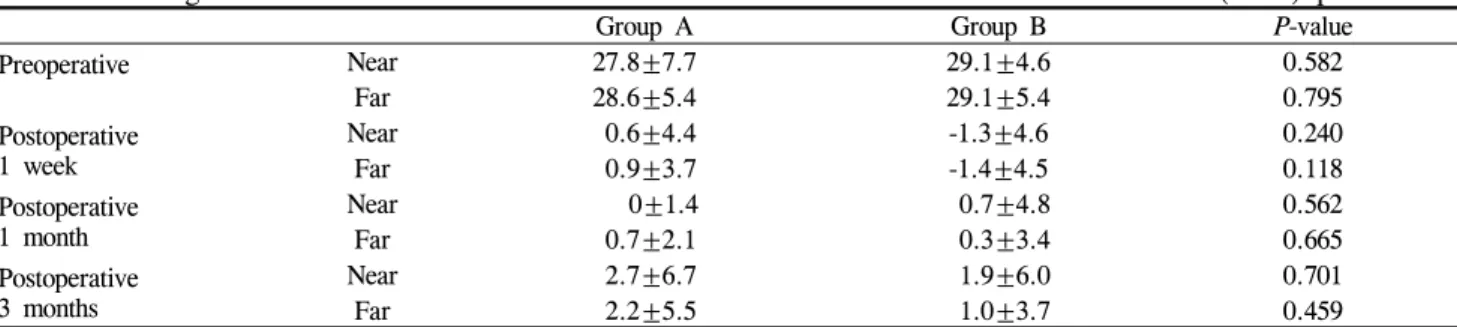
Table 1. Changes in ocular deviation after lateral rectus recession & medial rectus resection (R&R) procedures
Group A Group B P-value
Preoperative Near 27.8±7.7 29.1±4.6 0.582
Far 28.6±5.4 29.1±5.4 0.795
Postoperative 1 week
Near 0.6±4.4 -1.3±4.6 0.240
Far 0.9±3.7 -1.4±4.5 0.118
Postoperative
1 month Near 0±1.4 0.7±4.8 0.562
Far 0.7±2.1 0.3±3.4 0.665
Postoperative 3 months
Near 2.7±6.7 1.9±6.0 0.701
Far 2.2±5.5 1.0±3.7 0.459
Data represent the mean±standard deviation in prism diopters. P-values by independent t-test; (-): esotropia; (+): exotropia; Group A (n=18): patients who had the R&R procedure performed under general anesthesia with a muscle relaxant (atracurium); Group B (n=16): patients who had the R&R procedure performed under general anesthesia without a muscle relaxant (atracurium).
may induce relaxation and lengthening of the extraocular muscles and may result in insufficient muscle resection, which may have an impact on surgical results. To the best of our knowledge, there is no experimental study or report regarding the effect of muscle relaxants, including atracurium, on extraocular muscles. The purpose of this study is to investigate the effect of atracurium on outcomes of intermittent exotropia surgery under general anesthesia, with a focus on resection procedures.
Materials and Methods
All medical records of exotropia surgery performed by one surgeon between June 2001 and November 2006 at Konyang University Hospital were reviewed. The subjects who underwent recession and resection (R&R) procedures were identified.
Exclusion criteria included ambylopia, previous strabismus surgery or concomitant oblique muscle surgery, paralytic or restrictive exotropia, A or V pattern exotropia, other ocular disease, a chromosomal anomaly, systemic disorders such as congenital anomalies or a neurologic disorder, and a follow-up period of less than 3 months postoperatively.
All patients underwent a complete ophthalmologic examination prior to surgery. Alternate prism and cover tests or the Krimsky method were used to measure ocular deviation at near (1/3 m) and distant (6 m) fixations. All refractive errors were corrected. Sensory status was evaluated with the Titmus test and stereopsis of less than 100 seconds of arc was defined as good.
All surgeries were performed by one surgeon (YRK) under general anesthesia administered by one anesthesiologist (HUK). In all patients general anesthesia was induced by intravenous injection of ketamine (1 mg/kg) followed by inhalation of sevoflurane (4 vol%) and N2O 3L/O2 3L.
Atracurium (0.1 mg/kg) was intravenously injected into the atracurium usage patients while the inhalation anesthetics were started. Atracurium usage patients were intubated 1.5-2 minutes following the atracurium injection, whereas the patients who did not receive atracurium were intubated 3-4 minutes after sevoflurane inhalation, when they were fully
relaxed. The operator was blind to the usage of muscle relaxants. The amount of surgery was based on the distant deviation according to a modification of the table originally proposed by Parks.12
Preoperative deviation angle was defined as the last recorded angle before the operation. All patients received follow-up examinations at one week, one month, and three months following the operation. The near and distant deviation angles were measured at each follow-up visit.
Preoperative and postoperative deviation angles were compared at each follow-up visit.
Surgical outcome was determined by the results of examination three months after surgery. The surgical outcome was defined as: successful if the distant deviation angles were equal to or less than 10 prism diopters (PD), undercorrection if exodeviation was over 10 PD, and overcorrection if esodeviation was over 10 PD.
All continuous variables are expressed as mean±standard deviation (SD). The independent t-test was used to compare the means of two groups. The Fisher’s exact tests were used to compare proportions in surgical outcomes. Probability values less than 0.05 were considered statistically significant, and all analyses were conducted using SPSS for Windows (Version 15.0, LEAD Technologies, Inc., Chicago, Illinois, USA).
Results
Thirty four patients who underwent lateral rectus muscle recession and medial rectus muscle resection (R&R) were included in this study. The patients were divided into two groups: atracurium usage during anesthesia (group A, n=18) and no atracurium usage during anesthesia (group B, n=16).
The average age of all the patients at surgery was 6.2±1.7 years (mean±SD; range: 3 to 10 years) and the male-to-female ratio was 18:16. The average age of patients in group A was 5.8±1.2 years and 6.7±2.0 years in group B (p=0.157 by independent t-test). Group A consisted of 9 males and 9 females and group B consisted of 9 males and 7 females (p=0.744 by Fisher’s exact test). Sixteen patients (88.9%) of group A and 15 patients (93.8%) of group B had
Table 2. Surgical outcomes: Comparison of distant deviation angles at 3 months postoperatively
Group A Group B P-value
Undercorrection 3 (16.7%) 1 (6.3%) 0.604
Success 15 (83.3%) 15 (93.7%)
Overcorrection 0 (0%) 0 (0%)
Data represent the number (percentage). P-value by Fisher’s exact test; Group A (n=18): patients who had the R&R procedure performed under general anesthesia with a muscle relaxant (atracurium); Group B (n=16): patients who had the R&R procedure performed under general anesthesia without a muscle relaxant (atracurium).
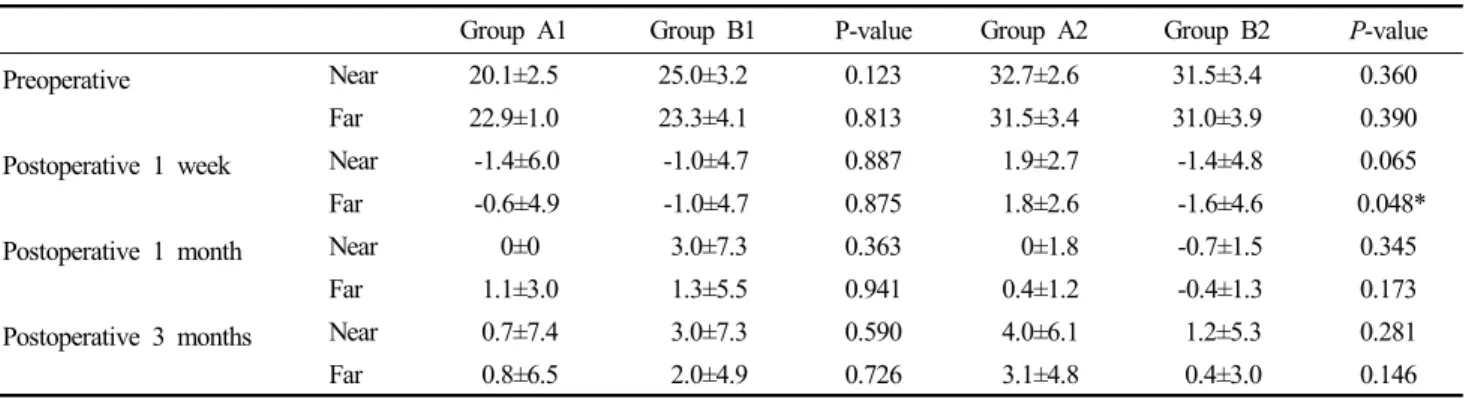
Table 3. Changes of ocular deviation according to the amount of medial rectus (MR) resection
Group A1 Group B1 P-value Group A2 Group B2 P-value
Preoperative Near 20.1±2.5 25.0±3.2 0.123 32.7±2.6 31.5±3.4 0.360
Far 22.9±1.0 23.3±4.1 0.813 31.5±3.4 31.0±3.9 0.390
Postoperative 1 week Near -1.4±6.0 -1.0±4.7 0.887 1.9±2.7 -1.4±4.8 0.065
Far -0.6±4.9 -1.0±4.7 0.875 1.8±2.6 -1.6±4.6 0.048*
Postoperative 1 month Near 0±0 3.0±7.3 0.363 0±1.8 -0.7±1.5 0.345
Far 1.1±3.0 1.3±5.5 0.941 0.4±1.2 -0.4±1.3 0.173
Postoperative 3 months Near 0.7±7.4 3.0±7.3 0.590 4.0±6.1 1.2±5.3 0.281
Far 0.8±6.5 2.0±4.9 0.726 3.1±4.8 0.4±3.0 0.146
Data represent the mean±standard deviation in prism diopters. * P<0.05 by independent t-test; (-): esotropia; (+): exotropia; Group A1 (n=7): patients who had the R&R procedure performed under general anesthesia with a muscle relaxant, < 5 mm MR resection; Group B1 (n=6): patients who had the R&R procedure performed under general anesthesia without a muscle relaxant, < 5 mm MR resection;
Group A2 (n=11): patients who had the R&R procedure performed under general anesthesia with a muscle relaxant, ≥ 5 mm MR resection;
Group B2 (n=10): patients who had the R&R procedure performed under general anesthesia without a muscle relaxant, ≥ 5 mm MR resection.
stereopsis of less than 100 seconds of arc (p=0.871 by Fisher’s exact test). The average age, sex ratio, and proportion of patients with good stereopsis did not differ significantly between the two groups.
Changes in preoperative & postoperative ocular deviation of patients who underwent R&R were compared between groups A and B (Table 1). There was no noticeable difference in preoperative deviation angles between the two groups (p>0.05 by independent t-test). The measured near and distant ocular deviation angles for 1 week, 1 month, and 3 months following surgery had a tendency to increase.
Patients in group A tended to be less corrected in amount than those in group B; however, the difference was not statistically significant at any point.
The surgical outcomes based on distant deviation angles at 3 months postoperatively are presented in Table 2. The results showed a higher undercorrection rate in group A compared to group B; however, the difference in undercorrection rate between groups A and B was not statistically significant (p=0.604 by Fisher’s exact test).
In order to investigate the difference in postoperative results depending on the length of resected medial rectus (MR) muscle, the patients were divided into two subgroups according to the amount of resection: less than 5 mm (group
A1, atracurium usage, n=7; group B1, no atracurium usage, n=6) or 5 mm and greater (group A2, atracurium usage, n=11; group B2, no atracurium usage, n=10). Changes in ocular deviation in each subgroup are presented in Table 3.
In the subgroup with an MR resection of less than 5 mm there was no noticeable difference in ocular deviation at any of the follow-up visits between the two subgroups (group A1 and group B1). In the subgroup with larger MR resections (5 mm and greater), patients in group A2 were less corrected than patients in group B2 and the difference was significant on distant deviation angles at 1 week postoperatively (p=0.048 by independent t-test).
Surgical outcomes were also compared in the subgroups divided according to the length of resected MR muscle (Table 4). Patients with larger resections (≥ 5 mm) in group A (group A2) showed the highest undercorrection rate (18.2%), whereas those in group B (group B2) showed the lowest undercorrection rate (0%). However, the difference in surgical outcomes between groups A and B was not statistically significant in either subgroup of different resection length (Fisher’s exact test, p=1.000 in the subgroup with resections < 5 mm, 0.476 in the subgroup with resections ≥ 5 mm).
Table 4. Surgical outcomes 3 months postoperatively according to the amount of MR resection
Group A1 Group B1 P-value Group A2 Group B2 P-value
Undercorrection 1 (14.3%) 1 (16.7%) 1.000 2 (18.2%) 0 (0%) 0.476
Success 6 (85.7%) 5 (83.3%) 9 (81.8%) 10 (100%)
Overcorrection 0 (0%) 0 (0%) 0 (0%) 0 (0%)
Data represent the number (percentage). P-value by Fisher’s exact test; Group A1 (n=7): patients who had the R&R procedure performed under general anesthesia with a muscle relaxant, < 5 mm MR resection; Group B1 (n=6): patients who had the R&R procedure performed under general anesthesia without a muscle relaxant, < 5 mm MR resection; Group A2 (n=11): patients who had the R&R procedure performed under general anesthesia with a muscle relaxant, ≥ 5 mm MR resection; Group B2 (n=10):
patients who had the R&R procedure performed under general anesthesia without a muscle relaxant, ≥ 5 mm MR resection.
D iscussion
This study demonstrated that patients who underwent R&R procedures under general anesthesia with a muscle relaxant tended to be less corrected than those who were not given a muscle relaxant, especially early in the postoperative period and in patients with larger MR resections (≥ 5 mm).
However, there was no significant difference later in the postoperative period.
Under general anesthesia various important physiological changes occur in the eyes. These changes include relaxation of the extraocular muscles, diversion of eyeball position, change in pupil size, decreased intraocular pressure, decreased production of tears, and a difference in refractive state.13 Using muscle relaxants during general anesthesia influences the extraocular muscles and adjacent structures.
Furthermore, all inhalant anesthetics, except N2O, relax skeletal muscles and reinforce the effects of nondepolarizing muscle relaxants.10
We performed this study to investigate the effect of intraoperative atracurium usage on surgical results of R&R for exotropia. Patients in the muscle relaxant group (group A) tended to be less corrected in their distant deviation angles 3 months after the operation compared to patients who did not receive a muscle relaxant (group B), although this result was not statistically significant. In cases with less than 5 mm of MR muscle resection, atracurium usage (subgroup A1) and no atracurium usage (subgroup B1) showed no significant differences in distant deviation angles at any point following the R&R procedures. However, in cases with more than 5 mm of MR resection, the distant deviation angles of patients treated with muscle relaxants (subgroup A2) were significantly less corrected at 1 week postoperatively compared to patients operated on without the use of muscle relaxants (subgroup B2). The surgical outcomes, as compared by distant deviation angles at 3 months postoperatively, also showed a higher undercorrection rate and a lower success rate with intraoperative atracurium usage and no undercorrection without atracurium usage in the subgroup with larger MR resections (≥ 5 mm), whereas the difference was negligible with or without atracurium usage in the subgroups with smaller MR resections (< 5 mm). These results suggest that using muscle relaxants during general
anesthesia may cause relaxation and lengthening of the extraocular muscles, thus leading to insufficient MR resection in R&R for exotropia.
In the subgroups with larger MR resections, deviation angles after surgery tended to be less corrected in the intraoperative atracurium usage subgroup. However, the difference between the two subgroups was significant only at 1 week postoperatively and not at 1 month or 3 months following the operation. This finding suggests that the effect of muscle relaxants during exotropia surgery under general anesthesia might only affect the early postoperative phase.
Our study was limited by the small sample size and short-term follow-up. Exotropia tends to recur with time,14,15 thus a long-term prospective follow-up study with a larger number of subjects may be needed.
In conclusion, patients who underwent R&R procedures under general anesthesia with a muscle relaxant tended to be less corrected than those who did not use a muscle relaxant, especially in the early postoperative period and in patients with larger MR resections equal to or greater than 5 mm.
However, there was no significant difference later in the postoperative period.
References
1. Meakin GH. Role of muscle relaxants in pediatric anesthesia. Curr Opin Anaesthesiol 2007;20:227-31.
2. Donati F, Meistelman C, Plaud B. Vecuronium neuromuscular blockade at the adductor muscles of the larynx and adductor pollicis. Anesthesiology 1991;74:833-7.
3. Meistelman C, Plaud B, Donati F. Rocuronium (Org 9426) neuromuscular blockade at the adductor muscles of the larynx and adductor pollicis in humans. Can J Anaesth 1992;39:665-9.
4. Bencini A, Newton DE. Rate of onset of good intubating conditions, respiratory depression and hand muscle paralysis after vecuronium. Br J Anaesth 1984;56:959-65.
5. Pansard JL, Chauvin M, Lebreault C, et al. Effects of an intubating dose of succinylcholine and atracurium on the diaphragm and the adductor pollicis in humans.
Anesthesiology 1987;67:326-30.
6. Donati F, Antzaka C, Bevan DR. Potency of pancuronium at the diaphragm and the adductor pollicis muscle in humans. Anesthesiology 1986;65:1-5.
7. Ungureanu D, Meistelman C, Frossard J, Donati F. The orbicularis oculi and the adductor pollicis muscles as
monitors of atracurium block of laryngeal muscles. Anesth Analg 1993;77:775-9.
8. Ruff RL. More than meets the eye: Extraocular muscle is very distinct from extremity skeletal muscle. Muscle Nerve 2002;25:311-3.
9. Kaminski HJ, Al-Hakim M, Leigh RJ et al. Extraocular muscles are spared in advanced Duchenne dystrophy. Ann Neurol 1992;32:586-8.
10. Porter JD, Baker RS. Muscles of a different “color”: the unusual properties of the extraocular muscles may predispose or protect them in neurogenic and myogenic disease. Neurology 1996;46:30-7.
11. Porter JD, Baker RS, Ragusa RJ, Brueckner JK. Extraocular muscles: basic and clinical aspects of structure and
function. Surv Ophthalmol 1995;39:451-84.
12. Ohtsuki H, Hasebe S, Kono R, et al. Prism adaptation response is useful for predicting surgical outcome in selected types of intermittent exotropia. Am J Ophthalmol 2001;131:117-22.
13. Lim ST, Kim SJ, Park YG. A clinical study : Change of the eye position under general anesthesia. J Korean Ophthalmol Soc 1995;36:2243-51.
14. Scott WE, Keech R, Mash AJ. The postoperative results and stability of exodeviations. Arch Ophthalmol 1981;99:
1814-8.
15. Stoller SH, Simon JW, Lininger LL. Bilateral lateral rectus recession for exotropia: a survival analysis. J Pediatr Ophthalmol Strabisms 1994;31:89-92.