필라테스 안정화 운동이 배근 수축과 허리골반정렬, 생리통에 미치는 영향
김문정
1문현주
2ǂ1
모던필리테스 센터장,
2ǂ미주신경연구센터 센터장
Effects of Pilates Stabilization Exercise on Abdominal Muscles Contraction, Lumbopelvic Alignment, Dysmenorrhea
Kim Moonjeoung, PT, Ph.D
1Moon Hyunju, PT, Ph.D
2ǂ1
Dept. of Physical Therapy, Modern Pilates, Chief of Center
2ǂ
Dept. of Physical Therapy, Vagus Nerve Research Center, Chief of Center
Abstract
Purpose : Dysmenorrhea can be caused by misalignment of the pelvis. Since pilates stabilization exercise is a methods that affects pelvic alignment by inducing contraction of abdominal muscles, the purpose of this study is to determine whether dysmenorrhea is reduced when pilates stabilization exercise is applied.
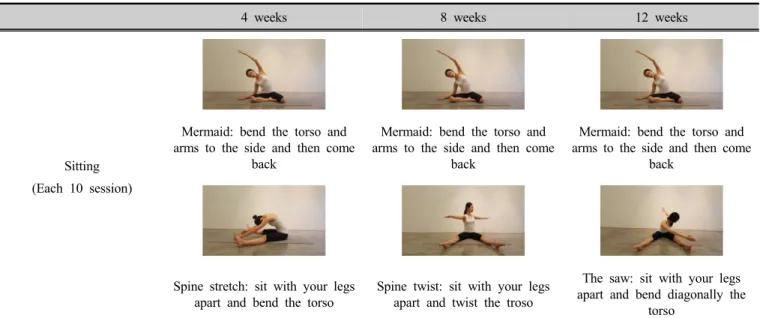
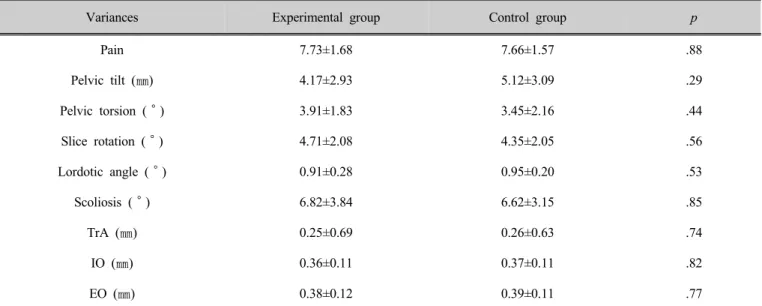
Methods : 47 dysmenorrhea patients were randomly divided into experimental (n=23) and control (n=24) groups. The experimental group performed pilates stabilization exercise three times a week for 12 weeks, and the control group did not perform any intervention. Abdominal muscle thickness, lumbar pelvic alignment, and dysmenorrhea were measured before intervention, 6 weeks, and 12 weeks after intervention to determine the mean change over time and the effect of group and factor interactions (repeated measured ANOVA and contrast test for each period).
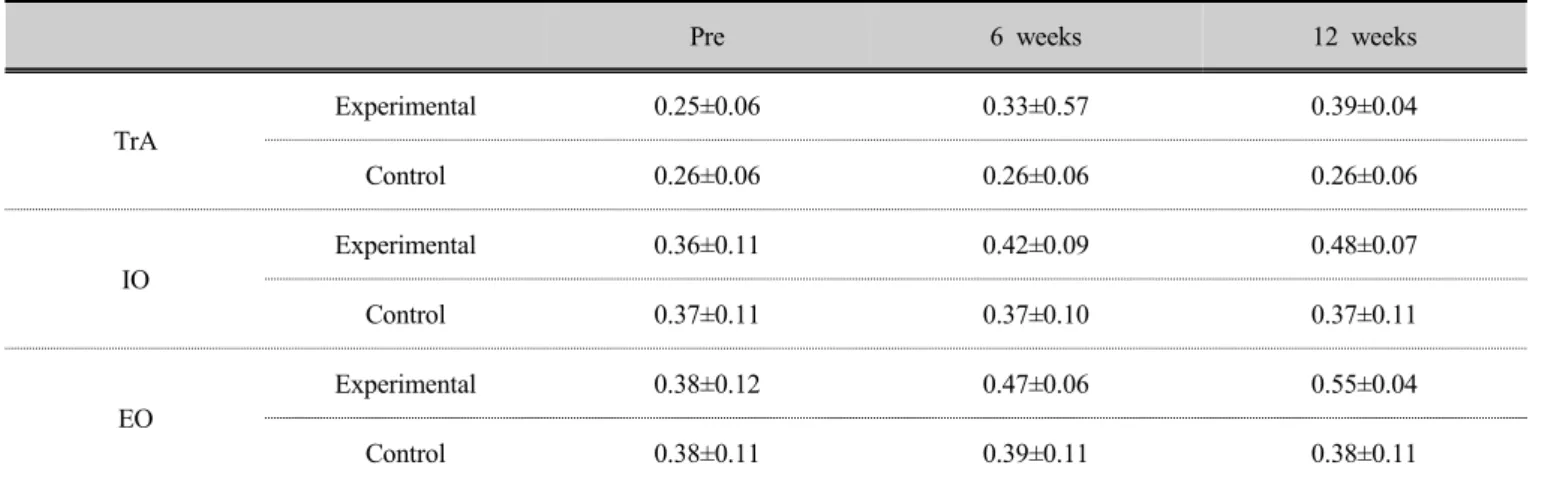
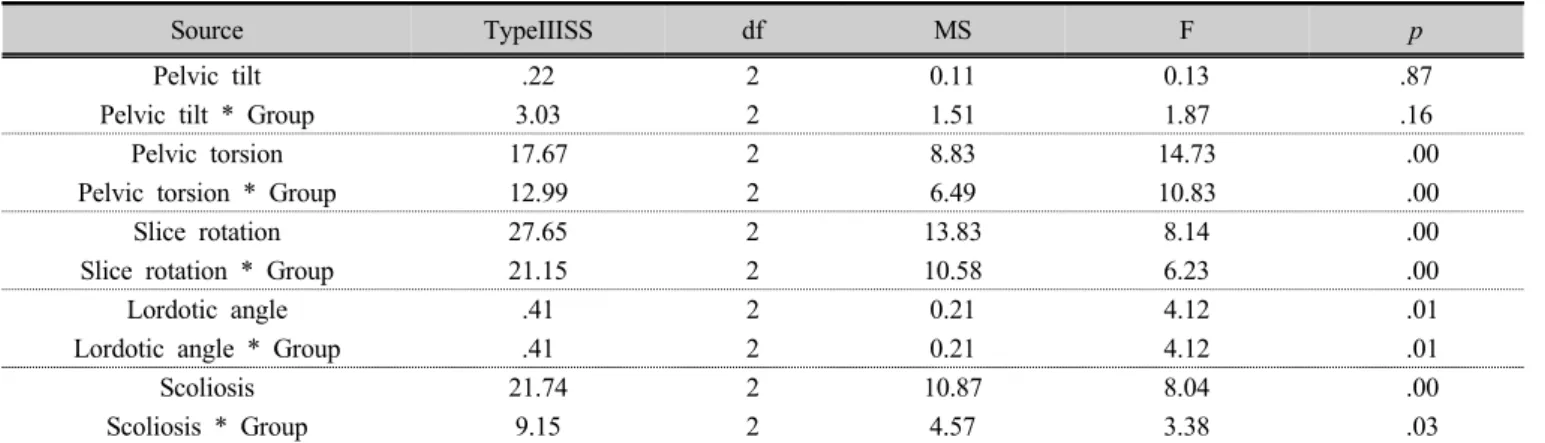
Results : In the experimental group, the thickness of the transverse abdominis, internal oblique, and external oblique muscles were increased significantly by group and period (p<.05). The pelvic torsion, lordosis and dysmenorrhea were also significantly decreased by group and period. But the control group did not change significantly in any of the variables.
Conclusion : Applying pilates stabilization exercise to women with dysmenorrhea may be an effective intervention that contributes to relieving dysmenorrhea by correcting the stability and alignment of the lumbar pelvis.
Key Words : abdominal muscles, dysmenorrhea, lumbopelvic alignment, pilates stabilization exercise
ǂ
교신저자: 문현주, [email protected]
1)