Introduction
By the end of December 2019, a new viral infection that mainly affects the human lower respiratory tract was first de- tected in China and quickly spread out to all over the world within a few weeks. This novel virus is type 2 severe acute respiratory syndrome coronavirus (SARS-CoV-2), which causes coronavirus disease 2019 (COVID-19)
1. COVID-19 is a highly contagious disease that has rapidly spread worldwide
and has been announced as a pandemic by the World Health Organization (WHO). More than 5.7 million individuals worldwide were infected, and approximately 358,000 death cases were reported by 28 May
2. There are many factors that might cause the large variations in the prevalence and death rate of COVID-19 among countries. One of these factors is whether a country enacts vaccination prevention programs against serious infectious diseases, such as tuberculosis (TB).
Although TB and COVID-19 are caused by two different mi- croorganisms, both infect the lower respiratory tract and are transmitted via small respiratory droplets coughed or sneezed by an infected patient. In addition, any of these two diseases are known to be a deadly infection for people with weak im- munity system. Epidemiological data on the global prevalence of COVID-19 indicated that countries with bacillus Calmette- Guérin (BCG) vaccination policies have lower rate of death related to COVID-19 than in countries without such a policy
3,4.
Vaccine for Mycobacterium tuberculosis and the Immune System
TB is caused by bacterial infection of Mycobacterium tuberculosis to the human body through mainly the pulmo- nary route. This Mycobacterium species is present in the air
COVID-19 Death and BCG Vaccination Programs Worldwide
Feras J. Jirjees, Ph.D.
1,* , Yahya H. Dallal Bashi, Ph.D.
2,* and Hala J. Al-Obaidi, Ph.D.
21
College of Pharmacy, University of Sharjah, Sharjah, United Arab Emirates,
2School of Pharmacy, Queen’s University Belfast, Belfast, UK
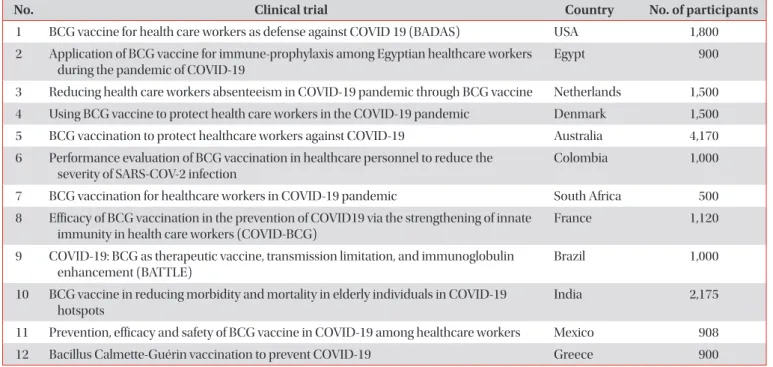
Several clinical trials are being conducted worldwide to investigate the protective effect of the bacillus Calmette-Guérin (BCG) vaccine against death in healthcare providers who are working directly with coronavirus disease 2019 (COVID-19) patients. Clinical studies suggested that certain live vaccines, particularly the BCG vaccine, could reduce the mortality due to other diseases caused by non-targeted pathogens, most probably through the nonspecific effects (heterologous effects). By the end of May 2020, the available information on the COVID-19 pandemic indicated the great effect of the BCG vaccine in reducing the number of COVID-19 death cases. The occurrence of death due to COVID-19 was found to be 21-fold lower in countries with a national BCG vaccination policy than in countries without such a policy, based on the medians of COVID-19 death case per 1 million of the population in these two groups of countries (p<0.001, Mann- Whitney test). Therefore, it can be concluded that the early establishment of a BCG vaccination policy in any country is a key element in reducing the number of COVID-19 and tuberculosis death cases.
Keywords: COVID-19 Pandemic; BCG Vaccine; COVID-19 Death Cases; Coronavirus; COVID-19 Mortality
Address for correspondence: Feras J. Jirjees, Ph.D.
College of Pharmacy, University of Sharjah, Sharjah, P.O. Box 27272, United Arab Emirates
Phone: 971-65057445, Fax: 971-65585812 E-mail: [email protected]
*These authors contributed equally to this work.
Received: Jun. 18, 2020 Revised: Aug. 14, 2020 Accepted: Sep. 4, 2020 Published online: Sep. 4, 2020
cc It is identical to the Creative Commons Attribution Non-Commercial License (http://creativecommons.org/licenses/by-nc/4.0/).
Copyright © 2021
The Korean Academy of Tuberculosis and Respiratory Diseases.
coughed by individuals with TB. The most common symptom is persistent cough. TB can affect the lymph nodes, which are essential for proper functioning of the immune system. Long- course (at least 6 months) treatment with antibiotics, such as rifampicin and ethambutol, can be used to completely cure TB
5.
BCG vaccine for TB is prepared from a weakened strain of Mycobacterium bovis. This bacterial strain is very close to M.
tuberculosis, which causes TB in humans
6. This BCG vaccine is typically administered shortly after birth to protect infants and children from serious forms of TB, particularly to prevent pulmonary TB. In brief, the immune response induced in newborns after BCG vaccination typically starts with the rec- ognition of BCG by neutrophils, macrophages, and dendritic cells at the inoculation site. This is followed by the activation of the adaptive immune system via migration of dendritic cells to the lymph nodes, resulting in the activation of mycobacteria- specific CD4 and CD8 T cells, which secrete high amounts of interferon (IFN)-γ and granzymes (serine proteases enzymes released within cytotoxic T cells and natural killer cells for inducing apoptosis to eliminate cells that have become can- cerous or infected with bacteria or viruses). This subsequently leads to the activation of B cells and the generation of plasma and memory T cells in addition to the production of antigen- specific antibodies in response to the presence of BCG anti- gens. These antibodies help protect the body against TB infec- tion. Some evidence also shows that BCG vaccine induces non-specific cross-protection via improved innate immune responses against microorganisms other than the TB-related pathogen
7,8. Recently, it was found that inf-cDC2s, a type of dendritic cells, play an important role in body responses to SARS-CoV-2 infection in vivo, as these cells are generated in a type I IFN-dependent manner to optimally prime CD4
+and CD8
+T cell immunity and to induce much stronger immune responses
9. Moreover, BCG vaccine is associated with low hospitalization rates for other respiratory infections not re- lated to TB
10.
Although national BCG vaccination programs are available in most countries apart from Western European countries and North American countries, such as the United States and Canada, TB remains a life-threatening disease with 1.5 million deaths in 2018 worldwide; moreover, it is estimated that 10 million people suffer from TB globally, with most cases oc- curring in eight countries: India, China, Indonesia, the Philip- pines, Pakistan, Nigeria, Bangladesh, and South Africa
11. The main reason for that is the efficacy of BCG vaccine in prevent- ing pulmonary TB by 50% in average
12,13. This means that BCG vaccine can reduce the risk of TB and its progression to active TB. Likewise, COVID-19 death records in those countries were less than 6 per 1 million of population
2. Yet, BCG vaccine does not provide complete protection against TB owing to many factors, such as genetic differences among the popula- tions, environmental changes, exposure to specific strains of
TB or other bacterial, and the TB strains used to manufacture the vaccine. These factors also include genetic differences between the strains being cultured and the choice of growth medium
14,15.
In addition, the duration of protection by BCG is not clearly known, as published data showed an inconsistent protec- tive effect of the BCG vaccine
16-19. One study found that in a given population, the protective effect of BCG against TB could decrease after 15 years and probably disappeared after 20 years
19, whereas another study in Native Americans im- munized in the 1930s found evidence of protection even at 60 years after immunization, with only a slight waning in ef- ficacy
20.
In 2018, 153 countries were considering the BCG vaccine as a standard childhood immunization program, and there are only 113 countries with a BCG coverage of ≥90% of the popu- lation
11.
Recently, several published articles stated that to a certain extent, countries with national BCG vaccine policies have less COVID-19 death rates than countries without such a policy
3,4.
Published Information about the Proposed Role of BCG in Activating the
Immune System against COVID-19
The BCG vaccine typical enhances the immune system capability to fight off pathogens, by interacting immune cells receptors with different pathogen associated molecular pat- terns, such as peptidoglycans, cell wall proteins, lipopolysac- charides, mycolic acids and glycoproteins which locate at the pathogen cell membrane and preserve molecular signatures of bacteria and viruses as well
7,21. Following this reaction, a series of biological stimulations take place including the pro- duction and secretion of pro-inflammatory cytokines as de- scribed in section 2. In particular, the BCG vaccine was found to be also defending against viral infections which affect the respiratory tract. In this context, it was found that mice who vaccinated with BCG prior to be infected with the Influenza virus have mild lung damage and lower Influenza load in their blood compared to those did not vaccinated and this was referred to either an earlier antibody secretion or the nonspe- cific cell-mediated immunity
22.
In an experimental laboratory setting, the BCG vaccina- tion exhibited the capability to reduce the level of the yellow fever vaccine (an attenuated viral strain) viremia in human monocytes and this was correlated with induction of cytokine responses (especially interleukin [IL]-1b)
23.
In a randomized placebo-controlled pilot study, healthy volunteers received either placebo vaccine (n=20) or live at- tenuated BCG vaccine (n=20). After 14 days, all participants received intramuscular injection of trivalent influenza vaccine.
Antibody responses against that influenza vaccine strain were
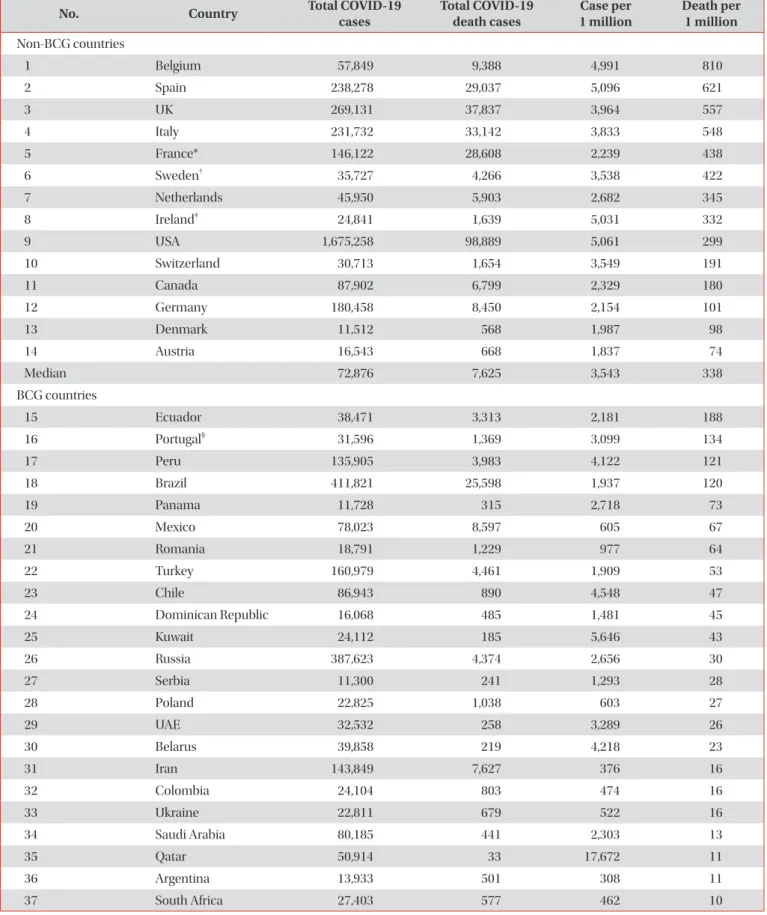
Table 1. Effect of BCG vaccination policy on the number of COVID-19 death cases in countries with more than 10,000 confirmed COVID-19 cases as per the WHO situation report on 28 May 2020
No. Country Total COVID-19
cases Total COVID-19
death cases Case per
1 million Death per 1 million Non-BCG countries
1 Belgium 57,849 9,388 4,991 810
2 Spain 238,278 29,037 5,096 621
3 UK 269,131 37,837 3,964 557
4 Italy 231,732 33,142 3,833 548
5 France* 146,122 28,608 2,239 438
6 Sweden
†35,727 4,266 3,538 422
7 Netherlands 45,950 5,903 2,682 345
8 Ireland
‡24,841 1,639 5,031 332
9 USA 1,675,258 98,889 5,061 299
10 Switzerland 30,713 1,654 3,549 191
11 Canada 87,902 6,799 2,329 180
12 Germany 180,458 8,450 2,154 101
13 Denmark 11,512 568 1,987 98
14 Austria 16,543 668 1,837 74
Median 72,876 7,625 3,543 338
BCG countries
15 Ecuador 38,471 3,313 2,181 188
16 Portugal
§31,596 1,369 3,099 134
17 Peru 135,905 3,983 4,122 121
18 Brazil 411,821 25,598 1,937 120
19 Panama 11,728 315 2,718 73
20 Mexico 78,023 8,597 605 67
21 Romania 18,791 1,229 977 64
22 Turkey 160,979 4,461 1,909 53
23 Chile 86,943 890 4,548 47
24 Dominican Republic 16,068 485 1,481 45
25 Kuwait 24,112 185 5,646 43
26 Russia 387,623 4,374 2,656 30
27 Serbia 11,300 241 1,293 28
28 Poland 22,825 1,038 603 27
29 UAE 32,532 258 3,289 26
30 Belarus 39,858 219 4,218 23
31 Iran 143,849 7,627 376 16
32 Colombia 24,104 803 474 16
33 Ukraine 22,811 679 522 16
34 Saudi Arabia 80,185 441 2,303 13
35 Qatar 50,914 33 17,672 11
36 Argentina 13,933 501 308 11
37 South Africa 27,403 577 462 10
significantly enhanced in BCG group compared to the pla- cebo group. Enhanced pro-inflammatory leukocyte responses and modulation of cytokine responses against unrelated pathogens were observed
24.
Likewise, the BCG vaccine might probably induce such a mechanism in the human body against COVID-19 which could result in reducing both the COVID-19 death rate and the severity of cases.
COVID-19 Pandemic
COVID-19 was first reported in Wuhan City, Hubei Prov- ince, China in December 2019, and the disease spread rapidly in China and globally in less than 5 weeks
25. Coronaviruses are a family of viruses that commonly exist in nature and can infect humans, causing pneumonia, kidney failure, damage in the digestive tracts, and even death
26. Currently, the novel COVID-19 is spreading more quickly than other known coro- naviruses
27.
COVID-19 is mainly transmitted between people via close contact or respiratory droplets coughed or sneezed by COVID-19–infected people. The high incidence of COVID-19 could probably be caused by the spreading of the virus via as- ymptomatic infected individuals. The initial site of COVID-19 infection is not yet defined, and its pathogenesis is still under investigation. Because COVID-19 is a respiratory disease, the lungs of most COVID-19 patients appear to be affected. The
common symptoms of COVID-19 are fever, cough, fatigue, sore throat, and shortness of breath
27,28.
In severe COVID-19 cases, high levels of pro-inflammatory cytokines (IL-2, IL-7, IL-10, granulocyte colony-stimulating factor, IFN-γ–induced protein 10, monocyte chemotactic protein 1, macrophage inflammatory protein 1A, and tumor necrosis factor α), a phenomenon known as cytokine storm, were observed
25. This cytokine storm can lead to inflamma- tion-induced lung damage with serious complications, such as pneumonia, respiratory failure, shock, and even death
29. Currently, paracetamol as an antipyretic/analgesic agent as well as empirical antibiotics for co-infections are common treatment options used to manage COVID-19 cases in hospi- tals worldwide
30.
Both the incidence and death rates of COVID-19 in the United States and most European countries (which should have robust healthcare systems) were higher than those in other developed countries with good healthcare systems, such as Singapore, Japan, Korea, and Hong Kong, and also higher than that in developing countries that might not have well- established healthcare systems
2.
Based on BCG data of the last 40 years published by WHO, countries with more than 10,000 confirmed COVID-19 cases were classified as BCG and non-BCG countries in this review article
31. Till 28th of May 2020, the WHO data revealed that the incidence of COVID-19 (cases per 1 million of population) in countries with a national BCG vaccination policy is 3.6-fold lower than that in countries without such a policy, based on Table 1. Continued
No. Country Total COVID-19
cases Total COVID-19
death cases Case per
1 million Death per 1 million
38 Bahrain 10,052 15 5,907 9
39 Philippines 15,588 921 142 8
40 Egypt 20,793 845 203 8
41 Japan 16,719 874 132 7
42 Afghanistan 13,659 246 351 6
43 Pakistan 64,028 1,317 290 6
44 Indonesia 24,538 1,496 90 5
45 Republic of Korea 11,402 269 222 5
46 Singapore 33,249 23 5,683 4
47 India 165,799 4,706 120 3
48 Bangladesh 40,321 559 245 3
49 China 84,547 4,645 59 3
Median 31,596 845 977 16
COVID-19, coronavirus disease 2019; WHO, World Health Organization; BCG, Bacillus Calmette-Guérin.
*BCG vaccination policy has been stopped in 2009, BCG vaccination covered approximately 80% of newborns between 1985 and 2007.
†BCG
vaccination covered <27% of newborns every year.
‡BCG policy covered less than 40% between 2004–2012 and stopped in 2016.
§BCG vac-
cination covered 76% in 1980 and approximately 90% of newborns from 2013 to 2018.
the medians of the two groups (Table 1). Regardless of the number of countries used in this comparison, the number of COVID-19 cases is also higher by two-fold in countries with- out a national BCG vaccination policy than in countries with such a policy, based on the medians of the two groups (Table 1).
In this context, another research group was found that the reported number of COVID-19 cases are very low in the coun- tries with universal BCG vaccination policies compared to countries without such a policy
21.
BCG Vaccination and COVID-19 Death Occurrence
In general, the death rate of COVID-19 in each country is mainly related to the age and health conditions (such as car- diovascular diseases, diabetes, and weak immune system) of COVID-19 patients
32,33. Moreover, the numbers of COVID-19 death cases varied among non-BCG countries (Table 1). For example, the number of COVID-19 death cases in Germany is 4.4-fold lower than that in the United Kingdom. This can be further expressed as one death case per 21 COVID-19 cases in Germany, whereas in the United Kingdom the number was one death case per seven COVID-19 cases. This might be at- tributed to the differences between Germany and the United Kingdom in terms of healthcare settings and actions taken by governments to minimize the spreading of COVID-19.
COVID-19 death cases (per 1 million of the population) in
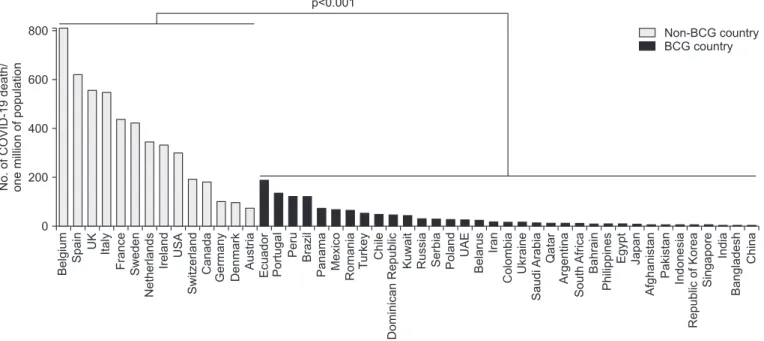
countries with more than 10,000 confirmed COVID-19 cases were also reviewed and reported (Table 1). The occurrence of COVID-19 death is 21-fold lower in countries with a national BCG vaccination policy than in countries without the policy, based on the medians of COVID-19 death case per 1 million of population in these two groups of countries (p<0.001, Mann- Whitney test). Moreover, the odds ratio for COVID-19 death in countries with BCG vaccination program was found to be 0.15 (95% confidence interval [CI], 0.14–0.16). In particular, the highest reported values of COVID-19 death case per 1 million of population in a non-BCG country and a BCG country were 810 (in Belgium) and 188 (in Ecuador), respectively (Table 1, Figure 1).
Moreover, a median of one death case per 10 cases of CO- VID-19 was reported in non-BCG countries, compared with one death case per 37 cases of COVID-19 in BCG countries.
Furthermore, the number of COVID-19 death cases in BCG countries was nine times lower than that in non-BCG coun- tries, based on the medians of COVID-19 death cases in these two groups of countries (Table 1).
However, the race, age, health conditions, and location of COVID-19 patients, as well as the number of population per country and actions taken by governments, might affect the occurrence of COVID-19 death. In particular, the presence of a national BCG vaccination policy appeared to have a great impact on reducing the rate of COVID-19 death in a given country. For example, the COVID-19 death case per 1 million of population in Spain (a non-BCG country) is 4.6- and 89- fold higher than that in Portugal and Japan (BCG countries),
Figure 1. Summary of coronavirus disease 2019 (COVID-19) death case per million of population in countries with more than 10,000 CO- VID-19 cases in the presence and absence of Bacillus Calmette-Guérin (BCG) vaccination policies, as per the World Health Organization situation report on 28 May 2020. p-values represent results of Mann-Whitney comparison between BCG and non-BCG countries.
Belgium Spain UK Italy France Sweden Netherlands Ireland USA Switzerland Canada Germany Denmark Austria Ecuador Portugal Peru Brazil Panama Mexico Romania Turkey Chile DominicanRepublic Kuwait Russia Serbia Poland UAE Belarus Iran Colombia Ukraine SaudiArabia Qatar Argentina SouthAfrica Bahrain Philippines Egypt Japan Afghanistan Pakistan Indonesia RepublicofKorea Singapore India Bangladesh China
600
400
200 800
No.ofCOVID-19death/ onemillionofpopulation
p<0.001
0
Non-BCG country BCG country