S T U D Y P R O T O C O L
Open Access
The role of the addition of ovarian
suppression to tamoxifen in young women
with hormone-sensitive breast cancer who
remain premenopausal or regain
menstruation after chemotherapy (ASTRRA):
study protocol for a randomized controlled
trial and progress
Hyun-Ah Kim
1, Sei Hyun Ahn
2, Seok Jin Nam
3, Seho Park
4, Jungsil Ro
5, Seock-Ah Im
6, Yong Sik Jung
7,
Jung Han Yoon
8, Min Hee Hur
9, Yoon Ji Choi
10, Soo-Jung Lee
11, Joon Jeong
12, Se-Heon Cho
13, Sung Yong Kim
14,
Min Hyuk Lee
15, Lee Su Kim
16, Byung-In Moon
17, Tae Hyun Kim
18, Chanheun Park
19, Sei Joong Kim
20,
Sung Hoo Jung
21, Heungkyu Park
22, Geum Hee Gwak
23, Sun Hee Kang
24, Jong Gin Kim
25, Jeryong Kim
26,
Su Yun Choi
27, Cheol-Wan Lim
28, Doyil Kim
29, Youngbum Yoo
30, Young-Jin Song
31, Yoon-Jung Kang
32,
Sang Seol Jung
33, Hyuk Jai Shin
34, Kwan Ju Lee
35, Se-Hwan Han
7, Eun Sook Lee
5, Wonshik Han
36,
Hee-Jung Kim
2and Woo Chul Noh
1*Abstract
Background: Ovarian function suppression (OFS) has been shown to be effective as adjuvant endocrine therapy in premenopausal women with hormone receptor-positive breast cancer. However, it is currently unclear if addition of OFS to standard tamoxifen therapy after completion of adjuvant chemotherapy results in a survival benefit. In 2008, the Korean Breast Cancer Society Study Group initiated the ASTRRA randomized phase III trial to evaluate the efficacy of OFS in addition to standard tamoxifen treatment in hormone receptor-positive breast cancer patients who remain or regain premenopausal status after chemotherapy.
Methods: Premenopausal women with estrogen receptor-positive breast cancer treated with definitive surgery were enrolled after completion of neoadjuvant or adjuvant chemotherapy. Ovarian function was assessed at the time of enrollment and every 6 months for 2 years by follicular-stimulating hormone levels and bleeding history. If ovarian function was confirmed as premenopausal status, the patient was randomized to receive 2 years of goserelin plus 5 years of tamoxifen treatment or 5 years of tamoxifen alone. The primary end point will be the comparison of the 5-year disease-free survival rates between the OFS and tamoxifen alone groups. Patient recruitment was finished on March 2014 with the inclusion of a total of 1483 patients. The interim analysis will be performed at the time of the observation of the 187th event.
(Continued on next page)
* Correspondence:[email protected]
1Department of Surgery, Korea Cancer Center Hospital, Korea Institute of
Radiological and Medical Sciences, Seoul, Republic of Korea Full list of author information is available at the end of the article
© 2016 Kim et al. Open Access This article is distributed under the terms of the Creative Commons Attribution 4.0 International License (http://creativecommons.org/licenses/by/4.0/), which permits unrestricted use, distribution, and reproduction in any medium, provided you give appropriate credit to the original author(s) and the source, provide a link to the Creative Commons license, and indicate if changes were made. The Creative Commons Public Domain Dedication waiver (http://creativecommons.org/publicdomain/zero/1.0/) applies to the data made available in this article, unless otherwise stated.
(Continued from previous page)
Discussion: This study will provide evidence of the benefit of OFS plus tamoxifen compared with tamoxifen only in premenopausal patients with estrogen receptor-positive breast cancer treated with chemotherapy.
Trial registration: ClinicalTrials.gov Identifier NCT00912548. Registered May 31 2009. Korean Breast Cancer Society Study Group Register KBCSG005. Registered October 26 2009.
Keywords: Ovarian function suppression, Goserelin, Tamoxifen, Adjuvant endocrine therapy, Premenopause, Breast cancer
Background
Many prospective randomized trials have shown that ad-juvant endocrine therapy, such as with tamoxifen or ovarian function suppression (OFS), provides a disease free survival benefit for young patients with hormone receptor-positive breast cancer [1–3]. However, there is insufficient information whether adding OFS to standard tamoxifen treatment for premenopausal patients is an ef-fective therapy in reducing disease recurrence.
Premenopausal breast cancer patients with hormone receptor-positive disease have a worse prognosis than postmenopausal breast cancer patients with hormone receptor-positive disease [4, 5]. This difference in sur-vival may be due to tamoxifen resistance in premeno-pausal women [5]. Theoretically, the combination of OFS and tamoxifen therapy could overcome tamoxifen resistance in premenopausal women. However, in the absence of clinical evidence of a definitive survival bene-fit associated with OFS plus standard tamoxifen therapy, additional toxicities from OFS treatment complicate rec-ommendation of this treatment regimen. Therefore, it is important to identify patients most likely to benefit from additional OFS treatment.
The results of the Suppression of Ovarian Function Trial (SOFT), a randomized, phase 3 trial conducted by The International Breast Cancer Study Group (IBCSG), showed no significant benefit from the addition of ovar-ian suppression to tamoxifen in overall patients [6]. However, in women who remained premenopausal and were at sufficient risk of recurrence to warrant adjuvant chemotherapy, the addition of OFS improved disease outcomes. In SOFT, ovarian function was assessed by serum E2 measurement just one time within 8 months after chemotherapy regardless of menstruation. How-ever, it is assumed that examination at only one time point may be insufficient to evaluate ovarian function after chemotherapy. The patients who regain ovarian function later may lose the chance to benefit from the addition of ovarian suppression treatment. The patients who regain ovarian function later may lose their chance to benefit from the addition of ovarian suppression treat-ment. As there is no standard method to predict the re-sumption of ovarian function at the time of chemotherapy completion, we decided to evaluate ovarian function re-peatedly for 2 years.
The Korean Breast Cancer Society Study Group has designed and initiated a randomized phase III trial com-paring OFS plus tamoxifen versus tamoxifen only after chemotherapy in young women with estrogen receptor-positive breast cancer (ASTRRA); participants include those with premenopausal status or those who have regained ovarian function after the completion of neoad-juvant or adneoad-juvant chemotherapy. The primary objective of this study is to compare the 5-year disease-free sur-vival rates between the two groups.
Methods/design
Study design and setting
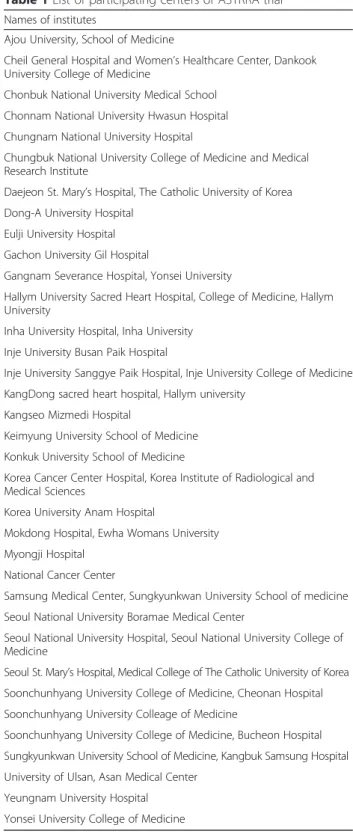
ASTRRA is a phase III open-label, prospective, random-ized, multicenter investigator initiated clinical trial. The trial was designed to evaluate the combination of 2 years of goserelin plus 5 years of tamoxifen (OFS group) ver-sus 5 years of tamoxifen alone (tamoxifen alone group) as adjuvant endocrine therapy according to ovarian function after the completion of neoadjuvant or adju-vant chemotherapy in patients with estrogen receptor-positive breast cancer. The Korean Breast Cancer Society Study Group coordinates the trial, and the Steering Com-mittee oversees the trial. The institutional review board of Korea Cancer Center Hospital was approved the protocol version 1.3 [K-0902-004-009]. The study protocol was approved by each institutional review board of all partici-pating centers as well. Table 1 shows the list of participat-ing centers. All patients provided written informed consent before enrollment.
Patients
The trial enrolled premenopausal women≤ 45 years of age with histologically confirmed estrogen receptor-positive, stage I–III, primary invasive breast cancer treated with definitive surgery and chemotherapy. Pre-menopausal status for inclusion criteria was defined as having a regular menstruation history at the time of diagnosis. Estrogen receptor positivity was determined as expression of estrogen receptor in at least 10 % of tumor cells as determined by immunohistochemistry or 10 fmol/mg cytosol protein as determined by a dextran-coated charcoal ligand binding assay.
Receipt of neoadjuvant or adjuvant chemotherapy was required, and the standard regimens were allowed except
CMF. Adjuvant trastuzumab therapy for patients with human epidermal growth factor receptor-2-positive dis-ease was permitted, although it was not considered as chemotherapy.
We excluded patients with other primary malignancies within the last 5 years, except for adequately treated in
situ carcinoma of the cervix, basal cell carcinoma, or squamous cell carcinoma of the skin. In addition, pa-tients with thrombocytopenia, those currently treated with anti-coagulant agents, and patients that were preg-nant, lactating, or treated with investigational drugs within the previous 4 weeks before baseline assessment were excluded.
Study design
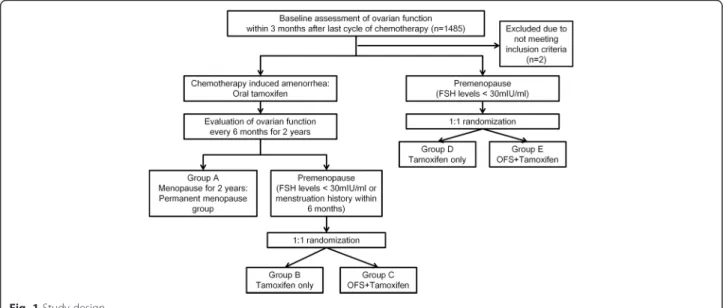
The first screening test to evaluate ovarian function was performed within 3 months of the final dose of chemo-therapy. Premenopausal status at the first screening test was defined by serum follicular stimulating hormone (FSH) levels < 30 mIU/ml. At 6, 12, 18, and 24 months following the baseline assessment, ovarian function sta-tus is to be evaluated by menstruation stasta-tus and serum FSH levels. Regaining premenopausal status is defined by FSH levels < 30mIU/ml or bleeding history within 6 months of each visit. Study visits will be every 6 months for 5 years and at least yearly thereafter, ac-cording to each institute’s routine practice. If the patient does not regain satisfy the definition of being premeno-pausal during the 24 months after enrollment, the pa-tient will be categorized to the permanent menopause group (group A). At each visit, newly confirmed pre-menopausal patients will be randomly assigned in a 1:1 ratio to the OFS group (group C or group E) or the tam-oxifen alone group (group B or group D). The OFS group is treated with 3.6 mg subcutaneous injection goserelin (Zoladex® [D-Ser(But)6 Azgly10 luteinizing-hormone-releasing hormone]; AstraZeneca) every 28 days for 2 years plus oral tamoxifen at a dose of 20 mg daily for 5 years. The tamoxifen only group is treated with oral tamoxifen at a dose of 20 mg daily for 5 years. Randomization is performed by means of an internet-based system and is stratified according to lymph node status (negative versus positive) and insti-tutes (Fig. 1). Data are collected and stored in a digital case report form.
Primary and secondary end points
The primary end point is to compare the 5-year disease-free survival rates between the OFS and tamoxifen alone groups, particularly among patients with premenopausal status (assessed every 6 months for 2 years) after the completion of chemotherapy. Disease-free survival is de-fined as the time from enrollment to the detection of in-vasive recurrence of breast cancer (local, regional, or distant metastasis), contralateral breast cancer, second-ary malignancy, or death without breast cancer recur-rence. Patients who are still alive without any event at the time of the analysis will be censored.
Secondary end points are (1) to compare overall sur-vival rates between groups, (2) to compare 5-year
Table 1 List of participating centers of ASTRRA trial
Names of institutes
Ajou University, School of Medicine
Cheil General Hospital and Women’s Healthcare Center, Dankook University College of Medicine
Chonbuk National University Medical School Chonnam National University Hwasun Hospital Chungnam National University Hospital
Chungbuk National University College of Medicine and Medical Research Institute
Daejeon St. Mary’s Hospital, The Catholic University of Korea Dong-A University Hospital
Eulji University Hospital Gachon University Gil Hospital
Gangnam Severance Hospital, Yonsei University
Hallym University Sacred Heart Hospital, College of Medicine, Hallym University
Inha University Hospital, Inha University Inje University Busan Paik Hospital
Inje University Sanggye Paik Hospital, Inje University College of Medicine KangDong sacred heart hospital, Hallym university
Kangseo Mizmedi Hospital
Keimyung University School of Medicine Konkuk University School of Medicine
Korea Cancer Center Hospital, Korea Institute of Radiological and Medical Sciences
Korea University Anam Hospital
Mokdong Hospital, Ewha Womans University Myongji Hospital
National Cancer Center
Samsung Medical Center, Sungkyunkwan University School of medicine Seoul National University Boramae Medical Center
Seoul National University Hospital, Seoul National University College of Medicine
Seoul St. Mary’s Hospital, Medical College of The Catholic University of Korea Soonchunhyang University College of Medicine, Cheonan Hospital Soonchunhyang University Colleage of Medicine
Soonchunhyang University College of Medicine, Bucheon Hospital Sungkyunkwan University School of Medicine, Kangbuk Samsung Hospital University of Ulsan, Asan Medical Center
Yeungnam University Hospital Yonsei University College of Medicine
disease-free survival rates between postmenopausal tients treated with tamoxifen and premenopausal pa-tients treated with OFS plus tamoxifen, (3) to determine the tolerability of tamoxifen with or without goserelin.
Sample size calculation and statistics
Planned enrollment was at least 1234 patients. Initially, the design projected that 2 years of accrual, plus 5 years of additional follow-up would be sufficient to observe the target of 374 disease-free survival events across the two treatment arms, with 85 % power to detect 7 % re-duction in hazard with OFS plus tamoxifen versus tam-oxifen alone. In 2010, because of a slower-than-expected enrollment rate, the steering committee extended the ac-crual period from 2 years to 4 years.
An intent-to-treatment analysis and per-protocol ana-lysis will be performed. The disease-free survival rate will be evaluated using the Kaplan-Meier method. The log-rank test will be used to compare the treatment groups. Multivariate analyses will be performed using Cox’s proportional hazards model.
Trial progress
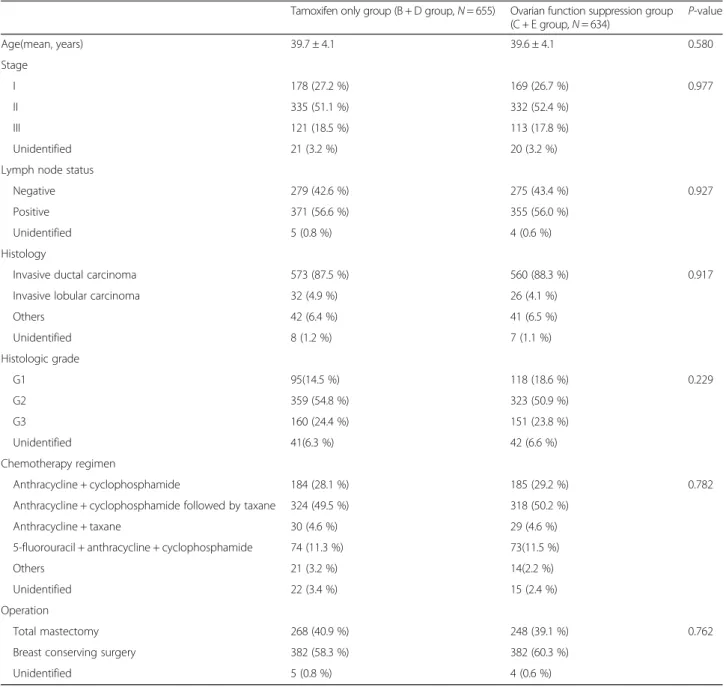
Recruitment was closed on March 2014. Between March 2009 and March 2014, 1485 patients were screened, and 1483 patients from 35 institutes in South Korea were en-rolled in this study. On January 12 2015, 634 patients were randomized to the OFS group, and 655 patients were randomized to the tamoxifen only group (Table 2). Eighty patients were classified as permanent menopause status. Another 114 patients continue to exhibit a status of chemotherapy-induced amenorrhea, and the ovarian function of these patients is being evaluated every 6 months. All of the patients received chemotherapy be-fore randomization. Node-positive disease was present
in 56.3 % of the patients. The first interim analysis will be performed when 50 % of the planned disease-free sur-vival events (187 events) have occurred.
Discussion
In South Korea, 48.7 % of newly diagnosed breast cancer patients in 2011 were premenopausal and less than 50 years of age [7]. Although the total number of pa-tients is smaller than that of western countries, the rate of premenopausal patients is higher in South Korea. The Korean Breast Cancer Society has been focused on developing optimal tailored therapy for these patients because of the relatively higher proportion of premeno-pausal patients in the Korean breast cancer patient population. In 2008, the Korean Breast Cancer Society Study Group initiated the ASTRRA trial to answer the following questions: (1) whether disease free survival benefits could be achieved with the addition of OFS to standard 5-year tamoxifen treatment after the com-pletion of neoadjuvant or adjuvant chemotherapy in premenopausal young women with estrogen receptor-positive disease, and (2) whether delayed OFS treatment could reduce disease recurrence in patients with recov-ered ovarian function who experienced chemotherapy-induced amenorrhea and who were treated with stand-ard tamoxifen therapy.
Results from phase III trials including OFS, as well as a meta-analysis of these trials, might help to advance current knowledge of the survival advantage gained with addition of OFS treatment [8–14]. Of these trials, SOFT was a randomized, three-arm, phase III trial designed to investigate the role of OFS in women with premeno-pausal status either after completion of (neo)adjuvant chemotherapy or following surgery alone. The SOFT trial included three arms: (1) tamoxifen only for 5 years,
(2) tamoxifen for 5 years + OFS for 5 years, and (3) exe-mestane for 5 years + OFS for 5 years [15]. One of the comparisons in the SOFT trial was tamoxifen + OFS ver-sus tamoxifen alone, similar to the comparison in the ASTRRA trial. Although the studies have some resem-blance, there are significant distinctions between the study design of the SOFT trial and the ASTRRA trial. First, the ASTRRA trial has only included women aged≤ 45 years. Because standard endocrine therapy takes at least 5 years, older premenopausal women could experi-ence natural, spontaneous menopause during endocrine therapy, and this would obscure the effect of OFS. Sec-ond, in contrast to the SOFT trial population, only 53 %
of which were treated with chemotherapy, all partici-pants in the ASTRRA trial received neoadjuvant or adju-vant chemotherapy before enrollment. Thus, ASTRRA trial focuses more on the role of OFS after completing chemotherapy. Third, ovarian function was assessed only one time (based on estradiol levels) at the time of randomization in the SOFT trial, within 8 months after completing chemotheapy. However, resumption of ovar-ian function occurs in about 60 % of women younger than 45 years of age within 2 years after completing chemotherapy [16, 17]. We assume that patients who re-cently regained ovarian function may lose the chance to benefit from the addition of OFS treatment. Therefore,
Table 2 Demographics of randomized patients
Tamoxifen only group (B + D group,N = 655) Ovarian function suppression group (C + E group,N = 634) P-value Age(mean, years) 39.7 ± 4.1 39.6 ± 4.1 0.580 Stage I 178 (27.2 %) 169 (26.7 %) 0.977 II 335 (51.1 %) 332 (52.4 %) III 121 (18.5 %) 113 (17.8 %) Unidentified 21 (3.2 %) 20 (3.2 %)
Lymph node status
Negative 279 (42.6 %) 275 (43.4 %) 0.927
Positive 371 (56.6 %) 355 (56.0 %)
Unidentified 5 (0.8 %) 4 (0.6 %)
Histology
Invasive ductal carcinoma 573 (87.5 %) 560 (88.3 %) 0.917
Invasive lobular carcinoma 32 (4.9 %) 26 (4.1 %)
Others 42 (6.4 %) 41 (6.5 %) Unidentified 8 (1.2 %) 7 (1.1 %) Histologic grade G1 95(14.5 %) 118 (18.6 %) 0.229 G2 359 (54.8 %) 323 (50.9 %) G3 160 (24.4 %) 151 (23.8 %) Unidentified 41(6.3 %) 42 (6.6 %) Chemotherapy regimen Anthracycline + cyclophosphamide 184 (28.1 %) 185 (29.2 %) 0.782
Anthracycline + cyclophosphamide followed by taxane 324 (49.5 %) 318 (50.2 %)
Anthracycline + taxane 30 (4.6 %) 29 (4.6 %)
5-fluorouracil + anthracycline + cyclophosphamide 74 (11.3 %) 73(11.5 %)
Others 21 (3.2 %) 14(2.2 %)
Unidentified 22 (3.4 %) 15 (2.4 %)
Operation
Total mastectomy 268 (40.9 %) 248 (39.1 %) 0.762
Breast conserving surgery 382 (58.3 %) 382 (60.3 %)
in the ASTRRA trial, ovarian function will be evaluated by menstruation history or FSH levels every 6 months from the time of enrollment for at least 2 years. Until now, 1286 (86.7 %) patients in the ASTRRA trial are premenopausal or have regained premenopausal status after chemotherapy, and only 80 (5.4 %) patients have been classified to the permanent menopausal group after 2 years of observation. Examination at only one time point may thus be insufficient to evaluate ovarian func-tion after chemotherapy.
The proportion of patients with regained ovarian func-tion is slightly higher in the ASTRRA trial than in other reports. This might be caused by the exclusion of pa-tients treated with CMF regimens [16, 17]. Because most patients treated with CMF do not recover from chemotherapy-induced amenorrhea, we excluded pa-tients who had received the CMF regimen [8, 16, 17]. In contrast to the CMF regimen, modern non-CMF chemo-therapy regimens result in less permanent amenorrhea after treatment. The NSABP B-30 trial assessed men-strual status after various non-CMF chemotherapy regi-mens at baseline and every 6 months over 24 months. The incidence of amenorrhea 12 months after random assignment was 69.8 % for sequential doxorubicin and cyclophosphamide followed by docetaxel, 57.7 % for con-current docetaxel-doxorubicin-cyclophosphamide, and 37.9 % for concurrent docetaxel-doxorubicin (P < 0.001) [18]. Although CMF is an effective chemotherapy regimen for breast cancer patients, use of the CMF regimen in young patients is currently decreasing in South Korea. Thus, we believe that the removal of the CMF regimen from the trial’s acceptable chemotherapy regimen list is compatible with recent trends in the care of young women with breast cancer. Another reason for the high rate of ovarian function resumption in the ASTRRA trial would be the relatively young age of participants. The NSABP B-30 trial showed that age is significantly related to the inci-dence of chemotherapy-induced amenorrhea [18].
The important advantage of the ASTRRA trial study de-sign is the repeated evaluation of ovarian function. The longitudinal evaluation of ovarian function may help to se-lect the most appropriate patients to receive additional OFS treatment, thereby avoiding unnecessary side effects. OFS causes menopausal symptoms and bone mass loss [19, 20]; menopausal symptoms, such as vasomotor symp-toms, vaginal dryness, vaginal discharge, anxiety, depres-sion, or sleep disturbances, significantly affect quality of life [19]. Sometimes these symptoms result in low compli-ance or destroy the physician-patient relationship. Because there is yet no reliable biomarker to select patients most likely to benefit from OFS, continuous checking of ovarian function may facilitate this patient selection.
Currently, the ASTRRA trial has closed to accrual, with a total 1483 enrolled patients. Through the ASTRRA trial,
we can determine optimal endocrine therapy based on real-time ovarian function status for each premenopausal breast cancer patient with estrogen receptor-positive dis-ease who received neoadjuvant or adjuvant chemotherapy.
Ethics approval and consent to participate
The institutional review board of Korea Cancer Center Hospital was approved the protocol [K-0902-004-009]. The study protocol was approved by each institutional re-view board of all participating centers as well (Table 1).
Consent for publications
Not applicable.
Availability of data and materials
The dataset supporting the conclusions of this article will is not available until the final report of this trial to ovoid bias on the analysis.
Abbreviations
CMF:cyclophosphamide, methotrexate, and fluorouracil; FSH: follicular stimulating hormone; IBCSG: International Breast Cancer Study Group; OFS: ovarian function suppression; SOFT: suppression of ovarian function trial. Competing interests
The authors declare that they have no competing interests. Authors’ contributions
HK and WN drafted the manuscript. SA, SN, SP, JR, SI, YJ, JY, MH, YC, SL, JJ, SC, SK, ML, LK, BM, TK, CP, SK, SJ, HP, GG, SK, JK, JK, SC, CL, DK, YY, YS, YK, SJ, HS, KL, SH, EL, WH, and HK have made substantial contribution to design this study. All authors have reviewed the manuscript and given final approval to be published.
Acknowledgements
We thank all the patients who participated in this trial, the participating investigators and Korean Breast Cancer Study Group.
The following list of name show the investigators who contributed this study by making substantial contributions to acquisition of data: Byung Ho Son2, Beom Seok Ko2, Jong-Han Yu2, Jong Won Lee2, Jeong Eon Lee3, Se
Kyung Lee3, Min-Ki Seong1, Jangmoo Byeon1, Yeun-Ju Sohn1, Seung Il Kim4,
Han-Sung Kang5, In Hae Park5, Seeyoun Lee5, So-Youn Jung5, Dong Young
Noh36, Tae You Kim6, Do Youn Oh6, Sae-Won Han6, Kyung-Hun Lee6, Tae-Yong Kim6, Min Ho Park8, Sung-Soo Kang9, Hae Kyung Lee9, SeungSang
Ko9, Chan-Seok Yoon9, Kyong Hwa Park10, Su-Hwan Kang11, Mi-Ri Lee13,
Sun-wook Han14, Jihyoun Lee15, Youn Ok Lee16, An-bok Lee17, Young Up
Cho20, Hyun Jo Youn21, Seon Kwang Kim21, Jihyoung Cho24, Ki-Tae Hwang25, Jin-Sun Lee26, Young Jin Choi32, Seul-Gi Lee32, Byung Joo Chae33, Hyun Jung
Choi34, Wan Sung Kim34.
Author details
1Department of Surgery, Korea Cancer Center Hospital, Korea Institute of
Radiological and Medical Sciences, Seoul, Republic of Korea.2Department of
Surgery, University of Ulsan, Asan Medical Center, Seoul, Republic of Korea.
3
Department of Surgery, Samsung Medical Center, Sungkyunkwan University School of medicine, Seoul, Republic of Korea.4Department of Surgery, Yonsei
University College of Medicine, Seoul, Republic of Korea.5Center for Breast
Cancer, National Cancer Center, Goyang, Republic of Korea.6Department of
Internal Medicine, Seoul National University Hospital, Cancer Research Institute, Seoul National University College of Medicine, Seoul, Republic of Korea.7Department of Surgery, Ajou University, School of Medicine, Suwon,
Republic of Korea.8Department of Surgery, Chonnam National University
Hwasun Hospital, Gwangju, Republic of Korea.9Department of Surgery, Cheil General Hospital and Women’s Healthcare Center, Dankook University College of Medicine, Seoul, Republic of Korea.10Department of Internal
11Department of Surgery, Yeungnam University Hospital, Daegu, Republic of
Korea.12Department of Surgery, Gangnam Severance Hospital, Yonsei
University, Seoul, Republic of Korea.13Department of Surgery, Dong-A
University Hospital, Busan, Republic of Korea.14Department of Surgery, Soonchunhyang University College of Medicine, Cheonan Hospital, Cheonan, Republic of Korea.15Department of Surgery, Soonchunhyang University
Colleage of Medicine, Seoul, Republic of Korea.16Division of Breast &
Endocrine Surgery, Hallym University Sacred Heart Hospital, College of Medicine, Hallym University, Anyang, Republic of Korea.17Department of
Surgery, Mokdong Hospital, Ewha Womans University, Seoul, Republic of Korea.18Department of Surgery, Inje University Busan Paik Hospital, Busan,
Republic of Korea.19Department of Surgery, Sungkyunkwan University School of Medicine, Kangbuk Samsung Hospital, Seoul, Republic of Korea.
20Department of Surgery, Inha University Hospital, Inha University, Incheon,
Republic of Korea.21Department of Surgery, Chonbuk National University
Medical School, Jeonju, Republic of Korea.22Department of Breast Surgery, Gachon University Gil Hospital, Incheon, Republic of Korea.23Department of
Surgery, Inje University Sanggye Paik Hospital, Inje University College of Medicine, Seoul, Republic of Korea.24Department of Surgery, Keimyung
University School of Medicine, Daegu, Republic of Korea.25Departments of Surgery, Seoul National University Boramae Medical Center, Seoul, Republic of Korea.26Department of Surgery, Chungnam National University Hospital,
Daejeon, Republic of Korea.27Department of Surgery, KangDong sacred
heart hospital, Hallym university, Seoul, Republic of Korea.28Department of Surgery, Soonchunhyang University College of Medicine, Bucheon Hospital, Bucheon, Republic of Korea.29Department of Surgery, Kangseo Mizmedi
Hospital, Seoul, Republic of Korea.30Department of Surgery, Konkuk
University School of Medicine, Seoul, Republic of Korea.31Department of Surgery, Chungbuk National University College of Medicine and Medical Research Institute, Cheongju, Republic of Korea.32Department of Surgery,
Eulji University Hospital, Daejeon, Republic of Korea.33Department of
Surgery, Seoul St. Mary’s Hospital, Medical College of The Catholic University of Korea, Seoul, Republic of Korea.34Breast and thyroid care center,
Department of Surgery, Myongji Hospital, Goyang, Republic of Korea.
35Department of Surgery, Daejeon St. Mary’s Hospital, The Catholic University
of Korea, Daejeon, Republic of Korea.36Department of Surgery and Cancer Research Institute, Seoul National University College of Medicine, Seoul, Republic of Korea.
Received: 24 March 2015 Accepted: 11 May 2016
References
1. Fisher B, Dignam J, Bryant J, DeCillis A, Wickerham DL, Wolmark N, et al. Five versus more than five years of tamoxifen therapy for breast cancer patients with negative lymph nodes and estrogen receptor-positive tumors. J Natl Cancer Inst. 1996;88:1529–42.
2. Early Breast Cancer Trialists’ Collaborative Group (EBCTCG). Effects of chemotherapy and hormonal therapy for early breast cancer on recurrence and 15-year survival: an overview of the randomised trials. Lancet. 2005;365: 1687–717.
3. Fisher B, Jeong J, Bryant J, Anderson S, Dignam J, Fisher ER, et al. Treatment of lymph-node-negative, oestrogen-receptor-positive breast cancer: long-term findings from National Surgical Adjuvant Breast and Bowel Project randomised clinical trials. Lancet. 2004;364:858–68.
4. Fowble BL, Schultz DJ, Overmoyer B, Solin LJ, Fox K, Jardines L, et al. The influence of young age on outcome in early stage breast cancer. Int J Radiat Oncol Biol Phys. 1994;30:23–33.
5. Ahn SH, Son BH, Kim SW, Kim SI, Jeong J, Ko SS, et al. Poor outcome of hormone receptor-positive breast cancer at very young age is due to tamoxifen resistance: nationwide survival data in Korea–a report from the Korean Breast Cancer Society. J Clin Oncol. 2007;25:2360–8.
6. Francis PA, Regan MM, Fleming GF, Láng I, Ciruelos E, Bellet M, et al. Adjuvant ovarian suppression in premenopausal breast cancer. N Engl J Med. 2015;372:436–46.
7. Kim Z, Min SY, Yoon CS, Lee HJ, Lee JS, Youn HJ, et al. The basic facts of korean breast cancer in 2011: results of a nationwide survey and breast cancer registry database. J Breast Cancer. 2014;17:99–106.
8. Jakesz R, Hausmaninger H, Kubista E, Gnant M, Menzel C, Bauernhofer T, et al. Randomized adjuvant trial of tamoxifen and goserelin versus cyclophosphamide, methotrexate, and fluorouracil: evidence for the
superiority of treatment with endocrine blockade in premenopausal patients with hormone-responsive breast cancer–Austrian Breast and Colorectal Cancer Study Group Trial 5. J Clin Oncol. 2002;20:4621–7. 9. Bernhard J, Zahrieh D, Castiglione-Gertsch M, Hurny C, Gelber RD, Forbes JF,
et al. Adjuvant chemotherapy followed by goserelin compared with either modality alone: the impact on amenorrhea, hot flashes, and quality of life in premenopausal patients–the International Breast Cancer Study Group Trial VIII. J Clin Oncol. 2007;25:263–70.
10. LHRH-agonists in Early Breast Cancer Overview group. Use of luteinising-hormone-releasing hormone agonists as adjuvant treatment in premenopausal patients with hormone-receptor-positive breast cancer: a meta-analysis of individual patient data from randomised adjuvant trials. Lancet. 2007;369:1711–23.
11. Pagani O, Regan MM, Walley BA, Fleming GF, Colleoni M, Láng I, Gomez HL. Adjuvant exemestane with ovarian suppression in premenopausal breast cancer. N Engl J Med. 2014;371:107–18.
12. Jankowitz RC, McGuire KP, Davidson NE. Optimal systemic therapy for premenopausal women with hormone receptor-positive breast cancer. Breast. 2013;22 Suppl 2:S165–70.
13. Gnant M, Mlineritsch B, Stoeger H, Luschin-Ebengreuth G, Knauer M, Moik M, et al. Adjuvant endocrine therapy plus zoledronic acid in premenopausal women with early-stage breast cancer: 62-month follow-up from the ABCSG-12 randomised trial. Lancet Oncol. 2011;12:631–41.
14. Davidson NE, O’Neill AM, Vukov AM, Osborne CK, Martino S, White DR, et al. Chemoendocrine therapy for premenopausal women with axillary lymph node-positive, steroid hormone receptor-positive breast cancer: results from INT 0101 (E5188). J Clin Oncol. 2005;23:5973–82.
15. Regan MM, Pagani O, Fleming GF, Walley BA, Price KN, Rabaglio M, et al. Adjuvant treatment of premenopausal women with endocrine-responsive early breast cancer: design of the TEXT and SOFT trials. Breast. 2013;22: 1094–100.
16. Kim H, Shin D, Moon N, Paik N, Noh W. The incidence of chemotherapy-induced amenorrhea and recovery in young (<45-year-old) breast cancer patients. J Breast Cancer. 2009;12(1):20–6.
17. Petrek JA, Naughton MJ, Case LD, Paskett ED, Naftalis EZ, Singletary SE, et al. Incidence, time course, and determinants of menstrual bleeding after breast cancer treatment: a prospective study. J Clin Oncol. 2006;24:1045–51. 18. Ganz PA, Land SR, Geyer Jr CE, et al. Menstrual history and quality-of-life
outcomes in women with node-positive breast cancer treated with adjuvant therapy on the NSABP B-30 trial. J Clin Oncol. 2011;29:1110–6. 19. Nystedt M, Berglund G, Bolund C, Fornander T, Rutqvist LE. Side effects of
adjuvant endocrine treatment in premenopausal breast cancer patients: a prospective randomized study. J Clin Oncol. 2003;21:1836–44.
20. Gnant M, Mlineritsch B, Luschin-Ebengreuth G, Kainberger F, Kassmann H, Piswanger-Solkner JC, et al. Adjuvant endocrine therapy plus zoledronic acid in premenopausal women with early-stage breast cancer: 5-year follow-up of the ABCSG-12 bone-mineral density substudy. Lancet Oncol. 2008;9:840–9.
• We accept pre-submission inquiries
• Our selector tool helps you to find the most relevant journal • We provide round the clock customer support
• Convenient online submission • Thorough peer review
• Inclusion in PubMed and all major indexing services • Maximum visibility for your research
Submit your manuscript at www.biomedcentral.com/submit