왕피천 저서성 대형무척추동물의 섭식기능군을 이용한 군집분석 1a
박영준2ㆍ임헌명2ㆍ김기동2ㆍ조영호3ㆍ남상호3ㆍ권오석4*
Community Analysis Based on Functional Feeding Groups of Benthic Macro Invertebrate in Wangpi-cheon
1aYoung-Jun Park
2, Heon-Myong Lim
2, Ki-Dong Kim
2, Young-Ho Cho
3, Sang-Ho Nam
3, Oh-Seok Kwon
4*요 약
본 연구는 왕피천의 섭식기능군을 이용해 군집분석을 실시하기 위한 것으로 2007년 10월부터 2008년 5월까지 총 4회에 걸쳐 조사를 수행하고 그 결과를 분석하였다. 조사시기동안 출현한 저서성 대형무척추동물은 총 4문 6강 16목 58과 138종이었으며, EPT index 값은 61.59%로 매우 높게 나타나 왕피천의 하천생태계는 매우 청정하고 건강한 것으로 분석되었다 . 왕피천의 하천지점별 섭식기능군을 살펴본 결과 긁어먹는 무리와 주워먹는 무리가 지류에 비해 우점하고 있는 일반적인 하천 중류의 특징을 보이는 그룹과 썰어먹는 무리가 본류에 비해 높은 비율을 차지하고 있는 상류 특성을 보이는 지류의 그룹인 두 개의 그룹으로 나뉘어졌다 . 유사도 지수를 근거로 각 지점별 클러스터 분석을 실시해 본 결과 , 자연 상태의 비교란 지역(A그룹)과 제방 및 보 등에 의한 인위적 교란지역(B그룹; 지점 8, 11)으로 그룹화 되었다 . 또한 비교란 지역은 본류(지점 1, 2, 3, 4, 7) 및 지류(지점 5, 6, 9, 10)의 특성을 갖는 두개의 그룹으로 분류됨을 확인 할 수 있었다.
주요어: 생태·경관보전지역, 유사도 지수, EPT index
1 접수 2010년 5월 31일, 수정(1차: 2010년 8월 27일, 2차: 2010년 10월 22일), 게재확정 2010년 10월 23일 Received 31 May 2010; Revised(1st: 27 August 2010, 2nd: 22 October 2010); Accepted 23 October 2010 2 국립환경과학원 자연자원연구과 Nature Conservation Research Division of NIER, Incheon(404-708), Korea 3 대전대학교 생명과학과 Dept. of Biological Science Daejeon Univ., Daejeon(300-716), Korea
4 경북대학교 농업생명과학대학 응용생명과학부 School of Applied Biosciences, College of Agriculture and Life Sciences, Kyungpook National Univ. Daegu(702-701), Korea
a 이 논문은 2007년도 대구지방환경청의 연구비 지원에 의하여 수행되었음.
* 교신저자 Corresponding author([email protected])
ABSTRACT
Community analysis based on functional feeding groups of benthic macro invertebrates at Wangpi-cheon was assessed with the result of four field survey from October, 2007 to May, 2008. A total 138 species of benthic macro invertebrates in 58 families, 16 orders, 6 classes, and 4 phyla were collected during the field surveys. The result of EPT index value showed high value of 61.59% and it means that the stream ecosystem of Wangpi-cheon is very clear and healthy. In this study the functional feeding groups in Wangpi-cheon were divided into two groups. First, Scrapers and Collectors-Gathering group which is normally dominant in midstream showed higher dominance in main stream than tributary. Second, shredders group showed higher dominance in tributary than main stream like as the general characteristics of upriver. With the result of cluster analysis based on the similarity index, the study areas could be grouped into a natural area(A group) and an artificial disturbance
area(B group; site 8 and 11) where embankment, bank and levee had been built near by. And also, the natural area(A group) was classified into two groups which had the characteristic of main(site 1, 2, 3, 4 and 7) stream and tributary(site 5, 6, 9 and 10) respectively.
KEY WORDS: CONSERVATION AREAS OF LANDSCAPE AND ECOSYSTEM, SIMILARITY INDEX, EPT INDEX
서 론
하천생태계에서 생물군집은 자연적인 환경 변화뿐만 아 니라 수질 오염 등의 인위적인 변화 정도에 따라 생물 개체 나 집단의 구조와 기능의 차이를 나타내기 때문에 이들에 대한 분석은 수계에 대한 환경변화의 영향을 평가하는데 매우 유용하다고 할 수 있다(Power et al., 1988; Resh et
al., 1988). 이러한 하천생태계내 구조에 대한 생물군집의생물학적 조사는 이미 18C 중엽부터 유럽을 중심으로 연구 되어 왔으며, 하천내의 생물은 생산자인 조류(algae)에서부 터 1차 또는 2차 소비자인 대형무척추동물, 최종소비자인 어류나 다른 대형무척추동물, 그리고 분해자인 미생물로 구 성되어진다. 이들 중 특히 저서성 대형무척추동물의 대부분 을 차지하고 있는 수서곤충은 종 수와 개체수가 풍부하여 하천생태계의 생물다양성을 대표하고 있다(Allan, 1995).
또한, 수환경으로부터 유입되는 물질의 영향을 직접 받아 서식 장소를 선택하고 이동성이 약하기 때문에 수계의 환경 상태를 평가하는데 적합한 지표생물군(Wilhm and Dorris, 1968; Wilhm, 1972)으로서 수질오염의 정도를 파악하는 데 있어 생태학적인 연구소재로 많은 관심과 연구가 이루어 지고 있다.
하천생태계내 기능에 대한 대표적인 연구로는 다양한 먹 이자원의 획득방법에 따른 영양단계를 설명할 수 있는 섭식 기능군(Functional feeding groups;FFGs)의 분류가 제시된 바 있고(Cummins, 1973), 이를 체계화하려는 일련의 연구 가 시도되었다(Cummins, 1974; Cummins and Klug, 1979;
Merritt and Cummins, 1984; 1996). 또한 각 분류군 별로 섭식기능군의 세분화 작업을 수행한 바 있다(Behmer and Hawkins, 1986; Beisser et al., 1991; Bunn, 1986; Growns and Davis, 1994; Hawkins and Sedell, 1981; Wallace and Merritt, 1980). 국내의 경우 Ro(2002)는 Merritt-Cummins 의 체계를 토대로 다양한 선행 조사자료와 문헌자료로 한국 산 수서곤충류 섭식기능군의 유형 분류 및 생태적 중요성을 체계적으로 정리하였으며, 수서곤충 군집구조와 섭식기능 군 조성에 따른 하순의 분석과 섭식기능군이 생태계 내 군 집 안정성에 기여하는 정도를 규명하려는 등의 연구가 매우
다각적인 방법으로 진행되고 있다(Bae et al., 2003; Park
et al., 2006; Ro and Chun, 2004; Shin et al., 2006; Won et al., 2005).인간의 문명은 물과 함께 시작되어 발전해 왔다고 해도 과언이 아니다 . 이렇게 인간에게 매우 필수적이며 유익한 수자원의 중요성을 간과하여 , 최근의 수자원은 산업화와 도 시화에 의한 무분별한 개발과 허술한 보전으로 환경이 크게 훼손되었다 . 정도의 차이는 있지만 국내에 인위적인 영향을 받지 않은 하천이나 강은 거의 없는 실정이며, 이러한 인위 적인 교란에 몸살을 앓고 있는 하천이나 강의 보존과 보전 은 인간의 문명을 지속시키기 위한 필연적인 일이라고 할 수 있다 . 국내에서도 최근에 삶의 질이 향상됨과 동시에 자 연환경의 보존과 보전에 대한 인식이 보편화되면서 환경에 대한 관심이 날로 증가하고 있다. 이것에 힘입어 국가나 지 방지자체 및 여러 환경단체들이 힘을 모아 인위적인 영향을 가장 덜 받은 지역을 지정하여 보전하려는 노력을 기울이고 있다. 1989년 이래로 지정된 생태․경관보전지역 29개소 중 에는 1989년 낙동강 하구와 2002년 동강유역 그리고 2005 년 왕피천 유역이 수계를 중심으로 형성된 생태계보전지역 으로 지정․관리되고 있다 . 특히 왕피천 유역은 2006년에 범 위가 확대 지정되어 생태․경관보전지역 29개소의 전체 면적 의 40%에 달하는 국내에서 가장 큰 생태계보전지역으로 지정․관리되고 있어 그 중요성이 더욱 크다고 할 수 있다 (The Ministry of Environment, 2006).
따라서 본 연구에서는 하천생태계의 생물다양성을 대표 하는 저서성 대형무척추동물의 군집구조 및 섭식기능군을 통해 왕피천 수계의 구조와 기능을 분석함으로서 하천 고유 의 서식환경 및 먹이자원 특성과 인위적 간섭 정도와 같은 관리현황을 파악함과 동시에 향후 생태․경관보전지역 설정 시 활용될 기초자료를 제공하고자 한다 .
재료 및 방법
1. 조사지 개황 및 조사 시기
본 연구의 조사지역인 왕피천은 총 길이가 60.95km이고
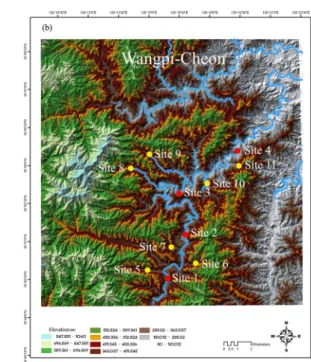
Figure 1. Map of the study area(a) with survey sites(b)
* Site 1: Suha-ri, Subi-myeon, Yeongyang-gun, Gyeongsangbuk-do (N36°49′32.1″, E129°15′33.7″), Site 2: Wangpi-ri, Seo-myeon, Uljin-gun, Gyeongsangbuk-do (N36°50′49.6″, E129°16′38.1″) Site 3: Wangpi-ri, Seo-myeon, Uljin-gun, Gyeongsangbuk-do (N36°51′37.7″, E129°16′51.6″) Site 4: Wangpi-ri, Seo-myeon, Uljin-gun, Gyeongsangbuk-do (N36°53′38.3″, E129°18′46.8″) Site 5: Suha-ri, Subi-myeon, Yeongyang-gun, Gyeongsangbuk-do (N36°49′49.8″, E129°15′21.5″) Site 6: Suha-ri, Subi-myeon, Yeongyang-gun, Gyeongsangbuk-do (N36°49′49.5″, E129°16′31.7″) Site 7: Suha-ri, Subi-myeon, Yeongyang-gun, Gyeongsangbuk-do (N36°50′06.9″, E129°16′26.6″) Site 8: Wangpi-ri, Seo-myeon, Uljin-gun, Gyeongsangbuk-do (N36°54′05.2″, E129°15′02.4″) Site 9: Wangpi-ri, Seo-myeon, Uljin-gun, Gyeongsangbuk-do (N36°53′26.2″, E129°17′19.102.4″) Site 10: Wangpi-ri, Seo-myeon, Uljin-gun, Gyeongsangbuk-do (N36°53′14.7″, E129°17′40.6″) Site 11: Wangpi-ri, Seo-myeon, Uljin-gun, Gyeongsangbuk-do (N36°53′30.3″, E129°18′27.8″)
면적이 513.71㎢인 하천으로 경북 영양군 수비면 일대에서 발원하여 경북 울진군 서면-근남면 수곡리에서 동해를 향해 동류하다 노음리에서 지류인 광천과 매화천이 합류하는 하 천으로, 동해로 유입되는 하천 중에서 비교적 규모가 큰 하 천에 속한다(The Ministry of Environment, 2006).
조사지점은 상류인 경상북도 영양군 수비면 수하리에서 하류인 경상북도 울진군 서면 왕피리까지 총 11개 지점(본 류 4지점, 지류 7지점)을 선정하였으며(Figure 1), 조사 시 기는 2007년 10월과 11월 그리고 2008년 3월과 5월로 총 4회에 걸쳐 저서성 대형무척추동물의 조사를 실시하였다.
2. 조사방법 및 분석방법
야외 조사 시 정량채집 위주로 하였고, 정성채집을 병행 하였다. 정량채집은 계류용 정량채집 장비인 Surber net(30
㎝×30㎝; 망목지름 0.25㎜)을 사용하여 주로 여울을 대상
으로 총 3회 실시하였다. 정성채집은 주로 Scoop net(망목 지름 0.25㎜)를 이용하여, 정량채집 장비로 채집이 어려운 수변이나 소에 대한 조사를 실시하였고, 군집분석은 정량채 집의 자료만을 이용하였다 . 물리적 환경 조사 중 하폭, 수폭, 수심 및 하상물질의 경우 실측자료를 사용하여 평균값을 제시하였고, 기타 하천 총 길이 등의 지형적 환경정보는 1/25,000 지형도를 바탕으로 ArcGIS ver9.3을 통하여 분석 하였다. 조사된 저서성 대형무척추동물의 섭식기능군 분류 는 문헌 (Cummins, 1973; 1974; Cummins and Klug, 1979;
Merritt and Cummins, 1996; Ro, 2002)을 사용하였으며,
분류된 섭식기능군을 근거로 지점간의 구분을 위해 클러스
터 분석을 실시하였다 . 클러스터 분석에는 각 조사지점에서
분류된 섭식기능군별 자료를 통해 Bray & Curtis(1957)의
유사도 지수를 구한 후 가중평균 결합법을 사용하여 수지도
를 작성하였다.
Sampling sites Stream width(m)
Water width(m)
Water depth(m)
Water current(m/sec)
Substrate
*B:C:P:G:S Main stream
Site 1 34.50 10.25 0.28 0.93 B:C:P:G:S=0:4:3:2:1 Site 2 48.20 11.75 0.29 0.83 B:C:P:G:S=0:5:2:1:2 Site 3 31.20 10.52 0.27 0.98 B:C:P:G:S=1:4:2:1:2 Site 4 39.10 15.54 0.36 1.20 B:C:P:G:S=1:3:3:2:1
Tributary
Site 5 16.70 6.25 0.23 1.15 B:C:P:G:S=0:1:5:3:1 Site 6 14.60 3.25 0.17 0.68 B:C:P:G:S=1:2:3:3:1 Site 7 13.10 2.75 0.19 0.90 B:C:P:G:S=1:3:3:2:1 Site 8 5.70 2.25 0.21 1.10 B:C:P:G:S=1:3:2:3:1 Site 9 8.20 3.52 0.23 1.40 B:C:P:G:S=0:4:3:2:1 Site 10 11.40 2.75 0.28 1.83 B:C:P:G:S=0:2:4:3:1 Site 11 8.30 2.75 0.21 0.43 B:C:P:G:S=0:3:3:2:2
*B: Boulder(>256㎜), C: Cobble(64~256㎜), P: Pebble(16~64㎜), G: Gravel(2~16㎜), S: Sand(0.1~2㎜), by Cummins(1962)
Table 1. Habitat condition and general characteristics of 11 sampling sites
Figure 2. Accumulated species number of benthic macro invertebrates in Wangpi-cheon
결과 및 고찰
1. 물리적 수환경
왕피천의 물리적 수환경을 조사한 결과 하천의 횡단면을 살펴보면, 하천폭의 경우 본류 평균 38.25m, 지류 평균 11.14m로 27.1m 차이를 보였고, 유수폭은 본류 평균 12m, 지류 평균 3.36m로 8.6m의 차이를 나타내었다. 또한 수심 의 경우 본류 평균 0.3m, 지류 평균 0.21m로 0.09m의 차이 를 보였고, 유속의 경우 본류 평균 0.98m/s, 지류 평균 1.07
㎧로 0.09㎧의 차이로 조사되었다. 하상구조의 경우 본류는 큰 자갈(Cobble) 40%, 자갈(Pebble) 25%, 작은 자갈 (Gravel)과 모래(sand)가 15%, 큰돌(Boulder) 5%의 순으로 나타났으며, 지류는 자갈 32.85%, 큰 자갈과 작은 자갈이 25.71%, 모래 11.43%, 큰돌 4.29%의 순으로 조사되었다 (Table 1). 또한 왕피천의 종단면을 살펴보면 최상류 지점의 해발고도가 약 720m이고, 하천의 총 길이는 60.95㎞로 하 천구배(River Slope)는 1/84의 큰 값을 보여 하천의 길이에 비해 전체 하천의 경사가 매우 급한 전형적인 동해 유입 하천의 특징을 잘 나타내고 있다고 판단된다.
2. 종구성 및 현존량
국내에서 수계를 중심으로 한 가장 큰 “생태계보전지역”
으로 지정․관리되고 있는 왕피천의 전 조사지점에서 출현한 저서성 대형무척추동물은 총 4문 6강 16목 58과 138종 8,073개체로 나타났으며, 종구성은 비곤충류 중 편형동물 문 1종, 연체동물문 7종, 환형동물문 4종, 절지동물문 갑각 강 2종으로 총 14종이(10.14%) 출현하였고, 수서곤충은 하 루살이목 37종(26.81%), 잠자리목 8종(5.80%), 강도래목
16종(11.59%), 노린재목 10종(7.25%), 뱀잠자리목 2종 (1.45%), 딱정벌레목 6종(4.35%), 파리목 13종(9.42%) 그 리고 날도래목 32종(23.19%)으로 총 124종이 출현하여 89.86%의 높은 비율을 차지하는 것으로 조사되었다. 일반 적으로 청정한 하천생태계에서는 하루살이목과 날도래목 및 강도래목의 점유율(EPT index)이 높게 나타나게 되는데 (Ward, 1992), 왕피천의 경우 하루살이목 26.81%, 강도래 목 11.59%, 날도래목 23.19%로 이들 종의 EPT index 값은 61.59%의 매우 높은 값을 나타내어 매우 청정하고 건강한 하천생태계를 유지하고 있다는 것을 간접적으로 확인하였 다(Figure 2).
각 조사지점별 출현종의 분포를 살펴보면 제 4지점에서
79종으로 가장 많은 종이 출현하였고, 제 11지점에서 46종
으로 가장 적게 출현한 것으로 조사되었다. 본류에서 평균
Figure 3. Comparison of number of species and individuals in 11 sites along Wangpi-cheon
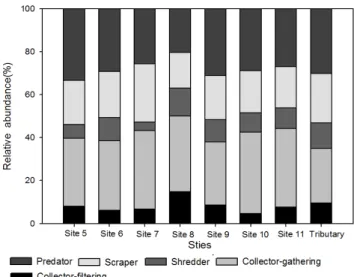
Figure 4. Composition of functional feeding groups of benthic macro invertebrates in main stream of Wangpi-cheon
Figure 5. Composition of functional feeding groups of benthic macro invertebrates in tributaries of Wangpi-cheon
71종으로 유입지류의 55.6종에 비해 15.4종의 차이를 보이 고 있었으며, 개체수 역시 본류에서 평균 906.8개체로 유입 지류의 583개체에 비해 323.8개체의 차이를 나타내었다.
이것은 본류의 경우 여울과 소가 연속적으로 교차되어 수중 서식처의 다양성이 유지되고, 수중의 일조량이 풍부하여 광 합성에 의한 자체영양공급이 가능하기 때문에, 일반적으로 계곡천보다 평지천에 더 다양하고 많은 종이 서식하는 전형 적인 하천생태계의 모습(Brönmark et al., 1984a; Strayer, 1983)을 보여주고 있는 것이라 할 수 있다(Figure 3).
3. 섭식기능군
생태․경관보전지역으로 지정․관리되고 있는 왕피천 하천
생태계의 기능을 분석하기 위해서 하천연속성 개념(River Continuum Concept; RCC)과 섭식기능군(Functional Feeding Group; FFG)을 통하여 본류 및 그 유입지류를 비교․분석 하였다 (Appendix 1).
본류의 경우 잡아먹는 무리(Predator) 35.4%, 주워먹는 무리(Collector-gathering) 29.2%, 긁어먹는 무리(Scraper) 20.4%, 썰어먹는 무리(Shredder) 7.9% 그리고 걸러먹는 무 리(Collector-filtering) 7.2%의 순으로 나타났다. 그리고 상 류에서 하류로 갈수록 주워먹는 무리와 긁어먹는 무리는 점차적으로 감소하고 있었으며, 잡아먹는 무리의 경우 제 2지점의 감소를 제외하고는 비슷한 수준으로 조사되었다.
또한 썰어먹는 무리와 걸러먹는 무리의 경우 점차적으로 증가하는 경향을 보이고 있었다 (Figure 4).
왕피천 유입지류의 경우 잡아먹는 무리 30.2%, 주워먹는 무리 25.4%, 긁어먹는 무리 23.0%, 썰어먹는 무리 11.9%
그리고 걸러먹는 무리 9.5%의 순으로 나타났다. 잡아먹는 무리와 긁어먹는 무리 그리고 주워먹는 무리가 전체적으로 본류에 비해 낮게 조사되었고 , 걸러먹는 무리와 썰어먹는 무리는 크게 변화되지 않았다(Figure 5).
왕피천의 본류지점은 일반적인 하천의 중류의 특성인 일
조량의 증가로 인한 부착조류의 번성을 보이고 있어 , 긁어
먹는 무리와 유기물을 주워서 분해하는 주워먹는 무리가
지류에 비해 우점하고 있고, 낙엽을 분해하는 썰어먹는 무
리의 경우 우점도가 감소하고 있다 . 지류의 경우 외부로부
터 유입되는 낙엽잎이나 나뭇가지처럼 큰 고형물질인 소립
유기물(coares particulate organic material; CPOM)을 먹이
원으로 사용하는 썰어먹는 무리가 본류에 비해 높은 비율을
Site 1 Site 2 Site 3 Site 4 Site 5 Site 6 Site 7 Site 8 Site 9 Site 10 Site 11 Site 1 100.00
Site 2 92.90 100.00
Site 3 95.00 90.20 100.00
Site 4 91.93 88.31 93.08 100.00
Site 5 86.11 87.59 88.73 88.11 100.00
Site 6 83.56 89.21 87.50 89.66 93.75 100.00
Site 7 92.90 94.59 91.50 85.71 87.59 87.77 100.00
Site 8 71.11 78.13 73.68 79.10 82.05 84.03 73.44 100.00
Site 9 79.14 86.36 83.21 84.06 92.56 92.68 83.33 85.71 100.00
Site10 85.71 91.43 88.28 90.41 91.47 94.66 90.00 80.00 90.32 100.00
Site11 75.19 82.54 79.39 78.79 88.70 88.89 79.37 90.57 90.91 86.44 100.00
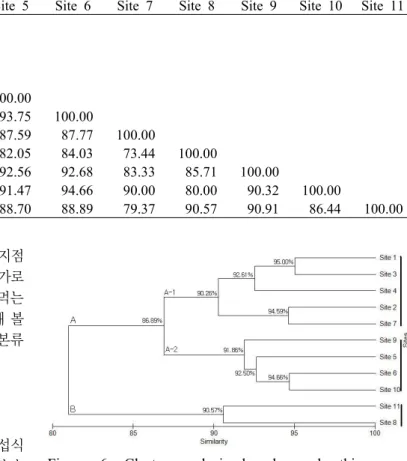
Table 2. Similarity indices between the sampling sites in the Wangpi-cheon
Figure 6. Cluster analysis based on benthic macro invertebrates assemblages collected at 11 sites in the Wangpi-cheon
차지하고 있어 상류의 특성을 보이고 있다. 그러나 제 7지점 의 경우 중류의 특징인 개방형하천에 의해 일조량의 증가로 썰어먹는 무리의 감소와 함께 주워먹는 무리와 긁어먹는 무리의 증가를 확인 할 수 있었다. 이러한 결과를 통해 볼 때 썰어먹는 무리와 긁어먹는 무리의 구성비에 따라 본류 및 지류의 특성이 분류될 수 있음을 확인하였다.
4. 유사도분석
각 조사지점에서 출현한 저서성 대형무척추동물의 섭식 기능군을 대상으로 지점간의 유사도 지수를 분석한 결과, 본류의 제 1지점과 3지점이 95%의 가장 높은 유사도를 보 여 가장 비슷한 섭식기능군을 나타내는 것으로 분석되었다.
이외에도 지류의 제 6지점과 10지점이 94.66%, 본류 제 2 지점과 지류 7지점이 94.59% 등으로 매우 높은 유사성을 보였다(Table 2). 이러한 이유는 앞에서도 언급했듯이 본류 와 유사한 특징인 썰어먹는 무리의 감소와 긁어먹는 무리의 증가 등에 의해 다른 지류와 차이점을 보였기 때문으로 사 료된다(Appendix 1).
각각의 유사도 지수를 근거로 각 지점별 클러스터 분석을 한 결과 비교란 지역(A group)과 제방 및 보 등에 의한 인위 적 교란지역(B group)으로 나뉘어졌으며, 또한 비교란 지역 은 본류 및 지류의 특성을 갖는 2개의 그룹으로 집단화됨을 확인 할 수 있었다. 그룹 A는 비교란 지역으로 본류의 특성 을 나타내는 제 1, 2, 3, 4, 7(A-1 group)지점과 지류의 특성 을 나타내는 제 5, 6, 9, 10(A-2 group)지점으로 나뉘었고, 그룹 B는 하류의 보에 의한 영향으로 상류의 지류임에도 불구하고 정수화와 같은 교란을 받는 8지점과 주변에 마을 과 콘크리트 제방의 영향으로 교란을 받는 제 11지점으로 나뉘는 것을 확인 할 수 있었다(Figure 6).
본 연구결과로 하천생태계 생물군집의 특성은 하천연속 성의 개념(RCC)을 이용하여 설명할 수 있다(Vannote et
al., 1980)는 기존의 보편적 이론을 확인할 수 있었고, 생물
군집 중 하나인 저서성 대형무척추동물의 섭식기능군 특성 을 통하여 생물군집의 변동 및 인위적 영향 그리고 하천생 태계의 서식환경 및 먹이자원의 특성을 예측 할 수 있었다.
또한 섭식기능군의 분포예측이 가능함으로서 기존의 생태·
경관보전지역 평가와 설정 시에 중요한 자료로 활용될 수 있을 것이다.
인용문헌
Allan, J.D.(1995) Stream Ecology. Structure and Function of Running Waters. Chapman & Hall, London, 388pp.
Bae, Y.J., D.H. Won, D.H. Hoang, Y.H. Jin and J.M. Hwang(2003) Community Composition and Functional Feeding Groups of Aquatic Insects According to Stream Order from the Gapyeong Creek in Gyeonggi-do, Korea. Korean J. Limnol. 36(1): 21-28.
Behmer, D.J. and C.P. Hawkins(1986) Effects of overhead canopy on macroinvertebrate production in a Utah stream. Freshwater Biology. 16: 287-300.
Beisser, M.C., S. Testa, Ⅲ. and N.G. Aumen(1991) Macroinvertebrate trophic composition and processing of four leaf species in Mississippi stream. J. Freshwat. Ecol. 6: 23-33.
Bray, J.R. and J.T. Curtis(1957) An ordination of the upland forest communities of south Wisconsin. Eco. Monogr. 27: 325-349.
Brönmark, C., J. Hermann, B. Malmqvist, C. Otto and P.
Sjöström(1984a) Animal community structure as a function of stream size. Hydrobiologia. 112: 73-79.
Bunn, S.E.(1986) Spatial and temporal variation in the macro- invertebrate fauna of streams of the northern Jarrah forest, Western Australis: functional organization. Freshwater Biology 16: 621-632.
Cummins, K.W. and M.J. Klug(1979) Feeding ecology of stream invertebrates. Ann. Rev. Syst. 10: 147-172.
Cummins, K.W.(1962) An evaluation of some techniques for the collection and analysis of benthic samples with special em- phasis on lotic water. Am. Midl. Nat. 67: 477-504.
Cummins, K.W.(1973) Trophic relations of aquatic insects. Ann.
Rev. Entomol. 18: 183-206.
Cummins, K.W.(1974) Structure and function of stream ecosystems. Bioscience 24(11): 631-641.
Growns, I.O. and J.A. Davis(1994) Longitudinal changes in near-bed flows and macroinvertebrate communities in a Western Australian stream. J. N. Am. Benthol. Soc. 13(4):
417-438.
Hawkins, C.P. and J.R. Sedell(1981) Longitudinal and seasonal changes in functional organization of macroinvertebrate com- munities in four Oregon streams. Ecology 62(2): 387-397.
Merritt, R.W. and K.W. Cummins(1984) An introduction to the aquatic insects of North America. 2nd. ed. Kendall/Hunt Publ.
Co., Dubuque, Iowa.
Merritt, R.W. and K.W. Cummins(1996) An Introduction to the Aquatic Insects or North America. 3rd. ed. Kendall/Hunt Publ.
Co.
Park, Y.J., Y.H. Cho, Y.G. Han, H.S. Oh, O.S. Kwon and S.H.
Nam(2006) Fauna of Macro invertebrates and Composition of Functional Feeding Groups about the Aquatic Insects to Microhabitats from the Geum River. J. Ecol. Field Biol. 29(5):
415-424.
Power, M.E., R.J. Stout, C.E. Cushing, P.P. Harper, F.R. Hauer, W.J. Matthews, P.B. Moyle, B. Statzner and I.R. Wais De
Badgen(1988) Biotic and abiotic controls in river and stream communities. Journal of the North American Benthological Society 7: 456-479.
Resh, V.H., H.V. Brown, A.P. Covich, M.E. Gurtz, H.W. Li, G.W.
Minshall, S.R. Reice, A.L. Sheldon, J.B. Wallace and R.C.
Wissmar(1988) The role of disturbance in stream ecology.
Journal of the North American Benthological Society 7:
433-455.
Ro, T.H. and D.J. Chun(2004) Functional feeding group catego- rization of Korean immature aquatic insects and community stability analysis. Korean J. Limnol. 37(2): 137-148.
Ro, T.H.(2002) Categorization and Ecological Importance of Functional Feeding Goups as Essential Units in Lotic Ecosystems. Bulletin of the KACN, No 21: 67-93.
Shin, H.S, S.C. Park, J.K. Kim, S.J. Kim, J.H. Park, J.S. Choi and J.K. Choi(2006) Community Analysis based on Functional Feeding Groups of Aquatic Insects in Wonju Stream. Kor. J.
Env. Eco. 20(2): 259-266.
Strayer, D.(1983) The effects of surface geology and stream size on freshwater mussel (Bivalvia, Unionidae) distribution in south-eastern Michigan, USA. Freshwater Biology. 13:
253-264.
The Ministry of Environment(2006) Change and Notice of Ecological Scenary Preservation Region in Wangpi-cheon.
Nature Policy Division, Korea, 7pp.
Vannote, R.L., G.W. Minshall, K.W. Cummins, J.R. Sedell and C.E. Cushing(1980) The river continuum concept. Canadian Journal of Fisheries and Aquatic Sciences 37: 130-137.
Wallace, J.B. and R.W. Merritt(1980) Filter-feeding ecology of aquatic insects. Ann. Rev. Entomol. 25: 103-32.
Ward, J.V.(1992) Aquatic insect ecology. John Wiley & Sons, Inc.
Wilhm, J. and T.C. Dorris(1968) Biological parameters of water quality. Bioscience 18: 477-481.
Wilhm, J.(1972) Graphic and mathematical analysis of biotic com- munities in polluted stream. Annual Review of Entomology 17:
233-252.
Williams, D.D. and B.W. Feltmate(1992) Aquatic Insects. CBA International, Wallingford, UK.
Won, D.H., S.J. Kwon and Y.C. Jun(2005) Aquatic insects of Korea. Korea Ecosystem Service Co., Ltd., Korea, 415pp.
Scientific name Site1 Site2 Site3 Site4 Site5 Site6 Site7 Site8 Site9 Site10 Site11 FFG*
Planariidae sp. ○ ○ ○ ○ ○ SC
Semisulcospira libertina (Gould) ○ ○ ○ ○ ○ ○ ○ ○ ○ ○ ○ SC
Semisulcospira forticosta (Martens) ○ ○ ○ ○ ○ SC
Semisulcospira tegulata (Martens) ○ SC
Lymnaea auricularia (Linnaeus) ○ ○ ○ ○ ○ ○ ○ SC
Austropeplea ollula (Gould) ○ ○ ○ ○ SC
Hippeutis cantori (Benson) ○ ○ ○ ○ ○ ○ SC
Polypylis hemisphaerula (Benson) ○ SC
Limnodrilus gotoi Hatai ○ ○ ○ ○ ○ ○ ○ ○ ○ CG
Glossiphoniidae sp. ○ ○ ○ ○ P
Whitmania acranulata Whitman ○ ○ ○ ○ ○ P
Erpobdella lineata Muller ○ ○ ○ ○ ○ ○ ○ ○ ○ P
Asellus hilgendorfii Bovalius ○ SH
Gammarus sobaegensis Uéno ○ ○ ○ ○ SH
Acentrella gnom Kluge ○ ○ ○ ○ ○ ○ ○ CG
Acentrella sibirica Kazlauskas ○ ○ ○ ○ ○ ○ ○ ○ CG
Baetiella tuberculata (Kazlauskas) ○ ○ ○ ○ ○ ○ ○ ○ ○ ○ ○ CG
Baetis fuscatus Linnaeus ○ ○ ○ ○ ○ ○ ○ ○ ○ ○ CG
Cloeon dipterum (Linnaeus) ○ CG
Baetis silvaticus Kluge ○ ○ ○ ○ ○ ○ ○ ○ CG
Baetis ursinus Kazlauskas ○ ○ ○ CG
Labiobaetis atrebatinus (Eaton) ○ ○ ○ ○ ○ ○ ○ ○ CG
Procloeon pennulatum (Eaton) ○ ○ ○ ○ ○ ○ CG
Nigrobaetis bacillus (Kluge) ○ ○ ○ ○ ○ ○ ○ CG
Caenis KUa ○ ○ ○ ○ CG
Cincticostella levanidovae (Tshernova) ○ ○ ○ ○ ○ ○ ○ ○ ○ ○ ○ SC
Cincticostella tshernovae (Bajkova) ○ ○ ○ ○ ○ ○ ○ ○ SC
Drunella aculea (Allen) ○ ○ ○ ○ ○ ○ ○ ○ ○ ○ SC
Drunella cryptomeria (Imanishi) ○ ○ ○ ○ ○ ○ ○ ○ SC
Ephemerella imanishii Gose ○ ○ ○ ○ ○ ○ ○ ○ ○ ○ CG
Serratella setigera (Bajkova) ○ ○ ○ ○ ○ ○ ○ ○ ○ ○ CG
Uracanthella rufa (Imanishi) ○ ○ ○ ○ ○ ○ ○ ○ ○ ○ CG
Ephemera orientalis McLachlan ○ ○ ○ CG
Ephemera separigata Bae ○ ○ ○ CG
Ephemera strigata Eaton ○ ○ ○ ○ ○ ○ ○ ○ ○ ○ CG
Cinygmula grandifolia Tshernova ○ ○ ○ SC
Ecdyonurus bajkovae Kluge ○ ○ ○ ○ ○ ○ ○ ○ SC
Ecdyonurus dracon Kluge ○ ○ ○ ○ ○ ○ SC
Ecdyonurus joernensis Bengtsson ○ ○ SC
Ecdyonurus kibunensis Imanishi ○ ○ ○ ○ ○ ○ ○ ○ ○ ○ ○ SC
Ecdyonurus levis (Navás) ○ ○ ○ ○ ○ ○ ○ SC
Epeorus curvatulus Matsumura ○ ○ ○ ○ ○ ○ ○ ○ ○ ○ ○ CG
Epeorus pellucidus (Brodsky) ○ ○ ○ ○ ○ ○ ○ ○ ○ ○ ○ CG
Heptagenia kyotoensis Gose ○ SC
Iron aesculus (Imanishi) ○ ○ ○ ○ ○ ○ ○ ○ CG
Rhithrogena na ○ ○ ○ ○ ○ ○ ○ ○ ○ ○ ○ CG
Isonychia japonica (Ulmer) ○ ○ CG
Choroterpes (Euthraulus) altioculus Kluge ○ ○ ○ ○ ○ ○ ○ ○ CG
Paraleptophlebia chocolata Imanishi ○ ○ ○ ○ ○ ○ ○ ○ ○ ○ ○ CG
Potamanthus (Potamanthodes) formosus Eaton ○ ○ ○ ○ CG
Appendix 1. The list of functional feeding groups in Wangpi-cheon
Scientific name Site1 Site2 Site3 Site4 Site5 Site6 Site7 Site8 Site9 Site10 Site11 FFG*
Siphlonurus chankae Tshernova ○ ○ ○ ○ ○ ○ ○ ○ ○ ○ CG
Ischnura asiatica (Brauer) ○ P
Calopteryx japonica Selys ○ ○ ○ ○ ○ ○ P
Sieboldius albardae Selys ○ ○ ○ ○ ○ ○ ○ P
Davidius lunatus Bartenef ○ ○ ○ ○ ○ ○ ○ ○ ○ ○ ○ P
Anisogomphus maacki Selys ○ P
Macromia manchuria Asahina ○ ○ ○ ○ ○ P
Orthetrum albistylum speciosum (Uhler) ○ ○ ○ P
Orthetrum triangulare melania (Selys) ○ P
Taenionema sp. ○ ○ ○ ○ ○ ○ ○ SH
Nemoura tau Zwick ○ SH
Amphinemura coreana Zwick ○ ○ ○ ○ SH
Amphinemura KUa ○ ○ ○ SH
Protonemura KUa ○ SH
Nemoura KUa ○ ○ ○ SH
Nemoura KUb ○ ○ ○ ○ ○ ○ SH
Rhopalopsole mahunkai Zwick ○ SH
Stavsolus japonicus (Okamoto) ○ ○ ○ ○ ○ ○ ○ ○ ○ ○ P
Periodes KUa ○ ○ ○ ○ P
Kamimuria coreana Ra, Kim, Kang, and Ham ○ ○ ○ ○ ○ ○ ○ P
Neoperla coreensis Ra, Kim, Kang, and Ham ○ ○ ○ ○ ○ ○ ○ P
Paragnetina flavotincta (McLachlan) ○ ○ ○ ○ ○ ○ ○ P
Kiotina decorata (Zwick) ○ ○ ○ ○ ○ P
Sweltsa nikkoensis (Okamoto) ○ ○ ○ ○ ○ ○ ○ ○ ○ P
Micronecta (Micronecta) guttata Matsumura ○ P
Notonecta (Paranecta) triguttata Motschulsky ○ P
Muljarus japonicus (Vuillefroy) ○ ○ ○ P
Muljarus major Esaki ○ P
Laccotrephes japonensis Scott ○ ○ ○ ○ P
Ranatra chinensis Mayr ○ ○ P
Microvelia douglasi Scott ○ P
Aquaris paludum (Fabricius) ○ ○ ○ ○ P
Gerris (Gerris) latiabdominis Miyamoto ○ ○ ○ ○ ○ ○ ○ ○ ○ P
Metrocoris histrio (White) ○ ○ ○ ○ ○ ○ P
Protohermes grandis Thunberg ○ ○ ○ ○ ○ ○ P
Parachauliodes continentalis Weele ○ ○ P
Neonectes natrix (Sharp) ○ ○ ○ ○ ○ ○ ○ ○ P
Rhantus (Rhantus) Pulverosus (Stephens) ○ ○ P
Elmidae sp. ○ SC
Helodes KUa ○ ○ ○ SC
Psephenoides KUa ○ ○ ○ SC
Eubrianax KUa ○ SC
Tipula KUa ○ ○ SH
Tipula KUb ○ ○ ○ SH
Hexatoma KUa ○ ○ ○ ○ ○ ○ ○ ○ ○ P
Antocha KUa ○ ○ ○ ○ ○ CG
Simulium sp. ○ ○ ○ ○ ○ ○ ○ ○ ○ ○ ○ CF
Ceratopogonidae sp ○ ○ ○ P
Appendix 1. (Continued)
Scientific name Site1 Site2 Site3 Site4 Site5 Site6 Site7 Site8 Site9 Site10 Site11 FFG*
Chironomus sp.1 ○ ○ ○ ○ ○ ○ ○ ○ ○ ○ ○ CG
Chironomus sp.2 ○ ○ ○ ○ ○ ○ ○ ○ ○ ○ CG
Chironomus sp.3 ○ ○ ○ ○ ○ ○ CG
Chironomus sp.4 ○ ○ ○ ○ ○ ○ ○ ○ CG
Chironomus sp.5 ○ ○ CG
Philorus KUa ○ ○ ○ ○ SC
Suragina KUa ○ ○ ○ ○ ○ P
Stenopsyche marmorata Navas ○ ○ ○ ○ ○ ○ ○ ○ CF
Stenopsyche bergeri Martynov ○ ○ ○ ○ CF
Wormaldia KUa ○ CF
Ecnomus tenellus (Rambur) ○ CF
Arctopsyche ladogensis Kolenati ○ CF
Hydropsyche kozhantschikovi Martynov ○ ○ ○ ○ ○ ○ CF
Hydropsyche valvata Martynov ○ ○ ○ ○ ○ ○ ○ ○ ○ ○ CF
Hydropsycheorientalis Martynov ○ ○ ○ CF
Hydropsyche KUd ○ ○ ○ ○ CF
Cheumatopsyche brevilineata Iwata ○ ○ ○ ○ ○ ○ ○ ○ CF
Cheumatopsyche KUa ○ CF
Apsilochorema KUa ○ P
Rhyacophila KUa ○ ○ ○ ○ ○ ○ ○ ○ ○ ○ ○ P
Rhyacophila KUb ○ ○ ○ P
Rhyacophila retracta Martynov ○ ○ ○ ○ P
Rhyacophila clemens Tsuda ○ ○ ○ P
Rhyacophila impar Martynov ○ P
Rhyacophila narvae Navas ○ P
Rhyacophila shikotsuensis Iwata ○ ○ ○ ○ ○ ○ ○ ○ ○ P
Rhyacophila nigrocephala Iwata ○ ○ ○ ○ ○ ○ ○ ○ ○ P
Rhyacophila brevicephala Iwata ○ P
Glossosoma KUa ○ ○ SC
Phryganopsyche latipennis Banks ○ ○ ○ SH
Goera japonica Banks ○ ○ ○ ○ ○ ○ ○ ○ ○ ○ SC
Neophylax ussuriensis Martynov ○ ○ ○ ○ SC
Apatania KUa ○ ○ ○ ○ SC
Hydatophylax nigrovittatus McLachlan ○ ○ ○ ○ ○ ○ ○ ○ ○ ○ SH
Nothopsyche KUa ○ ○ ○ ○ ○ ○ ○ CG
Goerodes KUa ○ ○ SH
Goerodes KUb ○ ○ ○ ○ ○ ○ ○ SH
Psilotreta kisoensis Iwata ○ ○ ○ ○ ○ ○ ○ ○ ○ ○ SC
Molanna moesta Banks ○ ○ SC
*P:Predator, SC:Scraper, SH:Shredder, CG:Collector-Gathering, CF:Collector-Filtering, by Merritt-Cummins(1996)