https://doi.org/10.6111/JKCGCT.2021.31.4.190
Figure of merit and bending characteristics of Mn-SnO 2 /Ag/Mn-SnO 2 tri- layer film
Youngsoo Cho and Guneik Jang †
Department of Advanced Materials Engineering, Chungbuk National University, Cheongju 28644, Korea (Received July 26, 2021)
(Revised July 26, 2021) (Accepted August 6, 2021)
Abstract Typical Mn-SnO
2/Ag/Mn-SnO
2tri-layer films were prepared on a PET substrate by RF/DC magnetron sputtering method at room temperature. Based on EMP simulation, the thicknesses of the top and bottom Mn-doped SnO
2layers were kept at 40 nm and the Ag layer was maintained at 13 nm for continuous electrical conduction. The experimentally measured optical transmittances at 550 nm wavelength were ranged from 82.9 to 88.1 % and sheet resistances were varied from 5.9 to 6.9 /□. The highest value of figure of merit,
TCwas 48.1 × 10
3
1. Based on bending test under 4 and 5 mm of inner and outer curvature radius condition, tri-layer film resistance varies only by approximately 1.5 % after 10,000 bending cycles, showing excellent mechanical flexibility.
Key words OMO, Transmittance, Sheet resistance, Figure of merit, Bending test
Mn-SnO 2 /Ag/Mn-SnO 2 3중 다층막의 성능지수와 밴딩 특성
조영수, 장건익 †
충북대학교 신소재공학과, 청주, 28644 (2021년 7월 26일 접수)
(2021년 7월 26일 심사완료) (2021년 8월 6일 게재확정)
요 약 상온에서 PET 기판 위에 Mn-SnO
2/Ag/Mn-SnO
23중 다층막을 RF/DC 마그네트론 스파터링 방식으로 제조하였 다. EMP 시뮬레이션 결과에 따라 Mn-SnO
2의 막 두께는 40 nm, Ag 막 두께는 13 nm로 고정하였다. 550 nm 파장대역에서 측정한 3중막의 투과율은 82.9에서 88.1 % 범위였으며 면저항은 5.9에서 6.9 /□로 변화하였다. 가장 높은 성능지수(
TC)는 48.1 × 10
3
1로 나타났다. 곡률반경 4, 5 mm 조건에서 inner 밴딩과 out 밴딩의 굽힘시험을 10,000회 실시한 결과 Mn- SnO
2/Ag/Mn-SnO
23중막의 저항변화율은 약 1.5 %로 탁월한 기계적 유연성을 보였다.
1. 서 론
투명 전도성 산화물(transparent conducting oxide: TCO) 은 유기 발광 다이오드, 태양전지, 터치패널 등을 포함한 광전자 산업에서 광범위하게 사용되고 있다[1-3]. 가장 대표적인 TCO 재료는 인듐 주석 산화물(ITO)로 550nm 의 가시광선 대역에서 85 % 이상의 높은 투과율과 약 10 3 ·cm 가량의 낮은 비저항을 동시에 갖는 우수한 소재이다[4]. 하지만 높은 투과율과 전기전도도를 갖는 ITO는 30 0 o C 이상의 고온 공정으로 PET와 같은 유연기
판 적용이 쉽지 않고 산화물의 결정화에 따른 취성으로 인해 기계적 밴딩 특성이 크게 떨어져 유연소자 적용에 어려움을 격고 있다[5-7]. 최근에는 이러한 어려움을 극 복하기 위해서 저온에서도 공정이 가능하고 하부 양면의 TCO 사이에 매우 얇은 금속층을 중앙에 배치하는 Oxide/
Metal/Oxide(OMO) 다층막 구조 연구가 활발히 진행되 고 있다[8-12]. OMO 물질로는 Ga, Mn, Al, Zn, F 등 을 도핑하여 특성을 향상시킨 GZO/Ag/GZO, MTO/Ag/
MTO, AZO/Ag/AZO, ZTO/Ag/ZTO, FTO/Ag/FTO 등 이 있다. 이중에서도 Mn을 SnO 2 에 도핑 후 MTO/Ag/
MTO 다층막으로 활용하는 연구가 많은 관심을 받고 있 는데 Mn 2+ 이온반경은 0.66 Å, Mn 3+ 이온반경은 0 .645 Å 으로 Sn 4+ 이온반경의 0 .69 Å 보다 작아 타 불순물에 비
†
Corresponding author
†
E-mail: [email protected]
해 치환이 쉽게 일어나는 것으로 알려져 있다.
성능지수는 투명전극에서 표면저항과 투과율에 관련된 아주 중요한 요소이다. Lee 연구팀에 의하면 continuous composition spread 공정으로 제작한 Mn(2.59 wt.%)- SnO 2/ Ag/Mn(2.59 wt.%)-SnO 2 다층막은 550nm 파장대 에서 86 % 이상의 높은 투과율과 7.35 × 10 3 ·cm의 낮은 비저항을 나타내었다[13]. 하지만 Mn-SnO 2 /Ag/Mn- SnO 2 삼중막의 성능지수와 유연 소자 적용을 위한 기계 적 안정성을 평가한 연구는 극히 제한적이다.
본 연구에서는 상온에서 RF/DC 스퍼터링 공정으로 PET 기판 위에 혼합기체 O 2 /Ar+O 2 농도 비율을 조절하 여 Mn(4.04 wt.%)-SnO 2 /Ag/Mn(4.04 wt.%)-SnO 2 3중 다층막을 제조한 후 투과율, 면저항, 성능지수를 측정하 고 제조한 3중막의 밴딩특성을 체계적으로 평가하고자 하였다.
2. 실험 방법
본 실험에 앞서 Mn-SnO 2 /Ag/Mn-SnO 2 3중막 구조에 서 Mn-SnO 2 두께를 35에서 45 nm, Ag는 12에서 14 nm로 변화하며 최적의 투과율 조건과 Mn-SnO 2 /Ag/Mn- SnO 2 3중막의 O 2 농도 변화에 따른 투과율 특성을 EMP (essential macleod program) 시뮬레이션을 통하여 사전 에 예측하였다. 3중막의 증착실험은 RF/DC 스퍼터링 방식으로 진행하였다. 먼저 50 m 두께의 PET 기판을 챔버에 장입 후 저진공 펌프(rotary vane pump)와 고진 공 펌프(turbo molecular pump)를 사용하여 초기진공도 를 6.0 × 10 6 Torr로 유지하였다. 이후 Ar 유량을 35 sccm, O 2 유량은 0에서 3 sccm로 흘려 O 2 /Ar+O 2 혼합 비율을 0 ~7.9 %로 변화하며 상온에서 Mn(4.04 wt.%)- SnO 2 와 99.99 %의 Ag 타겟을 사용, Mn-SnO 2 막과 Ag
Fig. 1. Schematic diagram of Mn-SnO
2/Ag/Mn-SnO
2tri-layer film.
Fig. 2. EMP simulated transmittance spectra of Mn-SnO
2(35~
45 nm)/Ag(12~14 nm)/Mn-SnO
2(35~45 nm) tri-layer films as a function of different film thicknesses.
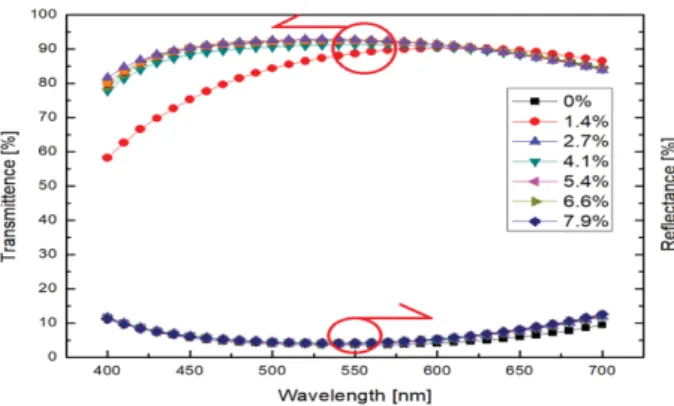
Fig. 3. EMP simulated transmittance and reflectance spectra of Mn-SnO
2(40 nm)/Ag(13 nm)/Mn-SnO
2(40 nm) tri-layer films with
different O
2/Ar+O
2gas concentrations.
막을 각기 증착하였다. EMP 시뮬레이션에 의해 Mn-SnO 2
막의 두께는 45 nm, Ag 막의 두께는 13 nm 고정하였다.
Figure 1은 3중막의 개괄적 모식도이다. 3중막의 투과율과 반사율 분석은 UV-VIS 분광광도계(KONICA MINOLTA, CM-3600d)를 이용하였고 면저항은 4-point probe로, 막의 표면구조 및 거칠기는 주사탐침현미경(digital instruments, nanoscope IIIa)을 사용하였다. 다층막의 기계적 밴딩 특 성은 2-point probe가 탑재된 굽힘 시험기(JIBT-210)를 사용하여 굽힘반경 4, 5 mm의 조건에서 inner와 outer 굽힘시험을 10 ,0 0 0번 실시한 후, 저항 변화를 측정하였다.
3. 결과 및 고찰
Figure 2는 550 nm 가시광선 영역에서 3중막의 다양 한 두께 변화에 따른 Mn-SnO 2 (35~45 nm)/Ag(12~14 nm)/Mn-SnO 2 (35~45 nm)의 EMP 시뮬레이션 결과이다.
최고의 투과율을 나타내는 다층막은 Mn-SnO 2 (45 nm)/
Ag(13 nm)/Mn-SnO 2 (40nm)로 투과율은 87.7 %였다.
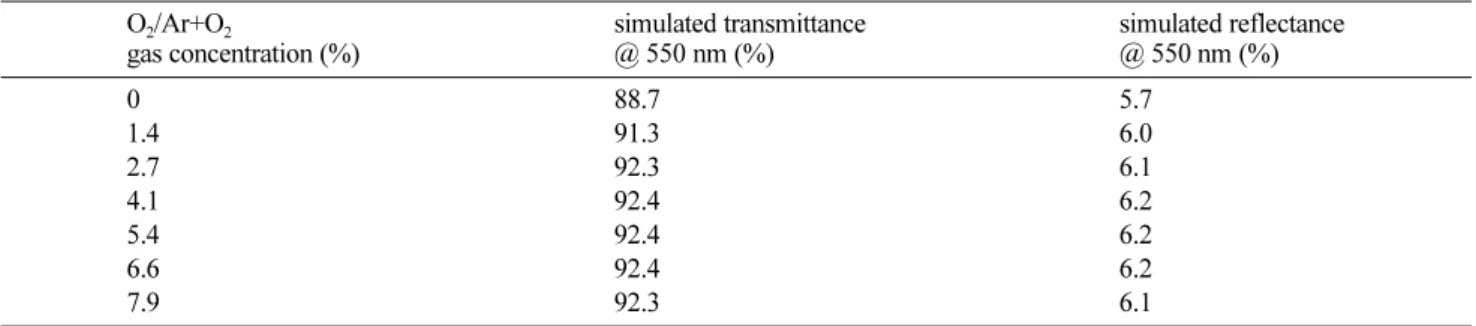
Figure 3은 EMP 시뮬레이션을 통한 350에서 750 nm 파장대역에서 공정 혼합기체 O 2 /Ar+O 2 농도 변화에 따 른 Mn-SnO 2 (40nm)/Ag(13 nm)/Mn-SnO 2 (40nm) 3중막 의 투과율, 반사율 스펙트럼 결과이다. 공정 혼합기체인 O 2 /Ar+O 2 농도 비율이 증가함에 따라 투과율은 88.7 % 에서 92.4 % 까지 크게 증가하였으며, 반사율도 5.7 %에서 6.3 %로 증가하는 경향을 보였다. Table 1은 O 2 /Ar+O 2
농도 비율을 변화하며 550nm의 가시광선 영역에서 시 뮬레이션 한 투과율과 반사율 비교 결과이다. 혼합기체 O 2 /Ar+O 2 농도 비율이 4.1에서 6.6 % 증가 시 투과율은 최대 92.4 %를 보였다.
Figure 4는 스파터로 증착한 Mn-SnO 2 (40nm)/Ag(13 nm)/Mn-SnO 2 (40nm) 3중막의 공정 혼합기체 O 2 /Ar+O 2
농도 비율에 따른 투과율과 반사율 스펙트럼 결과이다.
EMP 시뮬레이션 결과와 유사하게 혼합기체 O 2 /Ar+O 2
농도 비율 증가에 따라 투과율은 82.9 %에서 최대 88.1 % 까지 점진적으로 증가하였다. Table 2는 공정 혼합기체 O 2 /Ar+O 농도 비율에 따라 550nm 파장대에서 증착된 Mn-SnO 2 (40nm)/Ag(13 nm)/Mn-SnO 2 (40nm) 3중막의 투과율 및 반사율 측정 결과이다. EMP 시뮬레이션에서 는 O 2 /Ar+O 2 농도 비율이 6.6 %에서 가장 높은 투과율 인 92.4 %를 보인 반면 실제 증착한 다층막의 경우 O 2 / Table 1
EMP simulated Tr
550 nmand R
550 nmof Mn-SnO
2(40 nm)/Ag(13 nm)/Mn-SnO
2(40 nm) tri-layer films with different O
2/Ar+O
2gas concentrations
O
2/Ar+O
2gas concentration (%) simulated transmittance
@ 550 nm (%) simulated reflectance
@ 550 nm (%)
0 88.7 5.7
1.4 91.3 6.0
2.7 92.3 6.1
4.1 92.4 6.2
5.4 92.4 6.2
6.6 92.4 6.2
7.9 92.3 6.1
Fig. 4. Experimentally measured transmittance and reflectance data taken on Mn-SnO
2(40 nm)/Ag(13 nm)/Mn-SnO
2(40 nm) tri-
layer films with different O
2/Ar+O
2gas concentrations.
Table 2
Experimentally measured Tr
550 nmand R
550 nmof Mn-SnO
2(40 nm)/
Ag(13 nm)/Mn-SnO
2(40 nm) tri-layer films with different O
2/Ar+
O
2gas concentrations O
2/Ar+O
2gas concentration (%) transmittance
@ 550 nm (%) reflectance
@ 550 nm (%)
0 82.9 5.3
1.4 86.8 5.5
2.7 88.1 5.6
4.1 87.8 5.6
5.4 87.5 5.6
6.6 87.0 5.5
7.9 86.2 5.5
Fig. 5. Sheet resistance variation of Mn-SnO
2(40 nm)/Ag(13 nm)/
Mn-SnO
2(40 nm) tri-layer films with different O
2/Ar+O
2gas concentrations.
Ar+O 2 농도 비율이 2.7 %에서 투과율이 88.1 %로 가장 높게 나타났다. 단일막의 경우 시뮬레이션과 실제 실험값 의 차는 비교적 적었으나 다층막은 증착 시 막의 밀도 및 두께 불균일, 표면 거칠기에 따른 빛의 산란, 막간의 계면 확산 등으로 인하여 투과율 차가 큰 것으로 판단된다.
Figure 5는 공정 혼합기체 O 2 /Ar+O 2 농도 비율을 0에 서 7.9 %까지 변화하며 측정한 Mn-SnO 2 /Ag/Mn-SnO 2
다층막의 면저항 수치이다. 혼합기체 O 2 /Ar+O 2 농도 비
율이 0에서 7.9 %로 변화 시, 면저항 수치는 약 5.8에서
6.9 /□ 범위에서 변화하였으며, 모든 다층막에서 7 /
□ 이하의 낮은 면저항 수치를 나타내었다. OMO 다층 막의 전기 전도는 중간층인 금속 Ag에 의해 주로 결정 되며, 13 nm의 Ag 두께로 면저항은 일정하게 유지되는 것으로 판단된다.
Figure 6은 공정 혼합기체 O 2 /Ar+O 2 농도 비율에 따 른 Mn-SnO 2 (40nm)/Ag(13 nm)/Mn-SnO 2 (40nm) 3중 다층막의 성능지수(figure of merit: FOM) 결과이다. 일 반적인 투명 전도성 다층막의 성능지수는 주로 Haacke’s 의 성능지수 계산식에 의해 계산되며
여기서, T는 투과율, R sh 는 면저항이다[14]. Figure 4 의 성능지수 계산 결과에서 혼합기체 O 2 /Ar+O 2 농도 비
Haacke's FOM: TC = T R --- 10 sh
Fig. 6. The calculated figure of merit of Mn-SnO
2(40 nm)/
Ag(13 nm)/Mn-SnO
2(40 nm) tri-layer films with different O
2/ Ar+O
2concentrations.
Table 3
Comparison data of transmittance, sheet resistance and figure of merit with different OMO tri-layer films
Materials Transmittance
(%) Sheet resistance
(/□) Figure of merit
(10
3
1) Reference
Mn-SnO
2/Ag/Mn-SnO
288.1 5.8 48.1 this study
SnO
2/Ag/SnO
287.1 7.5 35.3 [15]
-IGZO/Ag/-IGZO 88.1 4.2 53 [16]
TiO
2/Ag/TiO
284 3.8 43.9 [17]
AZO/Ag/AZO 88 6.3 43.9 [18]
Fig. 7. AFM images of Mn-SnO
2(40 nm)/Ag(13 nm)/Mn-SnO
2(40 nm) tri-layer film with different O
2/Ar+O
2concentrations; (a) 0 %,
(b) 2.7 %, (c) 5.4 %, and (d) 7.9 %.
율이 0에서 7.9 %로 증가 시 Mn-SnO 2 (40nm)/Ag(13 nm)/
Mn-SnO 2 (40nm) 다층막의 성능지수는 24.5 × 10 3 1 에 서 48.1 × 10 3 1 으로 크게 변화하였다. 특히 혼합기체 O 2 /Ar+O 2 농도 비율이 2.7 % 일 때, 면저항은 5.8 /□, 투과율은 88.1 %로 계산된 성능지수는 48.1 × 10 3 1 로 가장 높았다.
Table 3은 TCO의 산화물이 다르며 중간 금속층을 Ag 를 사용한 타 연구자의 다층막 연구결과 비교표이다.
Table 3을 통해 타 연구자의 실험결과와 비교 시, 본 연 구를 통한 Mn-SnO 2 (40nm)/Ag(13 nm)/Mn-SnO 2 (40nm) 다층막은 88.1 %의 높은 투과율과 비인듐계 산화물 중 에서는 48.1 × 10 3 1 가장 높은 성능지수를 나타내었 다. 또한 동일한 Mn-SnO 2 (40nm) 산화물과 Ag 금속층 을 사용한 연구에서 O 2 를 전혀 첨가하지 않은 Mn-SnO 2 / Ag/Mn-SnO 2 다층막의 성능지수 33.5 × 10 3 1 보다도 투과율과 면저항 특성이 일정 부분 개선되는 결과를 얻 었다[13].
Figure 7은 AFM에 의한 Mn-SnO 2 (40nm)/Ag(13 nm)/
Mn-SnO 2 (40nm) 3중막의 혼합기체 O 2 /Ar+O 2 농도 비율 에 따른 표면거칠기 측정 결과이다. 혼합기체 O 2 /Ar+O 2
비율이 0에서 7.9 %로 증가 시에도 표면 거칠기(Ra) 값 은 1.0에서 최대 2.4 nm로 모두 3 nm 이하의 부드러운 막 표면 특성을 보였다.
Figure 8은 혼합기체 O 2 /Ar+O 2 농도 비율이 2.7 %일 때 제조한 Mn-SnO 2 (40nm)/Ag(13 nm)/Mn-SnO 2 (40nm) 다층막의 굽힘 시험 결과이다. 굽힘 시험은 곡률반경 4, 5 mm 조건에서 inner 밴딩과 out 밴딩을 각각 총 10 ,0 0 0 회 실시하였다. 그 결과 곡률반경 4, 5 mm 조건에서 실 시한 out 밴딩의 경우 최초 저항치는 32.613 , 33.791 , 10,000회 실시 이후 측정한 저항치는 32.208, 33.709 으로 저항변화율은 각각 1.2 %, 0 .2 % 였다. Inner 밴딩 에서 각 곡률 반경 4, 5 mm 조건에서 실시한 최초 저항 치는 28.832, 33.942 , 10,000회 이후에 측정한 저항치
는 28.467, 33.577 으로 저항변화율은 각각 1.2 %와 1.1 %를 나타내었다.
굽힘시험 결과 Mn-SnO 2 (40nm)/Ag(13 nm)/Mn-SnO 2
(40nm) 3중막은 저항변화율이 2 % 이하로 낮게 나타나 기계적 안정성이 매우 높은 것으로 판단된다. 이 결과는 10mm 이하의 곡률반경 조건에서 밴딩횟수 증가에 따라 저항변화가 심한 인듐계 산화물 다층박막에 비해 상당히 안정적인 수치로 판단된다[19].
4. 결 론
RF/DC 스퍼터링 방식으로 Mn-SnO 2 (40nm)/Ag(13 nm)/
Mn-SnO 2 (40nm) 3중막을 제조한 후 성능지수와 기계적 특성을 평가하고자 하였다. 공정 혼합기체 O 2 /Ar+O 2 농 도 비율에 따라 투과율은 88.1 %로 가장 높게 나타났으 며 농도 비율에 따라 투과율은 82.9 %에서 최대 88.1 % 까지 변화하였다. 또한 혼합기체 O 2 /Ar+O 2 농도 비율이 0에서 7.9 %로 증가 시 Mn-SnO 2 (40nm)/Ag(13 nm)/Mn- SnO 2 (40nm) 3중막의 성능지수는 24.5 × 10 3 1 에서 48.1 × 10 3 1 으로 크게 증가하였다. O 2 /Ar+O 2 농도 비 율이 2.7 % 일 때 면저항은 5.8 /□, 투과율은 88.1 %로 계산에 의한 성능지수는 48.1 × 10 3 1 로 가장 높게 나타났다. 곡률반경 4, 5 mm 조건에서 굽힘시험을 inner 밴딩과 out 밴딩으로 10 ,0 0 0 회 실시한 결과 Mn-SnO 2
(40nm)/Ag(13 nm)/Mn-SnO 2 (40nm) 3중막의 저항변화 율은 약 2.0 % 이하로 낮게 나타나 기계적 안정성은 매 우 높은 것으로 판단된다.
감사의 글
이 논문은 충북대학교 국립대학육성사업(2020) 지원을 받아 작성되었음.
References