재활치료과학 제 8 권 제 4 호
Therapeutic Science for Rehabilitation Vol. 8. No. 4. 2019.
https://doi.org/10.22683/tsnr.2019.8.4.041
Effects of Virtual Reality-Based Activities of Daily Living Training on Activities of Daily Living and Rehabilitative Motivation in
Patients With Traumatic Brain Injury: A Pilot Study
Moon, Jong-Hoon, M. S., O. T., Jeon, Min-Jae, Ph.D., P. T.
Dept. of Healthcare and Public Health Research, National Rehabilitation Research Institute, National Rehabilitation Center, Researcher
국문초록
Objective : The purpose of this study was to investigate the effects of virtual reality-based activities of daily living (ADL) training on ADL and rehabilitative motivation in patients with traumatic brain injury.
Methods : This study was performed using a pre-post design with seven traumatically brain injured patients. Subjects were subjected to virtual reality-based ADL training for 30 minutes a day, 2 to 3 times a week for 4 weeks. Evaluation was conducted before and after the intervention using the Korean Modified Barthel Index (K-MBI), Cognitive Functional Independence Measure (C-FIM), and Volitional Questionnaire (VQ). Changes before and after intervention were analyzed by Wilcoxon signed-rank test, and correlations were analyzed using Spearman’s coefficient.
Results : After intervention, patients with traumatic brain injury showed significant improvements in K-MBI (p<.05). There was no significant change in total C-FIM score and VQ score (p>.05).
Total C-FIM score correlated significantly with VQ score (p<.05, r=.755). The social cognition domain of C-FIM had a significant correlation with VQ score (p<.05, r=826).
Conclusions : Virtual reality-based ADL training can improve ADL performance, but further research is needed to determine whether improvements in social cognition and rehabilitative motivation are possible.
Key Words : ADL, Cognition, Rehabilitative motivation, Traumatic brain injury, Virtual reality
교신저자 : 전민재([email protected]) || 접수일: 2019.07.08 || 심사일: 2019.08.02
|| 게재승인일: 2019.08.26
Ⅰ. Introduction
Brain injuries can be classified into two types, non-traumatic and traumatic injuries. Traumatic brain injury is caused by an external shock rather than a degenerative disease. Generally, male in- cidence is high (Shiroma, Ferguson, & Pickelsimer, 2012). Following traumatic brain injury, more than half of individuals live with disabilities or other seri- ous difficulties (Hoofien, Gilboa, Vakil, & Donovick, 2001). Common symptoms of patients with traumatic brain injury include spasticity, muscle weakness, and decreased cognitive function (Pearce, 2004). Such symptoms induce dependence in activities of daily living (ADL), resulting in increased depression and caregiving burden, thus leading to reduced quality of life for both the patient and the family (Bay, Hagerty, Williams, Kirsch, & Gillespie, 2002; Tulsky et al., 2016). In patients with traumatic brain injury, low motivation, as well as depression, is a commonly observed phenomenon. Reduction in motivation can affect participation and perseverance in rehabilitation (Marin & Wilkosz, 2005). According to the previous study, motivation has been reported as an important predictor of rehabilitation outcomes for patients with brain injury (Winkens, Van Heugten, Visser-Meily,
& Boosman, 2014).
Patients with traumatic brain injury feel that ADL independence is necessary for themselves and their families. Cognitive function, pain, paralysis, phys- ical function, and consciousness are the factors that affect the ability of people with brain injury to per- form ADL (Driver & Ede, 2009). The symptoms and functional problems following traumatic brain in- jury indicate that these patients are more likely to develop ADL dependence than those with no brain
injury or non-traumatic brain injury (Huang, Cifu,
& Keyser-Marcus, 2000).
As the improvements of physical and cognitive functioning are essential for independently per- forming ADL, maximum recovery of body function is one of the goals of rehabilitation. There have been various reports of intervention methods for the improvements of ADL-related physical and cog- nitive functions in patients with traumatic brain injury, including occupation-based strategy train- ing (Dawson, Binns, Hunt, Lemsky, & Polatajko, 2013), computer-assisted cognitive rehabilitation (Chen, Thomas, Glueckauf, & Bracy, 1997), robot training (Sacco et al., 2011), usage of cognitive ori- entation to occupational performance (Dawson et al., 2009), telerehabilitation (Ng, Polatajko, Marziali, Hunt, & Dawson, 2013), and virtual real- ity-based training (Thornton et al., 2005).
Virtual reality simulates a specific environment and situation by making it seem as if the person using it is interacting with the real environment and situation. Virtual reality can minimize the dif- ference between the laboratory environment and the real world and can be implemented in- dependently in physical disability condition using a free interface (Steuer, 1992). The advantage of performing the tasks associated with ADL in virtual reality is that it can overcome space constraints in a hospital environment where it is difficult for the patient to actually perform ADL. The virtual reality approach can act as a catalyst between real- ity and virtuality through motivation and interest (Zhang et al., 2003).
In a previous study on virtual reality for traumatic
brain injury(Rose, Brooks, & Rizzo, 2005), they ap-
plied virtual reality-based cognitive assessment,
psychological intervention (Schultheis & Rizzo, 2001), virtual reality-based exercise (Grealy, Johnson,
& Rushton, 1999), and virtual reality for ADL evalua- tion (Zhang et al., 2003) to the control group.
However, there is a lack of research on a virtual real- ity training tool for ADL improvement of traumatic brain injury patients. In addition, few studies have examined how such training can affect rehabilitative motivation(Brett, Sykes, & Pires-Yfantouda, 2017).
Therefore, this preliminary study examines the effects of virtual reality-based ADL training on ADL and rehabilitative motivation of patients with trau- matic brain injury.
Ⅱ. Methods
1. Participants
This study was performed using a pre-post inter- vention design for seven patients with traumatic brain injury. The inclusion criteria were: 1) medical diagnosis of traumatic brain injury, 2) cognitive im- pairment with a score of less than 23 on the Korean Mini-Mental State Examination (K-MMSE) score, 3) ability to communicate, 4) the incidence of injury
>3 months (Scheid, Preul, Gruber, Wiggins, & Von Cramon, 2003), and 5) a change in Korean Modified Barthel Index (K-MBI) scores of two points or less when compared with the previous month. The ex- clusion criteria were: 1) severe visual and auditory impairments, 2) severe apraxia, and 3) severe depression. All subjects and caregivers voluntarily agreed in writing to participate in the study and were well informed. This research was conducted after obtaining patient consent.
2. Measurements
1) Korean Modified Barthel Index
K-MBI is an ADL measurement tool developed by Granger, Albrecht, and Hamilton (1979). The 10 domains of K-MBI are personal hygiene, self-bath- ing, feeding, toilet use, stair climbing, dressing, bowel control, bladder control, ambulation, and wheelchair and chair / bed transfer. Scoring is as- sessed through interviews and direct observation and is used primarily in clinical practice. The score is from 0 to 100, and the higher the score, the higher the ADL ability. In this study, the K-MBI was used, where the inter- and intra-tester reli- ability of K-MBI are 0.93-0.98 and 0.87-1.00, re- spectively (Jung et al., 2007).
2) Functional Independence Measure
Functional Independence Measure (FIM) was de- veloped to evaluate the ADL of people with dis- ability The inter-tester reliability of FIM is .83 to .96 (Granger, Cotter, Hamilton, & Fiedler, 1993).
FIM is divided into two large domains: Motor-FIM
and cognitive-FIM (C-FIM), which are subdivided
into six sections: Self-care, sphincter control, mo-
bility, locomotion, communication, and social
cognition. The FIM consists of 18 items. FIM is
characterized by the evaluation of social cognition
compared to K-MBI. Each item is assigned a score
of 1 to 7 depending on the degree of help from
complete dependency to independence. Thus, a
minimum of 18 points and a maximum of 126 points
can be assigned (Stineman et al., 1996). In this study,
only social cognition (social interaction, problem
solving, memory) and comprehension (expressions,
comprehension) were used to evaluate the C-FIM.
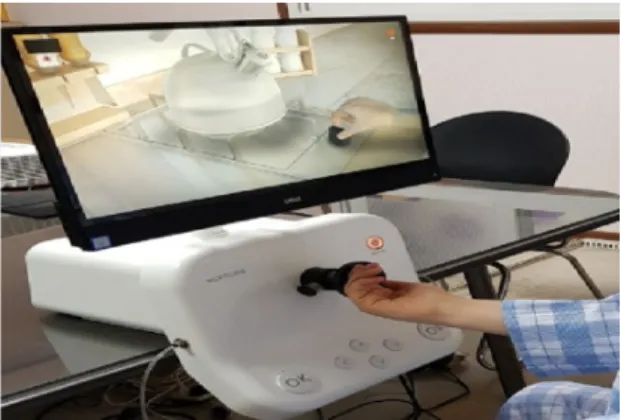
Figure 1. Virtual Reality-Based ADL Training(Moto Cog)
3) Volitional QestionnaireThe Volitional Questionnaire (VQ) was used to evaluate the rehabilitative motivation of patients with traumatic brain injury. The VQ consists of a total of 14 items, where each item is scored from 1 to 4 according to the level of voluntary action by subjects. The total score, therefore, ranges from at least 14 to a maximum of 56 points. The higher the score, the higher the rehabilitative motivation. The VQ can also be measured by subjects who are difficult to interview, and occupational therapists can observe and measure the behavior of subjects. In this study, occupational therapists evaluated the rehabilitative motivation for treatment by observing patient behav- ior during the experiment. The inter-tester reliability of VQ is 0.75 to 0.90 (Chern, Kielhofner, de las Heras,
& Magalhaes, 1996).
3. Procedures
After pre-assessment, the subjects underwent virtual reality-based ADL training for 30 minutes a day, 2 to 3 times a week for 4 weeks. Virtual reality-based ADL training was applied using Moto Cog (Cybermedic, Korea)(Figure 1). Moto Cog is a program developed to promote ADL by improving
hand use and cognitive function. This study focused on the training program for ADL improvement.
Moto Cog consists of a hand function training course, a cognitive training course, and an ADL training course. The training program classifies dif- ficulty levels from 1 to 5 levels. Occupational thera- pists applied the program according to the patient's level of cognitive and physical function. The hand function training course is relatively simple, while the cognitive training course requires moderate cog- nitive function and is a course for motivation and interest. The ADL training course requires upper limb function and cognitive function. The program items of the hand function training course and the ADL training course performed by the subjects in- cluded: Turning on a gas stove, opening a door lock, opening various shape handles, squeezing, ham- mering, and pizza making. The cognitive training course was composed of activities including card matching, piano playing, arm wrestling, shooting, fencing, boxing and bomb removal.
All subjects underwent conventional rehabilitation
for 4 weeks according to the rehabilitation schedule,
and this included occupational therapy and physical
therapy. Occupational therapy was performed by identi-
fying a specific, reduced function and activity of the
Subjects ( n =7)
n %
Gender Male 6 85.7
Female 1 14.3
Age
1)(years) 54.71±16.32
Causes of injury
Motor vehicular 5 71.4
Fall 1 14.3
Indeterminant 1 14.3
Education
1)(years) 11.86±2.12
Time post injury
1)(months) 4.71±1.50
MMSE-K
1)(score, range 0-30) 19.14±1.86
K-MBI
1)(score, range 0-100) 86.57±5.29
C-FIM total
1)(score, range 5-35) 20.00±2.83
Communication
1)(score, range 2-14) 9.29±1.50
Social Cognition
1)(score, range 3-21) 10.71±1.50
VQ
1)(score, range 14-56) 35.14±7.63
Mean±SD
1), K-MMSE: Korean Mini-Mental State Examination; K-MBI: Korean Modified Barthel Index; C-FIM: Cognitive Functional Independence Measure; VQ: Volitional Questionnaire.
T able 1. The General Characteristics, Activities of Daily Living, and Rehabilitative Motivation in Subjects subject. In order to improve the body function, pur-
poseful activities and task-based activities, stretching exercises using rehabilitation tools were performed (Moon, Park, Kim, & Na, 2018). For improvement of cognitive function, figure separation, picture compar- ison, hidden picture search and memory training, maze search were performed (Moon & Won, 2016). Physical therapy focused on balance training, gait training, and strengthening exercises. Post-evaluation was per- formed after all interventions were completed.
4. Analysis
All statistical analyses were performed in SPSS version 21. Statistical significance was set at .05.
The general characteristics of patients with traumatic brain injury, ADL, and rehabilitation motivation were confirmed by frequency analysis. Changes in ADL
and rehabilitation motivation before and after inter- vention were analyzed by Wilcoxon signed-rank test.
The correlation between ADL and rehabilitation mo- tivation was analyzed using Spearman correlation analysis.
Ⅲ. Results
1. General characteristics, activities of daily living, and rehabilitative motivation in subjects
The mean age of the subjects was 54.71±16.32
years, and 6 (85.7%) were men. The main cause
of injury was motor vehicle accidents (71.4%). The
education level was 11.86±2.12 years and the time
post injury was 4.71±1.50 months. The cognitive
Subjects ( n =7)
Z
Pre Post
Mean±SD Mean±SD
K-MBI (score, range 0-100) 86.57±5.29 89.43±4.72 -2.414
*C-FIM total (score, range 5-35) 20.00±2.83 20.43±2.44 -1.089
Communication (score, range 2-14) 9.29±1.50 9.57±1.27 -1.000
Social Cognition (score, range 3-21) 10.71±1.50 10.86±1.21 -.447
VQ (score, range 14-56) 35.14±7.63 35.71±5.22 -.846
K-MMSE: Korean Mini-Mental State Examination; K-MBI: Korean Modified Barthel Index; C-FIM: Cognitive Functional Independence Measure; VQ: Volitional Questionnaire.
*
p <.05
Table 2. Change of Activities of Daily Living, and Rehabilitative Motivation in Subjects
K-MBI C-FIM total CO SC VQ
K-MBI 1
C-FIM total .396 1
CO .709 .908
**1
SC .200 .973
***.815
*1
VQ .090 .755
*.606 .826
*1
K-MBI: Korean Modified Barthel Index; C-FIM: Cognitive Functional Independence Measure; CO: Communication; SC: Social Cognition;
VQ: Volitional Questionnaire.
*
p <.05,
**p <.01,
***p <.001
Table 3 . The Correlation Relationship Between Activities of Daily Living, and Rehabilitative Motivation in Subjects (N = 7) function score was 19.14±1.86. The average total
K-MBI score was 86.57±5.29, the average total C-FIM was 20.00±2.83, and the total mean VQ score was 35.14±7.63 (Table 1).
2. Change of activities of daily living, and rehabilitative motivation in subjects
The subjects showed significant improvements in K-MBI after intervention (p<.05). There were no significant score changes in pre- versus post-inter- vention of C-FIM or VQ (p>.05) (Table 2).
3. Correlation relationship between activities of daily living, and
rehabilitative motivation in subjects
The total C-FIM score was significantly corre- lated with the VQ score (p<.05, r=.755). The social cognition domain of C-FIM had a significant corre- lation with the VQ score (p<.05, r=.826) (Table 3).
Ⅳ. Discussion
This preliminary study examined the effects of
virtual reality-based ADL training on ADL and re-
habilitative motivation in patients with traumatic brain injury. After intervention, patients with trau- matic brain injury showed significant improvement in K-MBI, which implies the effect of virtual real- ity-based ADL training. A previous study conducted by Bak (2019) reported that virtual reality training focusing on ADL resulted in an improvement in the self-care area of FIM in patients with stroke.
In this study, the improvement of K-MBI total score through virtual reality-based ADL training showed similar results as those of the other previous researches. The ADL training performed by the subjects in this study was particularly in the area of training related to self-care. The K-MBI score and self-care items have been shown to be moder- ately correlated (Woo, Park, & Cha, 2012). Therefore, it is estimated that improvements of self-manage- ment ability through virtual reality-based ADL train- ing led to the improvement in K-MBI score.
Despite these improvements in K-MBI score, C-FIM scores not showed a significant improvement.
Unlike this result, Bak (2019) reported a significant improvement in the social cognition area of FIM fol- lowing virtual reality-based ADL training for patients with stroke. However, the present study showed dif- ferent results may be due to differences in subject characteristics and training schedules. The mean K-MMSE score was 27.20 in the study by Bak (2019), but it was 19.14 in the present study. Low cognitive function is known to be a predictor of negative prognosis (Folmer, Billings, Diedesch-Rouse, Gallun, & Lew, 2011). In the study by Bak (2019), the subjects performed 20 sessions, but the subjects of the present study performed 8 to 12 sessions.
In other words, there was a difference in training schedule. In addition, patients with traumatic brain
injury are characterized by low social interaction (Nayak, Wheeler, Shiflett, & Agostinelli, 2000). It is presumed that this difference in characteristics between the two studies led to discrepancies in the results.
There was no significant change in rehabilitative motivation after intervention, but there was a sig- nificant correlation with C-FIM and rehabilitative motivation. In particular, social cognition of C-FIM and rehabilitative motivation had a greater correla- tion than communication. According to a previous study (Finset, Dyrnes, Krogstad, & Berstad, 1995), patients with traumatic brain injury differ in their social interaction but receive more support from their family than friends or neighbors. Additionally, 57.4% of patients with severe traumatic brain injury reported a lack of social networks and difficulty with severe sequelae and poor emotional adjustment.
Decreased motivation after traumatic brain injury is an obstacle to participation in rehabilitation (Bailey, Echemendia, & Arnett, 2006), which adversely affects functional recovery (Huang et al., 2000). As the sub- jects of the present study were only patients with trau- matic brain injuries having moderate or mild cogni- tive impairments, it is necessary to study different damage levels in the future. Another reason is that the virtual reality-based ADL program of this study has a high proportion of basic-ADL related pro- grams and is different from the real-world ADL.
The findings of this preliminary study can be used to inform on optimal sample size for a future study. The authors performed a sample size calcu- lation (G Power 3.1) (Faul, Erdfelder, Buchner, &
Lang, 2009). After setting alpha = .05 and beta =
.80, the effect sizes of C-FIM and VQ were
calculated. As a result, when the C-FIM was set
as the primary outcome, 18 subjects were required.
When VQ was set as the primary outcome, 20 sub- jects were required.
There are some limitations to this preliminary study, including a small sample size and the ab- sence of a control group, because of which placebo effects could not be compared. Additionally, the duration of the intervention was short and thus the continuous effect of training is not known.
Lastly, the effect of training was considered only for 4 weeks. In the future, it is recommended to investigate the effects of virtual reality-based ADL training through randomized controlled trials while taking into consideration these limitations.
Ⅴ. Conclusion
In this preliminary study, we investigated wheth- er virtual reality-based ADL training improved ADL and rehabilitative motivation in patients with trau- matic brain injury. The results of the study showed that after intervention, patients with traumatic brain injury showed a significant improvement in K-MBI score. However, there were no significant changes in total C-FIM score and rehabilitative motivation. Total C-FIM score correlated sig- nificantly with rehabilitative motivation. The social cognition domain of C-FIM had a significant corre- lation with rehabilitative motivation. Virtual real- ity-based ADL training seems to improve ADL per- formance in patients with traumatic brain injury.
Further researches focused on social cognition and rehabilitative motivation are required.
References
Bailey, C. M., Echemendia, R. J., & Arnett, P. A. (2006).
The impact of motivation on neuropsychological per- formance in sports-related mild traumatic brain injury.
Journal of the International Neuropsychological Society, 12 (4), 475-484. doi:10.1017/S1355617706060619 Bak, I. H. (2019). Effect of virtual reality training focus
on ADL on upper extremity function and activities of daily living in stroke patients. Journal of the Korea Entertainment Industry Association, 13 (4), 321-329.
doi:10.21184/jkeia.2019.6.13.4.321
Bay, E., Hagerty, B. M., Williams, R. A., Kirsch, N., &
Gillespie, B. (2002). Chronic stress, sense of belonging, and depression among survivors of traumatic brain injury. Journal of Nursing Scholarship, 34 (3), 221-226.
doi:10.1111/j.1547-5069.2002.00221.x
Brett, C. E., Sykes, C., & Pires-Yfantouda, R. (2017).
Interventions to increase engagement with rehabilitation in adults with acquired brain injury: A systematic review.
Neuropsychological Rehabilitation, 27 (6), 959-982.
doi:10.1080/09602011.2015.1090459
Chen, S. H. A., Thomas, J. D., Glueckauf, R. L., & Bracy, O. L. (1997). The effectiveness of computer-assisted cog- nitive rehabilitation for persons with traumatic brain injury. Brain Injury, 11 (3), 197-210.
Chern, J. S., Kielhofner, G., de las Heras, C. G., &
Magalhaes, L. C. (1996). The volitional questionnaire:
Psychometric development and practical use. American Journal of Occupational Therapy, 50 (7), 516-525.
doi:10.5014/ajot.50.7.516
Dawson, D. R., Binns, M. A., Hunt, A., Lemsky, C., &
Polatajko, H. J. (2013). Occupation-based strategy train- ing for adults with traumatic brain injury: A pilot study.
Archives of Physical Medicine and Rehabilitation, 94 (10), 1959-1963. doi:10.1016/j.apmr.2013.05.021
Dawson, D. R., Gaya, A., Hunt, A., Levine, B., Lemsky,
C., & Polatajko, H. J. (2009). Using the cognitive ori-
entation to occupational performance (CO-OP) with
adults with executive dysfunction following traumatic
brain injury. Canadian Journal of Occupational Therapy,
76 (2), 115-127. doi:10.1177/000841740907600209
Driver, S., & Ede, A. (2009). Impact of physical activity on mood after TBI. Brain Injury, 23 (3), 203-212.
doi:10.1080/02699050802695574
Faul, F., Erdfelder, E., Buchner, A., & Lang, A. G. (2009).
Statistical power analyses using G* Power 3.1: Tests for correlation and regression analyses. Behavior Research Methods, 41 (4), 1149-1160. doi:10.3758/BRM.41.4.1149 Finset, A., Dyrnes, S., Krogstad, J. M., & Berstad, J. (1995).
Self-reported social networks and interpersonal support 2 years after severe traumatic brain injury. Brain injury, 9 (2), 141-150.
Folmer, R. L., Billings, C. J., Diedesch-Rouse, A. C., Gallun, F. J., & Lew, H. L. (2011). Electrophysiological assessments of cognition and sensory processing in TBI: Applications for diagnosis, prognosis and rehabilitation. International Journal of Psychophysiology, 82 (1), 4-15. doi:10.1016/
j.ijpsycho.2011.03.005
Granger, C. V., Albrecht, G. L., & Hamilton, B. B. (1979).
Outcome of comprehensive medical rehabilitation:
Measurement by PULSES profile and the Barthel Index.
Archives of Physical Medicine and Rehabilitation , 60 (4), 145-154.
Granger, C. V., Cotter, A. C., Hamilton, B. B., & Fiedler, R. C. (1993). Functional assessment scales: A study of persons after stroke. Archives of Physical Medicine and Rehabilitation, 74 (2), 133-138.
Grealy, M. A., Johnson, D. A., & Rushton, S. K. (1999).
Improving cognitive function after brain injury: The use of exercise and virtual reality. Archives of Physical Medicine and Rehabilitation, 80 (6), 661-667.
doi:10.1016/S0003 -9993(99)90169-7
Hoofien, D., Gilboa, A., Vakil, E., & Donovick, P. J. (2001).
Traumatic brain injury (TBI) 10-20 years later: A compre- hensive outcome study of psychiatric symptomatology, cognitive abilities and psychosocial functioning. Brain Injury, 15 (3), 189-209. doi:10.1080/026990501300005659 Huang, M. E., Cifu, D. X., & Keyser-Marcus, L. (2000).
Functional outcomes in patients with brain tumor after inpatient rehabilitation: Comparison with traumatic brain injury. American Journal of Physical Medicine &
Rehabilitation , 79 (4), 327-335.
Jung, H. Y., Park, B. K., Shin, H. S., Kang, Y. K., Pyun, S. B., Paik, N. J., ... Han, T. R. (2007). Development of the Korean version of Modified Barthel Index (K-MBI):
Multi-center study for subjects with stroke. Journal of
the Korean Academy of Rehabilitation Medicine, 31 (3), 283-297.
Marin, R. S., & Wilkosz, P. A. (2005). Disorders of diminished motivation. Journal of Head Trauma Rehabilitation, 20 (4), 377 – 388.
Moon, J. H., & Won, Y. S. (2016). Effects of cognitive treatment programs using smart device applications on attention, working memory, and treatment preference in patients with stroke. Journal of cognitive Enhancement and Intervention, 7 (3), 1-16.
Moon, J. H., Park, K. Y., Kim, H. J., & Na, C. H. (2018).
The effects of task-oriented circuit training using re- habilitation tools on the upper-extremity functions and daily activities of patients with acute stroke: A random- ized controlled pilot trial. Osong Public Health and Research Perspectives, 9 (5), 225-230. doi:10.24171/
j.phrp.2018.9.5.03
Nayak, S., Wheeler, B. L., Shiflett, S. C., & Agostinelli, S. (2000). Effect of music therapy on mood and social interaction among individuals with acute traumatic brain injury and stroke. Rehabilitation Psychology, 45 (3), 274-283. doi:10.1037//0090-5550.45.3.274
Ng, E. M., Polatajko, H. J., Marziali, E., Hunt, A., & Dawson, D. R. (2013). Telerehabilitation for addressing executive dysfunction after traumatic brain injury. Brain Injury, 27 (5), 548-564. doi:10.3109/02699052.2013.766927 Pearce, J. M. S. (2004). Positive and negative cerebral
symptoms: The roles of russell reynolds and hughlings jackson. Journal of Neurology, Neurosurgery &
Psychiatry, 75 (8), 1148-1148. doi:10.1136/jnnp.2004.
038422
Rose, F. D., Brooks, B. M., & Rizzo, A. A. (2005). Virtual reality in brain damage rehabilitation. Cyberpsychology
& Behavior, 8 (3), 241-262. doi:10.1089/cpb.2005.8.241 Sacco, K., Cauda, F., D'Agata, F., Duca, S., Zettin, M., Virgilio, R., ... Appendino, S. (2011). A combined robotic and cognitive training for locomotor rehabilitation:
Evidences of cerebral functional reorganization in two chronic traumatic brain injured patients. Frontiers In Human Neuroscience, 23 (5), 146. doi:10.3389/fnhum.
2011.00146
Scheid, R., Preul, C., Gruber, O., Wiggins, C., & Von
Cramon, D. Y. (2003). Diffuse axonal injury associated
with chronic traumatic brain injury: Evidence from
T2
*-weighted gradient-echo imaging at 3T. American
Journal of Neuroradiology, 24 (6), 1049-1056.
Schultheis, M. T., & Rizzo, A. A. (2001). The application of virtual reality technology in rehabilitation.
Rehabilitation Psychology, 46 (3), 296. doi:10.1037/0090 – 5550.46 .3.296
Shiroma, E. J., Ferguson, P. L., & Pickelsimer, E. E. (2012).
Prevalence of traumatic brain injury in an offender pop- ulation: A meta-analysis. The Journal of Head Trauma Rehabilitation, 27 (3), 1-10. doi:10.1097/HTR.0b013e 3182571c14.
Steuer, J. (1992). Defining virtual reality: Dimensions de- termining telepresence. Journal of Communication, 42 (4), 73-93. doi:10.1111/j.1460-2466.1992.tb00812.x Stineman, M. G., Shea, J. A., Jette, A., Tassoni, C. J.,
Ottenbacher, K. J., Fiedler, R., & Granger, C. V. (1996).
The functional independence measure: Tests of scaling assumptions, structure, and reliability across 20 diverse impairment categories. Archives of Physical Medicine and Rehabilitation, 77 (11), 1101-1108. doi:10.1016/
S0003-9993(96)90130-6
Thornton, M., Marshall, S., McComas, J., Finestone, H., McCormick, A., & Sveistrup, H. (2005). Benefits of activity and virtual reality based balance exercise programmes for adults with traumatic brain injury: Perceptions of participants and their caregivers. Brain Injury, 19 (12), 989-1000. doi:10.1080/02699050500109944
Tulsky, D. S., Kisala, P. A., Victorson, D., Carlozzi, N., Bushnik, T., Sherer, M., ... Englander, J. (2016). TBI-QOL:
Development and calibration of item banks to measure patient reported outcomes following traumatic brain injury. The Journal of Head Trauma Rehabilitation, 31 (1), 40-51. doi:10.1097/HTR.0000000000000131
Winkens, I., Van Heugten, C. M., Visser-Meily, J. M. A.,
& Boosman, H. (2014). Impaired selfawareness after ac- quired brain injury: Clinicians’ ratings on its assessment and importance for rehabilitation. Journal of Head Trauma Rehabilitation, 29 (2), 153 – 156. doi:10.1097/
HTR.0b013e31827d1500.
Woo, H. S., Park, W. K., & Cha, T. H. (2012). Correlation between Korean-WMFT functional score and activities of daily living. Korean Journal of Occupational Therapy, 20 (3), 95-104.
Zhang, L., Abreu, B. C., Seale, G. S., Masel, B., Christiansen, C. H., & Ottenbacher, K. J. (2003). A virtual reality envi- ronment for evaluation of a daily living skill in brain
injury rehabilitation: Reliability and validity. Archives
of Physical Medicine and Rehabilitation, 84 (8),
1118-1124. doi:10.1016/S0003-9993(03)00203-X
국문초록
가상현실 기반의 일상생활활동 훈련이 외상성 뇌손상 환자의 일상생활활동 및 재활동기에 미치는 효과 : 예비연구
문종훈, 전민재
국립재활원 재활연구소 건강보건연구과 연구원
목적
:
본 예비 연구는 가상현실 기반의 일상생활활동 훈련이 외상성 뇌손상 환자의 일상생활활동 및 재활동기에 미치는 영향을 알아보고자 한다.
연구방법
:
본 연구는7
명의 외상성 뇌손상 환자를 대상으로 중재 전-
후 설계를 수행하였다.
대상자들은 하루30
분,
주2~3
회, 4
주간 가상현실 기반의 일상생활활동 훈련을 수행하였다.
중재 전과 후로 평가를 수행하였다.
측정은 수정바델지수,
기능적 독립척도(
인지),
의지 설문지가 평가되었다.
중재 전과 후의 변화는 윌콕슨 부호순위 검정으로 분석하였고,
상관관계는 스피어만 상관분석을 이용하였다.
결과:
중재 후,
외상성 뇌손상 환자는 한국판 수정바델지수에서 유의한 향상을 보였다(p<.05).
기능적독립척도
(
인지)
와 재활동기는 유의한 변화가 없었다(p>.05).
기능적 독립척도(
인지)
는 재활동기와 유의한 상관이 있었다(p<.05, r=.755).
기능적 독립척도(
인지)
의 사회인지영역은 재활동기와 유의한 상관이 있었 다(p<.05, r=826).
결론
:
가상현실 기반의 일상생활활동 훈련은 일상생활활동 수행능력을 향상시킬 수 있으나,
사회인지와 재활동기의 개선여부가 가능한지에 대해서는 연구가 더 필요하다.
주제어