http://dx.doi.org/10.4078/jrd.2014.21.2.54
54
<Received:April 9, 2014, Revised:April 24, 2014, Accepted:April 25, 2014>
Corresponding to:Yoon-Kyoung Sung, Department of Rheumatology, Hanyang University Hospital for Rheumatic Diseases, Wangsimni-ro, Seongdong-gu, Seoul 133-792, Korea. E-mail:[email protected]
pISSN: 2093-940X, eISSN: 2233-4718
Copyright ⓒ 2014 by The Korean College of Rheumatology
This is a Free Access article, which permits unrestricted non-commerical use, distribution, and reproduction in any medium, provided the original work is properly cited.
한국인 루푸스 임상연구의 현재와 미래
김 담ㆍ조수경ㆍ성윤경 한양대학교 류마티스병원 류마티스내과
The Present and Future of Clinical Research for Korean Lupus Patients
Dam Kim, Soo-Kyung Cho, Yoon-Kyoung Sung
Department of Rheumatology, Hanyang University Hospital for Rheumatic Diseases, Seoul, Korea
Systemic lupus erythematosus (SLE) is considered to be the prototype of systemic autoimmune disease because it involves the most immune cells and it can affect all organs of the hu- man body. Despite the advances in understanding the etiology and pathogenesis of SLE, a sobering fact is that only a few drugs have been licensed for its treatment. This may be asso- ciated with the difficulties in performing clinical trials due to its diverse clinical manifestations and comorbidities of SLE, as well as difficulties in determining the disease outcome. To determine the natural course and drug response of SLE pa-
tients, various observational studies have been conducted in Western countries. However, in Korea, sufficiently powered prospective clinical studies are scarce. In this review, we con- ducted a systematic review to be aware of the current status of clinical studies in Korean SLE patients. Identifying the top- ics for clinical studies that have been performed helps de- termine how the clinical research should be conducted for Korean SLE patients.
Key Words. Lupus erythematosus, Systemic, Clinical study, Korean
서 론
전신홍반루푸스(systemic lupus erythematosus, 이하 루푸 스)는 자가 항체 및 면역복합체에 의한 조직 손상을 특징 으로 하는 대표적인 자가 면역 질환이다 (1). 루푸스의 유 병률은 일반적으로 인종 및 지역에 따라 다양하게 나타나 는데, 한국에서는 인구 약 10만 명 당 20명 전후로 전국에 약 12,000명의 치료중인 환자가 있는 것으로 알려져 있다 (2). 환자는 매우 다양한 임상 증상과 검사 소견을 나타내 며, 이의 심각도에 따라 다양한 수준의 약물 치료가 이루 어진다 (1).
1950년대 이후로 루푸스의 진단과 치료에 현격한 발전이 있었으며, 이로 인하여 5년 생존률은 약 50%에서 90% 이
상으로 상승되었고, 15년 및 20년 생존률도 약 80%에 이르 는 것으로 알려져 있다 (3,4). 그러나, 루푸스는 여전히 일 반인에 비해서는 매우 높은 사망률을 갖는 질환이며, 루푸 스 자체뿐 아니라 치료 과정에서의 손상에 의해서 많은 동 반 질환을 유발하게 된다 (5). 최신의 향상된 치료 과정에 서 환자의 생존률은 다소 상승했을 지라도 환자들의 삶의 질이나 사회적 관점에서의 생산성 등 사회적 비용 또한 많 이 증가하고 있다 (6,7).
따라서, 루푸스는 그 발병 기전과 치료의 메커니즘을 규명 하는 기초연구만큼이나 환자의 임상 양상과 치료에 대한 반응 및 성과에 대한 임상연구가 무엇보다 중요한 질환 중 의 하나이다. 이러한 필요성에 눈 뜬 구미 여러 나라에서는
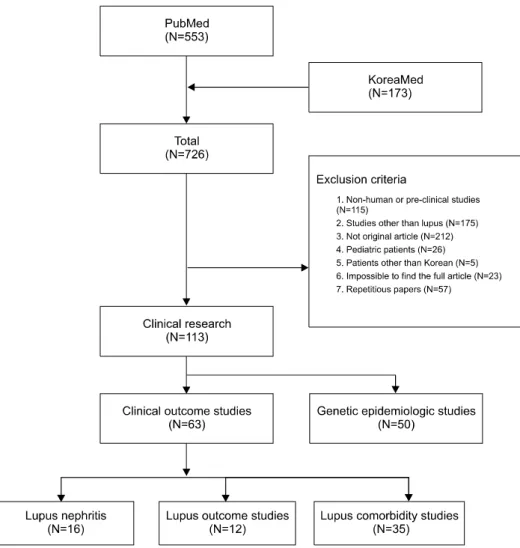
Figure 1. Selection of studies in- cluded in this review of systemic lupus erythematosus clinical re- searches.
다양한 가설을 가지고, 다양한 형태의 임상연구를 진행해 왔고, 그 대표적인 형태가 전향적 코호트 연구이다. 그에 반 해 우리나라에서는 주로 단면적 연구와 환자-대조군 형태 의 연구가 많이 행해져 왔으며, 이러한 연구디자인의 차이 는 병과 질환 경과에 대한 인과관계를 규명하고, 치료에 대 한 반응을 규명하는데 어느 정도 제한점을 가지고 있다.
저자들은 현재까지 이루어진 한국인을 대상으로 한 루푸 스 임상연구의 현황에 대해 체계적 문헌고찰(systematic re- view)의 형태를 통해서 검토하고, 이를 바탕으로 루푸스 임상연구의 나아갈 바에 대해서 고찰하고자 한다.
루푸스 연구의 현재 문헌 검색 전략
국내의 루푸스 환자를 대상으로 한 관찰 연구를 문헌 검 색을 통해서 추출하여 각 연구에서 사용 중인 outcome을 파악하여 국내 루푸스 연구의 주요 관심 주제를 도출하기 위해 문헌 검색을 시행하였다. 국내 문헌은 코리아메드 (http://www.koreamed.org)를 이용하여 검색하였다. 검색어 는 "systemic lupus erythematosus"로 검색하였으며, limit으 로 "clinical trial" or "comparative study" or "multicenter
study" or "original article" or "randomized controlled trial"
and "Human"으로 설정하여 검색하였고, 이후 검색된 범위 내에서 불필요한 문헌을 수작업으로 제외하였다. 국외 문 헌은 PubMed (http://www.ncbi.nlm.nih.gov/pubmed)를 이용 하여 검색하였다. “lupus erythematosus, systemic[MeSH]”
and “Korea”로 검색하였으며, 검색된 범위 내에서 불필요 한 문헌은 수작업으로 제외하였다. 2013년 10월 27일 이전 의 문헌들만을 대상으로 하였다(Figure 1).
이 연구들을 고찰하여 다음의 기준에 부합된 국내의 루 푸스 환자를 대상으로 한 임상연구 문헌을 본 문헌고찰의 대상 논문으로 선정하였다: 1) 국내 루푸스 환자를 대상으 로 한 연구로 2) 적절한 의료 결과(outcome)가 하나 이상 보고된 연구를 대상으로 한 연구를 선택하였으며, 1) 동물 실험 및 전임상시험 연구, 루푸스가 아닌 다른 질환에 대 한 연구, 2) 원저가 아닌 연구, 3) 소아를 대상으로 한 연구, 4) 한국인을 대상으로 하지 않은 연구, 5) 전문 검색이 불 가능한 연구, 6) 중복 문헌을 배제하였다.
주요 연구 형태
한국의 루푸스 환자들을 대상으로 한 임상 연구들은 대
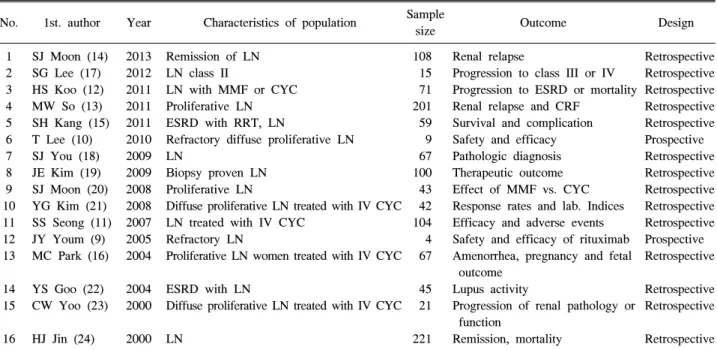
Table 1. Summary of the studies about lupus nephritis clinical researches in Korea No. 1st. author Year Characteristics of population Sample
size Outcome Design
1 2 3 4 5 6 7 8 9 10 11 12 13
14 15
16
SJ Moon (14) SG Lee (17) HS Koo (12) MW So (13) SH Kang (15) T Lee (10) SJ You (18) JE Kim (19) SJ Moon (20) YG Kim (21) SS Seong (11) JY Youm (9) MC Park (16)
YS Goo (22) CW Yoo (23)
HJ Jin (24)
2013 2012 2011 2011 2011 2010 2009 2009 2008 2008 2007 2005 2004
2004 2000
2000
Remission of LN LN class II
LN with MMF or CYC Proliferative LN ESRD with RRT, LN
Refractory diffuse proliferative LN LN
Biopsy proven LN Proliferative LN
Diffuse proliferative LN treated with IV CYC LN treated with IV CYC
Refractory LN
Proliferative LN women treated with IV CYC
ESRD with LN
Diffuse proliferative LN treated with IV CYC
LN
108 15 71 201 59 9 67 100 43 42 104 4 67
45 21
221
Renal relapse
Progression to class III or IV Progression to ESRD or mortality Renal relapse and CRF
Survival and complication Safety and efficacy Pathologic diagnosis Therapeutic outcome Effect of MMF vs. CYC Response rates and lab. Indices Efficacy and adverse events Safety and efficacy of rituximab Amenorrhea, pregnancy and fetal outcome
Lupus activity
Progression of renal pathology or function
Remission, mortality
Retrospective Retrospective Retrospective Retrospective Retrospective Prospective Retrospective Retrospective Retrospective Retrospective Retrospective Prospective Retrospective
Retrospective Retrospective
Retrospective LN: lupus nephritis, MMF: mycophenolate mofetil, CYC: cyclophosphamide, ESRD: end stage renal disease, CRF: chronic renal failure, RRT: renal replacement therapy, IV: intravenous.
부분 단면 연구나 환자 대조군 연구의 형태를 가지고 있었 다. 많은 연구들이 의무기록 검토를 통한 연구로 진행되었 으며, 코호트 연구는 루푸스 의료 성과를 연구한 몇 건의 연구 외에는 찾아볼 수 없었다. 본 논문에서는 연구 형태 를 전향적, 후향적, 단면연구, 환자 대조군 연구로 구분하 여 기술하였다.
유전 역학 연구는 대체로 환자 대조군 연구로 이루어졌 고, 이에 대한 자세한 기술은 본 논문의 주제와 부합되지 않아 생략하도록 한다.
주요 연구 주제: 루푸스 신염
루푸스 신염은 약 60%의 환자에서 전체 질병 기간 중 이 환된다고 알려져 있으며, 루푸스 환자의 주된 사망 원인 중 하나로 (8) 국내의 루푸스 임상연구의 주요 주제가 되 고 있다. 루푸스 신염에 관한 연구는 표본수가 작은 전향 적 연구 2편 외에는 모두 후향적으로 이루어진 연구이다 (Table 1). 루푸스 신염 환자들을 대상으로 한 전향적 연구 들은 각각 4명과 7명의 환자들을 대상으로 한 약물의 효과 나 안전성에 대한 연구였으며 (9,10), 이외에는 모두 후향 적 연구들로 15∼221명의 루푸스 신염 환자들을 대상으로 한 연구였다 (11-24).
한국인 루푸스 신염 연구에서 가장 중심이 되는 연구는 역 시 저용량 사이클로포스파마이드(cyclophosphamide, CYC) 와 마이코페놀레이트(mycophenolate mofetil, MMF)의 치료 효과에 관한 연구로서 한 연구에서 104명의 환자를 대상으 로, 저용량 CYC 정맥 주사 치료(0.5 g monthly)가 고용량 (0.75∼1.0 g/m2)의 약물 치료보다 효과가 떨어지지 않으며,
그 부작용은 더 적은 것을 확인하였다 (11). 이는 주로 Caucasian과 African American을 대상으로 연구되어 효과가 증명된 National Institutes of Health (NIH) 요법 (25)보다는 저용량의 Euro-Lupus Nephritis 프로토콜 (26) 혹은 그보다 더 적은 용량으로도 한국인 루푸스 신염환자에서 효과가 있음을 확인하였다는 데에 의미가 있다.
한편, CYC와 MMF의 치료효과가 유사하다고 하는 기존 의 연구 (27,28)와는 다른 결과를 보인 연구도 수행되었는 데, 루푸스 신염 환자 71명을 후향적으로 관찰하여, CYC 와 MMF의 효과를 비교하였다 (12). 그 결과 CYC로 치료 받은 환자들은 MMF로 치료 받은 환자들에 비하여 만성 신부전으로의 이행률과 사망률이 낮아 루푸스 신염의 치 료에 더 효과적이라고 주장하였다.
위에서 보듯 우리나라 루푸스 신염 환자에 대한 치료 약 물의 효과와 안전성은 서양의 자료와는 다소 차이가 있을 것으로 예상되며, 따라서 이에 대해서는 좀 더 명확한 근 거 창출이 필요하다. 즉, 선택 비뚤림의 발생 가능성이 적 은 무작위 임상시험이나 전향적 코호트의 수행이 필요할 수 있다.
이외에도 소수의 환자들을 대상으로 한 전향적 연구를 통해 기존의 치료에 반응하지 않는 불응성의 루푸스 신염 환자에서 rituximab (9) 및 tacrolimus (10)의 치료 효과에 대 한 연구도 이루어 졌으며, 루푸스 신염의 경과에 대한 연 구들도 활발히 이루어졌다 (13-16). 이는 주로 신염의 결과 로서의 만성 신부전의 위험 요인에 대한 연구 (13)와 완전 혹은 불완전 관해 환자에서 루푸스 신염의 재발 요인에 대 한 연구라 할 수 있다 (14). 이외에도 루푸스 신염으로 인
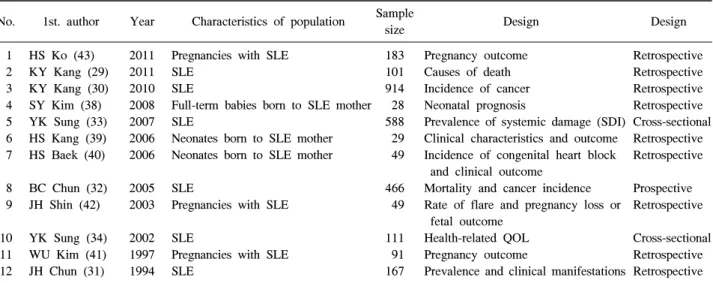
Table 2. Summary of the studies about lupus outcome clinical researches in Korea No. 1st. author Year Characteristics of population Sample
size Design Design
1 2 3 4 5 6 7
8 9
10 11 12
HS Ko (43) KY Kang (29) KY Kang (30) SY Kim (38) YK Sung (33) HS Kang (39) HS Baek (40)
BC Chun (32) JH Shin (42)
YK Sung (34) WU Kim (41) JH Chun (31)
2011 2011 2010 2008 2007 2006 2006
2005 2003
2002 1997 1994
Pregnancies with SLE SLE
SLE
Full-term babies born to SLE mother SLE
Neonates born to SLE mother Neonates born to SLE mother
SLE
Pregnancies with SLE
SLE
Pregnancies with SLE SLE
183 101 914 28 588 29 49
466 49
111 91 167
Pregnancy outcome Causes of death Incidence of cancer Neonatal prognosis
Prevalence of systemic damage (SDI) Clinical characteristics and outcome Incidence of congenital heart block and clinical outcome
Mortality and cancer incidence Rate of flare and pregnancy loss or fetal outcome
Health-related QOL Pregnancy outcome
Prevalence and clinical manifestations
Retrospective Retrospective Retrospective Retrospective Cross-sectional Retrospective Retrospective
Prospective Retrospective
Cross-sectional Retrospective Retrospective SLE: systemic lupus erythematosus, SDI: systemic damage index, QOL: quality of life.
한 만성 신부전 환자에서 신대체 요법의 종류에 따른 생존 율과 합병증을 확인하거나 (15), CYC를 사용한 폐경 전의 여성 환자에서의 난소 부전, 임신과 출산에 대한 연구도 이루어졌다 (16).
이와 같이 현재까지 이루어진 임상연구의 내용을 보면, 루푸스 신염의 기존 치료제 및 신규치료제에 대한 관해율 등의 직접적인 효과 연구와 더불어, 약제의 독성에 대한 약물 역학 연구, 그리고 그런 과정을 통해서 이루어진 관 해의 유지 여부 및 재발 요인, 최종 성과 지표 중 하나인 만성 신부전으로의 이행과 대체 요법 등이 주요 관심 주제 임을 알 수 있다.
주요 연구 주제: 루푸스 의료 성과 연구
임상 연구의 꽃이라 할 수 있는 성과 연구(outcomes re- search) 및 자연사 연구 분야에서 국내 자료는 매우 드물 다. 이는 사망이나 암 발생률 등의 의료 성과를 보기 위해 서는 많은 수의 환자가 필요하고, 루푸스 환자에서의 활성 도, 기능 장애 및 삶의 질 등을 측정하고자 하려면 전향적 연구의 형태가 유리하다는 점과 일맥상통하고 있다.
현재까지 한국인 루푸스 환자에서의 성과 연구는 크게 두 가지 형태로 나뉘고 있다. 첫 번째는 루푸스 환자의 사 망, 암 발생, 장기 손상, 삶의 질 등의 자연사 관련 연구, 두 번째는 루푸스 환자의 출산 및 신생아에 대한 연구라 할 수 있다(Table 2).
루푸스의 자연사 관련 연구들은 101∼914명의 비교적 많 은 환자를 대상으로 하였으며, 루푸스 환자의 사망률, 암 발생률, 임상상에 대한 후향적 연구들이 주가 되었으며 (29-31), 오직 한 기관에서만 전향적 코호트를 활용한 사망 률 및 암 발생률에 대한 연구 (32)와 장기 손상, 건강 관련 삶의 질에 대한 연구 (33,34)가 이루어졌다.
국내 코호트를 이용한 연구를 통하여 한국인 루푸스 환
자의 사망률은 596.0/100,000 person year, 표준화 사망비 (standardiazed mortality ratio, SMR)는 3.02로 제시되었고 (32), 이는 Yurkovich 등 (35)이 시행한 메타분석에서 추출 한 루푸스 환자의 SMR 2.98과 일치하는 결과를 보였다.
암 발생률은 179.3/100,000 person year, 표준화 발생비 (standardized incidence ratio, SIR)는 1.04로, 기존의 메타분 석을 통해서 제시된 SIR 1.16보다는 다소 낮게 제시되었다 (36). 그러나, 국내의 또 다른 연구에서는 한국인 루푸스 여성 환자에서의 암 발생률로 SIR 1.45를 제시하여 (30), 이에 대한 것도 좀 더 체계적인 연구가 필요하다.
루푸스의 또 하나의 대표적인 성과 지표는 장기 손상이 라 할 수 있는데, 주로 Systemic Lupus International Collabo- rating Clinics/American College of Rheumatology Damage Index (SLICC/ACR DI)를 활용하여 측정하는 경우가 많다 (37). 이에 대한 연구를 통하여 루푸스 환자 중 41.5%의 환 자가 1군데 이상의 손상을 가지고 있었으며, 고령, 긴 유병 기간, CYC 치료가 손상과 연관되어 있음을 밝혔다 (33).
한편, 다양한 측정도구를 이용하여 측정한 건강 관련 삶의 질이 루푸스 환자들에서 건강한 대조군에 비해 현저히 낮 은 것을 증명하였다 (34). 현재까지의 국내의 루푸스 의료 성과에 대한 연구는 다기관의 전향적 연구가 부족하다는 측면에서 문제가 있으며, 상대적으로 손상 및 삶의 질, 그 리고 환자들의 사회 경제적 부담을 성과 지표로 하는 연구 가 매우 드물다는 데에 문제가 있다.
루푸스 환자의 대부분은 가임기 여성이기 때문에 임신과 출산은 또 하나의 중요한 관심사라 할 수 있다. 윤리적인 우려로 인해 대부분의 루푸스와 연관된 출산과 신생아에 대한 연구는 모두 후향적으로 이루어졌는데, 28∼49명의 루 푸스 산모에게서 태어난 신생아 연구가 있고 (38-40), 91∼
183명의 루푸스 산모 (41-43)를 대상으로 한 연구들이 있다.
환자의 항체 및 소견에 따른 임신의 결과에 대한 연구를 통
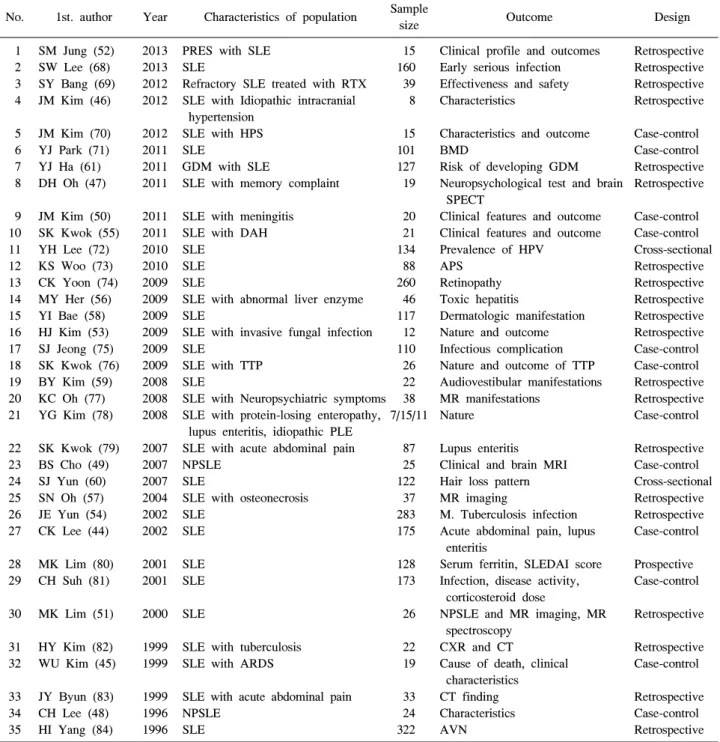
Table 3. Summary of the studies about lupus comorbidity clinical researches in Korea No. 1st. author Year Characteristics of population Sample
size Outcome Design
1 2 3 4
5 6 7 8
9 10 11 12 13 14 15 16 17 18 19 20 21
22 23 24 25 26 27
28 29
30
31 32
33 34 35
SM Jung (52) SW Lee (68) SY Bang (69) JM Kim (46)
JM Kim (70) YJ Park (71) YJ Ha (61) DH Oh (47)
JM Kim (50) SK Kwok (55) YH Lee (72) KS Woo (73) CK Yoon (74) MY Her (56) YI Bae (58) HJ Kim (53) SJ Jeong (75) SK Kwok (76) BY Kim (59) KC Oh (77) YG Kim (78)
SK Kwok (79) BS Cho (49) SJ Yun (60) SN Oh (57) JE Yun (54) CK Lee (44)
MK Lim (80) CH Suh (81)
MK Lim (51)
HY Kim (82) WU Kim (45)
JY Byun (83) CH Lee (48) HI Yang (84)
2013 2013 2012 2012
2012 2011 2011 2011
2011 2011 2010 2010 2009 2009 2009 2009 2009 2009 2008 2008 2008
2007 2007 2007 2004 2002 2002
2001 2001
2000
1999 1999
1999 1996 1996
PRES with SLE SLE
Refractory SLE treated with RTX SLE with Idiopathic intracranial hypertension
SLE with HPS SLE
GDM with SLE
SLE with memory complaint
SLE with meningitis SLE with DAH SLE
SLE SLE
SLE with abnormal liver enzyme SLE
SLE with invasive fungal infection SLE
SLE with TTP SLE
SLE with Neuropsychiatric symptoms SLE with protein-losing enteropathy, lupus enteritis, idiopathic PLE SLE with acute abdominal pain NPSLE
SLE
SLE with osteonecrosis SLE
SLE
SLE SLE
SLE
SLE with tuberculosis SLE with ARDS
SLE with acute abdominal pain NPSLE
SLE
15 160 39 8
15 101 127 19
20 21 134 88 260 46 117 12 110 26 22 38 7/15/11
87 25 122 37 283 175
128 173
26
22 19
33 24 322
Clinical profile and outcomes Early serious infection Effectiveness and safety Characteristics
Characteristics and outcome BMD
Risk of developing GDM Neuropsychological test and brain SPECT
Clinical features and outcome Clinical features and outcome Prevalence of HPV
APS Retinopathy Toxic hepatitis
Dermatologic manifestation Nature and outcome Infectious complication Nature and outcome of TTP Audiovestibular manifestations MR manifestations
Nature
Lupus enteritis Clinical and brain MRI Hair loss pattern MR imaging
M. Tuberculosis infection Acute abdominal pain, lupus enteritis
Serum ferritin, SLEDAI score Infection, disease activity, corticosteroid dose
NPSLE and MR imaging, MR spectroscopy
CXR and CT
Cause of death, clinical characteristics CT finding Characteristics AVN
Retrospective Retrospective Retrospective Retrospective
Case-control Case-control Retrospective Retrospective
Case-control Case-control Cross-sectional Retrospective Retrospective Retrospective Retrospective Retrospective Case-control Case-control Retrospective Retrospective Case-control
Retrospective Case-control Cross-sectional Retrospective Retrospective Case-control
Prospective Case-control
Retrospective
Retrospective Case-control
Retrospective Case-control Retrospective PRES: posterior reversible encephalopathy syndrome, SLE: systemic lupus erythematosus, RTX: rituximab, HPS: hemophagocytic syndrome, BMD: bone mineral density, GDM: glucocorticoid-induced diabetes mellitus, SPECT: single-photon emission computed tomography, DAH: diffuse alveolar hemorrhage, HPV: human papilloma virus, APS: anti-phospholipid antibody syndrome, TTP:
thrombotic thrombocytopenic purpura, MR: magnetic resonance, PLE: protein losing enteropathy, NPSLE: neuropsychiatric systemic lupus erythematosus, M. Tuberculosis: mycobacterium tuberculosis, SLEDAI: systemic lupus erythematosus disease activity index, CXR: chest x-ray, CT: computed tomography, ARDS: adult respiratory distress syndrome, AVN: avascular necrosis.
해 임신시의 질환 악화가 dsDNA 양성과 관련이 있음을 보 고하였고, 항 인지질 항체가 양성 시 태아 손실과 조산의 빈도가 증가함을 보고하였다 (41). 또 다른 연구에서는 47명 의 루푸스 산모를 관찰하여 루푸스의 악화가 주로 임신 2기
에 가장 많이 나타나며, 항 인지질 항체와 임신 중의 루푸스 악화가 태아 손실과 조산의 예측 인자임을 제시하였다 (42).
가장 많은 환자인 183예의 임신 사례를 관찰한 연구에서도 역시 항 인지질 항체의 존재가 태아 손실과 조산의 위험을
높이고, 수태 시의 루푸스 활성도와 임신 기간 중의 루푸스 악화가 임신 성적에 악영향을 미치므로, 좋은 임신 성적을 위해 적어도 수태 4개월 전에 루푸스의 활성도가 안정화되 는 것이 중요함을 밝혔다 (43). 이외에도 루푸스 산모의 출 산아에서의 완전 방실 블록 등의 심이상과 혈액학적 이상 등의 빈도 및 임상 증상을 관찰한 연구들도 있었다 (39,40).
이러한 임신과 출산은 그 결과가 태아에 직접적 영향을 미 치기 때문에 체계적인 임상시험은 시행하기 힘들다. 그러 나, 환자와 가족에게는 가장 관심이 높은 주제로서 약제의 중지 등으로 인해 환자에게 미치는 영향 또한 막대하다. 따 라서, 체계적인 디자인을 통한 전향적 연구가 반드시 필요 한 분야라 할 수 있다.
주요 연구 주제: 동반 질환
루푸스는 전신에 침범하는 질환으로 다양한 임상상을 가 지며, 자가면역 기전과 사용하는 약제들로 인해 급성 및 만성 합병증도 많이 발생한다 (5). 국내의 루푸스 환자를 대상으로 한 임상 연구에서 가장 많은 빈도를 차지하는 것 이 루푸스와 연관된 동반 질환에 관한 연구였으며 그 주제 도 매우 다양했다.
관심 질환의 빈도에 따라 8∼322명의 환자들을 대상으로 연구가 이루어졌으며, 후향적 연구와 후향적 환자-대조군 연구, 단면 연구, 1개의 전향적 연구가 있었다(Table 3). 대 상 환자는 루푸스롤 진단 받은 환자 중 해당 동반 질환을 함께 가지고 있는 환자들이었으며, 그 질환들은 각 분야에 걸쳐 다양하게 연구되고 있었다. 동반 질환은 크게 두 가 지로 나누어 볼 수 있는데, 질환의 경과로서 나타나는 심 각한 증상에 대한 연구와 치료 과정에서 발생할 수 있는 유해 반응에 대한 연구를 들 수 있다.
우선 루푸스의 증상에 대한 연구는 루푸스 환자의 급성 복통에 관한 연구가 있는데 (44) 루푸스 장염은 루푸스 환 자들의 급성 복통 시 가장 흔한 원인이었으며, 모든 루푸 스 장염 환자들은 고용량 스테로이드 치료에 좋은 반응을 보인 것으로 보고하였다. 한편, 성인성 호흡 부전 증후군 (adult respiratory distress syndrome, ARDS) 환자를 대상으 로 한 연구에서는 (45), 루푸스 환자의 ARDS의 가장 흔한 원인이 그람 음성 간균이고, 루푸스가 아닌 ARDS 환자와 비교하여 루푸스 ARDS 환자들은 더 어린 나이에 발생하 여 더 빠르게 진행하는 것을 보고하였다.
이외에도 특발성 두개 내 고혈압(idiopathic intracrainal hy- pertension, IIP) (46), 기억 장애 (47), 신경정신 루푸스(neu- ropsychiatric lupus, NP lupus) (48-51), 가역성 후백질 뇌병 변 증후군(posterior reversible encephalopathy syndrome, PRES) (52) 등의 신경계 증상과 관련된 연구가 많이 수행 되었으며, 활성도 상승과 치료 과정의 면역억제와 관련된 뇌막염 (50), 침윤성 진균감염 (53), 결핵균 감염 (54) 등의 감염, 미만성 폐포 출혈(diffuse alveolar hemorrhage, DAH) (55), 간기능 이상 (56), 골괴사 (57), 피부 양상 (58), 이과적
증상(audiovestibular symptom) (59), 탈모 패턴 (60)까지 다 양한 이슈에 대한 연구들로 동반 질환들의 임상 양상, 치 료 결과, 위험 인자 등을 다루고 있다.
루푸스의 치료에 있어 스테로이드는 가장 흔히 사용되는 약물로, 주요 장기 침범 시 고용량의 스테로이드를 정맥 투여 한다. 또한 장기간의 스테로이드 사용도 드물지 않아 스테로이드로 인한 합병증이 루푸스 환자에서 높은 빈도 로 나타날 수 있다. 스테로이드 유발 당뇨병(glucocorticoid- induced diabetes mellitus, GDM)은 고용량 스테로이드를 사 용한 루푸스 환자의 12.6%에서 발생하였고, 고령, 당뇨의 가족력, MMF 사용, 고용량 스테로이드 치료 전의 스테로 이드 복용량이 많은 환자에서 높은 빈도로 발생하는 것으 로 보고하였다 (61).
루푸스 환자에서의 동반 질환에 관한 연구는 향후 환자 의 생존률이 상승될수록 더욱 중요한 연구주제가 될 것으 로 생각하며 이에 대한 체계적 연구는 환자의 예후 향상에 도움이 될 것으로 예상된다. 그러나, 동반 질환 및 심각한 유해 반응의 발생은 상당히 드물 가능성이 높기 때문에 다 기관의 많은 환자를 이용한 연구가 바람직할 것으로 생각 된다.
루푸스 연구의 미래
향후 루푸스 임상 연구의 방향은 세 가지로 나눌 수 있다.
첫째로 발병에 대한 연구를 들 수 있다. 일반인구에 있어 서 루푸스 발병의 위험 요인은 다양한 가족 연구(family study)와 유전 연구(genetic study)를 통해 진행될 수 있는 데, 기존의 유전 역학 연구뿐 아니라 발병을 유발 할 수 있는 요인(trigger factor)로서의 감염 질환, 호르몬 변화, 화 학적 노출(chemical exposure), 생체정신사회학적 요인 (biopsychosocial factor)에 대한 연구가 수행되어야 할 것이 다. 이러한 환경적 요인은 인종적 요인에 더해서 국가와 환경에 따라서 매우 다양하게 나타날 수 있기 때문에 한국 인에서의 연구 수행은 매우 가치가 높다고 할 수 있다.
둘째로 주요 기관 손상의 기전과 위험 요인을 규명하는 것이다. 루푸스 환자 치료의 가장 큰 목표 중 하나는 주요 장기의 손상으로 인한 기능 장애(functional disability)를 예 방하는 것이다. 이러한 장기 손상의 위험 요인으로서의 임 상 요인, 환경적 요인과 더불어 자가 항체의 유무, 그리고 이의 발생에 관여하는 유전적 요인에 대한 체계적 정보 수 집과 분석이 필요하다 (62-67). 이와 함께 혈액과 체액을 통한 새로운 생물학적 표지자(biomarker)의 탐색에 대한 연구를 통해 환자의 치료 성과와 예후를 예측하는 연구가 수행되어야 한다. 유전학적 정보뿐 아니라 microarray와 proteomics를 활용한 표지자 발굴 및 특별한 임상상황에서 의 의미 규명이 매우 중요하며, 따라서 실험실에서 시작되 어 체계적을 등록된 환자에서 검증하는 작업이 필요하다 고 할 수 있다.
셋째로 조금 더 진전된 치료에 대한 연구가 필요하다. 한
국에서의 일차 목표는 기존의 증명된 면역억제 치료에 대 한 국내 근거의 확보이다. 이는 표준화된 치료를 위해서 매우 중요한데, 새롭게 임상시험이 불가능하다면, 체계적 인 관찰 연구가 필요하다. 이에는 새로 개발된 생물학적 제제에 대한 약물 역학 연구도 포함된다. 새로운 비면역 치료의 표적을 찾아내는 것이 필요하며, 손상된 장기에 대 한 회복 및 동반 질환 관리를 위한 약제 개발 또한 필요하 다. 이러한 연구는 루푸스 환자를 증상과 경과에 따라 체 계적으로 분류하고, 이를 대상으로 한 뚜렷한 성과지표를 설정하는 과정이 필요하다.
결 론
루푸스 환자들에 대한 국내의 임상연구는 다양한 주제의 연구들이 이루어지고 있으며, 일정 부분 국내 근거 창출에 기여하고 있음을 알 수 있었다. 루푸스는 인종간의 차이가 큰 질환이므로 한국인에서의 진단과 치료 지침을 마련하 기 위한 임상 연구는 꼭 필요한데, 현재까지 국내의 루푸 스 임상 연구의 형태가 후향적 연구와 단면적 연구에 머물 러 있는 것은 아쉬움이 크다. 루푸스는 대표적인 희귀 난 치성 질환으로 환자의 자연사 연구와 진단 및 치료 근거의 확보를 위해서 전향적 관찰 연구가 매우 중요하다. 또한, 이러한 희귀질환이라는 특성 이외에도 환자의 다양한 임 상 양상, 성과 지표 및 다양한 위험 요인 등을 고려할 때 다기관 연구를 통한 충분한 표본수의 확보가 필요할 것이 다. 이를 통해 한국인 루푸스 환자에서의 환자 특성 규명 과 주요 장기 손상의 새로운 생물학적 표지자의 발굴, 그 리고 신규 치료에 대한 근거 확보가 가능한 훌륭한 임상 연구가 수행되기를 기대한다.
References
1. D'Cruz DP, Khamashta MA, Hughes GR. Systemic lupus erythematosus. Lancet 2007;369:587-96.
2. Shim JS, Sung YK, Joo YB, Lee HS, Bae SC. Prevalence and incidence of systemic lupus erythematosus in South Korea. Rheumatol Int 2013. [Epub ahead of print]
3. Merrell M, Shulman LE. Determination of prognosis in chronic disease, illustrated by systemic lupus erythema- tosus. J Chronic Dis 1955;1:12-32.
4. Pons-Estel GJ, Alarcón GS, Scofield L, Reinlib L, Cooper GS. Understanding the epidemiology and progression of systemic lupus erythematosus. Semin Arthritis Rheum 2010;39:257-68.
5. Bongu A, Chang E, Ramsey-Goldman R. Can morbidity and mortality of SLE be improved? Best Pract Res Clin Rheumatol 2002;16:313-32.
6. Lau CS, Mak A. The socioeconomic burden of SLE. Nat Rev Rheumatol 2009;5:400-4.
7. Slawsky KA, Fernandes AW, Fusfeld L, Manzi S, Goss TF. A structured literature review of the direct costs of adult systemic lupus erythematosus in the US. Arthritis Care Res (Hoboken) 2011;63:1224-32.
8. Saxena R, Mahajan T, Mohan C. Lupus nephritis: current update. Arthritis Res Ther 2011;13:240.
9. Youm JY, Sung YK, Uhm WS, Jun JB, Yoo DH, Bae SC. Rituximab Treatment for the Patient with Refractory Lupus Nephritis. J Korean Rheum Assoc 2005;12:251-62.
10. Lee T, Oh KH, Joo KW, Kim YS, Ahn C, Han JS, et al. Tacrolimus is an alternative therapeutic option for the treatment of refractory lupus nephritis. Lupus 2010;19:
974-80.
11. Seong SS, Choi CB, Yun HR, Kim YJ, Sung YK, Bae SC. Effect of lower dose intravenous cyclophosphamide on remission induction in Korean patients with lupus nephritis. Rheumatol Int 2008;28:453-8.
12. Koo HS, Kim YC, Lee SW, Kim DK, Oh KH, Joo KW, et al. The effects of cyclophosphamide and mycopheno- late on end-stage renal disease and death of lupus nephritis. Lupus 2011;20:1442-9.
13. So MW, Koo BS, Kim YG, Lee CK, Yoo B. Predictive value of remission status after 6 months induction therapy in patients with proliferative lupus nephritis: a retro- spective analysis. Clin Rheumatol 2011;30:1399-405.
14. Moon SJ, Park HS, Kwok SK, Ju J, Choi BS, Park KS, et al. Predictors of renal relapse in Korean patients with lupus nephritis who achieved remission six months fol- lowing induction therapy. Lupus 2013;22:527-37.
15. Kang SH, Chung BH, Choi SR, Lee JY, Park HS, Sun IO, et al. Comparison of clinical outcomes by different renal replacement therapy in patients with end-stage renal disease secondary to lupus nephritis. Korean J Intern Med 2011;26:60-7.
16. Park MC, Park YB, Jung SY, Chung IH, Choi KH, Lee SK. Risk of ovarian failure and pregnancy outcome in pa- tients with lupus nephritis treated with intravenous cyclo- phosphamide pulse therapy. Lupus 2004;13:569-74.
17. Lee SG, Cho YM, So MW, Kim SS, Kim YG, Lee CK, et al. ISN/RPS 2003 class II mesangial proliferative lupus nephritis: a comparison between cases that progressed to class III or IV and cases that did not. Rheumatol Int 2012;32:2459-64.
18. You SJ, Park JS, Kim JH, Park SK, Bae SC, Kim GH, et al. Clinicopathological Correlation of Lupus Nephritis.
Korean J Nephrol 2009;28:410-7.
19. Kim JE, Hwang EA, Yoon JS, Jang MH, Kim SH, Han SY, et al. Treatment of Lupus Nephritis: A 21 Year, Single Center Experience. Korean J Nephrol 2009;28:
113-21.
20. Moon SJ, Kim DK, Park SY, Chang JH, Kim HW, Lee JE, et al. A comparison study between mycophenolate mofetil and cyclophosphamide for treatment of pro- liferative lupus nephritis. Korean J Med 2008;74:640-7.
21. Kim YG, Kim HW, Cho YM, Oh JS, Nah SS, Lee CK, et al. The difference between lupus nephritis class IV-G and IV-S in Koreans: focus on the response to cyclo- phosphamide induction treatment. Rheumatology (Oxford) 2008;47:311-4.
22. Goo YS, Park HC, Choi HY, Kim BS, Park YB, Lee SK, et al. The evolution of lupus activity among patients with
end-stage renal disease secondary to lupus nephritis.
Yonsei Med J 2004;45:199-206.
23. Yoo CW, Kim MK, Lee HS. Predictors of renal outcome in diffuse proliferative lupus nephropathy: data from re- peat renal biopsy. Nephrol Dial Transplant 2000;15:
1604-8.
24. Chin HJ, Kim SG. The Clinicopathologic Findings and Prognostic Factors Related to Death of Patients with Lupus Nephritis. Korean J Nephrol 2000;19:1129-42.
25. Boumpas DT, Austin HA 3rd, Vaughn EM, Klippel JH, Steinberg AD, Yarboro CH, et al. Controlled trial of pulse methylprednisolone versus two regimens of pulse cyclo- phosphamide in severe lupus nephritis. Lancet 1992;340:
741-5.
26. Houssiau FA, Vasconcelos C, D'Cruz D, Sebastiani GD, Garrido Ed Ede R, Danieli MG, et al. Immunosuppressive therapy in lupus nephritis: the Euro-Lupus Nephritis Trial, a randomized trial of low-dose versus high-dose intra- venous cyclophosphamide. Arthritis Rheum 2002;46:
2121-31.
27. Appel GB, Contreras G, Dooley MA, Ginzler EM, Isenberg D, Jayne D, et al; Aspreva Lupus Management Study Group. Mycophenolate mofetil versus cyclo- phosphamide for induction treatment of lupus nephritis. J Am Soc Nephrol 2009;20:1103-12.
28. Chan TM, Tse KC, Tang CS, Mok MY, Li FK; Hong Kong Nephrology Study Group. Long-term study of my- cophenolate mofetil as continuous induction and main- tenance treatment for diffuse proliferative lupus nephritis.
J Am Soc Nephrol 2005;16:1076-84.
29. Kang KY, Kwok SK, Ju JH, Park KS, Cho CS, Kim HY, et al. The causes of death in Korean patients with sys- temic lupus erythematosus over 11 years. Lupus 2011;20:989-97.
30. Kang KY, Kim HO, Yoon HS, Lee J, Lee WC, Ko HJ, et al. Incidence of cancer among female patients with sys- temic lupus erythematosus in Korea. Clin Rheumatol 2010;29:381-8.
31. Chun JH, Shin KC, Park CW, Doh GS, Lee CK, Hyun MS, et al. Clinical Manifestations On Systemic Lupus Erythematosus. J Korean Rheum Assoc 1994;1:159-68.
32. Chun BC, Bae SC. Mortality and cancer incidence in Korean patients with systemic lupus erythematosus: re- sults from the Hanyang lupus cohort in Seoul, Korea.
Lupus 2005;14:635-8.
33. Sung YK, Hur NW, Sinskey JL, Park D, Bae SC.
Assessment of damage in Korean patients with systemic lupus erythematosus. J Rheumatol 2007;34:987-91.
34. Sung YK, Oh KT, Kwak EJ, Lee HS, Kim TH, Jun JB, et al. Health-Related Quality of Life in Korean Patients with Systemic Lupus Erythematosus. J Korean Rheum Assoc 2002;9(Suppl):S84-95.
35. Yurkovich M, Vostretsova K, Chen W, Aviña-Zubieta JA. Overall and cause-specific mortality in patients with systemic lupus erythematosus: a meta-analysis of ob- servational studies. Arthritis Care Res (Hoboken) 2014;66:608-16.
36. Ni J, Qiu LJ, Hu LF, Cen H, Zhang M, Wen PF, et al.
Lung, liver, prostate, bladder malignancies risk in sys- temic lupus erythematosus: evidence from a meta-analysis. Lupus 2014;23:284-92.
37. Gladman D, Ginzler E, Goldsmith C, Fortin P, Liang M, Urowitz M, et al. Systemic lupus international collabo- rative clinics: development of a damage index in systemic lupus erythematosus. J Rheumatol 1992;19:1820-1.
38. Kim SY, Lee JH. Prognosis of neonates in pregnant wom- en with systemic lupus erythematosus. Yonsei Med J 2008;49:515-20.
39. Kang HS, Song SE, Ma JS, Choi YY, Song TB. The Clinical Characteristics and Outcome of Neonates born to Systemic Lupus Erythematosus Mothers. J Korean Soc Neonatol 2006;13:139-48.
40. Baek HS, Choi JH, Kim NS, Kim CR, Moon SJ.
Outcome of pregnant mothers with systemic lupus eryth- ematosus (focusing on congenital heart block). Korean J Pediatr 2006;49:381-7.
41. Kim WU, Min JK, Kwun NK, Park SH, Hong YS, Lee SH, et al. Obstetric Outcomes in Patients with Systemic Lupus Erythematosus. J Korean Rheum Assoc 1997;4:
131-8.
42. Shin JH, Lee EY, Lee CK, Cho YS, Kim A, Yoo B, et al. Fetal outcome and clinical feature during pregnancy in systemic lupus erythematosus. Korean J Med 2003;65:511-9.
43. Ko HS, Ahn HY, Jang DG, Choi SK, Park YG, Park IY, et al. Pregnancy outcomes and appropriate timing of preg- nancy in 183 pregnancies in Korean patients with SLE.
Int J Med Sci 2011;8:577-83.
44. Lee CK, Ahn MS, Lee EY, Shin JH, Cho YS, Ha HK, et al. Acute abdominal pain in systemic lupus eryth- ematosus: focus on lupus enteritis (gastrointestinal vascu- litis). Ann Rheum Dis 2002;61:547-50.
45. Kim WU, Kim SI, Yoo WH, Park JH, Min JK, Kim SC, et al. Adult respiratory distress syndrome in systemic lu- pus erythematosus: causes and prognostic factors: a single center, retrospective study. Lupus 1999;8:552-7.
46. Kim JM, Kwok SK, Ju JH, Kim HY, Park SH. Idiopathic intracranial hypertension as a significant cause of intract- able headache in patients with systemic lupus eryth- ematosus: a 15-year experience. Lupus 2012;21:542-7.
47. Oh DH, Kim SH, Jung S, Sung YK, Bang SY, Bae SC, et al. Precuneus hypoperfusion plays an important role in memory impairment of patients with systemic lupus erythematosus. Lupus 2011;20:855-60.
48. Lee CH, Lee JS, Song CH, Lee SK. Clinical Evaluation of Neuropsychiatric Lupus Erythematosus. J Korean Rheum Assoc 1996;3:126-33.
49. Cho BS, Kim HS, Oh SJ, Koh HJ, Yoon CH, Jung SL, et al. Comparison of the clinical manifestations, brain MRI and prognosis between neuroBeçhet's disease and neuropsychiatric lupus. Korean J Intern Med 2007;22:
77-86.
50. Kim JM, Kim KJ, Yoon HS, Kwok SK, Ju JH, Park KS, et al. Meningitis in Korean patients with systemic lupus
erythematosus: analysis of demographics, clinical features and outcomes; experience from affiliated hospitals of the Catholic University of Korea. Lupus 2011;20:531-6.
51. Lim MK, Suh CH, Kim HJ, Cho YK, Choi SH, Kang JH, et al. Systemic lupus erythematosus: brain MR imag- ing and single-voxel hydrogen 1 MR spectroscopy.
Radiology 2000;217:43-9.
52. Jung SM, Moon SJ, Kwok SK, Ju JH, Park KS, Park SH, et al. Posterior reversible encephalopathy syndrome in Korean patients with systemic lupus erythematosus: risk factors and clinical outcome. Lupus 2013;22:885-91.
53. Kim HJ, Park YJ, Kim WU, Park SH, Cho CS. Invasive fungal infections in patients with systemic lupus eryth- ematosus: experience from affiliated hospitals of Catholic University of Korea. Lupus 2009;18:661-6.
54. Yun JE, Lee SW, Kim TH, Jun JB, Jung S, Bae SC, et al. The incidence and clinical characteristics of Mycobacterium tuberculosis infection among systemic lu- pus erythematosus and rheumatoid arthritis patients in Korea. Clin Exp Rheumatol 2002;20:127-32.
55. Kwok SK, Moon SJ, Ju JH, Park KS, Kim WU, Cho CS, et al. Diffuse alveolar hemorrhage in systemic lupus er- ythematosus: risk factors and clinical outcome: results from affiliated hospitals of Catholic University of Korea.
Lupus 2011;20:102-7.
56. Her M, Lee Y, Jung E, Kim T, Kim D. Liver enzyme abnormalities in systemic lupus erythematosus: a focus on toxic hepatitis. Rheumatol Int 2011;31:79-84.
57. Oh SN, Jee WH, Cho SM, Kim SH, Kang HS, Ryu KN, et al. Osteonecrosis in patients with systemic lupus eryth- ematosus: MR imaging and scintigraphic evaluation. Clin Imaging 2004;28:305-9.
58. Bae YI, Yun SJ, Lee JB, Kim SJ, Won YH, Lee SC. A clinical and epidemiological study of lupus erythematosus at a tertiary referral dermatology clinic in Korea. Lupus 2009;18:1320-6.
59. Kim BY, Kang MK, Ahn TJ, Lee TH, Choi JH. Otologic Manifestations in Patients with Systemic Lupus Erythematosus. Korean J Otorhinolaryngol-Head Neck Surg 2008;51:416-21.
60. Yun SJ, Lee JW, Yoon HJ, Lee SS, Kim SY, Lee JB, et al. Cross-sectional study of hair loss patterns in 122 Korean systemic lupus erythematosus patients: a frequent finding of non-scarring patch alopecia. J Dermatol 2007;34:451-5.
61. Ha Y, Lee KH, Jung S, Lee SW, Lee SK, Park YB.
Glucocorticoid-induced diabetes mellitus in patients with systemic lupus erythematosus treated with high-dose glu- cocorticoid therapy. Lupus 2011;20:1027-34.
62. González LA, Toloza SM, McGwin G Jr, Alarcón GS.
Ethnicity in systemic lupus erythematosus (SLE): its in- fluence on susceptibility and outcomes. Lupus 2013;22:
1214-24.
63. Mok CC, Yap DY, Navarra SV, Liu ZH, Zhao MH, Lu L, et al; Asian Lupus Nephritis Network (ALNN).
Overview of lupus nephritis management guidelines and perspective from Asia. Int J Rheum Dis 2013;16:625-36.
64. Gatto M, Kiss E, Naparstek Y, Doria A. In-/off-label use of biologic therapy in systemic lupus erythematosus.
BMC Med 2014;12:30.
65. ter Borg EJ, Horst G, Hummel EJ, Limburg PC, Kallenberg CG. Measurement of increases in anti-dou- ble-stranded DNA antibody levels as a predictor of dis- ease exacerbation in systemic lupus erythematosus. A long-term, prospective study. Arthritis Rheum 1990;33:
634-43.
66. Akhter E, Burlingame RW, Seaman AL, Magder L, Petri M. Anti-C1q antibodies have higher correlation with flares of lupus nephritis than other serum markers. Lupus 2011;20:1267-74.
67. Su D, Liu R, Li X, Sun L. Possible novel biomarkers of organ involvement in systemic lupus erythematosus. Clin Rheumatol 2014. [Epub ahead of print]
68. Lee SW, Park MC, Lee SK, Park YB. Adjusted neu- tropenia is associated with early serious infection in sys- temic lupus erythematosus. Mod Rheumatol 2013;23:
509-15.
69. Bang SY, Lee CK, Kang YM, Kim HA, Suh CH, Chung WT, et al. Multicenter retrospective analysis of the effec- tiveness and safety of rituximab in korean patients with refractory systemic lupus erythematosus. Autoimmune Dis 2012;2012:565039.
70. Kim JM, Kwok SK, Ju JH, Kim HY, Park SH. Reactive hemophagocytic syndrome in adult Korean patients with systemic lupus erythematosus: a case-control study and literature review. J Rheumatol 2012;39:86-93.
71. Park YJ, Park BH, Min DJ, Kim WU. Risk Factors for Low Bone Mineral Density in Korean Patients with Systemic Lupus Erythematosus. J Rheum Dis 2011;18:19-25.
72. Lee YH, Choe JY, Park SH, Park YW, Lee SS, Kang YM, et al. Prevalence of human papilloma virus in- fections and cervical cytological abnormalities among Korean women with systemic lupus erythematosus. J Korean Med Sci 2010;25:1431-7.
73. Woo KS, Kim KE, Kim JM, Han JY, Chung WT, Kim KH. Prevalence and clinical associations of lupus anti- coagulant, anticardiolipin antibodies, and anti-beta2-gly- coprotein I antibodies in patients with systemic lupus erythematosus. Korean J Lab Med 2010;30:38-44.
74. Yoon CK, Park JH, Yu HG. Retinopathy Associated With Systemic Lupus Erythematosus. J Korean Ophthalmol Soc 2009;50:1215-20.
75. Jeong SJ, Choi H, Lee HS, Han SH, Chin BS, Baek JH, et al. Incidence and risk factors of infection in a single cohort of 110 adults with systemic lupus erythematosus.
Scand J Infect Dis 2009;41:268-74.
76. Kwok SK, Ju JH, Cho CS, Kim HY, Park SH.
Thrombotic thrombocytopenic purpura in systemic lupus erythematosus: risk factors and clinical outcome: a single centre study. Lupus 2009;18:16-21.
77. Oh KC, Byun WM, Jang HW, Kim KR. MR Manifestations of the Brain in Neuropsychiatric Systemic Lupus Erythematosus Patients. J Korean Radiol Soc
2008;58:1-7.
78. Kim YG, Lee CK, Byeon JS, Myung SJ, Oh JS, Nah SS, et al. Serum cholesterol in idiopathic and lupus-related protein-losing enteropathy. Lupus 2008;17:575-9.
79. Kwok SK, Seo SH, Ju JH, Park KS, Yoon CH, Kim WU, et al. Lupus enteritis: clinical characteristics, risk factor for relapse and association with anti-endothelial cell antibody. Lupus 2007;16:803-9.
80. Lim MK, Lee CK, Ju YS, Cho YS, Lee MS, Yoo B, et al. Serum ferritin as a serologic marker of activity in sys- temic lupus erythematosus. Rheumatol Int 2001;20:89-93.
81. Suh CH, Jeong YS, Park HC, Lee CH, Lee J, Song CH, et al. Risk factors for infection and role of C-reactive pro-
tein in Korean patients with systemic lupus erythema- tosus. Clin Exp Rheumatol 2001;19:191-4.
82. Kim HY, Im JG, Goo JM, Lee JK, Song JW, Kim SK.
Pulmonary tuberculosis in patients with systematic lupus erythematosus. AJR Am J Roentgenol 1999;173:1639-42.
83. Byun JY, Ha HK, Yu SY, Min JK, Park SH, Kim HY, et al. CT features of systemic lupus erythematosus in pa- tients with acute abdominal pain: emphasis on ischemic bowel disease. Radiology 1999;211:203-9.
84. Yang HI, Choi BS, Park SH, Lee SH, Cho CS, Kim HY.
The Avascular Necrosis of Bone in Sle. J Korean Rheum Assoc 1996;3:118-25.