Relationship between Maternal Serum C-Reactive Protein, Funisitis and Early-Onset Neonatal Sepsis
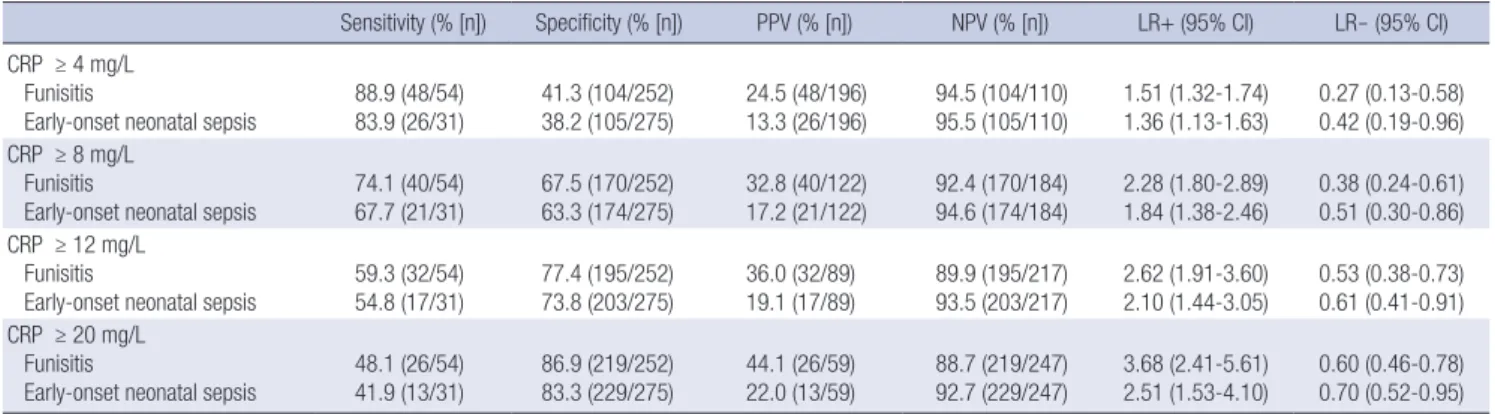
The aim of this study was to determine whether maternal serum C-reactive protein (CRP) is of value in predicting funisitis and early-onset neonatal sepsis (EONS) in women with preterm labor or preterm premature rupture of membranes (PROM). This retrospective cohort study included 306 consecutive women with preterm labor or preterm PROM who delivered preterm singleton neonates (23-35 weeks gestation) within 72 hr of CRP measurement. The CRP level was measured with a highly sensitive immunoassay. The sensitivity, specificity, positive predictive value, and negative predictive value of an elevated serum CRP level (≥ 8 mg/L) were 74.1%, 67.5%, 32.8%, and 92.4% for funisitis, and 67.7%, 63.3%, 17.2%, and 94.6% for EONS, respectively. Logistic regression analysis demonstrated that elevated levels of serum CRP were significantly associated with funisitis and EONS, even after adjusting gestational age. The maternal serum CRP level obtained up to 72 hr before delivery is an independent predictor of funisitis and EONS in women with preterm labor or preterm PROM. A low serum CRP level (< 8 mg/L) has good negative predictive value in excluding funisitis and EONS, and may therefore be used as a non- invasive adjunct to clinical judgment to identify low-risk patients.
Key Words: C-Reactive Protein; Early-Onset Neonatal Sepsis; Funisitis; Preterm Labor;
Preterm Premature Rupture of Membrane Sung Youn Lee1, Kyo Hoon Park1,
Eun Ha Jeong1, Kyung Joon Oh1, Aeli Ryu1, and Kyoung Un Park2 Departments of 1Obstetrics and Gynecology, and
2Laboratory Medicine, Seoul National University College of Medicine, Seoul National University Bundang Hospital, Seongnam, Korea Received: 16 July 2011
Accepted: 13 March 2012 Address for Correspondence:
Kyo Hoon Park, MD
Department of Obstetrics and Gynecology, Seoul National University Bundang Hospital, 82 Gumi-ro, Bundang-gu, Seongnam 463-707, Korea
Tel: +82.31-787-7252, Fax: +82.31-787-4054 E-mail: [email protected]
http://dx.doi.org/10.3346/jkms.2012.27.6.674 • J Korean Med Sci 2012; 27: 674-680 Obstetrics & Gynecology
INTRODUCTION
Microbial invasion of the amniotic cavity (MIAC) is considered to be the leading cause of preterm labor or preterm premature rupture of membranes (PROM), with an incidence of approxi- mately 25% of all preterm births (1, 2). A subset of fetuses ex- posed to microorganisms in utero may elicit the fetal inflam- matory response syndrome, including funisitis, which has been implicated as a cause of fetal or neonatal injury that leads to ce- rebral palsy and chronic lung disease (1, 3-6). Similarly, in the setting of MIAC a substantial number of preterm neonates are born with congenital sepsis, which has a high lethality rate (7) and survivors are at risk for other complications, such as severe retinopathy of prematurity or periventricular leukomalacia (8, 9). Therefore, the early identification of funisitis and congenital sepsis is a desirable clinical goal because a late diagnosis with delayed treatment of these early-onset diseases may increase the possibility of long-term sequelae and disability.
The early prenatal diagnosis of funisitis and/or congenital sepsis is difficult to achieve because the diagnosis of funisitis can only be made with certainty after delivery of the placenta and the diagnosis of congenital sepsis requires invasive procedures, such as cordocentesis. Therefore, several studies have attempt- ed to develop sensitive and specific diagnostic parameters for
funisitis and congenital sepsis via analysis amniocentesis-ob- tained amniotic fluid (AF), such as the AF white blood cell count and cytokine levels, and such parameters have accordingly been reported as significant predictors (10-15); however, amniocen- tesis is also an invasive procedure with risks. A recent study has reported that the maternal serum interleukin-6 (IL-6) predicts individuals destined to develop funisitis up to 72 hr before de- livery (16). Moreover, funisitis has been implicated as a valu- able marker for early-onset neonatal sepsis (13, 17, 18). As IL-6 is thought to be the primary trigger of C-reactive protein (CRP) release (19), it follows that the maternal serum CRP can also be predictive of funisitis and early-onset neonatal sepsis. This in- formation is clinically relevant because measurement of CRP is a non-invasive, rapid, inexpensive, and widely available test for detecting inflammation and tissue damage. The purpose of the current study, therefore, was to determine the diagnostic accu- racy of the maternal serum CRP for the prediction of funisitis and early-onset neonatal sepsis in women with preterm labor or preterm premature rupture of membranes.
MATERIALS AND METHODS Study design
This retrospective cohort study consisted of consecutive wom-
en who were admitted to the Seoul National University Bun- dang Hospital between January 2004 and December 2010 with the diagnosis of preterm labor and intact membranes or pre- term PROM (gestational age < 36 weeks) who met the follow- ing criteria: 1) singleton gestation; 2) maternal blood drawn for determination of CRP levels on admission and weekly thereaf- ter until delivery; 3) gestational age at birth > 23.0 weeks and
< 36.0 weeks; 4) placental histopathologic examination after preterm delivery; 5) absence of a major congenital anomaly; 6) delivery within 72 hr of CRP measurement. This last criterion was used to preserve a meaningful temporal relationship be- tween the CRP level, placental histology, and neonatal outcome.
Throughout the study period, the maternal serum CRP level was routinely measured at the time of admission in women who were diagnosed with preterm labor or preterm PROM. It is the policy at our institution to send the placenta of all preterm ba- bies for histopathologic examination.
Data storage and retrieval
A detailed database of all obstetric patients and neonates ad- mitted to the neonatal intensive care unit at our institution has been maintained since 2004. Demographic, antenatal, delivery, and outcome information data for all preterm births are entered prospectively by research fellows and research assistants. The cohort data retrieved in the database includes maternal age, par- ity, gestational age at the time of admission and delivery, gender, mode of delivery, causes of preterm birth (preterm labor and pre- term PROM), maternal serum CRP on admission, birth weight, Apgar scores at 1 and 5 min, clinical diagnosis of chorioamnio- nitis, placental pathologic diagnoses, antenatal use of medica- tions (steroids and antibiotics), and the diagnosis of early-onset neonatal sepsis. The serum CRP levels, measured again at week- ly intervals after admission, were abstracted from the electronic medical record in those patients who met entry criteria.
Definition of terminology
Preterm labor was defined as the presence of regular uterine contractions with a frequency of at least 2 every 10 min and cer- vical change that required hospitalization. Rupture of mem- branes was diagnosed by a sterile speculum examination con- firming both pooling of amniotic fluid in the vagina and a posi- tive nitrazine test. Corticosteroids and antibiotics were started if indicated. Clinical chorioamnionitis was defined as a body temperature ≥ 37.8°C on 2 occasions at least 4 hr apart, and
> 2 of the following criteria: uterine tenderness; malodorous vaginal discharge; maternal leukocytosis (> 15,000/μL); mater- nal tachycardia (> 100 beats/min); and fetal tachycardia (> 160 beats/min) (20). Histologic chorioamnionitis was diagnosed in the presence of acute inflammatory changes in any of the tissue samples (amnion, chorion-decidua, umbilical cord, and chori- onic plate) using criteria published previously (11). Funisitis was
diagnosed in the presence of neutrophil infiltration into the um- bilical vessel walls or Wharton’s jelly. Early-onset neonatal sep- sis was defined as the presence of confirmed or suspected sepsis at ≤ 72 hr after birth. Confirmed sepsis was diagnosed when ei- ther the blood culture and/or cerebrospinal fluid culture was positive. Suspected sepsis was diagnosed in the absence of a positive culture when two or more of the following previously validated hematologic criteria (21, 22) were observed: absolute neutrophil count < 7,500/μL or > 14,500/μL; absolute band count > 1,500/μL; immature/total neutrophil ratio > 0.16; and platelet count < 150,000/μL.
C-reactive protein measurements
The CRP level was measured with a latex-enhanced turbidimet- ric immunoassay (Denka Seiken, Tokyo, Japan) using an auto- mated analyzer (Toshiba 200FR; Toshiba, Tokyo, Japan). The detection limit of this assay is 0.1 mg/L. Both intra- and inter- assay coefficients of variation were < 10%.
Statistical analysis
A Student’s t-test or Mann-Whitney U-test was used for com- parison of continuous variables. Comparisons of proportions were performed with a chi-squared-test or Fisher’s exact test.
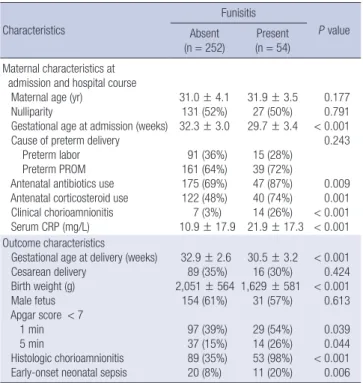
Shapiro-Wilk and Kolmogorov-Smirnov tests were used to test for normal distribution of the data. A receiver operating charac- teristic (ROC) curve analysis was used to determine the relation- ship between the sensitivity (true-positive rate) and the false- positive rate, and to select the best cut-off value for the serum CRP in the prediction of funisitis and early-onset neonatal sep- sis. Diagnostic indices were calculated (sensitivity, specificity, positive predictive value [PPV], negative predictive value [NPP], positive likelihood ratio [LR+], and negative likelihood ratio [LR-]) for the serum CRP to identify funisitis and early-onset neonatal sepsis. A logistic regression analysis was performed to determine the relationship between serum CRP levels and the occurrence of funisitis and early-onset neonatal sepsis after adjusting for baseline variables that have a significant correlation or a ten- dency with each of the outcome variables (P < 0.15), including gestational age, clinical chorioamnionitis, use of antenatal ste- roids and use of antenatal antibiotics (Table 1). In the logistic regression model, all factors were entered as dichotomous vari- ables and the ROC curves were used to identify the best cut-off values for the dichotomization of variables. All reported P val- ues were two-sided, and P values < 0.05 were considered sta- tistically significant. SPSS 15.0 for Windows (SPSS Inc., Chicago, IL, USA) was used for statistical analyses.
Ethics statement
The study protocol was reviewed and approved by the institu- tional review board of the Seoul National University Bundang Hospital (IRB No. B-1006/103-102). Informed consent was waived
by the board due to retrospective approach of this study.
RESULTS Study population
During the study period, 514 women with a viable singleton preg-
nancy initially diagnosed with preterm labor or preterm PROM delivered between 23.1 and 35.6 weeks gestation. Of these 514 women, 3 (0.6%) were excluded due to neonatal deaths in the delivery room, 1 (0.2%) for major congenital malformations, and 117 (23%) for an incomplete data set (lack of placental pa- thology [n = 15] and lack of maternal serum CRP level on ad- mission, or thereafter at weekly intervals until delivery [n = 102]).
Eighty-seven additional women were excluded because of CRP measurement-to-delivery intervals > 72 hr. The remaining 306 women, who fit the study criteria, defined the study cohort:
106 women had preterm labor with intact membranes and 200 women had preterm PROM. No significant differences were noted between women with preterm PROM and intact mem- branes with respect to the mean CRP level and the rates of clini- cal chorioamnionitis and early-onset neonatal sepsis. However, women with preterm labor had a significantly lower gestational age at the time of admission and delivery and a higher rate of histologic chorioamnionitis than did women with preterm PROM (gestational age at delivery, 31.9 ± 2.9 vs 32.7 ± 2.8 weeks, P = 0.031; rate of histologic chorioamnionitis, 54.7% [58/106] vs 42% [84/200], P = 0.034). The reasons for not measuring CRP included immediate delivery following hospital admission and attending physician preference for the follow-up CRP measure- ments.
Funisitis was present in 17.6% of the cases (54/306) and ear- ly-onset neonatal sepsis was diagnosed in 10.4% of the cases (31/306). Of 31 neonates with early-onset neonatal sepsis, 6.5%
(2/31) were diagnosed based on blood culture results and 93.5%
(29/31) were clinically suspected to have sepsis. Microorgan- isms isolated from blood cultures included coagulase-negative Table 1. Demographic and clinical characteristics of women and their newborns
according to the presence or absence of funisitis Characteristics
Funisitis
P value Absent
(n = 252)
Present (n = 54) Maternal characteristics at
admission and hospital course Maternal age (yr)
Nulliparity
Gestational age at admission (weeks) Cause of preterm delivery Preterm labor Preterm PROM Antenatal antibiotics use Antenatal corticosteroid use Clinical chorioamnionitis Serum CRP (mg/L)
31.0 ± 4.1 131 (52%) 32.3 ± 3.0
91 (36%) 161 (64%) 175 (69%) 122 (48%) 7 (3%) 10.9 ± 17.9
31.9 ± 3.5 27 (50%) 29.7 ± 3.4
15 (28%) 39 (72%) 47 (87%) 40 (74%) 14 (26%) 21.9 ± 17.3
0.177 0.791
< 0.001 0.243
0.009 0.001
< 0.001
< 0.001 Outcome characteristics
Gestational age at delivery (weeks) Cesarean delivery
Birth weight (g) Male fetus Apgar score < 7 1 min 5 min
Histologic chorioamnionitis Early-onset neonatal sepsis
32.9 ± 2.6 89 (35%) 2,051 ± 564
154 (61%) 97 (39%) 37 (15%) 89 (35%) 20 (8%)
30.5 ± 3.2 16 (30%) 1,629 ± 581
31 (57%) 29 (54%) 14 (26%) 53 (98%) 11 (20%)
< 0.001 0.424
< 0.001 0.613
0.039 0.044
< 0.001 0.006 Values are given as the mean ± standard deviation or No. (%). PROM, premature rup- ture of membranes; CRP, C-reactive protein.
Fig. 1. Receiver operating characteristic (ROC) curves for maternal serum C-reactive protein (CRP). (A) For predicting funisitis. Numbers next to solid dots represent serum CRP levels (mg/L; area under the curve, 0.751; SE, 0.036; P < 0.001). (B) For predicting early-onset neonatal sepsis. Numbers next to solid dots represent serum CRP levels (mg/L;
area under the curve, 0.700; SE, 0.051; P < 0.001).
Sensitivity Sensitivity
1-Specificity 1-Specificity
AUC = 0.751 P < 0.001 20
12 8
4
4
8
12 20
AUC = 0.700 P < 0.001
0.0 0.2 0.4 0.6 0.8 1.0 0.0 0.2 0.4 0.6 0.8 1.0
1.0
0.8
0.6
0.4
0.2
0.0
1.0
0.8
0.6
0.4
0.2
0.0
A B
Staphylococcus (n = 1) and Acinetobacter baumannii (n = 1).
Relationship between serum CRP and funisitis
Table 1 shows the demographic and clinical characteristics of the women and their newborns according to the presence or ab- sence of funisitis. Women with funisitis had a significantly lower mean gestational age at the time of admission and delivery, high- er rates of clinical chorioamnionitis and histologic chorioamni- onitis, were more likely to receive antenatal antibiotics and cor- ticosteroids, and were more likely to deliver neonates with ear- ly-onset neonatal sepsis than women without funisitis. Howev- er, there were no significant differences in the mean maternal age and the distribution of women with preterm PROM and in- tact membranes between these two groups. The mean serum CRP levels were significantly higher in women with funisitis than in women without funisitis.
Fig. 1A is a ROC curve describing the values of the serum CRP levels in predicting funisitis. The curve constructed for the ma- ternal serum CRP was above the 45° line, indicating a significant relationship with funisitis (area under the curve [AUC], 0.751;
standard error [SE], 0.036; P < 0.001). The best cut-off value for CRP to predict funisitis was 8 mg/L. The sensitivity, specificity, PPV, NPV, LR+, and LR- of an elevated serum CRP level (≥ 8 mg/
L) to predict funisitis are shown in Table 2.
To control for the significant differences in gestational age at the time of delivery, clinical chorioamnionitis, use of antenatal steroids, and use of antenatal antibiotics, we performed logistic regression analysis. Using the cut-off values derived from the ROC curves, elevated levels (≥ 8 mg/L) of maternal serum CRP were significantly associated with funisitis, even after control- ling for gestational age, chorioamnionitis, use of antenatal ste- roids, and use of antenatal antibiotics (odds ratio [OR], 4.44, 95%
confidence interval [CI] 2.11-9.34; Table 3).
Relationship between serum CRP and early-onset neonatal sepsis
Table 4 describes the demographic and clinical characteristics Table 2. Diagnostic indices of different C-reactive protein levels in the prediction of funisitis and early-onset neonatal sepsis
Sensitivity (% [n]) Specificity (% [n]) PPV (% [n]) NPV (% [n]) LR+ (95% CI) LR- (95% CI) CRP ≥ 4 mg/L
Funisitis
Early-onset neonatal sepsis
88.9 (48/54) 83.9 (26/31)
41.3 (104/252) 38.2 (105/275)
24.5 (48/196) 13.3 (26/196)
94.5 (104/110) 95.5 (105/110)
1.51 (1.32-1.74) 1.36 (1.13-1.63)
0.27 (0.13-0.58) 0.42 (0.19-0.96) CRP ≥ 8 mg/L
Funisitis
Early-onset neonatal sepsis
74.1 (40/54) 67.7 (21/31)
67.5 (170/252) 63.3 (174/275)
32.8 (40/122) 17.2 (21/122)
92.4 (170/184) 94.6 (174/184)
2.28 (1.80-2.89) 1.84 (1.38-2.46)
0.38 (0.24-0.61) 0.51 (0.30-0.86) CRP ≥ 12 mg/L
Funisitis
Early-onset neonatal sepsis
59.3 (32/54) 54.8 (17/31)
77.4 (195/252) 73.8 (203/275)
36.0 (32/89) 19.1 (17/89)
89.9 (195/217) 93.5 (203/217)
2.62 (1.91-3.60) 2.10 (1.44-3.05)
0.53 (0.38-0.73) 0.61 (0.41-0.91) CRP ≥ 20 mg/L
Funisitis
Early-onset neonatal sepsis
48.1 (26/54) 41.9 (13/31)
86.9 (219/252) 83.3 (229/275)
44.1 (26/59) 22.0 (13/59)
88.7 (219/247) 92.7 (229/247)
3.68 (2.41-5.61) 2.51 (1.53-4.10)
0.60 (0.46-0.78) 0.70 (0.52-0.95) PPV, positive predictive value; NPV, negative predictive value; LR+, positive likelihood ratio; LR-, negative likelihood ratio; CI, confidence interval; CRP, C-reactive protein.
Table 4. Demographic and clinical characteristics of women and their newborns according to the presence or absence of early-onset neonatal sepsis
Characteristics
Early-onset neonatal sepsis
P value Absent
(n = 275) Present (n = 31) Maternal characteristics at
admission and hospital course Maternal age (yr)
Nulliparity
Gestational age at admission (weeks) Cause of preterm delivery Preterm labor Preterm PROM Antenatal antibiotics use Antenatal corticosteroid use Clinical chorioamnionitis Serum CRP (mg/L)
31.2 ± 4.1 142 (52%) 32.0 ± 3.2
96 (35%) 179 (65%) 201 (73%) 145 (53%) 14 (5%) 11.0 ± 13.9
31.2 ± 2.7 16 (52%) 30.3 ± 3.6
10 (32%) 21 (68%) 21 (68%) 17 (55%) 7 (23%) 28.7 ± 36.8
0.921 0.998 0.011 0.769
0.527 0.823
< 0.001
< 0.001 Outcome characteristics
Gestational age at delivery (weeks) Cesarean delivery
Birth weight (g) Male fetus Apgar score < 7 1 min 5 min
Histologic chorioamnionitis Funisitis
32.6 ± 2.7
90 (33%) 2,118 ± 573
167 (61%) 105 (38%) 38 (14%) 123 (45%) 43 (16%)
30.8 ± 3.4
15 (48%) 1,614 ± 609
18 (58%) 21 (68%) 13 (42%) 19 (61%) 11 (36%)
0.003 0.082 0.001 0.774
0.002
< 0.001 0.08 0.006 Values are given as the mean ± standard deviation or No. (%). PROM, premature rup- ture of membranes; CRP, C-reactive protein.
Table 3. Logistic regression analyses of independent variables in predicting funisitis and early-onset neonatal sepsis
Variables Odds ratio 95% CI P value
Funisitis CRP ≥ 8 mg/L
Gestational age at delivery ≤ 32 weeks Antenatal antibiotics
Antenatal corticosteroids Clinical chorioamnionitis
4.44 2.74 3.03 1.27 6.97
2.11-9.34 1.25-6.03 1.16-7.88 0.55-2.93 2.41-20.2
< 0.001 0.012 0.023 0.569
< 0.001 Early-onset neonatal sepsis
CRP ≥ 8 mg/L
Gestational age at delivery ≤ 32 weeks Clinical chorioamnionitis
2.81 1.55 3.65
1.21-6.51 0.68-3.57 1.26-10.56
0.016 0.298 0.017 CI, confidence interval; CRP, C-reactive protein.
of the women and their newborns according to the presence or absence of early-onset neonatal sepsis. Women who delivered neonates with early-onset neonatal sepsis had a lower mean gestational age at the time of admission and significantly higher rates of clinical chorioamnionitis and funisitis when compared with women delivering neonates without early-onset neonatal sepsis. Neonates with early-onset neonatal sepsis were delivered earlier and had a lower mean birth weight and lower Apgar scores compared with those without early-onset neonatal sepsis. How- ever, there were no significant differences in the mean maternal age, the prevalence of histologic chorioamnionitis, and the pro- portion of mothers receiving antenatal antibiotics or corticoste- roids between mothers of neonates with early-onset neonatal sepsis compared with those who delivered without sepsis. The mean serum CRP levels were significantly higher in women de- livering neonates with early-onset neonatal sepsis than women delivering neonates without early-onset neonatal sepsis.
A ROC curve was constructed and used to select cut-off val- ues to dichotomize serum CRP levels as being increased or not increased (AUC, 0.700; SE, 0.051; P < 0.001; Fig. 1B). A cut-off value of 8 mg/L for serum C-reactive protein appeared to repre- sent a reasonable compromise between the sensitivity and spec- ificity, and was then used to calculate diagnostic indices for the prediction of early-onset neonatal sepsis. The sensitivity, speci- ficity, PPV, NPV, LR+, and LR- to predict early-onset neonatal sepsis are shown in Table 2. To determine the significant inde- pendent predictive effect of CRP on early-onset neonatal sepsis, logistic regression analysis was performed. Based on this model, an elevated CRP level (≥ 8 mg/L) was significantly associated with early-onset neonatal sepsis after adjustment for gestation- al age at delivery and clinical chorioamnionitis (OR, 2.81; 95%
CI, 1.21-6.51; Table 3).
DISCUSSION
A number of studies have assessed the relationship between early-onset neonatal sepsis and the maternal serum CRP level;
some studies have demonstrated a significant association (12, 23, 24), while other studies have failed to do so (25, 26). This dis- crepancy among studies is probably attributable, in part, to a wide variety of time intervals between CRP measurement and delivery. Indeed, a recent study in which daily blood samples were collected from women with preterm PROM revealed that maternal serum IL-6 rises as much as 72 hr before the onset of labor or clinical infection (16). Therefore, the current study was restricted to the women who delivered within 72 hr of the CRP measurement, so that the CRP measurement, neonatal outcome, and histologic examination of the placenta could be compared in a temporally meaningful way, and showed that CRP measure- ment independently predicted early-onset neonatal sepsis. Nev- ertheless, in the current study the AUC for the maternal serum
CRP was relatively small (95% CI, 0.600-0.800) and the likeli- hood ratio was 1.84, which suggests that the usefulness of se- rum CRP alone as a predictor of early-onset neonatal sepsis is limited. These findings are in agreement with the recent study by van der Heyden et al. (24).
From a practical point of view, we propose that the maternal serum CRP level can be used as a screening test for early-onset neonatal sepsis and funisitis rather than a diagnostic test. Spe- cifically, screening for early-onset neonatal sepsis and funisitis would begin with a maternal serum CRP measurement which can classify women with preterm labor or preterm PROM into high- and low-risk groups, and those at high-risk could then be targeted for appropriate risk-specific intervention (e.g., amnio- centesis).
A maternal serum CRP < 8 mg/L has good negative predic- tive value for early-onset neonatal sepsis and funisitis, suggest- ing that a low CRP can identify women and their newborns who may safely avoid overtreatment (e.g., antibiotics and invasive intervention). These findings are consistent with the reports by Kurki et al. (26) and Ernest et al. (27) who demonstrated that neg- ative CRP values before delivery strongly suggest the absence of chorioamnionitis and/or neonatal infection. The current study showed that approximately 60% of patients presenting with pre- term labor or preterm PROM will be included into this catego- ry. This finding is supported in the literature, in which 67% of women presenting with preterm labor had a CRP < 8 mg/L (28).
CRP has the potential to accurately identify a significant portion of women presenting with preterm labor or preterm PROM as low risk for early-onset neonatal sepsis and funisitis.
Several investigators have reported that the maternal serum CRP is valuable for the early diagnosis of histologic chorioam- nionitis in the absence of clinical signs of infection (10-12, 23).
However, to date there have been no reports on maternal serum CRP levels in relation to funisitis. Our finding that serum CRP levels are related to funisitis is novel, but not unexpected be- cause a similar relationship has been demonstrated with IL-6, the primary cytokine responsible for the biosynthesis of CRP (16).
Indeed, a significant relationship between maternal serum IL-6 and CRP level has been shown (29).
This is the first study to examine the independent predictive value of the maternal serum CRP level for funisitis. A fetal in- volvement assessment is an important step in the management of infection-associated preterm labor or preterm PROM. The difficulty with this assessment has lead to development of a num- ber of markers in umbilical cord plasma at birth and amniotic fluid. However, evaluating markers in these body fluids is rarely helpful in the early prediction of funisitis as access to these body fluids is limited in an ongoing pregnancy or may require the use of invasive techniques. In contrast, CRP test in maternal serum, as used in the current study, is non-invasive, inexpensive, and easily performed before delivery, thus allowing for serial test-
ing. Therefore, our finding that the serum CRP is independently predictive of funisitis can be beneficial to clinicians in counsel- ing and clinical management of women with preterm labor or preterm PROM.
Our study had several limitations. First, the most important one is the retrospective design. However, most data (i.e., mater- nal, placental, and other perinatal parameters) were collected prior to inclusion in the study by means of an electronically-pre- pared Excel-based (Microsoft Corporation, Redmond, WA, USA) data collection tool. Thus, each data element was accurately documented and verified. Second, we included a heterogeneous group of women regarding the status of fetal membranes (e.g., intact or ruptured fetal membranes). However, we believe that our main results remain valid because elevated levels of serum CRP were significantly associated with both funisitis and early- onset neonatal sepsis after adjustment for the confounding vari- ables (gestational age, clinical chorioamnionitis, and the state of fetal membranes).
In conclusion, a maternal serum CRP level obtained up to 72 hr before delivery is an independent predictor of funisitis and early-onset neonatal sepsis in women with preterm labor or preterm PROM but the usefulness is limited. A serum CRP level
< 8 mg/L has a good negative predictive value in excluding fu- nisitis and early-onset neonatal sepsis, and may therefore be a useful non-invasive adjunct to clinical judgment to identify low- risk patients. These findings need to be replicated prospectively in a second larger cohort because a recent study has found a sig- nificant influence of socio-demographic characteristics (e.g., race) on CRP values during normal pregnancy (30).
REFERENCES
1. Romero R, Gotsch F, Pineles B, Kusanovic JP. Inflammation in pregnan- cy: its roles in reproductive physiology, obstetrical complications, and fetal injury. Nutr Rev 2007; 65: S194-202.
2. Gonçalves LF, Chaiworapongsa T, Romero R. Intrauterine infection and prematurity. Ment Retard Dev Disabil Res Rev 2002; 8: 3-13.
3. Romero R, Gomez R, Ghezzi F, Yoon BH, Mazor M, Edwin SS, Berry SM.
A fetal systemic inflammatory response is followed by the spontaneous onset of preterm parturition. Am J Obstet Gynecol 1998; 179: 186-93.
4. Yoon BH, Romero R, Kim KS, Park JS, Ki SH, Kim BI, Jun JK. A systemic fetal inflammatory response and the development of bronchopulmona- ry dysplasia. Am J Obstet Gynecol 1999; 181: 773-9.
5. Yoon BH, Romero R, Park JS, Kim CJ, Kim SH, Choi JH, Han TR. Fetal ex- posure to an intra-amniotic inflammation and the development of cere- bral palsy at the age of three years. Am J Obstet Gynecol 2000; 182: 675-81.
6. Pacora P, Chaiworapongsa T, Maymon E, Kim YM, Gomez R, Yoon BH, Ghezzi F, Berry SM, Qureshi F, Jacques SM, et al. Funisitis and chorionic vasculitis: the histological counterpart of the fetal inflammatory response syndrome. J Matern Fetal Neonatal Med 2002; 11: 18-25.
7. Ohlsson A, Vearncombe M. Congenital and nosocomial sepsis in infants born in a regional perinatal unit: cause, outcome, and white blood cell
response. Am J Obstet Gynecol 1987; 156: 407-13.
8. Leviton A, Dammann O, Engelke S, Allred E, Kuban KC, O’Shea TM, Paneth N; ELGAN Study Investigators. The clustering of disorders in in- fants born before the 28th week of gestation. Acta Paediatr 2010; 99:
1795-800.
9. Faix RG, Donn SM. Association of septic shock caused by early-onset group B streptococcal sepsis and periventricular leukomalacia in the preterm infant. Pediatrics 1985; 76: 415-9.
10. Baud O, Emilie D, Pelletier E, Lacaze-Masmonteil T, Zupan V, Fernan- dez H, Dehan M, Frydman R, Ville Y. Amniotic fluid concentrations of interleukin-1beta, interleukin-6 and TNF-alpha in chorioamnionitis be- fore 32 weeks of gestation: histological associations and neonatal out- come. Br J Obstet Gynaecol 1999; 106: 72-7.
11. Yoon BH, Romero R, Kim CJ, Jun JK, Gomez R, Choi JH, Syn HC. Amni- otic fluid interleukin-6: a sensitive test for antenatal diagnosis of acute inflammatory lesions of preterm placenta and prediction of perinatal morbidity. Am J Obstet Gynecol 1995; 172: 960-70.
12. Yoon BH, Yang SH, Jun JK, Park KH, Kim CJ, Romero R. Maternal blood C-reactive protein, white blood cell count, and temperature in preterm labor: a comparison with amniotic fluid white blood cell count. Obstet Gynecol 1996; 87: 231-7.
13. Park JS, Romero R, Yoon BH, Moon JB, Oh SY, Han SY, Ko EM. The rela- tionship between amniotic fluid matrix metalloproteinase-8 and funisi- tis. Am J Obstet Gynecol 2001; 185: 1156-61.
14. Figueroa-Damián R, Arredondo-Garcia JL, Mancilla-Ramírez J. Amni- otic fluid interleukin-6 and the risk of early-onset sepsis among preterm infants. Arch Med Res 1999; 30: 198-202.
15. Buhimschi CS, Buhimschi IA, Abdel-Razeq S, Rosenberg VA, Thung SF, Zhao G, Wang E, Bhandari V. Proteomic biomarkers of intra-amniotic inflammation: relationship with funisitis and early-onset sepsis in the premature neonate. Pediatr Res 2007; 61: 318-24.
16. Murtha AP, Sinclair T, Hauser ER, Swamy GK, Herbert WN, Heine RP.
Maternal serum cytokines in preterm premature rupture of membranes.
Obstet Gynecol 2007; 109: 121-7.
17. Martius JA, Roos T, Gora B, Oehler MK, Schrod L, Papadopoulos T, Gross U. Risk factors associated with early-onset sepsis in premature in- fants. Eur J Obstet Gynecol Reprod Biol 1999; 85: 151-8.
18. Yoon BH, Romero R, Park JS, Kim M, Oh SY, Kim CJ, Jun JK. The relation- ship among inflammatory lesions of the umbilical cord (funisitis), um- bilical cord plasma interleukin 6 concentration, amniotic fluid infection, and neonatal sepsis. Am J Obstet Gynecol 2000; 183: 1124-9.
19. Castell JV, Gómez-Lechón MJ, David M, Fabra R, Trullenque R, Heinrich PC. Acute-phase response of human hepatocytes: regulation of acute- phase protein synthesis by interleukin-6. Hepatology 1990; 12: 1179-86.
20. Gibbs RS, Blanco JD, St Clair PJ, Castaneda YS. Quantitative bacteriolo- gy of amniotic fluid from women with clinical intraamniotic infection at term. J Infect Dis 1982; 145: 1-8.
21. Bhandari V, Wang C, Rinder C, Rinder H. Hematologic profile of sepsis in neonates: neutrophil CD64 as a diagnostic marker. Pediatrics 2008;
121: 129-34.
22. Smulian JC, Bhandari V, Campbell WA, Rodis JF, Vintzileos AM. Value of umbilical artery and vein levels of interleukin-6 and soluble intracel- lular adhesion molecule-1 as predictors of neonatal hematologic indices and suspected early sepsis. J Matern Fetal Med 1997; 6: 254-9.
23. Skrablin S, Lovric H, Banovic V, Kralik S, Dijakovic A, Kalafatic D. Mater-
nal plasma interleukin-6, interleukin-1beta and C-reactive protein as indicators of tocolysis failure and neonatal outcome after preterm deliv- ery. J Matern Fetal Neonatal Med 2007; 20: 335-41.
24. van der Heyden JL, van Teeffelen SS, Coolen AC, Halbertsma FJ, Aarden- burg R, Mertens HJ, Mol BW. Is it useful to measure C-reactive protein and leukocytes in patients with prelabor rupture of membranes? Am J Perinatol 2010; 27: 543-7.
25. Torbé A, Kowalski K. Maternal serum and vaginal fluid C-reactive pro- tein levels do not predict early-onset neonatal infection in preterm pre- mature rupture of membranes. J Perinatol 2010; 30: 655-9.
26. Kurki T, Teramo K, Ylikorkala O, Paavonen J. C-reactive protein in pre- term premature rupture of the membranes. Arch Gynecol Obstet 1990;
247: 31-7.
27. Ernest JM, Swain M, Block SM, Nelson LH, Hatjis CG, Meis PJ. C-reac-
tive protein: a limited test for managing patients with preterm labor or preterm rupture of membranes? Am J Obstet Gynecol 1987; 156: 449-54.
28. Mazor M, Kassis A, Horowitz S, Wiznitzer A, Kuperman O, Meril C, Glezerman M. Relationship between C-reactive protein levels and in- traamniotic infection in women with preterm labor. J Reprod Med 1993;
38: 799-803.
29. Szarka A, Rigó J Jr, Lázár L, Beko G, Molvarec A. Circulating cytokines, chemokines and adhesion molecules in normal pregnancy and pre- eclampsia determined by multiplex suspension array. BMC Immunol 2010; 11: 59.
30. Picklesimer AH, Jared HL, Moss K, Offenbacher S, Beck JD, Boggess KA. Racial differences in C-reactive protein levels during normal preg- nancy. Am J Obstet Gynecol 2008; 199: 523.