INTRODUCTION
Despite of great advances in early diagnosis and logical discovery of chemotherapy for cancer and of substantial ad- vances in molecular oncology, the cure rate of most cancers remain still low. Primary cancer prevention, particularly che- moprevention, could become an increasingly useful strategy in the fight against cancer (1). Fifty years have passed since the first chemotherapeutic alkylating agent was developed, and more than a hundred clinical chemotherapeutic regimens have been developed (2, 3). Nevertheless, the total number of new cancer patients worldwide in 1985 was estimated to be 7.62 million (4). The failure to improve the 5-yr observed survival from 1 in 3 in the 1960s to 1 in 2 in the 1970s stim- ulated awareness of the importance of primary prevention in cancer; chemoprevention (5). Since 1977, researchers in Korea have been trying to discover non-toxic cancer chemopreven- tive agents from natural food products, including ginseng (6).
LONG-TERM ANTICARCINOGENICITY EXPERIMENT
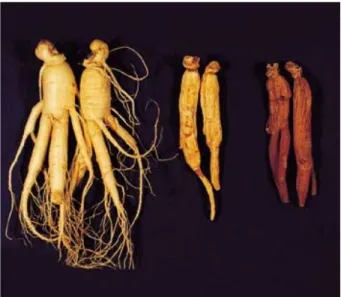
It is hypothesized that the life-prolongation effect of gin- seng described by Shennong (7) may be due to ginseng’s effi- cacy in preventing development of cancers. Therefore, an investigation was carried out in 1978 to evaluate the effects of ginseng on the inhibition or prevention of carcinogenesis induced by various chemical carcinogens. Red ginseng (Fig.
1) extract (1 mg/mL of drinking water) was administered orally to the weaned mice, and chemical carcinogens, 9, 10- demethyl-1, 2-benzanthracene (DMBA, 30 g), urethane (1 mg), N-2 fluorenylacetamide (FAA, 100 g×5), aflatox- in B1(8 g), or Hansando tobacco smoke condensates (320 g) were also injected into the subscapular region of ICR mice within 24 hr after birth. Controls were comprised of three groups of ICR newborn mice: normal (100), ginseng (200), and vehicle (316). The ten experimental groups were
Taik-Koo Yun, Yun-Sil Lee, You Hui Lee*, Shin Il Kim* Hyo Yung Yun�
Laboratory of Experimental Pathology, Korea Cancer Center Hospital, Seoul; Korea Ginseng &
Tobacco Research Institute*, Taejon; Department of Surgery, College of Medicine�, Chungbuk National University Hospital, Cheongju, Korea
Address for correspondence Taik-Koo Yun, M.D.
Laboratory of Experimental Pathology, Korea Cancer Center Hospital, 215-4 Gongneung-dong, Nowon-ku, Seoul 139-706, Korea
Tel : +82.2-335-1020, Fax : +82.2-335-1020 E-mail : [email protected]
S6
Anticarcinogenic Effect of Panax ginseng C.A. Meyer and Identification of Active Compounds
The failure to improve the five-year survival rate of cancer patients, from one in three in the 1960s to one in two in the 1970s, stimulated awareness of the impor- tance of primary prevention of cancer. Korean investigators carried out extensive long-term anticarcinogenicity experiments with 2000 newborn mice to investigate whether Panax ginseng C.A. Meyer inhibited carcinogenesis induced by several chemical carcinogens in 1978. There was a 22% decrease (p <0.05) in the inci- dence of urethane induced lung adenoma by the combined use of red ginseng extract. In the group sacrificed at 56 weeks after the treatment with aflatoxin B1, the incidence of hepatoma significantly decreased to 75% by the addition of red ginseng extract (p <0.05). The result showed that natural products can provide hope for human cancer prevention. By the newly established ‘9 week medium- term anticarcinogenicity test model of lung tumors in mice’(Yun’s model), we confirmed significant anticarcinogenic effects of powders and extracts of the 6- yr-old dried fresh ginseng, 5- and 6-yr old white ginsengs, and 4-, 5-, and 6-yr old red ginseng. We also demonstrated that the anticarcinogencity of ginseng was more prominent in aged or heat treated extracts of ginseng and red ginseng made by steaming. To investigate the active components for cancer prevention, several fractions of 6-yr old fresh ginseng and red ginseng, four semi-synthetic ginsenoside Rh1, Rh2, Rg3and Rg5, major saponin components in red ginseng, were prepared. Among the ginsenosides, Rg3and Rg5showed statistically sig- nificant reduction of lung tumor incidence and Rh2had a tendency of decreasing the incidence. Ginsenoside Rg3, Rg5and Rh2were found to be active anticar- cinogenic compounds. Rg3, Rg5and Rh2are active components in red ginseng, and they prevent cancer either singularly or synergistically.
Key Words : Panax ginseng C.A. Meyer; Long-term Anticarcinogenicity Mouse Model; Chemopreven- tion; Medium-term Anticarcinogenicity Mouse Model (Yun’s Model); Active Ginsenoside Components
comprised of DMBA (101), DMBA combined with ginseng (103), urethane (94), urethane combined with ginseng (92), FAA (90), FAA combined with ginseng (88), aflatoxin B1 (50), aflatoxin B1 combined with ginseng (47) (Table 1). In the N-methyl-N′-nitro-N-nitrosoguanidine (MNNG) group, MNNG (3 mg) was injected subcutaneously into the backs of Wistar rats once a week for 10 weeks (6, 8). The mice and rats were autopsied immediately after sacrifice. All major organs were grossly examined and weighed, and histopatho-
logical examinations were also made. In the group sacrificed at 48 weeks after the treatment with DMBA (DMBA com- bined with ginseng), the incidence of diffuse infiltration of pulmonary adenoma decreased by 61% (p<0.01), and the aver- age lung weight of male mice decreased by 21% (p<0.05). In the group sacrificed at 28 weeks after the treatment with ure- thane, there was 22% decrease (p< 0.05) in the incidence of lung adenoma by the combined treatment with ginseng. In the group sacrificed at 56 weeks after treatment with afla- toxin B1, there was decrease in the incidence of lung adeno- ma (29%) and hepatoma (75%) (p< 0.05) by the combined treatment with ginseng (Table 2). In the groups sacrificed at 68 weeks after the treatment with FAA or 48 weeks of tobacco smoke condensate treatment, statistically no signifi- cant decrease was observed. In the group sacrificed at 27 weeks after treatment with MNNG, ginseng extract had no effect on the incidence of MNNG-induced sarcoma by the com- bined treatment with ginseng. These findings indicated that prolonged administration of red ginseng extract inhibited the incidence and also the proliferation of tumors induced by DMBA, urethane, or aflatoxin B1(6, 8), providing the hope for human cancer prevention by natural products in human.
ESTABLISHMENT OF 9 WEEK MEDIUM-TERM ANTICARCINOGENICITY TEST MODEL
(YUN’S MODEL)
Soon after obtaining results of long-term experiments, we realized that it was necessary to develop a medium-term
Carcinogens or vehicles Sacrificed after birth (wk) Dose and route Vehicle No. of mice injected
No. of mice at
weaning %
1% gelatin 28 and 68 0.02 mL×1 s.c. H2O 199 194 97.5
DMSO 56 0.01 mL×1 s.c. 200 192 96.0
DMBA 26 and 48 30 g×1 s.c. 1% gelatin 210 204 97.1
Urethane 28 and 50 1 mg×1 s.c. 1% gelatin 200 186 93.0
FAA 25 and 68 100 g×5 s.c. 1% gelatin 201 178 88.6
Aflatoxin B1 56 8 g×1 s.c. DMSO 200 104 52.0
Tobacco smoke
condensate 67 320 g×1 s.c. 1% gelatin 200
Table 1.Survival of ICR newborn mice injected with various chemical carcinogens at weaning in long-term anticarcinogenicity experiment
DMSO: Dimethylsulfoxide, FAA: N-2- Fluorenylacetamide, DMBA: 9, 10-Dimethyl-1, 2-benz(a)anthracene.
Sacrifice (wks) Weight of lung Incidence of
lung adenoma Diffuse infiltration Incidence of hepatoma
DMBA 48 21% decrease - 63% decrease -
Urethane 28 - 22% decrease*
Aflatoxin B1 56 - 29% decrease - 75% decrease*
Table 2.Effect of red ginseng extract on pulmonary adenoma induced by various chemical carcinogens in long-term in vivo experi- ments
DMBA: 9,10-dimethyl-1,2-benzanthracene. *: p<0.05
Fig. 1. Panax ginseng C.A. Meyer in Korea are classified into fresh ginseng (left), white ginseng (center) and red ginseng (right).
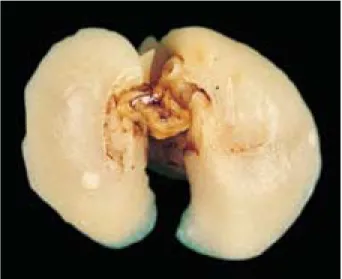
model for further experiments to eliminate the fluctuation of experimental conditions due to long-term feeding, and to include synthetic environmental chemical carcinogens such as ben30(a)pyrene (BP). Therefore, in 1983, we embarked to establish a 9-12 weeks medium-term anticarcinogenicity test model (9). A/J, C57BL/6J, C57BR/cdJ and N:GP(S) strains of newborn mice younger than 24 hr old were inject- ed subcutaneously with 0.5 mg or 1 mg of BP and all mice were sacrificed at the 9th week after birth. Lungs were excised and fixed in Tellyesniczky’s solution (100 mL of 70% ethanol, 3 mL of formalin, 5 mL of glacial acetic acid), and the num- ber of the adenoma were than counted by the naked eyes (Fig. 2). After counting, the lungs were embedded in paraf- fin, cut and then stained with hematoxylineosin. To obtain an index of tumor incidence, the percentage of tumor bear- ing mice per total number of mice in each group was calcu- lated. Tumor multiplicity was defined as the average num- ber of tumors per mouse obtained, by dividing the total num- ber of tumors by the total number of mice per group includ- ing nontumor-bearing animals. Statistical comparison was then made using the Chi-square test for tumor incidence and Student’s t-test for multiplicity. Lung adenoma incidence was 46.8% and 54.4% in N:GP(S) mice treated with 0.5 mg and 1 mg of BP, respectively. Corresponding values of A/J mice were 86.7% and 88.3%, those of C57BL/6J mice were 1.3% and 0%, and those of C57BR/ cdJ were 0%. The dose response effect of BP in A/J and N:GP(S) mice were also ex- amined: A single injection of 40 g of BP, which was the lowest dose in this experiment, showed 71.0% incidence of lung adenoma in A/J mice, which might be too high inci- dence for evaluating the anticarcinogenicity of unknown com- pounds. However, the dose showing a 50% tumor incidence in N:GP(S) mice was found to be 0.5 mg of BP (49.4%)
(9-12). In 1983, we established a 9 week medium-term anti- carcinogenicity model, termed Yun’s model, based on the incidence of N:GP(S) mouse pulmonary adenomas induced by benzo(a) pyrene.
MATERIALS AND METHODS OF YUN’S MODEL
N:GP(S) newborn mice less than 24 hr old were subcuta- neously injected once in the scapular region with 0.02 mL of benzo(a)pyrene (0.5 mg suspension of BP in aqueous gelatin). After weaning, test materials were administered for 6 weeks through drinking water or diets. All mice were sacrificed at the 9th week after birth. The procedures to score the index of lung tumor incidence were the same as those described under “Establishment of 9 week medium- term anticarcinogenicity test model (Yun’s model)”(9-12).
EVALUATION OF YUN’S MODEL
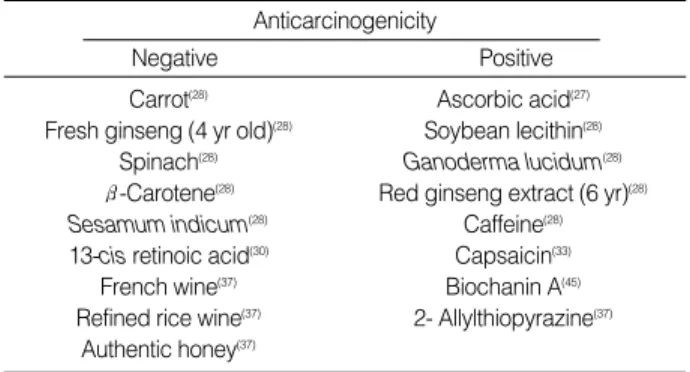
Ascorbic acid, -carotene, red ginseng extract (6 yr old), carrot, soybean lecithin, spinach, Sesamum indicum, Ganoder- ma lucidum, caffeine, capsaicin (13-15), fresh ginseng (4 yr old), biochanin A (16) and 2-allylthiopyrazine (17, 18) were evaluated as anticarcinogenic agents, using the above 9 week medium-term test model. Surprisingly, the authors failed to observe any anticarcinogenic effect of -carotene, fresh gin- seng, carrot, Sesamum indicum, spinach, however, ascorbic acid, red ginseng extract, soybean lecithin, Ganoderma lucidum, caffeine, capsaicin and 2-allylthiopyrazine showed positive effects (10-12, 19). This result was withheld for publication for 5 yr due to the unexplainability of the data (9). Soon after, the preliminary reports of the Physician’s Health Study in U.S.A. appeared to indicate negative results with -carotene (20). Similar results of lack of efficacy were also observed in an ATBC trial using 29,133 randomly selected male smok- ers (21), a CARET trial studying more than 18,000 people at high risk of lung cancer (22, 23), and a Physicians’Health Study which enrolled 22,071 American physicians (24). At the recommendation of the Chemoprevention Branch, Divi- sion of Cancer Chemoprevention and Control, US National Cancer Institute (25, 26), researchers in Korea tested the effect of red ginseng extract on azoxymethane (AOM)-induced colon cancer and N-butyl-N-(4-hydroxybutyl)-nitrosamine (OH-BBN)-induced bladder cancer, and the result were neg- ative (unpublished). Moreover, 13-cis retinoic acid was also without benefit in the 9-week medium-term study (12, 19, 27) (Table 3).
Recently, the loci responsible for mouse lung tumor sus- ceptibility have been mapped to chromosomes 6, 9, 17, and 19, while those linked to lung tumor resistance have been mapped to chromosome 4, 11, 12, and 18. Known candi- date genes for susceptibility or resistance include the K-ras
Fig. 2. Gross appearance of mouse lung with adenomas. Mouse was given a single subcutaneous injection of benzo(a)pyrene within 24 hr after birth and killed 9 weeks after birth.
proto-oncogene on chromosome 6, and the p16 tumor supres- sor gene on chromosome 4. The mouse lung tumor model has been expanded by various researchers including the Chemoprevention Branch of the NCI to include preclinical screening of chemopreventive agents against human lung cancer (28). Furthermore, this model system was also em- ployed to confirm the negative anticarcinogenicity effect of 9-cis retinoic acid, 4-HPR and oltipratz that had been known as promising cancer preventive agents in the NCI recom- mended model (29).
ANTICARCINOGENICITY OF TYPES AND AGES OF PANAX GINSENG C.A. MEYER
Using Yun’s model, investigators earlier confirmed the anticarcinogenic effect of 6-yr-old red ginseng extract. In this model, we further investigated the anticarcinogenic effects of fresh or white ginsengs and their derivatives, and the dependency of their anticarcinogenic effects on types and ages of ginseng derivatives. Here, fresh ginseng of 1.5, 3, 4, 5, and 6 yr of age (Fig. 3) was dried at room tempera- ture, finely powdered, and extracted 3 times in a water bath for 8 hr (yield of extract: 45%). White ginseng was also processed in the same way as fresh ginseng after removal of its cortex and fine root (yield of extract: 47%). For prepara- tion of red ginseng, fresh ginseng was steamed, dried, and processed in the same way as fresh ginseng (yield of extract:
51%). Overall, dried fresh ginseng, red ginseng powders or extracts of 1.5, 3, 4, 5, and 6 yr of age, and white ginseng powders or extracts of 3, 4, 5, and 6 yr of age were used.
These preparations at 5 mg/mL were orally administered at the weaning, and all the mice were sacrificed at the 9th week.
The following results were obtained: 1) the incidence of BP- induced lung adenoma was 41.3%, however, its incidence was reduced in the group treated with the dried fresh gin- seng powder. The incidence of lung adenoma induced by BP was reduced to 31.2%, 30.0%, 31.3%, 30.3 and 27.8%
(p<0.05) after co-treatment with 1.5-, 3-, 4-, 5-, and 6-yr- old dried fresh ginseng powders, respectively. Thus, a statis-
tically significant effect was observed only when treated with 6-yr-old dried fresh ginseng powder. 2) the incidence of BP- induced lung adenoma was 45.0% and its incidence decreased to 41.3%, 38.0%, 31.6% (p<0.05), and 25.3% (p<0.05) after co-treatment with 3-, 4-, 5-, and 6-yr-old white gin- seng powders, respectively. Thus, anticarcinogenic effects were observed with 5- and 6-yr-old white ginseng powders.
3) the incidence of lung adenoma was 48.6% in the control group, and its incidence diminished to 37.9%, 41.7%, 31.7%
(p<0.05), 28.3% (p<0.05), and 25.4% (p<0.01) after co- treatment with 1.5-, 3-, 4-, 5-, and 6-yr-old red ginseng powders, respectively. Therefore, anticarcinogenic effect was prominent in 4-, 5-, and 6-yr-old red ginseng powders (30).
Simultaneously, each ginseng powders of various types and ages were extracted and these extracts (2.5 mg/mL) were orally administered. All the mice were sacrificed at the 9th week, and the following results were obtained: the incidence of BP induced lung adenoma was 63.9% in the control group for the dried fresh ginseng extract treated group, and its inci- dence was reduced to 48.3%, 52.5%, 51.8%, 47.5%, and 44.1% (p<0.05) after cotreatment with 1.5-, 3-, 4-, 5-, and 6-yr-old dried fresh ginseng, respectively. Statistical signifi- cance was observed only in 6-yr-old dried fresh ginseng ex- tract. The incidence of lung adenoma induced by BP in the control group was 41.3% and were 31.0% 46.0%, 44.0%, and 26.5% (p<0.05) after co-treatment with 3-, 4-, 5-, and 6-yr-old white ginseng extracts, respectively, showing sta- tistically significant effect with 6-yr-old white ginseng ex- tract. In the control group, the incidence of lung adenoma induced by BP was 47.5% and its incidence diminished to 40.7%, 35.0%, 30.1% (p < 0.05), 30.0% (p < 0.05), and 26.3% (p<0.05) after co-treatment with 1.5-, 3-, 4-, 5-, and 6-yr-old red ginseng extract, respectively, thereby showing the statistically significant anticarcinogenic effects in 4-, 5-, and 6-yr-old red ginseng extracts. From these results, we con- cluded that significant anticarcinogenic effect was observed in extracts of 6-yr-old dried fresh ginseng, 6-yr-old white gin- seng, and 4-, 5-, and 6-yr-old red ginseng. The results also demonstrated that the anticarcinogenicity of ginseng was more prominent in aged or heat treated extracts of fresh
Anticarcinogenicity
Negative Positive
Carrot(28) Ascorbic acid(27) Fresh ginseng (4 yr old)(28) Soybean lecithin(28)
Spinach(28) Ganoderma lucidum(28) -Carotene(28) Red ginseng extract (6 yr)(28) Sesamum indicum(28) Caffeine(28) 13-cis retinoic acid(30) Capsaicin(33)
French wine(37) Biochanin A(45) Refined rice wine(37) 2- Allylthiopyrazine(37)
Authentic honey(37)
Table 3.Evaluation of anticarcinogenicity using Yun’s 9 week medium-term anticarcinogenicity model
Fig. 3. Fresh state of Panax ginseng C.A. Meyer at 1.5, 3, 4, 5, and 6 yr.
1.5 yr (140 g)
3 yr (140 g)
4 yr (140 g)
5 yr (140 g)
6 yr (140 g)
ginseng and red ginseng prepared by steaming (30-32) (Table 4).
SUPPORTIVE ANTICARCINOGENIC EFFECTS OF PANAX GINSENG C.A. MEYER IN VARIOUS
MODELS IN VITRO AND IN VIVO
In a study on the development of rat liver cancer induced by diethylnitrosamine, only one out of seven rats given red giseng developed a tumor, whereas all of the six control rats succumbed to tumor (33). Tissue-culture biomass tincture obtained from cultured Panax ginseng cells has a strong in- hibitory effect on the development of rat mammary adeno- carcinoma induced by methyl-N-nitrosourea administration (34) and experimental uterine cervix and vaginal tumors (35).
Red ginseng extracts had a significant inhibitory effect on skin cancer formation in a two-stage carcinogenesis mouse model: red ginseng extract at 50-400 mg/kg inhibited the development of skin papillomas induced by DMBA and croton oil in mice, decreased in the incidence, prolonged the latent period before tumor occurrence, and reduced tumor number per mouse in a dose-dependent manner (36). 12-o- tetradecanoylphorbol-13-acetate (TPA)-induced production of tumor necrosis factor in mouse skin was inhibited by methanol extract of heat-processed neoginseng (37). Dietary administration of red ginseng powder in the initiation stage of carcinogenesis in the colon of rats suppressed preneoplas- tic lesions induced by 1,2-dimethylhydrazine; this effect was associated with suppression of cell proliferation (38).
It should be noted here that Chinese (33, 36), Russian (34, 35), Korean (37) and Japanese (38) scientists only recently began to concentrate their effort on the cancer-preventive rather than the general effects of ginseng.
CONSTITUENTS OF PANAX GINSENG C.A.
MEYER CULTIVATED IN KOREA
The presence of saponin in ginseng was first reported by
Garriques in 1854 (39), when he isolated a saponin compo- nent from American ginseng, Panax quinquefolius and named it
“Panaquilon”. In 1957, Brekhman et al. reported saponin as the active component of ginseng (40). In 1965 the Shiba- ta and Tanaka’s group reported that ginseng saponin was triterpenoidal glycosides of dammarane type with glucose, arabinose, xylose or rhamnose, and named them ginseno- side-Rx as active components (41). Wu et al. also isolated - pyrrolidone, an artifact of ginseng alkaloids extract isolated and found to suppresss the growth rate of HeLa and KB cells in 1969 (42). Thirty-five kinds of ginsenosides have so far been isolated from fresh, white or red ginseng, among which 22 kinds of ginsenosides are protopanaxadiol type, and 12 of them are protopanaxatriol type, and one ginseno- side Ro is oleanane type. Since ginsenosides are generally labile under acidic conditions, ordinary acidic hydrolysis is always accompanied by many side reactions such as cycliza- tion of side chains, glycosyl elimination and epimerization of carbone-20 by SN1 reaction. Therefore, the chemical trans- formations of secondary metabolites occur during steaming process to prepare red ginseng. The unique components of red ginseng are known as 20(S)-ginsenoside Rg3(43), gin- senosides Rh2(43), Rs1, or Rs2, Rs3, Rs4(44) and Rg5(45), plus notoginsenoside-R4 in protopanaxadiol group, and 20 (R)-ginsenoside Rg2 (46), 20(R)-ginsenoside-Rh1, ginseno- side Rh4and F4 (47) in protopanaxatriol group. Malonyl- ginsenoside-Rb1, -Rb2, -Rc, and Rd are found only in white ginseng (48). Among chemical constituents other than saponin, 1-2% ether soluble components are present in the root of ginseng. Twelve kinds of phenolic compounds, includ- ing salicylic acid, caffeic acid, and maltol, have been isolated from ginseng. Especially, maltol which is present only in red ginseng and produced from maltose by amino-carbonyl reaction, shows antioxidant activity. Nine kinds of poly- acetylene compounds have been isolated and characterized as pananaxynol, panaxydol, panaxytriol, acetylpanaxydol, chloropapaxydol, and panaxyne, and also ginsenoyne A, B, C, D, E, F, G, H, I, J, K from hexane-soluble fraction have been reported. As for essential oils, about 30 kinds of ses- quiterpenes including azulene and patchoulene have been
Experimental groups
Incidence of lung adenoma
Fresh ginseng White ginseng Red ginseng
Powder Extract Powder Extract Powder Extract
Benzo(a)yrene (BP) 41.3 63.9 45.0 41.3 48.6 47.5
BP+1.5 yr 31.2 48.3 - - - - 37.9 40.7
BP+3 30.0 52.5 41.3 32.0 41.7 35.0
BP+4 31.3 51.8 38.0 46.0 31.7* 30.1*
BP+5 30.3 47.5 31.6* 44.0 28.3� 30.0*
BP+6 27.8* 44.1* 25.3� 26.5* 25.4� 26.3*
Table 4.Anticarcinogenic effects of Panax ginseng C.A. Meyer according to type and age; using Yun’s 9 week medium-term anti- carcinogenicity model
BP: Benzo(a)pyrene, Years: Age of ginseng at harvest. *: p<0.05, �: p<0.02 and �: p<0.01.
identified from the ether soluble fraction of fresh ginseng, and five kinds of methoxypyrazine and eight kinds of al- kypyrazine derivatives have been identified from the basic fraction of the ether-soluble extract. Sesquiterpene alcohol, panasinsanols A and B, have also been isolated. Seven kinds of -caboline alkaloid have been isolated from the ether-sol- uble alkaloidal fraction, and choline has been isolated from the water soluble fraction. Twenty-one kinds of neutral or acidic polysaccharides which make up 50-60% of the gin- seng root have been purified and named panaxan A-U con- sisting of glucose, arabinose, galactose, rhamnose, xylose or uronic acid. Ginseng contains 12 to 15% of nitrogen con- taining compounds, which are comprised of amino acids, adenosine, and pyroglutamic acid, and Arg-Fru-Glc is formed by amino-carbonyl reaction during the preparation of red ginseng. Other vitamins, inorganic substances, free monosac- charides, and organic acids are also present in ginseng (49).
ANTICARCINOGENICITY OF VARIOUS GINSENG FRACTIONS
Ginseng has been taken as tonic for a long time in Korea.
Therefore, instead of examining its active fractions or com- ponents, we focussed our study to confirm whether ginseng has an effective anticarcinogenic agent in humans as it has been shown in rodents for more than 15 yr.
To identify its active fractions, several extracts of red and fresh ginseng were tested for anticarcinogenicity using Yun’s 9 week medium model. For fractionation of red ginseng, powdered red ginseng (2 kg) of 6 yr old Panax ginseng C.A.
Meyer cultivated in Korea was extracted with water (2 L×2) at 90℃ and filterd, and one-tenth of the combined filtrates were evaporated to give a “water extract”(104 .4 g). Remain- ing combined filtrates were successsively extracted with hexane (1 L×3) and water saturated n-BuOH (700 mL×3), and dried to give hexane fraction (1.2 g) and named panax- an A-U consisting of glucose, arabinose, galatose, rhamnose, xylose or uronic acid. The water layer was also evaporated to give water fraction (715.9 g). n-BuOH fraction was chro- matographed on silica gel column, and the gel was eluted with CHCl3-MeOH-H2O (10:3:1→7:3:1). Eluates were examined by TLC together with authentic samples, and panaxadiol type saponin (29.2 g) and panaxatriol type saponin (32.8 g) were obtained (50, 51).
For fractionation of fresh ginseng, fresh ginseng was air- dried and powdered. The powdered fresh ginseng (1 kg) was extracted with water (2 L×2) at 90℃and filtered. One- tenth of the combined filtrates were evaporated to give a water extract (49.2 g), and nine-tenths of the combined fil- trates were extracted with ethyl ether (1 L×3) and water saturated n-BuOH (700 mL×3), to give n-BuOH fraction.
The combined n-BuOH fraction were dried and evaporated under the reduced pressure to give total saponin (63.6 g).
The powdered fresh ginseng (500 g) was extracted with 70% EtOH (1 L×3) at 80℃ and filtered, and the combined filtrates were then evaporated to give EtOH extract (142.1 g). To obtain polysaccharide fraction from fresh ginseng, the air-dried and powdered fresh ginseng (1 kg) was defatted with 85% EtOH (2 L×3), and the residues were extracted with hot water (1 L×3). The combined extracts were evap- orated to appropriate volumes and then dialyzed against run- ning water for 3 days and distilled water for 1 day. After non- dialyzate portion was centrifuged to remove insoluble mate- rials, the resulting supernatant was precipitated with 6 vol- umes of EtOH, and the precipitate was lyophilized to give polysaccharide fraction (13.3 g) (52).
For the preparation of ginsenoside Rg3and Rg5mixture, the ginsenoside Rb1(10 g) obtained from Korean ginseng (10 g) was hydrolyzed with 50% acetic acid (500 mL) at 70℃ for 3 hr. The reaction mixture, concentrated to appropriate volume, was left at 4℃ for 1 day and filtered. The filtrate was diluted with water (500 mL) and extracted with n-BuOH (250 mL×3). The combined n-BuOH fractions were washed with saturated NaHCO3solution and evaporated under the reduced pressure. The residue was chromatographed on silica gel column, using CHCl3-MeOH-H2O (9:3:1) as solvent, to obtain ginsenoside Rg3and Rg5 mixture. Ginsenoside Rg3 and Rg5mixtures were subjected to HPLC (Waters 244, CLC- ODS, RI dectector), using acetonitril-water (60:40) as mobile phase, to analyze the ratio of ginsenoside Rg3to Rg5(2.6 g) (45, 50).
The ginseng fractions were administered to newborn mice after weaning for 6 weeks: Red ginseng water extract (2 mg/
mL drinking water), hexane fraction (21.9 g/mL), ether frac- tion (42.3 g/mL), panaxadiol type saponin (67.7 g/mL), panaxatriol type saponin (56.6 g/mL) or water extract (811.4 g/mL) in experiment 1; 70% ethanol extract of fresh ginseng (4.72 mg/mL), total saponin of fresh ginseng (0.44 mg/mL) and polysaccharide of fresh ginseng (1.32 mg/mL) in experiment 2; ginsenoside Rg3+Rg5(7:3 ratio, 80 g/mL) in experiment 3. All mice were sacrificed at the 9th week after birth.
Lung adenoma incidence was 46.8% in mice treated with 0.5mg of BP. However, when treated together with red gin- seng, the incidence significantly reduced to 27.5% (inhibi- tion rate 36.8%). Panaxadiol type saponin, panaxatriol type saponin, hexane fraction and water fraction showed 42.3%, 41.3%, 40.0% and 41.3% incidence, respectively, with no significant reduction observed in experiment 1 (Table 5).
The next step was to compare anticarcinogenicity of 6 yr fresh ginseng fractions of 70% ethanol extract, water extract, total saponin and polysaccharide. Lung adenoma incidence was 58.3% in 0.5 mg of BP alone treated mice. The treat- ment of ethanol extract and total saponin together with BP reduced lung tumor incidence significantly to 44.1% (inhibi- tion rate 25.7%) and 43.3% (inhibition rate 24.4%), respec- tively, however the incidence of polysaccharide treatment
was 50.0%, with no significant reduction being observed in experiment 2 (Table 6).
Experiment 3 was to examine which components of red ginseng were responsible for anticarcinogenicity. For the experiment, Rg3 and Rg5 mixtures were selected, because they are present in large amounts in red ginseng and their semi-syntheses are possible. Lung adenoma incidence was 60.0% in 0.5 mg of BP alone treated mice, however, the treatment of Rg3+Rg5mixture with BP significantly re-
duced the incidence to 45.0% (inhibition rate 25.0%). The results showed that Rg3+Rg5had anticarcinogenic effect in Yun’s model (50) (Table 7).
Since red ginseng showed the most effective anticarcino- genicity, semi-synthesized ginsenoside Rg3and Rg5mix- tures were selected for experiment. The results showed sig- nificant inhibition of lung adenoma in the Yun’s model, indi- cating that ginsenoside Rg3and Rg5, alone or in combina- tion, would be active anticarcinogenic components.
Sex
Experimental groups and treatment No. of mice No. of mice with lung tumor
Lung tumor
incidence (%) Inhibition rates (%)
Benzo(a)pyrene (BP) M 30 16 53.3
0.5 mg/mice S.C. F 30 19 63.3
M+F 60 35 58.3 Reference
BP+70%EtOH extract M 30 11 36.7
4.72 mg/mL D.W. F 30 15 50.0
M+F 60 26 43.3* 25.7
BP+Water extract M 30 13 43.4
6.4 mg/mL D.W. F 29 13 44.8
M+F 59 26 44.1* 24.4
BP+Total saponin M 30 13 43.3
0.44 mg/mL D.W. F 30 13 43.3
M+F 60 26 43.3* 25.7
BP+Polysaccharide M 30 13 43.3
1.32 mg/mL D.W. F 30 17 56.7
M+F 60 30 50.0 14.2
Table 6.Effects of ethanol extract, water extract, total saponin and polysaccharide isolated from fresh ginseng on the incidence of benzo(a)pyrene induced lung tumor in mice, using Yun’s 9 week medium-term anticarcinogenicity test model
D.W.: Drinking water, *: p<0.05
Experiment-2 Sex
Experimental groups and treatment No. of mice No. of mice with lung tumor
Lung tumor
incidence (%) Inhibition rates (%)
Benzo(a)pyrene (BP) M 40 15 37.5
0.5 mg/mice S.C. F 39 22 56.4
M+F 79 37 46.8 Reference
BP+Red ginseng water extract M 40 8 20.0
2 mg/mL D.W. F 40 14 35.0
M+F 80 22 27.5* 36.8
BP+Panaxadiol type saponin M 38 16 42.1
67.7 g/mL D.W. F 40 17 42.5
M+F 78 33 42.3 9.6
BP+Panaxatriol type saponin M 40 16 40.0
56.6 g/mL D.W. F 40 17 42.5
M+F 80 33 41.3 11.8
Bp+Hexane fraction M - - -
21.9 g/mL D.W. F 40 16 40.0
M+F 40 16 40.0 14.6
BP+Water fraction M 40 13 32.5
811.4 g/mL D.W. F 40 20 50.0
M+F 80 33 41.3 11.8
Table 5.Effects of red ginseng water extract, panaxadiol type saponin, panaxatriol type saponin, hexane fraction and water fraction on the incidence of benzo(a)pyrene induced lung tumor in mice using Yun’s medium-term test model
D.W.: Drinking water, *: p<0.05
Experiment-1
IDENTIFICATION OF ACTIVE ANTICARCINO- GENIC COMPONENTS IN RED GINSENG
Fresh Panax ginseng C.A. Meyer cultivated in Korea (Kore- an red ginseng) was reported to be ineffective as anticarcino- genic or cancer preventive agent both in experimental ani- mal model and in human case-control and cohort study.
However, when treated with heat, the fresh or white ginseng and red ginseng were highly effective in cancer prevention.
Consequently, we purified four compounds, 20(S)-ginseno- side Rhl(Rhl) (54), 20(S)-ginsenoside Rh2(Rh2) (55), 20(S)- gisenoside Rg3(Rg3) and ginsenoside Rg5(55) from Korean red ginseng and tested them by Yun’s model.
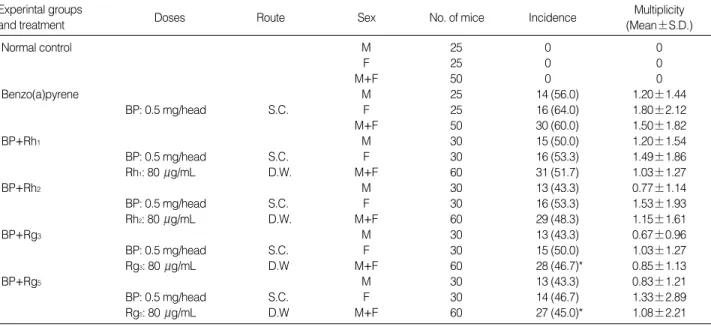
Ginsenoside Rg5was isolated as previously described (45), and Rg3and Rh2were by usual procedure from Korean red ginseng (51, 55). In brief, a mixture of 20(R)- and 20(S)- ginsenoside Rg3was obtained under mild acidic hydrolysis from protopanaxadiol saponins, ginsenoside Rb1, Rb2, Rc and Rd. The product was acetylated to give peracetates, which were further converted into 20(S)-ginsenoside Rg3, 20(R)- ginsenoside Rg3, 20(S)-ginsenoside Rh2and 20(R)-ginseno- side Rh2by direct alkaline treatment, while Rh1 was pre- pared from ginsenoside Re by similar procedure (55). All ginsenosides obtained were identified by physicochemical and spectral analysis (IR, MASS, 1H, 13C-NMR). Thereafter N:GP(S) mice were subcutaneously injected once with 0.02 mL of BP suspension (0.5 mg, in l% aqueous gelatin), and the following ginsenosides were administered in drinking water (80 g/mL) for 6 weeks; ginsenosides Rh1, Rh2, Rg3 and Rg5 (Fig. 4). Two control groups consisted of normal animals (no ginseng was given) and red-ginseng adminis- tered (but no BP-treated). Red ginseng extract (2 mg/mL of drinking water) was given immediately after weaning. Drink- ing water was changed every other day and diet was prepared every other week. At the 9th week after birth, adenomas of the lung were counted. There was no lung tumor observed in both normal control mice (no BP administered) and mice given with ginsenoside Rh1, Rh2, Rg3or Rg5alone. However, 60% of lung tumor incidence was found in the group given once with 0.5 mg of BP. On the other hand, when given with
2 mg of red ginseng extract for 6 week after benzo(a)pyrene pretreatment, 43.3% of incidence was observed (27.8% de- crease), which was statistically significant. The incidence of lung adenoma showed 51.7% in mice treated with ginseno- side Rh1, indicating no significant effect of Rh1on the BP- induced lung tumor. The incidence of lung tumor in mice treated with ginsenoside Rh2and BP showed 48.3% (19.5%
decrease). Although it was not statistically significant, we considered it to represent “tendency of decrease”in the inci- dence.
When given with 80 g/mL concentration for 6 weeks after BP administration, Rg3showed statistically significant decrease (22.2%) in lung tumor incidence (46.7%; p<0.05), whereas Rg5and BP had biologically significant incidence (45.0% and 25.0% decrease) (p<0.05) (Table 8).
Using Yun’s model, the above results, therefore, demon- strated that, among the four ginsenosides purified from red ginseng, Rg3and Rg5revealed significant reduction of lung tumor incidence, while Rh2 had a tendency of decreasing the incidence, indicating that ginseng is an active cancer chemopreventive agent (53).
Sex
Experimental groups and treatment No. of mice No. of mice with lung tumor
Lung tumor
incidence (%) Inhibition rates (%)
Benzo (a) pyrene (BP) M 25 14 56.0
0.5 mg/mice S.C. F 25 16 64.0
M+F 50 30 60.0 Reference
BP+Ginsenoside Rg3+Rg5 M 30 13 43.3
80 g/mL D.W. F 30 14 46.7
M+F 60 27 45.0* 25.0
Table 7.Effects of ginsenoside Rg3+Rg5mixture on the incidence of benzo(a)pyrene inducecd lung tumor in mice, using Yun’s 9 week medium-term anticarcinogenicity test model
S.C: Subcutaneous administration, D.W.: Drinking water, *: p<0.05
Experiment-3
Fig. 4.Chemical structure of ginsenoside Rh1, Rh2, Rh3and Rg5GIc-; -D-glucopyranosyl-, GIc-GIc-; -D-glucopyranosyl (1�2) -D-glucopyranosyl-.
HO HO
HO
OH OH
O-Glc
HO HO
OH
Glc-GIc-O Glc-GIc-O
Glc-O
20(S)-ginsenoside Rg3 ginsenoside Rg5
20(S)-ginsenoside Rh1 20(S)-ginsenoside Rh2
DISCUSSION
As early as the 1960s, alkaloid components of ginseng, - pyrrolidone, was reported to inhibit the growth of HeLa cells (42). Thereafter, saponins have been found to have antimu- tagenic activity in vitro and in vivo (56); growth inhibitory activity against several tumor cell lines including nude mouse- transplantable human colon adenocarcinoma cells (MK-1 cells, mouse melanoma cells (B-16 cells), mouse fibroblast- derived tumor cells (L929 cells), human colon adenocarci- noma cells (SW620), human uterus carcinoma cells (HeLa cells) and human erythroleukemic cells (K562 cells) (57);
growth inhibition of human ovarian cancer cells in nude mice (58); reverse transformation in cultured Morris hep- atoma cells (59); induction of differentiation by ginsenoside in F9 teratocarcinoma cells (60); and immunomodulating activity of Rg1in mice (61, 62). The red ginseng was found to activate natural killer cells in mice with lung adenoma induced by urethane and benzo(a)pyrene (63). The polysac- charide revealed anticomplementary activity (64, 65), retic- uloendothelial system-potentiating activity, alkaline phos- phatase-inducing activity (66), and cytoprotective activity (67, 68). Lately, various polyacetylenes extracted from gin- seng (69, 70) are known to have cytotoxic activity (71).
Ginsenoside Rh1and Rh2have recently been reported to cause differentiation of F9 teratocarcinoma cells, and it has been suggested that the effects of ginsenosides might have been exerted via binding with a glucocorticoid receptor or its analogous nuclear receptor (60). In nude mice bearing HRA cell tumors, oral administration of Rh2resulted in a significant retardation of tumor growth, consequently marked- ly prolonging survival time (58). The systemic as well as
oral multiple administrations of ginsenoside Rg3 inhibited lung metastasis produced by Bl6-BL6 melanoma and Colon 26-M3.l carcinoma cells in mice. This antimetastatic effect was thought to be associated with the inhibition of the inva- sion and adhesion by tumor cells as well as suppression of tumor-induced angiogenesis (72-77). These results dealt mostly with induction of tumor cell differentiation, inhibi- tion of tumor growths, prolongation of animal survival times or inhibition of metastasis. Generally, characteristics of the anticancer effect of ginseng may be summarized as follows:
1) it is observed only in slow-growing tumors such as Ehrlich and sarcoma 180 ascites tumours in vivo, 2) it is not observed in rapidly growing tumors such as L1210, P388 ascites tumors and Walker carcinosarcoma, and 3) there is no dose- response relationship and no cumulative effect (78-82).
Our strategy now is to switch from therapeutic approaches to chemoprevention of cancer by identifying effective natu- ral products. Anticarcinogenic effects of Korean red ginseng was earlier observed in l980 by long-term (6, 8) or medium term model (Yun’s model) (9-12) with mouse lung tumor.
We observed that anticarcinogenicity of ginseng was depen- dent on the type and age of the ginseng (30, 31). In two attempts with human case-control studies (83, 84) and a cohort study (85) to evaluate the cancer preventive effect, however, fresh ginseng was found to be ineffective to decrease the relative risk (RR). On the other hand, when treated with heat, fresh ginseng, white ginseng and red ginseng were sig- nificantly effective in the decrease of RR, similar to the results obtained from animal experiments. This result sug- gested the generation of active cancer chemopreventive com- pounds of Korean ginseng by heat-treatment.
At present, 35 ginsenosides have been identified in gin-
Experintal groups
and treatment Doses Route Sex No. of mice Incidence Multiplicity
(Mean±S.D.)
Normal control M 25 0 0
F 25 0 0
M+F 50 0 0
Benzo(a)pyrene M 25 14 (56.0) 1.20±1.44
BP: 0.5 mg/head S.C. F 25 16 (64.0) 1.80±2.12
M+F 50 30 (60.0) 1.50±1.82
BP+Rh1 M 30 15 (50.0) 1.20±1.54
BP: 0.5 mg/head S.C. F 30 16 (53.3) 1.49±1.86
Rh1: 80 g/mL D.W. M+F 60 31 (51.7) 1.03±1.27
BP+Rh2 M 30 13 (43.3) 0.77±1.14
BP: 0.5 mg/head S.C. F 30 16 (53.3) 1.53±1.93
Rh2: 80 g/mL D.W. M+F 60 29 (48.3) 1.15±1.61
BP+Rg3 M 30 13 (43.3) 0.67±0.96
BP: 0.5 mg/head S.C. F 30 15 (50.0) 1.03±1.27
Rg3: 80 g/mL D.W M+F 60 28 (46.7)* 0.85±1.13
BP+Rg5 M 30 13 (43.3) 0.83±1.21
BP: 0.5 mg/head S.C. F 30 14 (46.7) 1.33±2.89
Rg5: 80 g/mL D.W M+F 60 27 (45.0)* 1.08±2.21
Table 8.Anticarcinogenicity of ginsenosides Rh1, Rh2, Rg3and Rg5, using Yun’s 9 week medium-term anticarcinogenicity model
S.C.: Subcutaneous administration, D.W.: Drinking water, *: p<0.05.
seng, and l2 ginsenosides were found in red ginseng (86).
We prepared four ginsenosides from Korean red ginseng and tested their cancer chemopreventive effect using Yun’s model. This model has been successfully employed to con- firm anticarcinogenicity effect of ginseng on lung tumor incidence induced by benzo(a)pyrene in mice. Mouse lung tumor model has been highly recommended for preclinical as well as clinical test models (28, 29), because this model showed no anticarcinogenicity with not only -carotene and 13-cis retinoic acid (10-12, 19), but also genetic alter- ation in mouse lung tumor which was similarly to that of human lung cancer cells.
When taken, 4 yr-old fresh or white ginseng did not show any anticarcinogenicity in animal model (30, 31), and an epidemiological study also revealed no statistically signifi- cant reduction of the relative risk in human (83-85). When heated, however, these ginsengs were highly effective as anti- carcinogenic agents and these results were confirmed by others (33-38). Red ginseng extract in a two-stage carcino- genesis mouse model had a significant inhibitory effect on skin cancer formation. At 50-400 mg/kg, red ginseng extract inhibited DMBA/croton oil-induced skin papillomas in mice, decreased the incidence, prolonged the latent period before tumor occurrence, and reduced tumor number per mouse in a dose-dependent manner (36). Recently, it has been shown that dietary administration of red ginseng powder in the initiation stage of carcinogenesis was found to suppress 1, 2-dimethylhydrazine (DMH) induced preneoplastic lesions in the colon of rats, and that this was associated with sup- pression of cell proliferation (38).
This fact led to search biologically active components in ginseng, and they so far identified 35 ginsenosides in gener- al and l2 in red ginseng (86).
Some of the ginsenosides are present in red ginseng in such a minute quantity, so that it is extremely difficult to obtain the amount enough for in vivo assay. Nevertheless, we suc- ceeded to purify and identify four ginsenosides, including gin- senoside Rhl, Rh2, Rg3and Rg5. Among the four ginseno- sides, Rg3 and Rg5showed significant reduction of lung tumor incidence and Rh2had a tendency of decreasing the incidence. These results strongly indicate that the anticar- cinogenicity or human cancer preventive effect of ginseng is due to ginsenoside Rg3, Rg5and Rh2.
There has been no report yet on the preventive effect of ginsenoside Rg3, Rg5and Rh2on chemically induced cancer or spontaneous murine cancer in vivo. Ginsenoside Rg5was isolated from methanol extract of Korean red ginseng in 1996 (45), however, there is no report yet on biological activity of the compound.
Although the mechanism of how these three minor gin- senosides exhibit the anticarcinogenic effect is not known, it is highly likely that Rg3, Rg5and Rh2in red ginseng pre- vent cancer either singularly or synergistically, and it is quite tempting to suggest that the ginsenosides may target one of
the 5 steps of either Vogelstein’s multi-stage carcinogenesis or inactivation of suppressor genes (87).
In conclusion, epidemiological studies including case-con- trol studies (83, 84) and population based cohort study (85) proved heat-treated red ginseng to be effective non-organ specific cancer preventive (19, 85, 86, 88, 89). In order to further confirm these ginsenosides as non-organ specific can- cer preventive, it is of absolute necessity to chemically syn- thesize large amounts of the materials for clinical testing as well.
REFERENCES
1. Beardsley T. Trends in cancer epidemiology: A war not won. Scien- tific American 1994; 270: 130-8.
2. Goodman LS, Wintrobe MM, Dameshek W, Goodman MJ, Gilman A, McLennan, MT. Nitrogen mustard therapy. JAMA 1946; 132:
126-32.
3. Tenenbaum L. Cancer Chemotherapy and Biotherapy: A Reference Guide. W B Saunders Co, 1994; Philadelphia.
4. Muir CS, Nectoux J. International patterns of cancer. In: D. Schot- tenfwld and J. F. Fraumeni, editors, Cancer Epidemiology and Pre- vention, 2nd ed, Oxford University Press, Oxford, 1996; 141-67.
5. American Cancer Society. Cancer Facts & Figures-1976. American Cancer Society Inc., Atlanta, GA, 1976; U.S.A.
6. Yun TK, Yun YS, Han IW. An experimental study on the tumor inhibitory effect of red ginseng in mice and rats exposed to various chemical carcinogens. Proc 3rd Inter Ginseng Symp, Korea Gin- seng Research Institute Press, Seoul, 1980; 87-112.
7. Tao Hongjin. Shennong Bencao Jing (Simplified Version of Shen- nong’s Ancient Chinese Medical Book) Liang Dynasty of China, circa 500 A.D., Munkwang Doso, 1982; Taipei
8. Yun TK, Yun YS, Han IW. Anticarcinogenetic effect of long-term oral administration of red ginseng on newborn mice exposed to var- ious chemical carcinogens. Cancer Detect Prev 1983; 6: 515-25.
9. Yun TK, Kim SH, Oh YR. Medium-term (nine weeks) method for assay of preventive agents against tumor. J Korean Cancer Assoc 1987; 19: 1-7.
10. Yun TK, Kim SH. Inhibition of development of benzo(a)pyrene- induced mouse pulmonary adenoma by natural products in medi- um-term bioassay system. J Korean Cancer Assoc 1988; 20: 133- 42.
11. Yun TK. Usefulness of medium-term bioassay determining forma- tion of pulmonary adenoma in NIH (GP) mice for finding anticar- cinogenic agents from natural products. J Toxicol Sci (Japan) 1992;
16: (Suppl. 1) 53-62.
12. Yun TK, Kim SH, Lee YS. Trial of new medium-term model using benzo(a)pyrene induced lung tumor in newborn mice. Anticancer Res 1995; 15: 839-45.
13. Lee SS. Enzymatic studies on capsaicin, the hot component of Cap- sicum annum. Yakhak Hoeji 1957; 3: 11-4.
14. Lee SS. Capsaicin: Then, now and tomorrow. In: Lee SK, Surh YJ, editors, Trend in Biopharmaceutical and toxicological sciences. Seoul:
National University Press, 1998; 54-75.
15. Jang JJ, Kim SH, Yun TK. Inhibitory effect of capsaicin on mouse lung tumor development. In vivo 1989; 3: 49-54.
16. Lee YS, Kim T-H, Jang JJ. Effect of biochanin A on mouse lung tumor and lymphocyte proliferation. J Korean Cancer Assoc 1991;
23: 479-84.
17. Kim ND, Kim SG, Kwak MK. Enhanced expression of rat micro- somal epoxide hydrolase gene by orgnosulfur compound. Biochem Pharm 1994; 47: 541-7.
18. Kim ND, Kwak MK, Kim SG. Inhibition of cytochrome P450 2E1 expression by 2 (allylthio) pyrazine, a potential chemopreventive agent: Hepatoprotective effects. Biochem Pharm 1997; 53: 261-9.
19. Yun T-K. Update from Asia: Asian cancer chemoprevention. In:
Bradlow HL, Fishman J, Osborne MP, editors, Cancer Prevention:
Novel nutrient and Pharmaceutical Developments The New York Academy of Sciences, New York, 1999; 889: 157-92.
20. The Steering Committee of the Physicians’Health Study Research Group. Special report: Preliminary report: Findings from the aspirin component of the ongoing physicians’health study. N Engl J Med 1988; 318: 262-4.
21. The Alpha-Tocopherol, Beta Carotene Cancer Prevention Study Group. The effect of vitamin E and beta carotene on the incidence of lung cancer and other cancers in male smorkers. N Engl J Med 1994; 330: 1029-35.
22. Omenn GS, Goodman GE, Thornquist MD, Balmes J, Cullen MR, Glass A, Keogh JP, Meyskens FL Jr, Valanis B, Williams JH Jr, Barnhart S, Cherniack MG, Brodkin CA, Hammar S. Risk factors for lung cancer and for intervention effects in CARET, the beta- carotene and retinol efficacy trial. J Natl Cancer Inst 1996; 88:
1550-9.
23. Omenn GS, Goodman GE, Thornquist MD, Balmes J, Cullen MR, Glass A, Keogh JP, Meyskens FL Jr, Valanis B, Williams JH, Barn- hart S, Hammar S. Effects of a combination of beta carotene and vitamin A on lung cancer and cardiovascular disease. N Engl J Med 1996; 334: 1150-5.
24. Hennekens CH, Buring JE, Manson JE, Stampfer M, Rosner B, Cook NR, Belanger C, LaMotte F, Gaziano JM, Ridker PM, Willett W, Peto R. Lack of effect of long-term disease. N Engl J Med 1996; 334:
1145-9.
25. Boone CW, Steele VE, Kelloff GJ. Screening for chemopreventive (anticarcinogenic) compounds in rodents. Mut Res 1992; 267: 251-5.
26. Steele VE, Moon RC, Lubet RA, Grubbs CJ, Reddy BS, Wargovich M, McCormick DL, Pereira MA, Crowell JA, Bagheri D, Sigman CC, Boone CW, Kelloff GJ. Preclinical efficacy evaluation of poten- tial chemopreventive agents in animal carcinogenesis models: Meth- ods and results from NCI Chemoprevention Drug Development Pro- gram. J Cell Biochem 1994; 20: 32-54.
27. Yun TK. Experimental and epidemiological evidence of the cancer preventive effects of Panax ginseng C A Meyer. Nutr Rev 1996; 54:
S71-S81.
28. Herzog CR, Lubet RA,You M. Genetic alterations in mouse tumors:
implications for cancer chemoprevention. J Cell Biochem Suppl 1997; 28-29: 49-63.
29. You M, Bergman G. Preclinical and clinical models of lung cancer
chemoprevention. Hematol Oncol Clin North Am 1998; 12: 1037- 53.
30. Yun TK, Lee YS. Anticarcinogenic effect of ginseng powders depend- ing on the types and ages using Yun’s anticarcinogenicity test (I).
Korean J Ginseng Sci 1994; 18: 89-94.
31. Yun TK, LeeYS. Anticarcinogenic effect of ginseng extracts depend- ing on the types and ages using Yun’s anticarcinogenicity test (II).
Korean J Ginseng Sci 1994; 18: 160-4.
32. Yun TK, Lee YS, Kwon HY, Choi KJ. Saponin Contents and anti- carcinogenic effects of ginseng depending on types and ages in mice.
Acta Pharm Sinica 1996; 17: 293-8.
33. Wu XG, Zhu DH. Influence of ginseng upon the development of liver cancer induced by diethylnitrosamine in rats. J Tongji Med Univ China 1990; 10: 141-5.
34. Bespalov VG, Aleksandrov VA, Davydov VV, Limanko A, Molokovskii DS, Petrov AS, Slepyan LI, Trilis Ya G. Mammary carcinogenesis suppression by ginseng tissue culture biomass tinc- ture. Bull Exp Biol Med 1993; 115: 63-5.
35. Bespalov VG, Davydov VV, Limarenko A Yu, Slepyan LI, Alek- sandrov VA. Inhibition of the development of experimental uterus cervix and vaginal tumors by tinctures from biomass of cultivated cells of ginseng and its germanium-selective stocks. Bull Exp Biol Med 1993; 116: 534-6.
36. Chen XG, Liu HY, Lei XH, Zhaodi F, Yan L, Lihua T, Rui H. Can- cer chemopreventive and therapeutic activities of red ginseng. J Ethnopharm 1998; 60: 71-8.
37. Keum Y-S, Park K-K, Lee J-M, Chun K-S, Park JH, Lee SK, Kwon H, Surh Y-J. Antioxidant and anti-tumor promoting activities of the methanol extract of heat-processed ginseng. Cancer Lett 2000; 150:
41-8.
38. Li W, Wanibuchi H, Salim EI, Wei M, Yamamoto S, Nishino H, Fukushima S. Inhibition by ginseng of 1,2-dimethylhydrazine indu- ction of aberrant crypt foci in the rat colon. Nutr Cancer 2000; 36:
66-73.
39. Garrignes S. Ann Chem Pharm 1854; 90: 231.
40. Brekhman II, Dardymov IV. New substances of plant origin which increase non-specific resistances. Annu Rev Pharmacol 1969; 9:
419-30.
41. Shibata S, Tanaka O, Soma K, Iida Y, Ando T, Nakamura H. Stud- ies in saponins and sapogenins of ginseng, the structure of panaxa- triol. Tetrahedron Lett 1965; 3: 207-13.
42. Wu IK, Suh CS, Jhang JJ, Shin KH. Presence of -pyrrolidone in ginseng exracts. J Pharm Soc Korea 1969; 13: 121-4.
43. Kitagawa I, Yoshikawa M, Yoshihara M, Hayashi T, Taniyama T.
Chemical studies on crude drug processing. 1. On the constituents of ginseng radix rubra. J Pharm Soc Jpn 1983; 103: 612-22 (in Japanese).
44. Kim SE, Lee YH, Park JH, Lee SK. Ginsenoside-Rs4, a new type of ginseng saponin concurrently induces apoptosis and selectively ele- vates protein levels of p53 and p21WAF1 in human hepatoma SK- HEP-1 cells. Eur J Cancer 1999; 35: 507-11.
45. Kim SI, Park JH, Ryu J-H, Park JD, Lee YH, Park J-H, Kim T-H, Kim JM, Baek N-I. Ginsenoside Rg5, a genuine dammarane glyco- side from Korean red ginseng. Arch Pharm Res 1996; 19: 551-3.