Analysis of Soil Fungal Community Related to Rhododendron mucronulatum in Biseul Mountain County Park, South Korea
Min-Ji Jeong
1†, Dong-Hyun Kim
1†, Doo-Ho Choi
1, In-Seon Lee
2* and Jong-Guk Kim
1*
1School of Life Science, Kyungpook National University, Daegu 701-701, Korea
2Department of Food Science and Technology, Keimyung University, Daegu 42601, Korea Received March 10, 2021 /Revised March 17, 2021 /Accepted March 18, 2021
Researching the soil fungal community is important to understand the interaction between fungi and living plants. However, too few studies have examined the soil fungal community and their inter- actions with plants. Rhododendron mucronulatum, commonly known as Korean rosebay, is an important forest resource that has aesthetic, ecological, and potential pharmacological values. We used a py- rosequencing method to analyze the characteristics of fungal communities from R. mucronulatum soil samples from Biseul mountain county park, which is one of the famous places for large R. mucronula- tum colonies in South Korea. We collected soil core samples in February and August at three sites in the Biseul Mountain County Park, taking into consideration the regional and seasonal conditions.
We obtained 454,157 validated reads after pyrosequencing all six samples. The fungal communities from the first observation spot in August had the richest species diversity among the samples.
Basidiomycota, Ascomycota, and Mortierellomycota were major phyla in the samples. Agaricales_f, Mortierellaceae, and Clavariaceae were major families in the samples. The genus Mortierella was the most dominant in all six samples. Overall, 19 genera could be associated with R. mucronulatum.
Sample 1 had 109 genera in sample 1, sample 2 had 111 genera, and sample 3 had 112 genera that were uniquely identified. The samples collected in August had 28 identified genera, that existed only in summer samples, indicating a weather effect. This study can be used as basic research to under- stand the relationship between soil fungi and plants.
Key words : Biseul mountain county park, fungal community, next-generation sequencing, pyrose-
quencing, Rhododendron mucronulatum
†Authors contributed equally.
*Corresponding authors
*Tel : +82-53-580-6690, Fax : +82-53-580-6690
*E-mail : [email protected] (In-Seon Lee) Tel : +82-53-950-5379, Fax : +82-53-955-5522 E-mail : [email protected] (Jong-Guk Kim)
This is an Open-Access article distributed under the terms of the Creative Commons Attribution Non-Commercial License (http://creativecommons.org/licenses/by-nc/3.0) which permits unrestricted non-commercial use, distribution, and reproduction in any medium, provided the original work is properly cited.
Introduction
Rhododendron mucronulatum is a deciduous shrub which can be usually found in sunny places on highlands between 50 and 2,000 meters [24]. It is called ‘azalea’ or ‘Korean rose- bay’ and blooms beautiful dark or light-pink flowers at the beginning of April, which are about 3-4.5 cm in diameter.
It is not only cold- and, disease-resistant, but also valuable for landscaping and gardening [25]. It is also edible, the flowers have been used to make wine, juice, and flow- er-patterned cakes by Koreans, but it can be weakly toxic
[22]. Some phenolic acids and flavonoids isolated from R.
mucronulatum have antioxidative activities [18, 19]. R. mucro- nulatum stems and flowers' extracts also have antioxidant and anticancer activities [1, 8, 21]. Biseul mountain county park, Daegu, South Korea has a beautiful scenery with a large R. mucronulatum colony. Yearly, there is a local festival of R. mucronulatum, and many people visit to enjoy the scenery. Thus, R. mucronulatum is a vital forest resource with potential values that can be useful in various ways.
However, there are few studies on the soil fungal commun- ity of R. mucronulatum. Kim et al., analyzed fungal commun- ities in the Korean red pine forest, the forest was mixed with few R. mucronulatum [17]. Also, Choi et al., analyzed R. mu- cronulatum's bacterial community [9].
Fungi play a major role in maintaining the soil ecosystem.
They function in various ways, such as degradation of plant
or animal residues and nutrient circulation in the soil [26,
31]. Also, they have a relationship with living plants by nu-
trient trade. Some soil fungi form a symbiotic relationship
with plants and can be involved in the reduction of N
2O
emissions from soil [4]. They interact and affect each growth
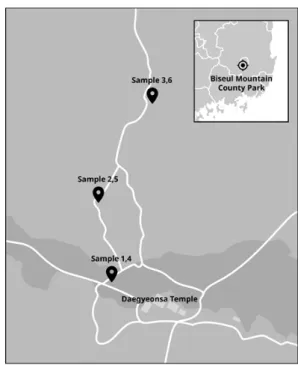
Fig. 1. The map of sampling sites in Biseul mountain county park from Daegu, South Korea. We selected three sites for investigation in various regions. Sample 1, 4 were collected at the entrance of the park. Sample 2, 5 were collected at the first observation spot. And sample 3, 6 were collected at the second observation spot.
and form their microbial communities in soil. Some micro- bial communities can positively affect the relationship be- tween plant diversity and the ecosystem [32]. Therefore, it is essential to research the soil fungal community to under- stand fungi and living plants' interaction. However, there are not enough studies on the soil fungal community and their plant interactions.
Next-generation sequencing (NGS) platforms make possi- ble parallel sequencing of massive number of DNA se- quences in one sample rapidly [3, 14, 16, 28, 29]. It provides low-cost and high-efficiency sequencing. Also, it can analyze hard-to-cultivate microbes.
In this study, we conducted the pyrosequencing analysis of fungal communities from soil samples of R. mucronulatum in Biseul mountain county park and analyzed their characteristics. Their diversity, species richness, relative abundance, taxonomic composition were analyzed, and the fungal genera concerned with R. mucronulatum were present- ed. We selected three sites in the Biseul mountain county park, and collected soil core samples in February and August considering regional and seasonal conditions.
Materials and Methods
Collection of samples
We collected soil samples in Biseul mountain from Daegu, South Korea. Three sites in the Biseul mountain county park related to the cluster of R. mucronulatum; the park entrance, the first observation spot, and the second observation spot (Fig. 1). The park entrance is a location where the colony of R. mucronulatum was formed thinly. The dense colony of R. mucronulatum was formed in the first observation spot and the second observation spot. The samples were collected at three sites in August, 2018 (summer) and February, 2019 (winter) considering the weather. The col- lected samples were numbered as follow; sample 1: col- lected in August at the entrance of the park, sample 2: col- lected in August at the first observation spot, sample 3:
collected in August at the second observation spot, sample 4: collected in February at the entrance of the park, sample 5: collected in February at the first observation point, and sample 6: collected in February at the second observation point. For sampling, soil cores (depth: 15 cm, diameter: 2 cm) were collected using a soil sampler, and an equal amount of each sample was used for pyrosequencing.
Extraction, purification and pyrosequencing of DNA
Pyrosequencing, one of the approaches for NGS, can ana-
lyze a large-scale sample of microbes from the soil [7, 10,
20, 23]. In NGS platforms, three common systems can be
used: 454 GS-FLX (Roche, Branford, CT, USA), Illumina
technology (Ilumina, San Diego, CA, USA), and SOLiD sys-
tems (Applied Biosystems, Waltham, MA, USA) [14]. Here,
the Illumina MiSeq Sequencing system was used, which can
rapidly analyze the soil fungal communities' classification
with DNA barcode sequences. For pyrosequencing, meta-
genomic DNA from the soil samples was extracted using
the FastDNA SPIN Kit for soil (MP Biomedicals, Santa Ana,
CA, USA) [20]. The quantified DNA was amplified by poly-
merase chain reaction (PCR) using primers targeting ITS2
region. The forward primer sequences were 5‘- AATGATA
CGGCGACCACCGAGATCTACAC-XXXXXXXX-TCGTCGG
CAGCGTC-AGATGTGTATAAGAGACAG-GCATCGATGA
AGAACGCAGC-3ʹ, and the reverse primer sequences were
5’-CAAGCAGAAGACGGCATACGAGAT-XXXXXXXX-GT
CTCGTGGGCTCGG-AGATGTGTATAAGAGACAGTCC-T
CCGCTTATTGATATGC-3ʹ. “X” implies the barcode se-
quence varies from sample to sample. PCR was conducted
using the PTC-200 Peltier thermal cycler (MJ Research,
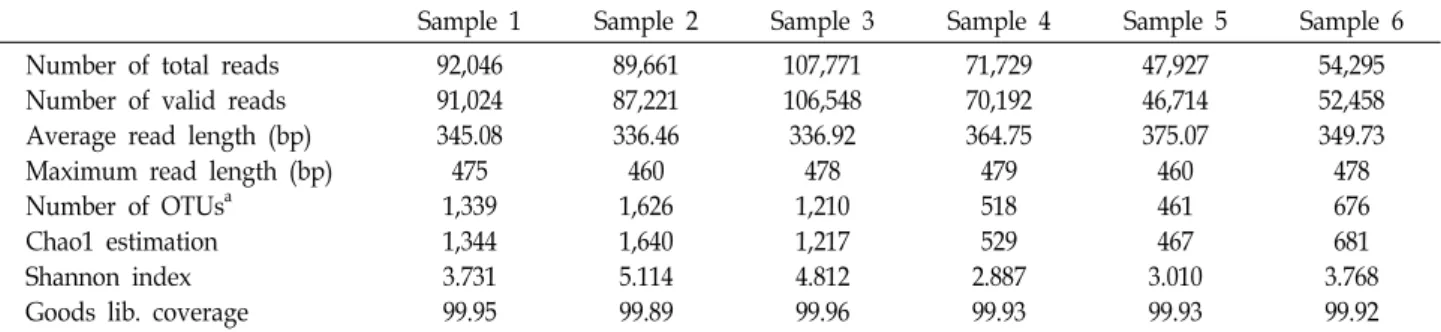
Table 1. Pyrosequencing and species richness analysis of the soil fungal communities associated with R. mucronulatum from samples collected in Biseul mountain county park
Sample 1 Sample 2 Sample 3 Sample 4 Sample 5 Sample 6
Number of total reads Number of valid reads Average read length (bp) Maximum read length (bp) Number of OTUsa
Chao1 estimation Shannon index Goods lib. coverage
92,046 91,024 345.08 475 1,339 1,344 3.731 99.95
89,661 87,221 336.46 460 1,626 1,640 5.114 99.89
107,771 106,548 336.92
478 1,210 1,217 4.812 99.96
71,729 70,192 364.75 479 518 529 2.887 99.93
47,927 46,714 375.07 460 461 467 3.010 99.93
54,295 52,458 349.73 478 676 681 3.768 99.92
aOTUs: Operational Taxonomic Units
Sample 1: the park’s entrance in August, sample 2: first observation point in August, sample 3: second observation point in August, sample 4: the park’s entrance in February, sample 5: first observation point in February, sample 6: second observation point in February.
Waltham, MA, USA). Agarose gel electrophoresis was per- formed for separating PCR products. The amplified PCR products were purified using the CleanPCR (CleanNA). The same concentrations of purified products were gathered and eliminated non-target fragments. And the quality and size of products were measured using an Agilent 2100 Bioana- lyzer (Agilent Technology, CA, USA) with a DNA 7500 chip.
Mixed amplicons were gathered and pyrosequencing was performed by Chunlab Inc. (Seoul, South Korea) using the Illumina MiSeq Sequencing system based on the manufac- turer's instruction.
Pyrosequencing data analysis and taxonomic identi- fication
Here, all raw sequences for pyrosequencing were proc- essed with the barcode sequences. Low-quality sequences were excluded by Trimmomatic 0.32 and not used for analy- sis [6]. Soil fungal communities were analyzed using the CLcommunity software (Chunlab, Inc.) for statistical and taxonomic analysis. The operational taxonomic units (OTUs) were analyzed using the CD-HIT clustering method at 97%
sequence similarity [30]. We used the Mothur platform to generate the rarefaction curves and diversity indices. Also, taxon exclusive or (XOR) analysis was used to investigate unique fungal species [33, 34].
Results and Discussion
Pyrosequencing and statistical data analysis The total number of reads was 463,429, of which 454,157 were valid reads. These were obtained after pyrosequencing for taxonomic analysis from all six samples (Table 1). The
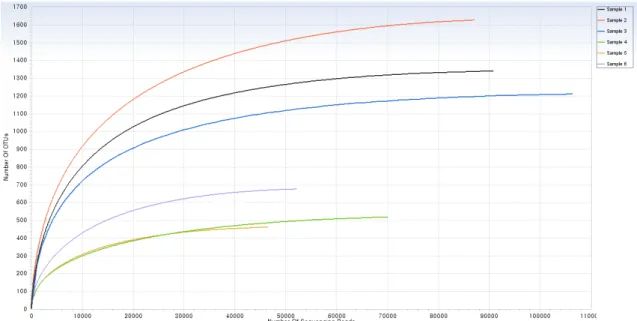
lowest number of valid reads was 46,714 from sample 5, and the greatest was 106,548 from sample 3. The lowest number of OTUs was 461 from sample 5, and the greatest was 1,626 from sample 2. The valid reads and OTUs were significantly different between samples 1-3 and 4-6. The rarefaction curves showed at one view that the species richness of sam- ples collected in August was greater than those in February (Fig. 2). It also implied that the fungal communities from the samples collected at the first observation point of the park in August were more diverse than the others. Chao1 estimation implied that sample 5 was the lowest (467) and sample 2 was the highest (1,640) in species richness. Shannon index indicated that sample 4 was the lowest (2.887) and sample 2 was the highest (5.114) in species richness. So, the fungal communities from the first observation point in August (sample 2) had the richest and the most diverse species.
Taxonomic compositions of fungal communities related to R. mucronulatum at the phylum and the family levels
In sample 1, 25 phyla, 60 classes, 147 orders, 271 families,
and 383 genera were identified. In sample 1, the dominant
phyla were Basidiomycota (52.0%), Ascomycota (23.0%), and
Mortierellomycota (9.0%). In sample 2, 29 phyla, 69 classes,
153 orders, 297 families, and 427 genera were identified. The
dominant phyla were Ascomycota (39.4%), Basidiomycota
(23.6%), and Mortierellomycota (11.1%). In sample 3, 25 phy-
la, 62 classes, 139 orders, 278 families, and 414 genera were
identified. The dominant phyla were Ascomycota (42.6%),
Basidiomycota (26.2%), and Mortierellomycota (14.5%). In
sample 4, 15 phyla, 40 classes, 79 orders, 137 families, and
Fig. 2. The rarefaction curves for the relationship between sequencing reads and operational taxonomic units (OTUs) of fungi from all samples. The CD-HIT clustering method was used to cluster OTUs at 97% similarity. The fungal communities from sample 1-3 collected in August were more diverse than sample 4-6 collected in February.
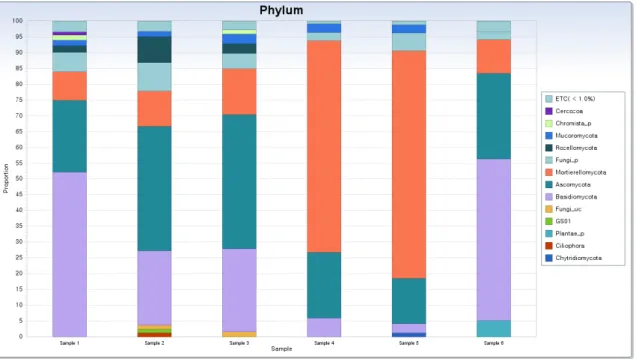
196 genera were identified. The dominant phyla were Mor- tierellomycota (67.0%), Ascomycota (20.9%), and Basidiomy- cota (6.0%). In sample 5, 20 phyla, 49 classes, 91 orders, 145 families, and 185 genera were identified. The dominant phy- la were Mortierellomycota (71.8%), Ascomycota (14.5%), and Fungi_p (5.7%). In sample 6, 18 phyla, 48 classes, 95 orders, 154 families, and 206 genera were identified in total. The dominant phyla were Basidiomycota (51.2%), Ascomycota (27.2%), and Mortierellomycota (10.8%) in the sample 6 (Fig. 3).
At the family level, the dominant families in sample 1 were Agaricales_f (46.6%) belonging to the class Agaricomy- cetes, and Mortierellaceae (8.7%) belonging to the class Mortierellomycetes and Fungi_f (5.6%). The dominant fami- lies in sample 2 were Mortierellaceae (11.1%) and Helo- tiales_f (10.6%) belonging to the class Leotiomycetes, and Clavariaceae (9.2%) belonging to the class Agaricomycetes.
The dominant families in sample 3 were Mortierellaceae (14.5%), Helotiales_f (12.2%), and Amanitaceae (8.1%) be- longing to Agaricomycetes. The dominant families in sample 4 were Mortierellaceae (67.0%), Helotiales_f (11.1%), and Clavariaceae (3.0%). The dominant families in sample 5 were Mortierellaceae (71.8%), Fungi_f (5.6%), and Pseudeurotia- ceae (4.4%) belonging to Leotiomycetes. The dominant fami- lies in sample 6 were Clavariaceae (43.6%), Helotiales_f (12.7%), and Mortierellaceae (10.7%) (Fig. 4). Among all sam- ples, Mortierellaceae was the most dominant family in four samples.
Characteristics of fungal community related to R.
mucronulatum at the genus level
We identified common genera in all samples at the genus level to investigate important fungi related to R. mucronula- tum. Overall, the genus Mortierella (total 119, 143 reads) was the most dominant genus in all samples. Helotiales_g (38,295), Agaricales_f_uc (32,218), Clavaria (29,873), and Fungi_g (16,121) followed.
Also, we selected 19 genera specifically identified in our samples only, compared to control samples unrelated to the county park and R. mucronulatum (Table 2). Overall, the ge- nus Moreaua was the most common among the 19 genera, followed by Clavariaceae_g and Leohumicola. Moreaua is a smut fungus found on sedges [27]. It has not been found in Korea, but Moreaua terrima was first discovered in 2014 [11, 12]. Moreaua was supposed to be related to R. mucronula- tum in our samples, however, we only found unclassified Moreaua species. Clavariaceae is a family, including species that can produce resupinate sporocarps [5]. Some Leohumicola species can survive following heat treatment [15]. This im- plied for the first time that these 19 genera can be associated with R. mucronulatum by analysis of soil fungal community.
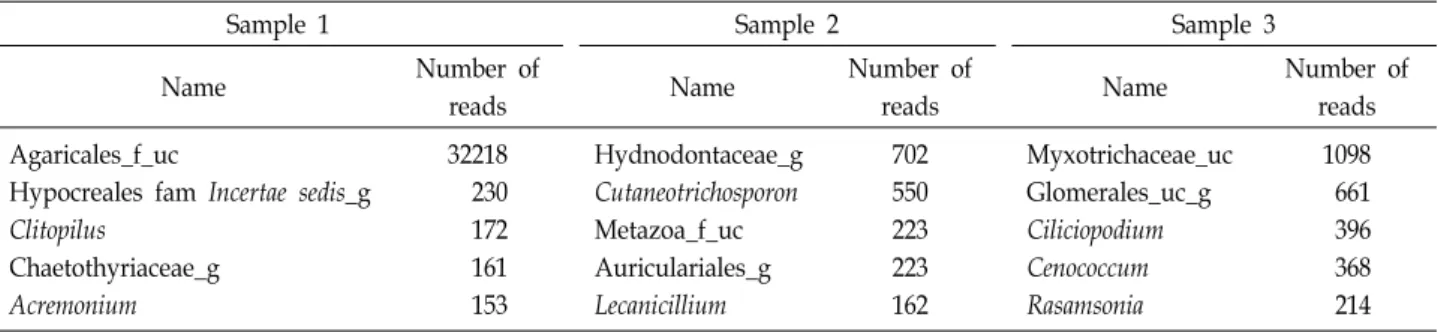
The top five genera were displayed in the most abundant order by analyzing the unique genera by location (Table 3).
In sample 1, 109 genera were uniquely identified. Agar-
icales_f_uc was the most common, and Clitopilus and Acre-
monium were also found. In sample 2, 111 unique genera
Fig. 3. Taxonomic composition at the soil fungal communities’ the phylum level from all samples associated with R. mucronulatum.
The fungal phyla are shown with more than 1% relative abundance in the samples, and the phyla less than 1% are marked as ETC. Basidiomycota was dominant phylum in sample 1 and 6, Ascomycota was dominant in sample 2 and 3, Mortierellomycota was dominant in sample 4 and 5.
Fig. 4. Taxonomic composition at the family level of the soil fungal communities from all samples associated with R. mucronulatum.
Forty-one major families are shown with different colors. The most abundant families in each sample were Agaricales_f in sample 1(46.6%), Mortierellaceae in sample 2(11.1%), 3(14.5%), 4(67.0%), 5(71.8%), and Clavariaceae in sample 6(43.6%).
were identified. Hydnodontaceae_g was the most common, and Cutaneotrichosporon, Metazoa_f_uc, Auriculariales_g, Lecanicillium, Clitopilus, and Acremonium followed in order.
In sample 3, 112 unique genera were identified, and Myxotri-
chaceae_uc, Glomerales_uc_g, Ciliciopodium, Cenococcum, and
Rasamsonia were identified. Unlike the previous analysis of
Table 2. The list in alphabetical order of 19 common genera in all samples from Biseul mountain county park com- pared with control samples
Name Apiotrichum Articulospora Cephalotheca Clavariaceae_g Coniochaeta Entolomataceae_uc Geomyces
GS05_g GS21_g GS22_g
Gymnostellatospora Hyaloscypha Ilyonectria Leohumicola Moreaua Paecilomyces Pyrenochaetopsis Rectipilus Trichocladium
The genera can be associated with R. mucronulatum by analysis of soil fungal community.
Table 3. The five unique genera in each sample collected at different spots in August
Sample 1 Sample 2 Sample 3
Name Number of
reads Name Number of
reads Name Number of
reads Agaricales_f_uc
Hypocreales fam Incertae sedis_g Clitopilus
Chaetothyriaceae_g Acremonium
32218 230 172 161 153
Hydnodontaceae_g Cutaneotrichosporon Metazoa_f_uc Auriculariales_g Lecanicillium
702 550 223 223 162
Myxotrichaceae_uc Glomerales_uc_g Ciliciopodium Cenococcum Rasamsonia
1098 661 396 368 214 They exist only in one sample.
Table 4. The genera identified in samples collected in August considering the effect of the weather
Name Sample 1 Sample 2 Sample 3
Chaetosphaeriales_g Fusicolla
Xylariales_g Sordariales_g Agaricomycetes_f_uc Paraconiothyrium Dothideomycetes_uc_g Chlorophyta_o_uc_g Didymella
Russulales_uc_g Lecanoromycetes_g Cladophialophora Knufia
Alternaria
Leucosporidiales_g Cyphellophora Haptocillium Orbiliaceae_uc Tremellales_uc_g Conlarium
Stereopsidales_uc_g Exophiala
Herpotrichiellaceae_uc Spizellomycetales_f_uc Dothideomycetes_g GS01_o_uc_g Paraphoma Inocybaceae_uc
137 11 17 32 45 24 6 6 80 24 7 207 59 54 87 15 21 55 9 54 2 113 54 83 75 105 1 9
6 3 31 53 24 5 77 162 4 9 661 386 21 12 4 25 4 7 96 161 5 34 14 2 30 873 2 4
34 3 38 1012 7 12 40 96 30 3 235 530 18 72 18 31 6 4 12 46 3 201 17 17 329 19 10 17 Twenty-eight unique genera were identified. They exist only in summer samples.
common genus, it is obvious that the genus was specifically found depending on where it was sampled. However, they were the communities of R. mucronulatum-related soil fungus.
There is a possibility of discovering a unique R. mucronula- tum-related soil fungus that appears only at the spot.
Considering the weather's effect, we analyzed the genera that were uniquely identified only in samples collected in the summer. Twenty-eight unique genera were identified (Table 4). Among them, the most notable genus is the Cladophialophora, which has been most frequently found. This was followed by Sordariales_g, GS01_o_uc_g, and Lecanor- omyces_g. The genus Cladophialophora is a vital genus clin- ically and environmentally [2]. Some Cladophialophora species were found for their relationship with living plants in al- kylbenzene-polluted soil [2]. We identified 17 Cladophialo- phora species and unclassified Cladophialophora species. C.
chaetospira species are found in plant litter and were identi- fied in all summer samples. Plant-associated species of Cladophialophora had appropriate growth temperature at 27℃
–30℃[2], which could be a reason for varying results dur-
ing winter.
Here, six soil samples were collected from three spots and
two weather of the Biseul mountain county park. Fungal
communities of the samples were analyzed by pyrosequenc-
ing. Statistical analysis showed that 454,157 validated reads
were pyrosequenced. The species richness of samples in
summer was greater than samples in winter due to the prop- er temperature conditions. The richest and the most diverse fungal community was that of sample 2 from the first ob- servation point in August. The genus Mortierella was the most dominant in all samples. The 19 genera can be asso- ciated with R. mucronulatum. One hundred nine genera in sample 1, 111 genera in sample 2, and 112 genera in sample 3 were uniquely identified.
To understand the relationship between fungi and living plants, it is vital to research the soil fungal community. They constantly interact, affecting each other's growth and form- ing microbial communities in the soil. By pyrosequencing, we showed that the fungal communities associated with R.
mucronulatum could have unique or common fungi accord- ing to location and weather. Further studies are needed to determine the characteristics of specific or unclassified gen- era and species of these fungi.
Acknowledgement
This Research was supported by Kyungpook National University Development Project Research Fund, 2018.
The Conflict of Interest Statement
The authors declare that they have no conflicts of interest with the contents of this article.
References
1. An, B. J., Lee, C. E., Son, J. H., Lee, J. Y., Choi, G. H.
and Park, T. S. 2005. Antioxidant, anticancer and tyrosinase inhibition activities of extracts from Rhododendron mucro- nulatum T. Appl. Biol. Chem. 48, 280-284.
2. Badali, H., Gueidan, C., Najafzadeh, M. J., Bonifaz, A., van den Ende, A. G. and De Hoog, G. S. 2008. Biodiversity of the genus Cladophialophora. Stud. Mycol. 61, 175-191.
3. Baptista, P, Reis, F, Pereira, E, Tavares, R. M., Santos, P.
M., Richard, F, Selosse, M. A. and Lino-Neto, T. 2015. Soil DNA pyrosequencing and fruitbody surveys reveal con- trasting diversity for various fungal ecological guilds in chestnut orchards. Environ. Microbiol. Rep. 7, 946-954.
4. Bender, S. F., Plantenga, F., Neftel, A., Jocher, M., Oberholzer, H. R., Köhl, L., Giles, M., Daniell, T. J. and Van Der Heijden, M. G. 2014. Symbiotic relationships between soil fungi and plants reduce N₂O emissions from soil. ISME J. 8, 1336-1345.
5. Birkebak, J. M., Mayor, J. R., Ryberg, K. M. and Matheny, P. B. 2013. A systematic, morphological and ecological over- view of the Clavariaceae (Agaricales). Mycologia 105,
896-911.
6. Bolger, A. M., Lohse, M. and Usadel, B. 2014. Trimmomatic:
a flexible trimmer for Illumina sequence data. Bioinformat- ics 30, 2114-2120.
7. Buée, M., Reich, M., Murat, C., Morin, E. and Nilsson, R.
H. 2009. 454 Pyrosequencing analyses of forest soils reveal an unexpectedly high fungal diversity. New Phytol. 184, 449-456.
8. Cho, Y. J., Ju, I. S., Chun, S. S., An, B. J., Kim, J. H., Kim, M. U. and Kwon, O. J. 2008. Screening of biological activ- ities of extracts from Rhododendron mucronulatum Turcz.
flowers. J. Kor. Soc. Food. Sci. Nutr. 37, 276-281.
9. Choi, D. H., Jeong, M. J., Kwon, H. J., Kim, M. G., Kim, D. H., Kim, Y. G. and Kim, J. G. 2020. Metagenomic Analysis of bacterial communities in Rhododendron mucro- nulatum in Biseul mountain county park, Daegu, Korea.
J. Life Sci. 30, 32-39.
10. Danielsen, L., Thürmer, A., Meinicke, P., Buée, M. and Morin, E. 2012. Fungal soil communities in a young trans- genic poplar plantation form a rich reservoir for fungal root communities. Ecol. Evol. 2, 1935-1948.
11. Denchev, C. M., Choi, Y., Lee, S. and Shin, H. 2007. New records of smut fungi from Korea. 1. Mycotaxon 100, 67-72.
12. Denchev, T. T. and Denchev, C. M. 2014. The genus Moreaua in Japan and Korea. Mycotaxon 127, 73-80.
13. Gottel, N. R., Castro, H. F., Kerley, M., Yang, Z. and Pelletier, D. A. 2011. Distinct microbial communities within the endosphere and rhizosphere of Populus deltoides roots across contrasting soil types. Appl. Environ. Microbiol. 77, 5934-5944.
14. Grada, A. and Weinbrecht, K. 2013. Next-generation se- quencing: methodology and application. J. Invest. Dermatol.
133, e11.
15. Hambleton, S., Nickerson, N. L. and Seifert, K. A. 2005.
Leohumicola, a new genus of heat-resistant hyphomycetes.
Stud. Mycol. 53, 29-52.
16. Handelsman, J. 2004. Metagenomics: application of ge- nomics to uncultured microorganisms. Microbiol. Mol. Biol.
Rev. 68, 669-685.
17. Kim, C. S., Han, S. K., Nam, J. W., Jo, J. W., Kwag, Y. N., Han, J. G., Sung, G. H., Lim, Y. W. and Oh, S. 2017. Fungal communities in a Korean red pine stand, Gwangneung Forest, Korea. JAPB. 10, 559-572.
18. Kim, M., Jones, A. D. and Chung, T. Y. 1996. Antioxidative activity of flavonoids isolated from Jindalrae flowers (Rho- dodendron mucronulatum Turcz.). App. Biol. Chem. 39, 320-326.
19. Kim, M., Jones, A. D. and Chung, T. Y. 1996. Antioxidative activity of phenolic acids Isolated from Jindalrae flower (Rhododendron mucronulatum Turzaninow). Appl. Biol.
Chem. 39, 506-511.
20. Kim, M., Yoon, H., You, Y. H., Kim, Y. E., Woo, J. R., Seo, Y., Lee, G. M., Kim, Y. J., Kong, W. S. and Kim, J.
G. 2013. Metagenomic analysis of fungal communities in- habiting the fairy ring zone of Tricholoma matsutake. J.
Microbiol. Biotechnol. 23, 1347-1356.
초록:우리나라 비슬산군립공원 진달래나무( Rhododendron mucronulatum )와 관련된 토양 진균 군 집의 pyrosequencing 분석
정민지
1†․김동현
1†․최두호
1․이인선
2*․김종국
2*
(1경북대학교 자연과학대학 생명과학부, 2계명대학교 식품보건학부)
진달래(Rhododendron mucronulatum)는 우리나라에서 어렵지 않게 볼 수 있는 개화식물로 꽃이 아름다워 관상목 으로 이용되고 있고 생태학적, 약리적으로 잠재력이 있는 중요한 산림자원이다. 우리나라의 대표적 진달래나무군 락지인 비슬산군립공원에서 진달래나무 아래의 토양을 채집하여 그 진균 군집의 특성을 조사하였다. 위치와 계절 에 따른 진균 군집의 차이를 확인하기 위하여 토양 샘플은 총 3개의 위치에서 2월과 8월에 각각 한번씩 채집하였 다. Pyrosequencing을 통해 총 454,157개의 서열을 얻을 수 있었다. 첫번째 채집포인트에서 얻은 샘플의 진균 군집 이 6개 샘플 중 가장 종 풍부도가 높았고 가장 다양한 진균들로 구성되어 있음을 확인하였다. 분류 단위 별 분석으 로는, Basidiomycota, Ascomycota, Mortierellomycota가 대표적인 문(phylum)으로 나타났으며, Agaricales_f, Mortierellaceae, Clavariaceae가 주요한 과(family)인 것으로 분석되었다. Mortierella 속(genus)은 모든 샘플중에서 가장 우점한 속이었다. 또한 총 진달래와 관련이 있는 것으로 추정되는 19개의 속이 확인되었다. 8월에 채집한 샘플에서 위치에 따라 각각 109개, 111개, 112개의 특이적인 속이 발견되었고, 2월의 샘플과 비교했을 때 2월의 샘플에는 존재하지 않는 28개의 공통된 속이 발견되었다. 이 연구는 추후 진달래나무에 특이적인 진균의 새로운 종을 규명하거나 토양 진균류와 식물의 상호작용을 규명하는 기초자료로 활용될 수 있다.
21. Lee, J. H., Jeon, W. J., Yoo, E. S., Kim, C. M. and Kwon, Y. S. 2005. The chemical constituents and their antioxidant activity of the stem of Rhododendron mucronulatum. Nat.
Prod. Sci. 11, 97-102.
22. Lee, S. W., Choi, S. H., Hong, Y. S. and Lim, S. I. 2007.
Grayanotoxin poisoning from flower of Rhododendron mu- cronulatum in humans. Bull. Environ. Contam. Toxicol. 78, 132-133.
23. Lim, Y. W., Kim, B. K., Kim, C., Jung, H. S., Kim, B. S., Lee, J. H. and Chun, J. 2010. Assessment of soil fungal communities using pyrosequencing. J. Microbiol. 48, 284- 289.
24. Mok, S. Y. and Lee, S. 2012. Identification of flavonoids and flavonoid rhamnosides from Rhododendron mucronu- latum for. albiflorum and their inhibitory activities against aldose reductase. Food Chem. 123, 969-974.
25. Park, I. H. and Cho, K. J. 2012. Management methods and vegetation characteristics of Rhododendron mucronulatum habitat in Mt. Biseul. J. Kor. Env. Res. Tech. 15, 55-66.
26. Peay, K. G., Baraloto, C. and Fine, P. V. 2013. Strong cou- pling of plant and fungal community structure across west- ern Amazonian rainforests. ISME J. 7, 1852-1861.
27. Shivas, R. G., Barrett, M. D., Barrett, R. L. and Vanky, K.
2011. Two new species of Moreaua (Ustilaginomycetes), on Actinoschoenus and Chrysitri, from Western Australia.
Mycol. Balc. 8, 137-140.
28. Shokralla, S., Spall, J. L., Gibson, J. F. and Hajibabaei, M.
2012. Next-generation sequencing technologies for environ- mental DNA research. Mol. Ecol. 21, 1794-1805.
29. Streit, W. R. and Schmitz, R. A. 2004. Metagenomics--the key to the uncultured microbes. Curr. Opin. Microbiol. 7, 492-498.
30. Vandenkoornhuyse, P., Sarjala, S. L., Leyval, C., Straczek, J. and Young, J. P. 2002. Extensive fungal diversity in plant roots. Science 295, 2051.
31. Wu, Y. T., Wubet, T., Trogisch, S., Both, S. and Scholten, T. 2013. Forest age and plant species composition determine the soil fungal community composition in a Chinese sub- tropical forest. PLoS One 8, e66829.
32. Zak, D. R., Holmes, W. E., White, D. C., Peacock, A. D.
and Tilman, D. 2003. Plant diversity, soil microbial com- munities, and ecosystem function: are there any links?
Ecology 84, 2042-2050.
33. Zehr, J. P., Jenkins, B. D., Short, S. M., and Steward, G.
F. 2003. Nitrogenase gen diversity and microbial commun- ity structure: a cross-system comparison. Environ. Microbiol.
5, 539-554.
34. Zinger, L., Coissac, E., Choler, P. and Geremia, R. A. 2009.
Assessment of microbial communities by graph partitioning in a study of soil fungi in two alpine meadows. Appl.
Environ. Microbiol. 75, 5863-5870.