Metagenomic Analysis of Bacterial Communities in Rhododendron mucronulatum in Biseul Mountain County Park, Daegu, Korea
Doo-Ho Choi, Min-Ji Jeong, Hae-Jun Kwon, Mi-Gyeong Kim, Dong-Hyun Kim, Young-Guk Kim and Jong-Guk Kim*
School of Life Science and Biotechnology, Kyungpook National University, Daegu 701-701, Korea Received January 7, 2020 /Revised January 21, 2020 /Accepted January 21, 2020
Rhododendron mucronulatum, native to Korea, Mongolia, Russia and parts of northern China, is known not only for its medicinal properties but also as a tourist attraction. One of the most famous tourist destinations with R. mucronulatum is in Biseul Mountain County Park, Daegu, Korea. To investigate the relationship between R. mucronulatum and microbiome communities in the surrounding soil, three sites within the park were chosen for sampling in February and August. The soil samples were then passed through a pyrosequencing process for analysis of the bacterial communities, and a total of 404,899 sequencing reads were obtained. Between 2,349 and 4,736 operational taxonomic units (OTUs) were observed across the three sampling zones and two seasons; samples from the park en- trance showed a higher number of OTUs than the other two sites, and samples from August had more OTUs than those from February. The sample from the second observation site displayed the fewest OTUs, particularly in February. According to Chao1 and Shannon indices, samples from the park entrance in August demonstrated the highest degree of species richness and diversity. Studying the bacterial communities across the six samples identified the common population as comprising 287 genera, 45 of which are only present in Biseul Mountain County Park and are expected to participate in the colonization of R. mucronulatum.
Key words : Bacterial community, Biseul mountain, metagenomics, Rhododendron mucronulatum
*Corresponding author
*Tel : +82-53-950-5379, Fax : +82-53-955-5379 E-mail : [email protected]
This is an Open-Access article distributed under the terms of the Creative Commons Attribution Non-Commercial License (http://creativecommons.org/licenses/by-nc/3.0) which permits unrestricted non-commercial use, distribution, and reproduction in any medium, provided the original work is properly cited.
Journal of Life Science 2020 Vol. 30. No. 1. 32~39 DOI : https://doi.org/10.5352/JLS.2020.30.1.32
Introduction
Bacteria are a type of biological cell and constitute a large domain of prokaryotic microorganisms. As member of king- dom Monera, bacteria have various kind of shapes including the spheres, rods and spirals. Also bacteria are one of the first created life form on earth and are present in most of various habitats. Specially, bacteria inhabit in the soil envi- ronment are able to penetrate plants and affect to their host as parasitic or symbiotic. As such a relationship has been continued for millions of years, plants have been colonized by various kind of species including bacteria and the struc- tural composition of bacterial communities also have been affected on the host plants. As symbiosis, bacteria contribute to plant growth promotion or biocontrol of pathogens. As many studies have been revealed about specific relationship
between bacterial communities and surrounded host, bacte- rial communities are expected to play important role for physiology of host [9, 11, 16, 23]. Because of symbiotic role from the bacterial communities, the composition of bacterial communities also being important. But even bacterial con- tribution to their host is well known, only 27 percent of the bacterial species have been grown in the laboratory environments. This limitation of culture result the lack of bacterial species diversity from communities and show the necessity of other experiment method not depend on the cul- tural experiment.
The metagenomics was first appeared in publication in
1998 by Jo Handelsman, Jon Clardy, Robert M. Goodman,
Sean F. Brady, and others [21]. The term included the idea
that collecting genes sequenced from the environment could
be analyzed for the study of a single genome. And by Kevin
Chen and Lior Pachter, the researchers at the University of
California, Berkeley, metagenomics were defined as the ap-
plication of modern genomics technique without isolation
and lab cultivation of individual species. Not like gene se-
quencing was started with a culture of same cells as a source
of DNA, early metagenomics expected the large groups of
microorganisms would be existing in many environment
that hardly be cultured and thus hardly be sequenced. In early studies, 16S ribosomal RNA sequences were used for analysis because of relative shortness, conservation within a species and general difference between species. The studies of ribosomal RNA (rRNA) genes collected from the environ- ments showed the less than 1% of the bacterial and archaeal species in the sample under method of cultivation. Norman R. Pace and colleagues used PCR to explore the diversity of ribosomal RNA sequences and supported the presence of a complex community of unexplored species. Although the method of Norman R. Pace and colleagues showed the limitation of exploring highly conserved, non-protein coding genes, it supported early microbial morphology-based anal- ysis that diversity was far more complex than was known by culturing methods. Based on this method, Healy F. G.
and colleagues reported the metagenomics isolation of func- tional genes from complex culture of environmental organ- isms lived in laboratory [10]. Starting using environmental shotgun sequencing in 2002, the method of sequencing had been published newly and more of microorganisms were de- tected than previous. Recently in 2005, C. Schuster at Penn State University and colleagues published the first sequences with high-throughput sequencing and massively parallel py- rosequencing developed by 454 Life Sciences [17].
Rhododendron mucronulatum known as Korean rhododen- dron is colonized in slightly shady northern slope site. It belongs to Rhododendron species usually inhabit forested regions at 1,600–2,300 m in Korea, Mongolia, Russia and parts of northern China [5]. As edible plant, it has been used as medicine regulating circulatory system, respiratory sys- tem and gynecological system. Also R. mucronulatum is one of the most attractive tourist resource in Korea. Biseul moun- tain (35°43'00.8"N 128°31'29.5"E) located in border of Dalseong-gun, Daegu and Gachang, Gyeongsangbuk-do, is the one of the most famous recreation forest place. In May, in full blossom of R. mucronulatum is the best sights in Biseul Mountain County Park. As this colonization is only posi- tioned in specific site of Biseul Mountain, association of mi- crobiome is expected [20].
As a subject of the publication, R. mucronulatum has been attractive source for many studies. But most of studies pub- lished in the past were concerned about the floral color or the flavor of blossom. Even publications about diversity of Rhododendron species or phytochemical were also existing, investigating about metagenomic analysis has not been founded. In this study, metagenomic analysis to investigate
the characteristic of bacterial population in R. mucronulatum colony were in progress. The investigation was done by GS-FLX pyrosequencing platform. Bacterial population from the soil samples of Biseul Mountain County Park, Daegu, Korea were collected and analyzed based on the 16S riboso- mal RNA sequences. These data would be useful for inves- tigating the colonization of R. mucronulatum.
Materials and Methods
Sample collection
The soil samples were collected in Biseul mountain coun- ty park from the Biseul mountain in Daegu, Korea. During the study, three sampling sites in county park were selected based on colonization of relation with R. mucronulatum as follow; (ⅰ)entrance of park (ⅱ)1
stobservation point (ⅲ)2
ndobservation point. Also to recognize the influence of the weather, sampling was done in February and August, separately. In this study, sample number was decided as fol- low; Sample 1–entrance of park in August; Sample 2 - 1
stobservation point in August; Sample 3 - 2
ndobservation point in August; Sample 4 - entrance of park in February;
Sample 5 - 1
stobservation point in February; Sample 6 - 2
ndobservation point in February. For the sampling, ten soil cores (depth: 15, diameter: 2 cm) with soil sampler were col- lected and were homogenized separately for experiments [6, 8].
DNA Extraction, purification and pyrosequencing Metagenomic DNA from the soil samples was extracted and quantified by the Quat-iT PicoGreen dsDNA Assay kit (Invitrogen, Carlsbad, CA, USA) for the pyrosequencing analysis [2]. Extracted and quantified DNA was then ampli- fied using the barcoded fusion primers targeting the 468 base pair of the V3/V4 regions from 16S rRNA genes that contained V3-341F 5’-CCTACGGGNGGCWGCAG-3’ and V4-805R 5’-GACTACHVGGGTATCT AATCC-3’ [1, 7, 12, 14]. PCR was proceed by the PTC-200 Peltier thermal cycler (MJ Research, Waltham, MA, USA) under following con- ditions; Initial denaturation (3 min at 95℃); 25 cycles of de- naturation (30 sec at 95℃), annealing (30 sec at 55℃) and extension (30 sec at 72℃); final extension (5 min at 72℃).
While on PCR amplification, clean-up and size selection
were done with AMpure bead XP (Beckman Coulter, CA,
USA) in gel electrophoresis for amplicon pooling. And meas-
urement of final concentration was done with Quat-iT Pico
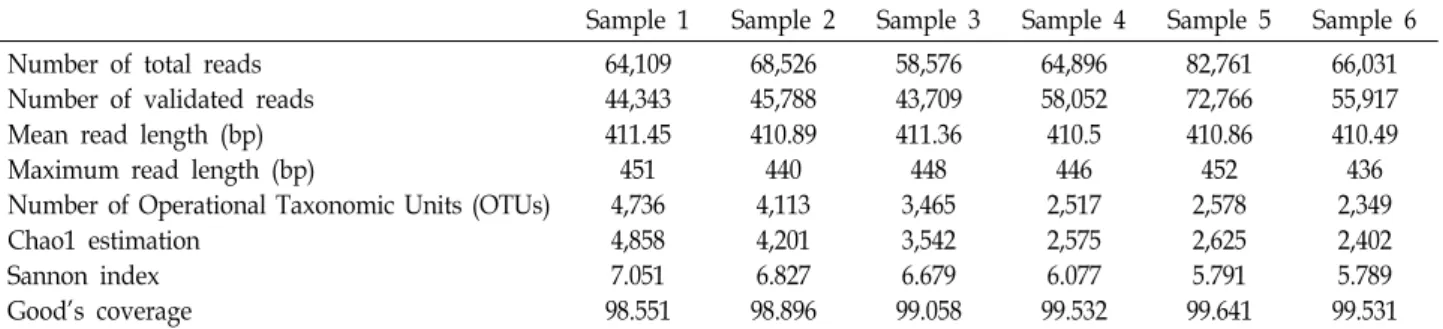
Table 1. Summary of results from pyrosequencing and statistical analysis
Sample 1 Sample 2 Sample 3 Sample 4 Sample 5 Sample 6
Number of total reads Number of validated reads Mean read length (bp) Maximum read length (bp)
Number of Operational Taxonomic Units (OTUs) Chao1 estimation
Sannon index Good's coverage
64,109 44,343 411.45 451 4,736 4,858 7.051 98.551
68,526 45,788 410.89 440 4,113 4,201 6.827 98.896
58,576 43,709 411.36 448 3,465 3,542 6.679 99.058
64,896 58,052 410.5
446 2,517 2,575 6.077 99.532
82,761 72,766 410.86 452 2,578 2,625 5.791 99.641
66,031 55,917 410.49 436 2,349 2,402 5.789 99.531 From 6 samples of Biseul Mountain County Park, total 404,899 reads were analyzed using ver. 10 of Illumina iSeq 100 Sequencing System.
Green dsDNA Assay kit and A260/A280 ratio. Using Agilent DNA 7500 kit, pooled sized short fragments were measured by Agilent 2100 Bioanalyzer (Agilent Technology, CA, USA).
The pyrosequencing was done by Chunlab Inc. (Seoul, Korea) using the ver. 10 of Illumina iSeq 100 Sequencing System (Illumina, CA, USA) based on the instruction from website.
With new sequencing chemistry, called One-Channel SBS Chemistry, iSeq 100 Sequencing System produced higher quality reads than the Illumina MiSeq that used before. All pyrosequencing data were matched with closely related spe- cies using the BLASTN search tool and calculating the 16S rRNA gene sequence similarities had been done by global alignment algorithm at the EzTaxon-e web server (http://
www.ezbiocloud.net/eztaxon).
Taxonomic assignment of sequencing reads and analysis
With database version PKSSU4.0, Microbiome Taxonomic Profile (MTP) of pyrosequencing reads were browsed and informed [3, 6, 13]. The sequencing data was analyzed using the EzBioCloud 16S-based Microbiome Taxonomic Profiling (MTP) app. Also bacterial communities could be analyzed by CLcommunity software ver. 3.46 (Chunlab, Inc. Seoul, Korea), but in this study, MTP app was used for analysis.
The operational taxonomic units (OTUs) were analyzed with CD-HIT program under 99% of sequence similarity [19]. The rare faction curve and diversity indices, included Chao1 and Shannon, were created as chart by the Mothur platform.
Also by taxon XOR analysis comparing system, unique spe- cies of bacteria were checked [22, 23].
Results
Pyrosequencing and statistical data analysis From 6 samples, total 404,899 reads were pyrosequenced
and 320,575 reads were verified for taxonomical assignment.
The number of validated reads ranged from 43,709 to 72,766 per sample and the average length of the read was about 410 bp. From 2,349 to 4,736 OTUs per sample were achieved separately at a 99% similarity level because the richness of bacterial OTUs was different by the sampling site and weather (Table 1). To analyze the species richness, the rar- efaction curves were created and indicated that September had greater bacterial community than May (Fig. 1). Also in same month, samples from the entrance of the county park showed the greater bacterial community than the others.
Chao1 estimation indicated that species richness decreased in following order: Sample 1 (4,858) > Sample 2 (4,201) >
Sample 3 (3,542) > Sample 5 (2,625) > Sample 4 (2,575) >
Sample 6 (2,402). Sannon index showed that species diversity decreased in following order: Sample 1 (7,051) > Sample 2 (6,827) > Sample 3 (6,649) > Sample 4 (6,077) > Sample 5 (5,791) > Sample 6 (5,789). Therefore, entrance site of county park in September showed the greatest species richness and diversity.
Compositon of R. mucronulatum-associated bacteria according to weather
Diversity and compositions of the bacteria were different
between site and weather. In Microbiome Taxonomic Profile,
Sequences of bacterial V3V4 rRNA gene were classified from
phylum down to the genus level. Taxonomic result about
sample 1 showed association with 42 phyla, 105 classes, 211
orders, 447 families and 1145 genera of bacteria. Bacterial
community of sample 1 was dominated by members of the
3 phyla Acidobacteria (31.0%), Proteobacteria (26.1%) and
Verrucomicrobia (10.0%). The sample 2 population was con-
cern with 33 phyla, 85 classes, 157 orders, 344 families and
872 genera of bacteria. Bacterial community of sample 2 was
dominated by members of the 3 phyla Acidobacteria (36.6%),
Fig. 1. Rarefaction curves for
Operational Taxonomic Units
(OTUs) at each 6 samples of R. mucronulatum were formed with 99%similarity of cutoff value. OTUs were clustered at 3% dissimilarity with CD-HIT. The bacterial community from entrance in August showed the highest degree of OTUs among the samples and prove the highest degree of
species richness and diversity.
Fig. 2. Taxonomic classification of bacteria associated with 6 samples of R. mucronulatum was formed at phylum level (with the RDP classifier). The bacterial phyla are shown with a relative abundance of more than 1% in all samples. The 11 phyla dominated by Acidobacteria, Proteobacteria and Verrucomicrobia are shown.
Proteobacteria (25.4%) and Verrucomicrobia (10.1%). The sample 3 population was concern with 29 phyla, 79 classes, 138 orders, 294 families and 767 genera of bacteria. Bacterial community of sample 3 was dominated by members of the 4 phyla Acidobacteria (33.1%), Proteobacteria (22.6%), Verru- comicrobia (12.8%) and Chloroflexi (10.5). The sample 4 pop- ulation was concern with 29 phyla, 71 classes, 129 orders, 252 families and 592 genera of bacteria. Bacterial community of sample 4 was dominated by members of the 3 phyla Proteobacteria (33.8%), Acidobacteria (25.9%) and Actinobac-
teria (13.5%). The sample 5 population was concern with 30 phyla, 74 classes, 131 orders, 264 families and 602 genera of bacteria. Bacterial community of sample 5 was dominated by members of the 2 phyla Acidobacteria (43.0%) and Proteobacteria (27.5%). The sample 6 population was con- cern with 28 phyla, 66 classes, 114 orders, 233 families and 547 genera of bacteria. Bacterial community of sample 6 was dominated by members of the 3 phyla Proteobacteria (36.2
%), Acidobacteria (28.0%) and Verrucomicrobia (11.9%) (Fig.
2).
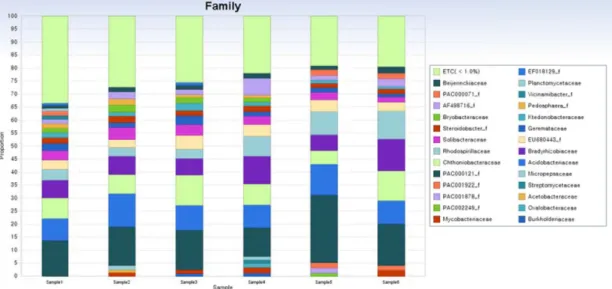
Fig. 3. Taxonomic classification of bacteria associated with 6 samples of R. mucronulatum was formed at family level (with the RDP classifier). The bacterial families are shown with a relative abundance of more than 1% in all samples. The 27 families dominated by PAC000121_f belong to class Solibacteres, Acidobacteriaceae and Chthoniobacteraceae are shown.
In family level of taxonomic results, bacterial community of sample 1 was dominated by PAC000121_f (13.8%) belong to class Solibacteres, Acidobacteriaceae (8.4%) and Chthonio- bacteraceae (8.0%). Bacterial community of sample 2 was do- minated by PAC000121_f (15.0%), Acidobacteriaceae (12.7%), Chthoniobacteraceae (7.2%) and Bradyrhizobiaceae (7.1%).
Bacterial community of sample 3 was dominated by PAC 000121_f (15.2%), Chthoniobacteraceae (11.6%) and Acido- bacteriaceae (9.5%). Bacterial community of sample 4 was dominated by PAC000121_f (11.2%), Bradyrhizobiaceae (10.8%), Acidobacteriaceae (8.7%) and Chthoniobacteraceae (8.0%). Bacterial community of sample 5 was dominated by PAC000121_f (25.9%) Acidobacteriaceae (11.8%) and Rhodo- spirillaceae (8.9%). Bacterial community of sample 6 was do- minated by PAC000121_f (16.1%), Bradyrhizobiaceae (12.0
%), Chthoniobacteraceae (11.5%), Rhodospirillaceae (10.7%) and Acidobacteriaceae (8.9%) (Fig. 3).
In genus level of taxonomic results, bacterial community of sample 1 was dominated by PAC000121_g (9.3%) and PAC002252_g (4.2%) belong to family Chthoniobacteraceae.
Bacterial community of sample 2 was dominated by PAC 000121_g (7.0%), PAC000030_g (5.0%) belong to class Soli- bacteres and PAC002252_g (4.5%). Bacterial community of sample 3 was dominated by PAC000121_g (9.6%), PAC 002252_g (6.6%) and PAC001932_g (4.8%) belong to family Chthoniobacteraceae. Bacterial community of sample 4 was dominated by JADL_g (5.7%) belong to family Rhodospirill- aceae, PAC002252_g (5.5%), PAC000166_g (5.2%) belong to
order Streptosporangiales, PAC000121_g (4.9%) and Rhodo- planes (4.7%). Bacterial community of sample 5 was domi- nated by PAC000121_g (15.1%), PAC000030_g (7.4%), JADL_
g (5.7%) and HM748676_g (4.1%) belong to family Acidobac- teriaceae. Bacterial community of sample 6 was dominated by PAC000121_g (9.0%), JADL_g (8.5%), PAC002252_g (6.4
%), Rhodoplanes (5.9%), PAC001932_g (5.0%) and PAC 000030_g (4.8%) (Fig. 4).
Population-specific bacterial OTUs at the genus level
In the study, 6 samples showed 287 common genus and to recognize unique bacterial population in the samples from Biseul Mountain county park, control soil sample that not belong to county park (specially not concern with R. mucro- nulatum) were collected and pyrosequenced [18]. By compar- ing in genus level, total 45 specific bacteria concern with R. mucronulatum were analyzed (Table 2). Among the specif- ic genus Methyloceanibacter was the major common bacteria from all weather and site [4].
Genus Methyloceanibacter was first reported in 2014 by Takeuchi et al. This methanol-oxidizing bacterium a member of the family Hyphomicrobiaceae in the order Rhizobiales was known for regulating the biogeochemical cycling of one-carbon substrates [15]. In this study, total 4 species with unknown name in genus Methyloceanibacter were discovered.
Also other present common specific genera were founded;
Glaciimonas, Nitrospira and Paucimonas. But unlike Methyloce-
Fig. 4. Taxonomic classification of bacteria associated with 6 samples of R. mucronulatum was formed at genus level (with the RDP classifier). The bacterial genera are shown with a relative abundance of more than 1% in all samples. The 34 genera from 6 samples are shown.
Table 2. Population-specific R. mucronulatum-associated bacterial Operational Taxonomic Units (OTUs) in genus level were shown Biseul Mountain county park
PAC001336_g AM997775_f_uc JN023844_g PAC000287_f_uc PAC000324_g PAC001298_g AY425783_g EF516835_g EU881182_g
EF018438_g PAC002318_f_uc EU335161_g DQ413131_g PAC000323_g JX133647_g PAC000149_f_uc EF018129_f_uc AJ318204_g
PAC001840_g EU861837_g EF494344_g AY281358_g EU135153_g DQ404819_f_uc LBTE_f_uc PAC002126_g PAC000396_f_uc
EF494362_g EF018221_g GU599038_g AF234690_g PAC002546_g AY661982_f_uc Glaciimonas GU127807_g FM253572_g
PAC002281_g FJ479101_g Paucimonas Nitrospira PAC001813_g Methyloceanibacter AY963418_g PAC001956_g PAC002249_g Including classified into scientific name and unclassified or unknown name for taxon, total 45 genera were recognized.
anibacter, other 3 genera were not dominating in all 6 samples.
Discussion
Because of various inhabit on earth, bacteria were partici- pated in various life cycle of creatures including the plants.
And the root of plants were closely related to the surround- ing bacterial communities. Such bacterial communities showed different population depend on the unique environ- ment factors. However comparing other metagenomic analy- sis, soil bacterial community structure may have more influ- ence with geographical location than in environmental factors.
In this study, three different sites of Biseul Mountain County Park and two different weather were selected as comparison. Because of the appropriate temperature, sample
in August showed higher degree of species richness and di- versity than in February. And the sample from the entrance showed more advantages in degree of species richness and diversity than other sites because of accessibility. But even the percentage of population is different, these six samples showed the common composition of population with 45 gen- era including Methyloceanibacter, Nitrospira, Glaciimonas, Pau- cimonas and et al. As these common genera were unique in samples from Biseul Mountain County Park, they were ex- pected to participate in the colonization of R. mucronulatum.
In conclusion, this study offer possibility to find out not only the composition of bacterial community regarding the host, but also the main influential bacteria for R. mucronulatum.
Further studies concern with the fungi and archaea would
be great helpful for creating the whole metagenomics of
Biseul Mountain County Park.
Acknowledgement
This Research was supported by Kyungpook National University Research Fund, 2017.
The Conflict of Interest Statement
The authors declare that they have no conflicts of interest with the contents of this article.
References
1. Aslam, Z., Lee, C. S., Kim, K. H., Im, W. T., Ten, L. N.
and Lee, S. T. 2007. Methylobacterium jeotgali sp. nov., a non- pigmented, facultatively methylotrophic bacterium isolated from jeotgal, a traditional Korean germented seafood. Int.
J. Syst. Evol. Microbiol. 57, 566-571.
2. Balvočiūtė, M. and Huson, D. H. 2017. SILVA, RDP, Green- genes, NCBI and OTT - how do these taxonomies compare.
BMC Genomics 18, 114.
3. Caro-Quintero, A. and Konstantinidis, K. T. 2012. Bacterial species may exist, metagenomics reveal. Environ. Microbiol.
14, 347-355.
4. Castelino, M., Eyre, S., Moat, J., Fox, G., Martin, P., Ho, P., Upton, M. and Barton, A. 2017. Optimisation of methods for bacterial skin microbiome investigation: primer selection and comparison of the 454 versus MiSeq platform. BMC Microbiol. 17, 23.
5. Chun, J., Kim, K. Y., Lee, J. H. and Choi, Y. 2010. The analy- sis of oral microbial communities of wild-type and toll-like receptor 2-deficient mice using a 454 GS FLX Titanium pyrosequencer. BMC Microbiol. 10, 101.
6. de Oliveira, L. S., Tschoeke, D. A., Magalhães Lopes, A. C.
R., Sudatti, D. B., Meirelles, P. M., Thompson, C. C., Pereira, R. C. and Thompson, F. L. 2017. Molecular mechanisms for microbe recognition and defense by the red seaweed Lauren- cia dendroidea. mSphere 2, pii:e00094-17.
7. Espinosa, E., Marco-Noales, E., Gómez, D., Lucas-Elío, P., Ordax, M., Garcías-Bonet, N., Duarte, C. M. and Sanchez- Amat, A. 2010. Taxonomic study of Marinomonas strain iso- lated from the seagrass Posidonia oceanica, with descriptions of Marinomonas balearica sp. Nov. and Marinomonas pollen- censis sp. nov. Int. J. Syst. Evol. Microbiol. 60, 93-98.
8. Handelsman, J., Rondon, M. R., Brady, S. F., Clardy, J. and Goodman, R. M. 1998. Molecular biological access to the chemistry of unknown soil microbes: A new frontier for nat- ural products. Chem. Biol. 5, 245-249.
9. Healy, F. G., Ray, R. M., Aldrich, H. C., Wilkie, A. C., Ingram, L. O. and Shanmugam, K. T. 2295. Direct isolation of functional genes encoding cellulases from the microbial consortia in a thermophilic, anaerobic digester maintained on lignocellulose. Appl. Microbiol. Biotechnol. 43, 667-674.
10. Hughes, J. B., Hellmann, J. J., Ricketts, T. H. and Bohannan, B. J. 2001. Counting the uncountable: statistical approaches
to estimating microbial diversity. Appl. Environ. Microbiol.
67, 4399-4406.
11. Jo, Y., Oh, Y. S., Woo, S. O., Park, C. H. and Yum, S. 2019.
Metagenomic analysis of bacterial communities associated with four Ecklonia cava populations, including Dokdo Island population. Taxicol. Environ. Health. Sci. 11, 11-18.
12. Jung, J. Y., Lee, S. H., Kim, J. M., Park, M. S., Bae, J. W., Hahn, Y., Madsen, E. L. and Jeon, C. O. 2011. Metagenomic analysis of Kimchi, a traditional Korean fermented food.
Appl. Environ. Microbiol. 77, 2264-2274.
13. Kim, M., Yoon, H., You, Y. H., Kim, Y. E., Woo, J. R., Seo, Y., Lee, G. M., Kim, Y. J., Kong, W. S. and Kim, J. G. 2013.
Metagenomic analysis of fungal communities inhabiting the fairy ring zone of Tricholoma matsutake. J. Microbiol. Bio- technol. 23, 1347-1356.
14. Lemos, L. N., Fulthorpe, R. R., Triplett, E. W. and Roesch, L. F. 2011. Rethinking microbial diversity analysis in the high throughput sequencing era. J. Microbiol. Methods 86, 42-51.
15. Mok, S. Y. and Lee, S. 2012. Identification of flavonoids and flavonoid rhamnosides from Rhododendron mucronulatum for. albiflorum and their inhibitory activities against aldose reductase. Food Chem. 123, 969-974.
16. Rosenblueth, M. and Martínez-Romero, E. 2006. Bacterial endophytes and their interactions with hosts. Mol. Plant Microbe Interact. 19, 827-837.
17. Takeuchi, M., Katayama, T., Yamagishi, T., Hanada, S., Tamaki, H., Kamagata, Y., Oshima, K., Hattori, M., Marumo, K., Nedachi, M., Maeda, H., Suwa, Y. and Sakata, S. 2014.
Methyloceanibacter caenitepidi gen. nov., sp. nov., a facul- tatively methylotrophic bacterium isolated from marine sediments near a hydrothermal vent. Int. J. Syst. Evol. Micro- biol. 64, 462-468.
18. Vaario, L. M., Fritze, H., Spetz, P., Heinonsalo, J., Hanajik, P. and Pennanen, T. 2011. Tricholoma matsutake dominates diverse microbial communities in different forest soil. Appl.
Environ. Microbiol. 77, 8523-8531.
19. Vandenkoornhuyse, P., Sarjala, S. L., Leyval, C., Straczek, J. and Young, J. P. 2002. Extensive fungal diversity in plant roots. Science 295, 2051.
20. Wang, G., Shuai, L., Li, Y., Lin, W., Zhao, X. and Duan, D. 2008. Phylogenetic analysis of epiphytic marine bacteria on Hole-Rotten diseased sporophytes of Laminaria japonica.
J. Appl. Phycol. 20, 403-409.
21. Wang, Q., Garrity, G. M., Tiedje, J. M. and Cole, J. R. 2007.
Naïve Bayesian classifier for rapid assignment of rRNA se- quences into the new bacterial taxonomy. Appl. Environ.
Microbiol. 73, 5261-5267.
22. Zehr, J. P., Jenkins, B. D., Short, S. M. and Steward, G. F.
2003. Nitrogenase gen diversity and microbial community structure: a cross-system comparison. Environ. Microbiol. 5, 539-554.
23. Zinger, L., Coissac, E., Choler, P. and Geremia, R. A. 2009.
Assessment of microbial communities by graph partitioning in a study of soil fungi in two alpine meadows. Appl.
Environ. Microbiol. 75, 5863-5870.
초록:비슬산 군립공원의 진달래에 대한 박테리아 군집 metagenomics 분석 규명
최두호․정민지․권해준․김미경․김동현․김영국․김종국*
(