유기물 장기 연용이 밭토양 미생물의 다양성에 미치는 영향
서장선*·권장식·노형준1
농촌진흥청 국립농업과학원, 1농촌진흥청 국립원예특작과학원
Effect of the Long-term Application of Organic Matters on Microbial Diversity in Upland Soils
Jang-Sun Suh*, Jang-Sik Kwon, and Hyung-Jun Noh1
National Academy of Agricultural Science, R.D.A., 249 Seodun-dong, Suwon, Korea
1National Institute of Horticultural and Herbal Science, R.D.A., 475 Imok-Dong, Suwon, Korea
To investigate the effect of long term application of organic matter in upland soils, plots for treatments of NPK, NPK+pig manure compost, rape seed cake, rice straw compost, and green manure were set up.
Populations of Bacillus and Gram negative bacteria were high in the plot treated with green manure application, but microbial biomass was increased with chemical fertilizer or pig manure compost in upland soils. Activities of phosphomonoesterase and dehydrogenase were high with organic matter application comparing to control. Cluster patterns analysed using phospholipid fatty acid of plots treated with rice straw and or pig manure compost were clearly different comparing with other treatments. Dominant bacteria in upland soils were Bacillus flexus, B. subtilis and B. megaterium. And the strains isolated from upland soils had amylase, protease and lipase activities.
Key words: Upland soil, Long-term application, Organic matter, Microbial diversity
접수 : 2010. 11. 1 수리 : 2010. 12. 20
*연락저자 : Phone: +82312900411 E-mail: [email protected]
서 언
유기 및 무기질 비료의 주된 목적은 식물의 양분 공급 이지만, 이들 비료를 토양에 시용하면 그곳에 서식하는 미생물도 영향을 받게 된다. 토양에 시용되는 유무기 물 질은 미생물의 양분으로 이용될 뿐만 아니라 미생물이 서식하는 미세환경에도 영향을 주게 된다. 따라서 식물 을 대상으로 사용된 비료는 미생물의 활성과 다양성을 변하게 하는 원인이 될 뿐 만 아니라, 이러한 결과에 의 해 식물의 생육이 미생물에 의해 영향을 받게 된다.
토양 유기물함량은 퇴비, 짚, 오니슬러지 혹은 도시폐 기물 혼합 시용과 같은 직접적인 방법, 혹은 식물체 생 육 증가에 따른 결과와 같은 간접적인 방법으로 많아진 다. 토양에 시용되는 개량제는 일반적으로 토양의 유기 탄소량 및 질소와 같은 양분의 농도를 높인다 (Madejon et al., 2001; Crecchio et al., 2001). 개량제는 사용 하는 종류에 따라 탄질율과 같은 유기물 조성이 다를 수 있는데, 이러한 조성의 차이점은 유기물의 분해율에 영
향을 주고 미생물 군락구조를 바꿀 수가 있다. 예를 들 어, 쉽게 분해되는 식물체가 있으면 빈영양성 조건에 적 응된 미생물에 비해 다영양성 환경에서 빨리 자라는 미 생물의 생육이 촉진되는 반면, 짚 시용은 셀룰로오스를 분해할 수 없는 미생물 보다는 셀룰루오스를 분해하는 능력이 있는 미생물의 활성을 촉진한다 (Jensen and Nybroe, 1999).
미생물군락상의 변화는 이처럼 유기 혹은 무기 개량제 의 시용 후에 관찰된다. 일반적으로 유무기물 시용에 의 해 양분 전환율 혹은 병발생도 및 병억제능이 높아지는 데, 미생물량은 토양의 유기탄소 함량이 높아지면 많아 지고 (Dhillion, 1997), NO3와 비교하여 NH4 시비는 호 밀의 take-all severity를 감소시키고 (Sarniguet et al., 1992), Thielaviopsis basicola를 억제한다 (Harrison and Shaw, 2001). 토양 사상균은 NPK 비료에 상이한 반응을 보이는데 (Donnison et al., 2000), 질소 시비는 사상균 종의 풍부성을 바꾼다고 하지만 (Sarathchandra et al., 2001), 무기질비료는 유기질비료에 비해 토양미 생물체량 및 활성에 비교적 영향이 적고 (Hopkins and Shiel, 1996; Parham et al., 2002, 2003; Plaza et al., 2004), 무비구와 화학비료구에 비해 석회 및 퇴비
가 시용된 구에서 인산가용화세균의 종류가 증가되었다 는 (Suh et al., 2008) 보고처럼 유기물은 토양생태계 에 서식하는 미생물에 많은 영향을 주고 있다.
유기물 시용이 토양의 미생물량을 증가시킨다는 연구 결과들과 더불어(Peacock et al., 2001; Pascual et al., 2000), 유기물시용은 다양한 종류의 효소 활성을 높인다 는 보고도 있다 (Crecchio et al., 2001; Madejon et al., 2001; Kandeler et al., 1999a; Kandeler et al., 1999b). 특히 용존 유기물은 토양미생물이 쉽게 이용할 수 있는 기질로서 중요하다 (Metting, 1993).
토양호흡이 용존 유기물의 농도와 밀접한 관계가 있는 데, 개량제는 토양용액에 존재하는 용존 유기물의 양과 질을 변화시킨다 (Marschner and Noble, 2000). 따라 서 쉽게 분해되는 유기물 시용 후 토양에서 관찰되는 이 화작용의 다양성 증가 (Degens et al., 2000) 역시 미 생물군락 구조의 변화의 원인이 된다. 이와 같이 유기물 은 토양에 서식하는 미생물의 종류, 활성 및 군집상에 다양한 영향을 주고 있다. 따라서 본 연구는 유기물 등 개량제 시용이 토양미생물상에 미치는 영향을 구명하고 자 유기물이 장기 연용된 밭토양을 대상으로 수행한 결 과이다.
재료 및 방법
시험토양은 옥수수 (수원 19호)를 재배한 동일비료 연 용 밭 토양 (국립농업과학원 시험포, 9년차)이었으며, 무 비구, 3요소구, 3요소+가축분퇴비, 유기질비료 (채종유 박), 볏짚퇴비, 녹비 (헤어리벳치) 시용구를 대상으로 조 사하였다. NPK구 시비량은 10a 당 질소 인산 칼리를 각 각 17.4, 3.0, 6.9 kg으로 하였으며 NPK+돈분퇴비 (PMC) 시용구는 N과 K를 각각 15.5, 2.4 kg, 퇴비는 1,370 kg을 시용하였다. 채종유박과 볏짚퇴비는 질소를 17.4 kg의 양으로 시비하고 유기물은 각각 290 kg, 3,480 kg을 시용하였으며, 시험구 재료처리는 2008년도 5월 2 일에 하였으며, 시료는 5월 7일에 채취하였다. 녹비구는 헤어리벳지를 2,567 kg의 양으로 시용하였다.
토양화학성은 pH는 초자전극법, TC와 TN은 CN analyzer, 유효인산은 몰리브데이트 발색법, 양이온은 ICP를 이용 하여 분석하였다 (농촌진흥청, 1988), 그람음성세균은 Yeast extract (YG) 한천배지에 크리스탈 바이올렛을 첨가한 배지를 사용하고, 바실러스는 시료를 80℃ 수조에서 10 분간 가열한 후 YG 배지를 이용하여 조사하였다 (토양 미생물연구회, 1992). 미생물량은 클로로포름 훈증추출 법을 사용하였다. 인산가용화능 검정에는 glucose 10 g, Ca3(PO4)2 5 g, (NH4)2SO4 0.5 g, NaCl 0.2 g, MgSO4ㆍ
7H2O 0.1 g, KCl 0.2 g, Yeast extract 0.5 g, MnSO4ㆍ H2O 0.002 g, FeSO4ㆍ7H2O 0.002 g, 증류수 1000 ml로 구성된 Pikovskaya배지를 사용하였다. Phospho- monoesterase (PME)분석은 토양 1 g을 50 ml cap tube 에 취하고 0.2 ml의 톨루엔, 4 ml MUB 완충용액 (pH 6.5), 1 ml의 p-nitrophenyl phosphate 용액을 가하 여, 수 초간 흔들어 내용물을 혼합한 후 cap tube의 마 개를 닫고 37℃항온기에서 1시간 배양하였다. 1시간 후 마개를 열고 1 ml 0.5M CaCl2 용액과 4 ml 0.5M NaOH 용액을 가한 후 수 초간 시험관을 흔들고 나서 Whatman No. 2 여지에 여과된 토양용액을 400nm에서 측정 하 였다. Dehydrogenase는 토양 5 g에 50 mg의 CaCO3
와 1 ml의 3% (w/v) 2,3,5-triphenyltetrazolium chloride (TTC)를 넣고 37℃에서 24시간 배양하였다. 배양 후 형 성된 2,3,5-triphenylformazan (TPF)을 메탄올로 추 출하여 485 nm에서 비색정량 하였다 (Sukul 2006). 토 양 인지질 지방산은 동결건조 한 후 클로로포름으로 추 출하여 실리카겔로 분획한 후 MIDI를 이용하여 분별 정 량하였으며, 세균은 tryptic soybean 배지 (TSA)에 증 식시켜 균체를 회수한 후 지방산을 추출하여 MIDI의 MIS (Microbial identification system, Newark, DE, USA) 를 이용하여 동정하였다 (Suh et al., 2009). 간략히 설 명하여, TSA배지에 생육한 균체를 4 mm 루프로 회수 하여 시험관에 넣고 비누화용액 (NaOH 45 g, Methanol 150 ml, 증류수 150 ml) 1 ml를 넣고 5~10초간 진탕 한 다음 100℃에서 5분간 가열하고 나서 5~10초간 진 탕한 후 100℃에서 25분간 가열한 후 냉각하였다. 냉각 후 메틸화용액 (6N HCl 325 ml, methanol 275 ml) 2 ml를 넣고 5~10초간 진탕한 다음 80℃에서 10분간 가 열한 후 급냉하였다. 냉각 후 다시 추출용액 (Hexane 200 ml, Methyl tert-Butyl Ether 200 ml) 1.25 ml 를 가한 후 10분간 부드럽게 흔들어 준 후 정치한 다음 파스퇴르 피펫을 사용하여 아래에 가라앉은 액상을 제거 하였다. 제거되고 남은 용액에 세척액 (NaOH 10.8 g, 증류수 900 ml) 3 ml를 넣고 5분간 부드럽게 교반한 후 상층액 2/3 액량을 파스퇴르 피펫으로 뽑아 캡튜브에 넣어 분석에 사용하였다.
결과 및 고찰
공시토양의 화학성은 Table 1과 같이 전질소 함량이 대조구 0.9, 비료구 1.0, 돈분퇴비구 1.2, 채종유박구 1.1, 볏짚퇴비구 1.4 및 헤어리벳지 처리구는 1.3 g kg-1이었 으며, 유효인산함량은 대조구 46에 비해 비료구 127, 돈 분퇴비구 180, 채종유박구 140, 볏짚퇴비시용구 218 및
Table 1. Soil chemical properties.
Treatment pH TC T-N Av. P2O5 Ex. Cations
K Ca Mg
(1:5) g kg-1 g kg-1 mg kg-1 --- cmol+ kg-1 ---
Control 5.4 7.6 0.9 46 0.31 6.66 0.43
NPK 5.7 9.1 1.0 127 0.30 7.37 0.34
NPK+pig manure compost 5.8 11.0 1.2 180 0.39 7.21 0.35
Rapeseed cake 5.4 18.8 1.1 140 0.28 5.93 0.28
Rice straw compost 6.4 13.7 1.4 218 0.83 8.63 0.31
Green manure 6.1 12.5 1.3 157 0.23 6.78 0.16
Table 2. Bacterial population and microbial biomass.
Treatment Bacteria Bacillus sp. Gram
negative bacteria
Soil microbial biomass x105 CFU g-1 x10⁴ CFU g-1 x10⁵ CFU g-1 C mg kg-1
Control 7 51 2 69
NPK 46 200 26 151
NPK+pig manure compost 80 306 49 224
Rapeseed cake 114 291 85 121
Rice straw compost 136 338 102 127
Green manure 260 986 161 104
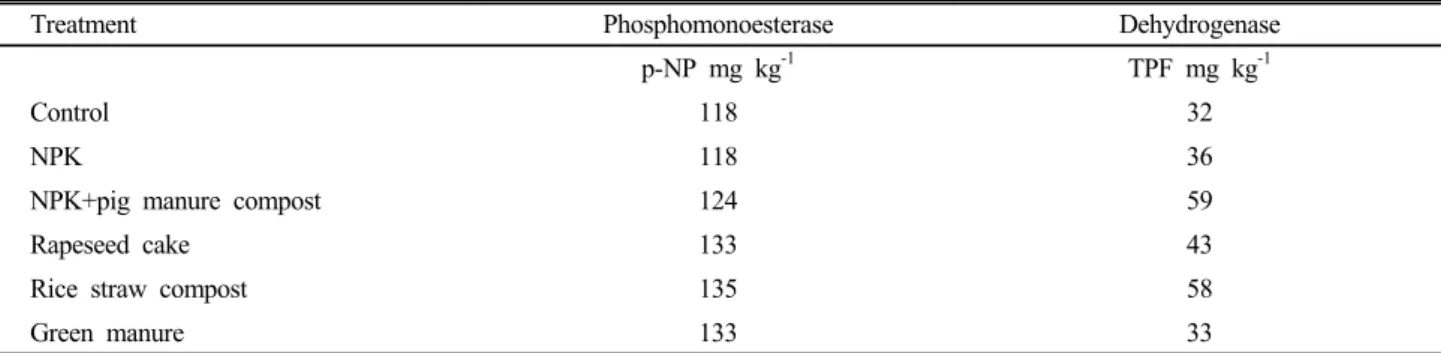
Table 3. Activities of phosphomonoesterase and dehydrogenase in upland soils of long-term cultivation.
Treatment Phosphomonoesterase Dehydrogenase
p-NP mg kg-1 TPF mg kg-1
Control 118 32
NPK 118 36
NPK+pig manure compost 124 59
Rapeseed cake 133 43
Rice straw compost 135 58
Green manure 133 33
녹비시용구 157 mg kg-1으로 볏짚퇴비시용구에서 가장 높았다.
밭토양 처리별 바실러스, 그람음성균 및 미생물량은 Table 2와 같았다. 세균은 대조구인 무비구에서 7x10⁵, 화학비료구 46x105, 화학비료+돈분퇴비시용구 80x105, 채종유박구 114x105, 볏짚퇴비시용구 136x105, 녹비시용 구 260x105 CFU g-1으로 녹비시용구에서 가장 높았다.
바실러스와 그람음성균도 녹비시용구에서 가장 높았지 만, 미생물량은 무처리 69, 화학비료구 151, 화학비료+
돈분퇴비시용구 224, 채종유박구 121, 볏짚퇴비시용구 127, 녹비시용구 104 C mg kg-1으로 화학비료+돈분퇴비시용 구에서 가장 높았다.
인산효소와 유기물분해효소는 Table 3과 같이 처리구 에 비해 무처리구에서 모두 낮은 값을 보였다. 인산효소 인 phosphomonoesterase는 무비구와 NPK구가 118,
돈분퇴비구가 124, 채종유박과 녹비시용구가 133, 볏짚 퇴비시용구가 135 p-NP mg kg-1으로 유기물시용구에서 높은 경향을 보였다. 한편 유기물분해효소인 dehydrogenase 활성은 무비구 32, 화학비료시용구 36, 녹비시용구 33, 채종유박 시용구 43, 볏짚퇴비시용구 58, 돈분퇴비시용구 가 59 TPF mg kg-1으로 유기물 보다는 퇴비를 시용한 처리에서 유기물 분해효소 활성이 높은 경향을 보였다.
양분과 토양효소와의 명확한 관계를 확인하기 어려운 이유가 (Starnes et al., 2008, Criquet and Braud 2008) 양분순환에 있어서 토양미생물체량과 효소활성 등 모든 특성이 관련되어있기 때문이라는 보고도 있지만 (Allison et al., 2007), 본 시험조건에서는 미생물량과 dehydro- genase와의 관계는 Fig. 1처럼 미생물 바이오매스가 증 가할 수록 유기물분해효소인 탈수소효소의 활성이 증가 하는 유의한 정의 상관관계를 보였다. 이는 일반적으로
Fig. 1. Dehydrogenase activity to microbial biomass in upland soils.
Fig. 2. Cluster analysis of soils by phospholipid fatty acid.
RaC: rapeseed cake, NPK: chemical fertilizer, GM: green manure, PMC: pig manure compost, RSC: rice straw compost.
Table 4. Distribution of Bacillus in upland soils on the treatment (%).
Bacillus Number of Isolates (%)
Control NPK NPK+PMC RaC RSC GM
Bacillus alcalophilus - - - - 1 (4.3) -
Bacillus amyloliquefaciens - - 1 (4.0) 1 (3.5) 1 (4.3) -
Bacillus cereus 3 (18.7) - 1 (4.0) 1 (3.5) 1 (4.3) -
Bacillus flexus 5 (31.2) 8 (38.1) 11 (44.0) 7 (25.0) 1 (4.3) -
Bacillus GC group 22 - - - 2 (7.1) 2 (8.7) -
Bacillus laevolacticus - - - 1 (3.5) - -
Bacillus megaterium 2 (12.5) 5 (23.8) 7 (28.0) 5 (17.8) 14 (60.8) 10 (37.0)
Bacillus mycoides 1 (6.2) - - - 1 (4.3) -
Bacillus oleronius - - 1 (4.0) - - -
Bacillus subtilis 1 (6.2) 4 (19.0) 1 (4.0) 7 (25.0) 1 (4.3) -
Others 4 (25.0) 4 (19.0) 3 (12.0) 4 (14.2) 1 (4.3) 17 (63.0)
Sum 16 21 25 28 23 27
PMC: pig manure compost, RaC: rapeseed cake, RSC: rice straw compost, GM: green manure.
미생물의 균수가 효소 활성 및 양분순환 간에 일정한 관 계가 있지만 (Suh et al., 2008), 비배양성 미생물이 포 함된 미생물 바이오매스가 효소활성에 보다 밀접한 상관 성이 있음을 보여주는 것이다.
Bååth and Anderson (2003)은 미생물 바이오매스와 PLFA간에 유의한 정의 상관관계가 있고, 토양 pH와 PLFA 종류 간에 정 혹은 부의 관계를 확인하였는데 16:1w5, 16:1w7c 및 18:1w7등은 정의 관계를 cy19:0, i15:0 및 i16:0은 부의 관계가 있다고 한바와 같이 PLFA는 미생 물 군집을 평가하는 지표로 활용되고 있다. 본 시험의 영년 밭토양의 PLFA에 의한 군집분석은 Fig. 2 처럼 볏 짚퇴비시용에 의한 미생물 군집상은 무처리, 채종유박, 녹비, 화학비료 및 화학비료+돈분퇴비 처리구와는 상이 한 유형을 보였다. 한편 돈분퇴비시용구의 미생물 군집 상 역시 무처리, 채종유박, 녹비, 화학비료와 다름을 보
였다. 이러한 결과는 유기물의 종류에 의해 토양미생물 군집상이 크게 영향을 받고 있음을 보여주는 것이라 할 수 있다.
논토양에서 인산 가용화균의 다양성을 조사하고자 선 택배지에 발현한 총 432균주를 분리하여 MIDI를 사용 하여 64.6%에 해당하는 세균을 동정한 결과 분리된 인 산가용화 세균은 Aquaspirillum, Arthrobacter, Bacillus, Falvobacterium, Micrococcus, Micromonospora, 및 Pseudomonas속이었으며, 이 가운데 Bacillus와 Pseudo- monas속이 각각 33.5% 및 21.9%로 우점하였다는 보고 처럼 (Suh et al., 2008) 배양성 균으로는 비교적 Bacillus 속이 우점하는 경향이었다. 따라서 본 시험에서는 유기 물 분해와 관련이 높은 Bacillus 속의 속종간 특성을 살 펴보았다.
영년동일 밭토양에서 분리된 바실러스 종류는 Table 4
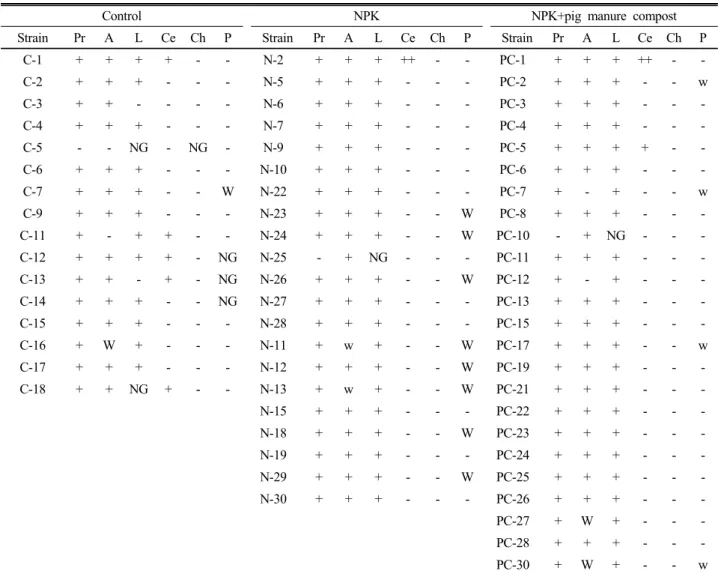
Table 5. Enzyme and phosphate solubilizing activity of isolates.
Control NPK NPK+pig manure compost
Strain Pr A L Ce Ch P Strain Pr A L Ce Ch P Strain Pr A L Ce Ch P
C-1 + + + + - - N-2 + + + ++ - - PC-1 + + + ++ - -
C-2 + + + - - - N-5 + + + - - - PC-2 + + + - - w
C-3 + + - - - - N-6 + + + - - - PC-3 + + + - - -
C-4 + + + - - - N-7 + + + - - - PC-4 + + + - - -
C-5 - - NG - NG - N-9 + + + - - - PC-5 + + + + - -
C-6 + + + - - - N-10 + + + - - - PC-6 + + + - - -
C-7 + + + - - W N-22 + + + - - - PC-7 + - + - - w
C-9 + + + - - - N-23 + + + - - W PC-8 + + + - - -
C-11 + - + + - - N-24 + + + - - W PC-10 - + NG - - -
C-12 + + + + - NG N-25 - + NG - - - PC-11 + + + - - -
C-13 + + - + - NG N-26 + + + - - W PC-12 + - + - - -
C-14 + + + - - NG N-27 + + + - - - PC-13 + + + - - -
C-15 + + + - - - N-28 + + + - - - PC-15 + + + - - -
C-16 + W + - - - N-11 + w + - - W PC-17 + + + - - w
C-17 + + + - - - N-12 + + + - - W PC-19 + + + - - -
C-18 + + NG + - - N-13 + w + - - W PC-21 + + + - - -
N-15 + + + - - - PC-22 + + + - - -
N-18 + + + - - W PC-23 + + + - - -
N-19 + + + - - - PC-24 + + + - - -
N-29 + + + - - W PC-25 + + + - - -
N-30 + + + - - - PC-26 + + + - - -
PC-27 + W + - - -
PC-28 + + + - - -
PC-30 + W + - - w
Pr; protease, A; amylase, L; lipase, Ce: cellulase, Ch: chitinase, P: phosphate solubility.
처럼 Bacillus alcalophilus, Bacillus amyloliquefaciens, Bacillus cereus, Bacillus flexus, Bacillus GC group 22, Bacillus laevolacticus, Bacillus megaterium, Ba- cillus mycoides, Bacillus oleronius, Bacillus subtilis 속 등이 분리되었다. MIDI에 의한 종까지의 동정은 완 벽하지 않지만 여기서는 바실러스의 다양성을 보고자 종 까지 표시하였다. 대조구에서는 6종이 분리되었으며 Bacillus flexus가 우점하였고, 화학비료구에서는 3종으로 Bacillus flexus, 돈분퇴비시용구에서는 6종으로 Bacillus flexus, 채종유박시용구에서는 7종으로 Bacillus flexus와 Bacillus subtilis, 볏짚퇴비 시용구에서는 8종 Bacillus megaterium, 헤어리벳지가 사용된 녹비시용구에서는 Bacillus로서는 Bacillus megaterium 1종만이 검출되었지만 다른 속의 세균이 타 처리구에 비해 많은 수로 검출되는 특성을 보 였다.
토양에서 분리된 바실러스에 대한 protease, amylase, lipase, cellulase, chitinase 및 인산가용화능은 Table 5와 같았다. 전분은 식물체에 저장되어있는 주요 탄수화
물이다. 전분의 덱스트린이나 당으로의 효소적 전환은 식 물체, 동물, 세균 및 사상균에서 유래된 효소에 의해 이 루어진다. 아밀라아제는 탄소의 지구화학적 순환에서 중 요한 역할을 할 뿐 만 아니라 다양한 산업에 응용되고 있다 (Ammozegar et al., 2003). 이와 같이 아밀라아 제 분비 세균은 물질순환에서 중요한 역할을 하기 때문 에 그 동태 파악도 생태학은 물론 미생물응용학적에서도 중요하다고 할 수 있다. 영년 밭 토양에서 분리된 세균 은 대부분 아밀라아제활성 뿐 만 아니라 protease 및 lipase의 활성을 가지고 있었다.
토양 단백질은 체외효소인 protease에 의해 펩티드와 아미노산으로 가수분해 된다. 프로테아제는 세균, 방선균 및 사상균에 의해 널리 생성되는데, Geisseler and Horwath (2008)은 미생물 biomass N과 밀접한 관계가 있다고 하였다.
밭토양에서 cellulase활성을 갖는 세균은 많지 않았으 나 볏짚퇴비시용구 및 채종유박이 시용된 토양에 비교적 높은 cellulase활성을 가지고 있는 균이 서식하고 있었
Table 5. Enzyme and phosphate solubilizing activity of isolates (continue).
Rapeseed cake Rice straw compost Green manure
Strain Pr A L Ce Ch P Strain Pr A L Ce Ch P Strain Pr A L Ce Ch P
CD-1 + + + - - W RS-1 + + + + - - GM-2 + - + - - -
CD-2 + + + - - W RS-3 + + + - - - GM-3 + - + - - W
CD-3 + - + W - - RS-4 + + + - - - GM-4 + + + - - -
CD-4 + + + ++ - W RS-6 + + + - - - GM-5 + + + - - -
CD-5 + + + - - - RS-7 + + + - - - GM-6 + + + - - W
CD-6 + + + - - - RS-8 + + + - - - GM-7 + + + - - -
CD-7 + + + - - - RS-9 + + + - - - GM-8 + - + - - -
CD-9 + + + - - - RS-10 + + + - - - GM-9 + - + - - -
CD-10 + + + - - - RS-11 + - NG NG NG - GM-10 + - + - - W
CD-11 + + + - - - RS-12 + + + - - W GM-12 + - + - - W
CD-13 + + + - - - RS-13 + + + - - W GM-13 + + + - - -
CD-14 + + + - - - RS-14 + + + - - - GM-14 + - + - - -
CD-15 + + + ++ - - RS-15 + + + - - - GM-15 + + + - - -
CD-16 + + + - - - RS-16 + + + - - - GM-16 + - + - - -
CD-17 + + NG + - - RS-17 + + + - - W GM-17 + - + - - W
CD-18 + + + ++ - W RS-18 + + + - - - GM-18 + - + + - W
CD-19 + + + ++ + - RS-21 + + + - - - GM-19 + - + - - -
CD-20 + + + ++ - - RS-22 + + + - - - GM-20 + - + - - W
CD-21 + + + ++ + W RS-25 + - + ++ - - GM-21 + - ND - - -
CD-23 + + + + - W RS-26 + + + - - - GM-22 + - + - - -
CD-24 + + + ++ - - RS-27 + ++ + ++ - - GM-24 + + + - - -
CD-27 + + + ++ - - RS-28 + + + - - - GM-25 + + + - - -
CD-28 + + + - - - GM-26 + - + - - -
CD-29 + + + ++ - - GM-27 + + + - - -
CD-30 + + + - - - GM-28 + + + - - -
GM-29 - - - - - W
GM-30 - - - - - -
Pr; protease, A; amylase, L; lipase, Ce: cellulase, Ch: chitinase, P: phosphate solubility NG: no growth, W; weak growth, ++ strong, + medium, - no activity
다. 퇴비는 미생물에 의해 생물학적으로 분해된 유기물 이다. 퇴비화 미생물에는 Bacillus, Actinomycetales, Thermus, Streptomyces. Aspergillus 등이 있는 바 이들 미생물에 의해 셀룰라아제가 분비되기 때문이라 할 수 있다. 한편 인산가용화능은 일부의 균에서만 약한 가 용화능을 보였다.
영년동일 밭토양에서 분리된 세균 대부분은 chitinase 활성을 가지고 있지 않았다. 고등식물이 chitinases를 생성하는 것은 진균병에 대한 방어기작이지만, 세균은 탄소나 질소원으로서 키틴을 이용하기 위해 생성한다.
이러한 세균의 특성은 병원성 진균을 제어하기 위해 이 용되기도 한다. Wang et al. (2006)은 키티나제를 생성 하는 Bacillus subtilis를 분리하고, Mavingui and Heulin (1994)이 Bacillus polymyxa로 동정된 많은 수의 바실
러스도 chitinase를 생성함을 보고한 바와 같이, 유기물 분해, 작물생육촉진 및 생물적 방제 등 바실러스의 다기 능적 메카니즘에 대한 연구가 필요하다고 생각된다.
요 약
바실러스와 그람음성균은 녹비시용구에서 높았지만, 미생물량은 비료+돈분퇴비 시용구에서 높았다. 인산효소 와 유기물분해효소는 무처리구에 비해 유기물 시용구에 서 모두 높은 값을 보였다. 영년 밭토양의 PLFA에 의한 군집분석은 볏짚퇴비 및 돈분퇴비시용구가 다른 처리와 상이한 특성을 보였다. 영년 밭 토양의 우점균은 Bacillus flexus, Bacillus subtilis 및 Bacillus megaterium 등
이었으며, 토양에서 분리된 세균은 대부분 amylase, pro- tease 및 lipase의 활성을 가지고 있었다.
인 용 문 헌
Allison, V.J, L.M. Condron, D.A. Peltzer, S.J. Richardson, and B.L. Turner. 2007. Changes in enzyme activities and soil microbial community composition along carbon and nutrient gradients at the Franz Josef chronosequence, New Zealand. Soil Biol. Biochem. 39:1770-1781.
Amoozegar, M.A., F. Malekzadeh, and K.A. Malik. 2003.
Production of amylase by newly isolated moderate halophile, Halobacillus sp. strain MA-2. J. Microbiol.
methods. 52:353-359.
Bååth, E., and T.H. Anderson. 2003. Comparison of soil fungal/bacterial ratios in a pH gradient using physiological and PLFA-based techniques. Soil Biol. Biochem. 35:
955-963.
Crecchio, C., M. Curci, R. Mininni, P. Ricciuti, and P.
Ruggiero. 2001. Short term effects of municipal solid waste compost amendments on soil carbon and nitrogen content, some enzyme activities and genetic diversity.
Biol. Fertil. Soils. 34:311-318.
Criquet, S. and A. Braud. 2008. Effects of organic and mineral amendments on available P and phosphatase activities in a degraded Mediterranean soil under short-term incubation experiment. Soil Tillage Res. 98:164-174.
Degens, B.P., L.A. Schipper, G.P. Sparling, and M. Vojvodic- Vukovich. 2000. Decreases in organic C reserves in soils can reduce the catabolic diversity of soil microbial communities. Soil Biol. Biochem. 32:189-196.
Dhillion, S.S. 1997. Fallow age influences microbial func- tional abilities, soil properties and plant functional groups.
In: Insam, H., Rangger, A. (Eds.), Microbial Communities, Springer, Berlin, pp. 140-148.
Donnison, L.M., G.S. Griffith, and R.D. Bardgett. 2000.
Determinants of fungal growth and activity in botanically diverse hay meadows: effects of litter type and fertilizer additions. Soil Biol. Biochem. 32:289-294.
Geisseler, D., and W.R. Horwath. 2008. Regulation of extracellular protease activity in soil in response to different sources and concentrations of nitrogen and carbon. Soil Biol. Biochem. 40:3040-3048.
Harrison, U.J. and H.D. Shaw. 2001. Effects of soil pH and nitrogen fertility on the population dynamics of Thielaviopsis basicola. Plant Soil. 228:147-155.
Hopkins, D.W. and R.S. Shiel. 1996. Size and activity of soil microbial communities in long-term experimental grassland plots treated with manure and inorganic fer- tilizers. Biol. Fertil. Soils. 22:66-70.
Jensen, L.E. and O. Nybroe. 1999. Nitrogen availability
to Pseudomonas fluorescens DF57 is limited during de- composition of barley straw in bulk soil and in the barley rhizosphere. Applied Environmental Microbiology.
65:4320-4328.
Kandeler, E., J. Luxhøi, D. Tscherko, and J. Magid. 1999a.
Xylanase, invertase and protease at the soil-litter interface of a loamy sand. Soil Biol. Biochem. 31:1171-1179.
Kandeler, E., M. Stemmer, and E.M. Klimanek. 1999b.
Response of soil microbial biomass, urease and xylanase within particle size fractions to long-term soil management.
Soil Biol. Biochem. 31:261-273.
Madejon, E., P. Burgos, R. Lopez, and F. Cabrera. 2001.
Soil enzymatic response to addition of heavy metals with organic residues. BBiol. Fertil. Soils. 34:144-150.
Mavingui, P. and T. Heulin. 1994. In vitro chitinase and antifungal activity of a soil, rhizosphere and rhizoplane population of Bacillus polymyxa. Soil Biol. Biochem.
26:801-803.
Marschner, B. and A. Noble. 2000. Chemical and biological processes leading to the neutralisation of soil acidity after incubation with different litter materials. Soil Biol.
Biochem. 32:805-813.
Metting, F.B. 1993. Structure and physiological ecology of soil microbial communities. In: Metting, F.B., (Ed.), Soil Microbial Ecology-Application in Agricultural and Environmental Management, Marcel Dekker, New York, pp. 3-24.
Parham, J.A., S.P. Deng, W.R. Raun, and G.V. Johnson.
2002. Long-term cattle manure application in soil. Part I: effect on soil phosphorus levels and activities of enzymes involved in phosphorus transformations in soil.
Biol. Fertil. Soils. 35:328-337.
Parham, J.A., S.P. Deng, and W.R. Raun. 2003. Long-term cattle manure application in soil. Part II: effect on soil microbial populations and community structure. Biol.
Fertil. Soils. 38:209-215.
Pascual, J.A., C. Garcia, T. Hernandez, J.L. Moreno, and M. Ros. 2000. Soil microbial activity as a biomarker of degradation and remediation processes. Soil Biol. Biochem.
32:1877-1877.
Peacock, A.D., M.D. Mullen, D.B. Ringelberg, D.D. Tyler, D.B. Hedrick, P.M. Gale, and D.C. White. 2001. Soil microbial community responses to dairy manure or am- monium nitrate applications. Soil Biol. Biochem. 33:1011-1019.
Plaza, C., D. Hernandez, J.C. Garcia-Gil, and A. Polo.
2004. Microbial activity in pig slurry-amended soils under semiarid conditions. Soil Biol. Biochem. 36:1577-1585.
Sarniguet, A., P. Lucas, and M. Lucas. 1992. Relationships between take-all, soil conduciveness to the disease, populations of fluorescent pseudomonads and nitrogen fertilizers. Plant Soil. 145:17-27.
Sarathchandra, S.U., A. Ghani, G.W. Yeates, G. Burch,
and N.R. Cox. 2001. Effect of nitrogen and phosphate fertilizers on microbial and nematode diversity in pasture soils. Soil Biol. Biochem. 33:953-964.
Starnes, D.L., P. Padmanabhan, and S.V. Sahi. 2008.
Effect of P sources on growth, P accumulation and activities of phytase and acid phosphatases in two cultivars of annual ryegrass (Lolium multiflorum L.).
Plant Physiol. Biochem. 46:580-589.
Suh, J.S., H.J. Noh, and J.S. Kwon. 2008. Effects of amendments on the phosphate-solubilizing bacteria in rice paddy soils. J. Korean Soc. Soil Sci. Fert. 41:342-347.
Suh, J.S., H.J. Noh, and J.S. Kwon. 2009. Impact of
amendments on microbial biomass, enzyme activity and bacterial diversity of soils in long-term rice field expe- riment. Korean J. Soil Sci. Fert. 42:257-265.
Sukul, P. 2006. Enzymatic activities and microbial biomass in soil as influenced by metalaxyl residues. Soil Biol.
Biochem. 38:320-326.
Wang, S.L, T.Y. Lin, Y.H. Yen, H.F. Liao, and Y.J. Chen.
2006. Bioconversion of shellfish chitin wastes for the production of Bacillus subtilis W-118 chitinase. Carbohydrate research. 341:2507-2515.
농촌진흥청. 1988. 토양화학분석법. 삼미인쇄사.
토양미생물연구회. 1992. 토양미생물실험법. 양현당.