Activating Transcription Factor 3 is a Molecular Target for Apoptotic Effect of Silymarin in Human Colorectal Cancer Cells
Hyun Ji Eo, Gwang Hun Park and Jin Boo Jeong*
Department of Medicinal Plant Resources, Andong National University, Andong 36729, Korea
Abstract - Apoptosis has been regarded as a therapeutic target because apoptosis is typically disturbed in human cancer.
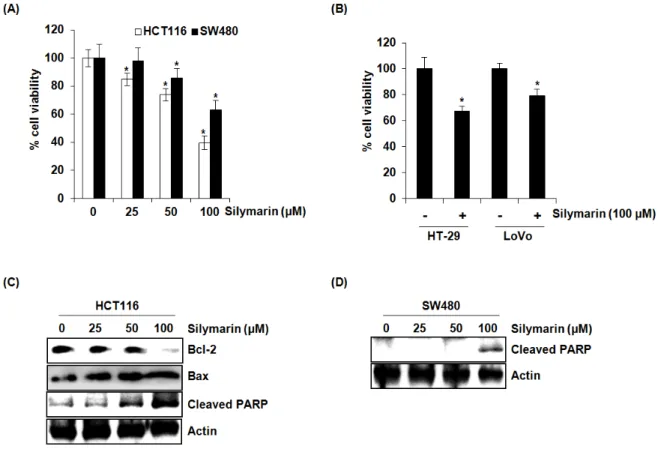
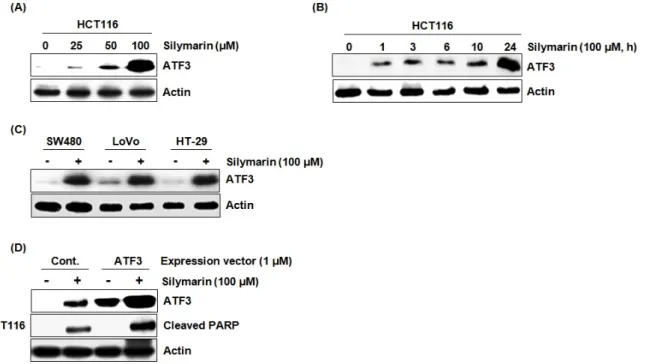
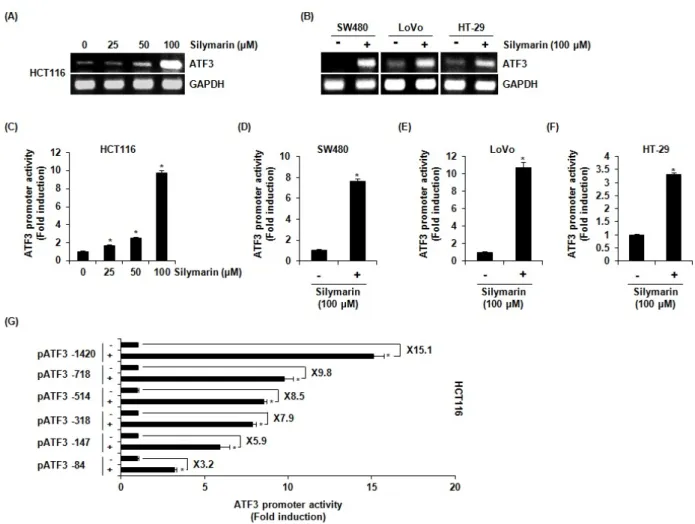
Silymarin found in the seeds of the milk thistle (Silybum marianum) has been reported to exert anti-cancer properties through apoptosis. This study was performed to investigate the molecular target for silymarin-mediated apoptosis in human colorectal cancer cells. Silymarin reduced the cell viability and induced an apoptosis in human colorectal cancer cells. ATF3 overexpression increased PARP cleavage by silymarin. Increased ATF3 expression in both protein and mRNA was observed in silymarin-treated cells. In addition, silymarin increased the luciferase activity of ATF3 promoter. Inhibition of JNK and IκK-α blocked silymarin-mediated ATF3 expression. The results suggest that silymarin induces apoptosis through JNK and IκKα-dependent ATF3 expression in human colorectal cancer cells.
Key words - Silymarin, Activating transcription factor 3, Apoptosis, Human colorectal cancer, Cancer chemoprevention
*Corresponding author. E-mail : [email protected] Tel. +82-54-820-7757
ⓒ 2016 by The Plant Resources Society of Korea