1. INTRODUCTION
In today’s business environment, Y Generational workers continue to increase in the most kinds of industries. And they will occupy around 75% of the world's labor force by 2025 (Choi, 2017). As Generation Y joins in the workforce, three generations of baby boomers, X generation and Y generation coexist in the present industrial field. Baby boomer generation who is the oldest one is retiring at a rapid pace. At the same time, that vacancy is filled with Generation Y workers. This
means that as time goes on, Generation Y employees will get bigger and bigger(Donald & Hillman, 2013).
It is common think that the service level of customer contact staff is a key factor to determine the customer satis- faction in the service area. By the way, most employees in charge of the customer service at the hotel are from the 20s to the mid-30s who were born between 1981 and 2000. It is the so-called Generation Y (Kong, Wang, & Fu, 2015). Mean- while, many researchers are arguing that the life pattern, needs and values that they pursue are pretty different from Information available at the Culinary Society of Korea (http://www.culinary.re.kr/)
Culinary Science & Hospitality Research
Journal & Article Management System: https://cshr.jams.or.kr/
http://dx.doi.org/10.20878/cshr.2017.23.6.009
A Study on Structural Model of Work-Values, Job Satisfaction and Task Performance of Generation Y Staff in the Hotel Industry
Hyunjung Choi
School of Hotel and Tourism Management, Baekseok University
KEYWORDS ABSTRACT
Work-values, Job satisfaction, Task performance, Y generation, Hotel service staff.
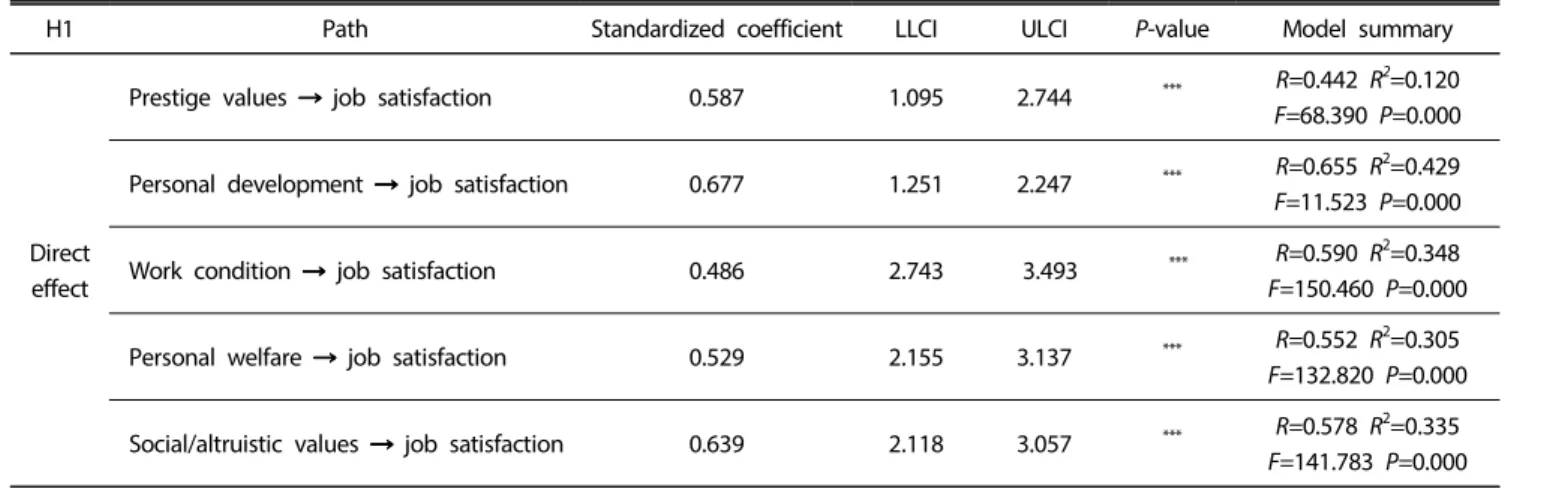
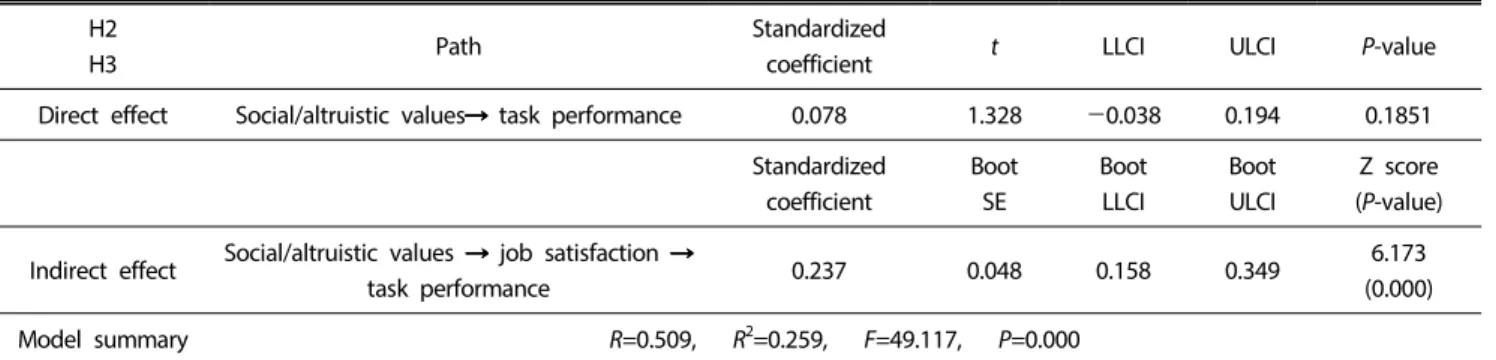
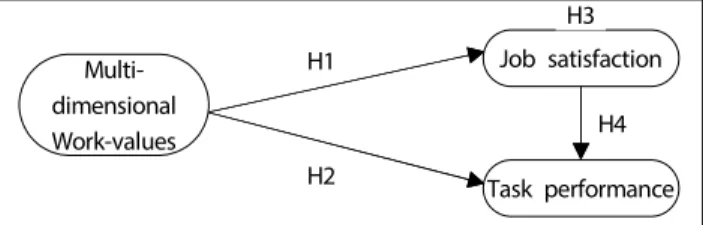
The main goal of this study was to demonstrate the causal relationships between multi-dimensional work-values, job satisfaction and task performance of Y generational employee in the Korean hotel industry. In order to achieve the purpose, the data were collected from Y generational employees working in the major cities in Korea. To analyze the data, frequency, exploratory factor analysis, re- liability analysis, PROCESS Macro analysis and simple regression analysis were undertaken by using SPSS 18.0. The results were as follows; 1. Work-values were found out as five factors; Prestige work- values, Personal development work-values, Work condition work-values, Personal welfare work-values, Social/ Altruistic work-values. 2. All five factors were found to be significant in enhancing job satis- faction. 3. Two factors which were prestige work-values and personal welfare work-values were found to be significant in facilitating task performance. 4. Job satisfaction was revealed as a mediator between all work-value factors and task performance. This study provided practical information about work-values of Y generational hoteliers to positively affect their job satisfaction and task performance. This study also confirmed that it is important to enhance job satisfaction in order to make employees perform their service duties better.
*
This work was supported by the Ministry of Education of the Republic of Korea and the National Research Foundation of Korea (NRF-2015S1A5A2A01011376).
*

![Table 2. Results for testing validity and reliability of work- value items Factors Eigen-value (%) Factor loading Cronbach’sα [Personal welfare values]](https://thumb-ap.123doks.com/thumbv2/123dokinfo/5459872.437225/6.892.76.435.163.1119/results-testing-validity-reliability-factors-factor-cronbach-personal.webp)