• 검색 결과가 없습니다.

Proteome analysis between diverse phenotypes of Salmonella enterica subspecies enterica serovar Typhimurium (S. Typhimurium)

N/A
N/A
Protected

Academic year: 2021

Share "Proteome analysis between diverse phenotypes of Salmonella enterica subspecies enterica serovar Typhimurium (S. Typhimurium)"

Copied!
11
0
0

로드 중.... (전체 텍스트 보기)

전체 글

(1)

285

<원례보저

>

Proteome analysis between diverse phenotypes of Salmonella enterica subspecies enterica serovar Typhimurium ( S. Typhimurium)

Gee-Wook Shin

1

, In-Seok Cha

2

, Woo-Won Lee

3

, Seong-Won Nho

2

, Seong-Bin Park

2

, Ho-Bin Jang

2

, Yong-Hwan Kim

2

, Tae-Sung Jung

2,

*

1

College of Veterinary Medicine, Chonbuk National University, Jeonju 561-756, Korea

2

College of Veterinary Medicine, Gyeongsang National University, Jinju 660-701, Korea

3

Busan Metropolitan City Institute of Health and Environmental, Busan 616-810, Korea (Accepted: November 1, 2010)

Abstract : Protein expression patterns in Salmonella enterica subspecies enterica serovar Typhimurium ( S. Typhimurium) strains with diverse phenotypes, such as phage type, antibiotic resistance pattern and plasmid profiles were examined. For detailed analysis of proteins expressed by different S. Typhimurium strains, protein fractions were divided into detergent-rich phase (DP) and aqueous phase (AP) using triton X-114 detergent. The two phases were subjected to two-dimensional gel electrophoresis (2-DE), followed by protein identification using peptide mass fingerprinting (PMF). In the results, PMF showed that DP fractions consisted mainly of outer membrane proteins, whereas the AP fractions included cytosolic proteins. Comparison of 2-DE profiles of DP did not show any distinct protein spots which could be correlated with phage type, antibiotic resistance pattern or plasmid profile. However, comparisons of 2- DE profiles of the AP revealed differences in the protein spots, which could be correlated with the plasmid profile and phage types. Among these protein spots, flagellin was specific for strains containing a 90 kb plasmid. Compared to DT193 phage type, three protein spots in the range of pI 5.0-5.5 and MW 8-15 kDa of AP 2-DE profiles were absent in the DT104 phage types. Additionally, a protein spot with PI in the range of 4.5-5.0 and molecular weight (MW) between 51-69 kDa was specific for phage type DT104, while a protein spot with pI in the range of 4.0-4.8 and MW between 18-20 kDa was specific for DT193 phage type. These protein spots may be useful for discriminating phage types of S.

Typhimurium.

Keywords : OMP, phage type, plasmid, proteome , Salmonella enterica serovar Typhimurium, Triton X-114

Introduction

Salmonella enterica subspecies enterica serovar Typhimurium ( S. Typhimurium) is a major food-borne zoonotic pathogen throughout the world [3]. The bacterium has a broad host range including poultry, cattle and pigs, and consumption of contaminated meat, raw milk, or eggs by humans can elicit a variety of illness, ranging from localized gastroenteritis to a life- threatening systemic disease [24, 33, 46]. The S.

Typhimurium has frequently been isolated from asymp- tomatic pigs [8]. These carrier animals are the major threats to food safety because of the subclinical nature of the infection and are the main source of infection

to other pigs, contamination to the environment, to slaughter plants, and to pork products [4, 42]. Further- more, the rapid emergence and dissemination of multidrug resistant (MDR) S. Typhimurium isolates from infected pigs have become a public health concern worldwide [27].

Phage typing, antimicrobial resistance profiles and plasmid profiles are widely used on epidemiological studies for S. Typhimurium. The MDR strains of S.

Typhimurium are frequently identified into two different definitive phage types, DT104 and DT193 [24, 33, 43].

The phage type DT104 was first isolated in the United Kingdom [43], and later reported from various food animals and pets as well as from human worldwide [26, 37]. On the other hand, 90 kb plasmid of S. Typhimurium

*Corresponding author

Tel: +82-55-751-5822, Fax: +82-55-762-6733

E-mail: [email protected]

(2)

has been known to encode an outer membrane proteins (OMPs) associated with fimbrial biosynthesis, which confers enhanced virulence by promoting bacterial spread after infection [14]. Besides, OMPs of Gram- negative bacteria have been recognized as virulence factors for invasion and adhesion to host, and as transporters for various molecules through the bacterial surface [23]. Recent studies showed that the OMPs significantly change in response to antibiotic stimulation in bacteria [6, 16, 36, 47]. Some OMPs associated with membrane channel proteins, are functional unit for antibiotic efflux systems and contribute to MDR in the bacteria. Resistance to fluoroquinolones in S. Typhimurium DT104 and DT204 [1, 2], and multi-drug resistance in Escherichia ( E. ) coli [34] is reportedly due to overproduction of the AcrAB-TolC efflux system.

Since the OMPs play an important function in virulence and MDR in bacteria, they may serve as potential targets for design of antibiotics and vaccines [23].

Proteomic techniques involving, two-dimensional gel electrophoresis (2-DE) followed by peptide mass finger- printing (PMF) have been recognized as an efficient and simple tool in identification of individual proteins, and are widely used for studying the mechanisms involved in pathogenicity, antibiotic resistance and environmental adaptation of bacteria [18]. In these aspects, the protein expression patterns of S. Typhimurium have been extensively studied and reference maps of the cytoplasmic and cell envelope proteins have been previously published [11, 12, 31, 32, 35]. However, there is little information about comparisons of protein expression patterns according to phage types, patterns of antibacterial resistance and plasmid profiles of the bacteria. Therefore, we wanted to find differentially expressed proteins using comparative 2-DE analysis among S. Typhimurium strains defined using phage type, antibacterial resistance pattern and plasmid profile.

Materials and Methods

Bacterial strains, growth conditions

Six strains of S . Typhimurim used in this study were provided from Busan metropolitan city institute of health and environmental. Phage types, antibiotic resistance patterns and plasmid profiles for strains are summarized in Table 1 [21, 22]. The strains were cultured on Salmonella-Shigella agar (Merck, Germany) at 37

o

C for 24 h to obtain single colony for 2-DE sample preparation. 2-DE samples were prepared by culturing strains in tryptic soy broth (TSB). The strains were recovered by incubating in TSB at 37

o

C for 14 h, were pelleted by centrifugation at 14,000

×

g for 10 min at 4

o

C, and washed three times with phosphate buffered saline (PBS, pH 7.2). The final bacterial pellets were stored at

20

o

C until used for 2-DE sample preparation.

Triton X-114 extraction of proteins from

S.

Typh- imurium strains

The Triton X-114 detergent-induced phase partition method was employed for obtaining OMP rich and cytoplasmic protein rich factions as described by Lee et al. [20]. The pellets were resuspended in PBS containing 1% Triton X-114, completely vortexed and then centrifuged at 16,600

×

g for 30 min at 4

o

C. The supernatant was transferred into a new tube, incubated for 30 min at 37

o

C and centrifuged at 100

×

g for 1 min. The lower OMP rich detergent phase (DP) and upper aqueous phase (AP) were collected in separate tubes. To improve purity of DP, the extracts were re- extracted with an equal volume of PBS. Finally, the extracted DP and AP were added to ten volumes of cold ethanol and stored at

20

o

C for over 12 h. The insoluble materials were precipitated by centrifugation at 16,600

×

g for 40 min. The pelleted proteins were Table 1. Phage type, antibioticresistance patterns and plasmid profiles of S. Typhimurium isolates

Strains Host Phage type Resistance pattern Plasmid profile (kb)

SN296 Pig DT22 P Nd

*

SN75 Pig RDNC

DST 40, 6.3

SN164 Pig DT193 ACCbDNaPSSuT 90, 40, 10.5, 6.3, 3

SNC282 Pig DT104 ACCbDNaPSSuT 90, 40, 10.5, 6.3, 3

SNC309 Pig DT104 ACCbDNaPSSuT 40, 10.5, 6.3, 3

SNC310 Pig DT104 ACCbDNaPSSuT 90, 40, 10.5, 6.3, 3

S. Typhimurium: Salmonella enterica subspecies enterica serovar Typhimurium.

*

Nd: not detected,

RDNC: reacts with

phages but cannot be confirmed.

(3)

air-dried and stored at

20

o

C until used for 2-DE.

2-DE PAGE

The dried DP and AP samples were dissolved in soluble buffer (7 M urea, 2 M thiourea, 4% CHAPS, 20 mM DTT, 0.5% IPG buffer 3-10), incubated for 10 min on ice and mixed with equal volume of rehydration buffer (9 M urea, 4% CHAPS, 20 mM DTT, 0.5% IPG buffer pH 4-7 and 0.002% bromophenol blue). The protein concentrations were adjusted to 0.3 mg/mL for DP and 0.6 mg/mL for AP. The 2-DE and silver staining were performed according to Shin et al. [39].

The stained gels were digitalized using Agfa Arcus 1200 image scanner (Agfa-Gevaert; Mortsel, Belgium) and the digitized images were analyzed using the Phoretix 2D software (Ver. 5.01; NonLinear Dynamics, UK).

PMF Protein spots were identified by PMF using MALDI- TOF MS as described by Shin et al. [39]. In brief, protein spots of interest were picked from silver-stained gels and subjected to in-gel digestion with 12.5 ng/mL porcine trypsin (Promega, USA) at 37

o

C overnight (approximately 16 h). The supernatant was recovered and extracted twice with equal volumes of 5% formic acid and acetonitrile, pooled, and dried in a vacuum centrifuge. Dried tryptic peptides were re-dissolved in 1 mL sample solution (93 : 5 : 2, v/v ratio of DW, acetonitrile and TFA), and the targeting on MALDI plate was performed using the solution-phase nitrocellulose method [19]. Alpha-cyano-4-hydroxycinnamic acid (40 mg/mL) and nitrocellulose (20 mg/mL) were prepared separately in acetone and mixed with isopropanol at a ratio of 2 : 1 : 1 (v/v). The internal standards, des- Arg-Bradykinin (monoisotopic mass: 904.4681) and angiotensin I (1296.6853) (Sigma-Aldrich, USA) were added to the mixture to generate the matrix solution.

The matrix solution (1

µ

L) was spotted onto target circles on the MALDI plate and dried. The dried samples were analyzed using a Voyager-DE STR MALDI-TOF mass spectrometer (PerSeptive Biosystems, USA). The proteins were identified by comparing the obtained mass spectra to the National Center for Biotechnology Information and SwissProt protein sequence databases using ProteinProspector (University of California, USA).

Results

Construction of partial 2-DE maps for DP and AP 2-DE was used for exploring differentially expressed proteins according to phage type, antibiotic resistance patterns and plasmid profiles of S. Typhimurium. The results showed that DP and AP extracts were observed to be consist of about 220 (220

±

10) and 400 (410

±

30) spots by silver staining after 2-DE, respectively (Fig. 1). Majority of the proteins spots in both 2-DE profiles were distributed at the MW 20 to 70 kDa range. However, there were many differences in spot

Fig. 1. Partial two-dimensional gel electrophoresis (2-DE) maps of the detergent-rich phase (DP) (A) and aqueous phase (B) fractionated using Triton X-114 from Salmonella enterica subspecies enterica serovar Typhimurium ( S.

Typhimurium) strains.

(4)

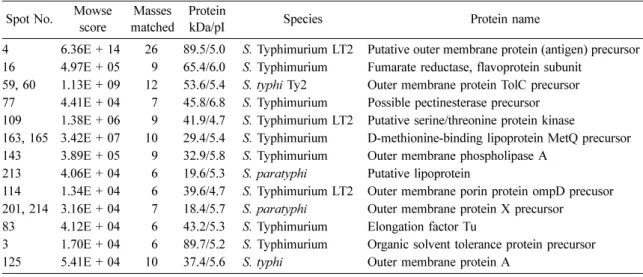
Table 2. The list of proteins identified in the 2-DE profile of DP of S. Typhimurium SN282 using MALDI-TOF MS Spot No. Mowse score Masses

matched Protein

kDa/pI Species Protein name

4 6.36E + 14 26 89.5/5.0 S. Typhimurium LT2 Putative outer membrane protein (antigen) precursor 16 4.97E + 05 9 65.4/6.0 S. Typhimurium Fumarate reductase, flavoprotein subunit

59, 60 1.13E + 09 12 53.6/5.4 S. typhi Ty2 Outer membrane protein TolC precursor 77 4.41E + 04 7 45.8/6.8 S. Typhimurium Possible pectinesterase precursor 109 1.38E + 06 9 41.9/4.7 S. Typhimurium LT2 Putative serine/threonine protein kinase

163, 165 3.42E + 07 10 29.4/5.4 S. Typhimurium D-methionine-binding lipoprotein MetQ precursor 143 3.89E + 05 9 32.9/5.8 S. Typhimurium Outer membrane phospholipase A

213 4.06E + 04 6 19.6/5.3 S. paratyphi Putative lipoprotein

114 1.34E + 04 6 39.6/4.7 S. Typhimurium LT2 Outer membrane porin protein ompD precusor 201, 214 3.16E + 04 7 18.4/5.7 S. paratyphi Outer membrane protein X precursor 83 4.12E + 04 6 43.2/5.3 S. Typhimurium Elongation factor Tu

3 1.70E + 04 6 89.7/5.2 S. Typhimurium Organic solvent tolerance protein precursor 125 5.41E + 04 10 37.4/5.6 S. typhi Outer membrane protein A

Fig. 2. Comparison of DP 2-DE profiles from 6 different isolates of S. Typhimurium, SN72 (a), SN164 (b), SN282 (c),

SN296 (d), SN309 (e) and SN310 (f). (A) The range of pI 4.0-4.5 and MW 35-40 kDa of DP 2-DE profiles. (B) The

range of pI 4.0-5.0 and MW 15-20 kDa of DP 2-DE profiles.

(5)

distribution of 2-DE profile for individual strain in

terms of pI. Spots for DP proteins were gathered in two ranges of pI 4.5-5.5 and pI 6.0-7.0 (Fig. 1A). In the case of 2-DE profile for AP, most of the spots were Table 3. Proteins identified in the 2-DE profile of AP of S. Typhimurium SN282 using MALDI-TOF MS

Spot No. Mowse

score Masses

matched Protein

kDa/pI Species Protein name

9 5.34E + 15 30 96.2/6.2 S. Typhimurium LT2 Iron dependent alcohol dehydrogenase 18 6.72E + 09 14 95.4/5.3 S. Typhimurium Chaperone ClpB

32 8.35E + 04 10 77.0/5.3 E. coli Phosphate acetyltransferase (phosphotransacetylase) 50 4.34E + 08 14 63.5/5.2 S. typhi Prolyl tRNA synthetase

40 8.98E + 03 8 81.2/6.0 S. typhi Lysine decarboxylase

43 8.42E + 04 9 65.4/6.0 S. paratyphi Fumarate reductase, flavoprotein subunit 47 5.94E + 06 16 69.2/4.8 S. Typhimurium Chaperone protein DnaK (heat shock protein 70;

HSP70)

58 1.27E + 05 8 57.2/4.8 S. Typhimurium 60 kDa chaperonin (protein Cpn60; GroEL protein) 77 8.29E + 10 20 48.0/4.8 S. Typhimurium Trigger factor

79 1.01E + 10 17 51.9/6.2 S. Typhimurium Inosine 5´-monophosphate dehydrogenase 80 2.53E + 06 10 56.2/5.1 S. Typhimurium 2,3 bisphosphoglycerate independent phospho-

glyceromutase

85 2.00E + 07 13 52.2/5.1 S. Typhimurium Aspartate ammonia-lyase 92 8.21E + 11 22 55.1/5.7 S. Typhimurium ATP synthase alpha subunit 95 9677 7 52.4/5.2 S. Typhimurium LT2 Aminoacyl-histidine dipeptidase 104, 108 8.88E + 06 13 51.6/4.9 S. Typhimurium Phage 1 flagellin

128, 136, 1.21E + 07 10 45.6/5.3 S. Typhimurium Enolase (2-phosphoglycerate dehydratase) (2-phospho-D-glycerate dehydratase) 137 130 5.74E + 04 8 42.3/5.1 S. typhi 3-oxoacyl-[acyl carrier protein] synthase I 148 3.67E + 10 15 43.2/5.3 S. Typhimurium Elongation factor Tu

149 1.91E + 06 9 43.2/5.8 S. Typhimurium Acetate kinase 156, 169 9.23E + 05 10 41.1/5.1 S. typhi Phosphoglycerate kinase 165 4.56E + 10 17 40.3/4.7 S. paratyphi Cell division protein FtsZ 180 3.54E + 04 8 39.1/5.7 S. paratyphi Fructose 1,6-bisphosphate aldolase 187 3.90E + 06 14 35.5/6.3 S. Typhimurium Glyceraldehyde-3-phosphate dehydrogenase 188 3.96E + 04 13 36512/5.0 Shigella flexneri RNA polymerase, alpha subunit

192 1.12E + 05 8 23.4/5.5 S. Typhimurium Adenylate kinase (ATP-AMP transphosphorylase) 202 1.18E + 05 11 26.9/5.7 S. Typhimurium Triosephosphate isomerase

216 8.48E + 04 8 32.4/6.0 S. Typhimurium Malate dehydrogenase

225, 229, 259 1.189E + 06 9 35/5.8 S. Typhimurium PTS system, mannose-specific IIAB component 234 1.38E + 07 12 30.3/5.1 S. Typhimurium Elongation factor Ts

244 2.23E + 05 9 30.9/5.3 S. Typhimurium LT2 Putative hydrolase

301 4.22E + 04 9 23.9/5.4 S. Typhimurium Oxygen insensitive NAD(P)H nitroreductase 304 4.33E + 06 11 24.2/5.2 S. Typhimurium LT2 Stringent starvation protein A

329 1.68E + 05 9 22.5/5.3 S. Typhimurium Uracil phosphoribosyltransferase 339 5.92E + 04 9 22.3/5.2 S. typhi Probable peroxidase

355 9.37E + 04 8 19.6/5.0 S. Typhimurium Inorganic pyrophosphatase

356, 357 5.00E + 05 8 20.7/5.0 S. Typhimurium Alkyl hydroperoxide reductase protein C22 402 1.31E + 04 8 15.5/5.3 S. Typhimurium DNA-binding protein H-NS

408 8.98E + 03 5 16.0/5.1 S. Typhimurium 6,7-dimethyl-8-ribityllumazine synthetase 410 6.07E + 04 6 16/5.4 S. Typhimurium Universal stress protein A

421 1.05E + 05 9 14.2/5.1 E. coli K12 Putative formate acetyltransferase

(6)

widely spread at range of over pI 5.0 (Fig. 1B).

Individual spots of the 2-DE were randomly selected and subjected to MALDI-TOF MS for identification and annotation using PMF. Among spots detected in the silver staining, 16 spots for DP could be identified as 13 different proteins, whereas 46 spots from AP 2- DE profile were annotated with 40 different proteins.

Of these proteins, fumarate reductase and elongation factor-Tu were detected on both 2-DE profiles for DP and AP (Tables 2 and 3, Fig. 1). Except for two proteins, 11 protein spots for DP were identified as outer membrane proteins of genus Salmonella . The isoforms of TolC precursors (Spot No. 59 and 60) and

lipoprotein MetQ precursors (Spot No. 163 and 165 for MetQ) identified in the DP, had the same MW but different pI (Fig. 1A and Table 2). However, the isoforms of ompX (Spot No. 201 and 214) of the DP showed differences in their MW as well as pI. In the case of 2-DE profiles for AP, the identified proteins were mainly cytosolic proteins (Table 3). Of the identified proteins of AP, two isoforms of phage 1 flagellin (No.

104 and 108), phosphoglycerate kinase (Spot No. 156 and 169) and alkyl hydroperoxide reductase protein C22 (Spot No. 356 and 367) were identical in a molecular mass but a slightly different in pI. In addition, enolase was detected on three spots (Spot No. 128, 136 and

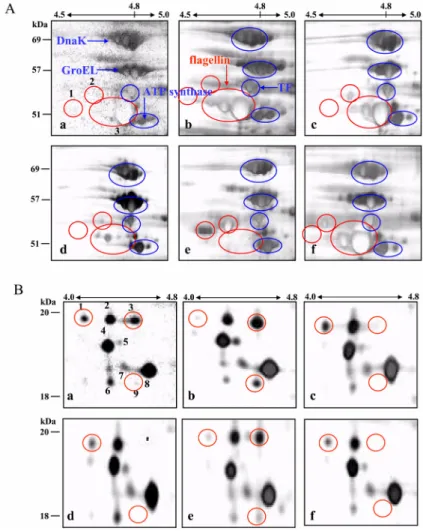
Fig. 3. Comparison of DP 2-DE profiles from 6 different isolates of S. Typhimurium SN72 (a), SN164 (b), SN282 (c),

SN296 (d), SN309 (e) and SN310 (f). (A) the range of pI 4.5-5.0 and MW 51-69 kDa of DP 2-DE profiles. (B) the range

of pI 4.0-4.8 and MW 18-20 kDa of DP 2-DE profiles. (C) the range of pI 4.5-5.5 and MW 20-24 kDa of DP 2-DE

profiles. (D) The range of pI 5.0-5.5 and MW 8-15 kDa of DP 2-DE profiles.

(7)

137) of 43 kDa in 2-DE profile for AP. Mannose- specific IIAB (Spot No. 225, 229 and 259) was detected on three different spots in 2-DE profiles for AP (Fig.

1B and Table 3). Of the proteins spots, spots No. 225 and 229 had an identical molecular mass but a slightly different pI. However, Spot No. 259 had lower molecular mass compared with two spots for mannose-specific IIAB (Fig. 1B and Table 3).

Comparisons of 2-DE profiles of

S

. Typhimurium strains

In 2-DE profiles for DP from S. Typhimurium, lipoprotein was detected in all strains, except for SN282 and SN310 strains (Fig. 2A). On the other hand, it’s neighboring spots (Fig. 2A), Nos. 1 and 3, were evident only in SN296 and SN309 strains. In the case of spot No. 2, it was absent only in 2-DE profile for

DP of an SN296 strain resistant only to penicillin.

OmpD spot disappeared only in 2-DE profile for DP of SN310 strain (Fig. 2A). The OmpX spot identified in the DP of SN164, SN296 and SN309 strains were not detected in the rest of the strains (Fig. 2B). When comparing the AP 2-DE profiles from all strains, major differences were evident at 10 different spots (Fig. 3).

In Fig. 3A, the phage 1 flagellin spots were absent in

AP 2-DE profile of SN72 and SN309 strains. However,

the spots of SN296 strain showed lower intensities

compared to other strains (Fig. 3A). Spot No. 1 in the

AP 2-DE profiles was shown only in SN309 strain. In

the case of spot No. 2, it was observed with higher

intensity in DT104 compared with that of other phage

types (Fig. 3A). When comparing the range of pI 4.0-

4.8 and MW 18-20 kDa on AP 2-DE profiles (Fig. 3B)

of all strains, spot No. 1 showed highest intensity in

Fig. 3. continued

(8)

SN72 and SN282 strains, intermediate intensity in SN296 and SN310 strains, and lowest intensity in SN164 and SN309 strains. Spot No. 3 was detected in the AP of SN72, SN164 and SN296 strains but were absent in other strains. Spot No. 9 was unique to the SN164 strain, which was DT193. In the range of pI 4.5-5.5 and MW 20 kDa (Fig. 3C), spot No. 1 was not detected in the AP only from SN309 strain. Spot No. 2 was not detected in the 2-DE profiles for AP from SN282, SN296, SN309 and SN310 strains (Fig. 3C). In the case of spot No. 3, it disappeared on AP 2-DE profiles for DT22 (SN296) and DT104 (SN309 and SN310 strains). In addition, spot No. 3 of SN282 strain showed lower intensity compared to those of SN72 (RDNC) and SN164 (DT193). The 2-DE profile of AP in the range of pI 5.0-5.5 and MW 14-15 kDa showed differences at four different spots (Fig. 3D). Spot No.

1 consisted of two spots on AP 2-DE profiles only in the SN72 strain. However, the spot for SN164 and SN309 strains showed higher intensity than those of the other strains. Finally, spot No. 2 disappeared on 2- DE profiles for DT104 and DT22 strains. Spot No. 3 and 4 showed higher intensity only in DT193 and SN164 strain (Fig. 3D).

Discussion

In this study, comparative 2-DE analysis was employed for investigating protein expression patterns of S.

Typhimurium strains according to phage type, antibiotic resistance pattern and plasmid profile. The traditional 2-DE analysis has some disadvantages, such as low load ability, poor separation of highly hydrophobic proteins and low resolution due to complexity of sample proteins. In this aspect, we used the phase partitioned with Triton X-114 to reduce complex proteins from S.

Typhimurium strains and comparative 2-DE analysis for exploring differentially expressed proteins from the bacterial strains.

Our previous study reported a 2-DE reference map for S. Enteritidis ATCC13076 using traditional extraction buffer (Mixture of urea and CHAPS). In the map, only one OMP was identified by PMF using MADLI-TOF MS [29]. The study might suggest that OMPs were insufficiently dissolved in the buffer. Therefore, the present study needed alternative methods to obtain both OMP-rich fraction and cytoplasmic proteins-rich fractions from six strains of S. Typhimurium. There are a

number of extraction methods for OMPs, such as using strong surfactants or high pH buffers combined with ultracentrifugation and temperature-dependent phase partitioning by Triton X-114 [5]. Of these methods, we selected phase partitioning using Triton X-114, because of technical simplicity. Whole cell lysates from six strains were divided into two phases using Triton X- 114, DP and AP. PMF results showed that most of the OMPs were present in DP 2-DE profiles, whereas most spots for cytoplasmic proteins were detected in AP 2- DE profiles. Based on the results, partition using Triton X-114 was thought to be a useful method for extraction of OMPs and cytoplasmic proteins of S. Typhimurium . In this study, isoforms of various proteins including, phage 1 flagellin, enolase, phosphoglycerate kinase, mannose-specific IIAB, alkyl hydroperoxide reductase, protein C22, OmpX, TolC precursor and MetQ precursor were observed in the detergent and aqueous phase extracts of S. Typhimurium. Most of these isoforms showed differences in the range of their PI values. The presences of several isoforms of the same protein have been reported in the 2-DE maps of various bacteria including E. coli [28], Chlamydia pneumoniae [44] and Staphylococcus aureus [7]. Multiple isoforms of several proteins are also reported for S. Typhimurium, Enteritidis, Choleraesuis, Pullorum and Dublin [11]. The occurrence of protein isoforms may have been due to post translation modifications such as phosphorylation and glycosylation, or amino acid substitution, which contributed to the overall protein diversity observed amongst the six isolates of S. Typhimurium.

In this study we could identify the proteins associated with virulence and antibiotic resistance mechanisms in the S. Typhimurium strains. The overproduction of AcrAB-TolC efflux system was reported to be associated with multi-drug resistant mechanisms in S. Typhimurium [1] and E. coli [34]. It was reported that the OmpD porin acts as an outer membrane channel protein and was associated with the efflux of methyl viologen [38]

and resistance to ceftriaxone [16] in S. Typhimurium.

The MetQ is the substrate-binding domain of the MetD methionine transport system, which is associated with multidrug resistant pumps [25]. The OmpX, a small outer membrane protein common to gram-negative bacteria, is involved in virulence and resistance to

β

- lactams and fluoroquinolones in various enterobacterial species [10, 41, 45]. The OmpA, a major OMP of S.

Typhimurium that is 94% identical to E. coli OmpA

(9)

[13], is involved in stabilization of the envelope structure and porin activity [29]. The OMP precursors, YaeT/Omp85, are required for OMP assembly of gram- negative bacteria [9, 45], and are also essential components for secretion of bacterial autotransporters, such as YaeT [17]. Their deficiency had been reported to induce impairment in membrane insertion, folding, and oligomerization of many OMPs, such as OmpA, TolC, and phospholipase A [9]. The bacterial phospholipase (outer membrane phospholipase A or OMPLA) is an integral membrane protein located in the outer membrane of many Gram-negative bacteria and has been implicated as a virulence factor [40]. In this study, the histone- like structuring nucleotide protein was also identified in the AP extracts of the S. Typhimurium isolates. This protein is reported to be associated with condensation of bacterial chromosome and regulation of many genes associated with adaptation to stressful environmental conditions [15] and multidrug resistance in E. coli [30].

These proteins identified in the present study might be useful information in studies on pathogenesis and mechanisms of resistance against antibiotics of S.

Typhimurium. However, no relationship could be established between the 2-DE protein profiles for the DP extracts of the S. Typhimurium strains used in the present study. The strains might have acquired resistance to antibiotics within the host body or in slaughter house environment before infecting the host. Previous studies on the antibiotic resistance mechanisms had reported differences in the expression of proteins, such as TolC and OmpD, in antibiotics treated resistant mutants and their parent bacterium, using proteomic techniques [6, 16, 36, 47].

In this study, we could identify spots specific for phage type, antibiotics resistance and plasmid profile of S. Typhimurium. Spots for phage 1 flagellin disappeared in 2-DE profiles from strains, SN296, SN75 and SN309, without 90 kb plasmid. Previous studies showed that a 90 kb plasmid encoded an outer membrane protein associated with fimbrial biosynthesis in enteric bacteria including Salmonella sp . Based on the previous and present studies, the 90 kb plasmid is thought to play an important role in synthesis of flagellin in S.

Typhimurium. On the other hand, we could find one spot specific for DT104 at the range of pI 4.5-5.0 and MW 51-69 kDa on AP 2-DE profiles. In the case of spot No. 9, it was specific for the DT193 strain. In addition, spot Nos. 2, 3 and 4 were absent at the range

of pI 5.0-5.5 and MW 8-15 kDa on 2-DE profiles for AP from DT104 strains. Although these spots could not be identified, the spots might be useful for discriminating phage types of S. Typhimurium.

Conclusion

Partial 2-DE maps were constructed from DP and AP of S. Typhimurium extracted using Triton X-114.

PMF from 2-DE gel showed that DP consisted mainly of OMPs, whereas most of the AP included cytosolic proteins. Comparative proteomic analysis showed that synthesis of flagellin was associated with a 90 kb plasmid. In addition, we also found several non-identified spots specific for DT104 and DT193.

References

1. Baucheron S, Mouline C, Praud K, Chaslus-Dancla E, Cloeckaert A. TolC but not AcrB is essential for multidrug-resistant Salmonella enterica serotype Typhimurium colonization of chicks. J Antimicrob Chemother 2005, 55 , 707-712.

2. Baucheron S, Tyler S, Boyd D, Mulvey MR, Chaslus-Dancla E, Cloeckaert A. AcrAB-TolC directs efflux-mediated multidrug resistance in Salmonella enterica serovar Typhimurium DT104. Antimicrob Agents Chemother 2004, 48 , 3729-3735.

3. Benenson AS. Control of Communicable Diseases Manual. 16th ed. pp. 410-415, American Public Health Association, Washington DC, 1995.

4. Bessa MC, Michael GB, Canu N, Canal CW, Cardoso M, Rabsch W, Rubino S. Phenotypic and genetic characterization of Salmonella enterica subsp.

enterica serovar Typhimurium isolated from pigs in Rio Grande do Sul, Brazil. Res Vet Sci 2007, 83 , 302-310.

5. Bodzon-Kulakowska A, Bierczynska-Krzysik A, Dylag T, Drabik A, Suder P, Noga M, Jarzebinska J, Silberring J. Methods for samples preparation in proteomic research. J Chromatogr B Analyt Technol Biomed Life Sci 2007, 849 , 1-31.

6. Coldham NG, Randall LP, Piddock LJ, Woodward MJ. Effect of fluoroquinolone exposure on the proteome of Salmonella enterica serovar Typhimurium.

J Antimicrob Chemother 2006, 58 , 1145-1153.

7. Cordwell SJ, Larsen MR, Cole RT, Walsh BJ.

Comparative proteomics of Staphylococcus aureus and

(10)

the response of methicillin-resistant and methicillin- sensitive strains to Triton X-100. Microbiology 2002, 148 , 2765-2781.

8. Davies PR, Morrow WE, Jones FT, Deen J, Fedorka-Cray PJ, Harris IT. Prevalence of Salmonella in finishing swine raised in different production systems in North Carolina, USA. Epidemiol Infect 1997, 119 , 237-244.

9. Doerrler WT, Raetz CR. Loss of outer membrane proteins without inhibition of lipid export in an Escherichia coli YaeT mutant. J Biol Chem 2005, 280 , 27679-27687.

10. Dupont M, James CE, Chevalier J, Pagès JM. An early response to environmental stress involves regulation of OmpX and OmpF, two enterobacterial outer membrane pore-forming proteins. Antimicrob Agents Chemother 2007, 51 , 3190-3198.

11. Encheva V, Wait R, Begum S, Gharbia SE, Shah HN. Protein expression diversity amongst serovars of Salmonella enterica . Microbiology 2007, 153 , 4183- 4193.

12. Encheva V, Wait R, Gharbia S, Begum S, Shah H.

Proteome analysis of serovars Typhimurium and Pullorum of Salmonella enterica subspecies I. BMC Microbiol 2005, 5 , 42.

13. Freudl R, Cole ST. Cloning and molecular characteri- zation of the ompA gene from Salmonella typhimurium . Eur J Biochem 1983, 134 , 497-502.

14. Friedrich MJ, Kinsey NE, Vila J, Kadner RJ.

Nucleotide sequence of a 13.9 kb segment of the 90 kb virulence plasmid of Salmonella typhimurium : the presence of fimbrial biosynthetic genes. Mol Microbiol 1993, 8 , 543-558.

15. Hommais F, Krin E, Laurent-Winter C, Soutourina O, Malpertuy A, Le Caer JP, Danchin A, Bertin P.

Large-scale monitoring of pleiotropic regulation of gene expression by the prokaryotic nucleoid-associated protein, H-NS. Mol Microbiol 2001, 40 , 20-36.

16. Hu WS, Lin YH, Shih CC. A proteomic approach to study Salmonella enterica serovar Typhimurium putative transporter YjeH associated with ceftriaxone resistance.

Biochem Biophys Res Commun 2007, 361 , 694-699.

17. Jain S, Goldberg MB. Requirement for YaeT in the outer membrane assembly of autotransporter proteins.

J Bacteriol 2007, 189 , 5393-5398.

18. Jungblut PR, Zimny-Arndt U, Zeindl-Eberhart E, Stulik J, Koupilova K, Pleissner KP, Otto A, Müller

EC, Sokolowska-Köhler W, Grabher G, Stöffler G.

Proteomics in human disease: Cancer, heart and infectious diseases. Electrophoresis 1999, 20 , 2100- 2110.

19. Landry F, Lombardo CR, Smith JW. A method for application of samples to matrix-associated laser desorption ionization time-of-flight targets that enhances peptide detection. Anal Biochem 2000, 279 , 1-8.

20. Lee RP, Doughty SW, Ashman K, Walker J.

Purification of hydrophobic integral membrane proteins from Mycoplasma hyopneumoniae by reversed-phase high-performance liquid chromatography. J Chromatogr A 1996, 737 , 273-279.

21. Lee WW, Jung BY, Lee GR, Lee DS, Kim YH.

Serotype and antimicrobial susceptibility of Salmonella spp. isolated from pigs and cattle. Korean J Vet Serv 2009, 32 , 49-59.

22. Lee WW, Jung BY, Lee GR, Lee DS, Kim YH.

Molecular genetic characterization of multiple antimicrobial resistant Salmonella spp. isolated from pigs and cattle. Korean J Vet Serv 2009, 32 , 61-76.

23. Lin J, Huang S, Zhang Q. Outer membrane proteins:

key players for bacterial adaptation in host niches.

Microbes Infect 2002, 4 , 325-331.

24. Maguire HC, Codd AA, Mackay VE, Rowe B, Mitchell E. A large outbreak of human salmonellosis traced to a local pig farm. Epidemiol Infect 1993, 110 , 239-246.

25. Merlin C, Gardiner G, Durand S, Masters M. The Escherichia coli metD locus encodes an ABC transporter which includes Abc (MetN), YaeE (MetI), and YaeC (MetQ). J Bacteriol 2002, 184 , 5513-5517.

26. Metzer E, Agmon V, Andoren N, Cohen D.

Emergence of multidrug-resistant Salmonella enterica serotype Typhimurium phage-type DT104 among salmonellae causing enteritis in Israel. Epidemiol Infect 1998, 121 , 555-559.

27. Molla B, Berhanu A, Muckle A, Cole L, Wilkie E, Kleer J, Hildebrandt G. Multidrug resistance and distribution of Salmonella serovars in slaughtered pigs.

J Vet Med B Infect Dis Vet Public Health 2006, 53 , 28-33.

28. Molloy MP, Herbert BR, Slade MB, Rabilloud T, Nouwens AS, Williams KL, Gooley AA. Proteomic analysis of the Escherichia coli outer membrane. Eur J Biochem 2000, 267 , 2871-2881.

29. Nikaido H. Molecular basis of bacterial outer membrane

(11)

permeability revisited. Microbiol Mol Biol Rev 2003, 67 , 593-656.

30. Nishino K, Yamaguchi A. Role of histone-like protein H-NS in multidrug resistance of Escherichia coli . J Bacteriol 2004, 186 , 1423-1429.

31. O’Connor CD, Farris M, Fowler R, Qi SY. The proteome of Salmonella enterica serovar Typhimurium:

current progress on its determination and some applications. Electrophoresis 1997, 18 , 1483-1490.

32. Park MR, Lee EG, Kim YH, Jung TS, Shin YS, Shin GW, Cha HG, Kim GS. Reference map of soluble proteins from Salmonella enterica serovar Enteritidis by two-dimensional electrophoresis. J Vet Sci 2003, 4 , 143-149.

33. Pontello M, Sodano L, Nastasi A, Mammina C, Astuti M, Domenichini M, Belluzzi G, Soccini E, Silvestri MG, Gatti M, Gerosa E, Montagna A. A community-based outbreak of Salmonella enterica serotype Typhimurium associated with salami consumption in Northern Italy. Epidemiol Infect 1998, 120 , 209-214.

34. Poole K. Efflux-mediated multiresistance in Gram- negative bacteria. Clin Microbiol Infect 2004, 10 , 12- 35. 26. Qi SY, Moir A, O’Connor CD. Proteome of Salmonella typhimurium SL1344: identification of novel abundant cell envelope proteins and assignment to a two- dimensional reference map. J Bacteriol 1996, 178 , 5032-5038.

36. Randall LP, Cooles SW, Coldham NG, Penuela EG, Mott AC, Woodward MJ, Piddock LJ, Webber MA.

Commonly used farm disinfectants can select for mutant Salmonella enterica serovar Typhimurium with decreased susceptibility to biocides and antibiotics without compromising virulence. J Antimicrob Chemother 2007, 60 , 1273-1280.

37. Ribot EM, Wierzba RK, Angulo FJ, Barrett TJ.

Salmonella enterica serotype Typhimurium DT104 isolated from humans, United States, 1985, 1990, and 1995. Emerg Infect Dis 2002, 8 , 387-391.

38. Santiviago CA, Fuentes JA, Bueno SM, Trombert AN, Hildago AA, Socias LT, Youderian P, Mora GC.

The Salmonella enterica sv. Typhimurium smvA , yddG and ompD (porin) genes are required for the efficient efflux of methyl viologen. Mol Microbiol 2002, 46 , 687-698.

39. Shin GW, Palaksha KJ, Yang HH, Shin YS, Kim YR, Lee EY, Oh MJ, Jung TS. Partial two- dimensional gel electrophoresis (2-DE) maps of Streptococcus iniae ATCC29178 and Lactococcus garvieae KG9408. Dis Aquat Organ 2006, 70 , 71-79.

40. Snijder HJ, Dijkstra BW. Bacterial phospholipase A:

structure and function of an integral membrane phospholipase. Biochim Biophys Acta 2000, 1488 , 91- 41. 101. Stoorvogel J, van Bussel MJ, Tommassen J, van de Klundert JA. Molecular characterization of an Enterobacter cloacae outer membrane protein (OmpX).

J Bacteriol 1991, 173 , 156-160.

42. Swanenburg M, Urlings HA, Snijders JM, Keuzenkamp DA, van Knapen F. Salmonella in slaughter pigs: prevalence, serotypes and critical control points during slaughter in two slaughterhouses. Int J Food Microbiol 2001, 70 , 243-254.

43. Threlfall EJ, Frost JA, Ward LR, Rowe B. Epidemic in cattle and humans of Salmonella typhimurium DT 104 with chromosomally integrated multiple drug resistance. Vet Rec 1994, 134 , 577.

44. Vandahl BB, Birkelund S, Christiansen G. Genome and proteome analysis of Chlamydia . Proteomics 2004, 4 , 2831-2842.

45. Vogt J, Schulz GE. The structure of the outer membrane protein OmpX from Escherichia coli reveals possible mechanisms of virulence. Structure 1999, 7 , 1301-1309.

46. Wang Y, Qu L, Uthe JJ, Bearson SM, Kuhar D, Lunney JK, Couture OP, Nettleton D, Dekkers JC, Tuggle CK. Global transcriptional response of porcine mesenteric lymph nodes to Salmonella enterica serovar Typhimurium. Genomics 2007, 90 , 72-84.

47. Xu C, Lin X, Ren H, Zhang Y, Wang S, Peng X.

Analysis of outer membrane proteome of Escherichia coli related to resistance to ampicillin and tetracycline.

Proteomics 2006, 6 , 462-473.

수치

Fig. 1.  Partial two-dimensional gel electrophoresis (2-DE) maps of the detergent-rich phase (DP) (A) and aqueous phase (B) fractionated using Triton X-114 from  Salmonella enterica  subspecies  enterica  serovar Typhimurium ( S.
Fig. 2.  Comparison of DP 2-DE profiles from 6 different isolates of  S.  Typhimurium, SN72 (a), SN164 (b), SN282 (c), SN296 (d), SN309 (e) and SN310 (f)
Fig. 3.  Comparison of DP 2-DE profiles from 6 different isolates of  S.  Typhimurium SN72 (a), SN164 (b), SN282 (c), SN296 (d), SN309 (e) and SN310 (f)

참조

관련 문서

The isolate was sent to Research Institute of Public Health and the Environment, Seoul, Korea, to further identify the serotype, and Salmonella enterica serovar Infantis

The propanediol utilization (pdu) operon of Salmonella enterica serovar Typhimurium LT2 includes genes necessary for formation of polyhedral organelles involved in

Characterization of a highly attenuated Salmonella enterica serovar Typhimurium mutant strain. Tükel Ç, Raffatellu M, Chessa D, Wilson RP, Akçelik

Phage types and pulsed-field gel electrophoresis patterns of Salmonella enterica serovar Enteritidis isolated from humans and chickens.. J

The efficacies of six commercial disinfectants were evaluated by using Salmonella enterica serovar Typhimurium under simulated natural conditions such as sub-zero temperature,

ABSTRACT - This study was conducted to investigate the effect of cold plasma combined with UV-C irradiation against Escherichia coli O157:H7, Salmonella enterica