• 검색 결과가 없습니다.

A Multicenter, Randomized, Comparative Study to Determine the Appropriate Dose of Lansoprazole for Use in the Diagnostic Test for Gastroesophageal Reflux Disease

N/A
N/A
Protected

Academic year: 2021

Share "A Multicenter, Randomized, Comparative Study to Determine the Appropriate Dose of Lansoprazole for Use in the Diagnostic Test for Gastroesophageal Reflux Disease"

Copied!
6
0
0

로드 중.... (전체 텍스트 보기)

전체 글

(1)

A Multicenter, Randomized, Comparative Study to Determine the Appropriate Dose of Lansoprazole for Use in the Diagnostic Test for Gastroesophageal Reflux Disease

Si Hyung Lee*, Byung Ik Jang*, Seong Woo Jeon

, Joong Goo Kwon

, Eun Young Kim

, Kwang-Bum Cho

§

, Chang Geun Park

, Chang Heon Yang

, and Daegu-Gyeongbuk Gastrointestinal Study Group

Department of Internal Medicine, *Yeungnam University College of Medicine, Daegu,

Kyungpook National University School of Medicine, Daegu,

Catholic University of Daegu School of Medicine, Daegu,

§

Keimyung University School of Medicine, Daegu,

Daegu Patima Hospital, Daegu,

Dongguk University College of Medicine, Gyeongju, Korea

Background/Aims: The diagnostic proton pump inhibitor test (PPI test) is a method used in diagnosing gastroesopha- geal reflux disease (GERD). This study aimed to determine the appropriate dose of lansoprazole for use in the diagnos- tic test for GERD. Methods: This study was a randomized, controlled, multicenter trial in the Daegu-Gyeongbuk area.

Patients with typical reflux symptoms such as regurgitation and heartburn for at least three months were enrolled in this study. Patients were divided into two groups, the erosive re- flux disease (ERD) group and the non-erosive reflux disease (NERD) group, and randomized to 14 days of treatment with lansoprazole at a dose of 15 mg, 30 mg or 60 mg once daily.

The PPI test was considered positive if the patient’s symp- toms improved by more than 50%. Results: A total of 218 pa- tients were enrolled, and analysis was performed on the 188 patients who completed the study. The PPI test was positive in 93.2% of the ERD group and 87.2% of the NERD group. A positive PPI test was observed in 91.7%, 89.4%, and 87.2%

of the 15 mg, 30 mg, and 60 mg groups, respectively. Signifi- cant symptom score changes were observed starting on day 8 for the 15 mg, 30 mg, and 60 mg groups. Conclusions: In this multicenter, randomized study of Korean patients, the standard dose of lansoprazole was as effective as a high dose of lansoprazole in relieving the symptoms of GERD, re- gardless of the presence of ERD, by day 14 of treatment. (Gut Liver 2011;5:302-307)

Key Words: Diagnosis; Lansoprazole; Gastroesophageal re- flux disease; Dose

Correspondence to: Byung Ik Jang

Department of Internal Medicine, Yeungnam University College of Medicine, 317-1 Daemyung 5-dong, Nam-gu, Daegu 705-717, Korea Tel: +82-53-620-3842, Fax: +82-53-654-8386, E-mail: [email protected]

Received on July 12, 2010. Accepted on January 20, 2011.

pISSN 1976-2283 eISSN 2005-1212 DOI: 10.5009/gnl.2011.5.3.302

This is an Open Access article distributed under the terms of the Creative Commons Attribution Non-Commercial License (http://creativecommons.org/licenses/by-nc/3.0) which permits unrestricted non-commercial use, distribution, and reproduction in any medium, provided the original work is properly cited.

INTRODUCTION

Gastroesophageal reflux disease (GERD) is a condition that develops when reflux of the stomach contents causes symptoms and/or complications based on the Montreal definition and clas- sification.

1

The most common symptoms associated with GERD are heartburn and regurgitation.

The prevalence of GERD in the west is higher than in Eastern countries, about 10-20%.

2

However, the prevalence of GERD depends on the diagnostic tools for establishing the diagnosis of GERD.

The available diagnostic tests for GERD include upper endos- copy, ambulatory 24-hour esophageal pH monitoring, barium esophagogram, and multichannel intraluminal impedance with a pH sensor. Endoscopy allows assessment esophageal mucosal injury. However, endoscopy is invasive, expensive (in some Western countries) and technically demanding, and the sensitiv- ity for diagnosing GERD is low, about 50%. Also, ambulatory 24-hour pH monitoring also is time-consuming and an invasive method and has a low sensitivity in cases with mild or non-ero- sive reflux disease. In addition, pH monitoring has inter-observ- er and intra-procedure variation. The proton pump inhibitor (PPI) test is a simple and noninvasive method for diagnosing GERD and sensitivity of the PPI test ranges from 27% to 89% and the specificity from 35% to 73%.

3-8

But, proper dose and duration of PPI for PPI test has not been fully evaluated.

This study was performed to evaluate the proper dose and

duration of PPI test according to erosive esophagitis in Korean

patients.

(2)

MATERIALS AND METHODS

This study was a randomized, controlled, multicenter trial from January 2007 to December 2007. The study was carried out at five tertiary referral centers in the Daegu and Gyeongbuk areas of Korea after Institutional Review Board (IRB) approval of the study. We enrolled 218 patients with typical reflux symptoms such as regurgitation and heartburn for at least three months and that had the symptoms for two or more days dur- ing a seven-day interval preceding commencement of the study (Fig. 1). Patients were eligible for the study if they were between 19 and 75 years of age. All patients provided written consent to participate in the study. The exclusion criteria were: patients that declined study enrollment; a pregnancy or breast-feeding;

patients that could not undergo esophagogastroduodenoscopy;

active gastric ulcer or duodenal ulcer; complications of GERD such as an esophageal stricture or Barrett’s esophagus; LA clas- sification of D GERD; warning signs such as anemia, weight loss, or severe dysphagia; severe allergy history for a drug; his- tory of gastric or esophageal surgery; impaired hepatic or renal function; uncontrolled diabetes mellitus or hypertension; severe concomitant cardiovascular, hepatic, renal, pulmonary, malig- nant or hematological disease; recent (within 1 week) treatment with a proton pump inhibitor, H2 blockers, prokinetics, sulcra- fate, steroid, antibiotics, non-steroid anti-inflammstory drugs, antihistamine, angiotensin-converting enzyme inhibitor or war- farin; alcohol or drug abuse.

We divided into two groups, erosive reflux disease and non- erosive reflux disease group after esophagogastroduodenoscopy (EGD). Patients took lasoprazole 15 mg or one 30 mg or 60 mg

once daily before breakfast for 14 days, according to the ran- domization schedule based on sequential patient numbers.

The severity of symptom was evaluated before the study, based on the information in a symptom diary, by the patient.

The patients were asked to keep a diary in which they recorded the severity of symptoms associated GERD throughout the study. The symptoms scale in the diary included 2 variables, re- gurgitation and heartburn. The symptom severity was graded by the patient as none=0, mild=1 (symptom did not last long and was easily tolerated), moderate=2 (symptom caused discomfort but not interrupted usual activities), severe=3 (symptoms caused interference of usual activities) and disabling symptom=4 (dis- abling symptom caused significant interference of usual activi- ties). The maximum score was 8 (regurgitation 4+heartburn 4).

Patients that did not take their medication of keep their diary at a frequency of at least 75% (protocol violations) were excluded from the study. The PPI test was considered positive if the pa- tient’s symptoms improved by more than 50%.

All adverse symptoms were evaluated and classified as mid (transient and easily tolerated), moderate (caused considerable interference with usual activity) or severe (caused considerable interference with usual activity and may have been incapacitat- ing or life-threatening). All efficacy variables were analyzed ac- cording to the per-protocol approach.

RESULTS

A total of 218 patients entered this study, and 188 patients were eligible for analysis. A total of 30 patients were excluded from the analysis because of protocol violations. There were no

Fig. 1. A schematic diagram of study design.

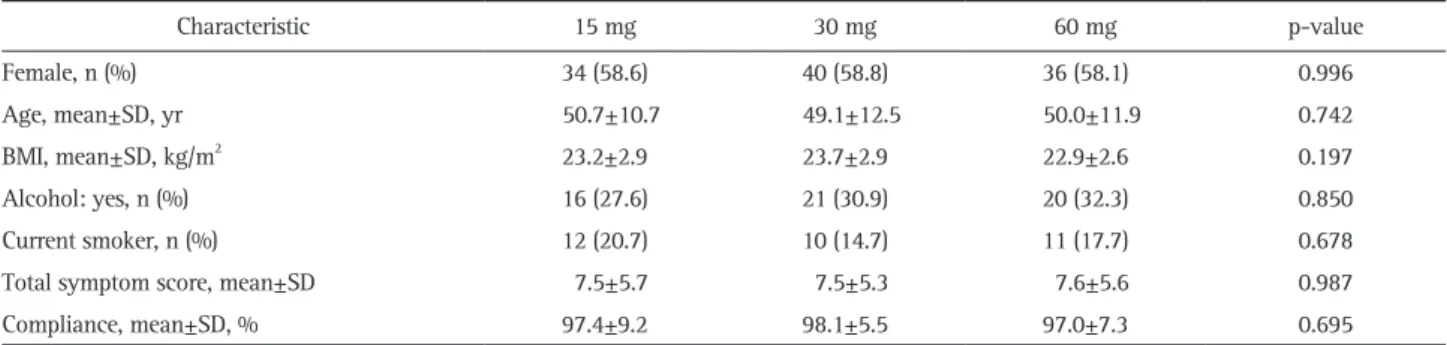
Table 1. Clinical Characteristics by Daily Dosage of Lansoprazole

Characteristic 15 mg 30 mg 60 mg p-value

Female, n (%) 34 (58.6) 40 (58.8) 36 (58.1) 0.996

Age, mean±SD, yr 50.7±10.7 49.1±12.5 50.0±11.9 0.742

BMI, mean±SD, kg/m

2

23.2±2.9 23.7±2.9 22.9±2.6 0.197

Alcohol: yes, n (%) 16 (27.6) 21 (30.9) 20 (32.3) 0.850

Current smoker, n (%) 12 (20.7) 10 (14.7) 11 (17.7) 0.678

Total symptom score, mean±SD 7.5±5.7 7.5±5.3 7.6±5.6 0.987

Compliance, mean±SD, % 97.4±9.2 98.1±5.5 97.0±7.3 0.695

SD, standard deviation; BMI, body mass index.

(3)

patients who stopped taking the medication because of adverse events.

The mean age of the 188 patients was 49.9±11.8 years. Male to female ratio was 78:110. Heartburn and regurgitation was observed in 171 (91%) and 151 (80.3%) of patients, respectively.

The number of patients in ERD and NERD group was 70 (37.2%) and 118 (62.8%) patients. The erosive esophagitis by LA classification in ERD group consisted of LA-A in 51 patients, LA-B in 16 patients, and LA-C in 3 patients.

Clinical characteristics between ERD and NERD group were well matched at baseline for age, body mass index, and total symptom score. However, female was predominant in NERD group and alcohol consumption and current smoking status was more frequently observed in ERD group. The three groups based on the dose of PPI were well matched at baseline (Table 1).

A positive PPI test was observed 93.2% of the ERD group and 87.2% of the NERD group during 2 weeks treatment (Table 2).

There was no difference between two groups (p>0.05).

The baseline mean symptom score by heartburn and regurgi- tation in ERD group and NERD group was 8.0±6.3 and 7.3±5.0, respectively (Table 3). The day to significant symptom score change from baseline was 6th day in ERD group and 11th day in NERD group (Table 3, Fig. 2).

A positive PPI test by dosage of lansoprazole was noted 91.7% in 15 mg group, 89.7% in 30 mg group, and 87.2% in 60 Table 2. Cumulative Improvement over 50% of the Initial Symptom

Score by Erosion during a 2 Week Treatment

Day ERD (n=70) NERD (n=118)

No. Cumulative % No. Cumulative %

2 35 50.0 55 46.6

3 42 60.0 60 51.3

4 50 71.4 69 58.5

5 48 68.6 75 63.6

6 55 78.6 79 66.9

7 51 73.9 78 66.1

8 53 76.8 86 73.5

9 62 88.6 86 73.5

10 60 85.7 91 77.8

11 63 90.0 91 79.8

12 62 88.6 92 81.4

13 61 89.7 91 82.0

14 55 93.2 82 87.2

ERD, erosive reflux disease; NERD, non-erosive reflux disease.

Table 3. Daily Change in the Mean Symptom Score by Erosion

Day ERD (n=70) NERD (n=118)

Mean±SD p-value Mean±SD p-value

Baseline 8.0±6.3 - 7.3±5.0 -

2 4.6±4.5 - 4.8±4.8 -

3 3.9±3.9 0.395 4.6±5.1 -

4 3.1±3.7 0.054 4.2±4.6 -

5 3.1±4.1 0.056 4.0±4.8 -

6 2.6±3.6 0.005 3.7±4.6 -

7 2.5±3.6 0.000 3.6±4.5 0.490

8 2.4±3.1 0.000 2.9±3.6 0.010

9 2.0±2.8 0.000 3.1±4.2 0.058

10 1.8±2.6 0.000 2.9±4.4 0.036

11 1.6±2.5 0.000 2.6±4.1 0.002

12 1.5±2.6 0.000 2.7±4.0 0.003

13 1.5±2.2 0.000 2.3±3.6 0.000

14 1.3±2.0 0.000 2.0±3.3 0.000

ERD, erosive reflux disease; NERD, non-erosive reflux disease; SD, standard deviation.

Fig. 2. Daily change in the mean symptom score for all subjects: ero- sive reflux disease (ERD) vs. non-erosive reflux disease (NERD). The X axis shows medication day from baseline (visit 2), and the Y axis shows the mean symptom score for each day.

Fig. 3. Daily change in the mean symptom score for all subjects on

each proton pump inhibitor (PPI) dose. The X axis shows medication

day from baseline (visit 2), and the Y axis shows the mean symptom

score for each day.

(4)

DISCUSSION

GERD is a condition characterized by heartburn or regurgita- tion caused by esophageal exposure to the acidic gastric con- tents.

9

The most common symptoms associated with GERD are heartburn and regurgitation. However, the symptoms in Asian countries are different from western countries; atypical symp- toms including hoarseness, atypical chest pain, dysphagia, and globus sensation are more common.

The prevalence of GERD in the West is higher than in Asian mg of lansoprazole group (p>0.05, Table 4, Fig. 3).

The number of days to significant symptom score change was 8th day for the 15 mg, 30 mg, and 60 mg group (Table 5).

Adverse symptoms observed in 6, 4, and 6 patients in the 15 mg, 30 mg, and 60 mg group, respectively. Common adverse symptoms were diarrhea and headache. However, most of ad- verse symptoms were mild. One moderate adverse symptom was observed in 30 mg and 60 mg group, respectively.

Table 4. Improvement over 50% of the Initial Symptom Score by Daily Dosage of Lansoprazole

Day 15 mg (n=58) 30 mg (n=68) 60 mg (n=62)

No. Cumulative % No. Cumulative % No. Cumulative %

2 30 51.7 27 39.7 33 53.2

3 32 56.1 34 50.0 36 58.1

4 34 58.6 45 66.2 40 64.5

5 38 65.5 47 69.1 38 61.3

6 38 65.5 49 72.1 47 75.8

7 38 66.7 47 69.1 44 71.0

8 40 71.4 53 77.9 46 74.2

9 40 70.2 58 85.3 50 80.6

10 44 77.2 58 85.3 49 79.0

11 45 80.4 58 85.3 51 85.0

12 46 82.1 58 87.9 50 82.0

13 47 85.5 54 84.4 51 85.0

14 44 91.7 52 89.7 41 87.2

Table 5. Daily Change in the Mean Symptom Score by Dosage of Lansoprazole

Day 15 mg (n=58) 30 mg (n=68) 60 mg (n=62)

Mean±SD p-value Mean±SD p-value Mean±SD p-value

Baseline 7.5±5.7 - 7.5±5.3 - 7.6±5.6 -

2 4.7±5.3 - 4.8±4.4 - 4.6±4.4 -

3 4.0±4.5 - 4.4±5.3 - 4.6±4.2 -

4 3.8±4.7 - 3.6±4.1 0.592 4.0±4.3 -

5 3.5±4.7 0.333 3.5±4.5 0.327 3.9±4.4 -

6 3.4±4.3 0.218 3.2±4.6 0.168 3.4±3.9 0.183

7 3.3±4.1 0.218 3.3±4.6 0.188 3.2±3.8 0.088

8 2.9±3.8 0.044 2.5±3.2 0.002 2.9±3.5 0.022

9 2.9±4.0 0.041 2.4±3.6 0.004 2.8±3.8 0.018

10 2.3±3.5 0.000 2.1±3.4 0.001 3.1±4.5 0.118

11 2.4±3.7 0.001 1.9±3.1 0.000 2.4±4.2 0.004

12 2.3±3.5 0.000 2.0±3.4 0.000 2.5±3.9 0.006

13 2.0±3.3 0.000 1.6±2.0 0.000 2.5±4.0 0.007

14 1.6±2.5 0.000 1.3±1.7 0.000 2.2±4.1 0.005

SD, standard deviation.

(5)

this study.

Various types of PPIs such as omeprazole, lansoprazole,

8

rabeprazole,

16

and esomeprzole

7

are used for the PPI test. The data on the PPI test using second generation medications was spare and conflicting because the majority of the PPI tests were performed using omeprazole.

3-8,14

However, the PPI test using second generation medication was as sensitive as the PPI test using omeprazole.

7,8,16

The limitation of this study is lack of gold standard for the diagnosis of GERD and the definition of positive PPI test is de- termined arbitrarily.

This randomized study was performed to evaluate the proper dose and duration of PPI test according to erosive esophagitis.

The results showed that standard dose PPI test using lansopra- zole regardless of the presence of erosive esophagitis was as ef- fective as high-dose PPI testing in Korean patients.

CONFLICTS OF INTEREST

No potential conflict of interest relevant to this article was reported.

ACKNOWLEDGEMENTS

This study was funded by Jeil Pharmaceutical Co., Ltd., Korea.

REFERENCES

1. Vakil N, van Zanten SV, Kahrilas P, Dent J, Jones R; Global Con- sensus Group. The Montreal definition and classification of gas- troesophageal reflux disease: a global evidence-based consensus.

Am J Gastroenterol 2006;101:1900-1920.

2. Richter JE. The many manifestations of gastroesophageal reflux disease: presentation, evaluation, and treatment. Gastroenterol Clin North Am 2007;36:577-599, viii-ix.

3. Schenk BE, Kuipers EJ, Klinkenberg-Knol EC, et al. Omeprazole as a diagnostic tool in gastroesophageal reflux disease. Am J Gastro- enterol 1997;92:1997-2000.

4. Fass R, Ofman JJ, Gralnek IM, et al. Clinical and economic as- sessment of the omeprazole test in patients with symptoms suggestive of gastroesophageal reflux disease. Arch Intern Med 1999;159:2161-2168.

5. Schindlbeck NE, Klauser AG, Voderholzer WA, Müller-Lissner SA.

Empiric therapy for gastroesophageal reflux disease. Arch Intern Med 1995;155:1808-1812.

6. Johnsson F, Weywadt L, Solhaug JH, Hernqvist H, Bengtsson L. One-week omeprazole treatment in the diagnosis of gastro- oesophageal reflux disease. Scand J Gastroenterol 1998;33:15-20.

7. Johnsson F, Hatlebakk JG, Klintenberg AC, et al. One-week esomeprazole treatment: an effective confirmatory test in patients with suspected gastroesophageal reflux disease. Scand J Gastroen- terol 2003;38:354-359.

countries, about 10-20%.

2,10

In Asia, the prevalence has been variably reported but is generally lower, 2.3-6.2%.

11

The preva- lence of erosive esophagitis and non-erosive esophagitis in Korean has been reported to be 8% and 4%, respectively.

12

The difference of prevalence between Western and Asian countries may be due to genetic and/or environmental factors.

13

But, the prevalence of GERD may also change according to the methods used for the diagnosis of GERD, because there are several crite- ria/method for the diagnosis of GERD.

The PPI test has been used as an effective method for diag- nosing GERD.

3,4

However, the dosage, duration, and optimal cut-off values are poorly defined. Several studies have used high dose of PPI for the inhibition of strong acid-secretion.

4,5,8

Schindlbeck et al.

5

reported that the sensitivity of PPI testing using 40 mg and 80 mg omeprazole was 27% and 83.3%, re- spectively. The definition of a positive PPI test in this study was a 75% reduction of symptoms. They concluded that GERD could be ruled out if symptoms do not improve with high dose of PPI testing. But, Fass et al.

4

had demonstrated that the sensitivity of omeprazole (60 mg daily, 40 mg AM+20 mg PM) test was about 80%. Thus, no definite consensus about ideal dose for PPI test has been reached.

The results of this study showed no difference between the standard dose (30 mg) and high dose (60 mg) of lansoprazole to relieve the symptoms associated with GERD. The racial dif- ference may contribute to this phenomenon. Thus, we proposed that the dose of PPI should be modulated by the population treated, especially with regard to race.

The optimal duration of the PPI test is defined poorly. In most studies, the duration of PPI test is 7-14 days.

3-6,8,14

This duration was supported by a previous pharmacological study.

15

Previous study reported that in cases with atypical symptoms, 7 days of PPI test might be too short. Thus, 14 days in this study might be sufficient for duration of PPI test, because patients in this study had typical symptoms of GERD.

The optimal cut-off value is also important to determine the

accuracy of PPI test. In a previous study, the cut-off value was

a 50-75% improvement in symptoms.

8,14

In this study, a positive

PPI test was defined as a 50% improvement in the symptoms

during 2 weeks. In addition, relief of symptoms according to

the presence of erosive esophagitis was evaluated. A positive

PPI test was observed 93.2% of patients in the ERD group and

87.2% of patients in the NERD group. The duration to signifi-

cant symptom resolution was 6 days in the ERD group and 11

days in the NERD group. In addition, a positive PPI test was

observed 91.7% of those taking 15 mg, 89.4% of those taking

30 mg and 87.2% of those taking 60 mg of lansoprazole. The

duration to significant symptom resolution was 8 days in 15

mg, 30 mg group, and 11 days in 60 mg of lansoprozole. This

study showed that there was no difference in the rate of symp-

tom resolution between ERD and NERD group. Also, the dosage

of lansoprazole did not influence the rate of symptom relief in

(6)

8. Juul-Hansen P, Rydning A, Jacobsen CD, Hansen T. High-dose proton-pump inhibitors as a diagnostic test of gastro-oesophageal reflux disease in endoscopic-negative patients. Scand J Gastroen- terol 2001;36:806-810.

9. DeVault KR, Castell DO; American College of Gastroenterology.

Updated guidelines for the diagnosis and treatment of gastro- esophageal reflux disease. Am J Gastroenterol 2005;100:190-200.

10. Dent J, El-Serag HB, Wallander MA, Johansson S. Epidemiology of gastro-oesophageal reflux disease: a systematic review. Gut 2005;54:710-717.

11. Wong WM, Lai KC, Lam KF, et al. Prevalence, clinical spectrum and health care utilization of gastro-oesophageal reflux disease in a Chinese population: a population-based study. Aliment Pharma- col Ther 2003;18:595-604.

12. Kim N, Lee SW, Cho SI, et al. The prevalence of and risk factors for erosive oesophagitis and non-erosive reflux disease: a nation- wide multicentre prospective study in Korea. Aliment Pharmacol

Ther 2008;27:173-185.

13. Cho YS, Choi MG, Jeong JJ, et al. Prevalence and clinical spec- trum of gastroesophageal reflux: a population-based study in Asan-si, Korea. Am J Gastroenterol 2005;100:747-753.

14. Fass R, Ofman JJ, Sampliner RE, Camargo L, Wendel C, Fennerty MB. The omeprazole test is as sensitive as 24-h oesophageal pH monitoring in diagnosing gastro-oesophageal reflux disease in symptomatic patients with erosive oesophagitis. Aliment Pharma- col Ther 2000;14:389-396.

15. Bruley des Varannes S, Levy P, Lartigue S, Dellatolas F, Lemaire M, Galmiche JP. Comparison of lansoprazole with omeprazole on 24- hour intragastric pH, acid secretion and serum gastrin in healthy volunteers. Aliment Pharmacol Ther 1994;8:309-314.

16. des Varannes SB, Sacher-Huvelin S, Vavasseur F, et al. Rabepra- zole test for the diagnosis of gastro-oesophageal reflux disease:

results of a study in a primary care setting. World J Gastroenterol

2006;12:2569-2573.

수치

Table 1. Clinical Characteristics by Daily Dosage of Lansoprazole
Table 3. Daily Change in the Mean Symptom Score by Erosion
Table 5. Daily Change in the Mean Symptom Score by Dosage of Lansoprazole

참조

관련 문서

In the analysis of soluble solids, the treatment group with material grains and the combined groups of glutinous millet and barley appeared high, and

Objective: The purpose of this study is to use it as a basis for the health care guidelines for the muscle mass and cardiovascular disease of Korean population by

surveillance study of patients with Emergency Department injuries under the control of the Korea Centers for Disease Control and Prevention (KCDC).Statistical

Serum uric acid levels and risk for vascular disease in patients with metabolic syndrome... Prevalence if the metabolic syndrome in a Turkish

The most common reasons for hesitancy by group were as follows: For the group who vaccinated on time with hesitancy, the reasons were in the order of concerns and

When classified according to their social and mental health problems, single-person households were divided into four types: the loneliness group, the isolation group,

Patients were divided into two groups; the Indirect group, who under- went surgery using indirect fixation using a suprapectineal plate only, and the Direct group, who

1 reported the usefulness of the metabolic score for insulin resistance (METS-IR) in the screening and prediction of non- alcoholic fatty liver disease (NAFLD) in middle-aged