• 검색 결과가 없습니다.

Nondestructive Bending Strength Evaluation of Woodceramics Made from Woody Part of Broussonetia Kazinoki Sieb. - Effect of Resin Impregnation Ratio -

N/A
N/A
Protected

Academic year: 2021

Share "Nondestructive Bending Strength Evaluation of Woodceramics Made from Woody Part of Broussonetia Kazinoki Sieb. - Effect of Resin Impregnation Ratio -"

Copied!
8
0
0

로드 중.... (전체 텍스트 보기)

전체 글

(1)

*1 Received on July 4, 2011; accepted on September 7, 2011

*2 College of Agriculture & Life Science, IALS, Gyeongsang National University, Jinju 660-701, Korea

*3 College of Agriculture & Life Science, Gyeongsang National University, Jinju 660-701, Korea

*4 College of Agriculture and Life Science, Institute of Agriculture Science & Technology Chonbuk National University, Chonju 561-756, Korea

Corresponding author : Seung-Won Oh (e-mail: [email protected])

Nondestructive Bending Strength Evaluation of Woodceramics Made from Woody Part of Broussonetia

Kazinoki Sieb.* 1

- Effect of Resin Impregnation Ratio -

Hee-Seop Byeon*

2

, Jae-Min Kim*

3

, Kyung-Rok Won*

3

, and Seung-Won Oh*

4†

ABSTRACT

Nondestructive evaluation (NDE) technique method using a resonance frequency mode was carried out for woodceramics made by different phenol resin impregnation ratios (40, 50, 60, 70%) for Broussonetia Kazinoki Sieb. Dynamic modulus of elasticity increased with increasing resin impregnation ratios. There was a close relationship between dynamic modulus of elasticity and static bending modulus of elasticity and between dynamic modulus of elasticity and MOR and between static bending modulus of elasticity and MOR. Therefore, the dynamic modulus of elasticity using resonance frequency mode is useful as a nondestructive evaluation method for predicting the MOR of woodceramics made by different im- pregnation ratios.

Keywords : nondestructive evaluation (NDE), resin impregnation ratio, woodceramics of Broussonetia Kazinoki Sieb, resonance frequency, MOE, MOR

1. INTRODUCTION

Nondestructive evaluation (NDE) techniques have been extensively used for sorting or grad- ing of wood products. There are examples in- clude visual grading and machine stress rating (MSR) of lumber. Dynamic modulus of elas- ticity (MOE

d

) and ultrasonic techniques also have been used for the same purpose. There are two methods to measure dynamic MOE

d

using

a resonance frequency and the velocity of acoustic propagation. The resonance frequency can be achieved by a free vibration and/or the fast Fourier transform (FFT) analyzer of impact hammer signals.

The dynamic MOE

d

method using the reso- nance frequency has been extensively used for the characterization of wood for musical instru- ments (Sobue et al., 1984; Hong, 1985, 1990;

Byeon & Hong, 1997). Park and Byeon (2006)

(2)

reported that dynamic MOE by resonance fre- quency using flexural vibration and bending strength and creep performances of a three-ply laminated wood had a high correlation co- efficient of 0.811-0.947. The MOE

d

method by impact hammer has been developed as a simple and efficient method. Gerhards (1974) showed that the stress wave speed are affected by such as moisture, temperature, grain angle and knot.

A longitudinal stress wave and transverse vi- bration methods were developed for the estima- tion of modulus of the elasticity for lumber (Ross & Pellerin, 1991; Ross et al., 1991, 1994).

The applications of stress wave signals by impact for log have been reported by several re- searchers (Aratake et al., 1992; Ross et al., 1997; Jang, 2000; Park, 2003). Ross et al.

(1997) and Jang (2000) found that relationship between the MOE of the logs and the lumber obtained from the logs is high. Another stress wave application approaches have been accom- plished in degraded wood (Ross et al., 1994, 1997). Ross et al. (1994) found that the stress wave evaluation technique is effective to detect the presence of wet wood in red oak lumber.

Ross et al. (1997) also found that the stress wave characteristics have a good coincidence with compressive strength values of biologically degraded wood. The stress wave was also used by Cha (1996) for the development of glulam from Korean small diameter log.

Basic relationship between ultrasonic trans- mission and wood property was studied (Jang, 2000; Kang & Lee, 2000; Lee et al., 2003; Son

& Lee, 2008). The ultrasonic was also used to evaluate the property of laminated wood (Hong et al., 2001) and to assess wooden ancient buildings (Lee et al., 2001).

The NDE of wood using the ultrasonic has been used to detect non-visible defects such as honeycomb or closed surface checks (Anderson

et al., 1997; Fuller, 1995). Most NDE technique applications focus on sorting and grading the lumber and log.

However, There was few researches in the application of stress wave for NDE of a wood- ceramics material. It is not suitable method to use impact hammer to evaluate the strength property because of its brittle property.

Therefore, NDE technique using the reso- nance frequency by free vibration mode was applied to woodceramics produced by different resin impregnation ratios, and the relationship between the resonance frequency parameter and static bending strength properties has been analysed.

2. MATERIALS and METHODS

2.1. Board Manufacture

Particle from woody part of paper mulberry (Broussonetia Kazinoki Sieb.) was made from a mill. The particle was screened by 40 mesh sieve and dried to below 8 percent moisture content and then mixed 10 percent powder PF resin (KNB-100PL, Kolon Chemical Co., Ltd).

A board measuring 260 × 260 × 11 mm and a density of 0.6 g/cm

3

was made by hot-press- ing and molding at temperature of 190°C. The pressing pressure was 50 kgf/cm

2

→ 30 kgf/cm

2

→ 20 kgf/cm

2

and pressing time was 6 minutes

→ 5 minutes → 4 minutes.

2.2. Resin Impregnation and Carbonization

The board was cut into sample measuring

120 × 120 × 11 mm which were then impreg-

nated at controlled resin impregnation ratios of

40, 50, 60 and 70 percent in a decompression

impregnation apparatus filled with liquified PF

resin (KPD-L777, Kolon Chemical Co., Ltd) at

1 atmosphere. The impregnated specimens were

(3)

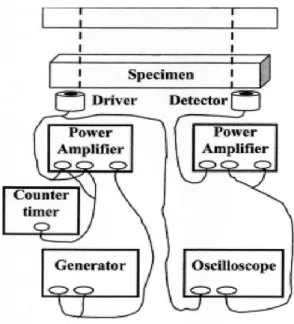
Fig. 1. Schematic diagrams of vibration techniques:

magnetic driver.

dried and cured at 60°C for 8 hours, then at 100 and 135°C for 10 hours, respectively.

Woodceramics boards were made in a vac- uum sintering furnace (KOVAC KSF-200V).

Samples from the board were treated with vary- ing resin impregnation ratios while a carboniz- ing temperature of 600°C, heating rate of 4°C/min, and maintaining time of 2 hours.

2.3. Resonance Mode and Bending Test

Vibration was induced via a small steel plate attached to the bottom end of the specimens and suspended by two threads at the magnetic driver as shown in Fig. 1. The vibration was re- ceived at a small steel plate attached to the oth- er end. The test was made both ends free. The test apparatus was consisted of a sine generator (B & K, 1023), universal counter timer (GSP, 5001), and oscilloscope (HP, 1,740 A). The val- ue of the frequency counter timer was recorded

when the relative amplitude indicated the high- est value on the oscilloscope. Resonance fre- quency (f) and dynamic modulus of elasticity (MOE

d

) was calculated by the following equa- tions:

          (1)

where f

0

: value at frequency counter timer, α

:

value according to vibration type-8.2, h:

thickness of specimen, l: length of specimen.

      (2) where ρ: density, m: value according to basic vibration-4.73, h: thickness of specimen, l:

length of specimen.

After resonance frequency measurement, bend- ing strength property test for the same specimen was performed by a three point loading method (concentrated load at midspan and supported at its ends) in a universal testing machine (UTM, Taeshin accuracy machine, TSU-2). The span was 80 mm, and the cross-head speed was set at 0.6 mm/min. The static modulus of elasticity (MOEs) and modulus of rupture (MOR) were calculated from the test result.

3. RESULTS and DISCUSSION

3.1. Dynamic Elastic Properties Acc- ording to Resin Impregnation Ratio

3.1.1. Resonance Frequency

The mean values of resonance frequency ac-

cording to different resin impregnation ratios

were shown in Table 1 and Fig. 2. The mean

values of resonance frequency were 1,949,

2,349, 2,348, 2,318 Hz for 40, 50, 60, 70% of

(4)

Fig. 2. Resonance frequency according to different resin impregnation ratios at carbonizing tem- perature of 600°C.

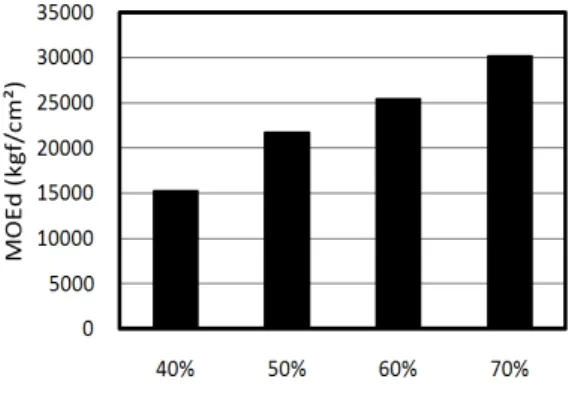
Fig. 3. Dynamic MOE according to different resin impregnation ratios at carbonizing temper- ature of 600°C.

Table 1. The properties of woodceramics made with different impregnation ratios at carbonizing temperature of 600°C

Impregnation ratio(%)

Density (g/cm

2

)

Resonance frequency (Hz)

MOEd (kgf/cm

2

)

MOEs (kgf/cm

2

)

MOR (kgf/cm

2

) 40 0.52 (0.024) 1,949 (177) 15,280 (3,231) 12,150 (2,622) 32 (7) 50 0.55 (0.020) 2,349 (60) 21,698 (2,387) 16,786 (4,408) 46 (10) 60 0.60 (0.011) 2,348 (89) 25,402 (1,945) 21,546 (6,111) 51 (9) 70 0.66 (0.016) 2,318 (136) 30,223 (3,207) 23,877 (8,229) 55 (18) Parenthesis is standard deviation, mean value was calculated from 10 replications.

MOE: modulus of elasticity, MOR: modulus of rupture.

resin impregnation ratio, respectively. Resonance frequency increased with increasing resin im- pregnation ratio. The density also increased with increasing resin impregnation ratio. Some of the studies show different results, Hong (1995) reported that resonance frequency of normal wood in Pinus densiflora increased, whereas that of compression wood decreased, with increasing density.

3.1.2. Dynamic Modulus of Elasticity The mean values of dynamic modulus of elasticity according to resin impregnation ratio were shown in Table 1 and Fig. 3. The mean

values of dynamic modulus of elasticity were

12,150, 16,786, 21,546, 23,877 kgf/cm

2

for 40,

50, 60, 70% of resin impregnation ratio, res-

pectively. Both density and dynamic modulus of

elasticity also increased with increasing resin

impregnation ratio. Byeon (2004) reported that

woodceramics made from particle-board impreg-

nated with phenol resin from three species of

Pinus densiflora, Pinus koraiensis and Larixle-

ptolepis had a similar result. Byeon (2010) also

reported that static modulus of elasticity to

woodceramics made by Broussonetia Kazinoki

increased with increasing resin impregnation

ratio.

(5)

Fig. 4. Relationship between density and MOR ac- cording to percentage of resin impregnation at carbonizing temperature of 600°C.

Fig. 5. Relationship between MOEs and MOR ac- cording to percentage of resin impregnation at carbonizing temperature of 600°C.

Table 2. Summary of regression parameters for relationships between density, MOR, MOE

d

, and MOEs for woodceramics produced by different resin impregnation ratio

Parameter Regression

model

Coefficientof determination

R

2

Correlation coefficient

r

Density vs. MOEs y = 94897x - 36430 0.669 0.818

Density vs. RF y = 2171x + 971 0.348 0.590

Density vs. MOEd y = 99546x - 35069 0.849 0.921

Density vs. MOR y = 178.0x - 57.75 0.428 0.654

MOEs vs. MOEd y = 0.948x - 2796 0.768 0.876

MOEs vs. MOR y = 0.0021x + 7.028 0.776 0.881

RF vs. MOEd y = 6E + 06x - 4E + 09 0.875 0.935

RF vs. MOR y = 0.046x - 58.34 0.412 0.642

RF vs. MOEs y = 18.11x - 21575 0.340 0.583

MOEd vs. MOR y = 0.002x - 0.079 0.632 0.795

RF: Resonance frequency; MOEs: static modulus of elasticity; MOEd: dynamic modulus of elasticity; MOR:

modulus of rupture

3.2. Relationship Between Density and Mechanical Properties

Least squares regression analysis method has been used in the field of wood properties, be- cause mechanical properties of wood are line- arly related (Bodig & Jayne, 1982; Bucur, 1995).

Regression parameters are presented in Table 2.

Figs. 4∼6 show relationships between density, static MOEs, dynamic MOE

d

and MOR.

The correlation coefficients between density

and static MOE, density and resonance fre-

quency, density and dynamic MOE

d

, density

and MOR (Fig. 4) for woodceramics produced

(6)

Fig. 6. Relationship between MOEd and MOR ac- cording to percentage of resin impregnation at carbonizing temperature of 600°C.

by different resin impregnation ratios were 0.818, 0.590, 0.921 and 0.654, respectively. The correlation coefficient of density versus dynam- ic MOE

d

in the woodceramics made by differ- ent impregnation ratio was much higher than the others. Some of the studies show different results, Hong (1995) reported that the correla- tion coefficient values of density versus dynam- ic MOE

d

relationship for normal wood and compression wood in Pinus densiflora were very high values of 0.896 and 0.688.

3.3. Relationship between Static MOEs and Mechanical Properties

Relationship between static MOE and MOR for woodceramics were analyzed. The re- gression coefficient shows that correlation co- efficient between bending MOEs and MOR for woodceramics produced by different impregnation ratio was high value of 0.881 (Table 2 and Fig.

5). It is considered to be caused by the uniform quality of woodceramics inner or outer. Wood- ceramics, on the other hand, produced from dif- ferent carbonizing temperatures with three kinds of species (Pinus densifora, Pinus koraiensis,

Larix leptolepis) had a higher density in outside than those in inside, and were a low correlation coefficient between static MOE and MOR (Byeon, 2004).

3.4. Relationship between MOE d and Mechanical Properties

Relationships between MOE

d

and MOEs, MOR for woodceramics were analyzed (Table 2 and Fig. 6). In this research, the correlation co- efficients between dynamic MOE

d

versus MOR and static MOEs versus MOR of woodceramics were high 0.795 and 0.881, respectively. And close correlations were found in MOE

d

and MOEs for woodceramics produced by different impregnation ratios. Generally, close correlation MOE

d

and MOEs for clear solid wood was re- ported by stress wave mode (Ross & Pellerin, 1991). Some of the studies show different re- sults, Byeon (2004) reported that the correlation coefficient of static MOE and MOR for the woodceramics produced by different carboniz- ing temperatures was lower value of 0.425.

3.5. Predicting MOR of Woodceramics Both dynamic MOE

d

and static MOEs were correlated to MOR for woodceramics and the results were written in Table 2. The results showed that high correlation coefficients were existed in the dynamic MOE

d

and MOR, static MOEs and MOR. On the othe hand, the corre- lation coefficient between density and MOR was not high.

Therefore, both the dynamic MOE

d

and static

MOEs are probably a good strength predictor

for woodceramics produced by different resin

impregnation ratio.

(7)

4. CONCLUSIONS

Nondestructive testing method using reso- nance frequency by flexural free vibration mode was carried out for woodceramics produced by impregnation ratios of 40, 50, 60 and 70%.

Both resonance frequency and dynamic mod- ulus of elasticity increased with increasing resin impregnation ratios.

There was a close relationship between den- sity and dynamic modulus of elasticity.

Also, close correlations were found between dynamic modulus of elasticity and static bend- ing modulus of elasticity and between dynamic modulus of elasticity and MOR and between static bending modulus of elasticity and MOR.

Therefore, the dynamic modulus of elasticity using resonance frequency mode is useful as a nondestructive evaluation method for predicting the MOR of woodceramics produced by differ- ent impregnation ratios.

REFERENCES

1. Anderson, R. B., J. K. Wiedenbeck, and R. J.

Ross. 1997. Nondestructive evaluation for de- tection of honeycomb in the sawmill: An eco- nomic analysis. Forest Prod. J. 47(6): 53∼59.

2. Bodig, J. and B. A. Jayne. 1982. Mechanics of Wood and Wood Composites. Van Nostrand Reinhold company, New York. pp. 247∼269, 645∼650.

3. Bucur, V. 1995. Acoustics of Wood. CRC Press, Boca Ration, Fla. pp. 105∼106.

4. Byeon, H.-S. and B.-H. Hong. 1997. The dynam- ic mechanical properties of Agathis Alba used for piano soundboards. J. of Korean Society of furniture technology 8(1/2): 9∼16.

5. Byeon, H.-S., S.-Y. Ahn, S.-W. Oh, and J.-J.

Piao. 2004. Nondestructive bending strength eval- uation of woodceramics using resonance Frequency Mode. Mokchae Konghak 32(3): 8 ∼14.

6. Byeon, H.-S., J.-M. Kim, K.-K. Hwang, S.-C.

Park, and S.-W. Oh. 2010. The effect of resin

impregnation ratio on the properties of wood- ceramics made from Broussonetia Kazinoki Sieb..

Mokchae Konghak 38(3): 178 ∼184.

7. Cha, J.-K. 1996. Study on stress waves for devel- opment of glulam from domestic small diameter log(Ⅰ). Mokchae Konghak 24(3): 90∼100.

8. Fuller, J. J. 1995. Nondestructive evaluation of honeycomb and surface checks in red oak lumber. Forest Prod. J. 45(5): 42∼44.

9. Gerhards, C. C. 1974. Stress wave speed and MOE of sweetgum ranging from 150 to 15 per- cent MC. Forest Prod. J. 25(4): 51∼57.

10. Hong, B.-H. 1985. The dynamic mechanical pro- perties of Paulownia coreana used for sounding boards. Mokchae Konghak 13(3): 34 ∼40.

11. Hong, B.-H. 1990. Studies on the improvement for GAYAGUM sounding boards. Mokchae Kong- hak 18(4): 65∼78.

12. Hong, B.-W. and H.-S. Byeon. 1995. Dynamic MOE and internal friction of compression woods in Pinus densiflora. Mokchae Konghak 23(2): 32

∼36.

13. Jang, S.-S. 2000. Effects of moisture content and slope grain on ultrasonic transmission speed of wood. Mokchae Konghak 28(2): 10∼18.

14. Jang, S.-S. 2000. Evaluation of lumber properties by applying stress waves to larch logs grown in Korea. Forest Prod. J. S0(3): 44∼48.

15. Kang, H.-Y. and K.-Y. Lee. 2000. Effects of cross-sectional dimension and moisture profile of small specimens on characteristics of ultrasonic wave propagation. Mokchae Konghak 28(2): 19

∼24.

16. Lee, J. J., K. C. Kim, and S. B. Mun. 2001.

Studies on the safety assessment of the wooden ancient buildings-The qualitative evaluation of deterioration used by ultrasonic methods for wooden ancient buildings. In: Proc. The Korean society of wood science and technology annual meeting. pp. 36∼42.

17. Lee, J.-J., K.-M. Kim, and S. B. Mun. 2003.

Investigation of transmission process for ultra- sonic wave in wood. Mokchae Konghak 31(2):

31∼37.

18. Park, H.-M. and H.-S. Byeon. 2006. Measurement

of dynamic MOE of 3-ply woods by flexural vi-

bration and comparison with bending strength

(8)

and creep performances. Mokchae Konghak. 34(2):

46∼57.

19. Park, J.-C. and S.-I. Hong. 2003. Bending strength assessment of Larix logs by nondestructive evalu- ation techniques. Mokchae Konghak 22(2): 60∼

68.

20. Ross, R. J. and R. F. Pellerin. 1991. NDE of green material with stress waves: Preliminary re- sults rosing dimension lumber. Forest Prod. J.

41(6): 57∼59.

21. Ross, R. J., E. A. Geske, G. H. Carson, and J.

F. Murphy. 1991. Transverse vibration non- destructive testing using a personal computer.

Res. Pap. FPL-RP-502. USDA Forest Serv., Forest Prod. Lab., Madison, Wis.

22. Ross, R. J., J. C. Ward, and A. Tenwolde. 1994.

Stress wave nondestructive evaluation of wet wood. Forest Prod. J. 44(7/B): 79∼83.

23. Ross, R. J., K. A. McDonald, D. W. Green, and K. C. Schad. 1997. Relationship between log and lumber modulus of elasticity. Forest Prod. J.

47(2): 89∼92.

24. Ross, R. J., R. C. Degroot, W. J. Nelson, and P.

K. Lebow. 1997. The relationship between stress wave transmission characteristics and the com- pressive strength of biologically degraded wood.

Forest Prod. J. 47(5): 89∼93.

25. Son, D.-W. and D.-H. Lee. 2008. Evaluation on termite damage of the traditional wooden build- ing by nondestructive methods. Mokchae Konghak 36(1): 21∼29.

26. Sobue, N., H. Nakano, and I. Asano. 1984.

Vibrational properties of spruce plywood for mu- sical instruments. Mokuzai gakkaishi. 31(1): 93

∼97.

수치

Fig. 1. Schematic diagrams of vibration techniques:
Fig. 2. Resonance frequency according to different resin impregnation ratios at carbonizing  tem-perature of 600°C.
Fig. 4. Relationship between density and MOR ac- ac-cording to percentage of resin impregnation  at carbonizing temperature of 600°C.
Fig. 6. Relationship between MOEd and MOR ac- ac-cording to percentage of resin impregnation  at carbonizing temperature of 600°C.

참조

관련 문서

• 이명의 치료에 대한 매커니즘과 디지털 음향 기술에 대한 상업적으로의 급속한 발전으로 인해 치료 옵션은 증가했 지만, 선택 가이드 라인은 거의 없음.. •

MP Yousef Al-Fadalah, Supervisor of Parliament Business Environment Committee declared that the Public Institution for Housing Care intends to dedicate nearly 150

The main objective of the Bi Regional Center for SMES Development is oriented towards generating the conditions of cooperation among the countries which

In a statement to Kuwait News Agency (KUNA) on the sidelines of a meeting of the Arab Parliament's Foreign Affairs Political and National Security

The meeting was attended by Assistant Foreign Minister for GCC Affairs, Ambassador, Nasser Al-Muzayyen, and Deputy Assistant Foreign Minister for the Office of the

“ Sheikh Nasser has a written message from HH the Amir, Sheikh Sabah Al-Ahmad Al-Jaber Al-Sabah to the Chinese President, Chi Gen Beng related to enhancing mutual

On his part, CEO of Express Roads Authority, Saud Al-Naqqi said that the heavy rains of the previous day led to clogging parts of the express

Kuwait will celebrate on Sunday the fourth anniversary of the UN honoring and proclamation of His Highness the Amir, Sheikh Sabah Al-Ahmad Al-Jaber Al-Sabah as