Accuracy and precision of polyurethane dental arch models fabricated using a three-dimensional subtractive rapid prototyping method with an intraoral scanning technique
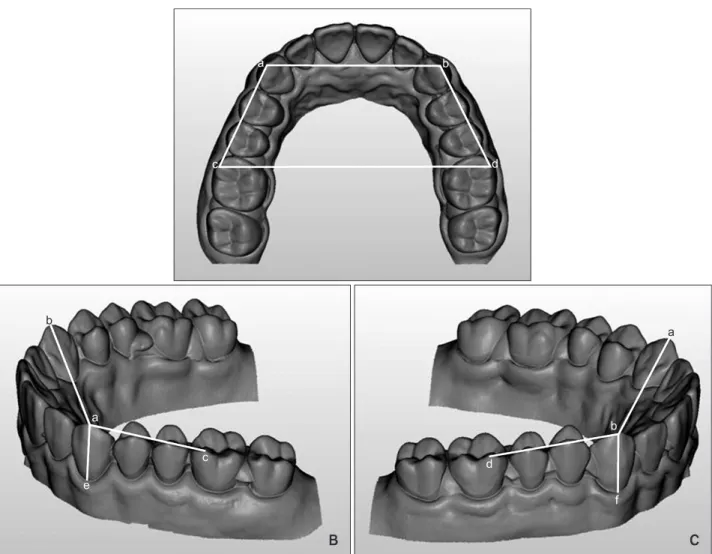
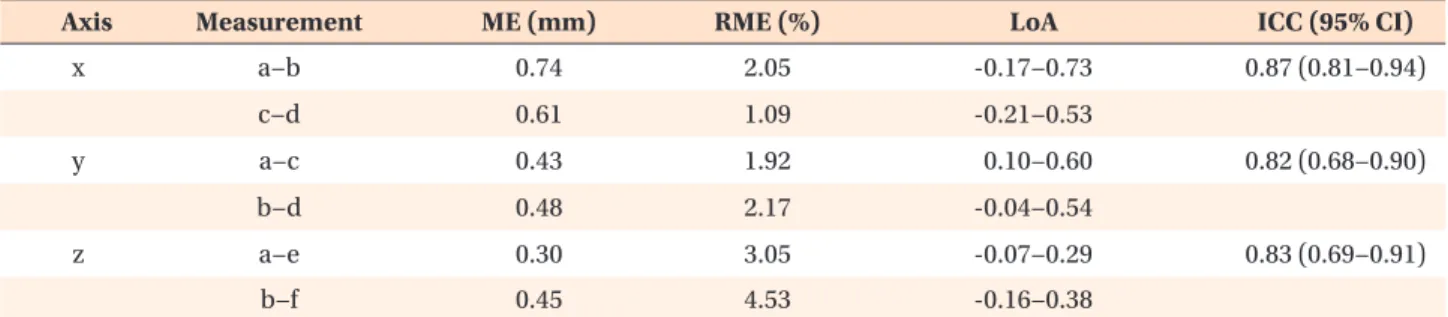
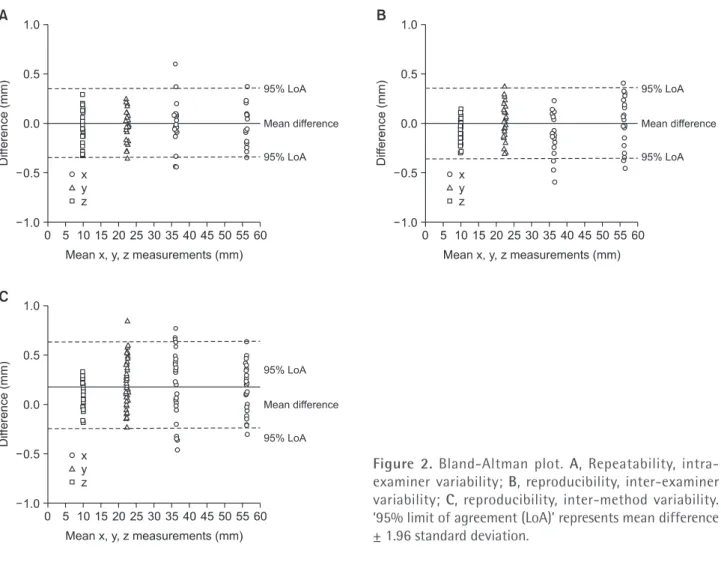
Objective: This study aimed to evaluate the accuracy and precision of polyure- thane (PUT) dental arch models fabricated using a three-dimensional (3D) subtractive rapid prototyping (RP) method with an intraoral scanning technique by comparing linear measurements obtained from PUT models and conventional plaster models. Methods: Ten plaster models were duplicated using a selected standard master model and conventional impression, and 10 PUT models were duplicated using the 3D subtractive RP technique with an oral scanner. Six linear measurements were evaluated in terms of x, y, and z-axes using a non-contact white light scanner. Accuracy was assessed using mean differences between two measurements, and precision was examined using four quantitative methods and the Bland-Altman graphical method. Repeatability was evaluated in terms of intra-examiner variability, and reproducibility was assessed in terms of inter- examiner and inter-method variability. Results: The mean difference between plaster models and PUT models ranged from 0.07 mm to 0.33 mm. Relative measurement errors ranged from 2.2% to 7.6% and intraclass correlation coefficients ranged from 0.93 to 0.96, when comparing plaster models and PUT models. The Bland-Altman plot showed good agreement. Conclusions: The accuracy and precision of PUT dental models for evaluating the performance of oral scanner and subtractive RP technology was acceptable. Because of the recent improvements in block material and computerized numeric control milling machines, the subtractive RP method may be a good choice for dental arch models.
[Korean J Orthod 2014;44(2):69-76]
Key words: Three-dimensional subtractive rapid prototyping, Intraoral scanning, Accuracy, Precision
Jae-Hong Kim
a,bKi-Baek Kim
a,bWoong-Chul Kim
aJi-Hwan Kim
aHae-Young Kim
a,b,ca
Department of Dental Laboratory Science and Engineering, College of Health Science, Korea University, Seoul, Korea
b
Department of Public Health Sciences, Graduate School, Korea University, Seoul, Korea
c
BK21+ Program in Public Health Sciences, Korea University, Seoul, Korea
Received July 8, 2013; Revised August 13, 2013; Accepted August 19, 2013.
Corresponding author: Hae-Young Kim.
Associate Professor, Department of Dental Laboratory Science and Engineering, Korea University, 161, Jeongneung-ro, Seongbuk-gu, Seoul 136-855, Korea.
Tel +82-2-940-2845 e-mail [email protected]
*This work was supported by a Korea University Grant (K1325051).
© 2014 The Korean Association of Orthodontists.
The authors report no commercial, proprietary, or financial interest in the products or companies described in this article.
This is an Open Access article distributed under the terms of the Creative Commons Attribution Non-Commercial License (http://creativecommons.org/licenses/by-nc/3.0) which permits unrestricted non-commercial use, distribution, and reproduction in any medium, provided the original work is properly cited.