1)
INTRODUCTION
Methicillin resistant Staphylococcus aureus (MRSA) is one of the major causes of human infections and has in- creased rapidly during the past few decades (1, 2). Most of them have been associated with hospital or healthcare
Submitted 9 December, 2007, accepted 15 February, 2008
This work was supported by the Korea Research Foundation Grant funded by the Korean Government (MOEHRD) KRF-2005-003-E00119.
Correspondence :Dong-Gun Lee, M.D.
Department of Internal Medicine, St. Mary’ Hospital
#62, Youido-dong, Youngdungpo-Gu, Seoul 150-713, Korea Tel:+82-2-590-2494, Fax:+82-2-535-2494
E-mail:[email protected]
(HA-MRSA). The incidence of methicillin resistance among nosocomial isolates of S. aureus is now higher than 60% in Korea (3). Moreover, recent reports have described an increasing incidence of community-asso- ciated MRSA (CA-MRSA) in patients who do not exhibit established risk factors for HA-MRSA and it has become a major concern worldwide (2, 4).
Some epidemiological studies have suggested that most of CA-MRSA strains had association with lack of multi-drug resistance, predominance of staphylococcal cassette chromosome mec element (SCCmec) IV and high prevalence of Panton-Valentine leukocidin (PVL)
증 례
A Case of Perianal Abscess due to Panton-Valentine Leukocidin Positive
Community-Associated Methicillin-Resistant Staphylococcus aureus : Report in Korea and Literature Review from the Far East
Chulmin Park, Ph.D., Dong-Gun Lee, M.D., Su-Mi Choi, M.D., Sun Hee Park, M.D.
Jung-Hyun Choi, M.D., Jin-Hong Yoo, M.D., Ji An Hur, M.D. and Wan-Shik Shin, M.D.
Department of Internal Medicine, College of Medicine, The Catholic University of Korea, Seoul, Korea
Panton-Valentine Leukocidin 양성 지역사회관련 메티실린 내성 황색포도알균에 의한 항문주위 농양 1예: 국내 보고 및 동아시아 증례 문헌고찰
가톨릭대학교 의과대학 내과학교실
박철민·이동건·최수미·박선희·최정현·유진홍·허지안·신완식
Community-associated methicillin resistant Staphylococcus aureus (CA-MRSA) with Panton- Valentine leukocidin (PVL) genes have recently emerged worldwide, but infections due to PVL carrying CA-MRSA strains have never been reported in Korea. We report a case of extensive perianal abscess due to PVL+CA-MRSA in a 76-year-old Korean female patient, of which genetic background was very close to USA300. It belonged to staphylococcal cassette chromosome mec element (SCCmec) type IV, ST8 of multilocus sequence typing (MLST), type 1 spa type, and accessory gene regulator locus (agr) group I. Comprehensive literature reviews from the Far East showed molecular characteristics were diverse and PVL genes were infrequently found than in western countries.
Key Words : Abscess, Panton-Valentine Leukocidin, Community-associated Infection,Staphyloco- ccus aureus, Methicillin resistance
DOI:10.3947/ic.2008.40.2.121
genes (2, 4). Although there still have been some disputes about the contribution of PVL in pathogenesis, PVL could be one of important virulence determinants asso- ciated with severe infection (5-8). So it is important to monitor the emergence of such strain in human as- sociated MRSA infection
PVL+ CA-MRSA strains, associated with human in- fection, have rarely been reported in Korea (9, 10), al- though some PVL+ MRSA strains were frequently iso- lated from bovine milk (11, 12).
In this report, we present a case of extensive perianal abscess due to PVL+ CA-MRSA in Korea. We also discuss its molecular characteristics, in comparison with the previously reported PVL+strains from the Far East including China, Japan, Korea, and Taiwan.
CASE REPORT
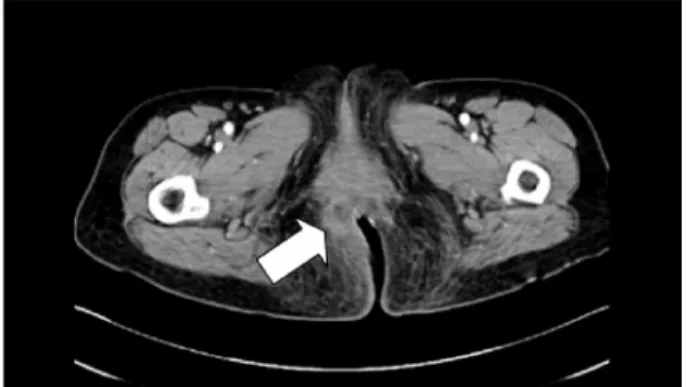
A 76-year-old woman presented with 2-week history of throbbing perianal pain that had worsened over pre- ceding 2 days. Her medical history was notable for hypertension for 30 years but she had not been hospi- talized in recent years nor received prolonged antibiotics or intravenous drugs. There was no known contact his- tory with patients associated with S. aureus. However, she had a history of traveling to Hawaii for the last 2 weeks. Clinical examination revealed fever (39.3℃) and two circumferential huge perianal mass-like lesions. No cutaneous furuncle, carbuncle, or wound on the other site of skin was found. The initial laboratory test showed an elevated a white blood cell count of 19,380/mm3(segment neutrophil 86%) and an increased C-reactive protein level of 40.45 mg/L (normal range, 0-5 mg/L). Computed to- mography with contrast medium showed perianal inflam- mation, extending to the bilateral ischiorectal fascia, predominant in the right side (Figure 1).
Intravenous cefoperazone/sulbactam 1 g twice daily was started. After three days, incision and drainage was performed. From the cultures of blood on the first day and the drained pus on the third day grew pure growths of MRSA with same antibiogram (named strain of YSSA15). Antibiotic susceptibility test by disc diffusion according to the guidelines of the Clinical and Labora-
tory Standards Institute (2006) showed that the isolate was susceptible to gentamicin, clindamycin, fusidic acid, ciprofloxacin, tetracycline, trimethoprim/sulfamethoxazole and vancomycin (13). It was resistant only to penicillin, oxacillin, and erythromycin. Treatment was switched to vancomycin 1 g twice daily plus metronidazole 500 mg thrice daily for 1 week followed by 2 months of oral fusidic acid. Three months later after surgery, there was no clinical evidence of a residual abscess.
On the laboratory test, the presence of the mecA, nuc gene was confirmed by PCR, as described previously (14).
To confirm the existence of PVL gene, we amplified its PVL genes (lukS-PV and lukF-PV) from YSSA15 for whole sequencing using the primers designated from GenBank No. AB006796 (forward lukS-PV; 5'-tgtttg- gtaatgaacgggttt-3', reverse lukS-PV; 5'-ggatagcaaaag- caatgcaa-3', forward lukF-PV; 5'-cacaacgcatttgtaaaca- gaaa-3', reverse lukF-PV; 5'-tcaattaagacgtggttaccctaa- 3'), and cloned using pcr 2.1 TOPO kit (Invitrogen Corp., Calsbad, CA, USA). Then sequences after two sequencing data of PCR products (lukS-PV and lukF-PV) were as- sembled. The BLAST search (BLASTN 2.2.13) of as- sembled nucleotide sequencing result (GenBank No.
DQ993352) showed over 99.5% of homology of USA300 (CP000255; 1546087-1548249). It was further analyzed to investigate other molecular features, including SCCmec, multilocus sequence typing (MLST), protein A gene (spa) typing, accessory gene regulator locus (agr) typing, hemolysin and staphylococcal enterotoxin genes, as previously described (2, 15). It was characterized as
Figure 1. Pelvic CT scan revealed bilateral thickening of levator ani muscle around anus extending to the bilateral ischiorectal fascia (arrow), especially on right side, with focal nodular infil- tration. Thickening of skin and soft tissue due to inflammation was also observed in the medial aspect of buttock.
type IV SCCmec-ST8-type 1 spa-type I agr. Also it possessed alpha-, beta-, delta- and gamma-hemolysin variant. Among the staphylococcal enterotoxin genes, only sea was positive.
DISCUSSION
There have been several reports about molecular
characteristics of MRSA isolated from Korea. ST5 or ST239 - SCCmec type II or III predominance were mainly presented in HA-MRSA. ST72 - SCCmec type IVA were predominant in CA-MRSA strains although CA-MRSA strains were still rare in Korea (9, 10, 12, 16-18). Strains of SCCmec type IV - ST8 from invasive disease like this report have not been reported in Korea yet.
From 2004 to 2005, we have collected of pathogenic
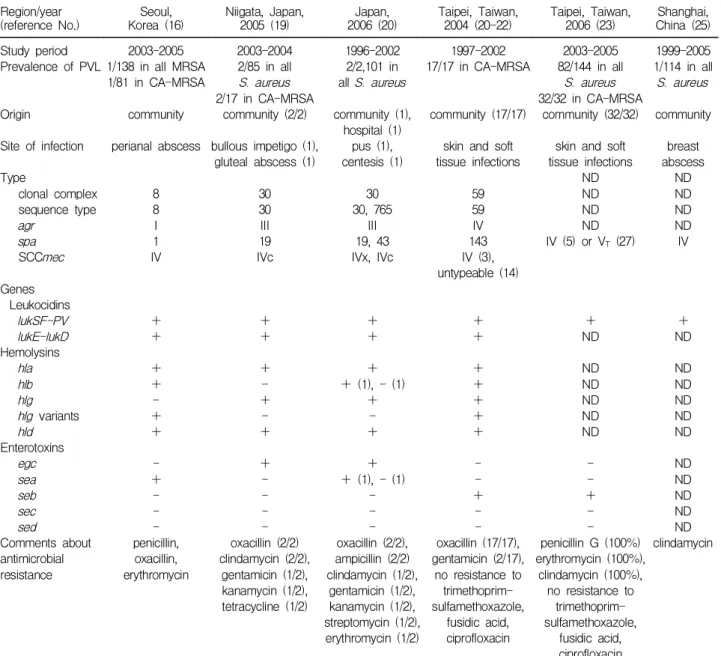
Table 1. Distribution of Epidemiologic Data, Virulence and Resistance Determinants in Reported Panton-Valentine Leu- kocidin-positiveStaphylococcus aureus Isolates from the Far East
Region/year (reference No.)
Seoul, Korea (16)
Niigata, Japan, 2005 (19)
Japan, 2006 (20)
Taipei, Taiwan, 2004 (20-22)
Taipei, Taiwan, 2006 (23)
Shanghai, China (25) Study period
Prevalence of PVL
Origin
Site of infection
Type
clonal complex sequence type agr
spa SCCmec
Genes Leukocidins
lukSF-PV lukE-lukD Hemolysins
hla hlb hlg hlg variants hld Enterotoxins
egc sea seb sec sed
Comments about antimicrobial resistance
2003-2005 1/138 in all MRSA 1/81 in CA-MRSA
community
perianal abscess
8 8 I 1 IV
+
+
+
+ -
+
+
-
+ - - - penicillin,
oxacillin, erythromycin
2003-2004 2/85 in all S. aureus 2/17 in CA-MRSA
community (2/2)
bullous impetigo (1), gluteal abscess (1)
30 30 III 19 IVc
+
+
+ -
+ -
+
+ - - - - oxacillin (2/2) clindamycin (2/2),
gentamicin (1/2), kanamycin (1/2), tetracycline (1/2)
1996-2002 2/2,101 in all S. aureus
community (1), hospital (1)
pus (1), centesis (1)
30 30, 765
III 19, 43 IVx, IVc
+
+
+
+ (1), - (1)
+ -
+
+
+ (1), - (1) - - - oxacillin (2/2), ampicillin (2/2) clindamycin (1/2),
gentamicin (1/2), kanamycin (1/2), streptomycin (1/2), erythromycin (1/2)
1997-2002 17/17 in CA-MRSA
community (17/17)
skin and soft tissue infections
59 59 IV 143 IV (3), untypeable (14)
+
+
+
+
+
+
+
- -
+ - - oxacillin (17/17), gentamicin (2/17),
no resistance to trimethoprim- sulfamethoxazole,
fusidic acid, ciprofloxacin
2003-2005 82/144 in all
S. aureus 32/32 in CA-MRSA
community (32/32)
skin and soft tissue infections
ND ND ND ND IV (5) or VT (27)
+ ND
ND ND ND ND ND
- -
+ - - penicillin G (100%) erythromycin (100%),
clindamycin (100%), no resistance to
trimethoprim- sulfamethoxazole,
fusidic acid, ciprofloxacin
1999-2005 1/114 in all S. aureus
community
breast abscess
ND ND ND ND IV
+ ND
ND ND ND ND ND
ND ND ND ND ND clindamycin
Abbreviations : CA, community-associated; egc, enterotoxin gene cluster, which includes the seg, sei, sem, and seo gene; hla, α -hemolysin gene; hlb, α -hemolysin gene; hld, β -hemolysin gene; hlg, δ -hemolysin gene; MRSA, methicillin resistant Staphylococcus aureus; ND, not done; PVL, Panton-Val- entine leukocidin; sea, staphylococcal enterotoxin A gene; seb, staphylococcal enterotoxin B gene; sec, staphylococcal enterotoxin C gene; sed, staphylococcal enterotoxin D gene
MRSA strains for epidemiologic study from a university affiliated tertiary referral hospital and five community hospital in Seoul, Korea (16). Of total 81 strains of CA- MRSA by definition (1, 16), we found YSSA15 was the only one PVL+isolate. And further molecular epidemiol- ogical findings revealed that this strain could be from internationally spread clone (USA300) (4). MRSA isolates with this genotype have recently been predominantly found in the United States, not in Japan and Taiwan (4, 19-23). The patient from our case had no history of fre- quent cutaneous infections or contact with patients suspicious of MRSA infection. However, the fact that the patient had been to Hawaii a few weeks ago before she suffered from MRSA infection made us to suspect that the organism might have been imported from Hawaii, USA. Also the possibility that MRSA came from bovine milk PVL+ clone in Korea was excluded, because their genetic background had no genetic relationship with YSSA15 (11). To validate whether this is the same iso- late as USA300 reported previously, we are considering performing pulsed field gel electrophoresis with YSSA15 and USA300 from center for disease control and preven- tion in USA.
Clinical presentation of perianal abscess was unusu- ally bilateral and extended to the regional fascia, these findings showed the possible role of PVL which is con- sidered to contribute to the extensive progression of in- flammation. Fortunately it was controlled by surgical drainage of appropriate timing and proper use of anti- biotics. As CA-MRSA USA300 reported in the literature (24), YSSA15 was not multi-drug resistant, only resis- tant against penicillin, oxacillin, and erythromycin. In this case, β-lactams followed by vancomycin and oral fusidic acid were useful to control infection. However, it should be reserved for the use of other susceptible anti- biotics such as quinoloes, clindamycin, etc. because of the risk of iMLSB resistance induction during treatment.
And further studies are warranted.
We also reviewed the comprehensive literatures of PVL+strains reported from the Far East (China, Japan, Taiwan) during 2000-2007 using a service of the Na- tional Library of Medicine and the National Institute of Health (http://www.ncib.nlm.nih.gov/entrez/query/fcgi?DB
=pubmed) (19-22, 25) and compared their epidemiologic data, virulence and resistance characteristics with our isolate (Table 1). Even though they were not collected in the same manner, the prevalence of PVL gene tended to be much lower than in western countries (4) except in cases of Taiwan. In Japan, one PVL+HA-MRSA strain was found to be associated with outbreaks in 1980-1990 (20). Additionally, diverse molecular types, hemolysin and enterotoxin genes were found as shown in Table 1. Anti- biotic resistance patterns were also somewhat different according to countries. Although geographically close, it could be concluded that the genetic background of PVL+ strains were widely varied in the Far East.
It should be necessary to monitor the characteristics of CA-MRSA strains in Korea, although PVL positive strains are rare. It was revealed that the spectrum of epidemiology and virulence of PVL+ strain would be changed due to the adaptation with typical PVL-Japanese CA-MRSA strains (19). So these findings show us the importance of continuous surveillance strategy of the spreading of PVL+ pandemic strain and the changing pattern of major virulence factors in MRSA-associated disease. Moreover PVL gene could be horizontally trans- mitted to other strains via temperate bacteriophage (26).
In summary, we report a first case of perianal abscess due to PVL+ CA-MRSA strain in Korea which is homologous with USA300. In the literature review, PVL+ MRSA were not frequently found in the Far East except in Taiwan. Other molecular characteristics of strains were distinguishable from each other according to countries.
요 약
최 근 Panton-Valentine leukocidin (PVL) 유 전 자 양 성 인 지 역 사 회 관 련 메 티 실 린 내 성 포 도 알 균 이 전 세 계 적 으 로 보 고 되 고 있 지 만 국 내 에 서 는 아 직 드 물 다 . 저 자 들 은 76세 여 자 환 자 에 서 PVL양 성 지 역 사 회 관 련 메 티 실 린 내 성 포 도 알 균 에 의 한 광 범 위 한 항 문 주 위 농 양 을 진 단 하 고 성 공 적 으 로 치 료 하 였 다 . 분 자 역 학 연 구 를 통 해 본 균 주 는 미 국 에 서 유 행 하 는 USA300주 와 매 우 유 사 하 고 , staphylococcal cassette chromosome mec mec (SCCmec) type IV, multilocus se- quence typing ST8, spa type type 1, accessory gene re-
gulator locus (agr) group I이 관 련 되 어 있 었 다 . 문 헌 조 사 결 과 동 아 시 아 에 서 보 고 된 PVL 양 성 지 역 사 회 관 련 메 티 실 린 내 성 포 도 알 균 은 분 자 역 학 적 특 성 이 다 양 하 고 , 미 국 및 유 럽 증 례 와 비 교 해 PVL 유 전 자 가 비 교 적 드 물 었 다 .
REFERENCES
1) Fridkin SK, Hagerman JC, Morrison M, Sanza LT, Como-Sabetti K, Jerningan JA, Harriman K, Harrison LK, Lynfield R, Farley MM : Active Bacterial Core Surveillance Program of the Emerging Infections Program Network: Methicillin resistant Staphyloco- ccus aureus disease in three communities. N Engl J Med352:1436-44, 2005
2) Zetola N, Francis JS, Nuermberger EL, Bishai WR : Community-acquired methicillin-resistant Staphylo- coccus aureus: an emerging threat. Lancet Infect Dis 5:275-86, 2005
3) Kim HB, Park WB, Lee KD, Choi YJ, Park SW, Oh MD, Kim EC, Choe KW : Nationwide surveillance for Staphylococcus aureus with reduced susceptibility to vancomycin in Korea. J Clin Microbiol 41:2279-81, 2003
4) Vandenesch F, Naimi T, Enright MC, Lina G, Nimmo GR, Heffernan H, Liassine N, Bes M, Greenland T, Reverdy ME, Etienne J : Community-acquired methi- cillin-resistant Staphylococcus aureus carrying Pan- ton-Valentine leukocidin genes: worldwide emer- gence. Emerg Infect Dis 9:978-84, 2003
5) Wang R, Braughton KR, Kretschmer D, Bach TH, Queck SY, Li M, Kennedy AD, Dorward DW, Klebanoff SJ, Peschel A, DeLeo FR, Otto M : Identi- fication of novel cytolytic peptides as key virulence determinants for community-associated MRSA. Nat Med 13;1510-4, 2007
6) Bubeck Wardenburg J, Bae T, Otto M, Deleo FR, Schneewind O : Poring over pores: alpha-hemolysin and Panton-Valentine leukocidin in Staphylococcus aureus pneumoniae. Nat Med 13:1405-6, 2007 7) Voyich JM, Otto M, Mathema B, Braughton KR,
Whitney AR, Welty D, Long RD, Dorward DW, Gardner DJ, Lina G, Kreiswirth BN, DeLeo FR : Is Panton-Valentine leukocidin the major virulence determinant in community-associated methicillin- resistant Staphylococcus aureus disease? J Infect Dis 194:1761-70, 2006
8) Labandeira-Rey M, Couzon F, Boisset S, Brown EL, Bes M, Benito Y, Barbu EM, Vazquez V, Hook M, Etienne J, Vandenesch F, Bowden MG : Staphyloco- ccus areus Panton-Valentine leukocidin causes necrotizing pneumoniae. Science 315:1130-3, 2007
9) Kim JS, Park JS, Song WK, Kim HS, Cho HC, Lee KM, Kim EC : Panton-Valentine leukocidin positive Staphylococcus aureus isolated from blood in Korea.
Korean J Lab Med 27:286-91, 2007
10) Song JS, Choe PG, Song KH, Cho JH, Kim SH, Bang JH, Lee CS, Park KH, Park KU, Shin S, Choi HJ, Kim ES, Kim DM, Lee MS, Park WB, Kim NJ, Oh MD, Kim EC, Kim HB, Choe KW : Multicenter study for frequency and clinical features of community- associated methicillin-resistant Staphylococus aureus in Korea. Infect Chemother 38:325-33, 2006
11) Kwon NH, Park KT, Moon JS, Jung WK, Kim SH, Kim JM, Hong SK, Koo HC, Joo YS, Park YH : Staphylococcal cassette chromosome mec (SCCmec) characterization and molecular analysis for methi- cillin-resistant Staphylococcus aureus and novel SCCmec subtype IVg isolated from bovine milk in Korea. J Antimicrob Chemother 56:624-32, 2005 12) Kim ES, Song JS, Lee HJ, Choe PG, Park KH, Cho
JH, Park WB, Kim SH, Bang JH, Kim DM, Park KU, Shin S, Lee MS, Choi HJ, Kim NJ, Kim EC, Oh MD, Kim HB, Choe KW : A survey of community-asso- ciated methicillin-resistant Staphylococcus aureus in Korea. J Antimicrob Chemother 60:1108-14, 2007 13) Clinical and Laboratory Standards Institute : Per-
formance standards for antimicrobial susceptibility testing. Sixteenth informational supplement. Approv- ed standard M100-S16. Wayne, PA, CLSI, 2006 14) Becker K, Harmsen D, MellmannA, Meier C,
Schumann P, Peters G, von Eiff C : Development and evaluation of a quality-controlled ribosomal sequence database for 16S ribosomal DNA-based identification of Staphylococcus species. J Clin Microbiol 42:4988- 95, 2004.
15) Jarraud S, Mougel C, Thioulouse J, Lina G, Meugnier H, Forey F, Nesme X, Etienne J, Vandenesch F : Relationships between Staphylococcus aureus genetic background, virulence factors, agr groups (alleles), and human disease. Infect Immun 70:631-41, 2002 16) Park C, Lee DG, Kim SW, Choi SM, Park SH, Chun
HS, Choi JH, Yoo JH, Shin WS, Kang JH, Kim JH, Lee SY, Kim SM, Pyun BY : Predominance of community-associated methicillin-resistant Staphylo- coccus aureus strains carrying staphylococcal chro- mosome cassette mec type IVA in Korea. J Clin Microbiol 45:4021-6, 2007
17) Cha HY, Moon DC, Choi CH, Oh JY, Jeong YS, Lee YC, Seol SY, Cho DT, Chang HH, Kim SW, Lee JC : Prevalence of the ST239 clone of methicillin- resistant Staphylcoccus aureus and differences in antimicrobial susceptibilities of ST239 and ST5 clones identified in a Korean hospital. J Clin Micro- biol 43:3610-4, 2005
18) Ko KS, Lee JY, Suh JY, Oh WS, Peck KR, Lee NY, Song JH : Distribution of major genotypes among methicillin-resistant Staphylococcus aureus clones in Asian countries. J Clin Microbiol 43:421-6, 2005 19) Takizawa Y, Taneike I, Nakagawa S, Oishi T, Ni-
tahara Y, Iwakura N, Ozaki K, Takano M, Nakayama T, Yamamoto T : A Panton-Valentine leukocidin (PVL)-positive community-acquired methicillin-re- sistant Staphylococcus aureus (MRSA) strain, another such strain carrying a multiple-drug resis- tance plasmid, and other more-typical PVL-negative MRSA strains found in Japan. J Clin Microbiol 43:3356-63, 2005
20) Yamamoto T, Dohmae S, Saito K, Otsuka T, Takano T, Chiba M, Fujikawa K, Tanaka M : Molecular characteristics and in vitro susceptibility to anti- microbial agents, including the des-fluoro (6) qui- nolone DX-619, of Panton-Valentine leucocidin- positive methicillin-resistant Staphylococcus aureus isolates from the community and hospitals. Antimi- crob Agents Chemother 50:4077-86, 2006
21) Wang CC, Lo WT, Chu ML, Siu LK : Epidemiological typing of community-acquired methicillin-resistant Staphylococcus aureus isolates from children in Taiwan. Clin Infect Dis 39:481-7, 2004
22) Bolye-Vavra S, Ernshefsky B, Wang CC, Daum RS : Successful multiresistant community-associated me- thicillin resistant Staphylococcus aureus lineage from Taipei, Taiwan, that carries either the novel sta- phylococcal chromosom cassette mec (SCCmec) type VT or SCCmec type IV. J Clin Microbiol 43:4719-30, 2005
23) Lo WT, Lin WJ, Tseng MH, Wang SR, Chu ML, Wang CC : Community acquired methicillin-resistant Staphylococcus aureus in children, Taiwan. Emerg Infect Dis 12:1267-70, 2006
24) Huang H, Flynn NM, King JH, Monchaud C, Morita M, Cohen SH : Comparison of community-associated methicillin-resistant Staphylococcus aureus (MRSA) and hospital-associated MRSA infections in Sacra- mento, California. J Clin Microbiol 44:2423-7, 2006 25) Li GH, Zhang YY, Wang F, Chen YJ, Nord CE, Fang
H : Emergence of methicilin-resistant Staphylococcus aureus carrying Panton-Valentine leukocidin gene in Shanghai, China. Int J Infect Dis 10:482-3, 2006 26) Narita S, Kaneko J, Chiba J, Piemont Y, Jarraud S,
Etienne J, Kamio Y : Phage conversion of Panton- Valentine leukocidin in Staphylococcus aureus: mol- ecular analysis of a PVL-converting phage, phiSLT.
Gene 268:195-206, 2001