Comparison of the Effects of Ezetimibe-Statin Combination Therapy on Major Adverse Cardiovascular Events in
Patients with and without Diabetes: A Meta-Analysis
Namki Hong1,2,*, Yong-ho Lee1,3,*, Kenichi Tsujita4, Jorge A. Gonzalez5, Christopher M. Kramer5, Tomas Kovarnik6, George N. Kouvelos7, Hiromichi Suzuki8, Kyungdo Han9, Chan Joo Lee10,11, Sung Ha Park10,11, Byung-Wan Lee1,3, Bong-Soo Cha1,3, Eun Seok Kang1,3
1Division of Endocrinology and Metabolism, Department of Internal Medicine, Yonsei University College of Medicine;
2Graduate School, Yonsei University College of Medicine; 3Institute of Endocrine Research, Yonsei University College of Medicine, Seoul, Korea; 4Department of Cardiovascular Medicine, Graduate School of Medical Sciences, Kumamoto University, Kumamoto, Japan; 5Department of Medicine (Cardiology) and Radiology, University of Virginia Health System, Charlottesville, VA, USA; 6Second Department of Medicine, Department of Cardiovascular Medicine, First Faculty of
Medicine, Charles University in Prague and General University Hospital in Prague, Prague, Czech Republic; 7Vascular Surgery Unit, Department of Surgery, University of Ioannina, Ioannina, Greece; 8Musashino Tokusyu Hospital, Tokyo, Japan;
9Department of Biostatistics, The Catholic University of Korea; 10Division of Cardiology, Department of Internal Medicine,
11Cardiovascular Research Institute and Cardiovascular Genome Center, Yonsei University College of Medicine, Seoul, Korea
Background: Ezetimibe-statin combination therapy has been found to reduce low density lipoprotein cholesterol levels and the risk of major adverse cardiovascular events (MACEs) in large trials. We sought to examine the differential effect of ezetimibe on MAC- Es when added to statins according to the presence of diabetes.
Methods: Randomized clinical trials with a sample size of at least 50 participants and at least 24 weeks of follow-up that compared ezetimibe-statin combination therapy with a statin- or placebo-controlled arm and reported at least one MACE, stratified by diabetes status, were included in the meta-analysis and meta-regression.
Results: A total of seven trials with 28,191 enrolled patients (mean age, 63.6 years; 75.1% men; 7,298 with diabetes [25.9%]; mean fol- low-up, 5 years) were analysed. MACEs stratified by diabetes were obtained from the published data (two trials) or through direct con- tact (five trials). No significant heterogeneity was observed among studies (I2=14.7%, P=0.293). Ezetimibe was associated with a great- er reduction of MACE risk in subjects with diabetes than in those without diabetes (pooled relative risk, 0.84 vs. 0.93; Pheterogeneity=0.012).
In the meta-regression analysis, the presence of diabetes was associated with a greater reduction of MACE risk when ezetimibe was add- ed to statins (β=0.87, P=0.038).
Conclusion: Ezetimibe-statin combination therapy was associated with greater cardiovascular benefits in patients with diabetes than in those without diabetes. Our findings suggest that ezetimibe-statin combination therapy might be a useful strategy in patients with diabetes at a residual risk of MACEs.
Received: 11 November 2017, Revised: 3 February 2018, Accepted: 22 February 2018
Corresponding author: Eun Seok Kang
Department of Internal Medicine, Yonsei University College of Medicine, 50-1 Yonsei-ro, Seodaemun-gu, Seoul 03722, Korea
Tel: +82-2-2228-1968, Fax: +82-2-393-6884, E-mail: [email protected]
*These authors contributed equally to this work.
Copyright © 2018 Korean Endocrine Society
This is an Open Access article distributed under the terms of the Creative Com- mons Attribution Non-Commercial License (http://creativecommons.org/
licenses/by-nc/4.0/) which permits unrestricted non-commercial use, distribu- tion, and reproduction in any medium, provided the original work is properly cited.
Keywords: Ezetimibe; Myocardial infarction; Stroke; Hydroxymethylglutaryl-CoA reductase inhibitors; Diabetes mellitus
METHODS
Data sources, search strategy, and selection criteria We conducted a meta-analysis based on the Preferred Reporting Items for Systematic Reviews and Meta-Analyses (PRISMA) guidelines [10]. Relevant studies were identified by searching the following data sources: MEDLINE via PubMed, Embase, and the Central Controlled Trials Register of the Cochrane Col- laboration (from 1994 to December 2016). The following text words and medical subject headings were used without lan- guage restriction: “ezetimibe,” “ezetimibe-simvastatin drug combination,” “simvastatin,” “pravastatin,” “lovastatin,” “ator- vastatin,” “rosuvastatin,” “fluvastatin,” “pitavastatin,” and “hy- droxymethylglutaryl-CoA reductase inhibitors.” The reference lists of identified studies were also scanned to find potentially relevant studies. Two independent authors (Y.H.L and N.H.) performed the literature search, data extraction, and quality as- sessment with a standardized method, and a third reviewer (E.S.K.) adjudicated any discrepancies. Quality assessment was done using the Cochrane Collaboration’s tool for assessing the risk of bias in randomized trials (Supplemental Fig. S1) [11].
This study was approved by Institutional Review Board of Sev- erance Hospital, Yonsei University (no. 4-2015-0637).
Data extraction and quality assessment
Standard information was extracted from published reports and unpublished data obtained from investigators into a spreadsheet.
We requested and received data using a formal question sheet for trials with unpublished information. We collected data on the number of randomized patients and the occurrence of MAC- Es in each ezetimibe and comparator group in the overall partic- ipants, as well as in subgroups divided by the presence of diabe- tes. Mean age, body mass index, follow-up duration, and the difference in the decrease of serum low density lipoprotein cho- lesterol (LDL-C) concentration between the ezetimibe and con- trol groups during the study were tabulated for each study.
Statistical analysis
Relative risks (RRs) and 95% confidence intervals (CIs) were calculated from the event numbers, with the total number of pa- tients as the denominator for individual studies. Heterogeneity across studies was estimated using the I2 statistic [12]. I2 values
INTRODUCTION
Statins (3-hydroxy-3-methylglutaryl coenzyme A reductase in- hibitors) have shown efficacy in lowering cholesterol levels and reducing the risk of cardiovascular events in the setting of pri- mary and secondary prevention [1,2]. Given the major contribu- tion of cardiovascular events to morbidity and mortality in pa- tients with diabetes, high-intensity statins are recommended for patients with diabetes [3,4]. However, individuals with diabetes have substantial residual cardiovascular risk, even when receiv- ing statin therapy, leading to an unmet need for additional lipid- modifying strategies [5].
Ezetimibe, a Niemann-Pick C1-like1 (NPC1L1) inhibitor, blocks intestinal cholesterol absorption, leading to the reduction of circulating cholesterol levels via a distinct mechanism from that of statins [6,7]. A large randomized controlled trial (RCT), the Improved Reduction of Outcomes: Vytorin Efficacy Interna- tional Trial (IMPROVE-IT), demonstrated the efficacy of ezeti- mibe-statin combination therapy on the reduction of cholesterol levels and major cardiovascular adverse events (MACEs) in pa- tients who had recently experienced a myocardial infarction [8].
Notably, in a subgroup analysis, the beneficial effect of ezeti- mibe added to statins on MACEs was more prominent in pa- tients with diabetes than in patients without diabetes [8]. Results from another large, placebo-controlled trial investigating the ef- ficacy of ezetimibe-statin combination therapy in reducing car- diovascular events in chronic kidney disease patients also found a similar preferential effect of ezetimibe-statin combination therapy in patients with diabetes [9]. Given the high residual cardiovascular risk in patients with diabetes who are receiving treatment, these findings suggest that ezetimibe might provide additional benefits for preventing cardiovascular events, partic- ularly in patients with diabetes. However, this potential differ- ential effect of ezetimibe according to presence of diabetes has not been assessed as a primary outcome in pooled results from RCTs.
In this meta-analysis, we compared the effect of ezetimibe- statin combination therapy on MACEs to that of statins alone or placebo in patients with and without diabetes, based on the pooled results of RCTs.
ranging from 0% to 40% were regarded as indicating no impor- tant heterogeneity; moderate, substantial, and considerable het- erogeneity were defined as I2 values ranging from 30% to 60%, 50% to 90%, and 75% to 100%, respectively [13]. Weighted pooled treatment effects were obtained with a random-effects model to provide a more conservative assessment of the average effect size. The heterogeneity of the pooled effect between sub- groups was calculated using the Cochran Q statistic, with the following formula: Q=∑[(1/variance of individual study)×(ef- fect of individual study–effect of pooled study)]2, where vari- ance of individual study=[(upper limit–lower limit)/(2×z)]2 [14]. A funnel plot with symmetry testing by the Egger linear regression method was used to test for potential publication bias [15]. Sensitivity analyses were performed by repeating analyses while removing one study at a time using the ‘metaninf’ com- mand (STATA). Analyses confined to statin-controlled trials were also performed, with the exclusion of placebo-controlled trials. Random-effects meta-regression models with inverse variance weighting were built to assess whether the presence of diabetes explained the variance in the estimated RR for MACEs observed between trials. Two-sided P values <0.05 were con- sidered to indicate statistical significance. All statistical analyses were performed with STATA version 14.0 (Stata Corp., College Station, TX, USA).
RESULTS
Characteristics of trials
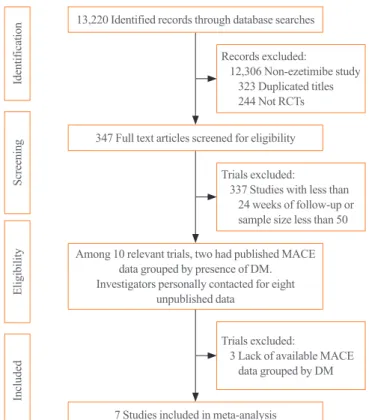
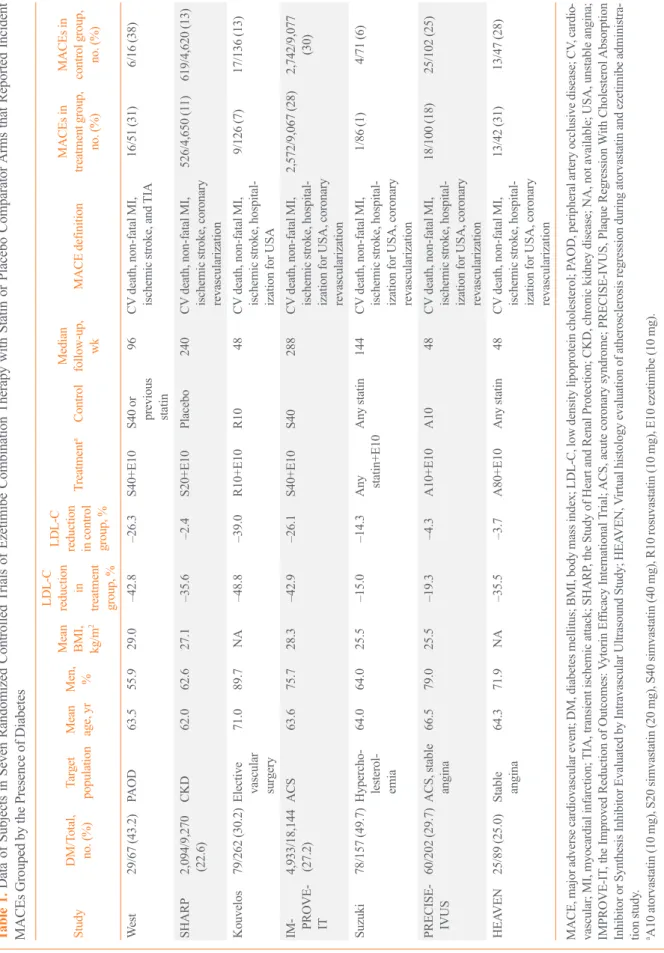
Among the 13,220 identified records, 347 randomized, placebo or statin-controlled endpoint trials of ezetimibe were screened (Fig. 1). Studies were included if they were completed RCTs comparing the effects of adding ezetimibe to any statin or pla- cebo on the incidence of MACEs and if they reported the clini- cal outcomes in participants stratified by the presence of diabe- tes. We also contacted investigators from eight potentially rele- vant trials about unpublished data for incident MACEs in par- ticipants stratified by diabetes, and received and included data from five of those trials. Finally, a total of seven studies, two with published data [8,9] and five with previously unpublished data that had not been analysed until our request [16-20], were included in the meta-analysis. The included studies enrolled 28,191 patients (7,298 with diabetes [25.9%]) with stable angi- na, recent acute coronary syndrome, chronic kidney disease, pe- ripheral arterial occlusive disease, or hypercholesterolemia (Ta- ble 1). The mean age of study subjects was 63.6 years and 75.1% were men. The mean follow-up duration of the studies
was approximately 5 years, according to the weighted average.
The prevalence of diabetes varied from 22.6% to 49.7%. Only one study, the Study of Heart and Renal Protection (SHARP) trial, was a placebo-controlled study (vs. an ezetimibe-simvas- tatin combination), whereas other trials included statin users as the control group. A greater LDL-C reduction (%) was shown in the ezetimibe and statin combination group than in the control group (statins or placebo), regardless of differences in the inten- sity and doses in the statin-controlled trials.
Outcome analysis
Fig. 2 shows the pooled association of ezetimibe combination therapy with MACE risk according to the presence of diabetes.
No significant heterogeneity was observed across the trials (I2=14.7%, P=0.293). In the included patients, a total of 6,581 MACEs occurred during follow-up. The definitions of MACEs were generally consistent among studies. Fig. 2A shows that the association of ezetimibe combination therapy with a lower MACE risk was greater in the pooled RR from subgroups with diabetes (RR, 0.84; 95% CI, 0.77 to 0.91) than in the pooled RR
13,220 Identified records through database searches
347 Full text articles screened for eligibility
Among 10 relevant trials, two had published MACE data grouped by presence of DM.
Investigators personally contacted for eight unpublished data
7 Studies included in meta-analysis Records excluded:
12,306 Non-ezetimibe study 323 Duplicated titles 244 Not RCTs
Trials excluded:
337 Studies with less than 24 weeks of follow-up or sample size less than 50
Trials excluded:
3 Lack of available MACE data grouped by DM
IdentificationScreeningEligibilityIncluded
Fig. 1. Flow diagram of the literature search to identify randomized controlled trials (RCTs) comparing the differential effect of ezeti- mibe combination therapy on the reduction of major adverse car- diovascular events (MACEs) according to the presence of diabetes.
DM, diabetes mellitus.
Table 1. Data of Subjects in Seven Randomized Controlled Trials of Ezetimibe Combination Therapy with Statin or Placebo Comparator Arms that Reported Incident MACEs Grouped by the Presence of Diabetes StudyDM/Total, no. (%)Target population Mean age, yr Men, % Mean BMI, kg/m
2
LDL-C reduction in
treatment group, % LDL-C reduction in control group, %
TreatmentaControl Median follow-up, MACEs in MACE definitiontreatment group, wkno. (%)
MACEs in control group, no. (%) West 29/67 (43.2)PAOD63.555.929.0–42.8–26.3S40+E10S40 or previous statin
96CV death, non-fatal MI, ischemic stroke, and TIA16/51 (31)6/16 (38) SHARP2,094/9,270 (22.6)CKD62.062.627.1–35.6–2.4S20+E10Placebo240CV death, non-fatal MI, ischemic stroke, coronary revascularization
526/4,650 (11)619/4,620 (13) Kouvelos 79/262 (30.2)Elective vascular surgery
71.089.7NA–48.8–39.0R10+E10R1048CV death, non-fatal MI, ischemic stroke, hospital- ization for USA
9/126 (7)17/136 (13) IM- PROVE- IT
4,933/18,144 (27.2)
ACS63.675.728.3–42.9–26.1S40+E10S40288CV death, non-fatal MI, ischemic stroke, hospital-
ization for USA, coronary revascularization
2,572/9,067 (28)2,742/9,077 (30) Suzuki78/157 (49.7)Hypercho- lesterol- emia
64.064.025.5–15.0–14.3Any statin+E10Any statin144CV death, non-fatal MI, ischemic stroke, hospital-
ization for USA, coronary revascularization
1/86 (1)4/71 (6) PRECISE- IVUS60/202 (29.7)ACS, stable angina66.579.025.5–19.3–4.3A10+E10A1048CV death, non-fatal MI, ischemic stroke, hospital-
ization for USA, coronary revascularization
18/100 (18)25/102 (25) HEAVEN25/89 (25.0)Stable angina64.371.9NA–35.5–3.7A80+E10Any statin48CV death, non-fatal MI, ischemic stroke, hospital-
ization for USA, coronary revascularization
13/42 (31)13/47 (28) MACE, major adverse cardiovascular event; DM, diabetes mellitus; BMI, body mass index; LDL-C, low density lipoprotein cholesterol; PAOD, peripheral artery occlusive disease; CV, cardio- vascular; MI, myocardial infarction; TIA, transient ischemic attack; SHARP, the Study of Heart and Renal Protection; CKD, chronic kidney disease; NA, not available; USA, unstable angina; IMPROVE-IT, the Improved Reduction of Outcomes: Vytorin Efficacy International Trial; ACS, acute coronary syndrome; PRECISE-IVUS, Plaque Regression With Cholesterol Absorption Inhibitor or Synthesis Inhibitor Evaluated by Intravascular Ultrasound Study; HEAVEN, Virtual histology evaluation of atherosclerosis regression during atorvastatin and ezetimibe administra- tion study. aA10 atorvastatin (10 mg), S20 simvastatin (20 mg), S40 simvastatin (40 mg), R10 rosuvastatin (10 mg), E10 ezetimibe (10 mg).
from subgroups without diabetes (RR, 0.93; 95% CI, 0.85 to 1.02; Pheterogeneity=0.012). A similar result was observed when the placebo-controlled study (SHARP) was excluded from the pooled analysis (RR, 0.86; 95% CI, 0.78 to 0.94 vs. RR, 0.97;
95% CI, 0.92 to 1.03; Pheterogeneity=0.022) (Fig. 2B), indicating a
statistically significant difference between the two pooled RRs (in the diabetes and no diabetes groups).
When all included trials were analysed by meta-regression, there was a trend toward a greater MACE risk reduction by ezetimibe combination therapy when added to statins in patients with diabetes compared to those without diabetes (β=0.89; 95%
CI, 0.75 to 1.06; P=0.203). When the placebo-controlled study was excluded from the analysis, ezetimibe-statin combination therapy was associated with a greater reduction of MACE risk in subjects with diabetes than in those without diabetes com- pared with statin monotherapy (β=0.87; 95% CI, 0.78 to 0.99;
P=0.038).
Data on cancer incidence were available in three studies (Kouvelos, SHARP, and IMPROVE-IT) (Supplemental Fig.
S2). The pooled RR for cancer incidence was 1.01 (95% CI,
Fig. 2. Pooled effects of ezetimibe-statin combination therapy on major adverse cardiovascular events grouped by the presence of di- abetes within studies. The test for heterogeneity between subgroups was significant (A) in all studies (P=0.012) and (B) after excluding the placebo-controlled trial (SHARP) (P=0.022). RR, risk ratio; CI, confidence interval; DM, diabetes mellitus; SHARP, the Study of Heart and Renal Protection; HEAVEN, virtual histology evaluation of atherosclerosis regression during atorvastatin and ezetimibe ad- ministration study; PRECISE-IVUS, Plaque Regression With Cho- lesterol Absorption Inhibitor or Synthesis Inhibitor Evaluated by Intravascular Ultrasound Study; IMPROVE-IT, the Improved Re- duction of Outcomes: Vytorin Efficacy International Trial.
0.2 1 5 Study
Subgroups without diabetes West-NonDM SHARP-NonDM HEAVEN-NonDM Suzuki-NonDM Kouvelos-NonDM PRECISE-IVUS-NonDM IMPROVE-IT-NonDM Subtotal (I-squared=12.5%, P=0.334) Subgroups with diabetes West-DM SHARP-DM HEAVEN-DM Suzuki-DM Kouvelos-DM PRECISE-IVUS-DM IMPROVE-IT-DM
Subtotal (I-squared=0.0%, P=0.910) Overall (I-squared=14.7%, P=0.293)
1.09 (0.27, 4.33) 0.24 47 0.86 (0.74, 0.99) 16.12 7,176 1.04 (0.55, 1.97) 1.13 64 0.29 (0.01, 7.00) 0.04 79 0.43 (0.16, 1.17) 0.47 183 0.69 (0.38, 1.28) 1.25 142 0.98 (0.92, 1.04) 40.02 13,211 0.93 (0.85, 1.02) 59.28 0.72 (0.32, 1.62) 0.71 20 0.78 (0.64, 0.94) 10.46 2,094 0.90 (0.37, 2.20) 0.59 25 0.26 (0.03, 2.37) 0.10 78 0.78 (0.23, 2.69) 0.31 79 0.89 (0.30, 2.61) 0.40 60 0.86 (0.78, 0.94) 28.16 4,933 0.84 (0.77, 0.91) 40.72 0.89 (0.83, 0.95) 100.00 RR (95% CI) %
weightSample size
A
0.2 1 5 Study
Subgroups without diabetes West-NonDM HEAVEN-NonDM Suzuki-NonDM Kouvelos-NonDM PRECISE-IVUS-NonDM IMPROVE-IT-NonDM Subtotal (I-squared=0.0%, P=0.485) Subgroups with diabetes West-DM HEAVEN-DM Suzuki-DM Kouvelos-DM PRECISE-IVUS-DM IMPROVE-IT-DM
Subtotal (I-squared=0.0%, P=0.928) Overall (I-squared=0.9%, P=0.435)
1.09 (0.27, 4.33) 0.15 47 1.04 (0.55, 1.97) 0.70 64 0.29 (0.01, 7.00) 0.03 79 0.43 (0.16, 1.17) 0.29 183 0.69 (0.38, 1.28) 0.78 142 0.98 (0.92, 1.04) 65.93 13,211 0.97 (0.92, 1.03) 67.88
0.72 (0.32, 1.62) 0.44 20 0.90 (0.37, 2.20) 0.36 25 0.26 (0.03, 2.37) 0.06 78 0.78 (0.23, 2.69) 0.19 79 0.89 (0.30, 2.61) 0.24 60 0.86 (0.78, 0.94) 30.83 4,933 0.86 (0.78, 0.94) 32.12 0.93 (0.89, 0.99) 100.00 RR (95% CI) %
weightSample size
B
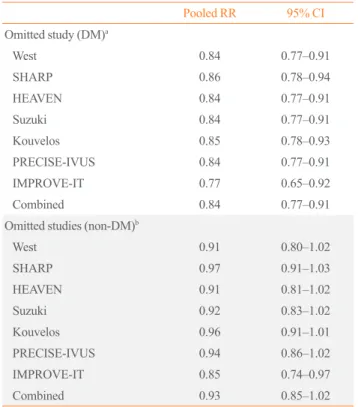
Table 2. Sensitivity Analyses for Assessing the Effects of Indi- vidual Studies on the Pooled Risk Ratio for Major Adverse Car- diovascular Events
Pooled RR 95% CI Omitted study (DM)a
West 0.84 0.77–0.91
SHARP 0.86 0.78–0.94
HEAVEN 0.84 0.77–0.91
Suzuki 0.84 0.77–0.91
Kouvelos 0.85 0.78–0.93
PRECISE-IVUS 0.84 0.77–0.91
IMPROVE-IT 0.77 0.65–0.92
Combined 0.84 0.77–0.91
Omitted studies (non-DM)b
West 0.91 0.80–1.02
SHARP 0.97 0.91–1.03
HEAVEN 0.91 0.81–1.02
Suzuki 0.92 0.83–1.02
Kouvelos 0.96 0.91–1.01
PRECISE-IVUS 0.94 0.86–1.02
IMPROVE-IT 0.85 0.74–0.97
Combined 0.93 0.85–1.02
RR, risk ratio; CI, confidence interval; DM, diabetes mellitus; SHARP, the Study of Heart and Renal Protection; HEAVEN, Virtual histology evaluation of atherosclerosis regression during atorvastatin and ezeti- mibe administration study; PRECISE-IVUS, Plaque Regression With Cholesterol Absorption Inhibitor or Synthesis Inhibitor Evaluated by Intravascular Ultrasound Study; IMPROVE-IT, The Improved Reduc- tion of Outcomes: Vytorin Efficacy International Trial.
aDM, subgroup with diabetes in each study; bNon-DM, subgroup with- out diabetes in each study.
0.94 to 1.09; P=0.794), indicating no difference between the ezetimibe and control groups.
Sensitivity analysis
In the sensitivity analysis (Table 2), the meta-analyses were re- peated after removing one study at a time. Omitting individual trials did not significantly affect the pooled risk, and the risk re- duction by ezetimibe combination therapy in the diabetes group remained robust even after removal of the largest trial (subanal- ysis excluding the IMPROVE-IT trial: [RR, 0.77; 95% CI, 0.65 to 0.92 vs. RR, 0.84; 95% CI, 0.77 to 0.91; P=0.372 in the dia- betes subgroup]; [RR, 0.85; 95% CI, 0.74 to 0.97 vs. RR, 0.93;
95% CI, 0.85 to 1.02; P=0.278 in the non-diabetes subgroups]).
However, the difference between the pooled RRs in the diabetes and non-diabetes groups did not reach statistical significance when the IMPROVE-IT trial was excluded (RR, 0.78; 95% CI, 0.65 to 0.93 in the diabetes subgroup vs. RR, 0.85; 95% CI, 0.74 to 0.97 in the non-diabetes group; Pheterogeneity=0.460), although a nominally consistent pattern was observed with the pooled re- sults of the studies overall.
Publication bias
A funnel plot and Egger test of the studies did not reveal any ev- idence of underlying publication bias for reporting MACEs (Supplemental Fig. S3).
DISCUSSION
In this meta-analysis of seven RCTs, we found a differential as- sociation of ezetimibe-statin combination therapy on MACE risk according to the presence of diabetes. Compared with statins alone, ezetimibe combination therapy reduced the risk of MACEs. The benefit of ezetimibe combination therapy was more prominent in patients with diabetes than in patients with- out diabetes.
Recent reviews and meta-analyses of RCTs, including the IMPROVE-IT study, showed that ezetimibe was likely associat- ed with a reduction of the risk of myocardial infarction and stroke, without affecting the risk of overall or cardiovascular mortality or newly-developed cancer [21,22]. However, pub- lished reviews reported marginal cardiovascular benefits of ezetimibe when ezetimibe was added to statins for reducing nonfatal myocardial infarction and stroke (17 fewer myocardial infarctions and six fewer strokes per 1,000 persons treated over 6 years) [21-24]. This uncertainty is reflected in the absence of a consensus regarding ezetimibe in international guidelines. The
2013 treatment guidelines of the American Heart Association/
American College of Cardiology (AHA/ACC) focused on statin monotherapy and did not suggest considering second-line drugs, including ezetimibe, as a treatment option based on a lack of strong evidence [4]. However, European and Korean guidelines for the management of dyslipidaemia permit the use of ezeti- mibe as a second-line therapy in association with statins when the therapeutic goal is not met despite maximal tolerated statin doses or in subjects intolerant to statins [25,26]. In line with newer evidence, the 2016 AHA/ACC updates on cholesterol treatment commented that second-line cholesterol-lowering drugs can be used to meet LDL-C treatment targets, at least in limited circumstances [27]. Given the current evidence of the ability of ezetimibe to prevent cardiovascular events, it is im- portant to identify the specific populations that might benefit the most from ezetimibe. However, no reviews or meta-analyses have primarily focused on the differential effect of ezetimibe according to the presence of diabetes. In this study, the pooled results of RCTs with a statin control arm showed that patients with diabetes experienced a greater benefit from ezetimibe- statin combination therapy than patients without diabetes, indi- cating that the presence of diabetes might be a potential indica- tion for adding ezetimibe to the therapeutic regimen of patients with high residual risk.
Several biological and clinical findings support the beneficial effect of ezetimibe in diabetes. Patients with a higher risk of cardiovascular events experience greater benefits when ezeti- mibe is added to statins, as shown in a previous review [22]. Pa- tients with diabetes are more likely to have a higher cardiovas- cular risk at baseline than patients without diabetes, which might lead to ezetimibe exerting a positive effect in patients with diabetes [8]. Furthermore, pathologic enhancement of NPC1L1 expression, a direct target of ezetimibe, has been re- ported in patients with diabetes [28,29]. Indeed, ezetimibe was associated with greater decreases in LDL-C and non-high den- sity cholesterol levels in patients with diabetes than in those without diabetes [30,31]. In addition to its favourable effects on the lipid profile of individuals with diabetes, ezetimibe combi- nation therapy was associated with improvements in insulin sensitivity and plasma adiponectin levels compared with statin monotherapy in patients with diabetes [32]. In the Plaque Re- gression With Cholesterol Absorption Inhibitor or Synthesis In- hibitor Evaluated by Intravascular Ultrasound Study (PRE- CISE-IVUS) trial, which was included in this analysis, the greater reduction of atherosclerotic plaque progression by ezeti- mibe could not be entirely explained by its cholesterol-lowering
effects [20]. Anti-inflammatory effects, reduction of the plant sterol ratio, inhibition of smooth muscle cell proliferation, and antiplatelet effects have been proposed as potential mechanisms underlying the cardiovascular benefit of ezetimibe [33-36]. Tak- en together, these pieces of evidence suggest that ezetimibe combination therapy might have a protective effect on cardio- vascular outcomes in patients with diabetes, possibly through its lipid-lowering effects or through a pleiotropic effect; however, the mechanisms of the effects of ezetimibe must be confirmed in further studies.
Concerns regarding increased cancer-related mortality associ- ated with ezetimibe use have been raised. According to a pooled analysis of three large trials (Simvastatin in Aortic Stenosis [SEAS], SHARP, and IMPROVE-IT), ezetimibe use was asso- ciated with a nominally increased risk of cancer-related mortali- ty (risk ratio, 1.45; 99% CI, 1.02 to 2.05; uncorrected P=0.007) [37,38]. However, the authors argued that this result might have been due to chance, rather than being a true finding, because a parallel increase in the cancer incidence was not found in the combined analysis. In our study, we also observed no associa- tion of ezetimibe use with cancer incidence when SHARP, IM- PROVE-IT, and the study by Kouvelos et al. [18] were pooled together, similarly to the meta-analysis performed by Savarese et al. [21]. Although monitoring for mortality due to cancer should be continued in large prospective trials, our findings sup- port the current consensus that ezetimibe is most likely not as- sociated with an increased risk of cancer incidence.
Our study is limited by the small number of eligible RCTs, with a single study representing the majority of enrolled pa- tients. Although we intentionally only analysed RCTs to mini- mize heterogeneity, it is possible that excluding observational studies with large numbers of subjects and longer follow-up du- rations might have led to an underestimation of the effect size of ezetimibe. Surrogate outcomes were not analysed in this study.
Although we analysed LDL-C levels according to the treatment groups, we could not obtain changes in the LDL-C level for each study stratified by diabetes. A composite endpoint, MAC- Es, was analysed instead of individual outcomes due to the lack of data stratified by the presence of diabetes, although the scope of this study was to evaluate the heterogeneity of the effects of ezetimibe on cardiovascular events between individuals with diabetes and those without diabetes. The studies that remained after excluding the SHARP and the IMPROVE-IT trials in our study might have been underpowered for detecting a significant additive cardioprotective effect of ezetimibe combination thera- py between the diabetes and non-diabetes groups. Meanwhile, a
previous meta-analysis of the effects of ezetimibe emphasized that including large studies such as SHARP or IMPROVE-IT in the pooled outcome analyses led to a significantly larger sample of patients, with greater representativeness of real-world pa- tients, when compared to a meta-analysis performed without the results from large trials [21,23]. Furthermore, our study provid- ed a comparison of the pooled risk of cardiovascular outcomes between diabetes and no diabetes groups, based on data that were collected by direct contact. Therefore, we believe that this analysis contributes some novel information on the interaction of the effects of ezetimibe with the presence of diabetes, al- though further prospective trials are needed to validate this pos- sibility.
In conclusion, the pooled results of RCTs showed that ezeti- mibe was associated with a greater reduction of MACEs in pa- tients with diabetes than in those without diabetes. This differ- ential effect of ezetimibe was robust across the trials. Given the current evidence regarding ezetimibe as a second-line lipid- lowering agent, ezetimibe-statin combination therapy might provide a feasible treatment option to combat residual cardio- vascular risk in patients with diabetes who are intolerant or re- fractory to statin therapy.
CONFLICTS OF INTEREST
No potential conflict of interest relevant to this article was re- ported.
ACKNOWLEDGMENTS
This work was financially supported by a National Research Foundation of Korea grant funded by the Korean government (MEST, Basic Research Promotion Fund; NRF-2010-013- E0008 and NRF-2012000891 to Eun Seok Kang), by the Bio &
Medical Technology Development Program of the NRF, Korea, MSIP (2016R1A2B4013029), the Korea Healthcare Technolo- gy R&D Project, Ministry of Health and Welfare, Republic of Korea (No. HI14C2476) and the Internal Grant Agency of the Ministry of Health, Czech Republic (IGA NT13224-4/2012).
This study was supported by the Korean Endocrine Society of KES Research Award 2017.
The authors are grateful to Hye Sun Lee, PhD and Ji Eun Moon, PhD (Biostatistics Collaboration Unit, Yonsei University College of Medicine, Seoul, Korea) for statistical consultation and to Dong-Su Jang (Medical Illustrator, Medical Research Support Section, Yonsei University College of Medicine, Seoul,
Korea) for his help with the figures.
AUTHOR CONTRIBUTIONS
All authors had full access to all of the data in the study and can take responsibility for the integrity of the data and the accuracy of the data analysis. Designed the study and wrote the protocol:
N.H., Y.H.L., E.S.K. Supervised data collection and synthesis:
E.S.K. Wrote the report and final draft of the manuscript:
Y.H.L., N.H. Wrote the search strategy and undertook the litera- ture search: K.H. Undertook all data analysis: Y.H.L., N.H. Un- dertook title screening, data gathering, cleaning and advised on methods, statistical analyses, and interpretation of the findings:
K.T., J.A.G., C.M.K., T.K., G.N.K., H.S., C.J.L., S.H.P., B.
W.L., B.S.C. Contributed equally to this work: N.H., Y.H.L.
Guarantor: E.S.K. All authors contributed to the final manu- script.
ORCID
Eun Seok Kang https://orcid.org/0000-0002-0364-4675
REFERENCES
1. Baigent C, Keech A, Kearney PM, Blackwell L, Buck G, Pollicino C, et al. Efficacy and safety of cholesterol-lower- ing treatment: prospective meta-analysis of data from 90,056 participants in 14 randomised trials of statins. Lancet 2005;366:1267-78.
2. Cholesterol Treatment Trialists’ (CTT) Collaboration, Baigent C, Blackwell L, Emberson J, Holland LE, Reith C, et al. Efficacy and safety of more intensive lowering of LDL cholesterol: a meta-analysis of data from 170,000 partici- pants in 26 randomised trials. Lancet 2010;376:1670-81.
3. Gerstein HC, Yusuf S. Dysglycaemia and risk of cardiovas- cular disease. Lancet 1996;347:949-50.
4. Stone NJ, Robinson JG, Lichtenstein AH, Bairey Merz CN, Blum CB, Eckel RH, et al. 2013 ACC/AHA guideline on the treatment of blood cholesterol to reduce atherosclerotic cardiovascular risk in adults: a report of the American Col- lege of Cardiology/American Heart Association Task Force on Practice Guidelines. J Am Coll Cardiol 2014;63(25 Pt B):
2889-934.
5. ACCORD Study Group, Ginsberg HN, Elam MB, Lovato LC, Crouse JR 3rd, Leiter LA, et al. Effects of combination lipid therapy in type 2 diabetes mellitus. N Engl J Med
2010;362:1563-74.
6. Park SW. Intestinal and hepatic niemann-pick c1-like 1. Di- abetes Metab J 2013;37:240-8.
7. Sudhop T, Lutjohann D, Kodal A, Igel M, Tribble DL, Shah S, et al. Inhibition of intestinal cholesterol absorption by ezetimibe in humans. Circulation 2002;106:1943-8.
8. Cannon CP, Blazing MA, Giugliano RP, McCagg A, White JA, Theroux P, et al. Ezetimibe added to statin therapy after acute coronary syndromes. N Engl J Med 2015;372:2387- 97.
9. Baigent C, Landray MJ, Reith C, Emberson J, Wheeler DC, Tomson C, et al. The effects of lowering LDL cholesterol with simvastatin plus ezetimibe in patients with chronic kid- ney disease (Study of Heart and Renal Protection): a ran- domised placebo-controlled trial. Lancet 2011;377:2181-92.
10. Moher D, Liberati A, Tetzlaff J, Altman DG; PRISMA Group. Preferred reporting items for systematic reviews and meta-analyses: the PRISMA statement. BMJ 2009;339:b2535.
11. Higgins JP, Altman DG, Gotzsche PC, Juni P, Moher D, Ox- man AD, et al. The Cochrane collaboration’s tool for assess- ing risk of bias in randomised trials. BMJ 2011;343:d5928.
12. Higgins JP, Thompson SG, Deeks JJ, Altman DG. Measur- ing inconsistency in meta-analyses. BMJ 2003;327:557-60.
13. Levey AS, Stevens LA, Schmid CH, Zhang YL, Castro AF 3rd, Feldman HI, et al. A new equation to estimate glomeru- lar filtration rate. Ann Intern Med 2009;150:604-12.
14. Sedgwick P. Meta-analyses: heterogeneity and subgroup analysis. BMJ 2013;346:f4040.
15. Egger M, Davey Smith G, Schneider M, Minder C. Bias in meta-analysis detected by a simple, graphical test. BMJ 1997;315:629-34.
16. West AM, Anderson JD, Meyer CH, Epstein FH, Wang H, Hagspiel KD, et al. The effect of ezetimibe on peripheral ar- terial atherosclerosis depends upon statin use at baseline.
Atherosclerosis 2011;218:156-62.
17. Kovarnik T, Mintz GS, Skalicka H, Kral A, Horak J, Skulec R, et al. Virtual histology evaluation of atherosclerosis re- gression during atorvastatin and ezetimibe administration:
HEAVEN study. Circ J 2012;76:176-83.
18. Kouvelos GN, Arnaoutoglou EM, Matsagkas MI, Kostara C, Gartzonika C, Bairaktari ET, et al. Effects of rosuvastatin with or without ezetimibe on clinical outcomes in patients undergoing elective vascular surgery: results of a pilot study. J Cardiovasc Pharmacol Ther 2013;18:5-12.
19. Suzuki H, Watanabe Y, Kumagai H, Shuto H. Comparative efficacy and adverse effects of the addition of ezetimibe to
statin versus statin titration in chronic kidney disease pa- tients. Ther Adv Cardiovasc Dis 2013;7:306-15.
20. Tsujita K, Sugiyama S, Sumida H, Shimomura H, Yamashi- ta T, Yamanaga K, et al. Impact of dual lipid-lowering strat- egy with ezetimibe and atorvastatin on coronary plaque re- gression in patients with percutaneous coronary interven- tion: the multicenter randomized controlled PRECISE- IVUS trial. J Am Coll Cardiol 2015;66:495-507.
21. Savarese G, De Ferrari GM, Rosano GM, Perrone-Filardi P.
Safety and efficacy of ezetimibe: a meta-analysis. Int J Car- diol 2015;201:247-52.
22. Fei Y, Guyatt GH, Alexander PE, El Dib R, Siemieniuk RA, Vandvik PO, et al. Addition of Ezetimibe to statins for patients at high cardiovascular risk: systematic review of patient-im- portant outcomes. J Eval Clin Pract 2018;24:222-31.
23. Battaggia A, Donzelli A, Font M, Molteni D, Galvano A.
Clinical efficacy and safety of Ezetimibe on major cardio- vascular endpoints: systematic review and meta-analysis of randomized controlled trials. PLoS One 2015;10:e0124587.
24. Thomopoulos C, Skalis G, Michalopoulou H, Tsioufis C, Makris T. Effect of low-density lipoprotein cholesterol low- ering by ezetimibe/simvastatin on outcome incidence: over- view, meta-analyses, and meta-regression analyses of ran- domized trials. Clin Cardiol 2015;38:763-9.
25. Catapano AL, Graham I, De Backer G, Wiklund O, Chap- man MJ, Drexel H, et al. 2016 ESC/EAS guidelines for the management of dyslipidaemias. Eur Heart J 2016;37:2999- 3058.
26. Committee for the Korean Guidelines for the Management of Dyslipidemia. 2015 Korean guidelines for the manage- ment of dyslipidemia: executive summary (English transla- tion). Korean Circ J 2016;46:275-306.
27. Nayor M, Vasan RS. Recent update to the US cholesterol treatment guidelines: a comparison with international guide- lines. Circulation 2016;133:1795-806.
28. Ravid Z, Bendayan M, Delvin E, Sane AT, Elchebly M, La- fond J, et al. Modulation of intestinal cholesterol absorption by high glucose levels: impact on cholesterol transporters, regulatory enzymes, and transcription factors. Am J Physiol Gastrointest Liver Physiol 2008;295:G873-85.
29. Lally SE, Owens D, Tomkin GH. Sitosterol and cholesterol in chylomicrons of type 2 diabetic and non-diabetic sub-
jects: the relationship with ATP binding cassette proteins G5 and G8 and Niemann-Pick C1-like 1 mRNA. Diabetologia 2007;50:217-9.
30. Vaverkova H, Farnier M, Averna M, Missault L, Viigimaa M, Dong Q, et al. Lipid-altering efficacy of ezetimibe/simvas- tatin 10/20 mg compared to rosuvastatin 10 mg in high-risk patients with and without type 2 diabetes mellitus inade- quately controlled despite prior statin monotherapy. Cardio- vasc Ther 2012;30:61-74.
31. Leiter LA, Betteridge DJ, Farnier M, Guyton JR, Lin J, Shah A, et al. Lipid-altering efficacy and safety profile of combination therapy with ezetimibe/statin vs. statin mono- therapy in patients with and without diabetes: an analysis of pooled data from 27 clinical trials. Diabetes Obes Metab 2011;13:615-28.
32. Koh KK, Oh PC, Sakuma I, Kim EY, Lee Y, Hayashi T, et al. Vascular and metabolic effects of ezetimibe combined with simvastatin in patients with hypercholesterolemia. Int J Cardiol 2015;199:126-31.
33. Tie C, Gao K, Zhang N, Zhang S, Shen J, Xie X, et al. Ezeti- mibe attenuates atherosclerosis associated with lipid reduc- tion and inflammation inhibition. PLoS One 2015;10:
e0142430.
34. Patel SB. Ezetimibe: a novel cholesterol-lowering agent that highlights novel physiologic pathways. Curr Cardiol Rep 2004;6:439-42.
35. Qin L, Yang YB, Yang YX, Gong YZ, Li XL, Li GY, et al.
Inhibition of smooth muscle cell proliferation by ezetimibe via the cyclin D1-MAPK pathway. J Pharmacol Sci 2014;
125:283-91.
36. Hussein O, Minasian L, Itzkovich Y, Shestatski K, Solomon L, Zidan J. Ezetimibe’s effect on platelet aggregation and LDL tendency to peroxidation in hypercholesterolaemia as monotherapy or in addition to simvastatin. Br J Clin Phar- macol 2008;65:637-45.
37. Peto R, Emberson J, Landray M, Baigent C, Collins R, Clare R, et al. Analyses of cancer data from three ezetimibe trials. N Engl J Med 2008;359:1357-66.
38. Drazen JM, D’Agostino RB, Ware JH, Morrissey S, Curf- man GD. Ezetimibe and cancer: an uncertain association. N Engl J Med 2008;359:1398-9.