Korean Journal of Urology
ⒸThe Korean Urological Association, 2013 693 Korean J Urol 2013;54:693-696
www.kjurology.org
http://dx.doi.org/10.4111/kju.2013.54.10.693
Endourology/Urolithiasis
Is Tubeless Percutaneous Nephrolithotomy a Feasible Technique for the Treatment of Staghorn Calculi?
Sang Cheol Lee, Chang Hee Kim, Kwang Taek Kim, Tae Beom Kim, Khae Hawn Kim, Han Jung, Sang Jin Yoon, Jin Kyu Oh
Department of Urology, Gachon University Gil Medical Center, Incheon, Korea
Purpose: Tubeless percutaneous nephrolithotomy (PNL) remains a challenging techni- que for the surgical treatment of staghorn renal calculi. Our study was designed to com- pare surgical outcomes between conventional and tubeless PNL.
Materials and Methods: We retrospectively enrolled consecutive patients who under- went conventional or tubeless PNL under general anesthesia performed by a single sur- geon (H.J.) for the treatment of staghorn calculi between 2003 and 2012. All patients were divided into two groups: group 1 included patients who underwent conventional PNL and group 2 included patients who were managed by tubeless PNL for the treat- ment of staghorn calculi. Preoperative and postoperative parameters were analyzed between the two groups, including age, stone burden, complications, any interventions, and duration of hospital stay.
Results: A total of 165 patients (group 1, 106; group 2, 59) were enrolled in the study.
No significant differences in age, sex, body mass index, or stone laterality were observed between the two groups. The mean stone burdens (±standard deviation) of group 1 and group 2 were 633.6 (±667.4) and 529.9 (±362.8), respectively (p=0.271). The post- operative stone-free clearance rate was higher in group 2 (78.0%) than in group 1 (69.8%); however, the difference was not clinically significant (p=0.127). In addition, no significant differences in postoperative complications, including fever, bleeding, in- fection, or additional interventions, were observed between the two groups.
Conclusions: Our results demonstrated that tubeless PNL has the same effectiveness and safety as conventional PNL in the treatment of staghorn calculi. Tubeless PNL may be feasible for managing renal staghorn calculi.
Keywords: Kidney calculi; Nephrolithotomy; Percutaneous nephrostomy
This is an Open Access article distributed under the terms of the Creative Commons Attribution Non-Commercial License (http://creativecommons.org/licenses/by-nc/3.0) which permits unrestricted non-commercial use, distribution, and reproduction in any medium, provided the original work is properly cited.
Article History:
received 9 May, 2013 accepted 19 July, 2013
Corresponding Author:
Jin Kyu Oh
Department of Urology, Gachon University Gil Medical Center, 21 Namdong-daero 774beon-gil, Namdong-gu, Incheon 405-760, Korea
TEL: +82-32-460-8506 FAX: +82-32-460-8340 E-mail: [email protected]
INTRODUCTION
Since the introduction of percutaneous nephrolithotomy (PNL) for the treatment of renal calculi by Fernstrom and Johansson [1], rapid progress has been made in the devel- opment of techniques for PNL [2]. Although some studies have reported better surgical outcomes for the manage- ment of renal calculi by use of shockwave lithotripsy (SWL) [3,4], PNL is still regarded as the standard treatment mo- dality for management of renal calculi [5].
Various technical challenges have recently been in-
troduced in relation to the methods of access and position- ing of patients. Isac et al. [6] suggested that endoscopic- guided renal access is safe and effective in comparison with the fluoroscopic-guided access technique. Sivalingam et al.
[7] introduced a retrograde technique for establishment of a percutaneous tract for performance of PNL. DasGupta and Patel [8] reviewed various positions for performance of PNL, including the supine position.
According to these technological developments, many urologists have modified the standard methods of post- operative management, such as insertion of a nephrostomy
Korean J Urol 2013;54:693-696
694 Lee et al
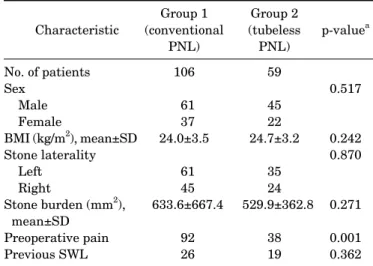
TABLE 1. Demographic and clinical characteristics of groups 1 and 2
Characteristic
Group 1 (conventional
PNL)
Group 2 (tubeless
PNL)
p-valuea
No. of patients Sex
Male Female
BMI (kg/m2), mean±SD Stone laterality Left
Right
Stone burden (mm2), mean±SD
Preoperative pain Previous SWL
106 61 37 24.0±3.5
61 45 633.6±667.4
92 26
59 45 22 24.7±3.2
35 24 529.9±362.8
38 19
0.517
0.242 0.870
0.271 0.001 0.362 PNL, percutaneous nephrolithotomy; BMI, body mass index; SD, standard deviation; SWL, shockwave lithotripsy.
a:Student t-test and chi-square test were used for data analysis.
tube. In a comparison of hospital stay and analgesic use, Nalbant et al. [9] demonstrated that totally tubeless PNL was a proper alternative to standard PNL. Considering the shorter hospital stay, Yun et al. [10] also emphasized that totally tubeless PNL was an effective alternative for the management of renal calculi. Using their experience of 3 years, Shah et al. [11] reported favorable outcomes of tube- less PNL.
However, the studies mentioned above have their limi- tations, and, to the best of our knowledge, no study of the feasibility of tubeless PNL for the management of renal staghorn calculi has been reported. Our study was de- signed to assess the feasibility of tubeless PNL by compar- ison of preoperative and postoperative parameters be- tween conventional and tubeless PNL.
MATERIALS AND METHODS
Approval of the Institutional Review Board of Gachon University Medical Center (Incheon, Korea) was obtained before conduct of this study. A data set of all consecutive patients who underwent conventional or tubeless PNL for the treatment of renal staghorn calculi from 2003 to 2012 in a single center was retrospectively collected. Staghorn calculi were classified as a renal pelvis stone with branch- ing into the major calyx. Also, stone burden was calculated as the surface area according to European Association of Urology guidelines [12]. All operations were performed by a single surgeon (H.J.) with the patient under general anesthesia.
Conventional and tubeless PNL were performed in the manner that we introduced previously [3]. Under general anesthesia, the patient’s position was the lithotomy position. After insertion of an open-ended ureteral stent (6 Fr) via a cystoscope, the patient’s position was changed to the prone position. By use of a fluoroscopic-guided “eye of the needle” technique [13], the affected kidney was punc- tured and an access tract was formed by using balloon dilation. Stone fragmentation was performed by using a lithoclast. In cases of conventional PNL, after removal of the stone, we placed a 24-Fr nephrostomy catheter. In cases of tubeless PNL, we inserted two pieces of Cutanplast (Mascia Brunelli, Italy) via the nephrostomy tract by using fluoroscopy instead of placing a nephrostomy catheter.
After insertion of sealants, we checked for the presence of urinary leakage by infusion of contrast media by using an open-ended ureteral catheter.
We divided the patients into two groups. Group 1 in- cluded patients who underwent conventional PNL per- formed by a single surgeon (H.J.) for the treatment of renal staghorn calculi. Group 2 included patients who under- went tubeless PNL for the management of renal staghorn calculi performed by the same surgeon during the same period.
We compared various preoperative and postoperative parameters between the two groups. The preoperative pa- rameters included age, sex, body mass index, stone later-
ality, and stone burden, and the postoperative variables in- cluded occurrence of complications and interventions and duration of hospital stay. We defined a stone-free state as no visible stones on a computed tomography scan at 1 month postoperatively.
Analyses of parameters of the two groups were per- formed by using an independent Student t-test and chi-square test. A p-value <0.05 were considered as having statistical significance. All statistical analyses were per- formed by using SPSS ver. 12.0 (SPSS Inc., Chicago, IL, USA).
RESULTS
A total of 165 patients were enrolled in our study. Group 1 (n=106) included 61 male patients and 37 female patients. No significant differences in sex were observed between group 2 (n=59) and group 1. Body mass index (±standard deviation) was 24.0±3.5 and 24.7±3.2 kg/m2 in groups 1 and 2, respectively (p=0.24). In the analysis of demographic parameters, no significant differences in stone laterality or stone burden were observed between the two groups. Although no significant difference in stone bur- den was observed between the two groups, the presence of preoperative pain was significantly greater in group 1 than in group 2 (92 vs. 38, p=0.001). Twenty-six patients in group 1 and 19 patients in group 2 underwent SWL before PNL (Table 1).
Table 2 shows various intraoperative and postoperative parameters of both groups. Mean operation times were 208.7±72.1 and 169.9±45.1 minutes in groups 1 and 2, respectively. In group 1, the mean duration of nephrostomy catheter indwelling was 3.55±1.94 days. Although no sig- nificant difference in the stone-free clearance rate was ob- served between the two groups, the mean hospital stay was
Korean J Urol 2013;54:693-696
Tubeless Percutaneous Nephrolithotomy 695
TABLE 2. Analysis of intraoperative and postoperative parameters in groups 1 and 2
Variable Group 1 (conventional PNL) Group 2 (tubeless PNL) p-valuea Operation time (min), mean±SD
Hospital stay (d), mean±SD Presence of remnant stone Stone-free clearance rate (%)
Duration of nephrostomy catheter (d), mean±SD Postoperative complications
Fever Bleeding Wound infection Others
Postoperative additional procedures Stenting
Transfusion Angioembolization Additional treatment Redo PNL
SWL
208.7±72.1 7.08±6.34
32 69.8 3.55±1.94
5 7 1 3 52 10 4 26 4 22
169.9±45.1 5.32±2.37
25 78
13 2 0 2 13 5 1 13 0 13
<0.001 0.012 0.115 0.115
0.010 0.384 0.454 0.841 0.001 0.837 0.455 0.849
PNL, percutaneous nephrolithotomy; SD, standard deviation; SWL, shockwave lithotripsy.
a:Student t-test and chi-square test were used for data analysis.
significantly shorter in group 2 than in group 1 (5.32±2.37 vs. 7.08±6.34 days, p=0.01).
In the analysis of postoperative complications, fever epi- sodes were more frequent in group 2 than in group 1 (13 vs.
5, p=0.01). However, almost all cases of fever in group 2 were due to atelectasis related to the general anesthesia and were easily managed with lung care. No significant dif- ferences in other complications were observed between the two groups.
For management of remnant stones, 26 and 13 patients in group 1 and group 2 underwent reoperation by PNL or SWL, respectively (p=0.849).
DISCUSSION
PNL was first introduced in 1976 by Fernstrom and Johansson [1] However, after several years, extracorporeal SWL was developed as a noninvasive technique for the treatment of renal and ureteral stones. Owing to its in- vasiveness by puncture of the renal parenchyme, post- operative complications after PNL have been reported [14,15]. Because of the noninvasiveness of SWL, many studies have supported the feasibility of SWL as an alter- native to PNL [3,4]. Nonetheless, there is no doubt that PNL is still the standard method for the management of renal staghorn calculi [2,5].
In the process of performance of standard PNL, insertion of a nephrostomy catheter via a working track is inevitable for control of renal parenchymal bleeding and urinary leakage. Unfortunately, indwelling of the nephrostomy catheter is the primary reason for discomfort in patients postoperatively and prolongation of hospital stay.
According to advancements in the technique, many stud- ies have reported on the feasibility of tubeless PNL [16,17].
Considering the length of hospital stay and analgesic use, Nalbant et al. [9] suggested that the tubeless PNL techni- que is more effective than conventional PNL. In addition, in a comparison of the data on conventional and tubeless PNL, Yun et al. [10] supported the same idea. However, the above studies had some limitations owing to small sample sizes and selection of patients.
Shah et al. [11] reported on their 3 years of experience with 454 cases of tubeless PNL. Despite their large samples sizes, their study also had some limitations because com- plicated cases, including those with pyonephrosis, intra- operative bleeding, and incomplete operations, were ex- cluded from the tubeless PNL group.
In our study, the selection of all patients was performed consecutively. Group 1 included 106 patients who under- went conventional PNL from 2003. After the introduction of the tubeless PNL technique, another 59 patients under- went PNL using a tubeless method. All operations were performed by a single surgeon (H.J.). Accordingly, consid- ering the single surgeon and the consecutive enrollment of patients, statistical bias was lower in our study.
Our results showed that tubeless PNL is a feasible and beneficial technique, considering the shorter duration of hospital stay and equal safety, compared with conven- tional PNL. The same number of complications in post- operative bleeding and wound infection were observed in groups 1 and 2. Although a higher incidence of fever was reported in group 2 than in group 1, in almost all cases, the febrile episodes were due to atelectasis related to the gen- eral anesthesia. However, differences in the operation time between the two groups were assumed to be due to the oper- ator’s learning curve according to the accumulation of cases rather than to the excellence of tubeless PNL.
Our study also had some limitations. First, our study was
Korean J Urol 2013;54:693-696
696 Lee et al
conducted retrospectively. However, all data were col- lected prospectively because the patients were enrolled in a consecutive manner. Second, the tubeless PNL group (group 2) did not include patients who underwent the proce- dure by use of a totally tubeless method, which refers to the use of no ureteral stents or nephrostomy catheters. In our study, totally tubeless PNL was applied to approximately two thirds of patients, whereas recent studies have re- ported results using totally tubeless PNL. Nonetheless, be- cause there was no selection bias, our study has some significance.
Considering the weak and strong points of various stud- ies related to tubeless PNL, including our study, the tube- less PNL technique may be a feasible and effective techni- que, compared with conventional PNL, in terms of shorter hospital stay and an equally proven complication rate. Our future study will focus on comparison of the results be- tween tubeless PNL with ureteral stenting and totally tubeless PNL.
CONCLUSIONS
In the current study, our findings showed that tubeless PNL had the same safety and effectiveness as conventional PNL. According to our results, it is highly suggestive that tubeless PNL may be a feasible and safe alternative to con- ventional PNL for proper management of renal staghorn calculi.
CONFLICTS OF INTEREST The authors have nothing to disclose.
ACKNOWLEDGMENTS
This work was supported by the Gachon University re- search fund of 2013 (GCU-2013-M033).
REFERENCES
1. Fernstrom I, Johansson B. Percutaneous pyelolithotomy: a new extraction technique. Scand J Urol Nephrol 1976;10:257-9.
2. Antonelli JA, Pearle MS. Advances in percutaneous nephroli- thotomy. Urol Clin North Am 2013;40:99-113.
3. Kim TB, Lee SC, Kim KH, Jung H, Yoon SJ, Oh JK. The feasibility of shockwave lithotripsy for treating solitary, lower calyceal stones over 1 cm in size. Can Urol Assoc J 2013;7:E156-60.
4. Goktas C, Akca O, Horuz R, Gokhan O, Albayrak S, Sarica K. SWL in lower calyceal calculi: evaluation of the treatment results in children and adults. Urology 2011;78:1402-6.
5. Wen CC, Nakada SY. Treatment selection and outcomes: renal calculi. Urol Clin North Am 2007;34:409-19.
6. Isac W, Rizkala E, Liu X, Noble M, Monga M. Endoscopic-guided versus fluoroscopic-guided renal access for percutaneous neph- rolithotomy: a comparative analysis. Urology 2013;81:251-6.
7. Sivalingam S, Al-Essawi T, Hosking D. Percutaneous nephroli- thotomy with retrograde nephrostomy access: a forgotten techni- que revisited. J Urol 2013;189:1753-6.
8. DasGupta R, Patel A. Percutaneous nephrolithotomy: does posi- tion matter? - prone, supine and variations. Curr Opin Urol 2013;23:164-8.
9. Nalbant I, Ozturk U, Sener NC, Dede O, Bayraktar AM, Imamoglu MA. The comparison of standard and tubeless percutaneous nephrolithotomy procedures. Int Braz J Urol 2012;38:795-800.
10. Yun SI, Lee YH, Kim JS, Cho SR, Kim BS, Kwon JB. Comparative study between standard and totally tubeless percutaneous nephrolithotomy. Korean J Urol 2012;53:785-9.
11. Shah H, Khandkar A, Sodha H, Kharodawala S, Hegde S, Bansal M. Tubeless percutaneous nephrolithotomy: 3 years of experience with 454 patients. BJU Int 2009;104:840-6.
12. Turk C, Knoll T, Petrik A, Sarica K, Seitz C, Straub M, et al.
Guidelines on urolithiasis [Internet]. Arnhem: European Asso- ciation of Urology; c2010 [cited 2013 Apr 8]. Available from:
http://www.uroweb.org/gls/pdf/Urolithiasis%202010.pdf.
13. Ko R, Soucy F, Denstedt JD, Razvi H. Percutaneous nephroli- thotomy made easier: a practical guide, tips and tricks. BJU Int 2008;101:535-9.
14. Tefekli A, Ali Karadag M, Tepeler K, Sari E, Berberoglu Y, Baykal M, et al. Classification of percutaneous nephrolithotomy compli- cations using the modified clavien grading system: looking for a standard. Eur Urol 2008;53:184-90.
15. Michel MS, Trojan L, Rassweiler JJ. Complications in percuta- neous nephrolithotomy. Eur Urol 2007;51:899-906.
16. Crook TJ, Lockyer CR, Keoghane SR, Walmsley BH. Totally tube- less percutaneous nephrolithotomy. J Endourol 2008;22:267-71.
17. Knoll T, Wezel F, Michel MS, Honeck P, Wendt-Nordahl G. Do patients benefit from miniaturized tubeless percutaneous neph- rolithotomy? A comparative prospective study. J Endourol 2010;
24:1075-9.