Received on July 10, 2014. Revised on August 15, 2014. Accepted on September 24, 2014.
CC This is an open access article distributed under the terms of the Creative Commons Attribution Non-Commercial License (http://creativecommons.org/licenses/by-nc/3.0) which permits unrestricted non-commercial use, distribu- tion, and reproduction in any medium, provided the original work is properly cited.
*Corresponding Author. Davar Amani, Department of Immunology, Medical School, Shahid Beheshti University of Medical Sciences, Tehran, Iran. Tel: 98-2122439970; Fax: 98-2122439970; E-mail: [email protected]
Abbreviations: IFN-γ, interferon-gamma; NK cell, natural killer cell; ELISA, enzyme linked immunosorbent assay; Ab, an- tibody; TNF-α, tumour necrosis factor-alpha; BMI, body mass index; IFN-γ, interferon-γ
Effects of Endurance Training on the Serum Levels of Tumour Necrosis Factor-α and Interferon-γ in Sedentary Men
Abdolreza Sotoodeh Jahromi1, Abdossaleh Zar2, Fatemeh Ahmadi3, Peter Krustrup4, Khosrow Ebrahim5, Friborz Hovanloo5 and Davar Amani6*
1Research Center for Non.communicable Diseases, Immunology Department, Jahrom University of Medical Sciences, Jahrom, Iran,
2Department of Physical Education & Sport Science,University of Jahrom, Jahrom, Iran, 3Department of Physical Education & Sport Sciences, Shiraz University, Shiraz, Iran, 4Sport and Health Sciences, College of Life and Environmental Sciences, University of Exeter, Exeter, UK, 5Department of Exercise Physiology, G.C. Shahid Beheshti University, Tehran, Iran, 6Department of Immunology, Medical School, Shahid Beheshti University of Medical Sciences, Tehran, Iran
Physical activity could be considered one of the factors that affect the immune system status and function. To find the re- lation between exercise and cytokines, we examined the pos- sible effects of an 8-week endurance training program on the serum levels of cytokines, including tumour necrosis fac- tor-alpha (TNF-α) and interferon-gamma (IFN-γ) in seden- tary men. A total of 30 healthy young male volunteers were randomly divided into an endurance training group and a con- trol group. The training group followed a specific exercise protocol (running on a treadmill for 15∼30 min at 50∼70%
maximal heart rate) for 8 weeks and the control group did not participate in any exercise program. Venous blood samples were collected from both the groups 24 h before and 24 h and 48 h after the exercise. Repeated ANOVA was used for statistical purposes. The serum levels of TNF-α and IFN-γ were determined by ELISA. Significant (p<0.05) and non-significant (p>0.05) decreases were observed in the serum levels of IFN-γ and TNF-α, respectively, after the 8-week endurance training program. Our findings indicated that an 8-week endurance exercise may affect the serum lev- els of some inflammatory cytokines, suggesting the benefi- cial role of this training protocol in elderly population and people with certain conditions (inflammation of the vertebrae or other inflammatory diseases).
[Immune Network 2014;14(5):255-259]
Keywords: Cytokine, Endurance exercise, IFN-γ, TNF-α
INTRODUCTION
Cytokines are one of the most important products of the im- mune system, which mediate the interactions of the cells in- volved in the immune responses and are secreted by the cells of the innate and acquired immune system, endothelial cells and fat storage cells. There are different types of cytokines, among which interferon-gamma (IFN-γ) and tumour ne- crosis factor-alpha (TNF-α) have fundamental roles (1). IFN- γ plays critical roles in cell-mediated innate and acquired im- munity, and is produced by helper T cells, cytotoxic T cells and natural killer (NK) cells. TNF-α, which is mostly re- leased from the monocytes, macrophages and NK cells, is a major pro-inflammatory cytokine that produces many effects on various cell types and immune responses (2).
It has been recognised that the immune system is affected by different types of psychological and physiological stressors. Physical activity is considered as one of the many factors that affect the immune system status and function (3).
Moreover, various studies have shown that cytokines are pro- duced by a range of physiological stimuli such as intense ex- ercise, stress hormones, oxidative stress and energy crisis (4).
Nowadays, the immune system and its response to endur- ance exercise and activities has become a favourite topic of health and exercise. Moderate and regular exercises increase
Figure 1. Eight-week endurance-training program.
Figure 2. Blood collection times before and after the 8-week exercise.
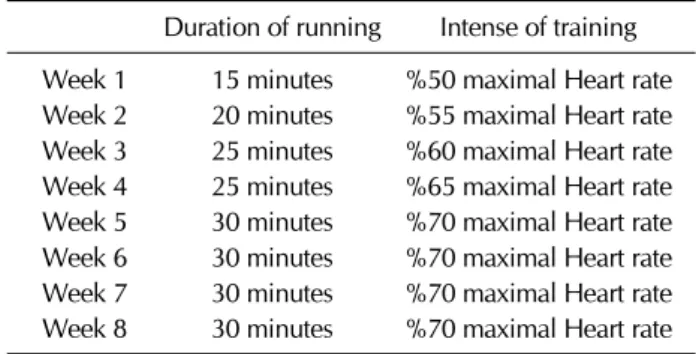
Table I. Duration and intense of training in an 8-week endurance training
Duration of running Intense of training Week 1 15 minutes %50 maximal Heart rate Week 2 20 minutes %55 maximal Heart rate Week 3 25 minutes %60 maximal Heart rate Week 4 25 minutes %65 maximal Heart rate Week 5 30 minutes %70 maximal Heart rate Week 6 30 minutes %70 maximal Heart rate Week 7 30 minutes %70 maximal Heart rate Week 8 30 minutes %70 maximal Heart rate the body's resistance against infections, such as upper respira-
tory tract infection, by enhancing the activity of the immune system. However, it has been observed that the body's resist- ance to infections significantly decreases after an intense exercise. Endurance exercise affects the secretion of pro-in- flammatory cytokines (5). Moreover, many studies have in- dicated that short-term exercise produces different effects on the circulating levels of the pro-inflammatory cytokines, when compared with prolonged exercise (6).
With regard to the beneficial (e.g. reduced risk of car- diovascular disease) and harmful (e.g. implications of asthma mediated through the activity of circulating leukocytes) effects associated with exercise, interests on studies focusing on the relation between the immune response status and exercise are increasing among researchers (7). Exercise or physical ac- tivity, based on the type, intensity, duration and various phys- ical conditions, induces different effects on various factors of the immune system (8). Hence, the aim of this study was to investigate the effects of an 8-week endurance activity on the serum levels of IFN-γ and TNF-α in sedentary men.
MATERIALS AND METHODS Subjects
A total of 28 healthy young men, aged 18∼24 years, were randomly divided into two groups, namely, endurance train- ing group (ET group, n=15) and control group (C group, n=13). Subjects with a history of heart disease, hypertension, diabetes, smoking and use of drugs were excluded from the study. Furthermore, the subjects were asked not to participate in any activities except the training program during the study period.
Research design and exercise program
The subjects belonging to the ET group underwent an 8-week
endurance training program followed by a recovery period (Fig. 1) (9). In brief, the subjects exercised on a treadmill three times a week for 8 weeks. Their running on the tread- mill lasted for 15∼30 min at 50∼70% maximal heart rate.
Venous blood samples were collected 24 h before and 24 and 48 h after the exercise.
Anthropometric characteristics, including height, weight and body mass index (BMI) of all the participants, were measured using standard procedure before the beginning of the study, and resting blood samples were collected for cytokine assessment. In detail, 24 h before the beginning of the train- ing program and after a 10-h fasting period at 10:00 am, all the participants were asked to remain seated for 10 min, and first blood samples were collected. Subsequently, second and third blood samples were collected 24 h and 48 h after recov- ery (end of the exercise training program) (Fig. 2). All the participants were allowed to warm up for 5 min, and then they started to run on the treadmill (Table I).
Maximal heart rate
The heart rates of all the participants were recorded for the
Figure 3. TNF-α serum level pre-exercise, 24 h and 48 h post exer- cise. Open bars, exercisers; solid bars, controls.
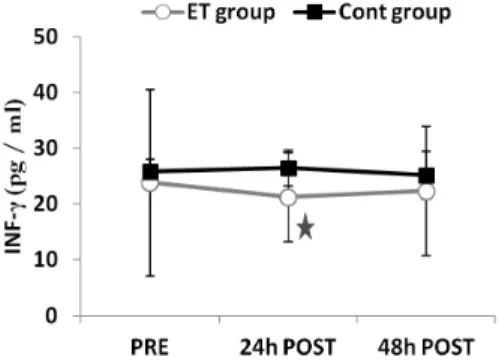
Figure 4. IFN-γ serum level pre-exercise, 24 h and 48 h post exer- cise. Open bars, exercisers; solid bars, controls. *Significant diffe- rence comparing pre-exercise value (p<0.05).
maximal heart rate calculation using Karvonen method (10) as follows:
HRtarget=% Intensity(HRmax−HRrest)+HRrest
Cytokine concentrations tests
During each blood sampling, 2 ml of blood sample were col- lected from the brachial vein. The separated sera were tested using commercial ELISA kits for the measurement of serum cytokine concentrations.
For each blood sampling, 2 ml of blood sample was taken from the brachial vein. Separated sera were tested using com- mercial ELISA kits for measurement of serum cytokine concentrations.
Serum TNF-α was measured by commercial ELISA kit (Bendermedsystems, Austria: Cat. No. BMF 223) follows com- pany instruction. It is based on the direct sandwich technique with biotin-Streptavidin, in which two monoclonal antibodies (Ab) are directed against human TNF-α. Human TNF- pres- ent in the sample or standard binds to antibodies adsorbed to the microwells. A biotinconjugated anti-human TNF- Ab is added and binds to human TNF- captured by the first Ab.
Following incubation unbound biotin-conjugated anti-human TNF- Ab is removed during a wash step. Streptavidin-HRP is added and binds to the biotin-conjugated anti-human TNF- Ab. Following incubation unbound Streptavidin-HRP is re- moved during a wash step, and substrate solution reactive with HRP is added to the wells. A coloured product is formed in proportion to the amount of human TNF- present in the sample or standard. The reaction is terminated by addition of acid and absorbance is measured at 450 nm. A standard curve is prepared from 7 human TNF- standard dilutions and human TNF- sample concentration determined.
Serum IFN-γ was measured by ELISA (Bendermedsystems, Austria: Cat. No. BMS279INST), According to company in- struction as the same method for serum TNF-α.
Statistical analysis
For data analysis, one-way ANOVA with repeated measures test was employed using SPSS-12. The measurements were considered as statistically significant if p<0.05. All the values were expressed as mean and standard deviation.
RESULTS Subjects
There was no significant difference in the baseline character- istics, including age and BMI, between the ET group (21.1±
1.8 years and 21.2±2.4 kg/m2, respectively) and C group (19.3±1.2 years and 20.5±2.2 kg/m2, respectively) (p>0.05).
Cytokine response to exercise
The serum levels of the inflammatory cytokines IFN-γ and TNF-α decreased after the 8-week endurance training program. However, the reduction in the TNF-α level, when compared with the pre-exercise levels, was not statistically significant (p>0.05) (Fig. 3), whereas a significant decrease in the serum IFN-γ level was noted after the 8-week endur- ance training program (p<0.05) (Fig. 4).
DISCUSSION
There are only limited reports on the effects of low-intensity and low-duration aerobic exercise on inflammatory cytokines.
The present study is the first to indicate the influence of
low-intensity and low-duration exercise on the serum levels of inflammatory cytokines, including TNF-α and IFN-γ, and it was observed that an 8-week endurance training program could result in a non-significant decrease in the TNF-α level.
Previous studies on the effect of exercise on inflammation showed controversial results. Conraads reported that a combi- nation of endurance and resistance exercises did not affect the plasma levels of TNF-α (11). However, Ryan demon- strated that weight loss and exercise program (aerobic+re- sistance) decreased the concentrations of TNF-α (12).
Furthermore, an increase in the plasma and urinary concen- trations of TNF-α after exercise (13) and up to 72 h post-ex- ercise (8) has also been reported. In agreement with the find- ings of the present study, many previous studies have re- ported that the TNF-α level decreased after physical activities and exercises (14,15). Nevertheless, there are several reports demonstrating significant increases in the TNF-α level after exercise (3,16). In addition, it has been indicated that the sport field can affect the changes in the level of TNF-α (17).
Some studies have shown that the presence of high levels of TNF-α for longer duration could cause tissue damage and some complications, whereas low levels of TNF-α may con- tribute to tissue repair (18). In addition, high concentrations of TNF-α may produce negative effects on heart function (19). Therefore, the endurance training program may be use- ful for people with high levels of TNF-α.
The results of the present study showed significant de- creases in the serum IFN-γ concentration following the 8-week endurance training program. This finding is in agree- ment with those reported in previous studies, which demon- strated a decreased level of IFN-γ after physical activity and exercise program (20,21). However, the results of several studies are in contrast to our findings. Some investigators re- ported a significant increase in the IFN-γ level after exercise (9,16). Heesen reported that the TNF-α and IFN-γ plasma levels increased after an intensive exercise with bicycle ergo metre (9), while Suzuki showed that the concentrations of IFN-γ and TNF-α did not alter after a marathon match (14).
Moreover, several studies have reported that the production of IFN-γ from T cells is inhibited by cortisol and epi- nephrine, which are increased in response to exercise (22).
Therefore, this mechanism may be responsible for the de- crease in the IFN-γ levels, observed in the present study and previous studies (3).
The response of cytokines to exercise is complex and re- lated to the intensity of the exercise, training conditions, loca-
tion of cytokine measurement (e.g. tissue, plasma or urine) and specificity and sensitivity of the methods of measure- ment. Furthermore, the duration of the time between exercise and cytokine response may differ depending on the type of cytokines (8). As we could not find any other studies with a research design similar to that employed in the present study, it is necessary to distinctly examine the effects of each type of exercise on the immune system.
In summary, the results of the present study revealed that 8 weeks of aerobic exercise with low to medium intensity and duration could affect the production of inflammatory cy- tokines such as IFN-γ and TNF-α.
ACKNOWLEDGEMENTS
Author thank to the subjects for their participation to this study.
CONFLICTS OF INTEREST
The authors have no financial conflict of interest.
REFERENCES
1. Koch, A. J. 2010. Immune Response to Exercise. Braz. J.
Biomotricity 4: 92-103.
2. Abbas, A. K., and S. Pillai. 2007. Cellular and Molecular Immunology. Publisher: Elsevier Science, 6th Edition. p.
212-229.
3. Nieman, D. C., J. M. Davis, D. A. Henson, J.
Walberg-Rankin, M. Shute, C. L. Dumke, A. C. Utter, D. M.
Vinci, J. A. Carson, A. Brown, W. J. Lee, S. R. McAnulty, and L. S. McAnulty. 2003. Carbohydrate ingestion influences skeletal muscle cytokine mRNA and plasma cytokine levels after a 3-h run. J. Appl. Physiol (1985.) 94: 1917-1925.
4. Peake, J. M., K. Suzuki, M. Hordern, G. Wilson, K. Nosaka, and J. S. Coombes. 2005. Plasma cytokine changes in relation to exercise intensity and muscle damage. Eur. J. Appl.
Physiol. 95: 514-521.
5. Ostrowski, K., T. Rohde, S. Asp, P. Schjerling, and B. K.
Pedersen. 1999. Pro- and anti-inflammatory cytokine balance in strenuous exercise in humans. J. Physiol. 515: 287-291.
6. Bruunsgaard, H., and B. K. Pedersen. 2000. Special feature for the Olympics: effects of exercise on the immune system:
effects of exercise on the immune system in the elderly population. Immunol. Cell Biol. 78: 523-531.
7. Radom-Aizik, S., F. Zaldivar, Jr., S. Y. Leu, P. Galassetti, and D. M. Cooper. 2008. Effects of 30 min of aerobic exercise on gene expression in human neutrophils. J. Appl. Physiol (1985.) 104: 236-243.
8. Pedersen, B. K., and M. Febbraio. 2005. Muscle-derived in- terleukin-6--a possible link between skeletal muscle, adipose
tissue, liver, and brain. Brain Behav. Immun. 19: 371-376.
9. Heesen, C., S. M. Gold, S. Hartmann, M. Mladek, R. Reer, K. M. Braumann, K. Wiedemann, and K. H. Schulz. 2003.
Endocrine and cytokine responses to standardized physical stress in multiple sclerosis. Brain Behav. Immun. 17: 473-481.
10. Hovanloo, F. K., and A. Zar. 2009. The effect of exercise with low and high intensity on respiratory burst activities and neutrophils counts. Hormozgan Med. J. 13: 253-259.
11. Conraads, V. M., P. Beckers, J. Bosmans, L. S. De Clerck, W. J. Stevens, C. J. Vrints, and D. L. Brutsaert. 2002.
Combined endurance/resistance training reduces plasma TNF-alpha receptor levels in patients with chronic heart fail- ure and coronary artery disease. Eur. Heart J. 23: 1854-1860.
12. Ryan, A. S., and B. J. Nicklas. 2004. Reductions in plasma cytokine levels with weight loss improve insulin sensitivity in overweight and obese postmenopausal women. Diabetes Care 27: 1699-1705.
13. Moldoveanu, A. I., R. J. Shephard, and P. N. Shek. 2001.
The cytokine response to physical activity and training. Sports Med. 31: 115-144.
14. Suzuki, K., M. Yamada, S. Kurakake, N. Okamura, K.
Yamaya, Q. Liu, S. Kudoh, K. Kowatari, S. Nakaji, and K.
Sugawara. 2000. Circulating cytokines and hormones with im- munosuppressive but neutrophil-priming potentials rise after endurance exercise in humans. Eur. J. Appl. Physiol 81:
281-287.
15. Ross, M. L., S. L. Halson, K. Suzuki, A. Garnham, J. A.
Hawley, D. Cameron-Smith, and J. M. Peake. 2010. Cytokine responses to carbohydrate ingestion during recovery from ex- ercise-induced muscle injury. J. Interferon Cytokine Res. 30:
329-337.
16. Sugama, K., K. Suzuki, K. Yoshitani, K. Shiraishi, and T.
Kometani. 2013. Urinary excretion of cytokines versus their plasma levels after endurance exercise. Exerc. Immunol. Rev.
19: 29-48.
17. Rosa, J. S., S. Heydari, S. R. Oliver, R. L. Flores, A. M.
Pontello, M. Ibardolaza, and P. R. Galassetti. 2011.
Inflammatory cytokine profiles during exercise in obese, dia- betic, and healthy children. J. Clin. Res. Pediatr. Endocrinol.
3: 115-121.
18. Giamarellos-Bourboulis, E. J., C. Routsi, D. Plachouras, V.
Markaki, M. Raftogiannis, D. Zervakis, V. Koussoulas, S.
Orfanos, A. Kotanidou, A. Armaganidis, C. Roussos, and H.
Giamarellou. 2006. Early apoptosis of blood monocytes in the septic host: is it a mechanism of protection in the event of septic shock? Crit. Care 10: R76.
19. Lowe, G. D. 2005. Circulating inflammatory markers and risks of cardiovascular and non-cardiovascular disease. J. Thromb.
Haemost. 3: 1618-1627.
20. Smith, J. K., R. Dykes, J. E. Douglas, G. Krishnaswamy, and S. Berk. 1999. Long-term exercise and atherogenic activity of blood mononuclear cells in persons at risk of developing is- chemic heart disease. JAMA 281: 1722-1727.
21. Lancaster, G. I., Q. Khan, P. T. Drysdale, F. Wallace, A. E.
Jeukendrup, M. T. Drayson, and M. Gleeson. 2005. Effect of prolonged exercise and carbohydrate ingestion on type 1 and type 2 T lymphocyte distribution and intracellular cytokine production in humans. J. Appl. Physiol (1985.) 98: 565-571.
22. Franchimont, D., J. Galon, M. Gadina, R. Visconti, Y. Zhou, M. Aringer, D. M. Frucht, G. P. Chrousos, and J. J. O'Shea.
2000. Inhibition of Th1 immune response by glucocorticoids:
dexamethasone selectively inhibits IL-12-induced Stat4 phos- phorylation in T lymphocytes. J. Immunol. 164: 1768-1774.