경락경혈학회지 Vol.28, No.3, pp.233 244, 2011∼ Korean Journal of Acupuncture
Dong-Wha Lee , Mi-Sook Shin Daegu Jin Oriental Clinic
Dept. of Oriental Rehabilitation Medicine, School of Korean Medicine, Pusan National University
Abstract
Objectives : To evaluate the effectiveness of direct moxibustion in patients with failed back surgery syndrome (FBSS).
Methods : 5 patients (3 females and 2 males) with FBSS underwent direct moxibustion on ouch points (阿是穴) for 10 to 15 weeks (once a week). The effectiveness of the treatment was evaluated with NRS (numerical rating scale), ODI (Oswestry disability index), BDI (Beck depression inventory) score, SF-36 (short form 36 health survey) score and PSQI (Pittsburgh sleep quality index) before and after the treatment.
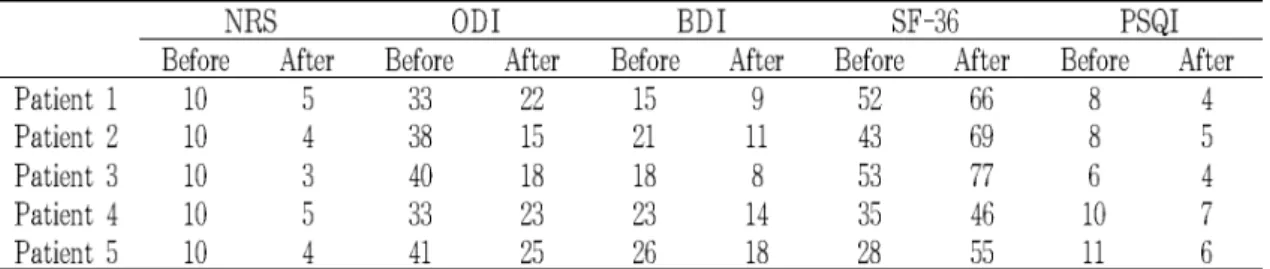
Results : Within observation period, average value changed from 10.0 to 4.2 in NRS of pain, from 37.0 to 20.6 in ODI, from 20.6 to 12.0 in BDI score, 42.2 to 62.6 in SF-36 score, and from 8.6 to 5.2 in PSQI.
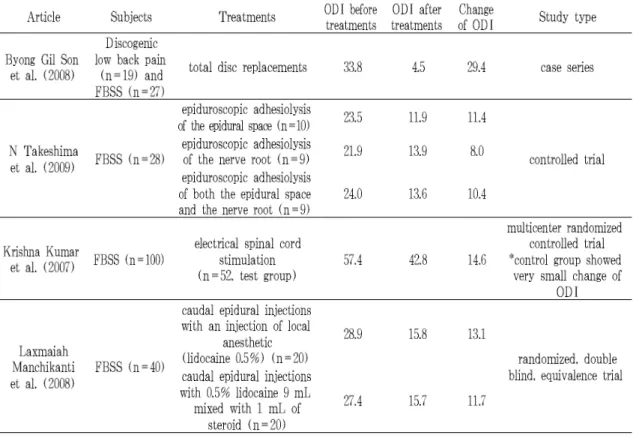
Conclusions : Direct moxibustion on FBSS patients showed more or equivalent effectiveness when compared to conventional FBSS treatment modalities.
Key words : failed back surgery syndrome, ouch point, meridian sinew, direct moxibustion, back pain, radiating pain
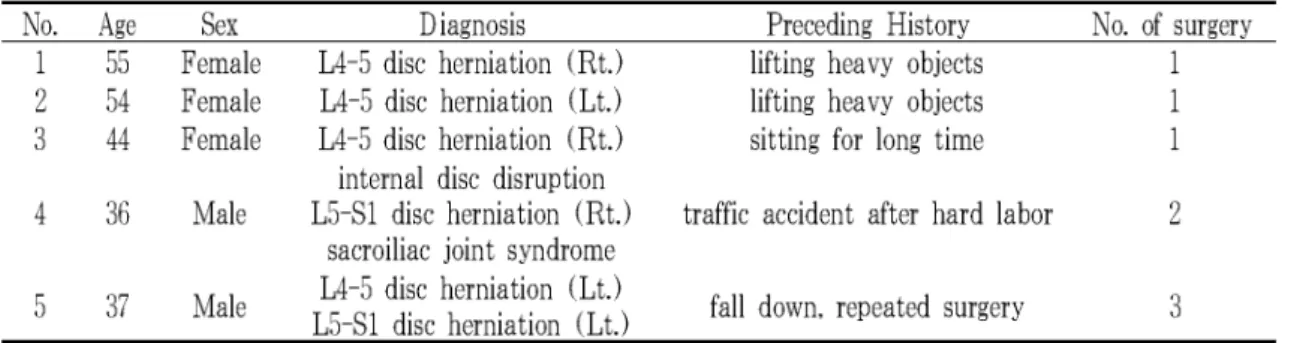
Table 1. General Characteristics of Subjects
Fig. 1. Moxa size and ignition method used for the present study.
Fig. 2. Target area and points of the direct moxibustion therapy.
Table 2. Changes of Clinical Indices before and after the Direct Moxibustion Treatment
Fig. 3. Pain levels before and after the direct
moxibustion therapy. Fig. 4. Disability levels of daily life before and after the direct moxibustion therapy.
Fig. 5. Depression levels before and after the direct moxibustion therapy.
Fig. 6. Overall health levels before and after the direct moxibustion therapy.
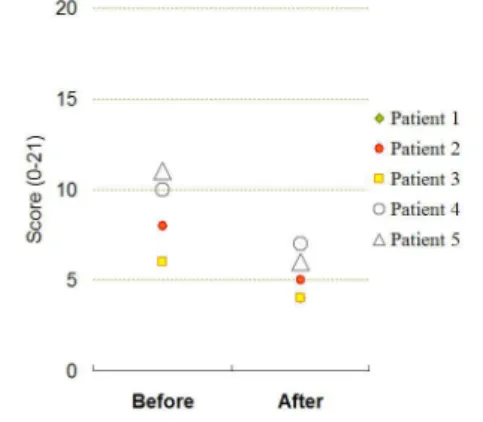
Fig. 7. Insomnia levels before and after the direct moxibustion therapy.
Table 3. A Comparison of Therapeutic Effects of Various Treatment Methods on FBSS Showed in Some Recent Noticeable Articles in Terms of Oswetry Disability Index (ODI)