Korean J Endocrine Surg 2013;13:227-233
Endocrine Surgery
Surgical Outcomes of Robotic MRND versus Conventional Open MRND for Papillary Thyroid Carcinoma with Lateral Neck Node Metastasis: Comparative Analysis using Propensity Score Matching
Kwang Hyun Yoon, Won Woong Kim, Ji Young Yoo, Eun Jeong Ban, Hai Young Son, Sang-Wook Kang, Jong Ju Jeong, Kee-Hyun Nam, Woong Youn Chung, Cheong Soo Park
Department of Surgery, Yonsei University College of Medicine, Seoul, Korea
Purpose: During the past decade, various endoscopic thyroid surgeries have been conducted, each with its own benefits. The incorporation of robotic systems to endoscopic thyroid surgery has improved the visualization and precision of endoscopic techniques. We previously reported our initial experience with robotic modified radical neck dissection (MRND) of papillary thyroid carcinoma (PTC) with lateral neck node metastasis (LNM). The aim of this study was to compare surgical outcomes of robotic vs. conventional open MRND of PTC with LNM using propensity score matching.
Methods: From January 2008 to February 2011, 515 patients with PTC with LNM were enrolled. One hundred patients underwent robotic MRND, and 415 patients underwent conventional open MRND. These two groups were retrospectively compared with respect to their clinicopathological characteristics, surgical outcomes, and surgical completeness.
Furthermore, to avoid selection bias, propensity score matching analysis was used to compare surgical outcomes of each group without any compounding factors.
Results: The operative time for the robotic MRND was longer than for the open MRND (297.9±60.2 min vs. 212.1±55.6 min, P=0.089). However, the mean numbers of retrieved lymph nodes and mean hospital stay after surgery were similar in the two groups (36.0±12.9 vs. 40.8±13.3, P=0.235), (6.1±1.6 days vs. 6.1±2.1 days, P=0.577). The complication rates were similar between the two groups, and there was no statistical difference in postoperative thyroglobulin levels between groups (0.51±0.83 ng/ml vs. 0.89±2.46 ng/ml, P=0.593).
Conclusion: According to our study, robotic MRND shows similar surgical outcomes to conventional open MRND after case-matched analyses. We suggest that robotic MRND is an acceptable alternative as an operative method for PTC with LNM, resulting in excellent cosmesis and patient satisfaction.
Key Words: Papillary thyroid carcinoma, Lateral neck metastasis, Radical neck dissection, Robot surgery
Received October 4, 2013, Revised November 4, 2013, Accepted November 5, 2013 Correspondence: Sang-Wook Kang Department of Surgery, Yonsei University College of Medicine, 250 Seongsanno, Seodaemun-gu, Seoul 120-752, Korea Tel: +82-2-2228-2100
Fax: +82-2-313-8289 E-mail: [email protected]
Copyright © 2013 Korean Association of Thyroid and Endocrine Surgeons; KATES. All Rights Reserved.
cc This is an Open Access article distributed under the terms of the Creative Commons Attribution Non-Commercial License (http://creativecommons.org/licenses/by-nc/3.0) which permits unrestricted non-commercial use, distribution, and reproduction in any medium, provided the original work is properly cited.
INTRODUCTION
Over the last decade, improvements in socio-economic status have increased the interest in health and quality of
life. In accordance with this trend, medicine has also quickly developed, and humans have not only extended their life expectancy but have also improved their quality of life with medical treatments. Furthermore, people want
better conditions for treating diseases, reducing pain during therapies, reducing complications, and shortening therapy periods.
Accordingly, many medical and surgical therapies have been modified based on quality of life-associated factors, such as postoperative pain, morbidity, length of hospi- talization, cosmesis, and a return to full activity. In accordance with these concepts, minimally invasive surgery has rapidly developed in various surgical fields.
Papillary thyroid carcinoma (PTC) is a common cancer and is often seen in young women. PTC usually has a favorable prognosis, but it can frequently metastasize to local lymph nodes (LNs). In cases of lateral neck node metastasis (LNM) from PTC, total thyroidectomy with modified radical neck dissection (MRND) is the treatment of choice.(1) Conventional open MRND is the safest and most efficient approach. However, patients are interested not only in the treatment of this disease but also their post-operative quality of life, such as operative scarring and degree of pain. Accordingly, we previously applied endoscopic techniques to thyroidectomy and MRND procedures for PTC with LNM.(2) The use of robotics in thyroidectomy and MRND offers many advantages due to the dexterity of robotic systems.(3-6)
We previously reported our experiences with robotic MRND and its technical feasibility in PTC patients.(7) In this study, we will compare surgical outcomes of a robotic MRND patient group and an open MRND patient group by case-matching analyses.
METHODS
Between January 2008 and February 2011, a total of 515 patients underwent bilateral total thyroidectomy with central compartment neck dissection (CCND) and additional MRND in the Department of Surgery of Yonsei University Medical Center.
Of these 515 patients, 415 underwent conventional open thyroidectomy with MRND (the open group, OG) and 100 patients underwent robotic thyroidectomy with MRND (the robotic group, RG). The surgical outcomes of the two groups were compared and analyzed. To reduce
the impact of treatment selection bias and potential confounding on this comparative study, we performed rigorous adjustments for significant differences in baseline characteristics of patients by propensity score matching.
The propensity score was defined as the probability of being assigned to a given surgical group based on patient baseline clinical findings and tumor characteristics. We chose the 90% level to allow adequate power for subgroup analysis at a significance level of 0.05 in this retrospective study. Propensity score matching was employed to match characteristics, such as age, sex, T-size, multiplicity, capsular invasion, and stage for 73 patients from each group. After propensity score matching, the baseline covariates of the two groups were compared.
Pre-operative diagnoses of thyroid nodules were made by ultrasonographic-guided fine needle aspiration biopsy (FNAB) and neck computed tomography.(8) In cases of palpable lateral neck nodes or suspected spread in a preoperative image study among well-differentiated PTC patients, FNAB was conducted again. LNM was verified by histological diagnosis through FNAB or thyroglobulin (Tg) levels in the FNAB washout fluid (FNA-Tg>10 ng/ml, > mean+2SD of FNA-Tg measured in node-negative patients, or >serum-Tg) from lateral neck LNs.(9) At our institution, level IIB and VA LNs are not routinely dissected.(10,11) However, excision is conducted for cases that are suspect- ed of level IIB and VA LNs. The eligibility criteria for robotic MRND were: (1) well-differentiated thyroid carcinoma with clinical LNM (cases with one or two minimal metastatic LNs in the lateral neck), (2) tumor size ≤4 cm, and (3) minimal invasion into the anterior thyroid capsule and strap muscle.
The exclusion criteria were: (1) definite tumor invasion to an adjacent organ [recurrent laryngeal nerve (RLN), esophagus, or trachea] and (2) multilevel LN metastases in the lateral neck or perinodal infiltration at a metastatic LN. Robotic thyroidectomy was possible for MRND among PTC patients with LNM, and either open or robotic surgery was performed by patient request. All patients were admi- nistered levothyroxine for thyroid-stimulating hormone (TSH) suppression and underwent radioactive iodine (RAI) therapy 8∼12 weeks after surgery. Serum levels of Tg and neck ultrasound were regularly checked during follow-up.
Table 1. Clinicopathological characteristics of the patients in the two study groups
Open (n=415) Robot (n=100) P value
Age, years 45.8±13.4 36.6±10.0 0.000
Sex (M:F [F%]) 93:322 (77.6%) 21:79 (79%) 0.871
Tumor size, cm 1.45±0.87 1.16±0.60 0.000
Multiplicity 220 (53.0%) 49 (49%) 0.418
Extrathyroidal invasion, n (%) 163 (39.3%) 26 (26%) 0.013
Stage I/IV, n (%) 206 (49.6%)/209 (50.4%) 75 (75%)/25 (25%)
1) Conventional open MRND procedure
The operative technique was explained previously.(7) Briefly, the patient is placed in the supine position with a soft pillow under the shoulders to extend the neck slightly.
A 10∼12-cm standard collar incision is then made approximately two finger-breadths above the sternal notch, and a sub-platysmal flap is dissected from the sternal notch inferiorly, to the thyroid cartilage superiorly, to the contralateral-medial border of the sternocleido- mastoid (SCM) muscle medially, and to the trapezius muscle laterally. The clavicular head of the SCM muscle is partially (1/3) divided at the level of its attachment to the clavicle to expose the deepest point of the level IV area optimally, and the external jugular vein is ligated at the medial crossing point of the SCM muscle. After total thyroidectomy with CCND, the patient’s head is turned to the opposite side of the lesion to better expose the lateral neck area. The plane between the SCM muscle and the strap muscles is then opened by dissecting the entire medial border of the SCM muscle with lateral traction. The omohyoid muscle is identified, encircled, dissected superiorly and laterally, and excised, thereby exposing the internal jugular vein (IJV) and the common carotid artery (CCA). Care must be taken during the detachment of the LN from the posterior aspect of the IJV to avoid CCA, vagus nerve, or sympathetic nerve chain injury. LN peeling of the IJV begins from upper level III and goes to lower level IV.
After clearing the level IV area, the LNs in the supra- clavicular area are detached from the subclavian vein.
Dissection then follows the surface of the deep layer of the deep cervical fascia while avoiding injury to the lymphatic ducts and the phrenic nerve. The transverse cervical vessels are then identified and preserved, and the external jugular vein is ligated at the inlet to the subclavian vein.
Dissection proceeds upward along the anterior border of the trapezius muscle, while preserving the spinal accessory nerve. After completing level III, IV, and VB node dissec- tions, a level IIA dissection is continued to the posterior belly of the digastric muscle and the submandibular gland superiorly. After specimen delivery, a 3-mm closed suction drain is inserted and placed in the lateral neck compart- ments.
2) Robotic MRND procedure
The operative technique was explained previou- sly.(7,12) Briefly, patients were placed in the supine position while under general anesthesia. The neck was slightly extended, and the lesion-side arm was abducted to expose the lateral neck. A 7∼8-cm vertical skin incision was made in the axilla along the anterior axillary fold. A sub-platysmal dissection was made to the midline of the anterior neck, the submandibular gland superiorly, and the trapezius muscle posteriorly. The clavicular head of the SCM was then divided at the level of its attachment to the clavicle to expose the jugular chain. A long, wide retractor blade is then inserted through the axillary incision to elevate the two heads of the SCM and strap muscles. A total thyroidectomy with CCND is performed in the same manner as a double incision thyroidectomy.(4) After fini- shing the level III, IV, and VB node dissections, redocking is required to provide a better view for level II LN dissection.
After delivering the specimen, a 3-mm closed suction drain is inserted as described above for open thyroidectomy.
Finally, the wound is closed cosmetically.
RESULTS
Unadjusted data before matching are summarized in Table 1. The mean age of the patients in the OG was
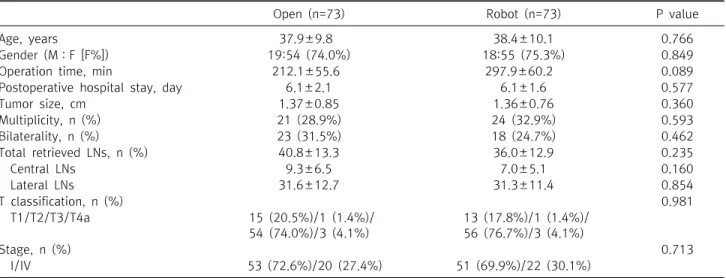
Table 2. Clinicopathological characteristics of the patients in the two study groups after case matching
Open (n=73) Robot (n=73) P value
Age, years 37.9±9.8 38.4±10.1 0.766
Gender (M:F [F%]) 19:54 (74.0%) 18:55 (75.3%) 0.849
Operation time, min 212.1±55.6 297.9±60.2 0.089
Postoperative hospital stay, day 6.1±2.1 6.1±1.6 0.577
Tumor size, cm 1.37±0.85 1.36±0.76 0.360
Multiplicity, n (%) 21 (28.9%) 24 (32.9%) 0.593
Bilaterality, n (%) 23 (31.5%) 18 (24.7%) 0.462
Total retrieved LNs, n (%) 40.8±13.3 36.0±12.9 0.235
Central LNs 9.3±6.5 7.0±5.1 0.160
Lateral LNs 31.6±12.7 31.3±11.4 0.854
T classification, n (%) 0.981
T1/T2/T3/T4a 15 (20.5%)/1 (1.4%)/
54 (74.0%)/3 (4.1%)
13 (17.8%)/1 (1.4%)/
56 (76.7%)/3 (4.1%)
Stage, n (%) 0.713
I/IV 53 (72.6%)/20 (27.4%) 51 (69.9%)/22 (30.1%)
Table 3. Comparison of perioperative complications after case matching
Open (n=73) Robot (n=73) P value
Transient hypocalcemia, n (%) 38 (52.1%) 35 (48.0%) 0.741
Permanent hypocalcemia, n (%) 0 0
Transient hoarseness, n (%) 0 3 (4.1%) 0.245
Recurrent laryngeal nerve injury, n (%) 0 0
Seroma, n (%) 5 (6.8%) 7 (9.6%) 0.765
Hematoma formation, n (%)
Conservative manage 1 (1.4%) 0
Reoperation 0 1 (1.4%)
Chyle leakage, n (%) 4 (5.5%) 4 (5.5%) 1
Honor’s syndrome, n (%) 0 0
Wound infection, n (%) 0 0
Vagus nerve injury, n (%) 0 0
RLN sacrifice d/t cancer invasion, n (%) 1 (1.4%) 1 (1.4%) 1
45.8±13.4 years and 36.6±10.0 years in the RG. The male to female ratio in the OG was 77.6% (93:322) and was 79%
(21:79) in the RG. The mean tumor size in the OG was 1.45±0.87 cm and 1.16±0.60 cm in the RG. The extrathyroidal invasion rate was smaller in the RG than in the OG [163 (39.3%) vs. 26 (26%), P=0.013]. The clinico- pathological characteristics of the two groups were not significantly different.
After case matching, clinicopathological characteristics of the two groups were obtained and are given in Table 2.
The two groups were similar in terms of age, gender, postoperative hospital day, tumor size, and retrieved LNs.
The mean ages of the patients were 37.9±9.8 years in the RG and 38.4±10.1 years in the OG. The male-to-female gender ratios were 19:54 in the RG and 18:55 in the OG.
Mean total operating time was longer in the RG than in the OG (297.9±60.2 min vs. 212.1±55.6 min). The mean postoperative hospital stay was 6.1±2.1 days in the RG and 6.1±1.6 days in the OG. The mean tumor size was 1.37±0.85 cm in the RG and 1.36±0.76 cm in the OG. The mean total number of LNs retrieved was 40.8±13.3 in the RG and 36.0±12.9 in the OG.
The post-operative complications of both groups are shown in Table 3. Transient hypocalcemia was found in 48% (35/73) of the RG and 52% (38/73) of the OG. No cases of permanent hypocalcemia, RLN injury, or Horner’s syndrome were encountered. One patient in the RG (1.4%) experienced postoperative bleeding that required another surgery. All cases of chyle leakage were minor and successfully managed conservatively (external gauze
Table 4. Comparisons of surgical completeness in the two study groups after case matching
Open Robot P value
Recurrence at follow up ultrasound (postoperative 1 year later), n 0/44 0/34 Postoperative serum Tg (ng/ml), n
Tg>1 ng/ml, n (%)
0.89±2.46 6 (8.2%)
0.51±0.83 5 (6.8%)
0.593
Abnormal uptake in RAI scan, n 0/73 0/73
Tg = thyroglobulin.
packing around the level IV area and a low-fat diet).
One-year follow-up ultrasonographic results are shown Table 4. There was no recurrence in either group.
Postoperative serum Tg levels were checked 6 months postoperatively and found to have been maintained at low levels. Mean Tg levels were not significantly different between the two groups.
DISCUSSION
Papillary thyroid carcinoma, PTC−the most common type of well differentiated thyroid cancer−usually adopts a mild biologic course, but nevertheless, it frequently metastasizes to local LNs. In cases of lateral LNM from PTC, bilateral total thyroidectomy with MRND for affected lateral neck nodes is the treatment of choice.(1) However, although conventional open MRND is the safest and most efficient type of surgical treatment, a long incision scar on the neck is inevitable. In view of the favorable nature and high prevalence of PTC in women, the avoidance of unsightly scarring in the neck area necessitates minimally invasive and remote approaches to lateral neck dissection.(1,2) In terms of minimally invasive surgery to the thyroid gland, the first report was issued on endoscopic thyroidectomy by Hüscher et al. in 1997.(13) Subsequently, various types of minimally invasive and endoscopic surgical techniques were introduced for the thyroid gland.(14-17) However, endoscopic thyroidectomy has some limitations: 1) the operative view is unstable because surgeons tend to rely on assistants (rotating residents, interns, etc.) to hold scopes, 2) it is difficult to perform a sharp dissection around the recurrent laryngeal nerve or in the Berry ligament region with endoscopic instruments, and 3) the straight and relatively unsophisticated design of endoscopic instru- ments makes it difficult to perform meticulous LN dissec-
tion in deep, narrow areas or in regions with an angled approach.(3,6) In the late 20th century, dexterous robotic technology with computer enhanced, master-servant telemanipulator systems was introduced to the surgical field. The use of surgical robotic systems has enabled surgeons to overcome the above-mentioned shortcomings of endoscopic thyroidectomy by providing magnified 3-D images and allowing greater dexterity and more accurate instrument movements, for example, by hand-tremor filtering and motion scaling, and by enabling fine move- ments,(18-20) Furthermore, the camera and instruments are completely controlled by the surgeon. These advan- tages are particularly useful when the operative field is deep and narrow, and when sharp dissection is need- ed.(21-23) Accordingly, we applied endoscopic techni- ques to thyroidectomy and MRND procedures in PTC patients with LNM. Furthermore, the incorporation of dexterous robotic technology during neck surgery enables more precise and meticulous endoscopic movement during the complex procedure required for MRND.
Recently, a robotic MRND technique for thyroid cancer with LNM was introduced and produces excellent cosmetic results. In addition, both the technical feasibility and safety of robotic MRND have been reported, and the technique has been found to be capable of complete compartment-oriented dissection.(7)
After attaining sufficient experience to show the technique’s safety and feasibility, we tried to show the oncologic safety of robotic MRND by comparing surgical outcomes of robotic vs. open MRND procedures. To minimize bias, we matched age, sex, T-size, multiplicity, and capsular invasion in the RG and OG using propensity scoring matching. Robotic surgery was found to take longer than the open method, because robotic surgery is composed of three steps: making a working space between
the incision and surgical sites, docking and instrumen- tation, and conducting the actual surgery.(3-6) With more experience, it is expected that the differences between the two groups will gradually decrease. However in terms of the postoperative hospital stay, total retrieved LNs, and tumor stage, large differences between the two groups were not found. After comparing complications and oncologic outcomes, there were no substantial differences between the two groups. Many surgeons worry that minimally invasive surgery must be applied to patients with early PTC and that it will be applied to patients with locally advanced PTC with LNM. However, based on our ex- perience, we are achieving treatment records similar to conventional open MRND without complications.
No significant differences were found between the two groups in terms of total retrieved LNs, tumor stage, post- operative complications, and oncologic outcomes, which demonstrates the feasibility of robotic MRND in cases of locally advanced PTC with LNM. This means that the same level of success can be achieved with robotic surgery as with conventional open thyroidectomy, which in turn demonstrates the possibility of LN dissection through sophisticated handling without any nerve injury.
One of benefits of minimally invasive surgery is the reduction of pain after surgery. This study did not conduct a survey on discomfort or pain that patients experience after surgery. In the case of conventional open thyroidec- tomy with MRND, surgery is performed with a large incision on the neck with the neck hyperextended for a long period. In contrast, for robotic MRND with no hyperextension of the neck and a smaller incision, a reduction in discomfort and pain is expected. Further objectification and comparisons should be made in future studies.
CONCLUSION
Robotic MRND was found to be technically feasible, safe, and cosmetically excellent. It was similar to con- ventional open MRND in terms of surgical outcomes, and it has an additional advantage of excellent cosmesis.
Furthermore, robotic MRND allows complete compart-
ment-oriented LN dissection without any injury to major vessels or nerves, and without compromising surgical oncologic principles. Robotic MRND is an acceptable surgical method for PTC patients with LNM.
REFERENCES
1. Caron NR, Clark OH. Papillary thyroid cancer: surgical man- agement of lymph node metastases. Curr Treat Options Oncol 2005;6:311-22.
2. Kang SW, Jeong JJ, Yun JS, Sung TY, Lee SC, Lee YS, et al. Gasless endoscopic thyroidectomy using trans-axillary approach; sur- gical outcome of 581 patients. Endocr J 2009;56:361-9.
3. Kang SW, Jeong JJ, Yun JS, Sung TY, Lee SC, Lee YS, et al.
Robot-assisted endoscopic surgery for thyroid cancer: experi- ence with the first 100 patients. Surg Endosc 2009;23:2399- 406.
4. Kang SW, Jeong JJ, Nam KH, Chang HS, Chung WY, Park CS.
Robot-assisted endoscopic thyroidectomy for thyroid malig- nancies using a gasless transaxillary approach. J Am Coll Surg 2009;209:e1-7.
5. Kang SW, Lee SC, Lee SH, Lee KY, Jeong JJ, Lee YS, et al. Robotic thyroid surgery using a gasless, transaxillary approach and the da Vinci S system: the operative outcomes of 338 consecutive patients. Surgery 2009;146:1048-55.
6. Ryu HR, Kang SW, Lee SH, Rhee KY, Jeong JJ, Nam KH, et al.
Feasibility and safety of a new robotic thyroidectomy through a gasless, transaxillary single-incision approach. J Am Coll Surg 2010;211:e13-9.
7. Kang SW, Lee SH, Park JH, Jeong JS, Park S, Lee CR, et al. A com- parative study of the surgical outcomes of robotic and conven- tional open modified radical neck dissection for papillary thy- roid carcinoma with lateral neck node metastasis. Surg Endosc 2012;26:3251-7.
8. Choi JS, Kim J, Kwak JY, Kim MJ, Chang HS, Kim EK.
Preoperative staging of papillary thyroid carcinoma: compar- ison of ultrasound imaging and CT. AJR Am J Roentgenol 2009;193:871-8.
9. Kim MJ, Kim EK, Kim BM, Kwak JY, Lee EJ, Park CS, et al.
Thyroglobulin measurement in fine-needle aspirate washouts:
the criteria for neck node dissection for patients with thyroid cancer. Clin Endocrinol (Oxf) 2009;70:145-51.
10. Lee J, Sung TY, Nam KH, Chung WY, Soh EY, Park CS. Is level IIb lymph node dissection always necessary in N1b papillary thy- roid carcinoma patients? World J Surg 2008;32:716-21.
11. Caron NR, Tan YY, Ogilvie JB, Triponez F, Reiff ES, Kebebew E, et al. Selective modified radical neck dissection for papillary thyroid cancer-is level I, II and V dissection always necessary?
World J Surg 2006;30:833-40.
12. Kang SW, Lee SH, Ryu HR, Lee KY, Jeong JJ, Nam KH, et al. Initial experience with robot-assisted modified radical neck dis- section for the management of thyroid carcinoma with lateral neck node metastasis. Surgery 2010;148:1214-21.
13. Hüscher CS, Chiodini S, Napolitano C, Recher A. Endoscopic
right thyroid lobectomy. Surg Endosc 1997;11:877.
14. Ikeda Y, Takami H, Sasaki Y, Kan S, Niimi M. Endoscopic re- section of thyroid tumors by the axillary approach. J Cardiovasc Surg (Torino) 2000;41:791-2.
15. Ikeda Y, Takami H, Sasaki Y, Takayama J, Niimi M, Kan S.
Comparative study of thyroidectomies. Endoscopic surgery versus conventional open surgery. Surg Endosc 2002;16:
1741-5.
16. Shimizu K, Akira S, Jasmi AY, Kitamura Y, Kitagawa W, Akasu H, et al. Video-assisted neck surgery: endoscopic resection of thy- roid tumors with a very minimal neck wound. J Am Coll Surg 1999;188:697-703.
17. Ohgami M, Ishii S, Arisawa Y, Ohmori T, Noga K, Furukawa T, et al. Scarless endoscopic thyroidectomy: breast approach for better cosmesis. Surg Laparosc Endosc Percutan Tech 2000;
10:1-4.
18. Lewis CM, Chung WY, Holsinger FC. Feasibility and surgical ap- proach of transaxillary robotic thyroidectomy without CO(2)
insufflation. Head Neck 2010;32:121-6.
19. Landry CS, Grubbs EG, Perrier ND. Bilateral robotic-assisted transaxillary surgery. Arch Surg 2010;145:717-20.
20. Berber E, Heiden K, Akyildiz H, Milas M, Mitchell J, Siperstein A.
Robotic transaxillary thyroidectomy: report of 2 cases and de- scription of the technique. Surg Laparosc Endosc Percutan Tech 2010;20:e60-3.
21. Lang BH, Chow MP. A comparison of surgical outcomes be- tween endoscopic and robotically assisted thyroidectomy: the authors' initial experience. Surg Endosc 2011;25:1617-23.
22. Kuppersmith RB, Holsinger FC. Robotic thyroid surgery: an ini- tial experience with North American patients. Laryngoscope 2011;121:521-6.
23. Landry CS, Grubbs EG, Morris GS, Turner NS, Holsinger FC, Lee JE, et al. Robot assisted transaxillary surgery (RATS) for the re- moval of thyroid and parathyroid glands. Surgery 2011;149:
549-55.