127
국내 시판 산양유제품 내 젖소 유성분의 혼입에 대한 조사 연구
정태환․전우민․한경식*
삼육대학교 동물자원학과
Adulteration of Caprine Milk Products by Bovine Milk in Korea
Tae-Hwan Jung, Woo-Min Jeon and Kyoung-Sik Han*
Dept. of Animal Resource, Sahmyook University, Seoul 139-742, Korea
Abstract
The aim of this study was to investigate adulteration of caprine milk products by bovine milk using biomolecular techniques with bovine-specific primers for the mitochondrial cytochrome b gene. Polymerase chain reaction (PCR) and real-time PCR assays were applied to caprine milk products including infant formula, city milk, and fermented milk. The results indicated that six out of the eight caprine infant formula products tested contained bovine milk components. In addition, two of the three tested caprine city milk products and two caprine fermented milk products were shown to be adulterated with bovine milk. Conventional PCR results corroborated with results obtained by real-time PCR. This study demonstrates that DNA-based species identification procedures would be useful and applicable in routine examinations of the dairy industry to ensure the quality and safety of dairy foods.
Keywords: Caprine milk, bovine milk, adulteration, bovine-specific primer, real-time PCR
* Corresponding author: Kyoung-Sik Han, Dept. of Animal Resource, Sahmyook University, Seoul 139-742, Korea. Tel: +82-2-3399-1765, Fax: +82-2-3399-1762, E-mail: [email protected]
서 론
산양유는 단백질 구성 비율이 모유와 유사하게 αs1-casein 의 함량이 적고 β-casein의 함량이 높아 부드러운 커드를 형성하여 소화 흡수가 용이하다(John and Ian, 1985; Haenlein, 1995). 또한 우유에 비해 중간사슬지방산 함량이 높고, 지 방구의 크기가 작아 장기능이 미숙한 영유아들의 소화 흡 수에 유리하며, 비타민, 미네랄, 다양한 종류의 올리고당 및 기능성 성분들이 다량 함유되어 있어 일반 식품으로서의 우수한 가치는 물론, 기능성 식품으로의 개발 가능성이 뛰 어난 식품 원료이다(Jenness, 1980; Hachelaf et al., 1993).
국내의 경우, 계절 번식을 하는 산양의 특성 때문에 연중 원유 공급이 하절기에 집중되어 있고, 원유 대부분이 시유, 발효유와 같이 저장성이 짧은 제품들 생산에 이용되고 있
다(Park, 2006). 산양유는 영유아에게 적합한 이화학적 특성 과 웰빙 식품으로서 좋은 기호성을 갖고 있지만, 국내 생산량 이 전체 소비량에 비해 미약한 수준에 머물러 있어 산양분유 에 대한 수입 의존도가 매우 높은 실정이다(Lim et al., 2006).
한편, 국내 식품 규격상 영유아용 산양 조제분유 내 산양 유성분의 함유량이 규정되어 있지 않아, 우유에 비해 고가 인 산양유로 조제분유를 생산할 때 제조 회사별 제품 안에 포함된 산양 유성분의 함유량은 매우 다양하다. 심지어 국 내외적으로 산양유 만으로 제조해야 하는 액상 유제품에도 우유를 혼합 판매하는 경우가 종종 발생하여 유래가 다른 원유의 혼합 여부를 정확히 알 수 있는 검출 방법이 필요한 실정이다(Calvo et al., 2002). 특히, 유제품 내 여러 품종의 원유가 혼합되어 있을 경우, 의도치 않게 특정 유성분이 일 부 민감한 사람들에게 알러지를 유발할 수 있는 개연성이 있어 신중한 검증이 요구된다(Bottero et al., 2003).
국내외적으로 산양유와 우유의 혼합 여부를 검출하고자 여러 연구들이 수행되어 왔으며, 적용된 연구 방법으로는
전기영동법, 크로마토그래피법, 등전점 분리법, ELISA법 등 이 있지만, 방법의 정확도, 소요시간 및 노동력 등의 문제가 대두되고 있다(Addeo et al., 1990; Levieux and Venien, 1994;
Mimmo and Pagani, 1998; Lee et al., 2004; Mayer et al., 2005). 이러한 단점을 보완하고자 PCR 기법을 이용하여 각 종 낙농제품에 사용된 원유의 품종을 구별하는 다양한 방법 들이 보고되어 왔다(Meyer et al., 1995; Mafra et al., 2004).
본 연구는 일반 PCR법과 real-time PCR법을 사용하여 보다 신속하고 정확하게 국내 시판 중인 각종 산양유제품 내 우 유 성분의 함유 여부를 조사하고자 실시되었다.
재료 및 방법
1. 공시시료
국내 시판 중인 4개사(A사, B사, C사 및 D사)의 산양조 제분유 4종(1단계, 2단계), 젖소 분유, 젖소 시유, 산양 시유 및 산양 발효유를 대형마트와 지역 대리점에서 각각 구매 하여 실험에 사용하였다.
2. DNA의 추출
시료로부터 genomic DNA의 추출은 NucleoSpin®Food kit (Macherey-Nagel)를 사용하여 실시되었다. 간략하게, 200 mg의 시료에 550μL lysis buffer와 10μL proteinase K를 첨가하여 65℃, 30분 동안 배양한 다음, 10,000×g, 10분 동안 원심분리하여 상징액을 회수하였다. 시료와 동량의 buffer C4 와 에탄올을 첨가한 다음 제공된 column에 DNA를 흡착시 킨 후, 2종의 washing buffer로 세척한 다음 100μL elution buffer로 DNA를 회수하였다.
3. Polymerase Chain Reaction
시료내 genomic DNA의 증폭은 10× TaKaRa EX Taq buffer 5μL에 1.25 U Ex TaqTM, 4μL dNTP 혼합액(각 2.5 mM), 4μL 시료 DNA, 2μL primer 쌍(각 10 pM)을 첨가한 후 증류수로 최종 50μL가 되도록 PCR 반응 용액을 제조한 다음, Verti®96-well thermal cycler(Applied Biosystems)를 사 용하여 실시되었다. Primer는 젖소 미토콘드리아 cytochrome b 유전자를 대상으로 약 274 bp의 DNA 단편이 증폭될 수 있도록 forward primer(5’ GACCTCCCAGCTCCATCAAAC ATCTCATCTTGATGAAA 3’)와 reverse primer(5’ CTAG AAAAGTGTAAGACCCGTAATATAAG 3’)를 사용하였다 (Matsunaga et al., 1999). 반응용액의 PCR 조건은 Bania 등 (2001)의 방법을 일부 변형하여 94℃에서 3분 처리 이후, 94℃
에서 30초, 60℃에서 30초, 72℃에서 20초를 40회 반복한 다음 다시 72℃에서 10분간 반응시켰다. 증폭된 PCR 산물
은 1 kb DNA 마커와 함께 1.0% agarose gel에서 100 V, 30 분 동안 전기영동하였다.
4. Real-time PCR
SYBR®Green master mix(Applied Biosystems) 10μL에 4 μL 시료 DNA와 일반 PCR에 사용된 동일한 primer 쌍(각 10 pM) 을 첨가한 후 증류수로 최종 20μL 부피가 되도록 혼합한 다 음 StepOnePlusTM real-time PCR system(Applied Biosystems) 를 사용하여 증폭하였다. 반응 조건은 일반 PCR 조건의 첫 단계인 DNA 변성 반응시간을 10분으로 조정한 것 이외에 모두 동일하게 실시되었다.
결과 및 고찰
본 연구에서 사용된 분석 조건이 젖소 유성분을 선택적 으로 검출할 수 있는지 그 적절성 여부를 판단하기 위해 우 선 산양 시유, 젖소 시유 및 젖소 분유를 대상으로 PCR 산 물 생성 여부를 조사하였다. 그 결과, 40 cycles의 PCR 반 응 이후 산양 시유의 경우 어떠한 밴드도 검출되지 않았지 만, 젖소 시유와 젖소 분유에서는 약 300 bp의 선명한 밴드 가 생성되어 젖소 유성분을 선택적으로 검출할 수 있음을 알 수 있었다(Fig. 1).
그 다음, 판매량이 높은 국내 주요 4개 회사의 산양조제 분유 중 1, 2단계 제품을 대상으로 젖소유 성분 함유 여부 를 조사하였다. 국내에서 시판되는 영유아용 산양조제분유 는 대부분 외국에서 생산되어 완제품이 수입되거나 산양유 분말 형태로 수입한 후 국내에서 완제품으로 제조, 판매되 고 있다. 실험 결과, B사에서 생산된 산양조제분유(산양유 성분 100% 함유 표기 제품) 이외에 다른 3개사(A사, C사, D사)의 제품 모두에서 젖소 유성분이 함유되어 있음을 알 수 있었다(Fig. 1). 본 연구의 결과만으로 그 성분 함량의 높고 낮음의 차이는 알 수 없지만, 젖소 유성분의 혼입 여부 에 대한 정보를 제공하는 것은 산양조제분유에 대해 식품 성분 규격이 정확하게 명시되어 있지 않은 국내 현실 속에 서 소비자가 제품을 선택하는데 유용하게 사용될 수 있다.
본 연구에 사용된 primer 쌍은 다양한 육제품에 사용된 고 기의 품종을 조사하기 위해 고안되었으며, 젖소 미토콘드리 아의 cytochrome b의 유전자를 선택적으로 증폭하는 것으 로 알려져 있다(Matsunaga et al., 1999). 일반적으로 미토콘 드리아 유전자는 염색체 유전자보다 점돌연변이 비율이 높 아 종간 차이를 구분하는데 널리 이용되고 있어(Unseld et al., 1995), 물소, 젖소, 산양 및 염소 젖 등으로 제조된 치즈를 분별하고자 할 때 PCR-restriction fragment length polymorphism 분석법과 같은 분자생물학적 기법의 대상 유전자로 널리
1 2 3 4 5 6 7 8 9 10 11 12
Fig. 1. Agarose gel electrophoresis of PCR amplicons obtained with bovine-specific primers. lane 1, 1 kb marker; lane 2~9 represent caprine infant formulas (step 1 and 2) of four companies(A, B, C and D), respectively; lane 10, caprine city milk; lane 11, bovine city milk; lane 12, bovine infant formula.
사용되고 있다(Branciari et al., 2000).
식품을 제조할 때 수반되는 열처리, 숙성 등의 과정을 거 치는 치즈와 같은 다양한 낙농 식품군들에 종간 구분을 위 해 사용될 수 있는 기법들에는 한계가 있다. 비록 PCR 기 법의 효율성에 영향을 미치는 여러 요인들이 존재하지만, 식품 제조나 저장기간 중에도 보존성이 뛰어난 DNA를 바 탕으로 수행되는 종간 구별법들이 다양한 방향으로 시도되어 왔다(Bania et al., 2001; Maudet and Taberlet, 2001; López et al., 2004). PCR 기법을 바탕으로 한 검사방법 간에도 정확 도의 차이가 존재하지만, 최근 보고에 따르면 산양유에 혼 입된 0.1%의 젖소 유성분까지도 검출될 수 있음이 알려져 있다(Maudet and Taberlet, 2001).
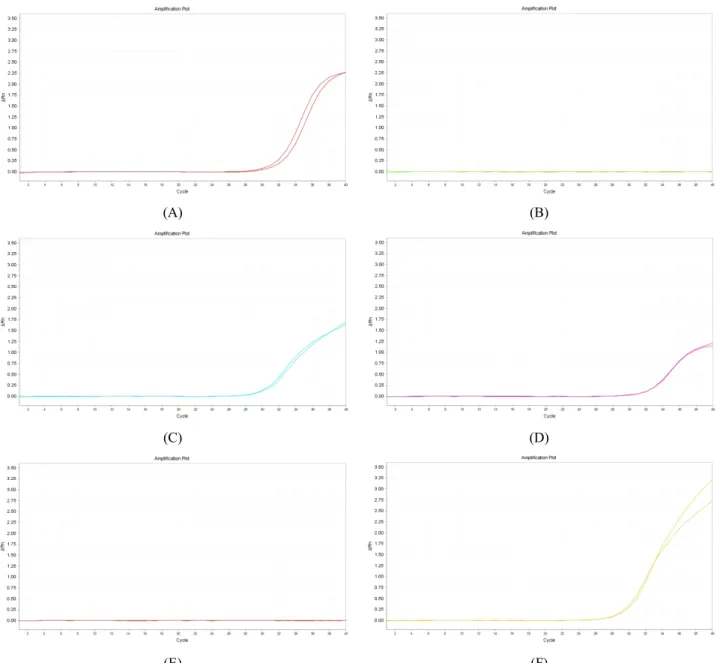
일반 PCR을 실시할 경우, 전기영동을 통해 밴드를 확인 해야 하는 번거로움과 긴 소요시간을 보완하고자 동일한 primer 쌍을 사용하여 실시간 검출이 가능한 real-time PCR 법을 실시하였다. 그 결과, 일반 PCR법으로 검출된 결과와 유사하게 B사를 제외한 모든 산양 조제분유들에서 증폭곡 선(amplification curve)이 생성됨을 알 수 있었다(Fig. 2).
대조구로 사용된 산양시유를 제외하고, 젖소시유에서도 증 폭곡선이 생성되었으며, 제품별 증폭곡선의 평균 Ct 값은 29~32 cycles 사이로 나타났다. 본 연구에서는 정성적인 분 석만을 실시하였지만, 표준곡선을 이용하여 정량 검사를
실시할 경우 각 제품 내 젖소 유래 DNA의 함량도 검출 가 능하다. 특히, real-time PCR법을 사용한 제품 내 종간 검출 방법은 많은 시료를 조사해야할 경우, 보다 용이하게 이용 될 수 있다.
또한, 본 연구에서 국내 시판되는 다른 제조 기업들의 산 양 발효유 2종과 산양유 2종을 조사한 결과, 모두 젖소 유 성분이 함유되어 있음을 알 수 있었다(data not shown). 식 품 규격상 산양조제분유와 달리 산양 시유와 산양 발효유 제품의 경우 타종의 원유가 함유되어서는 안 되는 품목이 므로, 본 연구와 같이 빠르게 종간 구별이 가능한 PCR 기 법은 부적합한 식품 성분의 혼입에 대한 검사에 유용하게 사용될 수 있다. 그 밖에도 특수 식품 내 식품 성분의 종류 와 함량의 정보를 소비자에게 신속하고 정확하게 전달해 줄 수 있는 검사 방법으로도 이용 가능하다.
참고문헌
1. Addeo, F., Moio, L., Chianese, C., Stingo, C., Resini, P., Berner, I., Krause, I., Di Luccia, A. and Bocca, A. 1990.
Use of plasmin to increase the sensitivity of the detection of bovine milk in ovine cheese by gel isoelectric focusing of caseins. Milchwissenschaft 45:708-711.
(A)
(B)
(C)
(D)
(E)
(F)
Fig. 2. Amplification curves of real-time PCR with bovine-specific primers. (A)~(D) represent caprine infant formulas (step 1) of four companies (A, B, C and D), respectively; (E), caprine city milk; (F), bovine city milk.
2. Bania, J., Ugorski, M., Polanowski, A. and Adamczyk, E. 2001. Application of polymerase chain reaction for detection of goats’ milk adulteration by milk of cow. J.
Dairy Res. 68:333-336.
3. Bottero, M. T., Civera, T., Nucera, D., Rosati, S., Sacchi, P. and Turi, R. M. 2003. A multiplex polymerase chain reaction for the identification of cow’s, goats’ and sheep’s milk in dairy products. Int. Dairy J. 13:277-282.
4. Branciari, R., Nijman, I. J., Plas, M. E., Di Antonio, E.
and Lenstra, J. A. 2000. Species origin of milk in Italian
Mozzarella and Greek Feta cheese. J. Food Prot. 63:
408-411.
5. Calvo, J. H., Osta, R. and Zaragoza, P. 2002. Species- specific amplification for detection of bovine, ovine and caprine cheese. Milchwissenschaft 57:444-446.
6. Hachelaf, W., Boukhrelda, M., Benbouabdellah, M., Coquin, P., Desjeux, J. F., Boudraa, G. and Touhami, M. 1993.
Digestibilit des graisses du lait de chevre chez les enfants presentant une malnutrition d’origine digestive. Comparioson avec le lait de vache. Lait. 73:593-599.
7. Haenlein, G. F. W. 1995. Status and prospects of the dairy goat industry in the United States. J. Anim. Sci.
74: 1173-1181.
8. Jenness, R. 1980. Composition and characteristics of goat milk: Review 1968-1979. J. Dairy Sci. 63:1605-1630.
9. John, C. and Ian, D. H. 1985. Goat’s milk and infant feeding. Med. J. Aust. 143:508-510.
10. Lee, C. C., Chang, H. S. and Sheen, H. S. 2004. A quick novel method to detect the adulteration of cow milk in goat milk. Asian-Aust. J. Anim. Sci. 17:420-422.
11. Levieux, D. and Venien, A. 1994. Rapid, sensitive two- site ELISA for detection of cows’ milk in goat’s or ewes’ milk using monoclonal antibodies. J. Dairy Res.
61:91-99.
12. Lim, Y. S., Kwak, H. S. and Lee, S. K. 2006. Charac- teristics of goat milk and current utilizing trends in Korea.
J. Korean Dairy Technol. Sci. 24:1-9.
13. López-Calleja, I., González, I., Fajardo, V., Rodríguez, M. A., Hernández, P. E., García, T. and Martín, R. 2004.
Rapid detection of cows' milk in sheeps' and goats' milk by a species-specific polymerase chain reaction technique.
J. Dairy Sci. 87:2839-2845.
14. Marfra, I., Ferreira, I. M., Faria, M. A. and Oliveria, B.
P. 2004. A novel approach to the quantification of bovine milk in ovine cheese using a duplex polymerase chain raction method. J. Agr. Food Chem. 52:4943-4947.
15. Matsunaga, T., Chikuni, K., Tanabe, R., Muroya, S., Shibata, K., Yamada, J. and Shinmura, Y. 1999. A quick and simple method for the identification of meat species and meat products by PCR assays. Meat Sci. 51:143- 148.
16. Maudet, C. and Taberlet, P. 2001. Detection of cows’
milk in goats’ cheeses inferred from mitochondrial DNA polymorphism. J. Dairy Res. 68:229-235.
17. Mayer, H. K. 2005. Milk species identification in cheese varieties using electrophoretic, chromatographic and PCR techniques. Int. Dairy J. 15:595-604.
18. Meyer, R., Hofelein, C., Luthy, J. and Candrian, U. 1995.
Polymerase chaing reaction-restriction fragment length polymorphism analysis: A smaple method for species identification in food. J. AOAC Int. 78:1542-1551.
19. Mimmo, P. and Pagani, S. 1998. Development of an ELISA for the detection of caprine αs1-casein in milk.
Milchwissenschaft 53:363-367.
20. Park, S. Y. 2006. Production and consumption of goat milk products in Korea. J. Korean Dairy Technol. Sci.
24:39-45.
21. Unseld, M., Beyermann, D., Brabdt, P. and Hiesel, R.
1995. Identification of the species origin of highly processed meat products by mitochondrial DNA sequences. PCR Meth. Appl. 4:241-243.
(Received: August 30, 2013 / Accepted: September 25, 2013)