• 검색 결과가 없습니다.

Hematologic and Serological Investigation of Effect on Gyeongokgo in Healthy Individuals : a Randomized, Subject-assessor-blind, Placebo-controlled, Single-center Pilot Study

N/A
N/A
Protected

Academic year: 2021

Share "Hematologic and Serological Investigation of Effect on Gyeongokgo in Healthy Individuals : a Randomized, Subject-assessor-blind, Placebo-controlled, Single-center Pilot Study"

Copied!
10
0
0

로드 중.... (전체 텍스트 보기)

전체 글

(1)

Introduction

Gyeongokgo (GOK) is a prescription recorded in the Donguibogam that consists of four ingredients: ginseng (Panax ginseng CA Meyer, root), poria (Poria cocos [Schw.]

Wolf), Rehmannia glutinosa (Rehmannia glutinosa var.

purpurea), and honey (Apis indica Radoszkowski). Clinically, GOK is widely used in patients who have been weakened by surgery or have reduced immune function and as a health restorative by students, office workers, and the elderly.

Several experimental studies have reported its effects on preventing osteoporosis

1)

and improving atopic symptoms

2)

, as well as its anti-inflammatory

3)

and anti-cancer effects

4)

. To date, the only studies on GOK have been conducted on restricted subjects or variables, including reports of its

beneficial effects on athletes

5,6)

. There are no published data on GOK safety or mechanism of action. In South Korea, Western medicine and Traditional Korean medicine are dichotomized, and patients often take both kinds of medicine simultaneously. This means there is a particular need for basic data on the pharmacologic activity and safety of traditional Korean medicines. We conducted the randomized clinical trial including 29 healthy 20-year-old to 40-year-old subjects using hematologic and serologic tests, urinalysis, body analysis and questionnaires, before and after 4 weeks of GOK or placebo treatment. The aim of this study was to acquire objective data about the hematologic and serological test and questionnaires of this representative restorative used in traditional Korean medicine.

Hematologic and Serological Investigation of Effect on Gyeongokgo in Healthy Individuals : a Randomized, Subject-assessor-blind, Placebo-controlled,

Single-center Pilot Study

Yun-Young Sunwoo

, Hye Jung Kim

1#

, Ja Young Kim

1

, Na Rae Yang

2

, Jin Hyun Lee

1

, Tae Yong Park

1

*

Iksudang Clinic of Oriental Medicine, 1 : Institute for Integrative Medicine, Catholic Kwandong University International St. Mary’s Hospital, 2 : Magoknaru Clinic of Oriental Medicine

There are no published data on Gyeongokgo (GOK) safety or efficacy despite being commonly use. The Gyeongokgo (GOK) is commonly used in traditional Korean medicine to promote a health qi and blood, but their objective data was not sufficient in clinical field. To investigate the safety and efficacy of GOK with hematologic and serologic testing and the change of the quality of life in healthy individuals. Randomized, subject-assessor-blind, placebo-controlled, single-center pilot study Participants and Interventions 29 healthy volunteer subjects were randomly placed into the GOK group (n = 20) or placebo control group (n = 9) and instructed to take one treatment packet (GOK or placebo) twice daily for 4 weeks. Subjects were assessed using the Fatigue Severity Scale (FSS) and Short Form 36 Health Survey (SF-36) and underwent hematologic and serologic tests and body composition analysis.

The FSS total score (p = 0.093) and SF-36 general health index (p = 0.002) were improved following treatment in the GOK group. Post-treatment thyroid-stimulating hormone levels were increased in the GOK group compared with pre-treatment levels (p = 0.0042). C-reactive protein levels decreased (p = 0.0256) in the GOK group compared with that the placebo group. In time-series tests, GOK did not affect post-prandial serum triglycerides, glucose, insulin, or C-peptide levels. Notably, elevations in serum fasting triglycerides at 2- (p = 0.0333) and 4-hours (p = 0.0414) post-prandial were lower than those in the placebo group. GOK reduced fatigue levels and did not significantly affect laboratory test results performed to measure safety, serum glucose, and lipid profiles. Post-meal triglyceride levels were effectively reduced with treatment.

keywords : Fatigue Severity Scale, Short Form 36, Quality of life, Safety, Gyeongokgo, Traditional Korean Medicine

* Corresponding author

Tae Yong Park, Institute for Integrative Medicine, Catholic Kwandong University International St. Mary’s Hospital, 25, Simgok-ro 100beon-gil, Seo-gu, Incheon, Republic of Korea

·E-mail : [email protected] ·Tel : +82-32-290-3319

·Received : 2019/06/18 ·Revised : 2019/08/05 ·Accepted : 2019/08/08

ⓒ The Society of Pathology in Korean Medicine, The Society for Physiology in Korean Medicine pISSN 1738-7698 eISSN 2288-2529 http://dx.doi.org/10.15188/kjopp.2019.08.33.4.239

Available online at https://kmpath.jams.or.kr

# Both authors contributed equally to this work

(2)

Materials and Methods

1. Study subjects

This study was a 4-week-long, single-center, subject-assessor-blind, placebo-controlled, parallel, randomized clinical trial. Before starting the study, approval was granted by the Catholic Kwandong University International St. Mary’s Hospital Institutional Review Board(IRB) of the under project number IS14TISF0016. This study was also registered as KCT0002652 in Clinical Research inform action Service(CRIS). Subjects were physically and mentally healthy males and females aged 20 to 40 who had seen one of the clinical trial flyers posted in the hospital between March and April 2015 and had willfully consented to participate(Fig. 1). The following exclusion criteria were applied: 1) underlying diseases including hypertension, hepatitis, or tuberculosis; 2) a history of endocrinologic or hormone disorders; 3) a history of hepato-pancreato-biliary or renal disorders; 4) a history of impaired blood glucose regulation (i.e., impaired fasting glucose, impaired glucose tolerance, or diabetes); 5) steroid or hormonal drug use less than 1 month before the start of the study; 6) pregnancy or breastfeeding; and 7) any abnormal findings that might possibly have impacted the study results. The researchers first confirmed any matters that contravened the clinical trial conditions via a phone call or visit to each subject. Following this, a total of 32 subjects (16 male and 16 female) underwent screening including hematologic tests, urinalysis, electrocardiography, and a chest x-ray. The 29 subjects who passed the screening were randomly allocated by the random number table to a GOK treatment group of 20 subjects (9 males and 11 females), or a placebo control group of 9 subjects (4 males and 5 females). The probability of random allocation to the GOK group was set at 2:1 to encourage participation.

Later, the subjects were gathered at a pre-designated location; provided with identical meals; and subjected to a questionnaire, hematologic tests, urinalysis, and body composition analysis. Subsequently, the subjects were asked to complete a daily medication diary to assess compliance, use of other medicines, and alcohol consumption. At the end of the 4-week treatment, the subjects were again gathered, provided with identical meals, and subjected to the same questionnaire and tests as at the first visit.

2. GOK and placebo preparation

GOK was manufactured according to methods recorded in the Donguibogam

7)

under the management and

supervision of a specialist in traditional Korean pharmacology at the external manufacturer of traditional medicines associated with our hospital. After pulverizing 200 g poria and 100 g ginseng, these were thoroughly mixed with 1056 g Rehmannia glutinosa juice and 704 g honey.

This mixture was poured into an earthenware jar, and the opening was sealed with five layers of oiled paper and one layer of silk fabric. The pot was heated for 72 hours using the bain-marie method in a copper pot over a mulberry wood fire and then cooled for 24 hours in cold well water.

It was then heated for another 24 hours using the same method, and cooled for 24 hours before being made into its final, solid form and packed into a small earthenware jar.

Finally, 1100 g GOK mixture was added to 2600 mL distilled water and heated for 10 minutes in a slow boiler used to manufacture herbal medicines. The 3600-mL volume of GOK liquid obtained was divided into 30 packets of 120 mL each, and the packets were sealed.

The placebo was prepared by adding 4000 mL distilled water to 800 g black rice powder and boiling for 30 minutes while mixing thoroughly. Disaccharide (300 g) was added, and the mixture was reheated while stirring thoroughly for another 5 minutes. The resulting placebo was divided into 30 120-mL packets that were then sealed.

3. Administration method

Subjects in each group drank one individually sealed 120-mL packet of liquid GOK (GOK group) or liquid placebo (control group) twice a day after breakfast and dinner, for 4 weeks.

5. Outcome measurements 1) Questionnaires

The Fatigue Severity Scale (FSS) is an instrument for assessing fatigue that was developed by Krupp et al

8)

in 1989. It consists of nine items each scored on a 7-point Likert scale. It can easily be used in medical consultations and has shown strong validity and reliability in various fatigue-related disorders

9,10)

.

The 36-Item Short Form Survey (SF-36) is a representative instrument for assessing quality of life (QOL) comprised of 36 questions, divided into the three domains of functional status, well-being, and overall evaluation of health

10)

. Study subject QOL was assessed based on FSS and SF-36 scores before and after the study period. Both questionnaires can be viewed in the Appendix. We used the Korean versions of the assessments.

2) Laboratory tests for hematologic and immunologic

(3)

responses

Blood samples were obtained from subjects’ antecubital veins after a 12-hour overnight fast, centrifuged, and stored at -80℃. Blood samples were analyzed with an automated blood cell counter (Sysmex XN (XN) modular system, Sysmex, Kobe, Japan), Beckman Coulter AU5800 chemistry analyzers (Beckman Coulter Inc., Brea, CA, USA), and Unicel DXI 800 chemiluminescent enzyme immunoassays (Beckman Coulter Inc.). Glycosylated hemoglobin (HbA1C) levels were measured by high-performance liquid chromatography using a HLC-723G8 analyzer (Tosoh Co., Tokyo, Japan). Routine urinalysis was performed on a US-3100Rplus analyzer (Eiken Chemical Co. Ltd., Tokyo, Japan) in chronological order, and urine sediments were subjected to automated morphologic examination using a laser-based fluorescent flow cytometer, UF-1000i (Sysmex Co., Hyogo, Japan). For cytokine analysis, plasma samples were collected using EDTA, centrifuged, and stored at -8 0℃. Plasma cytokine levels including tumor necrosis factor (TNF)-α, interleukin (IL)-1β, IL-6, interferon (IFN)-r, IL-2, and IL-10 were determined using a Milliplex MAP Human Cytokine/Chemokine Magnetic Bead Panel (Millipore Corp., Billerica, MA, USA) following the manufacturer’s kit-specific protocols. All samples were assayed in triplicate, and the mean absorbances were calculated from standard curves.

3) Body composition tests

The participants’ body compositions were measured using the Inbody 770 analyzer (Inbody Co., Ltd., Seoul, Korea) after vital sign stabilization.

4) Adverse event monitoring

Adverse events during the trial were assessed through safety assessments and laboratory tests. All adverse reactions that occurred throughout the intervention and follow-up periods were evaluated as World Health Organization Adverse Reaction Terminology, and classified in 1-5 grades according to the Common Terminology Criteria for adverse Events (version 4.03).

5) Measurement of compliance and

The subject who was less than 70% with compliance were dropped out.

6) Assessment of blinding

There was no assessment on blinding success.

7) Statistical analysis

Statistical analyses were performed by a statistician who was blinded to the subjects’ status. We used a paired t-test or Wilcoxon signed-rank test for changes within the groups and an independent two-sample t-test or Mann-Whitney U test (Wilcoxon rank sum test) for

inter-group differences following treatment. All statistical analyses were performed using SAS v9.1.3 (SAS Institute Inc., Cary, NC, USA). P values less than 0.05 were considered statistically significant.

Fig. 1. Study flow chart (ITT, intention to treat; PP, per protocol).

Results

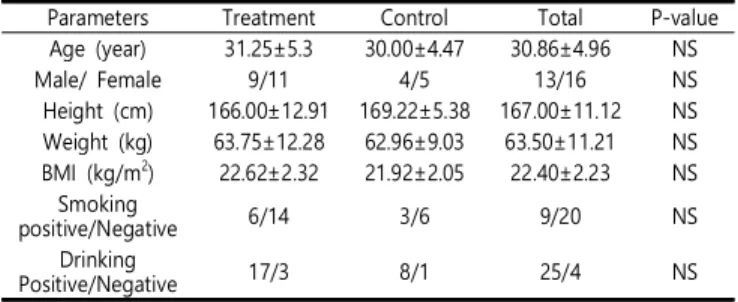
Of the 32 subjects originally enrolled in this study, 3 were excluded due to abnormal hematologic findings during screening, and the remaining 29 subjects were included in the final analysis. There were no significant differences in general characteristics between the two groups(Table 1).

Table 1. The General Characteristic of the study

Parameters Treatment Control Total P-value

Age (year) 31.25±5.3 30.00±4.47 30.86±4.96 NS

Male/ Female 9/11 4/5 13/16 NS

Height (cm) 166.00±12.91 169.22±5.38 167.00±11.12 NS Weight (kg) 63.75±12.28 62.96±9.03 63.50±11.21 NS BMI (kg/m

2

) 22.62±2.32 21.92±2.05 22.40±2.23 NS

Smoking

positive/Negative 6/14 3/6 9/20 NS

Drinking

Positive/Negative 17/3 8/1 25/4 NS

The FSS questionnaire results showed no significant difference in scores between the GOK and control groups following the treatment period. However, after the treatment period, the GOK group did show a statistically significant decrease in overall score, as well as for the following specific items: 1) “I lose motivation when I am fatigued,” 2)

“I become tired when I exercise,” 3) “I become tired easily,”

4) “I engage in less physical activity because of fatigue,” and

5) “I often experience problems due to fatigue”(Table 2).

(4)

Table 2. Fatigue severity scale results after the duration of the clinical trial

Variables Treatment Total P-value 3

Before Difference P-value 1 Before Difference P-value 2

Total 32.35±9.30 -6.6±10.2 0.0093 38.78±5.59 -1±7.57 0.7021 0.1533

P-value 1 : Wilcoxon signed rank test for the change within the treatment group following treatment with GOK. P-value 2 : Wilcoxon signed rank test for the change within the control group following treatment with the placebo. P-value 3 : Mann-Whitney U test (Wilcoxon rank sum test) for inter-group differences in the change following treatment

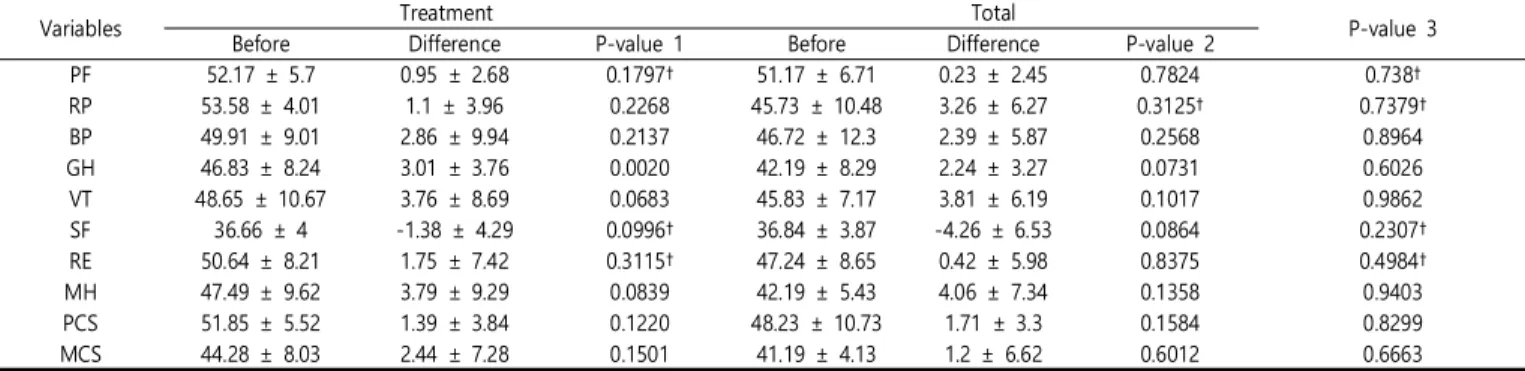
Table 3. The 36-Item Short Form Survey Results after the Duration of clinical trial

Variables Treatment Total

P-value 3

Before Difference P-value 1 Before Difference P-value 2

PF 52.17 ± 5.7 0.95 ± 2.68 0.1797† 51.17 ± 6.71 0.23 ± 2.45 0.7824 0.738†

RP 53.58 ± 4.01 1.1 ± 3.96 0.2268 45.73 ± 10.48 3.26 ± 6.27 0.3125† 0.7379†

BP 49.91 ± 9.01 2.86 ± 9.94 0.2137 46.72 ± 12.3 2.39 ± 5.87 0.2568 0.8964

GH 46.83 ± 8.24 3.01 ± 3.76 0.0020 42.19 ± 8.29 2.24 ± 3.27 0.0731 0.6026

VT 48.65 ± 10.67 3.76 ± 8.69 0.0683 45.83 ± 7.17 3.81 ± 6.19 0.1017 0.9862

SF 36.66 ± 4 -1.38 ± 4.29 0.0996† 36.84 ± 3.87 -4.26 ± 6.53 0.0864 0.2307†

RE 50.64 ± 8.21 1.75 ± 7.42 0.3115† 47.24 ± 8.65 0.42 ± 5.98 0.8375 0.4984†

MH 47.49 ± 9.62 3.79 ± 9.29 0.0839 42.19 ± 5.43 4.06 ± 7.34 0.1358 0.9403

PCS 51.85 ± 5.52 1.39 ± 3.84 0.1220 48.23 ± 10.73 1.71 ± 3.3 0.1584 0.8299

MCS 44.28 ± 8.03 2.44 ± 7.28 0.1501 41.19 ± 4.13 1.2 ± 6.62 0.6012 0.6663

PF, physical functioning; RP, role limitations due to physical health; BP, bodily pain; GH, general health perceptions; VT, vitality; SF, social functioning; RE, role limitations due to emotional problems; MH, general mental health; PCS, summary measures of physical; MCS, summary measures of mental. P-value 1 : Wilcoxon signed rank test†

for the change within the treatment group following treatment with GOK. P-value 2 : Wilcoxon signed rank test† for the change within the control group following treatment with the placebo. P-value 3 : Mann-Whitney U test† (Wilcoxon rank sum test) for inter-group differences in the change following treatment.

Table 4. The 36-Item Short Form Survey Results after the Duration of clinical trial

Variables Treatment Total

P-value 3 Before Difference P-value 1 Before Difference P-value 2

Hematology

WBC ( x10^3㎕ ) 6.97±2.41 -0.74±2.23 0.0490† 6.2±1.72 -0.33±0.83 0.2676 0.4785

RBC ( x10^6㎕ ) 4.74±0.52 0.03±0.17 0.4888 4.82±0.56 -0.08±0.17 0.2066 0.1321

Hemoglobin(g/dL) 14.5±1.67 0.05±0.54 0.6855 14.63±1.69 -0.31±0.57 0.1382 0.1133

Hematocrit(%) 42.94±4.45 -0.04±1.68 0.9149 43±4.2 -1.06±1.59 0.0821 0.1386

Platelet count (x10^3㎕) 245.7±48.38 9±22.54 0.0583 285±119.01 6.33±25.9 0.4841 0.7803

ANC (absolute neutrophil count) 4357.95±2269.54 -646.95±2291.66 0.6291† 3304.44±947.81 -485.56±706.76 0.0732 0.8335†

Biochemistry

Protein(g/dL) 7.49±0.33 -0.02±0.37 0.7810 7.38±0.35 -0.04±0.38 0.7377 0.8711

Albumin(g/dL) 4.78±0.22 -0.14±0.2 0.0234 4.7±0.23 -0.17±0.21 0.0415 0.5880†

Total bilirubin(mg/dL) 0.79±0.36 0.01±0.36 0.6926 0.8±0.31 0±0.42 1.0000 0.9475

AST(U/L) 21.1±4.87 -0.5±8.51 0.7905† 21.44±4.5 -0.22±7.21 0.9286 0.7787†

ALT(U/L) 17.1±8.01 -0.2±6.25 1.0000† 18±7.68 -0.89±10.28 0.8018 1.0000†

γ-GTP(U/L) 22.5±18 0.1±5.28 1.0000† 18.22±10.41 1.67±5.92 1.0000† 0.7410†

ALP(U/L) 61.35±17.53 -1.35±6.29 0.5045 60.67±13.27 -1.67±6.02 0.4304 0.8999

BUN(mg/dL) 12.78±2.59 0.1±2.99 0.8233 10.5±3 -0.13±2.78 0.8890 0.8474

Creatinine(mg/dL) 0.64±0.14 0.06±0.06 0.0063† 0.62±0.11 0.03±0.05 0.2500† 0.3076†

HbA1c(%) 5.23±0.22 0±0.08 1.0000† 5.17±0.23 -0.04±0.07 0.2188† 0.2039†

Total Cholesterol(mg/dL) 188.8±28.85 4.65±24.09 0.3210 193.22±16.15 -5.67±20.84 0.4384 0.2772 Triglyceride(mg/dL) 101.85±77.19 -2.45±36.41 1.0000† 68.67±32.04 17±30.29 0.5078† 0.2390†

HDL(mg/dL) 58.85±14.82 1.8±5.12 0.0984 66.56±7.52 -1.78±7.12 0.4753 0.1348

LDL(mg/dL) 119.1±18.76 3.8±18.8 0.3023 120.67±15.41 -4.44±14.06 0.3708 0.2515

TC/HDL 3.37±0.89 -0.05±0.37 0.5672 2.94±0.43 -0.02±0.27 0.8488 0.8236

CRP(mg/L) 0.97±1.18 -0.5±1.22 0.0768† 0.39±0.33 0.33±0.69 0.2891† 0.0256†

Free T4(ng/dL) 0.89±0.09 0.05±0.09 0.3323† 0.89±0.1 0.09±0.09 0.0141 0.2670†

TSH(uIU/mL) 1.69±0.79 0.35±0.48 0.0042† 1.82±0.8 0.77±0.94 0.0389 0.4158†

Urinalysis

Specific Gravity 1.02±0.01 0±0.01 0.1434 1.03±0 0±0.01 0.2624 0.0582

pH 5.88±0.56 -0.18±0.61 0.2188† 6.17±0.66 -0.17±0.97 0.6195 0.8399†

WBC, white blood cell; RBC, red blood cell; AST, aspartate aminotransferase; ALT, alanine aminotransferase; γ-GTP, gamma(γ)-glutamyl transferase; ALP, alkaline phosphatase; BUN, blood urea nitrogen; HbA1c, Hemoglobin A1c; HDL, high density lipoprotein; LDL, low density lipoprotein; CRP, c-reactive protein; Free T4, free thyroxine (T4); TSH, thyroid stimulating hormone. P-value 1 : Wilcoxon signed rank test† for the change within the treatment group following treatment with GOK.

P-value 2 : Wilcoxon signed rank test† for the change within the control group following treatment with the placebo. P-value 3 : Mann-Whitney U test† (Wilcoxon rank sum test) for inter-group differences in the change following treatment.

The SF-36 was administered to assess QOL, and both intra- and inter-group analyses were performed. Ten

different items were evaluated, consisting of the eight

individual items: PF (physical functioning), RP (role

(5)

limitations – physical), BP (bodily pain), GH (general health), VT (vitality), SF (social functioning), RE (role limits – emotional), and MH (mental health), in addition to the physical component summary (PCS = PF + RP + BP + GH)

and mental component summary (MCS = VT + SF+ RE + MH). Apart from general health, which significantly improved after GOK treatment, there were no significant differences(Table 3).

Table 5. The laboratory findings for serum glucose, TG, C-peptide, and insulin level after meal after the duration of the clinical trial

Variables Before After P-value

Fasting PP2hr PP4hr Fasting PP2hr PP4hr p-value1 p-value2 p-value3

Glucose

Treatment

(n=20) 99.4±6.81 99.85±14.7 97.75±14.89 95.9±8.77 104.3±12 91.5±8.36 0.0812 0.1643 0.0961 Control (n=9) 99.22±5.83 102.67±15.36 90.89±9.85 93.78±6.24 97.67±11.2 87.22±12.36 0.0970 0.1887 0.2891†

p-value2 0.4989† 0.6415 0.3530† 0.9440† 0.1718 0.2825 0.5760 0.0783 0.7087†

Triglyceride

Treatment

(n=20) 101.85±77.19 125.95±87.43 131.4±105.27 99.4±65.31 111.3±84.17 105.65±87.17 0.8238† 0.0391 0.0056 Control (n=9) 68.67±32.04 85.44±64.84 84.11±51.83 85.67±58.34 95.78±66.97 87.89±73.71 0.5078† 0.2130 0.6906

p-value2 0.2134† 0.2304† 0.2303† 0.4852† 0.8335† 0.4429† 0.2390† 0.0333 0.0414

C-peptide

Treatment

(n=20) 1.53±0.41 4.75±1.79 3.57±1.67 1.89±0.92 4.75±1.62 2.32±0.74 0.2632† 0.9950 0.0032 Control (n=9) 1.39±0.53 4.85±2.5 3.02±1.77 1.81±0.92 4.1±1.52 2.35±1.03 0.0391† 0.1828 0.1396

p-value2 0.4570 0.9044 0.4853† 0.7615† 0.3232 0.6081† 0.8335† 0.2892 0.3526

Insulin

Treatment

(n=20) 5.87±2.64 26.53±19.12 17.2±11.94 9.11±5.49 24.36±13.2 8.67±3.2 0.0118† 0.8238† 0.0026†

Control (n=9) 6.69±2.81 28.98±17.25 13.46±9.88 8.37±4.11 17.3±13.34 8.83±5.81 0.2572 0.0115 0.0972

p-value2 0.4552 0.5604† 0.3658† 0.6744† 0.0731† 0.2674† 0.6576† 0.0498† 0.4164†

All values are expressed as mean±S.D. and median(Q1, Q3). P-value 1 were calculated for difference (after-before) within group at each time using Wilcoxon signed test

†. P-value 2 were calculated for variables between treatment and control group at each time using an Mann-Whitney U test (Wilcoxon rank sum test)†

Table 6. Serum cytokine levels after the duration of the clinical trial

Variables Treatment Total

P-value 3

Before After P-value 1 Before After P-value 2

TNF-a 2.88±2.18 2.53±1.26 1.0000† 2.55±1.37 3.67±3.45 0.2891† 0.2674†

IL-1β 3.29±0.33 3.26±0.29 0.4959 3.21±0.22 3.22±0.23 0.8602 0.5955

IL-6 5.27±4.15 3.98±2.43 0.1435† 3.45±1.01 3.2±0.23 1.0000† 0.2862†

IFN-r 8.85±15.34 5.14±0.55 0.5034† 4.97±0.48 4.97±0.42 1.0000† 0.4409†

IL-2 3.23±4.53 2.39±0.57 0.8036† 1.92±0.62 2.33±0.93 0.0226 0.1879†

IL-10 10.38±30.94 3.38±7.52 0.2379† 1.08±0.31 1.34±0.5 0.1466 0.1244†

P-value 1 : Wilcoxon signed rank test† for the change within the treatment group following treatment with GOK. P-value 2 : Wilcoxon signed rank test† for the change within the control group following treatment with the placebo. P-value 3 : Mann-Whitney U test† (Wilcoxon rank sum test) for inter-group differences in the change following treatment.

Table 7. Body composition findings after the duration of the clinical trial

Variables Treatment Total

P-value 3

Before After P-value 1 Before After P-value 2

Total body mass 63.75±12.28 63.66±12.42 1.0000† 62.96±9.03 63.09±9.42 0.6565 0.5657

Body fat mass 16.61±3.45 16.55±3.56 0.7036 16.32±3.37 16.71±3.41 0.1267 0.1175

Fat-free mass 47.15±11.08 47.11±11.17 0.8265 46.63±7.92 46.38±7.98 0.2709 0.4316

P-value 1 : Wilcoxon signed rank test† for the change within the treatment group following treatment with GOK. P-value 2 : Wilcoxon signed rank test† for the change within the control group following treatment with the placebo. P-value 3 : Mann-Whitney U test† (Wilcoxon rank sum test) for inter-group differences in the change following treatment.

Table 4 summarizes the inter- and intra-group differences in hematologic and serologic findings following treatment. There was no statistical difference between the two groups except that the GOK group had lower C-reactive protein (CRP) levels after treatment (P = 0.0256).

In the intra-group comparison, the GOK group showed significant decreases in white blood cell and albumin levels (P = 0.049 and P = 0.023, respectively), and significant increases in creatinine and thyroid-stimulating hormone (TSH) levels (P = 0.006, and P = 0.004, respectively). The control group showed a significant decrease in albumin (P

= 0.042) and a significant increase in free thyroxine (T4)

and TSH (P = 0.014 and P = 0.039, respectively). However, in the individual data, five participants (four and one in the GOK and control groups, respectively) showed values higher than the reference ranges in liver function tests for aspartate aminotransferase (AST), alanine aminotransferase (ALT), or gamma-glutamyl transferase (GGT).

Regarding post-prandial laboratory findings for serum glucose, triglycerides (TG), C-peptide, and insulin levels following the treatment period, the GOK group showed a significant decrease in TG at 2- and 4-hours post-prandial.

There were also significant inter- and intra-group

differences regarding the change at each measurement

(6)

time point from before to after the trial. Among the five subjects who had a reduction in TG of at least 50 mg/dl, all five had a decrease in TG 4 hours after eating, three had a decrease at 2 hours, and one had a decrease at fasting (Table 5).

Additionally, we investigated the regulatory effect of GOK on inflammatory-related cytokine levels but found no significant differences within or between groups (Table 6).

The same was true for the body composition analysis for total body, body fat, and fat-free masses (Table 7).

Finally, There was no adverse events during the trial.

Every subjects was more than 70% with compliance.

Discussion

The FSS questionnaire results for the GOK group revealed significant decreases in scores for the following items after taking GOK: “I lose motivation when I am fatigued,” “I become tired when I exercise,” “I become tired easily,” “I engage in less physical activity because of fatigue,” and “I often experience problems due to fatigue.”

In the SF-36, there was a significant increase in general health scores in the GOK group. Collectively, these findings suggest that GOK improved subjective fatigue, which is in line with previous reports that GOK ingestion can have beneficial effects on certain physical functions

5,6)

. In addition, an analysis of GOK composition revealed that it contains various amino acids and minerals with antioxidant functions, and the authors suggested that this is the mechanism of action by which it relieves fatigue

11)

. There was no notable difference in questionnaire results between the two groups, even though there was a significant difference after treatment in the GOK group.

Oral GOK administration did not significantly affect the laboratory findings. There were no significant intra- or inter-group differences regarding glucose metabolism.

There are two likely explanations for this. First, the degree of perceived change was not great because the subjects in both groups were healthy adults with normal insulin tolerance before treatment. Second, the saccharide and black rice in the placebo are nutritious ingredients commonly used in traditional Korean medicine to nourish the body.

Interestingly, we observed GOK-related improvements in post-prandial TG levels. This was similar to the findings of a previous mouse study, in which serum total cholesterol and TG levels were decreased, while high-density lipoprotein levels were increased following

treatment with GOK and modified GOK

12)

.

CRP, a major inflammatory markers, was significantly lowered in the GOK group after the treatment period.

Elevated CRP and high fasting TG are common hematologic findings in obese individuals, indicating that obesity is closely connected with both lipid metabolism abnormalities and vascular health

13)

. Previous research revealed that GOK reduces inflammatory cytokine secretion and effectively decreases the range of infarction in mice with middle cerebral artery (MCA) occlusion

14)

. Considering that elevated CRP can be used as an important indicator of obesity

15)

, GOK might exert an effect on vascular health, which is in turn related to obesity and lipid metabolism. Furthermore, CRP can be used as an indicator of fatigue

16)

, and the results of our study are consistent with a report describing a correlation between decreasing CRP and indicators of actual QOL

17-19)

. Also, our GOK group exhibited a significant increase in TSH. This is consistent with a report stating that, although not statistically significant, the TSH concentration was higher in a group of GOK-treated mice with induced growth disorder

20)

. Given the results of a study on individuals with normal thyroid function, in which people with lower normal-range TSH values felt more fatigue

21)

, our study suggests a possible mechanism for reduced fatigue after taking GOK. However, a biological false positive have to be considered in the case of CRP and TSH.

Five participants (four in the GOK group and one in the control group) exhibited levels of AST, ALT, GGT, or total bilirubin that were above the standard range after the treatment period. We found that these participants had above average alcohol intake during the study. Hence, they may have experienced adverse reactions unrelated to GOK.

Numerous traditional Korean medicines including GOK have been shown to affect levels of various cytokines

22-25)

, and our earlier study demonstrated that GOK significantly reduced TNF-α and IL-1β levels compared to a control in induced MCA infarction mice

15)

. We anticipated that GOK treatment would influence blood cytokine levels in humans, but possibly because the subjects in this study were healthy individuals with baseline cytokine levels within normal ranges, there were no statistically significant changes. Conversely, subjects in the previous studies had blood cytokine levels that were already altered by various pathologic disease states, which might have predisposed them to a greater response to GOK.

Many people worry that taking a restorative will make

them put on weight, and because traditional Korean

(7)

medicines are not zero-calorie, we measured subjects’ total body, body fat, and fat-free masses. There was no significant increase in total body weight for either group;

indeed, a slight decrease in body weight was observed, although this was not statistically significant.

Our study had several limitations. First, the subjects’

lifestyle habits were not controlled during the trial period.

There have been differences in daily habits such as diet and exercise, but also, because most of the subjects were young office workers, alcohol consumption and excessive work were frequent. The second limitation was the choice of placebo. The black rice and saccharide may have impacted glucose load and imparted generic restorative benefits to the control group subjects. Third, we only included young, healthy adults in whom any measurable effects were below the level of evidence required for clinical application. Finally, traditional Korean medicine prescriptions should be made according to the patient’s medical symptoms, a practice that was not incorporated into the study design and might have reduced the precision of the results. Future studies should include further investigation into CRP and TSH levels and identify objective indices that can be applied to explain the clinical effects of GOK and investigate its mechanism(s) of action.

Conclusion

Hematologic and serologic test results and QOL questionnaires revealed that in healthy 20- to 40-year-old adults, a 4-week GOK regimen did not cause any hepatotoxicity or nephrotoxicity; had a beneficial effect on some items of perceived QOL; and was associated with elevated TSH, reduced CRP, and reduced fasting TG levels.

Acknowledgment

This study was approved by the Catholic Kwandong University International St. Mary’s Hospital Institutional Review Board (IRB) of the under project number IS14TISF0016. This study was also registered as KCT0002652 in Clinical Research inform action Service (CRIS).

References

1. Hwang YH, Kim KJ, Kim JJ, et al. Antiosteoporosis activity of new oriental medicine preparation (kyungokgo mixed with water extract of Hovenia dulcis)

on the ovariectomized mice. eCAM. 2015, Article ID 373145, 17page.

Doi: http://dx.doi.org/10.1155/2015/373145.

2. Im LR, Ahn JY, Kim JH, et al. Inhibitory effect of

Kyungohkgo in the development of

2,4-dinitrochlorobenzene-induced atopic dermatitis in NC/Nga mice. Arch Pharm Res. 2011;34(2):317-21.

3. Lee KS, Kim GH, Kim HH, et al. Qualities and anti-inflammatory activity of kyungokgos sold in local markets. Journal of the Korean Society of Food Science and Nutrition. 2013;42(2):335-41.

4. Lee ES, Seo BI, Lee JW, Bae JS. Effects of kyungohkgo and prescription of modified kyungohkgo on lung cancer. Korean J Herbol. 2002;17(2):101-9.

5. Kim DG, Park WH, Cha YY. Effect of kyungohkgo on aerobic capacity and anti-fatigue in high school soccer players. J Physiol Pathol Korean Med. 2011(2):934-44.

6. Joo HC. The effects of KYUNGOK-KO prescription for relieving fatigue in aerobics, Doctoral Thesis.

Department of Physical Education, Graduate School of Chungang University. 2004.

7. Kim MD. The literature study on the efficacy and manufacturing process of gyeongokgo. J Korean Medical Classics. 2011;24(2):51-64.

8. Krupp LB, LaRocca NG, Muir-Nash J, Steinberg AD. The fatigue severity scale. Application to patients with multiple sclerosis and systemic lupus erythematosus.

Arch Neurol.1989;46(10):1121-3.

9. Chung KI, Song CH. Clinical usefulness of fatigue severity scale for patients with fatigue, and anxiety or depression. Korean J Psychosom. 2001;9:164-73.

10. Ware JE, C.D. Sherbourne Jr. The MOS 36-item short-form health survey (SF-36). I. Conceptual framework and item selection. Med Care.

1992;30(6):473-83.

11. Lee SY, Shin YJ, Park JH. An analysis of the Kyungoko's ingredients and a comparison study on anti-oxidation effects according to the kinds of extract.

Korean J Herbol. 2008;23(2):123-36.

12. Kim JB, Song HN. Effects of kyeongok-go and its two added prescriptions on hyperlipidemic rats induced by high-fat diet. J Physiol Pathol Korean Med.

2014;28:371-8.

13. Löwbeer C, Mårtensson L, Berg E, Wallinder H.

Associations between c-reactive protein and

apolipoproteins, lipoprotein (a) and conventional serum

lipids in outpatients: correlations and time trends. Open

J Clin Diagn. 2015;5:33-40.

(8)

14. Park SI, Lee JH, Chung YA, et al. The neuroprotective effect of a traditional herbal (kyung-ok-ko) on transient middle cerebral artery occlusion-induced ischemic rat brain. Int J Imaging Syst Technol. 2015;25(2):131-8.

15. Firdous S. Correlation of CRP, fasting serum triglycerides and obesity as cardiovascular risk factors.

J Coll Physicians Surg Pak. 2014;24(5):308-13.

16. Cho HJ, Seeman TE, Bower JE, et al. Prospective association between c-reactive protein and fatigue in the Coronary Artery Risk Development in Young Adults Study. Biol. Psychiatry. 2009;66(9):871-8.

17. Nowakowski AC, Graves KY, Sumerau JE. Mediation analysis of relationships between chronic inflammation and quality of life in older adults. Health Qual. Life Outcomes. 2016;14:46.

18. Nowakowski ACH. Chronic inflammation and quality of life in older adults: a cross-sectional study using biomarkers to predict emotional and relational outcomes. Health Qual Life Outcomes. 2014;12:141.

19. Hamer M, Chida Y. Life satisfaction and inflammatory biomarkers: the 2008 Scottish Health Survey. Jpn Psychol Res. 2011;52(2):133-9.

20. Han S, Yunyeop C, Lee E. Effects of Kyungohkgo (Qiong yu gao) on growth and learning ability in growth deficiency rat with insufficient nutrition diet. J Oriental Rehab Med. 2008;18(2):97-109.

21. Ven AC van de, Netea-Maier RT, De Vegt F, et al. Is there a relationship between fatigue perception and the serum levels of thyrotropin and free thyroxine in euthyroid subjects? Thyroid.2012;22(12):1236-43.

22. Burns JJ, Zhao EW, K. Spelman T. The influence of traditional herbal formulas on cytokine activity.

Toxicology 2010;278(1):140-59.

23. Lee ES, Seo BI, Lee JW, Bae JS. The immunological activities of kyungohkgo and prescription of modified kyungohkgo. Korean J Herbol. 2002;17(2):95-100.

24. Park SW. The experimental study on anti-inflammatory and anti-depressive effects of Gyungokgo.

Masters/Doctoral Thesis, College of Oriental Medicine, Graduate School of Dongguk University. 2010.

25. Jang MH, Lee JJ, Lee JM, et al. Oriental medicine

Kyung-Ok-Ko prevents and alleviates

dehydroepiandrosterone-induced polycystic ovarian

syndrome in rats. PLoS One. 2014. e87623.

(9)

Appendix 1. FSS ( Fatigue Severity Scale)

전혀 그렇지 않다 매우 그렇다

← →

1 피로하면 의욕이 없어진다.

My motivation is lower when I am fatigued 1 2 3 4 5 6 7

2 운동을 하면 피곤해진다.

Exercise brings on my fatigue 1 2 3 4 5 6 7

3 쉽게 피곤해진다.

I am easily fatigued 1 2 3 4 5 6 7

4 피로 때문에 신체 활동이 감소된다.

Fatigue interferes with my physical functioning 1 2 3 4 5 6 7

5 피로로 인해 종종 문제가 생긴다.

Fatigue causes frequent problems for me 1 2 3 4 5 6 7

6 피로 때문에 지속적인 신체 활동이 어렵다.

My fatigue prevents sustained physical functioning 1 2 3 4 5 6 7

7 피로 때문에 업무나 책임을 다 하지 못 한다

Fatigue interferes with carrying out certain duties and responsibilities 1 2 3 4 5 6 7 8 내가 겪고 있는 가장 힘든 문제를 세 가지 뽑는다면 그 중에 피로가 포함된다.

Fatigue in among my most disabling symptoms 1 2 3 4 5 6 7

9 피로 때문에 직장·가정·사회 활동에 지장을 받는다

Fatigue interferes with my work, family, or social life. 1 2 3 4 5 6 7

Appendix 2. SF-36 (36 Item Short Form Survey) 1

당신의 평소 건강상태는 어떻습니까?

In general, would you say your health is 최고로 좋다

Excellent 매우 좋다

Very good 좋다

Good 조금 나쁘다

Fair 나쁘다

Poor

2

작년과 비교했을 때 현재 당신의 건강 상태는 어떻습니까?

Compared to one year ago, how would you rate your health in general now?

훨씬 좋다 Much better now than one

year ago

조금 좋다 Somewhat better now than

one year ago

거의 비슷하다 About the same

조금 나쁘다 Somewhat worse than one year

ago

훨씬 나쁘다 Much worse than one year

ago

3

다음은 당신의 평상시 활동에 관한 질문입니다. 다음과 같은 활동을 할 때 지장이 있습니까? 지장이 있다면 어느 정도의 제한을 받습니까?

The following items are about activities you might do during a typical day. Does your health now limit you in these activities? If so, how much?

지장이 많다

Yes, Limited a lot 지장이 약간 있다

Yes, Limited a little 지장이 전혀 없다 No, Not limited at all 1) 달리기, 무거운짐 들기, 격렬한 운동 등 격렬한 활동

Vigorous activities, such as running, lifting heavy objects, participating in strenuous sports

2) 탁자 옮기기, 집안 청소, 한두시간 걷기 등 다소 힘든 활동

Moderate activities, such as moving a table, pushing a vacuum cleaner, bowling, or playing golf

3) 조금 무거운 시장 바구니를 들거나 운반하기 Lifting or carrying groceries

4) 계단으로 여러 층을 걸어 올라가기 Climbing several flight of stairs 5) 계단으로 한 층을 걸어 올라가기

Climbing one flight of stairs 6) 허리를 굽히거나 무릎을 꿇는 것

Bending, kneeling, or stooping 7) 1km 정도 걷기

Walking more than a mile

8) 200-300m 정도 걷기 (동네 한바퀴 산책) Walking several blocks

9) 100m 걷기 (집 주변 걷기) Walking a block

10) 혼자서 목욕을 하거나 옷을 갈아 입는 것 Bathing or dressing yourself

4

지난 한 달간 당신의 신체적인 건강 상태 때문에 일상 활동을 하는데에 다음과 같은 어려움이 있었습니까?

During the past 4 weeks, have you had any of the following problems with work or other regular daily activities as a result of your physical health?

항상 그랬다 대부분 그랬다 때때로 그랬다 드물게 그랬다 전혀 없었다 1) 일하는 시간을 줄여야만 했다

Cut down the amount of you spent on work or other activities 2) 원하는 만큼의 일을 하지 못했다

Accomplished less than you would like 3) 일이나 일상 활동 중에서 할 수 없는 것이 있었다

Were limited in the kind of work or other activities 4) 일이나 일상 활동 중에 어려움이 있었다.

Had difficulty performing the work or other activities.

(10)

5

지난 한 달간 당신의 정서적인 문제 때문에 일상 활동을 하는데에 다음과 같은 어려움이 있었습니까?

During the past 4 weeks, have you had any of the following problems with work or other regular daily activities as a result of any emotional problems(such as feeling depressed or anxious)?

항상 그랬다 대부분 그랬다 때때로 그랬다 드물게 그랬다 전혀 없었다 1) 일하는 시간을 줄여야만 했다.

Cut down the amount of you spent on work or other activities 2) 원하는 만큼의 일을 하지 못했다.

Accomplished less than you would like

3) 일이나 일상 활동 중에 평소처럼 집중하지 못하였다.

Didn`t do work or other activities as carefully as usual

6

지난 한달 동안 당신의 신체적인 건강 혹은 정서적인 문제로 당신의 사회생활 (가족, 친구, 이웃, 동료 등)에 어려움이 있었습니까?

Emotional problems interfered with your normal social activities with family, friends, neighbors, or groups?

전혀 없었다

Not at all 약간 있었다

Slightly 보통 이다

Moderately 꽤 많이 있었다

Severe 대단히 많이 있었다

Very Severe

7

지난 한달 동안 몸에 통증이 얼마나 많이 있었습니까?

How much bodily pain have you had during the past 4 weeks 전혀 없었다

None 아주 가벼운 통증이 있었다

Very mild 가벼운 통증이 있었다

Mild 보통의 통증이 있었다

Moderate 심한 통증이 있었다

Severe 격심한 통증이 있었다

Very Severe

8

지난 한달 동안 당신은 몸의 통증 때문에 정상적인 일상생활을 하는데에 얼마나 지장이 있었습니까?

During the past 4 weeks, how much did pain interfere with your normal work (including both work outside the home and housework)?

전혀 없었다

Not at all 약간 있었다

A little bit 보통 이다

Moderately 꽤 많이 있었다

Quite a bit 대단히 많이 있었다

Extremely

9

다음 질문은 당신이 지난 한 달간 어떻게 느끼고 어떻게 지냈는지에 관한 것입니다. 각 문항에 관하여 가장 알맞은 대답에 하나씩 표시하세요.

These questions are about how you feel and how things have been with you during the last 4 weeks. For each question, please give the answer that comes closest to the way you have been feeling

항상 그랬다 대부분 그랬다 때때로 그랬다 드물게 그랬다 전혀 없었다 1) 나는 의욕이 넘치고 원기 왕성했다

Did you feel full of pep?

2) 나는 초조하고 신경질적 이었다

Have you been a very nervous person?

3) 나는 기분이 저조하고 의기소침하여 즐거운 일이 없었다

Have you felt so down in the dumps that nothing could cheer you up?

4) 나는 차분하고 평온하였다

Have you felt calm and peaceful?

5) 나는 활력이 넘쳤다

Did you have a lot of energy?

6) 나는 마음이 상하고 우울했다 Have you felt downhearted and blue?

7) 나는 매우 지쳤었다 Did you feel worn out?

8) 나는 행복했었다

Have you been a happy person?

9) 나는 피곤했었다

Did you feel tired?

10

지난 한달 동안 당신의 신체적인 건강 혹은 정서적인 문제로 인하여 사회활동에 얼마나 자주 지장이 있었습니까?

During the past 4 weeks, how much of the time has your physical health or emotional problems interfered with your social activities (like visiting with friends, relatives, etc.)?

전혀 없었다

None of the time 약간 있었다

A little bit of the time 보통 이다

Some of the time 꽤 많이 있었다

Most of the time 대단히 많이 있었다 All of the time

11

다음 질문에 관하여 당신은 어디에 해당하는지 답하십시오.

How true or false is each of the following statements for you?

확실히 그렇다

Definitely true 대체로 그렇다

Mostly true 잘 모르겠다

Don`t know 대체로 아니다 Mostly false

전혀 아니다 Definitely

false 1) 나는 다른 사람들보다 병에 쉽게 걸리는 것 같다

I seem to get sick a little easier than other people 2) 나는 내가 아는 다른 사람들만큼 건강하다

I am as healthy as anybody I know 3) 나의 건강은 점점 나빠질 것이라고 생각한다

I expect my health to get worse 4) 나의 건강상태는 매우 좋다

My health is excellent

수치

Table 1. The  General  Characteristic  of  the  study
Table 3. The  36-Item Short Form  Survey  Results  after  the  Duration  of  clinical  trial
Table 6. Serum cytokine  levels  after  the duration of  the  clinical trial

참조

관련 문서

Bactericidal effect of photocatalytic reactor depending on the UV-A illumination time and flow rate of V.. Bactericidal effect of photocatalytic reactor

In this study, using concept mapping of a variety of learning techniques in the area of science, especially biology, has a positive effect on learning

The results of the repeated measures ANOVA of health-related physical fitness suggested that the main effect based on test time had a significant difference

The purpose of this study is to investigate the effect of the “problem solving and programming” area of ​​information subject on perception and

This study was to do a comparative analysis on kinematic differences and differences in muscle activity between the skilled and the unskilled in windsurfing

There was no significant difference between the groups in problems of eating habits, but the obesity group considered overeating as a problem while the normal

In the present study we investigated the proliferation effect of human oral cancer KB cell treated with pulsatilla koreana extract.. We analyzed the effects of this

The main effect according to the results of the repeated measures ANOVA on physical fitness based on test time showed a significant difference in grip