Introduction
Periodontitis is an infectious disease initiated by periodontal pathogens.1 It is well known that peri- odontal disease primarily develops due to bacterial infection. However, the initiation and progression of the diseases can vary among individuals based on genetic traits, systemic conditions, and environ- mental factors.2-4 There is a large body of literature showing that both surgical and nonsurgical peri-
odontal therapies are effective against periodontitis by removing pathogenic dental plaque and calculus.5 However, some patients do not respond to conven- tional periodontal therapy6 or show highly elevated susceptibility to periodontal infection.7 Investigations of the mechanism underlying these phenomena have revealed that the immune response of subjects ap- pears to play a critical role in the development and manifestation of periodontal diseases.8,9
In order to provide a better treatment modality to
*Correspondence to: Hyun-Jung Kim
Professor, Institute for Evidence-based Medicine, Department of Preventive Medicine, College of Medicine, Korea University, 73 Inchon-ro, Seongbuk-gu, Seoul, 02841, Republic of Korea
Tel: +82-2-2286-1341, Fax: +82-2-2286-1342, E-mail: [email protected]
*Correspondence to: Jung-Chul Park
Assistant Professor, Department of Periodontology, College of Dentistry, Dankook University, 119 Dandae-ro, Dongnam-gu, Cheonan, 31116, Republic of Korea Tel: +82-41-550-0261, Fax: +82-303-3442-7364, E-mail: [email protected] Received: January 6, 2017/Last Revision: March 6, 2017/Accepted: March 9, 2017
effects of host modulation by nonsteroidal anti-inflammatory drugs on periodontal disease: a systematic review and meta-analysis
Dae-Young Kang1, In-Woo Cho1, Hyun-Seung Shin1, Hyeong-Sik Ahn2, Hyun-Jung Kim2*, Jung-Chul Park1*
1Department of Periodontology, College of Dentistry, Dankook University, Cheonan, Republic of Korea
2Institute for Evidence-based Medicine, Department of Preventive Medicine, College of Medicine, Korea University, Seoul, Republic of Korea
Purpose: Nonsteroidal anti-inflammatory drugs that prohibit biosynthesis of arachidonic acid metabolites have been considered potent host modulation agents. The aim of this review was to determine the effect of nonsteroidal anti-inflammatory drugs adjunctive with nonsurgical periodontal treatment in patients with periodontal disease. Materials and Methods: Three electronic databases were searched to identify relevant studies. The methodological quality and mean differences of the change in clinical attachment level and probing depth were analyzed according to Cochrane review methods. Results: Twelve studies were included in the methodological assessment and nine studies were suitable for inclusion in the meta-analysis. The mean difference in the clinical attachment level gain did not differ significantly between the nonsteroidal anti-inflammatory drugs and control groups at any observation time. The highest mean difference in clinical attachment level gain was 0.30 mm at 4 weeks (95% confidence interval
= -0.37 to 0.97). There was a significant mean difference in the probing depth reduction, of 0.34 mm (95% confidence interval = 0.29 to 0.40) at 6 weeks. Conclusion: Therefore, nonsteroidal anti-inflammatory drugs have additional therapeutic effect when administrated with nonsurgical periodontal treatment. (J Dent Rehabil Appl Sci 2017;33(1):7-18)
Key words: anti-inflammatory agents, non-steroidal; drug therapy; meta-analysis; periodontal diseases; prostaglandins
Copyright© 2017 The Korean Academy of Stomatognathic Function and Occlusion.
It is identical to Creative Commons Non-Commercial License.
cc
ISSN 2384-4353 eISSN 2384-4272
patients who are highly susceptible to periodontal diseases, host modulation using various therapeutic agents targeting the manipulation of the inflamma- tory pathway has been proposed as an adjunctive treatment with conventional periodontal therapy.10-13 Nonsteroidal anti-inflammatory drugs (NSAIDs) are among the most potent agents due to their direct inhibition of cyclooxygenase, which is responsible for the production of arachidonic acid metabolites.
These metabolites are involved in tissue breakdown in periodontal diseases14 via the activation of the se- cretion of matrix metalloproteinase and osteoclasts.
NSAIDs are therefore expected to have a strong effi- cacy for host modulation in patients with periodontal diseases.
In spite of the effectiveness of NSAIDs in host modulation, few systematic literature reviews have at- tempted to fully evaluate their impact in periodontal therapies, although it has been well established that the therapeutic effect of a host modulation agent can be synergistic when it is coupled to a cause-related periodontal therapy.15-17
Therefore, the aim of this review was to compare the effects of adjunctive use of NSAIDs with non- surgical periodontal treatment (NSPT) on periodon- tal disease based on the available literature. Following focused question was addressed: “In patients with periodontal disease, is there an additional benefit of the oral administration of NSAIDs adjunctive with NSPT compared to control in terms of the clinical attachment level (CAL), probing depth (PD), and ad- verse outcomes in randomized controlled trials?”
Materials and Methods
Data and literature source
Relevant studies in electronic databases were iden- tified by searching MEDLINE (from January 1, 1976 to March 11, 2015), EMBASE (from January 1, 1985 to March 11, 2015), and the Cochrane Central Register of Controlled Trials (from January 1, 1987 to March 11, 2015) without any restriction on lan- guage according to the Cochrane review methods.18 A search strategy was developed by combining text
words and MeSH terms for MEDLINE and adapted to other databases (supplementary Appendix 1). In addition, key articles on periodontology published in the Journal of Periodontology, Journal of Clinical Periodontology, or Journal of Periodontal Research as well as the gray literature from January 1, 2005 to March 11, 2015 were searched manually for any missed relevant articles.19
Inclusion criteria and study selection
To be eligible for inclusion in our review, the stud- ies had to fulfill the following criteria:
1. Randomized controlled trials that compared the effects of NSAIDs and NSPT versus NSPT only.
2. Subjects diagnosed with one of the classified types of periodontal disease,20 with the excep- tion of gingival diseases and periodontitis asso- ciated with endodontic lesions.
3. All drugs administered via the oral route.
4. NSPT performed in both the NSAIDs and con- trol groups.
5. Outcome included at least one clinical parameter of CAL or PD.
Data extraction and analysis
Studies to be included were selected independently by two reviewers (D.Y.K. and J.C.P.). After removing duplicates, suitable studies were identified by ap- plying screening at the title/abstract level and then by reading the full texts. The level of agreement between reviewers in the screening process was as- sessed using Cohen’s kappa coefficient.21 Data of identified studies were extracted independently by two reviewers using a prefabricated data extraction form. Disagreement was discussed by two reviewers, and if not resolved it was mediated by taking advice from the other authors. The methodological quality of each included study was assessed independently using the Cochrane risk-of-bias assessment tool.22 Suggested protocols were searched as part of the evaluation of reporting bias.23 To describe character- istics of the studies, data about subject populations
and experimental designs were collected. The mean and standard deviation (SD) values of the changes in CAL and PD were collected for each group at base- line and the time of observation. If there were am- biguous or incomplete data, we contacted the authors by e-mail. The differences in the CAL gain and PD reduction between groups were calculated as mean and 95% confidence interval values. The results of the quantitative analysis were checked using both random-effect and fixed-effect models. To quantify heterogeneity, the I2 statistic was used to estimate the proportion of inconsistency from true differences.24 Review Manager software (v.5.2, Nordic Cochrane Center, Copenhagen, Denmark) was used to perform the statistical tests.
Results
Identification of studies
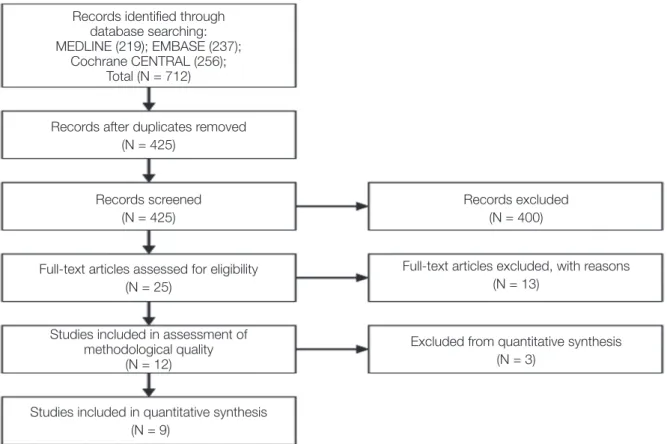
The search of the databases initially identified 712 articles (Fig. 1), of which 287 duplicated articles were
removed. At title/abstract screening, 400 articles that clearly were not consistent with the inclusion criteria were excluded. Reading the full texts of the remain- ing 25 articles resulted in the identification of 12 potentially relevant studies. The reasons for exclud- ing 13 articles are tabulated in supplementary Ap- pendix 2. The agreement between the two reviewers throughout the screening process was rated as good, with a Cohen’s kappa coefficient of 0.69.
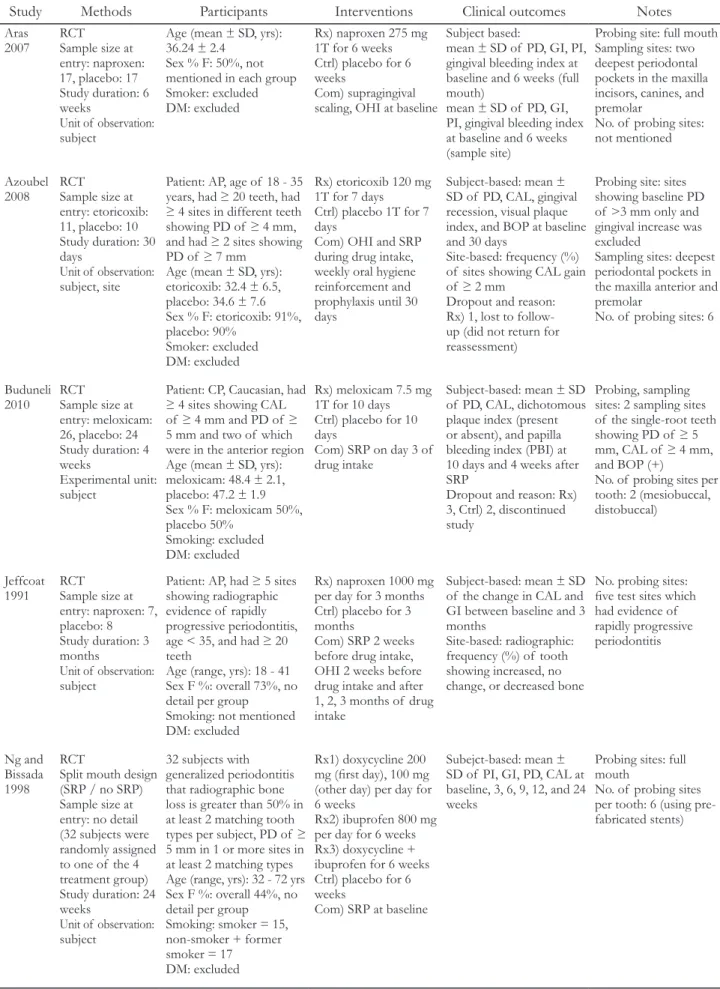
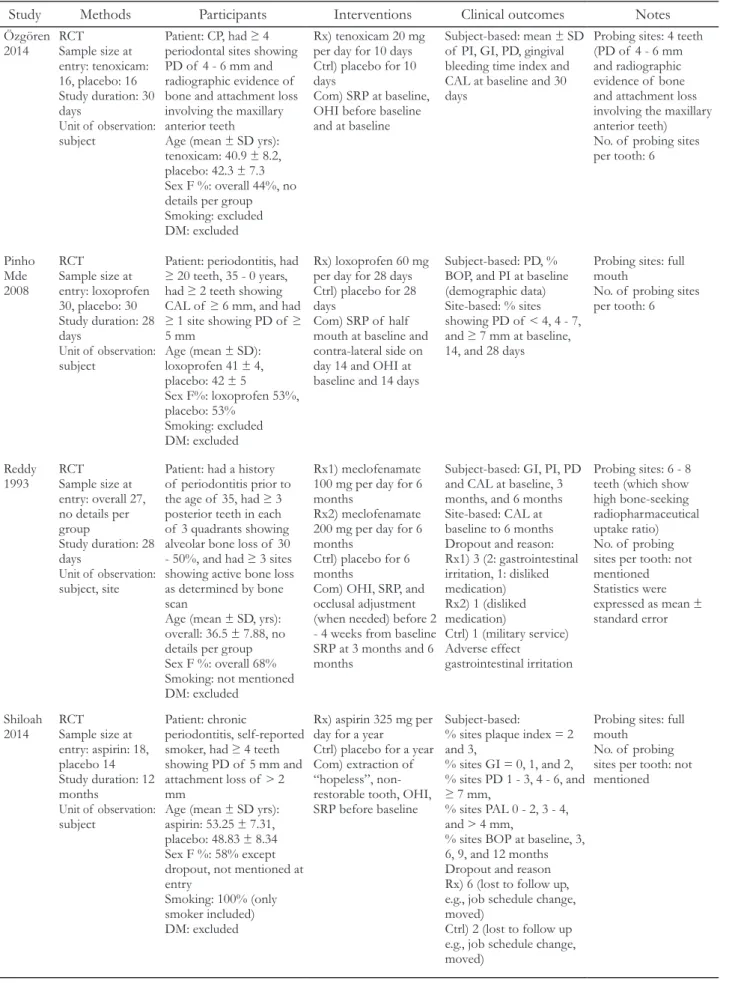
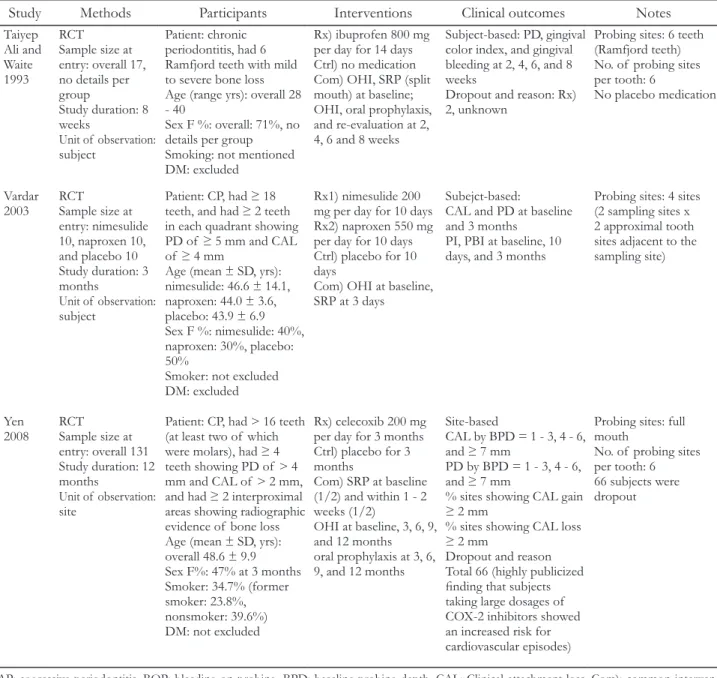
Study characteristics and patient populations The demographic and experimental characteristics of the included studies are summarized in Table 1.
There were differences between the studies in the kind of NSAIDs, daily dose, administration period, and observation period. The examined area, type of tooth, and number of data points per subject also varied among the studies. Treatment outcomes were presented using various outcome variables. For most of the studies, CAL or PD was reported as mean ± SD values at the subject-level observation unit.25-33
Fig. 1. Flow diagram.
Studies included in quantitative synthesis (N = 9)
Records identified through database searching:
MEDLINE (219); EMBASE (237);
Cochrane CENTRAL (256);
Total (N = 712)
Records after duplicates removed (N = 425)
Records screened (N = 425)
Records excluded (N = 400)
Full-text articles assessed for eligibility (N = 25)
Full-text articles excluded, with reasons (N = 13)
Studies included in assessment of methodological quality
(N = 12)
Excluded from quantitative synthesis (N = 3)
Table 1. Characteristics of included studies
Study Methods Participants Interventions Clinical outcomes Notes
Aras
2007 RCT
Sample size at entry: naproxen:
17, placebo: 17 Study duration: 6 weeks
Unit of observation:
subject
Age (mean ± SD, yrs):
36.24 ± 2.4 Sex % F: 50%, not mentioned in each group Smoker: excluded DM: excluded
Rx) naproxen 275 mg 1T for 6 weeks Ctrl) placebo for 6 weeks
Com) supragingival scaling, OHI at baseline
Subject based:
mean ± SD of PD, GI, PI, gingival bleeding index at baseline and 6 weeks (full mouth)
mean ± SD of PD, GI, PI, gingival bleeding index at baseline and 6 weeks (sample site)
Probing site: full mouth Sampling sites: two deepest periodontal pockets in the maxilla incisors, canines, and premolar
No. of probing sites:
not mentioned
Azoubel
2008 RCT
Sample size at entry: etoricoxib:
11, placebo: 10 Study duration: 30 daysUnit of observation:
subject, site
Patient: AP, age of 18 - 35 years, had ≥ 20 teeth, had
≥ 4 sites in different teeth showing PD of ≥ 4 mm, and had ≥ 2 sites showing PD of ≥ 7 mm
Age (mean ± SD, yrs):
etoricoxib: 32.4 ± 6.5, placebo: 34.6 ± 7.6 Sex % F: etoricoxib: 91%, placebo: 90%
Smoker: excluded DM: excluded
Rx) etoricoxib 120 mg 1T for 7 days
Ctrl) placebo 1T for 7 daysCom) OHI and SRP during drug intake, weekly oral hygiene reinforcement and prophylaxis until 30 days
Subject-based: mean ± SD of PD, CAL, gingival recession, visual plaque index, and BOP at baseline and 30 days
Site-based: frequency (%) of sites showing CAL gain of ≥ 2 mm
Dropout and reason:
Rx) 1, lost to follow- up (did not return for reassessment)
Probing site: sites showing baseline PD of >3 mm only and gingival increase was excluded
Sampling sites: deepest periodontal pockets in the maxilla anterior and premolar
No. of probing sites: 6
Buduneli
2010 RCT
Sample size at entry: meloxicam:
26, placebo: 24 Study duration: 4 weeks
Experimental unit:
subject
Patient: CP, Caucasian, had
≥ 4 sites showing CAL of ≥ 4 mm and PD of ≥ 5 mm and two of which were in the anterior region Age (mean ± SD, yrs):
meloxicam: 48.4 ± 2.1, placebo: 47.2 ± 1.9 Sex % F: meloxicam 50%, placebo 50%
Smoking: excluded DM: excluded
Rx) meloxicam 7.5 mg 1T for 10 days Ctrl) placebo for 10 daysCom) SRP on day 3 of drug intake
Subject-based: mean ± SD of PD, CAL, dichotomous plaque index (present or absent), and papilla bleeding index (PBI) at 10 days and 4 weeks after SRPDropout and reason: Rx) 3, Ctrl) 2, discontinued study
Probing, sampling sites: 2 sampling sites of the single-root teeth showing PD of ≥ 5 mm, CAL of ≥ 4 mm, and BOP (+)
No. of probing sites per tooth: 2 (mesiobuccal, distobuccal)
Jeffcoat
1991 RCT
Sample size at entry: naproxen: 7, placebo: 8 Study duration: 3 months
Unit of observation:
subject
Patient: AP, had ≥ 5 sites showing radiographic evidence of rapidly progressive periodontitis, age < 35, and had ≥ 20 teeth
Age (range, yrs): 18 - 41 Sex F %: overall 73%, no detail per group
Smoking: not mentioned DM: excluded
Rx) naproxen 1000 mg per day for 3 months Ctrl) placebo for 3 months
Com) SRP 2 weeks before drug intake, OHI 2 weeks before drug intake and after 1, 2, 3 months of drug intake
Subject-based: mean ± SD of the change in CAL and GI between baseline and 3 months
Site-based: radiographic:
frequency (%) of tooth showing increased, no change, or decreased bone
No. probing sites:
five test sites which had evidence of rapidly progressive periodontitis
Ng and Bissada 1998
RCTSplit mouth design (SRP / no SRP) Sample size at entry: no detail (32 subjects were randomly assigned to one of the 4 treatment group) Study duration: 24 weeks
Unit of observation:
subject
32 subjects with generalized periodontitis that radiographic bone loss is greater than 50% in at least 2 matching tooth types per subject, PD of ≥ 5 mm in 1 or more sites in at least 2 matching types Age (range, yrs): 32 - 72 yrs Sex F %: overall 44%, no detail per group
Smoking: smoker = 15, non-smoker + former smoker = 17
DM: excluded
Rx1) doxycycline 200 mg (first day), 100 mg (other day) per day for 6 weeks
Rx2) ibuprofen 800 mg per day for 6 weeks Rx3) doxycycline + ibuprofen for 6 weeks Ctrl) placebo for 6 weeks
Com) SRP at baseline
Subejct-based: mean ± SD of PI, GI, PD, CAL at baseline, 3, 6, 9, 12, and 24 weeks
Probing sites: full mouth
No. of probing sites per tooth: 6 (using pre- fabricated stents)
Table 1. (Continued) Characteristics of included studies
Study Methods Participants Interventions Clinical outcomes Notes
Özgören
2014 RCT
Sample size at entry: tenoxicam:
16, placebo: 16 Study duration: 30 daysUnit of observation:
subject
Patient: CP, had ≥ 4 periodontal sites showing PD of 4 - 6 mm and radiographic evidence of bone and attachment loss involving the maxillary anterior teeth
Age (mean ± SD yrs):
tenoxicam: 40.9 ± 8.2, placebo: 42.3 ± 7.3 Sex F %: overall 44%, no details per group Smoking: excluded DM: excluded
Rx) tenoxicam 20 mg per day for 10 days Ctrl) placebo for 10 daysCom) SRP at baseline, OHI before baseline and at baseline
Subject-based: mean ± SD of PI, GI, PD, gingival bleeding time index and CAL at baseline and 30 days
Probing sites: 4 teeth (PD of 4 - 6 mm and radiographic evidence of bone and attachment loss involving the maxillary anterior teeth) No. of probing sites per tooth: 6
Pinho Mde 2008
RCTSample size at entry: loxoprofen 30, placebo: 30 Study duration: 28 daysUnit of observation:
subject
Patient: periodontitis, had
≥ 20 teeth, 35 - 0 years, had ≥ 2 teeth showing CAL of ≥ 6 mm, and had
≥ 1 site showing PD of ≥ 5 mmAge (mean ± SD):
loxoprofen 41 ± 4, placebo: 42 ± 5
Sex F%: loxoprofen 53%, placebo: 53%
Smoking: excluded DM: excluded
Rx) loxoprofen 60 mg per day for 28 days Ctrl) placebo for 28 daysCom) SRP of half mouth at baseline and contra-lateral side on day 14 and OHI at baseline and 14 days
Subject-based: PD, % BOP, and PI at baseline (demographic data) Site-based: % sites showing PD of < 4, 4 - 7, and ≥ 7 mm at baseline, 14, and 28 days
Probing sites: full mouth
No. of probing sites per tooth: 6
Reddy
1993 RCT
Sample size at entry: overall 27, no details per group
Study duration: 28 daysUnit of observation:
subject, site
Patient: had a history of periodontitis prior to the age of 35, had ≥ 3 posterior teeth in each of 3 quadrants showing alveolar bone loss of 30 - 50%, and had ≥ 3 sites showing active bone loss as determined by bone scanAge (mean ± SD, yrs):
overall: 36.5 ± 7.88, no details per group Sex F %: overall 68%
Smoking: not mentioned DM: excluded
Rx1) meclofenamate 100 mg per day for 6 months
Rx2) meclofenamate 200 mg per day for 6 months
Ctrl) placebo for 6 months
Com) OHI, SRP, and occlusal adjustment (when needed) before 2 - 4 weeks from baseline SRP at 3 months and 6 months
Subject-based: GI, PI, PD and CAL at baseline, 3 months, and 6 months Site-based: CAL at baseline to 6 months Dropout and reason:
Rx1) 3 (2: gastrointestinal irritation, 1: disliked medication) Rx2) 1 (disliked medication)
Ctrl) 1 (military service) Adverse effect
gastrointestinal irritation
Probing sites: 6 - 8 teeth (which show high bone-seeking radiopharmaceutical uptake ratio) No. of probing sites per tooth: not mentioned Statistics were expressed as mean ± standard error
Shiloah
2014 RCT
Sample size at entry: aspirin: 18, placebo 14 Study duration: 12 months
Unit of observation:
subject
Patient: chronic
periodontitis, self-reported smoker, had ≥ 4 teeth showing PD of 5 mm and attachment loss of > 2 mmAge (mean ± SD yrs):
aspirin: 53.25 ± 7.31, placebo: 48.83 ± 8.34 Sex F %: 58% except dropout, not mentioned at entry
Smoking: 100% (only smoker included) DM: excluded
Rx) aspirin 325 mg per day for a year
Ctrl) placebo for a year Com) extraction of
“hopeless”, non- restorable tooth, OHI, SRP before baseline
Subject-based:
% sites plaque index = 2 and 3,
% sites GI = 0, 1, and 2,
% sites PD 1 - 3, 4 - 6, and
≥ 7 mm,
% sites PAL 0 - 2, 3 - 4, and > 4 mm,
% sites BOP at baseline, 3, 6, 9, and 12 months Dropout and reason Rx) 6 (lost to follow up, e.g., job schedule change, moved)
Ctrl) 2 (lost to follow up e.g., job schedule change, moved)
Probing sites: full mouth
No. of probing sites per tooth: not mentioned
Table 1. (Continued) Characteristics of included studies
Study Methods Participants Interventions Clinical outcomes Notes
Taiyep Ali and Waite 1993
RCTSample size at entry: overall 17, no details per group
Study duration: 8 weeks
Unit of observation:
subject
Patient: chronic periodontitis, had 6 Ramfjord teeth with mild to severe bone loss Age (range yrs): overall 28 - 40Sex F %: overall: 71%, no details per group Smoking: not mentioned DM: excluded
Rx) ibuprofen 800 mg per day for 14 days Ctrl) no medication Com) OHI, SRP (split mouth) at baseline;
OHI, oral prophylaxis, and re-evaluation at 2, 4, 6 and 8 weeks
Subject-based: PD, gingival color index, and gingival bleeding at 2, 4, 6, and 8 weeks
Dropout and reason: Rx) 2, unknown
Probing sites: 6 teeth (Ramfjord teeth) No. of probing sites per tooth: 6
No placebo medication
Vardar
2003 RCT
Sample size at entry: nimesulide 10, naproxen 10, and placebo 10 Study duration: 3 months
Unit of observation:
subject
Patient: CP, had ≥ 18 teeth, and had ≥ 2 teeth in each quadrant showing PD of ≥ 5 mm and CAL of ≥ 4 mm
Age (mean ± SD, yrs):
nimesulide: 46.6 ± 14.1, naproxen: 44.0 ± 3.6, placebo: 43.9 ± 6.9 Sex F %: nimesulide: 40%, naproxen: 30%, placebo:
50%Smoker: not excluded DM: excluded
Rx1) nimesulide 200 mg per day for 10 days Rx2) naproxen 550 mg per day for 10 days Ctrl) placebo for 10 daysCom) OHI at baseline, SRP at 3 days
Subejct-based:
CAL and PD at baseline and 3 months
PI, PBI at baseline, 10 days, and 3 months
Probing sites: 4 sites (2 sampling sites x 2 approximal tooth sites adjacent to the sampling site)
Yen 2008 RCT
Sample size at entry: overall 131 Study duration: 12 months
Unit of observation:
site
Patient: CP, had > 16 teeth (at least two of which were molars), had ≥ 4 teeth showing PD of > 4 mm and CAL of > 2 mm, and had ≥ 2 interproximal areas showing radiographic evidence of bone loss Age (mean ± SD, yrs):
overall 48.6 ± 9.9 Sex F%: 47% at 3 months Smoker: 34.7% (former smoker: 23.8%, nonsmoker: 39.6%) DM: not excluded
Rx) celecoxib 200 mg per day for 3 months Ctrl) placebo for 3 months
Com) SRP at baseline (1/2) and within 1 - 2 weeks (1/2)
OHI at baseline, 3, 6, 9, and 12 months oral prophylaxis at 3, 6, 9, and 12 months
Site-based
CAL by BPD = 1 - 3, 4 - 6, and ≥ 7 mm
PD by BPD = 1 - 3, 4 - 6, and ≥ 7 mm
% sites showing CAL gain
≥ 2 mm
% sites showing CAL loss
≥ 2 mm
Dropout and reason Total 66 (highly publicized finding that subjects taking large dosages of COX-2 inhibitors showed an increased risk for cardiovascular episodes)
Probing sites: full mouth
No. of probing sites per tooth: 6 66 subjects were dropout
AP: aggressive periodontitis, BOP: bleeding on probing, BPD: baseline probing depth, CAL: Clinical attachment loss, Com): common interven- tion, CP: chronic periodontitis, Ctrl): control group, GI: gingival index, GCF: gingival crevicular fluid, DM: diabetes mellitus, OHI: oral hygiene instruction, PD: probing depth, PI: plaque index, Rx): nonsteroidal anti-inflammatory drugs group, SD: standard deviation, yrs: years, Sex % F:
percentage of female, SRP: scaling and root planing.
Methodological quality of included studies The included studies were assessed using the Co- chrane risk-of-bias assessment tool (Fig. 2, supple- mentary Appendix 3). Publication bias could not be assessed due to the small number of appropriate studies (7 for CAL and 8 for PD), since asymmetry of the funnel plot is generally only tested when at least 10 studies are included in a meta-analysis.
Effects of interventions
Data reported as mean ± SD values with the subject-level observation unit pooled by observation time. The differences in the CAL gain and PD reduc- tion between NSAIDs and control groups using a random-effect model are illustrated in Fig. 3 and Fig.
4 as mean and 95% confidence interval values. There was no significant difference in the mean CAL gain
Fig. 3. Forest plot of changes in CAL for in randomized clinical trials that administrated NSAIDs adjunctive to nonsurgical periodontal treatment.
at any observation time (Fig. 3). A significant reduc- tion in PD-with a mean difference of 0.34 mm (95%
confidence interval = 0.29 to 0.40)-was seen only at 6 weeks relative to the control group (Fig. 4).
The number of adverse reactions, the reasons for dropouts, and reports of adverse reactions are listed
in Table 1. Reddy et al.31 reported that their dropouts were due to gastrointestinal discomfort in the group receiving meclofenamate at 200 mg/day, but the rea- son for other dropouts was unknown in most cases (e.g., lost to follow-up or a discontinued study).
Fig. 2. Risk of bias graph: review authors’ judgements about each risk of bias item presented as percentages across all included studies.
Low risk of bias Uuclear risk of bias High risk of bias Random sequence generation (selection bias)
Allocation concealment (selection bias) Blinding of participants and personnel (performance bias) Blinding of outcome assessment (detection bias) Incomplete outcome data (attrition bias) Selective reporting (reporting bias) Other bias
0% 25% 50% 75% 100%
Discussion
The studies included in this meta-analysis exhib- ited a substantial heterogeneity, which was due to a few reports of significantly higher mean differ- ences in CAL gain or PD reduction in the NSAIDs group than the control group. For instance, Ng and Bissada29 reported a higher mean difference in the NSAIDs group at 6 weeks posttreatment, but this was due to a smaller CAL loss in the NSAIDs group compared to the control group, rather than to a superior CAL gain. Likewise, Buduneli et al.27 enrolled patients with a deeper PD at baseline in the NSAIDs group than the control group, and this may have resulted in a superior PD reduction considering that scaling and root planing reportedly produces a
greater PD reduction in sites with a deeper PD.5,34 The following differences accounted for the het- erogeneity. Firstly, subjects were recruited in each study using different inclusion criteria and exclusion criteria. Secondly, additional oral prophylaxis or oral hygiene instruction was either not planned or, if it was planned, the schedule varied among the studies.
These additional procedures may produce an ap- propriately maintained plaque state in the enrolled patients, and they may have resulted in the treatment responses differing among the studies. In addition, the state of plaque deposition was not presented as a unified outcome variable. Moreover, kinds of NSAIDs the daily dose, administration period, and observation period of the regime varied among the studies. These differences may have contributed to Fig. 4. Forest plot of changes in PD for in randomized clinical trials that administrated NSAIDs adjunctive to nonsurgical periodontal treatment.
the inconsistent results.
It is well known that NSAIDs may induce gas- trointestinal irritation, and two of the patients who dropped out for this reason had received meclof- enamate at 200 mg/day for 6 months.31 To minimize gastrointestinal irritation and ulcers from NSAIDs, limiting the dose or co-administration with proton- pump inhibitors or H2-receptor antagonist can be considered.35 It has been reported that NSAIDs can impair oral mucosal repair as well as gastrointestinal mucosa,36 so whether NSAIDs compromise gingival repair following NSPT also needs to be investigated.
A recent nationwide retrospective study failed to show any benefit of low-dose aspirin when compar- ing mean CAL and PD data from 2 335 subjects in a national health and nutrition examination survey.37 In addition, systematic reviews have found no clear effect of NSAIDs on clinical outcomes.17 Our pres- ent results are in accordance with these previous findings. However, two reviews have found positive effects of NSAIDs on gingival inflammation and periodontal-disease progression by reducing the rate of alveolar bone resorption.38,39 These conflicting findings are probably due to the bone preservation effect of NSAIDs and it might not be reflected in clinical parameters including PD or CAL. Also, it would take a long time for bony changes to be mea- surable by periodontal probes.
The methodological quality of the included stud- ies was not high due to the lack of information. In addition, there were problems associated with partial tooth recording (i.e., including only specific types of teeth), which has the risk of overestimating or un- derestimating the periodontal condition of patients.40 Not only an adequate number of subjects but also an adequate number of data points from different types of teeth are needed to accurately reflect the status of included subjects. Taking these factors into account, further randomized controlled trials are needed to achieve a high methodological quality, involving sub- ject-level observation units and sufficient data points via full-mouth observations as well as the inclusion of sufficient subjects to achieve an adequate statisti- cal power for detecting a clinically meaningful effect size of NSAIDs.
Conclusion
The present review found clinical benefit for NSAIDs and NSPT over NSPT alone in some ad- ministration periods. It is difficult to conclude defini- tively whether a specific regime is superior to others, although some studies have found significant benefits and the others do not, due to the smallness of the included samples and the substantial heterogeneity among studies.
ORCID
Dae-Young Kang http://orcid.org/0000-0002-4311-4118 In-Woo Cho http://orcid.org/0000-0003-4985-3816 Hyun-Seung Shin http://orcid.org/0000-0002-1410-9731 Hyeong-Sik Ahn http://orcid.org/0000-0002-2084-7466 Hyun-Jung Kim http://orcid.org/0000-0003-2018-2385 Jung-Chul Park http://orcid.org/0000-0002-2041-8047
References
1. Consensus report. Periodontal diseases: pathogen- esis and microbial factors. Ann Periodontol 1996;1:
926-32.
2. Havemose-Poulsen A, Sørensen LK, Bendtzen K, Holmstrup P. Polymorphisms within the IL-1 gene cluster: effects on cytokine profiles in peripheral blood and whole blood cell cultures of patients with aggressive periodontitis, juvenile idiopathic ar- thritis, and rheumatoid arthritis. J Periodontol 2007;
78:475-92.
3. Löe H. Periodontal disease. The sixth complication of diabetes mellitus. Diabetes Care 1993;16:329-34.
4. Tomar SL, Asma S. Smoking-attributable periodon- titis in the United States: findings from NHANES III. National Health and Nutrition Examination Survey. J Periodontol 2000;71:743-51.
5. Cobb CM. Clinical significance of non-surgical periodontal therapy: an evidence-based perspec- tive of scaling and root planing. J Clin Periodontol 2002;29 Suppl 2:6-16.
6. Haffajee AD, Socransky SS, Ebersole JL. Survival analysis of periodontal sites before and after peri-
odontal therapy. J Clin Periodontol 1985;12:553-67.
7. Giannobile WV, Braun TM, Caplis AK, Doucette- Stamm L, Duff GW, Kornman KS. Patient strati- fication for preventive care in dentistry. J Dent Res 2013;92:694-701.
8. Kornman KS, Page RC, Tonetti MS. The host re- sponse to the microbial challenge in periodontitis:
assembling the players. Periodontol 2000 1997;14:
33-53.
9. Page RC. The role of inflammatory mediators in the pathogenesis of periodontal disease. J Peri- odontal Res 1991;26(3 Pt 2):230-42.
10. Lane N, Armitage GC, Loomer P, Hsieh S, Majum- dar S, Wang HY, Jeffcoat M, Munoz T. Bisphos- phonate therapy improves the outcome of conven- tional periodontal treatment: results of a 12-month, randomized, placebo-controlled study. J Periodon- tol 2005;76:1113-22.
11. Leitão RF, Ribeiro RA, Chaves HV, Rocha FA, Lima V, Brito GA. Nitric oxide synthase inhibition prevents alveolar bone resorption in experimental periodontitis in rats. J Periodontol 2005;76:956-63.
12. Martinez GL, Koury JC, Martins MA, Nogueira F, Fischer RG, Gustafsson A, Figueredo CM. Serum level changes of long chain-polyunsaturated fatty acids in patients undergoing periodontal therapy combined with one year of omega-3 supplementa- tion: a pilot randomized clinical trial. J Periodontal Implant Sci 2014;44:169-77.
13. Martuscelli G, Fiorellini JP, Crohin CC, Howell TH.
The effect of interleukin-11 on the progression of ligature-induced periodontal disease in the beagle dog. J Periodontol 2000;71:573-8.
14. Offenbacher S, Odle BM, Van Dyke TE. The use of crevicular fluid prostaglandin E2 levels as a pre- dictor of periodontal attachment loss. J Periodontal Res 1986;21:101-12.
15. Caton JG, Ciancio SG, Blieden TM, Bradshaw M, Crout RJ, Hefti AF, Massaro JM, Polson AM, Thomas J, Walker C. Treatment with subantimi- crobial dose doxycycline improves the efficacy of scaling and root planing in patients with adult peri- odontitis. J Periodontol 2000;71:521-32.
16. Preshaw PM, Hefti AF, Novak MJ, Michalowicz BS, Pihlstrom BL, Schoor R, Trummel CL, Dean J, Van
Dyke TE, Walker CB, Bradshaw MH. Subantimi- crobial dose doxycycline enhances the efficacy of scaling and root planing in chronic periodontitis: a multicenter trial. J Periodontol 2004;75:1068-76.
17. Reddy MS, Geurs NC, Gunsolley JC. Periodontal host modulation with antiproteinase, anti-inflam- matory, and bone-sparing agents. A systematic re- view. Ann Periodontol 2003;8:12-37.
18. Higgins JP, Green S. Cochrane handbook for sys- tematic reviews of interventions, vol. 5. Wiley On- line Library, 2008.
19. Opengrey. System for information on grey litera- ture in Europe. Vandoeuvre-lès-Nancy: Institut de l'Information Scientifique et Technique, 2011.
Available from: http://www.opengrey.eu/ (updated 2015 Mar 11).
20. Armitage GC. Development of a classification sys- tem for periodontal diseases and conditions. Ann Periodontol 1999;4:1-6.
21. Cohen J. Weighted kappa: nominal scale agreement with provision for scaled disagreement or partial credit. Psychol Bull 1968;70:213-20.
22. Higgins JP, Altman DG, Gøtzsche PC, Jüni P, Mo- her D, Oxman AD, Savovic J, Schulz KF, Weeks L, Sterne JA; Cochrane Bias Methods Group; Co- chrane Statistical Methods Group. The Cochrane Collaboration's tool for assessing risk of bias in randomised trials. BMJ 2011;343:d5928.
23. Clinicaltrials.gov. A service of the U.S. National In- stitutes of Health. Bethesda: U.S. National Library of Medicine, 2000. Available from: https://clinical- trials.gov/ (updated 2015 Apr 5).
24. Higgins JP, Thompson SG, Deeks JJ, Altman DG.
Measuring inconsistency in meta-analyses. BMJ 2003;327:557-60.
25. Aras H, Ca layan F, Güncü GN, Berbero lu A, Kilinç K. Effect of systemically administered naproxen sodium on clinical parameters and myelo- peroxidase and elastase-like activity levels in gingi- val crevicular fluid. J Periodontol 2007;78:868-73.
26. Azoubel MC, Sarmento VA, Cangussú V, Azoubel E, Bittencourt S, Cunha FQ, Ribeiro RA, Brito GA. Adjunctive benefits of systemic etoricoxib in non-surgical treatment of aggressive periodontitis:
short-term evaluation. J Periodontol 2008;79:1719-
25.
27. Buduneli N, Buduneli E, Cetin EO, Kirilmaz L, Kütükçüler N. Clinical findings and gingival crevic- ular fluid prostaglandin E2 and interleukin-1-beta levels following initial periodontal treatment and short-term meloxicam administration. Expert Opin Pharmacother 2010;11:1805-12.
28. Jeffcoat MK, Page R, Reddy M, Wannawisute A, Waite P, Palcanis K, Cogen R, Williams RC, Basch C.
Use of digital radiography to demonstrate the po- tential of naproxen as an adjunct in the treatment of rapidly progressive periodontitis. J Periodontal Res 1991;26:415-21.
29. Ng VW, Bissada NF. Clinical evaluation of systemic doxycycline and ibuprofen administration as an adjunctive treatment for adult periodontitis. J Peri- odontol 1998;69:772-6.
30. Ozgören O, Develioglu H, Güncü G, Akman A, Berker E. The adjunctive effect of tenoxicam dur- ing non-surgical periodontal treatment on clinical parameters and gingival crevicular fluid levels of MMP-8 and TNF-alpha in patients with chronic periodontitis - randomized, double-blind clinical trial. Adv Clin Exp Med 2014;23:559-65.
31. Reddy MS, Palcanis KG, Barnett ML, Haigh S, Charles CH, Jeffcoat MK. Efficacy of meclof- enamate sodium (Meclomen) in the treatment of rapidly progressive periodontitis. J Clin Periodontol 1993;20:635-40.
32. Taiyeb Ali TB, Waite IM. The effect of systemic ibuprofen on gingival inflammation in humans. J Clin Periodontol 1993;20:723-8.
33. Vardar S, Baylas H, Huseyinov A. Effects of selec- tive cyclooxygenase-2 inhibition on gingival tissue
levels of prostaglandin E2 and prostaglandin F2al- pha and clinical parameters of chronic periodonti- tis. J Periodontol 2003;74:57-63.
34. Knowles JW, Burgett FG, Nissle RR, Shick RA, Morrison EC, Ramfjord SP. Results of periodontal treatment related to pocket depth and attachment level. Eight years. J Periodontol 1979;50:225-33.
35. Rostom A, Dube C, Wells G, Tugwell P, Welch V, Jolicoeur E, McGowan J. Prevention of NSAID- induced gastroduodenal ulcers. Cochrane Database Syst Rev 2002;4:CD002296.
36. Slomiany BL, Slomiany A. Nonsteroidal anti- inflammatory drugs impair oral mucosal repair by eliciting disturbances in endothelin-converting enzyme-1 and constitutive nitric oxide synthase. J Physiol Pharmacol 2001;52:81-92.
37. Kotsakis GA, Thai A, Ioannou AL, Demmer RT, Michalowicz BS. Association between low-dose as- pirin and periodontal disease: results from the con- tinuous national health and nutrition examination survey (NHANES) 2011-2012. J Clin Periodontol 2015;42:333-41.
38. Salvi GE, Lang NP. Host response modulation in the management of periodontal diseases. J Clin Periodontol 2005;32 Suppl 6:108-29.
39. Salvi GE, Lang NP. The effects of non-steroidal anti-inflammatory drugs (selective and non-selec- tive) on the treatment of periodontal diseases. Curr Pharm Des 2005;11:1757-69.
40. Thomson WM, Williams SM. Partial- or full-mouth approaches to assessing the prevalence of and risk factors for periodontal disease in young adults. J Periodontol 2002;73:1010-4.
*교신저자: 김현정
(02841)서울시 성북구 인촌로 73 근거중심 의학연구소, 고려대학교 의과대학 예방의학교실 Tel: 02-2286-1341|Fax: 02-2286-1342|E-mail: [email protected]
*교신저자: 박정철
(31116)천안시 동남구 단대로 119 단국대학교 치과대학 치주과학교실 Tel: 041-550-0261|Fax: 303-3442-7364|E-mail: [email protected] 접수일: 2017년 1월 6일|수정일: 2017년 3월 6일|채택일: 2017년 3월 9일
비스테로이드성 항염증제를 이용한 숙주조절이 치주질환에 미치는 영향: 체계적 고찰 및 메타 분석
강대영1, 조인우1, 신현승1, 안형식2, 김현정2*, 박정철1*
1단국대학교 치과대학 치주과학교실
2근거중심 의학연구소, 고려대학교 의과대학 예방의학교실
목적: 아라키돈산 대사물의 생합성을 억제하는 비스테로이드성 항염증제는 잠재적인 숙주조절제로 고려되고 있다. 이 종설의 목적은 비스테로이드성 항염증제를 비외과적 치주치료와 병용하였을 때 치주질환자에 미치는 영향을 평가하는 데 있다.
연구 재료 및 방법: 관련된 연구를 확인하기 위하여 세 전자 데이터베이스를 검색하였다. Cochrane의 고찰 방법론에 따 라 방법론적인 질, 임상 부착 수준과 탐침 깊이 변화량에 대한 평균 차이를 분석하였다.
결과: 총 12개의 연구의 방법론을 평가하였고 이중 9개의 연구에 대해 메타-분석을 시행하였다. 임상 부착 수준의 변화 에 대한 평균차의 경우 모든 관찰기간에서 비스테로이드성 항염증제 군과 대조군간 유의차를 보이지 않았다. 가장 큰 평 균차는 4주 때 0.30 mm로 나타났다(95% 신뢰구간 = -0.37 to 0.97). 탐침 깊이 변화에 대한 평균차는 6주 때 0.34 mm (95% 신뢰구간 = 0.29 to 0.40)로 유의차를 보였다.
결론: 이를 토대로 하였을 때 비스테로이드성 항염증제를 비외과적 치주치료와 병용하여 투여하였을 때 부가적으로 치 료효과를 증대시킬 수 있을 것으로 생각된다.
(구강회복응용과학지 2017;33(1):7-18)
주요어: 비스테로이드성 항염증제; 프로스타글란딘; 약물 요법; 치주 질환; 메타-분석