Allergy Asthma Immunol Res. 2014 September;6(5):421-427.
http://dx.doi.org/10.4168/aair.2014.6.5.421 pISSN 2092-7355 • eISSN 2092-7363
INTRODUCTION
The mechanisms underlying allergic diseases remain un- clear.1 Significant efforts have been put towards effective treat- ment and prevention, but reducing the prevalence of allergic diseases remains costly and challenging. The role of indoor en- vironmental factors in triggering and exacerbating allergic dis- eases is generally accepted.2-4 By addressing specific environ- mental risk factors in specific populations, policymakers and practitioners could cost-effectively reduce allergic disease bur- den. However, environmental triggers are complex, and it is dif- ficult to identify areas and populations at elevated risks for al- lergic diseases.
Many factors, including environmental factors, influence the incidence of asthma, atopic dermatitis (AD), and allergic rhini- tis (AR). Genetic factors are also important for determining dis- ease susceptibility.5 Among these three diseases, asthma is rec- ognized as an environmental justice concern due to its relation-
Exploring Household-level Risk Factors for Self-reported
Prevalence of Allergic Diseases Among Low-income Households in Seoul, Korea
SungChul Seo,
1Dohyeong Kim,
2,3* Christopher Paul,
4Young Yoo,
1,3,5Ji Tae Choung
1,3,51The Environmental Health Center for Asthma, Korea University, Seoul, Korea
2School of Economic, Political and Policy Sciences, The University of Texas at Dallas, Richardson, TX, United States
3Institute of Allergy and Immunology, Korea University, Seoul, Korea
4Duke Global Health Institute, Duke University, Durham, NC, United States
5Department of Pediatrics, College of Medicine, Korea University, Seoul, Korea
ship with poverty and substandard housing conditions,6-8 but the relationship between income and AD/AR has not been clearly demonstrated. Although some studies have reported a positive association between income and the prevalence of AD,9-11 others indicate that the prevalence of AD is greater for low-income families12 or not significantly related to income.13,14 The impact of economic status for AR is also unclear; some stud- ies reported elevated prevalence among high-income house- holds,15,16 but others argue that income status does not affect the prevalence.17-19 However, few studies have evaluated indoor risk factors (specifically for low-income populations), most of Purpose: Indoor risk factors for allergic diseases in low-income households in Korea have been characterized only partially. We evaluated the prev- alences of atopic dermatitis, asthma, and allergic rhinitis in Seoul, Korea, to identify key housing and behavioral risk factors of low-income house- holds. Methods: Statistical analysis of the prevalence of these diseases and various risk factors was conducted using data from a 2010 Ministry of Environment household survey. Logistic regression models were generated using data from 511 low-income household apartments in districts of Seoul. Results: In general, housing factors such as renovation history (P<0.1) and crowding status (P<0.01) were associated with allergic rhinitis, whereas behavioral factors such as frequency of indoor ventilation (P<0.05) and cleaning (P<0.1) were inversely correlated with atopic dermatitis.
Indoor smoking was a major trigger of asthma and atopic dermatitis in low-income households (P<0.05). The presence of mold and water leakage in houses were the most important risk factors for all three diseases (P<0.05). Conclusions: Various risk factors play a role in triggering allergic diseases among low-income households in Seoul, and health or environmental programs mitigating allergic diseases should be tailored to address appropriate housing or behavioral factors in target populations.
Key Words: Atopic dermatitis; asthma; allergic rhinitis; risk factors; low-income population; Korea
This is an Open Access article distributed under the terms of the Creative Commons Attribution Non-Commercial License (http://creativecommons.org/licenses/by-nc/3.0/) which permits unrestricted non-commercial use, distribution, and reproduction in any medium, provided the original work is properly cited.
Correspondence to: Dohyeong Kim, PhD, School of Economic, Political and Policy Sciences, The University of Texas at Dallas, 800 W Campbell Road, Richardson, TX 75080, United States.
Tel: +1-972-883-3512; Fax: +1-972-883-6297; E-mail: [email protected] Received: August 4, 2013; Revised: January 11, 2014;
Accepted: January 16, 2014
•There are no financial or other issues that might lead to conflict of interest.
which have been conducted in western countries.20,21
The epidemic increase in allergic disease has occurred in par- allel with many societal and lifestyle changes, which is most ap- parent in “westernized” or “modernized” countries.22 Urban Korean lifestyles have been rapidly and substantially western- ized during the past few decades in terms of diet and house- hold activities.23 In 2010, over 10 million people in Korea suf- fered from allergic diseases, resulting in annual treatment ex- penses of approximately USD 600 million.24 In 1995, the preva- lence of asthma and other allergic diseases were higher in Seoul than other provincial cities due mostly to elevated air pollution, but by 2000 had become similar across urban areas.25
Although several epidemiological studies of allergic diseases in Korea have been performed,26-28 no studies have focused on low-income households. Data supporting income effects on AD in Korea is also inconsistent,29,30 and the majority of studies on AR in Korea compares incidences by region, urban status, and time, but not the effects of household-level and economic status. Moreover, many experts argue that low income and pov- erty increases the risk of inadequate or delayed diagnosis and treatment, which could lead to more severe disease in patients in low-income households.31
Limiting analysis to only low-income households would min- imize variability in risk behaviors and intervention activities for allergic diseases (e.g. smoking, cleaning, ventilation, etc.), which are typically characterized by income status, and thus al- low researchers to identify risk factors that commonly affect low-income households with high certainty. Previous studies have generated multivariate statistical models to assign the rel- ative weights of each household-level risk factor for the inci- dences of allergic diseases,32 but the risk factors that are rela- tively more influential for allergic diseases in low-income pop- ulations remain unknown.
Moreover, despite the significant amount of information re- garding individual-level risk factors for allergic diseases, few studies have focused on household-level dynamics of allergic diseases based on household-level environmental and behav- ioral risk factors.33,34 Therefore, the aim of this study was to de- termine which “household-level” risk factors affect the preva- lence of 3 allergic diseases (AD, asthma, and AR) among low- income households in Seoul, focusing on housing and behav- ioral characteristics. We believe that this information will en- able identification of household-level risk factors for allergic diseases and provide a policy guideline concerning housing quality assessment and public health campaigns, and ultimate- ly change the behavior of low-income households.
MATERIALS AND METHODS
We conducted a cross-sectional study using data obtained from the Green Cody Consulting Project (2010-2011) per- formed by the Korea Environmental Corporation and support-
ed by the Ministry of Environment of the Republic of Korea.
Household surveys and indoor environmental samples were conducted with 1,516 homes throughout Seoul. The sample households were selected when they agreed to participate in the project and allowed a survey and assessment team to visit their house for a questionnaire survey and environmental as- sessments.
The questionnaire survey, completed by an adult in each household, included potential risk factors of allergic diseases pertaining to housing characteristics (i.e., age of housing, reno- vation history, molds or water leaking in the house, house size, etc.) and household behavioral aspects (pet in the house, fre- quency of ventilation, frequency of house-wide cleaning, indoor smoking, etc.). Self-reported disease experience questions at the household level for each of the 3 allergic diseases (AD, asthma, and AR) were also included in the survey, which asked whether anyone in the household had an allergic disease in the past.
Environmental assessment data collected for the 1,516 sam- ple households included measurements of airborne mold, presence of house dust mites (HDM), and phthalates in floor dust. The one-stage Andersen sampler (Andersen Instruments Inc., Atlanta, GA, USA) at a flow rate of 28.98 L/min for 10 min- utes and a culture-based method were used for sampling and analyses of airborne mold, respectively. Dust sampling using a vacuum cleaner (Majestic 360®, 1050 W, HMI Industries CO, USA) equipped with a nozzle containing a collector with a 10- µm pore-size filter (DustreamTM Collector, Indoor Biotechnolo- gies, Inc. Charlottesville, VA, USA) was performed to measure phthalates in floor dust. Each dust sample was sieved (355-µm sieve) and 100 mg of fine dust were added to 1 mL of PBS-T (0.05% Tween 20 in phosphate-buffered saline (PBS); pH 7.4).
Gas chromatography/flame ionization detection analysis was performed to measure the level of phthalates in floor dust using aliquots from the dust-mixed solution followed by centrifuga- tion.35 Semi-quantitative tests (SD Mite Tester, Standard Diag- nostics, Inc., Kyunggi-do, Korea) were performed to identify house dust mites in dust from the mattress or sofa. Swabbing using a cotton swab was applied to a 0.2×0.3-m area of the mat- tress or sofa, after which the swab was added to a tube contain- ing 1 mL of blocking-PBS-T solution (0.2 M Tricine, 0.05% Pro- cline, 0.25% Tween 20, 0.02% sodium azide in PBS). After 1 minute of shaking three drops were applied to the test device, and the level of HDM was divided into the following categories;
<20 mites/m2 (none), 20-99 mites/m2, and≥100 mites/m2. Using the survey data, we limited our study sample to only low-income households, whose monthly incomes were less than the minimum cost of living (determined annually by the Ministry of Health and Welfare) and who were eligible to re- ceive government income support.36 In 2011, the minimum cost of living for a family of four in Korea was approximately USD 15,700 (KRW 17,300,000) per year. Although household in- come information for each sample household was not available
from the survey data, our sample is likely representative of the low-income households in Seoul since they were classified as such by the government based on monthly income. Our sam- ple includes 687 households categorized as low-income. We limited our analysis to households in apartments as a majority of sample households live in apartments (85.7%), and apart- ments and houses tend to differ systematically in air quality.
According to the housing statistics in 2011, ~60% of the total
houses in Seoul were apartments, and 37.7% of those were over 20 years old.37 After excluding households who had recently moved to the sampled address (less than 3 years ago), the final sample for analysis consisted of 511 households in apartments who have lived in the current residence for at least 3 years. A summary of the statistics of the risk factors for the final sample set (N=511) is provided in Table 1.
We generated a logistic regression model of an allergic disease diagnosis within a household to identify risk factors (housing and behavioral) associated with the incidences of each allergic disease. The resulting models propose the relative weights that should be assigned to each risk factor for each disease. All sta- tistical analyses were performed with STATA version 12 (Stata Corporation, College Station, TX, USA).
RESULTS
Table 1 shows the sample statistics of self-reported household risk factors categorized as housing and behavioral factors, as well as the prevalence of AD, asthma, and AR. Of the 511 house- holds, 125 had at least one family member diagnosed with any of the allergic diseases (24.5%). A total of 39 (7.6%) households had an AD patient, 60 had an asthma patient (11.7%) and 45 had an AR patient (8.8%). Only 19 households (3.7%) reported 2 types of diseases, and none reported all three diseases. The av- erage age of the apartments was 17.6 years, which is approxi- mately twice the average age of apartments in Seoul (9.8 years).38 Table 1. Sample statistics of self-reported indoor risk factors and prevalence of
allergic diseases (N=511)
Variable N (%)
Indoor risk factors Housing
factors Age of housing
(year, mean±SD) 17.6±2.6
Crowding status
(m2/family member, mean±SD) 27.4±12.0 Renovation history
Yes 116 (22.7)
No 395 (77.3)
Molds or water leaking in the house
Yes 177 (34.6)
No 334 (65.4)
Behavioral
factors Pet in the house
Yes 48 (9.4)
No 463 (90.6)
Ventilation at least once per week
Yes 489 (95.7)
No 22 (4.3)
House-wide cleaning at least twice per week
Yes 478 (89.5)
No 33 (10.5)
Any smoker in the house
Yes 112 (21.9)
No 399 (78.1)
Prevalence of allergic
diseases At least one family member who has had AD
Yes 39 (7.6)
No 472 (92.4)
At least one family member who has had asthma
Yes 60 (11.7)
No 451 (88.3)
At least one family member who has had AR
Yes 45 (8.8)
No 466 (91.2)
At least one family member who has had any allergic disease
Yes 125 (24.5)
No 386 (75.5)
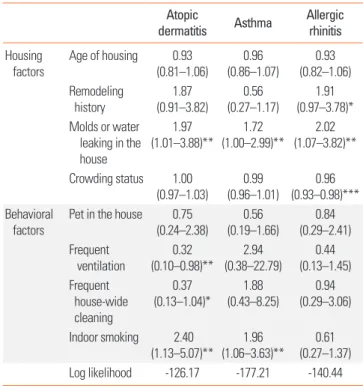
Table 2. Results of the logistic regression model for each disease: Odds ratios for indoor risk factors (N=511; 95% confidence interval)
Atopic
dermatitis Asthma Allergic rhinitis Housing
factors
Age of housing 0.93 (0.81–1.06)
0.96 (0.86–1.07)
0.93 (0.82–1.06) Remodeling
history 1.87
(0.91–3.82) 0.56
(0.27–1.17) 1.91 (0.97–3.78)*
Molds or water leaking in the house
1.97
(1.01–3.88)** 1.72
(1.00–2.99)** 2.02 (1.07–3.82)**
Crowding status 1.00
(0.97–1.03) 0.99
(0.96–1.01) 0.96 (0.93–0.98)***
Behavioral
factors Pet in the house 0.75
(0.24–2.38) 0.56
(0.19–1.66) 0.84 (0.29–2.41) Frequent
ventilation 0.32
(0.10–0.98)** 2.94
(0.38–22.79) 0.44 (0.13–1.45) Frequent
house-wide cleaning
0.37
(0.13–1.04)* 1.88
(0.43–8.25) 0.94 (0.29–3.06) Indoor smoking 2.40
(1.13–5.07)**
1.96 (1.06–3.63)**
0.61 (0.27–1.37)
Log likelihood -126.17 -177.21 -140.44
* P<0.1; ** P<0.05; *** P<0.01.
A total of 22% of the sample households stated that their house had been renovated recently (within the previous 3 years). A to- tal of 26% of respondents stated that their house had mold or visible water leaks. A crowding factor, calculated as house size divided by the number of family members, was 27.9 square me- ters per person on average for households in the sample. Com- pared to the city-wide average (36.3 square meters per person), low-income households reside in substantially more crowded environments.38 While over 90% of the sample households re- ported behaviors for improving their home environments (i.e., opened window for ventilation at least once per week or cleaned the entire house at least twice per week), 22% reported that a family member smoked indoors. This rate is approxi- mately twice the Korean national average for exposure to envi- ronmental tobacco smoke (a.k.a. secondhand smoke) in home environments (12.0%).39
The effects of housing and behavioral risk factors on allergic disease prevalence at the household level, estimated using lo- gistic regression models, are summarized in Table 2. The prom- inent risk factors differed among the three diseases. Only one risk factor, the presence of visible mold or water leaking in the house, was statistically significantly associated with all three diseases (P<0.05). A higher prevalence of AD was observed in households with behavioral risk factors for allergic diseases, while a higher prevalence of AR was associated with housing- related risk factors at the household level. Households living in a renovated building were more likely to have a family member with AR than those without renovations, but this was only mar- ginally significant (P<0.1). In other words, among poor house- holds, residents of recently renovated houses were at a slightly higher risk for AR. However, crowding was inversely related to the prevalence of AR at the highly significant level (P<0.01), which has been reported previously.40,41 The age of housing was not a significant risk factor for any of the diseases, possibly be- cause a majority of the sampled houses (92.2%) were built over 15 years ago and thus this factor showed only minor variation.
Behavioral factors had a greater influence on the AD inci- dence among sample households. The prevalence of AD was significantly lower for families who opened windows for venti- lation at least once per week or cleaned the entire house at least twice per week, compared to those not reporting such activities (P<0.05). However, those behavioral activities were not associ- ated with asthma or AR prevalence, while the impact of indoor smoking was statistically significantly associated with the prev- alence of asthma and AD (P<0.05). Pet ownership was not sig- nificantly associated with any allergic disease in our analysis.
Environmental sample data collected from surveyed house- holds can confirm whether higher levels of indoor environ- mental hazards are consistent with reported elevated risk fac- tors (Figure). Figure A shows that levels of mold in environmen- tal samples were higher in households reporting visible mold or water leakage than in those without (255.4 vs 196.6 CFU/m3;
P<0.05). The average level of airborne mold in households liv- ing in a recently renovated building was significantly higher than those without renovations (277.4 vs 200.6 CFU/m3; P<
0.05). This seems counterintuitive, but raises concern regarding the quality of renovations in low-income housing. Figure B shows that dust mites were significantly less prevalent in households with frequent cleaning or recent renovation com- pared to those without (P<0.05). Other indoor environmental hazard measurements—such as phthalate—in the environmen- tal sample data were not significantly correlated with any dis- ease.
DISCUSSION
We examined the prevalence of and risk factors for three aller- gic diseases (asthma, atopic dermatitis, and allergic rhinitis) among low-income households in apartments in Seoul. The risks for these diseases varied due to differences in housing and behavioral risk factors. The estimated impacts of such risk fac- tors on the allergic disease prevalence in this study could be in- Figure. Comparison of indoor environmental hazards according to risk factors:
(A) Average concentration of airborne mold and (B) percentage of households with over 20 dust mites per square meter.
(A) Average airborne mold (cfu/m3) 300
250 200 150 100 50
0 Mold/leaking
viewed Mold/leaking not
viewed Renovated Not renovated 255.4
196.6
277.4
200.6
P<0.01 P<0.01
(B) >20 dust mite/m2 (%) 70 60 50 40 30 20 10
0 Frenquently
cleaned Not frequently
cleaned Renovated Not renovated 47.4
65.6
54.7
46.8
P<0.01 P<0.05
terpreted with high predictability since we limited our sample to low-income households, who tend to share many common characteristics in terms of housing condition and risk behaviors pertaining to indoor environmental quality. Our results high- light the importance of monitoring environmental risk factors when addressing the susceptibility and severity of allergic dis- eases, particularly for low-income populations.
Our model results confirm that the prevalence of all three dis- eases was positively associated with the presence of visible mold or water leaking in the house. This suggests that low-in- come households tend to reside in relatively older housing stock typified by sub-standard environmental quality and un- healthy living conditions, where mold growth could be promot- ed due to more prevalent water leakage or persistent damp- ness.42 These results were consistent with previous studies in other settings showing the association of poor housing environ- ments with socio-economic status.43,44
We found that the concentrations of airborne mold were sig- nificantly higher in recently renovated households, suggesting that the renovations did not reduce airborne mold inside the house of low-income families, and may even increase exposure to environmental hazards during the renovation process. This adverse impact of recent renovations on allergic symptoms has been reported previously, particularly for respiratory symptoms such as wheezing or allergic rhinitis.45,46 However, further stud- ies of the renovation activities are required, perhaps in an ex- perimental or quasi-experimental format, to quantify the ef- fects. Additionally, exposure pathways and duration should be taken into account in terms of their potential influence on the development and exacerbation of allergic diseases.
We also identified a significant impact of exposure to indoor smoking (i.e., environmental tobacco smoke) on asthma and AD, which has not been consistently reported by Korean stud- ies.26,47 Our analysis confirms that indoor smoking was a major trigger of asthma and AD in low-income households, in which environmental tobacco smoke is more prevalent.48,49
We found that the effects on AD prevalence of behaviors, such as cleaning and ventilation, were more significant, while the ef- fects of housing characteristics had a greater influence on AR prevalence. Although more in-depth studies are required to confirm the robustness of our findings, our findings highlight the fact that AD and AR can be attributed to different environ- mental factors. Because AD is typically more prevalent among infants or younger children whose immune systems are under- developed and thus vulnerable to allergen exposure, parental behaviors that could reduce or eliminate potential allergens play a more critical role in preventing AD, compared to hous- ing-related environmental risk factors. On the other hand, AR usually develops at 7 to 8 years of age, and the prevalence in- creases steadily into the school years.50 Environmental risk fac- tors due to poor housing conditions in low-income households may have a greater influence on the development and severity
of AR in individuals with a fully developed immune system.
This suggests that health and environmental personnel should tailor their assistance to households based on their specific de- mographic characteristics.
We found that various housing and behavioral risk factors were significantly associated with exposure to potential allergic disease triggers within houses. As this study targeted low-in- come households who have less access to preventive and cura- tive medical services for allergic diseases, our findings could be useful as proactive guidelines for design of monitoring pro- grams for indoor environmental risk factors for different types of allergic diseases, with special consideration of the character- istics of low-income populations. For example, government- funded assistance and oversight of home renovations could be increased. Additionally, further studies of spatial and environ- mental factors are required to improve targeted intervention for allergic diseases.
The limitations of this study included the self-recorded preva- lence data, non-random selection of sample households, and binary administrative characterization of poverty status. Due to the intrinsic properties of the data, the implications of this study should be limited to highlighting potential impacts of housing and behavioral risk factors on allergic diseases among low-in- come households, rather than identifying the underlying causal disease mechanism at the individual patient level. Our statisti- cal models could not control for individual-level variables since the data did not include individual-level variables, such as age, sex, and disease experience for each member of the house- holds, unlike the international study of asthma and allergies in childhood (ISAAC) survey that is commonly used to measure the prevalence of allergic diseases. Given that risk factors for al- lergic diseases are known to differ between age groups, we be- lieve that a follow-up study using the ISAAC survey data includ- ing individual characteristics of low-income populations could confirm our findings in different age groups or sexes. Future studies should also include typical outdoor risk factors (e.g., outdoor air quality, outdoor temperature, and hours of outdoor activities) to explore the combinational effects of indoor and outdoor risk factors on allergic diseases.
In conclusion, this study demonstrates that the prevalence of al lergic diseases is affected by various household-level risk fac- tors in low-income households, such as remodeling history, crowding status (AR only), frequent ventilation and house-wide cleaning (AD only), indoor smoking (AD and asthma), and mold or water leaking in the house (all 3 diseases). Such varia- tion in the risk factors for allergic diseases suggests that target- ed intervention may reduce the prevalence of allergic diseases in low-income areas by identifying households at elevated risk.
A model specifically accounting for housing and behavioral characteristics could be used to identify households at risk, and could be applied to more effectively allocate limited resources to improve housing quality and enhance healthy behaviors.
Further studies should focus on developing a spatial model that will enable more accurate identification of elevated risk factors for allergic diseases. The resulting maps and output of estimat- ed allergic disease risks could play an important role in preven- tion of these diseases.
ACKNOWLEDGMENTS
This work was supported by the Original Technology Re- search Program for Brain Science through the National Re- search Foundation of Korea funded by the Ministry of Educa- tion, Science and Technology in Korea (Grant number:
2012006816). This support is greatly appreciated. We are grate- ful to all who were involved in data collection related to indoor exposure assessment on homes.
REFERENCES
1. Novak N. New insights into the mechanism and management of allergic diseases: atopic dermatitis. Allergy 2009;64:265-75.
2. Etzel RA. How environmental exposures influence the develop- ment and exacerbation of asthma. Pediatrics 2003;112:233-9.
3. Herr M, Just J, Nikasinovic L, Foucault C, Le Marec AM, Giordanel- la JP, Momas I. Risk factors and characteristics of respiratory and allergic phenotypes in early childhood. J Allergy Clin Immunol 2012;130:389-96.e4.
4. Yoshino H, Ando N, Kensuke H, Hasegawa K, Abe K, Ikeda K, Kato N, Kumagai K, Mitamura T, Yanagi U. Investigation of association between indoor environmental factors and child health problems in Japan - design of survey and outcome from preliminary cross- sectional questionnaire. Indoor Built Environ. Forthcoming 2013.
First published on 2013 Sep 2. doi: 10.1177/1420326X13500157.
5. Feijen M, Gerritsen J, Postma DS. Genetics of allergic disease. Br Med Bull 2000;56:894-907.
6. Spencer N, Thanh TM, Louise S. Low income/socio-economic sta- tus in early childhood and physical health in later childhood/ado- lescence: a systematic review. Matern Child Health J 2013;17:424- 31.
7. Largent J, Nickerson B, Cooper D, Delfino RJ. Paediatric asthma hospital utilization varies by demographic factors and area socio- economic status. Public Health 2012;126:928-36.
8. Gupta RS, Zhang X, Sharp LK, Shannon JJ, Weiss KB. The protec- tive effect of community factors on childhood asthma. J Allergy Clin Immunol 2009;123:1297-304.e2.
9. DaVeiga SP. Epidemiology of atopic dermatitis: a review. Allergy Asthma Proc 2012;33:227-34.
10. Yura A, Shimizu T. Trends in the prevalence of atopic dermatitis in school children: longitudinal study in Osaka Prefecture, Japan, from 1985 to 1997. Br J Dermatol 2001;145:966-73.
11. Wang IJ, Guo YL, Hwang KC, Hsieh WS, Chuang YL, Lin SJ, Chen PC. Genetic and environmental predictors for pediatric atopic der- matitis. Acta Paediatr Taiwan 2006;47:238-42.
12. Lapidus CS, Kerr PE. Social impact of atopic dermatitis. Med Health R I 2001;84:294-5.
13. Linneberg A, Simonsen JB, Petersen J, Stensballe LG, Benn CS. Dif- ferential effects of risk factors on infant wheeze and atopic derma- titis emphasize a different etiology. J Allergy Clin Immunol 2006;
117:184-9.
14. Haileamlak A, Dagoye D, Williams H, Venn AJ, Hubbard R, Britton J, Lewis SA. Early life risk factors for atopic dermatitis in Ethiopian children. J Allergy Clin Immunol 2005;115:370-6.
15. Broder I, Higgins MW, Mathews KP, Keller JB. Epidemiology of asthma and allergic rhinitis in a total community, Tecumseh, Michigan. 3. Second survey of the community. J Allergy Clin Im- munol 1974;53:127-38.
16. Bråbäck L, Hjern A, Rasmussen F. Social class in asthma and aller- gic rhinitis: a national cohort study over three decades. Eur Respir J 2005;26:1064-8.
17. Nathan RA, Meltzer EO, Seiner JC, Storms W. Prevalence of allergic rhinitis in the United States. J Allergy Clin Immunol 1997;99:S808- 14.
18. Leynaert B, Neukirch C, Liard R, Bousquet J, Neukirch F. Quality of life in allergic rhinitis and asthma. A population-based study of young adults. Am J Respir Crit Care Med 2000;162:1391-6.
19. Nafstad P, Magnus P, Jaakkola JJ. Risk of childhood asthma and al- lergic rhinitis in relation to pregnancy complications. J Allergy Clin Immunol 2000;106:867-73.
20. Wendt JK, Symanski E, Du XL. Estimation of asthma incidence among low-income children in Texas: a novel approach using Medicaid claims data. Am J Epidemiol 2012;176:744-50.
21. Vojta PJ, Randels SP, Stout J, Muilenberg M, Burge HA, Lynn H, Mitchell H, O’Connor GT, Zeldin DC. Effects of physical interven- tions on house dust mite allergen levels in carpet, bed, and uphol- stery dust in low-income, urban homes. Environ Health Perspect 2001;109:815-9.
22. Prescott SL, Tang ML; Australasian Society of Clinical Immunology and Allergy. The Australasian Society of Clinical Immunology and Allergy position statement: summary of allergy prevention in chil- dren. Med J Aust 2005;182:464-7.
23. Son BH, Kwak BS, Kim JK, Kim HJ, Hong SJ, Lee JS, Hwang UK, Yoon HS, Ahn SH. Changing patterns in the clinical characteristics of Korean patients with breast cancer during the last 15 years. Arch Surg 2006;141:155-60.
24. Kim SY, Yoon SJ, Jo MW, Kim EJ, Kim HJ, Oh IH. Economic burden of allergic rhinitis in Korea. Am J Rhinol Allergy 2010;24:e110-3.
25. Hong SJ, Lee MS, Sohn MH, Shim JY, Han YS, Park KS, Ahn YM, Son BK, Lee HB; Korean ISAAC Study Group. Self-reported preva- lence and risk factors of asthma among Korean adolescents: 5-year follow-up study, 1995-2000. Clin Exp Allergy 2004;34:1556-62.
26. Lee H, Kim GS. Geographical and sociodemographic risk factors for allergic diseases in Korean children. Asian Nurs Res 2011;5:1-10.
27. Yu JS, Lee CJ, Lee HS, Kim J, Han Y, Ahn K, Lee SI. Prevalence of atopic dermatitis in Korea: analysis by using national statistics. J Korean Med Sci 2012;27:681-5.
28. Lee SI. Prevalence of childhood asthma in Korea: international study of asthma and allergies in childhood. Allergy Asthma Immu- nol Res 2010;2:61-4.
29. So ES, Yeo JY. Relationship between health status and life styles and atopic dermatitis in adolescents. J Korean Acad Child Health Nurs 2012;18:143-9.
30. Lee JH, Suh J, Kim EH, Cho JB, Park HY, Kim J, Ahn K, Cheong HK, Lee SI. Surveillance of home environment in children with atopic dermatitis: a questionnaire survey. Asia Pac Allergy 2012;2:59-66.
31. Malveaux FJ, Fletcher-Vincent SA. Environmental risk factors of childhood asthma in urban centers. Environ Health Perspect 1995;
103 Suppl 6:59-62.
32. Sandini U, Kukkonen AK, Poussa T, Sandini L, Savilahti E, Kui- tunen M. Protective and risk factors for allergic diseases in high- risk children at the ages of two and five years. Int Arch Allergy Im- munol 2011;156:339-48.
33. Salo PM, Arbes SJ Jr, Crockett PW, Thorne PS, Cohn RD, Zeldin DC.
Exposure to multiple indoor allergens in US homes and its rela- tionship to asthma. J Allergy Clin Immunol 2008;121:678-84.e2.
34. Holberg CJ, Morgan WJ, Wright AL, Martinez FD. Differences in fa- milial segregation of FEV1 between asthmatic and nonasthmatic families. Role of a maternal component. Am J Respir Crit Care Med 1998;158:162-9.
35. Bornehag CG, Sundell J, Weschler CJ, Sigsgaard T, Lundgren B, Hasselgren M, Hägerhed-Engman L. The association between asthma and allergic symptoms in children and phthalates in house dust: a nested case-control study. Environ Health Perspect 2004;
112:1393-7.
36. Ministry of Health and Welfare (KR). The minimum cost of living in Korea 2012. Sejong: Ministry of Health and Welfare; 2011. Notifica- tion #2011-96 (2011 Aug 31).
37. Statistics Korea. National Housing Surveys 2010 [Internet]. Daejeon:
Statistics Korea; 2011 [cited 2013 Mar 19]. Available from: http://kosis.
kr/common/meta_onedepth.jsp?vwcd=MT_OTITLE&listid=116_
B01/.
38. Lee YH. Age of the Yongsan-gu’s apartments-16 years is the oldest in Seoul [Internet]. Seoul: Doctor Apartment; 2006 [cited 2013 Mar 15].
Available from: http://www.drapt.com/sise/index.htm?item=
5&page_name=cont_view&menu_key=25&okey=wdate&uid=62267
&start=0&mode=&s_que=&field=.
39. Ministry of Health and Welfare, Korea Centers for Disease Control and Prevention. Korea Health Statistics 2011: Korea National Health and Nutrition Examination Survey (KNHANES V-2). Cheongwon:
Korea Centers for Disease Control and Prevention; 2012.
40. Aberg N. Asthma and allergic rhinitis in Swedish conscripts. Clin Exp Allergy 1989;19:59-63.
41. Cardoso MR, Cousens SN, de Góes Siqueira LF, Alves FM, D’Angelo
LA. Crowding: risk factor or protective factor for lower respiratory disease in young children? BMC Public Health 2004;4:19.
42. Ren P, Jankun TM, Belanger K, Bracken MB, Leaderer BP. The rela- tion between fungal propagules in indoor air and home character- istics. Allergy 2001;56:419-24.
43. Litt JS, Goss C, Diao L, Allshouse A, Diaz-Castillo S, Bardwell RA, Hendrikson E, Miller SL, DiGuiseppi C. Housing environments and child health conditions among recent Mexican immigrant families:
a population-based study. J Immigr Minor Health 2010; 12:617-25.
44. Rauh VA, Chew GR, Garfinkel RS. Deteriorated housing contrib- utes to high cockroach allergen levels in inner-city households. En- viron Health Perspect 2002;110 Suppl 2:323-7.
45. Jaakkola JJ, Parise H, Kislitsin V, Lebedeva NI, Spengler JD. Asthma, wheezing, and allergies in Russian schoolchildren in relation to new surface materials in the home. Am J Public Health 2004;94:
560-2.
46. Herr M, Nikasinovic L, Foucault C, Le Marec AM, Giordanella JP, Just J, Momas I. Can early household exposure influence the devel- opment of rhinitis symptoms in infancy? Findings from the PARIS birth cohort. Ann Allergy Asthma Immunol 2011;107:303-9.
47. Yi O, Kwon HJ, Kim H, Ha M, Hong SJ, Hong YC, Leem JH, Sakong J, Lee CG, Kim SY, Kang D. Effect of environmental tobacco smoke on atopic dermatitis among children in Korea. Environ Res 2012;
113:40-5.
48. Zhang X, Martinez-Donate AP, Kuo D, Jones NR, Palmersheim KA.
Trends in home smoking bans in the U.S.A., 1995-2007: preva- lence, discrepancies and disparities. Tob Control 2012;21:330-6.
49. Finkelstein JA, Fuhlbrigge A, Lozano P, Grant EN, Shulruff R, Ardu- ino KE, Weiss KB. Parent-reported environmental exposures and environmental control measures for children with asthma. Arch Pediatr Adolesc Med 2002;156:258-64.
50. Zheng T, Yu J, Oh MH, Zhu Z. The atopic march: progression from atopic dermatitis to allergic rhinitis and asthma. Allergy Asthma Immunol Res 2011;3:67-73.