26
저위험군의 불안정형 협심증 환자에서 B-Type Natriuretic Peptide와 장기 예후
연세대학교 원주의과대학 심장내과학교실
안민수·유병수·이경훈·윤영진·김성윤·김장영·이승환·윤정한·최경훈
B-Type Natriuretic Peptide and Long-Term Prognosis in Low-Risk Patients With Unstable Angina
Min-Soo Ahn, MD, Byung-Su Yoo, MD, Kyoung-Hoon Lee, MD, Young-Jin Youn, MD, Seong-Yoon Kim, MD, Jang-Young Kim, MD, Seung-Whan Lee, MD, Junghan Yoon, MD and Kyung-Hoon Choe, MD
Department of Cardiology, Wonju College of Medicine, Yonsei University, Wonju, Korea ABSTRACT
Background and Objectives:
In acute coronary syndrome (ACS), the B-type natriuretic peptide (BNP) level is a strong predictor of mortality. Most ACS patients have a history of myocardial infarction (MI) or high risk ACS, clinical entities that are anticipated to lead to elevated BNP levels. Therefore, we assessed the relationship between BNP levels and long-term prognosis in low-risk patients with unstable angina (UA).
Subjects and Methods:Between September 2002 and June 2004, BNP was measured in baseline samples from 137 patients referred for angiography. UA was defined as a clinical diagnosis paired with significant coronary artery narrowing.
Patients had to exhibit no ST segment changes or abnormal Q waves, no elevation of cardiac enzymes, and no abnormal left ventricular diastolic or systolic function or regional wall motional abnormality on echocardio- graphy. Major adverse cardiac events (MACEs) were defined as cardiovascular death, MI, or readmission due to heart failure.
Results:The mean patient age was 62.2±10 years, and 70 (51.1%) of the patients were men. The mean follow-up duration was 44.5 months. Six patients died due to cardiac causes, 4 were admitted due to heart failure, and 2 had MIs. The mean BNP level was not different between patients suffering MACEs and those not suffering MACEs. Other characteristics were similar between the groups. Kaplan-Meier survival curves showed a statistically significant benefit in the BNP ≤80 pg/mL group (p=0.037). There were no significant prognostic factors on multivariate analysis.
Conclusion:A single BNP measurement was not an independent prognostic factor, but was related to event-free survival in patients with low-risk UA.
(Korean Circ J 2009;39:26-31)KEY WORDS:
B-type natriuretic peptide; Unstable angina; Prognosis.
서 론
급성 관동맥 증후군은 심근 괴사의 생화학적 증거가 없 는 불안정형 협심증에서부터 ST분절 상승 심근경색에 이르는
질환군을 이르며 급성 관동맥 증후군의 공통된 병태생리는 동맥경화반의 파열과 혈전 생성이 주된 기전이다.1) 급성 관 동맥 증후군의 예후는 불가역적인 심근손상과 허혈 및 경색에 의한 혈역학적 변화, 동맥경화성 혈관 질환의 범위와 속도 등에 의해 결정되는데, 불량한 예후를 예측할 수 있는 위험 인 자로는 임상 병력, 심전도 소견, 심근경색과 심근 기능장애, 신장 기능장애, 염증 반응의 활성도 등이 알려져 있다.2)
최근 새로운 표지자로 관심을 받고 있는 B-type natriuretic peptide (BNP)가 있다. 혈중 BNP치는 심부전 환자에서 좌 심실의 기능장애 정도에 비례하여 증가하며 심부전 환자에
Received: August 21, 2008 Accepted: October 11, 2008
Correspondence: Byung-Su Yoo, MD,Department of Cardiology, Wonju College of Medicine, Yonsei University, 162 Ilsan-dong, Wonju 220-701, Korea
Tel: 82-33-741-0917, Fax: 82-33-741-1219 E-mail: [email protected]
서 예후 인자로서 BNP의 중요성은 대규모 연구에서 입증 된 바 있다.3)4) 또한 심근 허혈 증상 발현 수일 이내에 측정 한 BNP는 급성 관동맥 증후군에서 위험도를 계층화 하고 장기 사망에 대한 강력한 예후 인자로서 유용성을 보고하고 있다.5)6) 이들 연구는 대부분 고위험군 환자로 저위험군의 불안정형 협심증 환자에 대한 예후 인자로서 BNP의 중요성 에 대한 보고는 드물다. 그리고 급성기의 BNP는 심근괴사 와 심근벽의 물리적 압력 증가에 의해 증가하는 급성반응기 물질의 일종으로 여겨진다. 이에 본 저자들은 심근괴사와 그 로 인한 염증반응이 없는 저위험군의 불안정형 협심증 환자 의 장기 예후와 BNP의 관계를 알아보고자 하였다.
대상 및 방법
대 상
2002년 9월부터 2004년 6월까지 허혈성 심질환으로 내원 하여 관동맥 조영술을 시행 받고 50% 이상 협착이 동반된 환자 중 저위험군 불안정형 협심증 환자 139명을 대상으로 하였다. 불안정형 협심증은 ACC/AHA 치료 지침에 따른 불 안정형 협심증 환자 중 관동맥 조영술상 50% 이상의 협착 이 동반된 환자로 정의하였다.2) 저위험군은 심전도상 0.1 mV 이상의 ST 분절의 하강이나 상승이 없고 비정상적인 Q파 가 없으며, 심근 효소의 상승이 없는 환자로 정의하였다.2) 심초음파상 좌심실 구혈률이 45% 미만이거나 이완기 기능 이 위정상 (pseudonormalized pattern), 제한형 (restrictive filling)을 보인 환자는 제외하였다. 또한 내원 당시 크레아 티닌 치가 1.5 mg/dL 초과되어 신부전의 위험군은 제외하 였다.7) 관동맥 질환은 치료자의 결정에 따라 70% 이상의 협착이 있는 경우는 관동맥 중재술을 시행하였다.
의무기록과 개인 면담을 통해서 심근경색, 협심증, 심부 전, 당뇨병, 고혈압, 뇌졸중, 고지혈증, 흡연력 등의 과거병 력 여부를 확인하였다. 주요 심장 사건은 심혈관 질환으로 인한 사망, 심근경색의 재발이나 심부전으로 인한 재입원으 로 정의하였다. 추적 관찰 방법으로는 전화와 입원력 및 의 무기록을 이용하였다.
혈중 BNP치 측정
혈중 BNP 농도 측정은 최초 내원 당시 모두 측정하였다.
BNP 측정은 전혈 혹은 최소 EDTA가 포함된 시험관에 3~5 mL 혈액을 채취한 후 BNP kit (Triage®, Biosite, San Diego, USA)를 이용하여 형광면역 측정법으로 정량적인 값을 산출 하였으며, 측정치의 하한값은 5 pg/mL였고, 상한값은 5,000 pg/mL였다. 이전의 연구를 바탕으로 BNP는 80 pg/mL를 기준으로 양군으로 나누어 분석하였다.5)
심장 초음파 검사
심실의 이완기능은 간헐파 도플러를 이용한 승모판 혈류
속도 측정을 통하여 E/A 비와 deceleration time (DT)을 측 정하고 폐정맥 혈류 속도인 수축기 좌심방의 이완기 (PVs1) 및 승모판 하강기 (PVs2) 속도, 확장기 (PVd), 그리고 심방 수축시 역행 (PVa) 혈류 속도를 같이 측정하여 평가하였다.
승모판 혈류 E/A 비가 1~2, DT이 160~240 msec, PVs2≥
PVd시 정상 유입 (normal filling), E/A비가 <1, DT >240 msec, PVs2 >PVd시 이완장애 (impaired relaxation), E/A 비가 1~1.5, DT 160~200 msec, PVa >35 cm/sec시 가성 정상 (pseudonormalization), 그리고 E/A >1.5, DT <160 msec, PVs2 <PVd시 제한성 유입 (restrictive filling)으로 평가하였다.8)9)
통계 분석
통계 분석은 SPSS 11.0을 이용하였다. 자료들은 평균±
표준편차로 표시하였다. 주요 심장사건 발생군과 발생하지 않은 군 간의 비교에서 수치 척도는 t-test, 범주형 변수는 chi-square를 사용하였다. Univariate analysis을 통해서 주요 심장 사건의 event free 생존율에 영향을 미칠 수 있 는 위험요인들을 결정하였고, 독립적 주요 심장 사건 예측 인자는 Cox proportional hazard regression 모델을 이용 하여 분석하였으며 비교 위험도는 95% 신뢰구간으로 제시 하였다.
결 과
BNP치에 따른 대상 환자들의 임상적 특성 및 event free 생존율
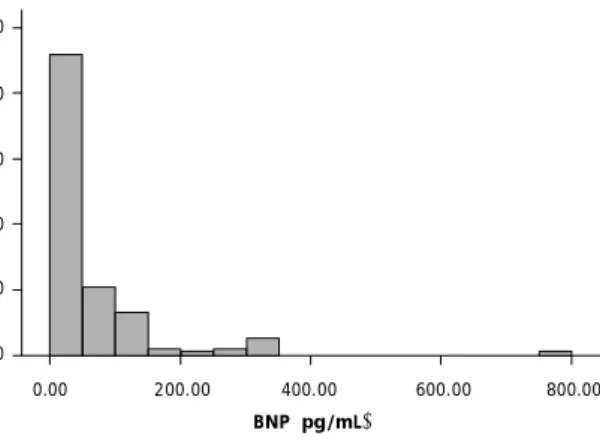
대상 환자는 137명으로 평균 연령은 62.2±10세, 남성이 70명 (51.1%)이었다. 관동맥 조영술상 단일 혈관 질환은 87 명 (63.5%), 다혈관 질환은 50명 (36.5%)이었으며 관동맥 중 재술은 125명 (91.2%)에서 시행되었다. 평균 BNP치는 61.2
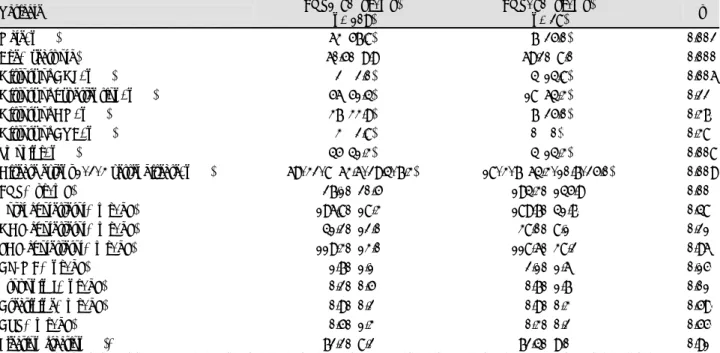
±44.5 pg/mL이었고 최대치는 796 pg/mL, 최소치는 4 pg/mL이었다 (Fig. 1). BNP치가 80 pg/mL 이하인 군의 평 균 BNP는 27.1±20.5 pg/mL이었고 80 pg/mL 초과인 군 은 194.3±145.9 pg/mL이었다. BNP치가 80 pg/mL 초과
Fig. 1. Distribution of B-type natriuretic peptide (BNP).
Frequency
100 80 60 40 20
0
0.00 200.00 400.00 600.00 800.00 BNP (pg/mL)
인 군에서 나이가 많고, 남성의 빈도가 낮았으며, 심부전의 과거력이 있는 경우가 많았고, 흡연력이 적었다. 또한 심혈 관 조영술상 다혈관 질환의 빈도가 높았으며, 혈중 tropo- nin치가 통계적으로 유의하게 높았다 (0.2±0.5 vs. 0.7±
1.7 mg/dL) (Table 1). Event free 생존율은 혈중 BNP치가 80 pg/mL 초과인 환자군에서 유의하게 낮았다 (p=0.037) (Fig. 2).
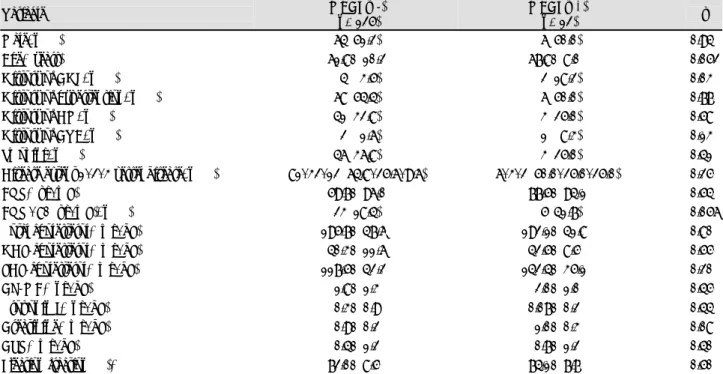
주요 심장 사건 발생에 따른 대상 환자들의 임상적 특성 대상 환자의 평균 추적 관찰 기간은 44.5±10.4개월이 었다. 추적 관찰 기간 동안 6명 (4.4%)의 환자가 심장 원인 으로 사망하였으며, 4명 (2.9%)의 환자가 심부전으로 입원 하였고, 2명 (1.5%)의 환자에서 심근경색이 발생하였다. 주
요 심장 사건이 발생한 군에서 평균 BNP치는 높았으나 통 계적 유의성은 없었으며 (77.5±94.1 vs. 59.7±96.0 pg/mL, p=0.54), BNP치가 80 pg/mL 초과인 경우도 높았으나 통 계적 유의성은 없었다 (41.7 vs. 18.4%, p=0.056). 그 외 인 구 통계학적 특성, 생화학적 검사, 관동맥 조영술 소견은 양 군 간에 차이가 없었다 (Table 2).
주요 심장 사건에 대한 예후 인자
저위험군 불안정형 협심증 환자의 주요 심장 사건의 event free 생존율에 대한 예측 인자의 단변량 분석에서 연령의 비교 위험도가 1.08 (95% 신뢰구간 1.00~1.16)로 높았으며, 80 pg/mL 이상 BNP치는 비교위험도가 3.20 (95% 신뢰구 간 1.01~10.1)으로 비교 위험도가 높았으나, Cox propor- tional hazard regression 분석에서 통계적으로 유의한 주 요 심장 사건의 event free 생존율에 대한 예측인자는 없었 다 (Table 3 and 4).
고 찰
본 연구에서 저자들은 내원 당시에 측정한 혈중 BNP치 가 급성 관동맥 증후군 중 저위험군 환자의 장기 예후, 즉, 심혈관 질환으로 인한 사망, 심근경색의 재발이나 심부전 으로 인한 재입원의 위험을 평가하는 데 독립적인 예측인자 로 유용성을 확인하고자 하였다. 본 연구에서는 주요 심장 사건이 발생한 군에서 BNP가 높았고 BNP가 80 pg/mL 초 과되는 경우가 많았으나 통계적 유의성은 없었다. 하지만
Table 1. Characteristics according to the levels of serum B-type natriuretic peptide (BNP)
Variable BNP≤80 (pg/mL)
(n=109)
BNP>80 (pg/mL)
(n=28) p
Male, n (%) 63 (57.8) 07 (25.0) 0.002
Age* (years old) 60.5±9.9 69.2±8.0 0.000
History of CHF, n (%) 02 (02.0) 04 (14.8) 0.006
History of hypertension, n (%) 56 (51.4) 18 (64.3) 0.220
History of DM, n (%) 37 (33.9) 07 (25.0) 0.370
History of CVA, n (%) 03 (02.8) 00 (00)0. 0.380
Smoking, n (%) 45 (41.3) 04 (14.3) 0.008
Disease extent 1/2/3 vessel disease, n (%) 69/32/8 (63.6/29.4/7.3) 18/3/7 (64.3/10.7/25.0) 0.009
BNP* (pg/mL) 27.1±20.5 194.3±145.9 0.000
Total cholesterol* (mg/dL) 196.8±18.30 189.7±41.70 0.480
HDL-cholesterol* (mg/dL) 41.2±12.0 38.0±8.10 0.210
LDL-cholesterol* (mg/dL) 119.3±13.00 118.6±38.20 0.960
CK-MB* (ng/dL) 1.7±1.1 2.1±1.6 0.150
Troponin I* (ng/dL) 0.2±0.5 0.7±1.7 0.010
Creatinine* (mg/dL) 0.9±0.2 0.9±0.3 0.590
CRP* (mg/dL) 0.5±1.3 0.3±0.2 0.550
Ejection fraction (%)* 72.2±8.20 72.4±9.00 0.910
*Mean±Standard deviation. MACEs: major adverse cardiac events, CHF: congestive heart failure, DM: diabetes mellitus, CVA: cere- brovascular accident, BNP: brain natriuretic peptide, HDL-cholesterol: high density lipoprotein-cholesterol, LDL-cholesterol: low density lipoprotein-cholesterol, CRP: C-reactive protein
Fig. 2. Kaplan-Meier estimate of cardiovascular event free survival according to cut-off value of B-type natriuretic peptide (BNP) at baseline (p=0.037).
Event free survival
1.0 0.8 0.6 0.4 0.2
0.0
0.0 20.0 40.0 60.0 Months
BNP≤80 (pg/mL) BNP>80 (pg/mL)
BNP가 80 pg/mL 초과군에서 통계적으로 유의하게 event free 생존율이 낮았다. 이는 주요 심장 사건이 발생한 군에 서 BNP가 높으나 standard deviation이 커 통계적 유의성 이 없는 것으로 판단되었다. 단변량 분석에서는 연령과 BNP 80 pg/mL 초과인 경우가 주요 심장 사건에 대한 event free 생존율의 예측인자였지만, Cox proportional hazard regres- sion 분석에서는 통계적 유의성이 없었다.
2007년에 발표된“ACC/AHA Guideline Update for the
management of patients with unstable angina and Non- ST-segment elevation myocardial infarction ”에서는 불 안정형 협심증 (unstable angina)과 비 ST 분절 상승 심근 경색 (non-ST-elevation myocardial infarction) 환자의 진단과 치료 과정에서 지속적인 위험도 판정을 강조하고 있다.2) 예후 평가 지표로는 흉통의 임상 병력과 진찰 소견, 심전도 소견이 있으며 생화학적 심근 표지자로 심근 특이 적 troponin이 여러 가지 매력적인 특성들 때문에 급성 관 동맥 증후군 환자의 평가에서 가장 선호되는 생화학적 심 근 표지자로 인정받고 있다.2) 이와 더불어 좌심실 구혈률 과 운동 장애 지수와 같은 심근의 수행능력이 예후에 중요 한 영향을 미친다.
Natriuretic peptide는 심근의 수행 능력을 반영하는 지 표가 되어 왔는데 최근 BNP가 새로운 관동맥 질환의 표지 자로 관심을 받고 있다. BNP는 심실벽의 증가된 압력과 긴 장에 반응하여 주로 심실에서 생산되는 호르몬으로 혈압과 혈장량, 나트륨 균형의 조절에 관여한다. BNP는 proBNP의 형태로 심근세포에서 생성, 혈액에 분비된 후, 혈액 속에서 BNP와 N-terminal proBNP (NT-proBNP)로 분리된다.10)11)
Table 4. Cox proportional hazard regression analysis regarding MACE-free survival
Variable RR (95% CI)
Age 1.06 (0.99-1.14)
BNP >80 (pg/mL) 2.10 (0.61-7.28) MACE: major adverse cardiac event, RR: relative risk, CI: confi- dence interval, BNP: brain natriuretic peptide
Table 3. Univariate analysis regarding MACE-free survival
Variable RR (95% CI)
Age 1.08 (1.00-1.16)
History of hypertension 0.88 (0.29-2.74) History of diabetes 0.63 (0.17-2.32) History of CHF 6.17 (0.99-38.4) History of CVA 5.59 (0.47-67.7)
Smoking 0.59 (0.16-2.19)
Triglyceride 0.99 (0.99-1.003)
HDL-cholesterol 1.01 (0.97-1.06)
LDL-cholesterol 1.01 (0.99-1.04)
Creatinine 11.2 (0.92-136.98)
CRP 1.10 (0.85-1.42)
EF 1.04 (0.95-1.13)
BNP >80 (pg/mL) 3.20 (1.01-10.1) MACE: major adverse cardiac event, RR: relative risk, CI: confi- dence interval, CHF: congestive heart failure, CVA: cerebrovas- cular accident, HDL-cholesterol: high density lipoprotein-cholesterol, LDL-cholesterol: low density lipoprotein-cholesterol, BNP: brain natriuretic peptide
Table 2. Characteristics according to the MACEs
Variable MACEs (-)
(n=125)
MACEs (+)
(n=12) p
Male, n (%) 64 (51.2) 06 (50.0) 0.940
Age* (years) 61.8±10.2 67.8±8.00 0.052
History of CHF, n (%) 04 (03.5) 02 (18.2) 0.030
History of hypertension, n (%) 68 (54.4) 06 (50.0) 0.770
History of DM, n (%) 41 (32.8) 03 (25.0) 0.580
History of CVA, n (%) 02 (01.6) 01 (08.3) 0.130
Smoking, n (%) 46 (36.8) 03 (25.0) 0.410
Disease extent 1/2/3 vessel disease, n (%) 81/32/12 (64.8/25.6/9.6) 6/3/2 (50.0/25.0/25.0) 0.250
BNP* (pg/mL) 59.7±96.0 77.5±94.1 0.540
BNP >80 (pg/mL), n (%) 23 (18.4) 05 (41.7) 0.056
Total cholesterol* (mg/dL) 195.7±47.60 192.1±41.80 0.800
HDL-cholesterol* (mg/dL) 40.3±11.6 42.5±8.50 0.550
LDL-cholesterol* (mg/dL) 117.5±42.20 142.4±35.10 0.200
CK-MB* (ng/dL) 1.8±1.3 2.0±1.0 0.450
Troponin I* (ng/dL) 0.3±0.9 0.07±0.20 0.440
Creatinine* (mg/dL) 0.9±0.2 1.0±0.3 0.080
CRP* (mg/dL) 0.4±1.2 0.7±1.2 0.400
Ejection fraction (%)* 72.0±8.50 74.1±7.70 0.500
*Mean±Standard deviation. MACEs: major adverse cardiac events, CHF: congestive heart failure, DM: diabetes mellitus, CVA: cere- brovascular accident, BNP: brain natriuretic peptide, HDL-cholesterol: high density lipoprotein-cholesterol, LDL-cholesterol: low density lipoprotein-cholesterol, CRP: C-reactive protein
BNP의 유용성은 처음에는 심부전의 진단과 예후인자로 알 려졌다.12) 수년간 natriuretic peptide는 심근경색 이후 좌심 실부전을 진단하는데 이용되었으며 natriuretic peptide가 증가된 경우에는 예후가 나쁜 것으로 알려져 있었다.13)
이후 많은 대규모 연구를 거치면서 관동맥 질환 환자에 게 있어서도 BNP가 독립적인 예후 인자라는 것이 밝혀졌
다.14-18) Galvani 등15)은 급성 관동맥 증후군 환자를 대상으
로 한 연구에서 내원 초기에 측정한 natriuretic peptide가 ST 분절 상승 심근경색뿐만 아니라 불안정형 협심증과 비 ST 분절 상승 심근경색 환자의 단기 및 장기 예후 인자임 을 보고하였다. 6,809명의 급성 관동맥 증후군 환자를 대 상으로 한 GUSTO-IV 연구에서는 NT-pro BNP치에 따른 4분위간 1년 사망률이 1.8%, 3.9%, 7.7%, 그리고 19.2%로 NT-pro BNP가 증가할수록 사망률이 증가함을 보고하였 다. 비 ST분절 상승 심근경색과 불안정형 협심증 환자를 대상으로 한 TACTICS-TIMI 18에서는 BNP치가 80 pg/mL 이상으로 상승한 군의 6개월 사망률이 그렇지 않은 군보다 통계적으로 유의하게 높음을 보고하였다 (8.4% vs. 1.8%, p<0.0001).18) 국내에서도 급성 관동맥 증후군 환자를 대상 으로 한 Baek 등19)의 연구에 따르면 입원시 측정한 NT- proBNP치는 이후 발생하는 주요 심장 사건을 예측하는 데 유용한 생화학적 표시자임을 보고하였다.
안정형 협심증 환자를 대상으로 한 Kragelund 등20)의 연 구에서는 NT-proBNP의 비교 위험도는 2.4 (95% 신뢰구간 1.5~4.0, p<0.001)로 고식적인 심혈관계 위험인자와 좌심실 구혈률에 독립적인 위험인자임을 보고하였으며, 좌심실 기능 이 정상인 저위험군의 안정형 협심증 환자를 대상으로 한 Omland 등21)의 연구에서도 BNP가 예후인자임을 보고하였다.
혈중 BNP나 NT-proBNP치의 증가가 급성 관동맥 증후 군의 예후인자로 여겨지는 병태생리학적 기전은 완전히 알려 져 있지는 않으나 몇 가지를 살펴보면, 첫째, natriuretic peptide치는 관동맥 증후군의 예후에 악영향을 미치는 연 령, 고혈압, 당뇨, 신부전과 관계가 있다. 둘째, natriuretic peptide치는 급성 관동맥 증후군의 중요한 예후 인자인 좌심실 부전을 반영한다.22) 이전의 연구에 의하면 증가된 natriuretic peptide치는 좌심실 부전이 동반된 환자에 있 어 사망에 대한 독립적인 예후 인자이다.23) 셋째, 급성기에 상승하는 natriuretic peptide는 급성 허혈이 미치는 심근 의 양에 비례하여 발생하는 이차적인 좌심실 부전을 반영 할 수 있다. 이전의 연구에 따르면 natriuretic peptide는 관 동맥 중재술 직후에 증가하며,24) 증가된 natriuretic peptide 의 정도는 허혈이 발생한 심근의 크기와 비례한다.25) 이러 한 병태 생리학적 기전으로 natriuretic peptide는 가역적 인 심근허혈이나 괴사에 의해 이차적으로 발생하는 신경호 르몬의 활성화의 표지자가 될 수 있다. 결과적으로 BNP 혹 은 혈중 NT-proBNP치는 특이도면에서 부족한 예후 지표 이지만, 다양한 원인들의 통합적인 위험도를 반영한다고 할
수 있다.
본 연구에서는 주요 심장 사건이 발생한 군과 발생하지 않은 군 사이에 BNP치의 차이는 없었으나 BNP치가 80 pg/mL 초과군이 event free 생존율이 낮았다. 하지만 Cox proportional hazard regression 분석에서 주요 심장 사건 의 event free 생존율에 대한 독립적인 위험인자는 없었다.
본 연구의 제한점으로는 대상 환자의 수가 적고 관동맥 증후군 환자 중 저위험군을 대상으로 하여 장기 추적 관찰 에도 불구하고 주요 심장사건의 발생률이 낮아 결과에 대한 통계적 유의성이 약화될 수 있다는 점이다. 또한 BNP의 측 정시기가 아직 확립되어 있지 않은 상태에서 허혈 증상 발 현 시점으로부터의 측정시기를 고려한 것이 아니고 내원 당 시에 측정한 BNP로, 실제 증상 발현부터 측정시기는 서로 다르고 환자들의 예후를 결정하는 데 어느 정도 영향을 미 칠 것으로 생각된다. 저위험군 관동맥 증후군 환자의 낮은 주요 심장 사건 발생률을 고려하여 향후 많은 환자를 대상 으로 하는 연구가 필요할 것으로 사료된다.
요 약
배경 및 목적
급성 관동맥 증후군 환자의 예후를 예측하는 데 생화학적 지표들이 유용한 것으로 알려져 있다. BNP는 급성 관동맥 증후군에서 위험도를 계층화하고 장기 사망에 대한 강력한 예후인자로서 유용성을 보고하고 있다. 하지만 저위험군의 불안정형 협심증 환자에 대한 예후 인자로서 BNP의 중요 성에 대한 보고는 아직 없었다. 이에 저위험군의 불안정형 협 심증 환자에서 장기 예후 지표로서 내원시에 측정한 BNP의 유용성을 평가하고자 하였다.
방 법
2002년 9월부터 2004년 6월까지 허혈성 심질환으로 내 원하여 관동맥 조영술을 시행 받고 50% 이상 협착이 동반 된 환자 중 저위험군 불안정형 협심증 환자 139명을 대상 으로 하여 주요 심장 사건 (심혈관 질환으로 인한 사망, 심 근경색의 재발이나 심부전으로 인한 재입원)을 추적조사 하였다. 불안정형 협심증은 ACC/AHA 치료 지침에 따른 불 안정형 협심증 환자 중 관동맥 조영술상 50% 이상의 협착 이 동반된 환자로 정의하였다. 저위험군의 정의는 심전도 상 0.1 mV 이상의 ST 분절 하강이나 상승이 없고 비정상 적인 Q파가 없으며, 심근 효소의 상승이 없는 환자로 정의 하였다. 또한 심초음파상 좌심실 구혈률이 45% 미만이거나 이완기 기능이 위정상 (pseudonormalized pattern), 제한형 (restrictive filling)을 보인 환자와 신기능 장애를 가진 환자 는 제외하였다.
결 과
12명 (8.6%)의 환자에서 주요 심장 사건이 발생하였다. 주 요 심장 사건이 발생한 군과 발생하지 않은 군 사이에 BNP
치에 통계적으로 유의한 차이는 없었으나 BNP치가 80 pg/
mL 초과군이 event free 생존율이 낮았다. 그러나 Cox pro- portional hazard regression 분석에서 주요 심장 사건의 event free 생존율에 대한 독립적인 위험인자는 없었다.
결 론
본 연구에서 내원시 측정한 BNP치는 저위험군 급성 관동 맥 증후군 환자에서 주요 심장사건에 대한 독립적인 예후 인자는 아니었지만 event free 생존율과 연관이 있었다.
중심 단어: B-type natriuretic peptide; 불안정형 협심증;
예후.
REFERENCES
1) Shah PK. New insights into the pathogenesis and prevention of acute coronary syndromes. Am J Cardiol 1997;79:17-23.
2) Anderson JL, Adams CD, Antman EM, et al. ACC/AHA 2007 guidelines for the management of patients with unstable angina/
non-ST-Elevation myocardial infarction: a report of the American College of Cardiology/American Heart Association Task Force on Practice Guidelines (Writing Committee to Revise the 2002 Guidelines for the Management of Patients With Unstable Angi- na/Non-ST-Elevation Myocardial Infarction) developed in colla- boration with the American College of Emergency Physicians, the Society for Cardiovascular Angiography and Interventions, and the Society of Thoracic Surgeons endorsed by the American Association of Cardiovascular and Pulmonary Rehabilitation and the Society for Academic Emergency Medicine. J Am Coll Cardiol 2007;50:e1-157.
3) Logeart D, Thabut G, Jourdain P, et al. Predischarge B-type na- triuretic peptide assay for identifying patients at high risk of re- admission after decompensated heart failure. J Am Coll Cardiol 2004;43:635-41.
4) Chung IH, Yoo BS, Ryu HY, et al. The relationship between the early follow-up BNP level and congestive status or prognosis in acute heart failure. Korean Circ J 2006;36:200-7.
5) de Lemos JA, Morrow DA, Bentley JH, et al. The prognostic value of B-type natriuretic peptide in patients with acute coronary syndromes. N Engl J Med 2001;345:1014-21.
6) Omland T, Persson A, Ng L, et al. N-terminal pro-B-type natri- uretic peptide and long-term mortality in acute coronary syn- dromes. Circulation 2002;106:2913-8.
7) Bellomo R, Ronco C, Kellum JA, Mehta RL, Palevsky P. Acute renal failure - definition, outcome measures, animal models, fluid therapy and information technology needs: the Second Interna- tional Consensus Conference of the Acute Dialysis Quality Ini- tiative (ADQI) Group. Crit Care 2004;8:R204-12.
8) Rakowski H, Appleton C, Chan KL, et al. Canadian consensus recommendations for the measurement and reporting of diastolic dysfunction by echocardiography: from the Investigators of Con- sensus on Diastolic Dysfunction by Echocardiography. J Am Soc Echocardiogr 1996;9:736-60.
9) Hillis GS, Ujino K, Mulvagh SL, Hagen ME, Oh JK. Echocar- diographic indices of increased left ventricular filling pressure and dilation after acute myocardial infarction. J Am Soc Echo- cardiogr 2006;19:450-6.
10) Maisel AS, Krishnaswamy P, Nowak RM, et al. Rapid measure- ment of B-type natriuretic peptide in the emergency diagnosis of heart failure. N Engl J Med 2002;347:161-7.
11) Omland T, Aakvaag A, Vik-Mo H. Plasma cardiac natriuretic
peptide determination as a screening test for the detection of patients with mild left ventricular impairment. Heart 1996;76:
232-7.
12) Yoo BS, Kim WJ, Jung HS, et al. The clinical experiences of B- type natriuretic peptide blood concentrations for diagnosis in congestive heart failure: the single hospital experience based on the large clinical database. Korean Circ J 2004;34:684-92.
13) Omland T, Aakvaag A, Bonarjee VV, et al. Plasma brain natri- uretic peptide as an indicator of left ventricular systolic function and long-term survival after acute myocardial infarction: com- parison with plasma atrial natriuretic peptide and N-terminal proatrial natriuretic peptide. Circulation 1996;93:1963-9.
14) Morrow DA, de Lemos JA, Sabatine MS, et al. Evaluation of B- type natriuretic peptide for risk assessment in unstable angina/
non-ST-elevation myocardial infarction: B-type natriuretic peptide and prognosis in TACTICS-TIMI 18. J Am Coll Cardiol 2003;
41:1264-72.
15) Galvani M, Ottani F, Oltrona L, et al. N-terminal pro-brain na- triuretic peptide on admission has prognostic value across the whole spectrum of acute coronary syndromes. Circulation 2004;
110:128-34.
16) Omland T, de Lemos JA, Morrow DA, et al. Prognostic value of N-terminal pro-atrial and pro-brain natriuretic peptide in pa- tients with acute coronary syndromes. Am J Cardiol 2002;89:
463-5.
17) Jernberg T, Stridsberg M, Venge P, Lindahl B. N-terminal pro brain natriuretic peptide on admission for early risk stratifica- tion of patients with chest pain and no ST-segment elevation. J Am Coll Cardiol 2002;40:437-45.
18) James SK, Lindahl B, Siegbahn A, et al. N-terminal pro-brain natriuretic peptide and other risk markers for the separate pre- diction of mortality and subsequent myocardial infarction in pa- tients with unstable coronary artery disease: a Global Utiliza- tion of Strategies To Open occluded arteries (GUSTO)-IV sub- study. Circulation 2003;108:275-81.
19) Baek KK, Jeon ES, Rhee IL, et al. N-terminal pro-B-type natri- uretic peptide as a prognostic marker in acute coronary syndrome.
Korean Circ J 2004;34:1070-81.
20) Kragelund C, Gronning B, Kober L, Hildebrandt P, Steffensen R.
N-terminal pro-B-type natriuretic peptide and long-term mortality in stable coronary heart disease. N Engl J Med 2005;352:666-75.
21) Omland T, Sabatine MS, Jablonski KA, et al. Prognostic value of B-Type natriuretic peptides in patients with stable coronary artery disease: the PEACE Trial. J Am Coll Cardiol 2007;50:
205-14.
22) St John Sutton M, Pfeffer MA, Plappert T, et al. Quantitative two-dimensional echocardiographic measurements are major predictors of adverse cardiovascular events after acute myocardial infarction: the protective effects of captopril. Circulation 1994;
89:68-75.
23) Richards AM, Nicholls MG, Yandle TG, et al. Plasma N-terminal pro-brain natriuretic peptide and adrenomedullin: new neuro- hormonal predictors of left ventricular function and prognosis after myocardial infarction. Circulation 1998;97:1921-9.
24) Tateishi J, Masutani M, Ohyanagi M, Iwasaki T. Transient in- crease in plasma brain (B-type) natriuretic peptide after percu- taneous transluminal coronary angioplasty. Clin Cardiol 2000;
23:776-80.
25) Marumoto K, Hamada M, Hiwada K. Increased secretion of atrial and brain natriuretic peptides during acute myocardial ischaemia induced by dynamic exercise in patients with angina pectoris. Clin Sci 1995;88:551-6.