201
Korean J Vet Serv 34(3) : 201~208 (2011)
*Corresponding author: Gil-jae Cho, Tel. +82-53-950-5978, Fax. +82-53-950-5955, E-mail. [email protected]
The biochemical and molecular characteristics of Streptococcus equi subsp. zooepidemicus isolated from the
genital tract of Thoroughbred mares in Korea
Seong-Kyoon Choi, Seong-Guk Kim1, Gil-Jae Cho*
College of Verterinary Medicine and Institute of Equine Medicine, Kyungpook National University, Daegu 702-701, Korea
1Gyeongbuk Veterinary Service Laboratory, Daegu 702-911, Korea (Received 1 April 2011; revised 22 August 2011; accepted 26 August 2011)
Abstract
Streptococcus equi subsp. zooepidemicus (S. zooepidemicus) is a pathogen of a variety of infections in horse. We studied biochemical and molecular characteristics of S. zooepidemicus isolated from the genital tract of Thoroughbred mares in Korea. Seventy-nine isolates were identified as S. zooepidemi- cus by biochemical and PCR method from 374 horses. The biochemical characteristics of S. zooepide- micus isolates were positive reaction of lactose and sorbitol. However, S. zooepidemicus isoltes were negative reaction of inulin, mannitol, raffinose, trehalose, aesculin hydrolysis, growth in 6.5% NaCl and variable reaction of maltose. Epidemiological investigations of S. zooepidemicus isolates were per- formed by fragment analysis of SzP (S. zooepidemicus protective protein) gene, CNE (collagen binding protein) gene and ISR (16s rRNA intergenic spacer region) gene using ABI Prism 3,130 ×l Genetic Analyzer System. All isolates were shown single amplification size of 906 bp in CNE gene, but SzP and ISR gene were shown variable patterns of fragment size. The characteristics of S. zooepidemicus investigated in this study will be very useful for the prevention of infection and the studies of epi- demiologic characteristics of S. zooepidemicus, causing the severe economic losses due to reproductive failures.
Key words : Thoroughbred horse, Genital tract, Streptococcus equi subsp. zooepidemicus
INTRODUCTION
Bain (1966) reported that β-hemolytic Streptoccocus was the most severe pathogen in the first year of in- fection, so only 40% of the infected horses could deliv- er the healthy foals and 35% of all horses could not ac- hieve the successful pregnancy for 3 years. Furthermore Escherichia coli, coagulase positive Staphylococcus spp, Klebsiella pneumoniae, Pseudomonas aeruginosa, Cory- nebacterium equi suppurative, and fungal infection were also shown to be severe pathogens which make hard recover. Eliminating such bacteria from genital tract was difficult, and proven hard to be treated in cases. The normal flora inhabiting in the prepuce of horses and the
external genitalia and vaginal vestibulum of mares in- hibit the growth of the virulent bacteria (Harkness and Wagner, 1983) Among them, Streptococcus equi subsp.
zooepidemicus (S. zooepidemicus) caused 75% of vaginal infection and most of the septic abortion (Roszel and Freeman, 1988). S. zooepidemicus is often isolated from secondary bacterial infections in horse. It can invade the upper respiratory mucosa and lymph nodes after a viral infection, sometimes mimicking strangles. In susceptible mares, it can cause cervicitis, metritis and placentitis (as an ascending infection from the vagina) resulting in abortion. It is the most common cause of mastitis in horses and has been associated with numerous other in- fections including wound infections, septicemia in colts, lower airway inflammation in young horses. Lower air- way inflammation can occur repeatedly in young horses
and adversely affect subsequent racing performance (Bain, 1966; Choi et al, 2007).
Thoroughbred and Anglo-Arab horse that were im- ported from Japan and Australia have been used as rac- ing horse in Korea since 1970s. Since early 1980s, Thoroughbred horse breeding has been produced within country for national qualified horse racing and devel- oped domestic animal industry. Now a day, about 26,000 domestic horses were raised including 10,000 improved breed horses and 16,000 native breed horses.
Among them, 2,300 Thoroughbred mares and 70 stal- lions were raised for breeding and about 1,200 foals were bred every years (Choi et al, 2007). The study of the propagation features related to the improvement in productivity Thoroughbred mares raised within the coun- try has been reported. Cho et al (2007) reported the nec- ropsy and histological characterisitics of fibrinopurulent peritonitis and abdominal abscesses associated with S.
zooepidemicus in a 1 year old Thoroughbred horses in Jeju. However, there are no report the S. zooepidemicus isolated in the genital tract of horse in Korea. At this point, this research will be the first one based on S.
zooepidemicus infection clinical patterns and charac- teristics. In particular, the biochemical and genetic fea- tures of S. zooepidemicus will help out many other parts of similar researches. Furthermore, it will help not only the horses themselves but also people in horse farm, horse riding club and animal hospitals through S. zooe- pidemicus screening system. Therefore, this study per- formed the biochemical and molecular characteristics of S. zooepidemicus isolated from the genital tract of Thoroughbred mares.
MATERIALS AND METHODS
Animals
A total of 374 Thoroughbred horses from equine stud farm and raising farm at Jeju and Jangsu were examined for 3 years from June 2006 to July 2009. Samples were collected from vaginal discharge, uterine washing, abort- ed fetus and uterine of abortion mare in the fifth month of pregnancy. In this study 79 S. zooepidemicus isolated
from 374 Thoroughbred horses (230 healthy horses, 143 clinical endometritis horses and 1 abortion fetus) from Jeju and Jeonbuk region in Republic of Korea were investigated. Culture for isolation of S. zooepidemicus was performed according to previously described techni- ques (Anzai et al, 2002). The vaginal swabs were taken from clitorial fossa of healthy horses, uterine flushing fluids from clinical endometritis horses only. The swabs were transported in modified Stuart's medium (BD, USA) in a portable fridge. Samples were transported to the laboratory in Liquid Stuart Medium (BD, USA) on ice packs and refrigerated until used (Quinn et al, 1993).
Isolation and identification of S. zooepide- micus
Culture for isolation of S. zooepidemicus from sam- ples was performed according to previously described techniques (Widders et al, 1984; Bannerman et al, 2003). Following vortexing of swabs in the sample buf- fer, the swabs were transferred using sterile technique to individual tubes containing 2 ml of Bacto Todd-Hewitt broth (BD, USA), and incubated in ambient air at 37oC overnight. Approximately 10 μl of broth was then in- oculated on Bloods agar at 37oC for 24 h. S. zooepide- micus suspected strains were stored at ―70oC in freezer vials containing 15% sterile glycerol for further analysis.
The isolates were identified on the basis of colonial and cellular morphology, gram staining, catalase test, oxidase test, OF-test, and were also identified with VITEK 2 in- strument (BioMerieux, France) with Gram Positive (GP) identification card (Eigner et al, 2005).
Identification of S. zooepidemicus was performed by using multiplex-PCR with S. zooepidemicus suspected strains obtained from biochemistry test. Molecular iden- tification of S. zooepidemicus isolates was performed by using sodA-seeI specific multiplex PCR using following primer pairs (Anzai et al, 2002): SodA-F (5'- CAG CAT TCC TGC TGA CAT TCG TCA GG-3') and SodA-R (5'- CTG ACC AGC CTT ATT CAC AAC CAG CC-3');
SeeI-F (5'- GAA GGT CCG CCA TTT TCA GGT ACT TTG-3') and SeeI-R (5'- GCA TAC TCT CTC TGT CAC CAT GTC CTG-3'). The species identification of S.
zooepidemicus was confirmed by sodA-seeI multiplex
Table 1. Oligonucleotide primers and PCR programs used for fragment analysis in this study
Target gene Sequence (5'→3'), 5'-Fluorescent label PCR program Size of product
CNE F-(6-FAM*) GCAACTAATCTTAGTGACAACAT 1† 906 bp
R-AAAGCTGGTATAGCGACTGCCA
ISR F-(6-FAM)TTGTACACACCGCCCGTCA 2‡ Size polymorphism
R-GGTACCTTAGATGTTTCAGTT
SzP F-(6-FAM)ACAAAAGGGGAATAAAATGGC 3§ Size polymorphism
R-TTTACCACTGGGGTATAAGGCT
*Carboxyfluorescein, †1× (95oC 180 s), 20× (94oC 30 s, 54oC 40 s, 72oC 50 s), 1× (72oC 180 s), ‡1× (95oC 180 s), 20× (94oC 60 s, 58oC 60 s, 72oC 60 s), 1× (72oC 180 s), §1× (95oC 180 s), 20× (94oC 30 s, 50oC 60 s, 72oC 90 s), 1× (72oC 180 s).
Fig. 1. PCR amplification of sodA-seeI for identifi-cation of S.
zooepidemicus. Lane M: molecular size marker (100 bp DNA ladder, Elpis, Korea), lane 1: S. equi isolates, lane 2 to 11: S. zooepidemicus isolates. S. zooepidemicus were identi- fied by PCR products of only 235 bp in the SodA gene. as it was compared with PCR products of both 235 bp and 520 bp in S. equi.
PCR giving a positive sodA gene (235 bp) and negative seeI gene (520 bp) reaction. PCR assays were accom- plished in a total volume of 25 μl of the following mix- tures: 2 μl DNA, 2 μl (10 pmol/μl) of each primer, 12.5 μl of 10× reaction buffer (Qiagen, Germany), and 6.5 μl distilled water. PCR amplification was as follows: first step was performed by initial denaturation for 3 min at 94oC, followed by 30 cycles at 94oC for 30 sec, 59oC for 30 sec and 72oC for 40 sec for sodA-seeI. After identification, bacteria were stored at ―70oC until use (Bannerman et al, 2003; Bienert et al, 2003).
Fragment analysis of S. zooepidemicus PCR amplification (Hirota et al, 2010) was performed in a reaction mixture of 10 μl containing 5 μl of Multi- plex Master Mix (Qiagen, Germany), 30 ng of DNA template, and SzP (S. zooepidemicus protective protein) gene, CNE (collagen binding protein) gene and ISR (16s rRNA intergenic spacer region) specific primers, re- spectively (Younan et al, 2005). Concentration, primer sequences, PCR programme and respective dyes used
are shown in the Table 1. PCRs were performed and prepared for subsequent analysis on sequencers in ac- cordance with the manufacturer's instructions. Amplifi- cation products were diluted 1:10 with water purified by high performance liquid chromatography, and 0.5 μl of diluted DNA was mixed with 9.5 μl of Hi-Di for- mamide (Applied Biosystems, USA) and 0.5 μl of GeneScan-1200 LIZ Size Standard (Applied Biosystems, USA) as internal lane size standard. Before fragment sizing in ABI Prism 3,130 xl Genetic Analyzer System (Applied Biosystems, USA), samples were incubated for 2 min at 95oC and immediately frozen at 20oC for >3 min to denature the DNA. If a SzP and ISR were not detected during fragment analysis, reactions were re- peated by using singleplex reactions with minor mod- ifications to amplify the specific locus. In that particular instance, the primer concentration was increased to 0.2 μmole/ml, annealing temperatures were reduced to 49oC, and the extension time was tripled to amplify larger fragments because of possible insertion sequence ele- ment transposition or other genetic events (Lee and Cho, 2006; Lindstedt et al, 2007; Hirota et al, 2010; Hyytia- Trees et al, 2010). After fragment analysis, correspond- ing peak data were examined by using GeneMapper Ver. 4.0 software (Applied Biosystems, USA).
RESULTS
Isolation and identification of S. zooepide- micus
Seventy-nine of S. zooepidemicus isolates from 374 samples in this study grew as small, grey to white colo-
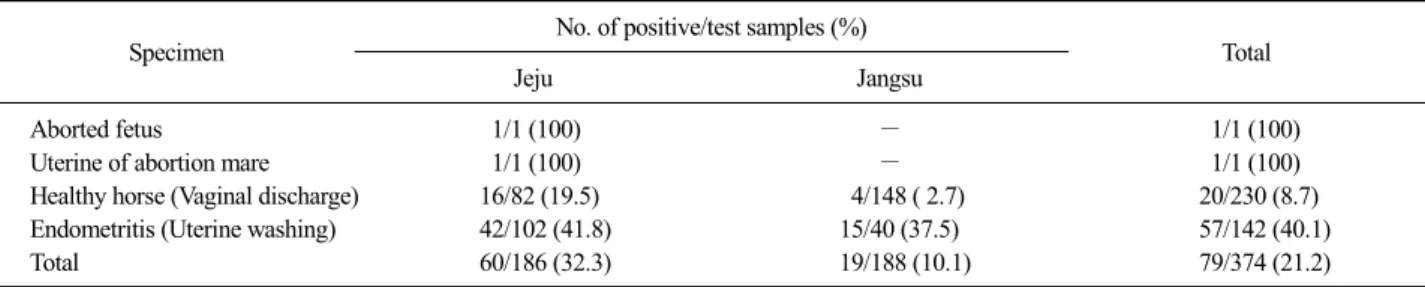
Table 2. The isolation frequency of S. zooepidemicus isolates isolated from Thoroughbred horses
Specimen No. of positive/test samples (%)
Total
Jeju Jangsu
Aborted fetus 1/1 (100) ― 1/1 (100)
Uterine of abortion mare 1/1 (100) ― 1/1 (100)
Healthy horse (Vaginal discharge) 16/82 (19.5) 4/148 ( 2.7) 20/230 (8.7)
Endometritis (Uterine washing) 42/102 (41.8) 15/40 (37.5) 57/142 (40.1)
Total 60/186 (32.3) 19/188 (10.1) 79/374 (21.2)
Table 3. Biochemical characteristics of 79 S. zooepidemicus
Substrates No. of positive isolates (%) Substrates No. of positive isolates (%)
D-amygdalin 0 (0.0) Lactose 76 (96.2)
Ala-Phe-Pro arylamidase 79 (100.0) D-mannitol 52 (65.8)
Leucine arylamidase 79 (100.0) Salicin 71 (89.9)
Alanine arylamidase 79 (100.0) Urease 0 (0.0)
D-ribose 16 (20.3) D-mannose 79 (100.0)
Novobiocin resistance 67 (84.8) Saccharose/sucrose 72 (91.1)
D-raffinose 0 (0.0) Beta galactopyranosidase 29 (36.7)
Optochin resistance 79 (100.0) Alpha mannosidase 0 (0.0)
Cyclodextrin 58 (73.4) Polymixin b resistance 56 (70.9)
L-proline arylamidase 3 (3.8) D-maltose 79 (100.0)
Tyrosine arylamidase 79 (100.0) D-trehalose 0 (0.0)
L-lactate alkalinization 0 (0.0) Alpha glucosidase 79 (100.0)
Growth in 6.5% NaCl 0 (0.0) Phosphatase 79 (100.0)
D-xylose 0 (0.0) D-galactose 79 (100.0)
Beta glucuronidase 31 (39.2) Bacitracin resistance 53 (67.1)
D-sorbitol 13 (16.5) Pullulan 79 (100.0)
nies on 5% sheep blood agar plates surrounded by a wide zone of complete hemolysis. S. zooepidemicus spe- cies-specific sodA-seeI gene generated by 235 bp frag- ments (Fig. 1). It was isolated 60 (32.3%) samples from Jeju and 19 (10.1%) from Jangsu, respectively (Table 2).
S. zooepidemicus isolates was isolated from uterine wa- shing fluid (40.1%) and vaginal discharge (8.7%).
Biochemical characteristics of S. zooepide- micus
The biochemical characteristics of S. zooepidemicus isolates are shown in Table 3. The S. zooepidemicus isolates were showed Gram positive cocci that occur in pairs, facultative anaerobes, catalase-negative, oxidase- negative, non- motile. A total of 79 isolates shown the same pattern in the majority of biochemical properties such as Ala-Phe-Pro arylamidase (100.00%), Leucine ar- ylamidase (100.00%), Alanine arylamidase (100.00%),
Optochin resistance (100.00%), Tyrosine arylamidase (100.00%), D-mannose (100.00%), Alpha glucosidase (100.00%), D-maltose (100.00%), D-galactose (100.00%), Phosphatase (100.00%). But, D-ribose (20.3%), Cyclod- extrin (73.4%), Beta glucuronidase (39.2%), D-sorbitol (16.5%), Lactose (96.2%), D-mannitol (65.8%), Salicin (89.9%) showed the diversity by isolates.
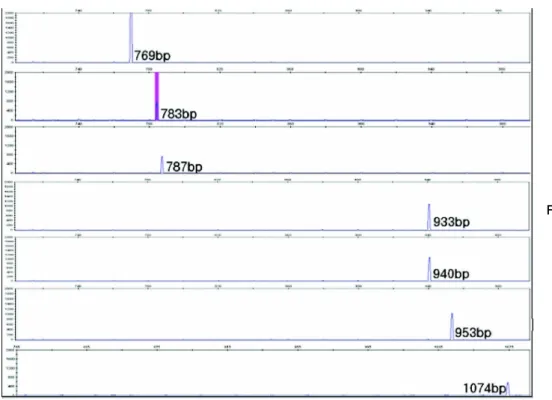
Molecular characteristics of S. zooepidemicus Fragment analysis of S. zooepidemicus isolates is shown in Fig. 2∼4. All isolates were shown single am- plification size of 906 bp in CNE gene, but SzP gene was shown variable patterns, 1,158 bp (n=2) and 1,118 bp (n=77). Fragment size of ISR gene were observed 769 bp (n=33), 783 bp (n=4), 787 bp (n=25), 933 bp n=3), 940 bp (n=10), 953 bp (n=3), and 1,074 bp (n=1).
Fig. 2. Peak data of SzP fragment analysis. After fragment analysis, SzP peak data were examined by using GeneMapper Ver. 4.0 software (Applied Bio-systems, USA). S. zooepidemicus isolates with sizes of 1,158 bp, 1,118 bp.
Fig. 3. Peak data of CNE fragment analysis. After fragment analysis, CNE peak data were examined by using GeneMapper Ver. 4.0 software (Applied Bio- systems, USA). S. zooepidemicus isolates with sizes of 906 bp.
Fig. 4. Peak data of ISR frag- ment analysis. After fra- gment analysis, ISR pe- ak data were examined by using GeneMapper Ver. 4.0 software (Appli- ed Bio- systems, USA).
S. zooepidemicus isola- tes with sizes of 769 bp, 783 bp, 787 bp, 933 bp, 940 bp, 953 bp, 1,074 bp.
DISCUSSION
Genital infections are a significant source of re- productive failure and economic loss to the horse breed- ing industry (Jeffcott et al, 1982; Pycock and Allen, 1990; Miragaya et al, 1997; Ozgur et al, 2001). The principal cause of endometritis in mare is S. zooepidemi- cus, the isolation rate of which range from 22 to 54%
of affected mares (Bain, 1966; Asbury et al, 1980;
Wingfield Digby and Ricketts, 1982; Widders et al, 1985). S. zooepidemicus has also been identified as the primary etiological agent in 15 to 20% of equine abor- tions (Rober, 1971; Widders et al, 1984).
Frontoso et al (2008) reported that samples were col- lected from the uterine of 75 mares and tested with rec- tal palpation and ultrasonography for foal heat. As a re-
Table 4. Molecular characteristics of 79 S. zooepidemicus
Gene Fragment size
Region
Total (%) Jeju (%) Jangsu (%)
CNE 906 bp 60*/60† (100) 19/19 (100) 79/79 (100) SzP 1,118 bp 58/60 (96.7) 19/19 (100) 77/79 (100) 1,158 bp 2/60 (3.3) − 2/79 (100) ISR 769 bp 30/60 (50.0) 3/19 (15.8) 33/79 (41.8)
783 bp 4/60 (6.7) − 4/79 (5.1) 787 bp 20/60 (33.3) 5/19 (26.3) 25/79 (31.6) 933 bp − 3 (15.8) 3/79 (3.8) 940 bp 6/60 (10.0) 4/19 (21.1) 10/79 (12.7) 953 bp − 3 (15.8) 3/79 (3.8) 1,074 bp − 1 (5.5) 1/79 (1.3)
*No. of positive, †Test samples (%).
sult of the bacterial test from the samples, 49 horses (65.3%) in total showed positive reaction and beta he- molytic Streptococcus (25.3%) and E. coli (24.0%) were the most frequently detected bacteria. It is primarily re- quired not only to select the horses being of good line, but also to establish and improve the technique of horse breeding in order to meet the needs of Korean horse market and secure nicer race horses and riding horses.
The samples in this study were collected from Jangsu and Jeju. But the selection for sampling done in- tensively from the certain regions including Jangsu and Jeju is attributed to the geographical nature peculiar to horse raising and reproducing. As to the domestic horse breeding, more than 95% is confined to Jeju and Jangsu. With this condition considered, it is preferred that other types of diseases be examined at the same time as well as the survey over S. zooepidemicus in- fection rate. The isolation rate of S. zooepidemicus in this study was indicated comparatively higher than that of Bain with 22% (Bain, 1966) and lower than those like Welsh with 54% (Welsh, 1984). It is a reality that there has not been any survey practically about S. zooe- pidemicus infection rate in the country. It is hard to mention any other studies available and simple comparison. However, the comparatively high rate of S.
zooepidemicus in this study is sure to appear domes- tically when compared to such foreign case study by Roszel and Freeman (1988) and McKinnon and Voss (1993).
Although there were some differences in sorbitol, lac-
tose, salicin, maltose among 79 S. zooepidemicus tested in this study, the results obtained were almost in accord- ance with the traditionally biochemical characteristics of S. zooepidemicus isolates. Interestingly, our results sho- wed that the fermentation rate for sorbitol (16.46%) in this study was indicated comparatively lower than tradi- tionally biochemical characteristics of S. zooepidemicus (Quinn et al, 1993). As a result of fragment analysis about CNE, it was confirmed that all Korean isolates were of same amplification size due to the observation of amplification size of 906 bp in all isolated strains.
However, analyzing epidemiological properties and characteristics of strains using CNE fragment analysis was difficult. But in the case of SzP virulence factors, 1,158 bp (n=2), 1,118 bp (n=77) and ISR gene region, 769 bp (n=33), 783 bp (n=4), 787 bp (n=25), 933 bp (n=3), 940 bp (n=10), 953 bp (n=3), 1,074 bp (n=1) am- plicon size observed. Based on fragment analysis of SzP results, we observed that most of the 60 strains isolated from Jeju had amplification sizes of 1,158 bp (n=2), 1,118 bp (n=58) and the 19 strains isolated from Jangsu had amplification size of 1,118 bp (n=19). Isolates from Jeju were classified into two groups, while those of Jangsu were categorized into one group by fragment analysis results of SzP gene.
Also, based on fragment analysis of ISR results, we observed that most of the 60 S. zooepidemicus strains isolated from Jeju had amplification sizes of 769 bp (n=30), 783 bp (n=4), 787 bp (n=20), 940 bp (n=6) and the 19 S. zooepidemicus strains isolated from Jangsu had amplification sizes of 769 bp (n=3), 787 bp (n=5), 933 bp (n=3), 940 bp (n=4), 953 bp (n=3), 1,074 bp (n=1) (Table 4). S. zooepidemicus strains isolated from Jeju were classified into five groups, while those of Jangsu were categorized into six groups by fragment analysis of ISR gene.
It is difficult to confirm the characteristics of isolates from each area merely based on SzP and ISR fragment analysis. But, it is highly correlated with the fact that various SzP and ISR patterns were shown in Jeju and Jangsu. These results indicate a high genetic hetero- geneity among the isolates which would be related ei- ther with the wide distribution of this microorganism in equine population, or with the fact that S. zooepidemicus
strains were isolated from individual mares, most of them belonging to single owners without any epidemio- logical or geographical relationship between them and possibility of influx of diseases from other areas.
ACKNOWLEDGMENTS
This study was supported by the Technology Deve- lopment Program for Agriculture and Forestry (108175- 03-1-CG000), Ministry for Agriculture, Forestry and Fis- heries, Republic of Korea.
REFERENCES
Anzai T, Timoney JF, Kuwamoto T, Wada R, Oikawa M, Higuchi T. 2002. Polymerase chain reaction restriction fragment length polymorphism analysis of the SzP gene of Streptococcus zooepidemicus isolated from the respi- ratory tract of horses. Am J Vet Res 63: 1298-1301.
Asbury AC, Halliwell RE, Foster GW, Longino SJ. 1980.
Immunoglobulin in uterine secretion of mares with dif- fering resistance to endometritis. Therigenology 14:
299-308.
Bain AM. 1966. The role of infection in infertility in the thor- oughbred mare. Vet Rec 78: 168-173.
Bannerman DD, Paape MJ, Hare WR, Sohn EJ. 2003. Increased levels of LPS-binding protein in bovine blood and milk following bacterial lipopolysaccharide challenge. J Dairy Sci 86: 3128-3137.
Bienert A, Bartmann CP, Verspohl J, Deegen E. 2003. Bacterio- logical findings for endodontical and apical molar dental diseases in the horse. Dtsch Tierarztl Wochenschr 110:
358-361.
Cho JJ, Kang SC, Yang HS, Yang JH, Son, WG, Bae JH, Kim JH, 2007. Peritonitis associated with Streptococcus equi subsp. zooepidemicus in a thoroughbred horse. Korean J Vet Res 47: 315-319.
Choi SK, Lee SG, Yang JH, Cho GJ. 2007. Distribution and antimicrobial susceptibility patterns of bacteria isolated from genital tract in Thoroughbred mares. J Vet Clin 24:
19-25.
Eigner U, Schmid A, Wild U, Bertsch D, Fahr AM. 2005.
Analysis of the comparative workflow and performance characteristics of the VITEK 2 and Phoenix systems. J Clin Microbiol 43: 3829-3834.
Frontoso R, De Carlo E, Pasolini MP, van der Meulen K, Pagnini U, Iovane G, De Martino L. 2008. Retrospective study of bacterial isolates and their antimicrobial suscep- tibilities in equine uterine during fertility problems. Res
Vet Sci 84: 1-6.
Harkness JE, Wagner JE. 1983. The biology and medicine of rab- bits and rodents. 2nd ed. pp. 173-175. Lea and Febiger, Philadelphia.
Hirota KI, Kakoi H, Gawahara H, Hasegawa T, Tozaki T.
2010. Construction and validation of parentage testing for thoroughbred horses by 53 single nucleotide poly- morphisms. J Vet Med Sci 72: 719-726.
Hyytia-Trees E, Lafon P, Vauterin P, Ribot EM. 2010. Multila- boratory validation study of standardized multiple-locus variable-number tandem repeat analysis protocol for shi- ga toxin-producing Escherichia coli O157: a novel ap- proach to normalize fragment size data between capillary electrophoresis platforms. Foodborne Pathog Dis 7:
129-136.
Jeffcott LB, Rossdale PD, Freestone J, Frank CJ, Towers-Clark PF. 1982. An assessment of wastage in thoroughbred racing from conception to 4 years of age. Equine Vet J 14:185-198.
Lee SY, Cho GJ. 2006. Parentage testing of Thoroughbred horse in Korea using microsatellite DNA typing. J Vet Sci 7:
63-67.
Lindstedt BA, Torpdahl M, Nielsen EM, Vardund T, Aas L, Kapperud G. 2007. Harmonization of the multiple-locus variable-number tandem repeat analysis method between Denmark and Norway for typing Salmonella Typhimu- rium isolates and closer examination of the VNTR loci.
J Appl Microbiol 102: 728-735.
McKinnon AO, Voss JL, 1993. Equine reproduction. pp. 246-253.
Lea & Rebiger, Philadephia.
Miragaya MH, Woods GL, Losinno L. 1997. Endometritis, sal- pingitis and fertilisation rates after mating mares with a history of intrauterine lumenal fluid accumulation. Equ- ine Vet J Suppl 25: 109-112.
Ozgur NY, Ikiz S, Carioglu B, Kilicarslan R, Yilmaz H, Akay O, Ilgaz A. 2001. Contagious equine metritis in Turkey:
first isolation of Taylorella equigenitalis from mares.
Vet Rec 149: 120-122.
Pycock JF, Allen WE. 1990. Inflammatory components in uterine fluid from mares with experimentally induced bacterial endometritis. Equine Vet J 22: 422-425.
Quinn PJ, Carter ME, Markey B, Carter GR. 1993. Clinical Veteri- nary Microbiology. 9th ed. pp. 127-136. Mosby, London.
Rober SJ. 1971. Veterinary obstetrics and genital disease. 2nd ed.
pp. 135-136. Theriogenology Edward bros.
Roszel JF, Freeman KP. 1988. Equine endometrial cytology. Vet Clin North Am Equine Pract 4: 247-262.
Welsh RD. 1984. The siginificance of Streptococcus zooepidemi- cus in the horse. Equine practice 6: 6-16.
Widders PR, Stokes CR, David JS, Bourne FJ. 1984. Quantitation of the immunoglobulins in reproductive tract secretions of the mare. Res Vet Sci 37: 324-330.
Widders PR, Stokes CR, David JS, Bourne FJ. 1985. Effect of cycle stage on immunoglobulin concentrations in re- productive tract secretions of the mare. J Reprod Immu-
nol 7: 233-242.
Wingfield Digby NJ, Ricketts SW. 1982. Results of concurrent bacteriological and cytological examinations of the endo- metrium of mares in routine stud farm practice 1978- 1981. J Reprod Fertil Suppl 32: 181-185.
Younan M, Estoepangestie AT, Cengiz M, Alber J, El-Sayed A,
Lämmler C. 2005. Identification and molecular charac- terization of Streptococcus equi subsp. zooepidemicus isolated from camels (Camelus dromedarius) and camel milk in Kenya and Somalia. J Vet Med B Infect Dis Vet Public Health 52: 142-146.