• 검색 결과가 없습니다.

Tolerance to Salt Stress by Plant Growth-Promoting Rhizobacteria on Brassica rapa var. glabra

N/A
N/A
Protected

Academic year: 2021

Share "Tolerance to Salt Stress by Plant Growth-Promoting Rhizobacteria on Brassica rapa var. glabra"

Copied!
7
0
0

로드 중.... (전체 텍스트 보기)

전체 글

(1)

Tolerance to Salt Stress by Plant Growth-Promoting Rhizobacteria on Brassica rapa var. glabra

Khalid A. Hussein

1,3

, Jaehong Yoo

2

, and Jin Ho Joo

3

*

1

Botany and Microbiology Department, Faculty of Science, Assiut University, 71516, Assiut, Egypt

2

National Academy of Agriculture Science, Jeongju, RDA, Korea

3

Department of Biological Environment, Kangwon National University, Chuncheon, Kangwon-do, Republic of Korea

(Received: November 2 2016, Revised: November 18 2016, Accepted: November 18 2016)

Salinity has been a threat to agriculture in some parts of the world; and recently, the threat has grown. Plant growth-promoting rhizobacteria (PGPR) may benefit plant growth, either by improving plant nutrition or producing plant growth hormones. The effects of rhizobacterial strains to attenuate the salinity stress on the germination of Chinese cabbage seeds were tested using four different concentrations of NaCl (50, 100, 150, and 200 mM). Also, PGPR strains were tested to enhance the early germination of Chinese cabbage seeds under normal conditions. Azotobacter chroococcum performed best with enhancing the radicle length of 4.0, 1.2, and 1.0 times at treatments of 50, 100, and 150 mM of NaCl, respectively. Additionally, significant differences were found in plumule length, A. chroococcum and Lactobacillus sp. showed remarkable activation either in normal or under stress conditions. Co-inoculation by three rhizobacterial strains (LAPmix) indicated synergistic effect to enhance the early germination of the seeds. The results of this study are promising for application of rhizobacterial strains that possess plant growth promoting traits to enhance the plant tolerance against salinity.

Key words: Rhizobacteria, Salinity, Tolerance, Plant growth promotion

The effect of different inoculations on the length of radicle and plumule and the seeds germination percentage of Chinese cabbage, Brassica rapa var. glabra, after 96 hour under normal conditions.

1)

*Corresponding author: Phone: +82332506448, Fax: +82332416640, E-mail: [email protected]

§
Acknowledgement: This study was supported by a grant (Project No. PJ010848022016) National Institute of Agricultural Science, Rural Development Administration (RDA), Republic of Korea.

This study was supported by 2015 Research Grant from Kangwon National University (No. 520150102).

(2)

Introduction

Plant growth promoting rhizobacteria can increase plant height and productivity due to their phytohormones synthesis, increasing availability of nutrients and mediating uptake of nutrients by the plants (Burd et al., 2000). Most of the interest has focus on non-symbiotic rhizobacterial strains, particularly Pseudomonas and Bacillus species. However, many still remain to be learned from the free living bacteria that have unique growth-enhancing effect on host plants (Bais et al., 2004; Ping and Boland 2004). Wu et al. (2005) demonstrated obviously the plant growth promoting effects of PGPR strains on different crops. Bacterial inoculants enhance plant growth, germination and seedling emergence (Lugtenberg et al., 2002). Salinity is abiotoc stress that substantially declines the yield of the crops by more than 50% (Bray, 2000). When salinity results from high level of NaCl, homeostasis of not only Na

+

and Cl

-

but also K

+

and Ca

2+

is disordered (Serrano et al., 1999; Hasegawa et al., 2000; Rodriguez, 2000).High soil salinity is very serious factor limiting the agricultural production in a wide proportion over the world (Zhang and Hodson, 2001; Bybordi et al., 2010).

Various environmental stresses such as water stress and high salt result in “stress ethylene” in which the ethylene is synthesized as a response to these stresses (Ciardi et al., 2000). This ethylene stress induces the symptoms of senescence in plant such as abscission and chlorosis which affect plant growth and survival (Glick, 2012). Some Rhizobia strains can produce the enzyme 1-aminocyclopropane-1-carboxylate (ACC) deaminase which hydrolyze the ACC which is the essential precursor for ethylene biosynthesis in plants (Ma et al., 2002). Therefore, ACC deaminase-producing PGPR may enhance plant growth by declining deleterious effects of stress ethylene. PGPR were found to tolerate salinity stress, which are often noxious to growth of important crop plants (Bacilio et al., 2004). After Honma and Shimomura (1978) discovered the enzyme 1-amino- cyclopropane-1-carboxylate (ACC) deaminase, Glick et al.

(2007) showed that this is a common feature of many PGPB.

Plant growth promoting rhizobacteria (PGPR) are comprised almost exclusively of free-living bacteria that dwell the rhizosphere of the plant (Kloepper et al., 1989). PGPR can enhance plant growth by various direct and indirect mechanisms (Glick, 1995; Gupta et al., 2000). Amongst of these mechanisms is improving plant stress tolerance to drought, salinity, and metal toxicity. Failure of germinations on saline soils is often due to high salt level in the planting zone as well as upward movement of soil solution and subsequent evaporation at the soil surface (Bybordi, 2010). The purpose of the present study was to evaluate the capability of some rhizobacteria strains to elevate the tolerance against salinity stress and to accelerate

the early seed germination of Chinese cabbage Brassica rapa var. glabra.

Materials and methods

Microorganisms and inoculums preparation Indole acetic acid (IAA) strongly producing bacteria were previously isolated from Panaxschinsen rhizosphere of Korean ginseng farm in Chuncheon city, Gangwon-do, South Korea. The strains were subcultured in Tryptic soy agar (TSA) medium pH 7.2. Bacterial strains were then preserved on (TSA) at 4°C (Noor et al., 2013). After two hours of growth in 5 mL of the nutrient broth as pre‒culture the OD of the culture broth was measured at 600 nm (OD600). One mL of the fresh grown spores was introduced into 250 mL new TSB broth medium supplemented with (5%) NaCl and incubated at 30°C for 48 h for activation.

NaCl stress effect on the seed germination of Chinese cabbage Plant seeds were surface sterilized by soaking in 70% ethanol for 1 min, then rinsed thoroughly in three treatments of sterile distilled water. Ten seeds were placed per Petri dish lined by sterilized filter paper (Whatman No. 1) wetted by 5 mL sterile solution of 0, 50, 100 and 150 mM NaCl. The experiment was conducted in three replicates. All Petri dishes of different treatments were incubated at 28°C under dark condition in plant growth chamber (DS 54 GLP, DASOL Scientific Co., Ltd., Korea). Germination progress was examined daily for 4 days. The number of germinated seeds was recorded every 24 h.

Inoculation of Chinese cabbage seeds The bacterial sus- pension was adjusted into 1×10

7

cfu mL

-1

for each strain using UV-VIS Spectrophotometer (Hitachi U-2900), and optical density OD at 600 nm. Seeds were agitated at 150 rpm with its corresponding spore suspension for 2 h and at room temperature.

Seeds were removed from the spore suspension and placed as 10 seeds/ plate. The seeds were landed on sterile filter (Whatman No. 1) which is humidified by 5 mL of sterile distilled water.

The experiment was conducted in triplicate.

Inoculation of Chinese cabbage seeds under salinity stress

The germination test of the seeds under different salinity

levels of NaCl (50, 100 and 150 mM) was conducted in

presence of either single or multi inoculated conditions. Seeds

surface was sterilized and washed as mentioned above. Seeds

were inoculated by soaking for 2h in 30 mL of its corresponding

bacterial suspension (1×10

7

cfu mL

-1

) with shaking conditions

of 150 rpm. In case of mixed inoculation, 10 mL of each

culture were participated. 30 mL sterile distilled water was

served as control as well as other treatments. Seeds were

filtrated using autoclaved gauze and placed exactly ten ones

per Petri dish lined by sterile filter (Whatman No. 1). Salinity

(3)

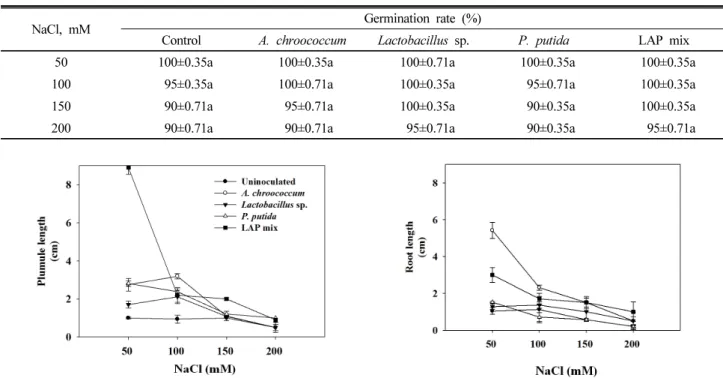
Table 1. Effect of PGPR on seed germination of Chinese cabbage Brassica rapa var. glabra under different salinity levels.

NaCl, mM Germination rate (%)

Control A. chroococcum Lactobacillus sp. P. putida LAP mix

50 100±0.35a 100±0.35a 100±0.71a 100±0.35a 100±0.35a

100 95±0.35a 100±0.71a 100±0.35a 95±0.71a 100±0.35a

150 90±0.71a 95±0.71a 100±0.35a 90±0.35a 100±0.35a

200 90±0.71a 90±0.71a 95±0.71a 90±0.35a 95±0.71a

Fig. 1. Effect of PGPB inoculation on the early seed germination under salinity stress; a, shows the effect of the PGPR bacterial inoculation to enhance the salinity tolerance of the tested plants, represented in the plumule length, of Chinese cabbage Brassica rapa var. glabra; b, shows the effect of the PGPR bacterial inoculation to enhance the salinity tolerance of the tested plants, represented in the root length, of Chinese cabbage Brassica rapa var. glabra.

stress and humidity conditions were then provided by 5 mL sterile solution of 0, 50, 100 and 150 mM NaCl. The germination rate was calculated using Timson index (Khan and Ungar, 1985) of germination velocity.

Statistical analysis Data were run to analysis of variance (ANOVA). Significance at 5% level was tested by Least Significant Difference (LSD) using SAS program version 9.1 (SAS, 2009).

Results and discussion

When plants are subject to a variety of stresses they often exhibit some symptoms which are known as ethylene syndrome.

There is evidence that PGPR can interfere with ACC synthase, thus decline the concentration of the precursor of ethylene.

Moreover, direct inoculation by phytohormones producing PGPR may affect plant metabolism. Many studies have shown that several soil bacteria, particularly the PGPR can produce cytokinins and gibberellins which are able to improve plant growth conditions (De Salamone et al., 2001). Hence, PGPR can stimulate plant tolerance to high salinity levels. In this work we investigated the effect of selected PGPR strains on the early germination of Chinese cabbage Brassica rapa var.

glabra seeds.

PGP bacteria effect on seeds germination, radicle length, and plumule growth under different salinity levels Inoculation of A. chroococcum, Lactobacillus sp., and LAPmix could enhance the germination rate of Chinese cabbage seeds by 5%

under salinity stress of 100 mM of NaCl. However, P. putida did not show increase in germination rate comparing to uninoculated seeds at the same salinity level. At salinity level of 150 mM of NaCl each of A. chroococcum, Lactobacillus sp., and LAPmix increased the germination rate by 5% rather than control. At salinity level of 200 mM of NaCl each of only Lactobacillus sp. and LAPmix increased the germination rate by 5% rather than control (Table 1). Mishra et al. (2010) demonstrated that the application of PGPR isolates signi- ficantly improved the percentage of seed germination under saline conditions. Under salinity stress, PGPR showed positive effect in plants evidenced by germination rate, tolerance of drought, yield and plant growth (Kokelis et al., 2006). Rhizo- bacteria have various mechanisms to survive in the rhizosphere under water stress and high salinity of soil (Miller and Woods 1996).

Under different salinity levels, inoculation of A. chroococcum showed remarkable enhancement to the radicle length of Chinese cabbage seedling where it showed 4.0, 1.2, and 1.0 times greater at treatments of 50, 100, and 150 mM of NaCl, respectively (Fig. 1). However, inoculation of A. chroococcum with 200 mM of NaCl increased the radicle length only by 0.3 cm.

LAPmix enhanced the radicle length rather than the uninoculated

(4)

Table 2. Effect of PGPR on root length of Chinese cabbage Brassica rapa var. glabraunder different salinity levels.

NaCl, mM Radicle length (cm plant

-1

)

Control A. chroococcum Lactobacillus sp. P. putida LAP mix

50 1.04±0.18gh 5.42±0.44a 1.28±0.15efg 1.52±0.03de 3.00±0.41b

100 1.12±0.71fg 2.31±0.14c 1.36±0.17edfg 0.71±0.25hl 1.70±0.30d

150 0.57±0.06ij 1.50±0.24def 1.00±0.53gh 0.57±0.06jl 1.50±0.33def

200 0.2±0.11j 0.50±0.47jl 0.50±0.24jl 0.20±0.05j 1.00±0.53gh

Table 3. Effect of PGPR on plumule length of Chinese cabbage Brassica rapa var. glabra under different salinity levels.

NaCl, mM Radicle length (cm plant

-1

)

Control A. chroococcum Lactobacillus sp. P. putida LAP mix

50 1.00±0.05g 2.75±0.33b 1.70±0.18f 2.61±0.14bc 2.81±0.36b

100 0.94±0.21g 3.19±0.14a 2.11±0.35de 0.94±0.21g 2.38±0.38cd

150 1.00±0.14g 1.10±0.05g 1.08±0.04g 1.00±0.14g 1.21±0.06g

200 0.50±0.16h 0.50±0.26h 0.50±0.16h 0.50±0.00h 1.00±0.00g

Fig. 2. The effect of different inoculations on the length of radicle and plumule and the seeds germination percentage of Chinese cabbage, Brassica rapa var. glabra, after 96 hour under normal conditions.

control of the Chinese cabbage seedling by 2.0, 0.6, 1.0, and 0.8 cm under salinity stress of 50, 100, and 150 mM of NaCl, respectively. P. putidaand Lactobacillus sp. inoculations showed lower increase in the radicle length Chinese cabbage seedling (Table 2). IAA produced by bioferilizers enhances plant growth by increasing the number of root hairs and lateral roots (Okon and Kapulnik, 1986). PGPR stimulate plant growth via production of phytohormone, activation of phosphate solubilizing, suppression of deleterious organism, and promotion of the minerals nutrients uptake (Lalande et al., 1989).

Inoculation of A. chroococcum enhanced the plumule length of Chinese cabbage significantly by 1.75 and 2.25 cm under salinity of 50 and 100 mM of NaCl, respectively. Similar results were shown by Kim et al. (2012), they found that co-inoculation of Brevibacterium iodinum and Methylobacterium oryzae mitigated the salinity stress and promoted the root length of maize and sorghum seedling by 22.9% and 29.7%, respectively. However, under salinity level of 150 and 200 mM of NaCl, A. chroococcum did not show positive effect on the plumule length. LAPmix inoculation improved the plumule growth significantly by 1.8 and 1.4 cm at salinity treatment of 50 and 100 mM of NaCl, respectively. Priming with PGPR increase germination and improve seedling establishment. It initiates the physiological process of germination, initiation of physiological process helps in the establishment and proliferation of PGPRon the spermosphere (Taylor and Harman, 1990). Treatments of 150 and 200 mM of NaCl LAPmix inoculation increased the plumule length insignificantly by 0.11 and 0.5, respectively. Lactobacillus sp. inoculation increased the plumule length significantly by 0.7 and 1.2 cm rather than uninoculated seeds at salinity of 50 and 100 mM of NaCl, respectively. However, at salinity stress of 150 and 200 mM of NaCl Lactobacillus sp. inoculation did not show significant increase as well as A. chroococcum and P. putida (Table 3). Tripathi et al. (1998) reported that the

phytohormone indole acetic acid production was not affected by salinity as much as nitrogenase production. Actually, low levels of salinity stimulate indole acetic acid production. But at higher than 100 mM NaCl, IAA production was suppressed.

Consequently, low level of salinity increases IAA production that may induce roots proliferation and help in the uptake of proline or betaines secreted by the plant roots. Treatment of chickpea seeds with P. fluorescens (Pf1) through seed followed by root zone application after 30 days of sowing increased seedling emergence (Vidhyasekaran and Muthamilan, 1995).

More than 33 products of PGPR have been registered for commercial use in greenhouse and field in North America, the threat of certain PGPR (P. aeruginosa, P. cepacia and B.

cereus) to infect human beings as opportunistic pathogens has to be clarified before large scale acceptance (Nakkeeran et al., 2005).

PGP bacteria effect on seeds germination under normal

conditions The highest rate of germination of Chinese cabbage

(5)

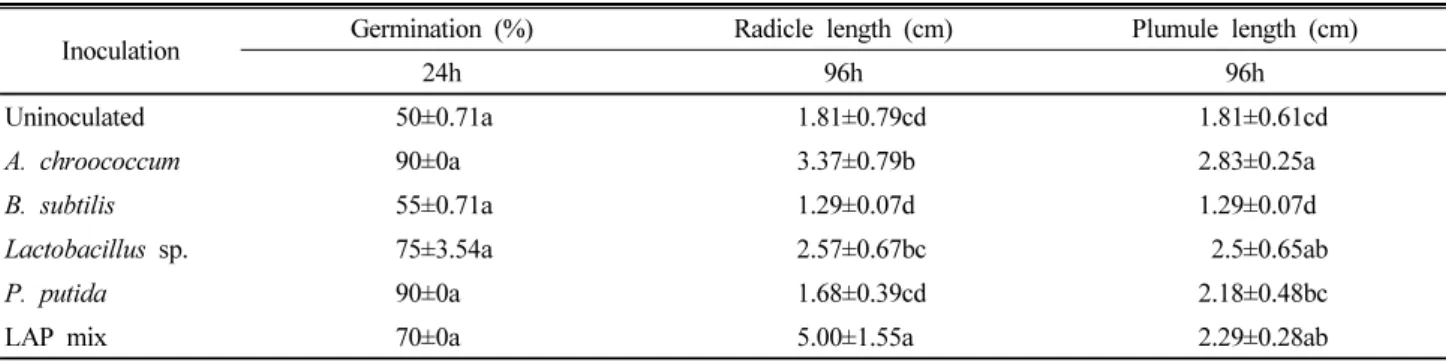
Table 4. Effect of PGPR on seed germination, root length, and plumule length of Chinese cabbage Brassica rapa var. glabra.

Inoculation Germination (%) Radicle length (cm) Plumule length (cm)

24h 96h 96h

Uninoculated 50±0.71a 1.81±0.79cd 1.81±0.61cd

A. chroococcum 90±0a 3.37±0.79b 2.83±0.25a

B. subtilis 55±0.71a 1.29±0.07d 1.29±0.07d

Lactobacillus sp. 75±3.54a 2.57±0.67bc 2.5±0.65ab

P. putida 90±0a 1.68±0.39cd 2.18±0.48bc

LAP mix 70±0a 5.00±1.55a 2.29±0.28ab

seeds after 24 h was 90% by A. chroococcum and P. putida followed by LAPmix which shown 70% of seeds germination after 24 h. However, Lactobacillus sp. showed only 55% (Fig.

2). The uninoculated treatment showed only 50% germination (Table 4). A. chroococcum inoculation enhanced the radicle length by 1.5 cm higher than the control. Lactobacillus sp.

enhanced the radicle length by 0.7 cm, while the highest radicle length was shown by LAPmix inoculation which increased the radicle by 3.2 cm higher than the uninoculated control.

Surface application of Pseudomonas to beet leaves actively compete for amino acids on the leaf and inhibited spore germination of Botrytis cinerea, Cladosporium herbarum and Phomabetae (Blakeman and Brodie, 1977). A. chroococcum inoculation enhanced the plumule growth by 1.0 cm longer than control. Lactobacillus sp. enhanced the plumule length by 0.7 cm, while P. putida did not show increase either in radicle or plumule length during Chinese cabbage germination. B.

subtilis had suppressive effect of the germination process (Table 4). Knowledge on the influence of biotic and abiotic environment on PGPR strains to express its plant growth promotion action has to be studied in badly under in vivo to improve the efficacy of PGPR strains (Nakkeeran et al., 2005).

The potentiality of the PGPR strain in the promotion of seed germination should be carried out atboth lab and field conditions in different soil types, microbial communities and climatic conditions (Roberts and Lohrke, 2003). It would lead to the development of applicable PGPR strains (Nakkeeran et al., 2005).

Conclusions

The study presented strains of IAA-producers rhizobacteria (A. chroococcum, Lactobacillus sp., and P. putida) that improve germination rate, root and plumule growth of Chinese cabbage grown under salinity stress. The studied strains have accelerated tolerance of Chinese cabbage under different salinity stresses, and ultimately improved germination, radicle, and plumule growth comparing to uninoculated control. Mostly, the co- inoculation of PGPR showed better results in terms of early germination. The results of this study are encouraging for use of rhizobacterial strains; particularly those possess plant growth

promoting traits, to elevate the plant tolerance against salinity.

However, further research is still needed to evaluate the PGPR role in the scale soil reclamation.

References

Bacilio, M., H. Rodriguez, and M. Moreno. 2004. Mitigation of salt stress in wheat seedlings by gfp-tagged Azospirillum lipoferum.

Biol. Fertil. soils 40:188-193.

Bais, H.P., S.W. Park, T.L. Weir, R.M. Callaway, and J.M.

Vivanco. 2004. How plants communicate using the underground information superhighway. Trends in Plant Science 9:26-32.

Benizri, E., A. Courtade, C. Picard, and A. Guckert. 1998. Role of maize root exudates in the production of auxins by Pseudomonas fluorescens M.3.1: Short communication. Soil Biol. Biochem. 30:1481-1484.

Bharathi, R., R. Vivekananthan, S. Harish, A. Ramanathan, and R. Samiyappan. 2004. Rhizobacteria-based bio-formulations for the management of fruit rot infection in chillies. Crop Prot.

23:835-843.

Blakeman, J.P. and I.D.S. Brodie. 1977. Competition for nutrients between e piphytic microorganisms and germination of spores of plant pathogens on beet root leaves. Physiol. Plant Pathol.

10:29-42.

Bowen, G.D. and A.D. Rovira, 1999. The rhizsphere and its management to improve plant growth. Adv. Agron. 66:1-102.

Brown, M.E. 1982. Seed and root bacterization. Annu. Rev.

Phytopathol. 12:181-197.

Burd, G.I., D.G. Dixon, and R.R. Glick. 2000. Plant growth promoting bacteria that decrease heavy metal toxicity in plants.

Canadian Journal of Microbiology 46:237-245.

Bybordi, A. 2010. The influence of salt stress on seed germination, growth and yield of canola cultivars. Notulae Botanicae Horti Agrobotanici Cluj-Napoca 38(1):128-133.

Bybordi, A., S.J. Tabatabaei, and A. Ahmadev. 2010. Effect of salinity on the growth and peroxidase and IAA oxidase activities in Canola, J. Food Agric. Environ. 8(1):109-112.

Cakmakc, R.I., D.F. Aydın, and A.F. Sahin. 2006. Growth promotion of plants by plant growth promoting rhizobacteria under greenhouse and two different field soil conditions. Soil Biol. Biochem.

38:1482-1487.

(6)

Cattelan, A.J., P.G. Hartel, and J.J. Fuhrmann. 1999. Screening for plant growth-promoting rhizobacteria to promote early soybean growth. Soil Sci. Soc. Am. J. 63:1670-1680.

Ciardi, J.A., D.M. Tieman, S.T. Lund, J.B. Jones, R.E. Stall, and H.J. Klee. 2000. Response to Xanthomonascampestrispv. vesicatoria in tomato involves regulation of ethylene receptor gene expression.

Plant Physiology 123:81-92.

De Salamone, I.E.G., R.K. Hynes, and L.M. Nelson. 2001. Can.

J. Microbiol. 47:404-411.

Egamberdiyeva, D. 2007. The effect of plant growth promoting bacteria on growth and nutrient uptake of maize in two different soils. Applied Soil Ecol. 36:184-189.

Flowers, T.J., A. Garcia, M. Koyama, and A.R. Yeo. 1997. Breeding for salt tolerance in crop plants: the role of molecular.biology.

Acta. Physio. Plantarum. 19:427-433.

Frankenberger, J.r. and M. Arshad. 1991. Microbial production of plant growth regulating substances in soil.p.162-171. In C.

Keel, B. Koller, and G. Defago (Eds.) Plant Growth-Promoting Rhizobacteria, Progress and Prospects. The Second International Workshop on PGPR. Interlaken, Switzerland, 14-19 October 1990.

Glick, B.R. 1995. The enhancement of plant growth by free- living bacteria. Can. J. Microbiol. 41:109-114.

Glick, B.R., D.M. Karaturovic, and P.C. Newell. 1995. A novel procedure for rapid isolation of plant growth promoting Pseu- domonas. Can. J. Microbiol. 41:533-536.

Glick, B.R., B. Todorovic, J. Czarny, Z. Cheng, J. Duan, and B.M.

Conkey. 2007. Promotion of plant growth by bacterial ACC deaminase. Critical Reviews in Plant Sciences 26:227-242.

Glick, B.R., C.L. Patten, G. Holguin, and D.M. Penrose. 1999.

Biochemical and genetic mechanisms used by plant growth promoting bacteria. Imperial College Press, London, UK.

Glick, R.B. 2012. Plant growth-promoting bacteria: Mechanisms and applications. Hindawi Publishing Corporation Scientifica Volume 2012, Article ID 963401, 15 pages http://dx.doi.

org/10.6064/2012/963401.

Gupta, A., M. Gopal, and K.V. Tilak. 2000. Mechanism of plant growth promotion by rhizobacteria. Indian J. Exp. Biol. 38:

856-862.

Hasegawa, P.M., R.A. Bressan, and J.K. Zhu. 2000. Plant cellular and molecular responses to high salinity. Annu. Rev. Plant Physiol. Plant Mol.Biol., 51:463-499.

Honma, M. and T. Shimomura. 1978. Metabolism of 1-aminocycl- opropane-1-carboxylic acid, Agricultural and Biological Chemistry 42(10):1825-1831.

Joo, G.J., Y.M. Kim, J.T. Kim, I.K. Rhee, J.H. Kim, and I.J. Lee.

2005. Gibberellins producing rhizobacteria increase endogenous gibberellins content and promote growth of red peppers. Journal of Microbiology 43:510-515.

Kang, S.M., G.J. Joo, M. Hamayun, C.I. Na, D.H. Shin, Y.K.

Kim, J.K. Hong, and I.J. Lee. 2009. Gibberellin production and phosphate solubilization by newly isolated strain of Acineto-

bactercalcoaceticus and its effect on plant growth. Biotechnol.

Lett. 31:277-281.

Khan, M.A. and I.A. Ungar. 1985. The role of hormones in regulating the germination of polymorphic seeds and early seedling growth of Atriplextri angularis Willd. under saline conditions. Physiologia Plantarum 63:109-113.

Kim, K., S. Hwang, V.S. Saravanan, and T. Sa. 2012. Effect of Brevibacteriumiodinum RS16 and Methylobacteriumoryzae CBMB20 inoculation on seed germination and early growth of Maize and Sorghum-sudangrass hybrid seedling under different salinity levels. Korean J. Soil Sci. Fert. 45(1):51-58.

Kloepper, J.W., R. Lifshitz, and R.M. Zablotowicz. 1989. Free- living bacterial inocula for enhancing crop productivity, Trends Biotechnol. 7:39-44.

Kokelis, B., N. Kloepper, and M.S. Reddy. 2006. Plant growth promoting rhizobacteria as transplant amendments and their effects on indigenous rhizosphere microorganisms. App. Soil.

Ecol. 31:91-100.

Kumar, D. 1995. Salt tolerance in oilseed brassicas—present status and future prospects.Plant Breed. Abst. 65:1438-1447.

Lalande, R., N. Bissonnette, D. Coutlée, and H. Antoun. 1989.

Identification of rhizobacteria and determination of their plant- growth promoting potential, Plant Soil. 115:7-11.

Lugtenberg, B.J.J., T.F.C. Chin-A-Woeng, and G.V. Bloemberg.

2002. Microbe-plant interactions: principles and mechanisms.

Antonie Van Leeuwenhoek. 81:373-383.

Ma, W., D.M., Penrose, and B.R. Glick. 2002. Strategies used by rhizobia to lower plant ethylene levels and increase nodulation,”

Canadian Journal of Microbiology 48(11):947-954.

Miller, K.J. and J.R. Woods. 1996. Osmoadaptation by rhizosphere bacteria; Anne. Rev. Microbiol. 50:101-136.

Mishra, M., U. Kumar, P.K. Mishra, and V. Prakash. 2010.

Efficiency of plant growth promoting rhizobacteria for the enhancement of Cicerarietinum L. growth and germination under salinity. Advances in Biological Research 4(2):92-96.

Nakkeeran, S., W.G. Dilantha Fernando, and Z.A. Zaki Siddiqui.

2005. Plant growth promoting rhizobacteria formulations and its scope in commercialization for the management of pests and diseasessiddiqui (ed.), PGPR: Biocontrol and Biofertilization, 257-296. Springer, Dordrecht, The Netherlands.

Nihorimbere, V., M. Ongena, M. Smargiassi, and P. Thonart. 2011.

Beneficial effect of the rhizosphere microbial community for plant growth and health. Biotechnol. Agron. Soc. Environ.

15(2):327-337.

Niranjan-Raj, S., N.P. Shetty, and H.S. Shetty. 2004.Seed-bio- priming with Pseudomonas fluorescens isolates, enhances growth of pearl millet plants and induce resistance against downy mildew. Int. J. Pest Manage. 50:41-48.

Okon, Y. and C. Labandera-González. 1994. Agronomic applications of Azospirillum: An evaluation of 20 years of worldwide field inoculation. Soil Biol. Biochem. 26:1591-1601.

Okon, Y. and Y. Kapulnik. 1986. Development and function of

(7)

Azospirillum inoculated roots. Plant Soil 90:3-16.

Ozturk, A., O. Caglar, and F. Sahin. 2003.Yield response of wheat and barley to inoculation of plant growth promoting rhizobacteria at various levels of nitrogen fertilization. J. Plant Nutr. Soil Sci. 166:262-266.

Ping, L.Y. and W. Boland, 2004. Signals from the underground:

bacterial volatiles promote growth in Arabidopsis. Trends Plant Sci. 9:263-266.

Raju, N.S., S.R. Niranjana, G.R. Janardhana, H.S. Prakash, H.S.

Shetty, and S.B. Mathur. 1999.Improvement of seed quality and field emergence of Fusariummoniliforme infected sorghum seeds using biological agents. J. Sci. Food Agric. 79:206-212.

Rodriguez, A. 2000. Potassium transport in fungi and plants.

Biochim. Biophys. Acta. 1469:1-30.

Serrano, R., J.M. Mulet, G. Rios, J.A. Marquez, I.F. De Larriona, M.P. Leube, Mendizabal, I., Pascual, A. Ahuir, M., Proft, R., Ros, and C. Montesinos. 1999. A glimpse of the mechanisms of ion homeostasis during salt stress. J. Exp. Bot. 50:1023-1036.

Shaukat, K., S. Affrasayab, and S. Hasnain. 2006. Growth responses of Helianthus annus to plant growth promoting rhizobacteria used as a biofertilizer. J. Agric. Res. 1:573-581.

Taylor, A.G. and G.E. Harman. 1990, Concept and technologies of selected seedtreatments. Annu. Rev. Phytopathol. 28:321-339.

Tripathi, S., A. Tripathi, D.C. Kori, and S. Tiwari. 1998. Effect of tree leaves aqueous extracts on germination and seedlings growth of soyabean. Allelopathy J. 5(1):75-82.

Vidhyasekaran, P. and Muthamilan, M. 1995. Development of formulations of Pseudomonasfluorescens for control of chickpea wilt.Plant. Dis. 79:782-786.

Wu, S.C., Z.H. Cao, Z.G. Li, K.C. Cheung, and M.H. Wong.

2005. Effects of biofertilizer containing N-fixer, P and K solubilizers and AM fungi on maize growth: A greenhouse trial. Geoderma. 125:155-166.

Zaidi, A., M.S. Khan, M. Ahemadand, and M. Oves. 2009. Plant growth promotion by phosphate solubilizing bacteria. Acta Microbiol. Immunol. Hungarica. 56:263-284.

Zhang, H.X., J.N. Hodson, J.P. Williams, and E. Blumwald.

2001. Engineering salt tolerant Brassica plants: Characterization of yield and seed oil quality in transgenic plants with increased vacuolar sodium accumulation. Proc. Nat. Acad. Sci. USA.

48:12832-12836.

수치

Fig. 1. Effect of PGPB inoculation on the early seed germination under salinity stress; a, shows the effect of the PGPR bacterial  inoculation to enhance the salinity tolerance of the tested plants, represented in the plumule length, of Chinese cabbage Bra
Table 2. Effect of PGPR on root length of Chinese cabbage Brassica rapa var. glabraunder different salinity levels.
Table 4. Effect of PGPR on seed germination, root length, and plumule length of Chinese cabbage Brassica rapa var

참조

관련 문서