4차 산업혁명 기반 핵심기술에 대한 기술성숙도와 산업과 연계 타당성 연구
조한진1, 정규만2*
1극동대학교 에너지IT공학과 교수, 2대구대학교 정보통신공학부 교수
A Study on the Connective Validity of Technology Maturity and Industry for Core Technologies based on 4th Industrial Revolution
Han-Jin Cho
1, Kyuman Jeong
2*1
Professor, Dept. of Energy IT Engineering, Far East University
2
Professor, School of Computer & Communication Engineering, Daegu University
요 약 4차 산업혁명의 핵심기술 발전은 다른 핵심기술의 발전과 연계되며, 이를 통하여 미래에 산업구조를 변화시키고 새로운 스마트 비즈니스 모델을 창출할 것으로 예측된다. 이에 본 논문에서는 기술 성숙도 분석을 통하여 기술 성숙도 수준 을 진단할 수 있는 방안과, 기술 개발에 도움이 될 수 있는 연구를 수행하고자 하였다. 이를 위하여 기술 동향 정보를 이용하 여 4차 산업혁명 핵심기술의 시장, 정책 등을 조사하고 종합하여 종합적인 성숙도 수준을 수행하였다. 기술 성숙도 측정값은 기술 개발자에 의해 배점되므로, 사람의 성향에 따라 편견이 작용되어 주관적인 평가가 될 수 도 있다. 또한 개별 기술의 성숙도에 대한 측정이므로, 전체 시스템 통합 관점의 평가에는 적합하지 않다. 하지만 전체 시스템을 구성하는 핵심 요소 기술들을 시스템에 연계하기에 앞서 성숙도를 평가하여 전체 시스템의 효과와 구현 가능성을 비교할 수 있는 수단으로 활용 할 수 있으며, 기술 개발의 계획에 중요한 역할을 수행할 수 있을 것으로 기대된다.
주제어 : 4차 산업혁명, 로봇, 인공지능, 빅데이터, 사물인터넷, 블록체인, 클라우드, 3D 프린팅, 기술 성숙도
Abstract
The core technology development of the Fourth Industrial Revolution is linked to the development of other core technologies, which will change the industrial structure in the future and create a new smart business model.In this paper, tried to analyze the technology maturity level and analyze the technology maturity. To do this, used technology trend information to investigate and integrate the market, policy, etc. Of core technology of the 4th Industrial Revolution to achieve a comprehensive maturity level. Because technology maturity measures are scored by technology developers, prejudices may be acted upon according to a person's tendency, which may be a subjective evaluation. It is also a measure of the maturity of individual technologies, and thus is not suitable for evaluating the overall system integration perspective. However, it is possible to evaluate the maturity before integrating the core element technologies constituting the whole system and to use it as a means to compare the effect of the whole system and its feasibility and play an important role in the planning of technology development.
Key Words :
4th Industrial Revolution, Robot, Artificial Intelligence, Big Data, Internet of Things, Block Chain, Cloud Computing, 3D Printing, Technology Readiness Level*This work was supported by the Korea Sanhak Foundation(KSF) in 2018
*Corresponding Author : Kyuman Jeong ([email protected]) Received January 2
Accepted March 20, 2019
Revised February 8, 2019 Published March 28, 2019
1. 서론
4차 산업혁명은 18세기 초기 산업 혁명 이후 네 번째 로 중요한 산업시대이며, 정보통신기술(ICT)의 융합으로 이루어낸 혁명 시대이다. 초연결성과 초지능화로 요약되 며, 기존의 오프라인과 온라인을 융합하는 혁명으로 빅 데이터, 인공지능 등의 핵심기술의 혁신을 통해 경제, 산 업 등의 모든 분야에 변화를 일으킬 것으로 전망된다. 실 제로 물리적, 생물학적, 디지털 세계를 빅데이터에 입각 해서 통합시키고, 경제 및 산업 등의 모든 분야에 영향을 미치는 다양한 신기술이 등장하고 있다[1].
4차 산업혁명의 핵심기술 발전은 다른 핵심기술의 발 전은 다른 핵심기술의 발전으로 연계된다. 네트워크 센 서 가격 하락과 IP 주소의 엄청난 증가로 사물인터넷 기 술이 발달하여 데이터의 양이 증가하였고, 엄청난 양의 데이터는 빅데이터 기술의 발전으로 연계 되었다. 그리 고 2000년대에 들어 빅데이터 기술의 눈부신 발전과 함 께 정체되어있던 인공지능 연구는 새 국면을 맞이하게 되었다. 또한 빅데이터를 기반으로 기계학습 기술이 발 달하였고, 이를 통하여 기계의 자동화, 초지능화와 같은 기술 발전을 이룩하였다. 기존의 제조업은 빅데이터, 사 물인터넷, 인공지능 등 디지털 기술 및 플랫폼 비즈니스 와 같은 새로운 패러다임과 결합이 가능하다. 맞춤형 소 량 생산, 스마트 공장 등 제조공정 측면의 혁신과 소비자 를 위한 제품에서 사물인터넷 기반 서비스도 가능해졌다 [2-4].
4차 산업혁명 핵심기술은 기술 및 산업간 융합을 통해 산업구조를 변화시키고 새로운 스마트 비즈니스 모델을 창출할 것으로 예측된다. 때문에 미래 사회 변화의 주도 권이 될 4차 산업혁명 기반 핵심기술의 개발과 동향 분석 이 필요하다. 국내의 기술 수준은 주요국에 비해 다소 낮 으며, 기술 개발을 위하여 체계적인 성장 방법과 정책에 관한 연구가 필요하다[5,6].
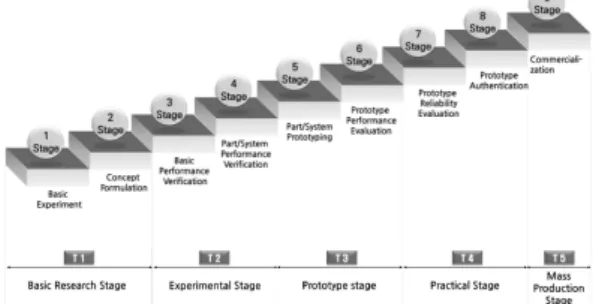
기술 성숙도란 기술 수준의 정량화된 측정 지표를 만 들어 연구개발 환경(실험실, 유사 환경, 실제 환경). 연구 개발 결과물(시제품, 완제품), 기술 수준(개념, 시현, 성능 검증)에 따라 기술 성숙도를 분류하는 것이다. 기초연구, 실험, 시작품, 실용화, 양산의 R&D 단계와 9개의 세부 단 계로 분류할 수 있다[7].
기술 성숙도 분석을 통하여 핵심 기술 요소들이 어떻 게 식별되었으며, 그러한 요소들이 기술을 개발하는데 있어 왜 중요하고 얼마만큼 성숙하여 있는지를 객관적이
제에 대해 기술 완성도 수준을 평가함으로써, 과제가 계 획된 질적 목표치를 달성하면서 계획된 진도에 따라 연 구개발이 이루어지고 있는지 파악 가능하다[8].
기술 성숙도 분석을 통하여 체계에 적용될 핵심 기술 요소들이 어떤 단계까지 완성되어 있는지, 현시점에서의 상태를 진단하고, 완성도 높은 기술이 최종 성과물로 산 출될 수 있도록 보장할 수 있게 하는 지표로써 사용할 수 있다[7].
2. 관련 연구
2.1 기술 성숙도
개발 기술의 성숙도 또는 이행단계를 평가하기 위한 정량화된 측정 지표를 기술 성숙도라고 하며, 연구 개발 환경(실험실, 유사 환경, 실제 환경), 연구개발 결과물(시 제품, 완제품), 기술 수준(개념, 시현, 성능검증)에 따라 기술 성숙도를 분류하는 것이다. 기초연구, 실험, 시작품, 실용화, 양산의 R&D 단계와 9개의 세부 단계로 분류할 수 있다[9].
핵심기술요소들이 어떻게 식별되었으며, 그러한 요소 들이 기술을 개발하는데 있어서 왜 중요하고 얼마만큼 성숙하여 있는지를 객관적(독립적)으로 평가한 결과를 수록한다. 연구개발 과제에 대해 기술 완성도 수준을 평 가함으로써, 과제가 계획된 질적 목표치를 달성하면서 계획된 진도에 따라 연구개발이 이루어지고 있는지 파악 가능하다[7].
체계에 적용될 핵심기술요소들이 어느 정도까지 완성 되어 있는지, 현시점에서의 상태를 진단하고 완성도 높 은 기술이 최종 성과물로 산출되도록 보장할 수 있게 하 는 지표로써 사용할 수 있다[5].
Fig. 1. Technology Readiness Level
2.2 기술 성숙도 분석 사례
ICT 기술과 의료기술이 접목되는 현상이 증가하면서 제시된 헬스케어 IT 성숙도 모델(HealthCare IT Maturity Model)은 비즈니스 관점과 기술적 관점에서 성 숙도 모델을 연구한 사례이며, ICT 기술과 의료기술이 접목되는 현상이 증가함에 따라 성숙도 모델 연구를 근 거로 주어진 환경에서 최적화된 의료 서비스를 환자에게 제공할 수 있는 방법을 연구한 것이다. 원격의료와 같은 의료 분야에서 최적화된 서비스를 제공하기 위한 중요한 모델이지만, 의료에 국한된 모델이라는 단점이 존재한다 [8].
학습의 효율성 강화를 위해 5가지 프로세스 관점에서 성숙도 모델은 연구한 이러닝 성숙도 모델이 있으며, 반 보되는 교육 및 연습을 통해 최적화된 교육 프로세스와 개발 환경을 구축하였다. 처음에는 단순한 반복 연습이 되지만, 점차 프로세스가 표준화되고 궁극적으로 시장 수요에 최적화될 수 있는 교육 결과물이 생산되는 모델 이다. 이 모델은 조직 내에 직원들의 업무 역량 및 반복 되는 업무를 효율적으로 처리하기 위한 인적 교육 모델 로는 최적화가 가능하지만, ICT 기술 관점에서는 다른 접근이 필요하다는 단점이 있다[10].
IT 기술 분야에 대한 서비스 측면에서 기본 단계에서 부터 자동화 단계까지 성숙도 모델을 연구한 서비스 관 리 성숙도 모델이 있다. 미국 SWINGTIDE라는 컨설팅 업체가 IT 업체들의 성과를 최적화할 수 있는 방법과 고 객들에게 대응할 수 있는 서비스를 최적하기 위한 4단계 성숙도 모델을 제시했다. 이 모델은 IT 업체의 제품 및 서비스를 최적화할 수 있는 방법을 제시했지만, 컨설팅 업체 관점에서 만들어진 모델이라 일부 업체에서는 적용 하는데 한계가 있을 수 있다는 단점이 있다[11].
3. 핵심기술 전망
3.1 로봇
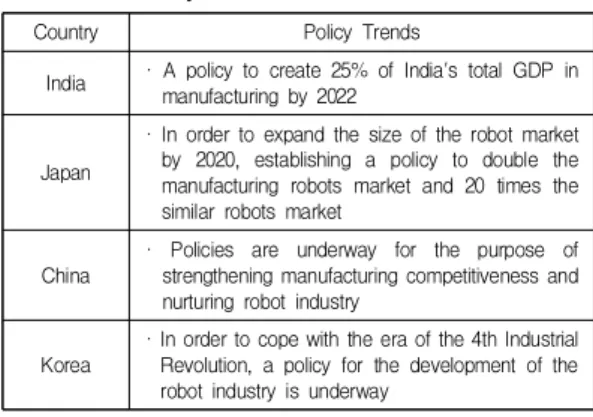
로봇 기술은 각 산업 분야에 직·간접적으로 적용되고 있으며, 공통 기술은 각 산업의 플랫폼 기술로 첨단 기술 개발을 주도하는 원동력으로 각 산업의 주요 기술과의 융합이 필수적인 기술로 부상하고 있다. 전 세계의 평균 성장 전망치는 15%로 전체적으로 증가세를 보이고 있으 며 제조용 로봇 관련 사업이 꾸준히 성장 중이다. 이에
국가별로 로봇 기술을 성장시키기 위한 정책을 수행 중 이며, Table 1과 같은 동향을 보이고 있다[12,13].
Table 1. Trends in Robot Technology Policy by Country
Country Policy Trends
India · A policy to create 25% of India's total GDP in manufacturing by 2022
Japan
· In order to expand the size of the robot market by 2020, establishing a policy to double the manufacturing robots market and 20 times the similar robots market
China
· Policies are underway for the purpose of strengthening manufacturing competitiveness and nurturing robot industry
Korea
· In order to cope with the era of the 4th Industrial Revolution, a policy for the development of the robot industry is underway
3.2 인공지능
인공지능 기술은 기술적 한계를 극복하며 급속히 발 전 중이며, 대부분의 산업에 영향을 줄 것으로 전망된다.
전 세계 인공지능 시장은 2016년부터 2020년까지 5년간 연평균 55.1%의 급성장을 통해 시장규모는 2016년 80억 달러에서 2020년 470억 달러로 확대될 전망이다. 이에 국 가별로 인공지능 기술을 개발하기 위한 정책을 수립 중 이며 Table 2와 같은 동향을 보이고 있다[14-16].
Table 2. Trends in national policy on artificial intelligence technology
Country Policy Trends
USA
· Supporting companies to achieve technological innovation by eliminating regulatory barriers between countries
Japan
· Developing data-driven artificial intelligence within diverse domains as well as leveraging policies for public use
China · Aiming to foster artificial intelligence industry of RBM 1 trillion by 2013
Korea
· Strengthening world-class artificial intelligence technology competitiveness through promotion of large-scale artificial intelligence project in the public sector and ensuring core technology of next-generation artificial intelligence
3.3 빅데이터
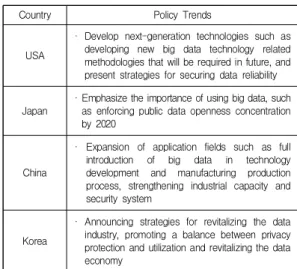
빅데이터 기술은 전 산업에 영향을 미치는 기반 기술 로 자리매김하고 있으며, 지능형 분석을 통한 ‘변화 예측 형 빅데이터’ 기술로 발전 중이다. 이에 따라 세계 시장은
전년 대비 30.2% 성장하였다. 4차 산업혁명 핵심기술의 기반 기술로 중요성이 강조되면서, 국가별로 정책적으로 지원을 아끼지 않고 있으며, Table 3과 같은 정책 동향을 보이고 있다[14,17].
Table 3. Trends in Bigdata technology policy on artificial intelligence technology
Country Policy Trends
USA
· Develop next-generation technologies such as developing new big data technology related methodologies that will be required in future, and present strategies for securing data reliability
Japan
· Emphasize the importance of using big data, such as enforcing public data openness concentration by 2020
China
· Expansion of application fields such as full introduction of big data in technology development and manufacturing production process, strengthening industrial capacity and security system
Korea
· Announcing strategies for revitalizing the data industry, promoting a balance between privacy protection and utilization and revitalizing the data economy
3.4 사물인터넷
사물인터넷 관련 기술은 초기 단계이자만 발전 가능 성이 큰 기술로 데이터 센터 모니터링 및 유지 관리, 공 급망 관리 및 홈오토메이션에 이르기까지 연결성 및 추 적 가능성이 무한하다. 세계 시장은 2022년 1조 달러 이 상의 시장이 형성될 것으로 전망되며, 국내 사물인터넷 총매출액은 7조 정도로 조사되며, 제품 기기 매출액이 큰 비중을 차지하고 있다. Gartner에서 2017년과 2018년 사 물인터넷 관련 상위 10대 기술을 발표하였으며, 국가적 으로 정책을 통해 지원을 하고 있으며, Table 4와 같은 동향을 보이고 있다[18,19].
Table 4. Trends in IoT technology policy on artificial intelligence technology
3.5 클라우드
다양한 정보의 저장·분석·활용이 용이해지면서 정보 의 공유 및 접근성이 증대될 것으로 기대되며 클라우드 의 기술 개발은 활발할 것으로 전망된다. 그에 따라 세계 시장은 2020년 약 219조 원에 이를 것으로 전망되며, 국 내 시장은 2019년 약 1조 원에 이를 것으로 전망된다. 국 가별로 클라우드 기술을 개발시키기 위한 정책을 수립 중이며, Table 5와 같은 동향을 보이고 있다[20,21].
Table 5. Trends in Cloud computing technology policy on artificial intelligence technology
Country Policy Trends
USA
· Increase security level by establishing security evaluation and approval management standards for services provided by private companies
Japan
· Promotion of cloud system of government information system aiming at all government information system cloud by 2021
China
· Present goals and action plans that combine the Internet in 11 industries and strategically foster cloud technology.
Korea
· Promote strategies for utilizing the private cloud by setting goals and directions for private cloud use
3.6 3D 프린팅
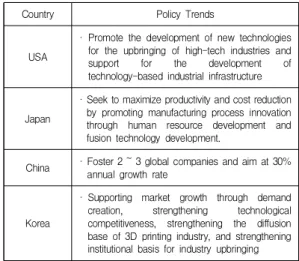
주요 선진국들이 3D 프린팅 기술을 주도하고 있으며, 다양한 분야로의 응용을 위한 기술 개발에 집중 투자중 이며, 서비스 시장도 확대 전망으로 조사된다. 그에 따라 세계 시장은 2022년까지 매년 평균 27.6% 고성장이 이어 지면서 262억 달러로 전망되며, 국내 시장은 2022년까지 24.1% 연평균 성장률을 보이며 1조 원 규모로 성장할 것 으로 전망된다. 국가별로 3D 프린팅 기술을 성장시키기 위한 정책을 수립 중이며, Table 6과 같은 동향을 보이고 있다[11,22].
Country Policy Trends
USA
· Urge the establishment of a national strategy for the Internet development of things aimed at improving economic growth and consumer service
Japan
· Promoting the development of the Internet and the cultivation of human resources that are the means to realize data-driven society
China
· Moving beyond simple manufacturing facility improvement, we will promote the industrial advancement by combining with core technology of the 4th Industrial Revolution
Korea
· Moving beyond simple manufacturing facility
improvement, we will promote the industrial
advancement by combining with core technology
of the 4th Industrial Revolution
Table 6. Trends in 3D Printing technology policy on artificial intelligence technology
Country Policy Trends
USA
· Promote the development of new technologies for the upbringing of high-tech industries and support for the development of technology-based industrial infrastructure
Japan
· Seek to maximize productivity and cost reduction by promoting manufacturing process innovation through human resource development and fusion technology development.
China · Foster 2 ~ 3 global companies and aim at 30%
annual growth rate
Korea
· Supporting market growth through demand creation, strengthening technological competitiveness, strengthening the diffusion base of 3D printing industry, and strengthening institutional basis for industry upbringing
3.7 블록체인
전체 블록체인 기술 중 분산 합의 메커니즘이 확인되 는 것은 ‘17년 9월 기준 901개로 전체의 77.3% 수준이다.
블록체인 기술 시장은 ‘18년 11억 2,100만 달러 규모에서
‘23년 194억 6,700만 달러 규모로 연평균 76.9% 성장할 전망으로 보인다[23].
Table 7. Trends in Block chain technology policy on artificial intelligence technology
Country Policy Trends
USA
· Indicate that related transactions and investments in virtual currencies of securities are subject to registration procedures based on US securities-related provisions.
Japan
· Began to review measures to apply virtual currency-related legislation under the existing fund settlement law to the Financial Instruments and Exchange Act
China
· As a leading country with a large number of patents related to block chains, the related industry has been designated as the main business of the state and actively invested in building industrial ecosystem
Korea · Expansion of various public service pilot projects at central and local government level
4. 기술 성숙도 분석 4.1 핵심 기술 분석
4.1.1 로봇
로봇 기술은 4차 산업혁명 핵심기술과 융합이 필수적 이며, 각 핵심기술과 연계된 연구가 필요할 것으로 판단 된다. 이에 따라 전 세계적으로 기술력을 향상시키기 위 하여 정책 및 산업을 추진 중이다. 로봇 기술 보유국 중 미국이 소유한 로봇 특허의 비중은 36%로 제일 높으며, 한국은 15.6%를 차지하고 있다. 한국과 미국 간 로봇 기 술 격차는 4.2년, 일본과 유럽연합(EU)는 1.4년, 중국은 7.1년으로 격차가 벌어진 것으로 조사된다.
Fig. 2. Gap of Robotics Technology with USA by Country
4.1.2 인공지능
국내는 인공지능 기술 보유국 중 최고 수준을 보유한 미국 대비 78.50%(격차 1.8년)의 기술 수주을 가지고 있 으며, 전년 대비 0.1%로 소폭 상승하였다. 이는 최근 국 내 못지않게 세계적 기업들도 인공지능 연구에 대거 집 중적으로 투자한 영향인 것으로 판단된다.
Table 8. Comparison of domestic technology level with countries that have the best technology of Artificial Intelligence
Classification
Skill level Countries with the best
technology Relative
level(%) Gap (years)
Learning intelligence 81.0 1.5 USA
Single intelligence 80.3 1.8 USA
Complex intelligence 74.2 2.1 USA
Average 78.5 1.8 USA
4.1.3 빅데이터
국내는 빅데이터 기술 보유국 중 최고 수준을 보유한
으며, 전년 대비 0.1% 소폭 상승하였다. 이는 세계적 기 업들도 빅데이터 연구에 대거 집중적으로 투자한 영향인 것으로 판단된다.
Table 9. Comparison of domestic technology level with countries that have the best technology of Bigdata
Classification
Skill level Countries with the best
technology Relative
level(%) Gap (years) Big data processing,
distribution 79.5 1.35 USA
Big data analysis,
utilization 79.3 1.8 USA
Average 79.4 1.58 USA
4.1.4 사물인터넷
국내는 사물인터넷 기술 보유국 중 최고 수준을 보유 한 국가 대비 82.6%(격차 1.1년)의 기술 경쟁력을 보유한 것으로 조사되며, 전년 대비 1.6% 상승하였다. 국내 최고 수준의 네트워킹 인프라를 기반으로 사물인터넷 분야 연 구 개발이 꾸준히 진행되고 있는 것으로 판단됨
Table 10. Comparison of domestic technology level with countries that have the best technology of IoT
Classification
Skill level Countries with the best
technology Relative
level(%) Gap (years) IoT application
technology 83.7 1.1 USA
IoT Platform 81.7 1.2 USA
IoT networking 88.3 0.8 USA
IoT devices 83.3 1.1 USA
IoT Digital Twin 75.0 1.3 USA
Average 82.4 1.1 USA
4.1.5 클라우드
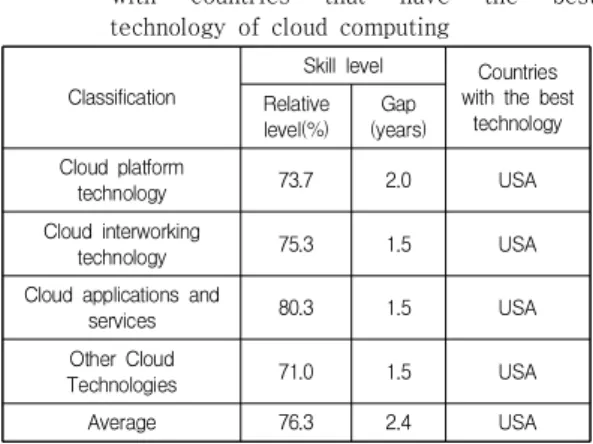
국내는 클라우드 컴퓨팅 기술 보유국 중 최고 수준을 보유한 미국 대비 75.1%(격차 1.7년)의 기술 경쟁력을 보 이며 보유국중에서 5위로 평가된다. 하지만 중국의 기술 수준 상승세보다는 느린 것으로 판단된다.
with countries that have the best technology of cloud computing
Classification
Skill level Countries with the best
technology Relative
level(%) Gap (years) Cloud platform
technology 73.7 2.0 USA
Cloud interworking
technology 75.3 1.5 USA
Cloud applications and
services 80.3 1.5 USA
Other Cloud
Technologies 71.0 1.5 USA
Average 76.3 2.4 USA
4.1.6 3D 프린팅
국내는 3D 프린팅 기술 보유국 중 최고 수준을 보유한 국가 대비 74.7%(격차 2.6년)의 기술 경쟁력을 보유한 것 으로 조사된다. 정부 주도 기술 개발로 상승세에 있으나, 선도 기업의 부재로 사업화가 정체되어 시장 성장성이 약한 것으로 판단된다.
Table 12. Comparison of domestic technology level with countries that have the best technology of 3D printing
Classification
Skill level Countries with the best
technology Relative
level(%) Gap (years)
Process technology 64.6 3.8 USA
Material and processing
technology 83.1 1.7 USA
Application and service
technology 67.5 3.2 USA
Average 74.7 2.9 USA
4.1.7 블록체인
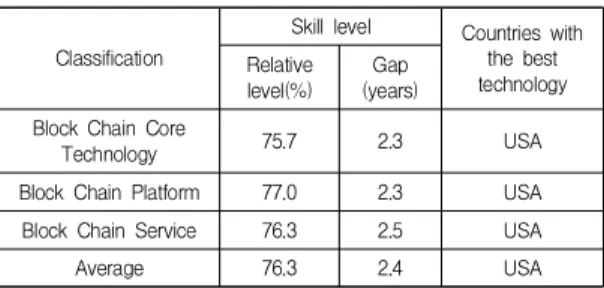
국내는 블록체인 기술 보유국 중 최고 수준을 보유한 국가 대비 76.4%(격차 2.4년)의 기술 경쟁력을 보유한 것 으로 조사된다. 조사 대상국중에서 국내는 가장 낮은 기 술 경쟁력을 보유한 것으로 보여, 해외에 비하여 블록체 인에 대한 연구가 활발하지 않은 것으로 판단된다.
Table 13. Comparison of domestic technology level with countries that have the best technology of block chain
Classification
Skill level Countries with the best technology Relative
level(%) Gap (years) Block Chain Core
Technology 75.7 2.3 USA
Block Chain Platform 77.0 2.3 USA
Block Chain Service 76.3 2.5 USA
Average 76.3 2.4 USA
4.2 고찰
기술 성숙도 분석은 기술 개발 성공 가능성 분석을 위 한 참고자료로써 사용하고, 기술적 타당성 검토로 활용 가능하다. 본 논문에서는 주요국과의 기술격차를 파악하 고, 국가별로 부족한 기술 수준을 파악하였다. 이를 통하 여 국가별로 과학기술 대응 전략을 수립하여 기술 개발 에 활용할 수 있을 것으로 판단된다. 또한 적용 기술에 대한 수준을 진단하고, 향후 발전시켜 나가야 할 서비스 방향에 대한 예측과 공공/민간 기술의 융합가능성 여부 를 진단하는 프레임을 정의할 수 있을 것이다. 그리고 각 기술별 성숙도에 따른 서비스 모델을 선정하여 발전시켜 나가도록 추진도 가능하다. 기술 동향 정보는 정부/공공 정책과 산업계의 R&D의 투자 의사 결정에 직접적인 영 향을 미치는 중요한 정보이다. 경쟁 기술들을 시스템에 결합하기에 앞서 성숙도를 평가하여 기술 수준을 비교할 수 있는 수단으로 이용하면 기술 개발의 계획 및 산업 발 전에 중요한 역할을 수행할 수 있을 것으로 전망된다.
5. 결론
문제를 해결하기 위한 서비스 디자인은 이중 다이아 몬드 모형을 활용한다. 문제를 탐색하여 파악하는 “문제 정의” 단계와 해결책을 개발하여 제공하는 “문제 해결”
단계로 나뉜다. “문제 해결” 단계에서 문제 해결을 위한 다양한 대안 제시와 시제품 개발(Prototyping)을 통한 검 증 단계를 거쳐 가장 효과적인 대안을 발굴하는 것이다.
우리가 풀어야 할 문제는 고정되어 있지 않으며, 시간 이 흐름에 따라 사회적 교호작용에 의해 지속적으로 변 형되어, 정적인 해결책은 곧 한계에 다다르게 된다. 동적 인 환경에서 문제와 해결책의 변화와 발전을 도외시한
정적인 최적안은 어리석은 것이다. 현실적으로 충분하지 않은 시간 동안 병렬적으로 다양한 해결책을 탐색하고 시험 개발하여 검증하는 것은 어려우며, 특히 사회 시스 템을 대상으로 서비스를 구현/제공하는 것은 불가능에 가깝다.
시간의 맥락 속에서 문제의 변화와 기술 개발 발전에 따라 탐색 가능한 해결책의 범위를 좁히는 것이 성공적 인 문제 해결의 열쇠다. 해결책의 실현 가능성은 서비스 를 구성하고 있는 핵심 기술의 성숙도에 의존한다. 대상 기술과 경쟁/대체 기술의 성숙도를 고려하지 않고 해결 책을 구현하는 것은 일시적으로 정적인 상태의 문제는 해결할 수 있을지 모르나, 곧 변화에 대응하지 못하고 단 명하게 될 것이다.
기술 성숙도(TRL, Technology Readiness Level) 평 가는 핵심 요소 기술의 성숙도를 나타내는 객관적 지표 로 많이 사용한다. 1989년 미국 NASA에서 우주 산업의 기술 투자 위험을 관리하기 위해 도입한 이래로 여러 분 야에서 기술 수준을 판단하기 위해 도입되고 있다.
미국의 NASA, DoD, 영국의 MoD 등에서는 국방부 무기체계 개발에 적용하고 있으며 기술 개발 착수 전 기 술 성숙도를 분석하여 기술적 위험을 평가하고 있다. 우 리나라에서도 방위사업청은 무기체계 개발 사업의 주요 시점마다 기술적 구성요소 및 성숙도를 평가하도록 규정 (방위사업청 예규) 하고 있으며, 정부 R&D 과제의 단계 별 연구 개발 목표 설정 및 정량적 평가 기준을 명확하기 위하여 사용되고 있다.
TRL 정의가 다소 추상적이므로 다양한 기술 분야별 기술 성숙도를 판단하기 위해서는 구체적인 평가 지표 개발이 필요하다. 기술 분야별로 기술 개발 방법 및 기술 개발 단계별 산출물에 따라 개별 기술 분야별로 TRL 평 가 지표 개발이 요구된다.
기술 동향 정보는 정부/공공 정책과 산업계의 R&D의 투자 의사결정에 직접적인 영향을 미치는 중요한 정보이 다. 이런 특성으로 인해 기술 동향 정보는 공공 데이터 개방에 필수적인 정보이다.
본 과제에서는 이러한 동향 정보를 이용하여 기술 성 숙도 수준을 진단할 수 있는 방안을 연구하였다. 기술 성 숙도 수준을 진단하기 위하여 4차 산업혁명 핵심기술의 시장, 정책 등을 조사하고 종합하여 종합적인 성숙도 수 준 진단을 수행하였다.
기술 성숙도 측정값은 기술 개발자에 의해 배점되므
가 될 수도 있다. 또한 개별 기술의 성숙도에 대한 측정 이므로, 전체 시스템 통합 관점(Holistic Approach)의 평 가에는 적합하지 않다. 하지만 전체 시스템을 구성하는 핵심 요소 기술들을 시스템에 연계하기에 앞서 성숙도를 평가하여 전체 시스템의 효과와 구현 가능성을 비교할 수 있는 수단으로 활용할 수 있으며, 기술 개발의 계획에 중요한 역할을 수행할 수 있을 것으로 판단된다.
REFERENCES
[1] S. Y. Jeon & S. G. An. (2018). Analysis of 4th Industrial
Revolution Technology Competitiveness and Implications: Focusing on Internet of Things,
Korea Institute of Science & Technology Evaluation and Planning. 2-24[2] Institute for Information and Communications Technology Promotion. (2018). Evaluation of technology
level and improvement of technology level for major technology leading the 4th industrial revolution. 6-18
[3] Korea Development Institute. (2018). Check currentstatus of South Korea's big data industry with papers and patents. 14-24
[4] Institute for Information and Communications Technology Promotion. (2017). Technology trend and R
& D direction of cloud computing.
[5] Institute for Information and Communications Technology Promotion. (2018). Analysis of public data
openness of major countries in response to the fourth industrial revolution era. 4-8
[6] Korea Institute of Science & Technology Evaluation and Planning. (2018). Analysis of World Competitiveness
Report 2017-2018 of World Economic Forum (WEF).
2-11
[7] National Assembly Research Service. (2017). Research
on technology maturity evaluation method and application plan for reliability of R & D project.
[8] Korea Institute of Science & Technology Evaluation and Planning. (2016).
Medium-long term technology development plan. 1123-1220
[9] D. G. Gim, Y. B. Lee, S. J. Gang & D. N. Choi. (2011).
A Study on the Estimation Coefficient of R & D Cost of Guided Weapon System using TRL, Korea Association
of Defense Industry Studies, 18(2), 26-40.
[10] Ministry of Science and ICT. (2017). Evaluation of the
2017. 4-12.
[11] Institute for Information and Communications Technology Promotion. (2018). ICT R & D Technology
Roadmap 2023 Report.
[12] Ministry of Trade, Industry and Energy. (2017). Robot
industry competitiveness survey in 2017. 3-49.
[13] Korean Intellectual Property Office. (2016). National
Patent Strategy Blueprint Construction Project - Robotics Field.
[14] Security Management Institute. (2011).
KISTEP Technology Trends Brief - Artificial Intelligence.
[15] Institute for Information and Communications Technology Promotion. (2017). Japan's AI policy trends
and implementation strategies.
[16] Korea Association for ICT Promotion. (2017). 3D
Printing Industry Status and Trend Survey in 2017
[17] Korea Institute of Science & Technology Evaluation andPlanning. (2018). KISTEP Technology Trends Brief -
Big Data.
[18] Korea Institute of Science & Technology Evaluation and Planning. (2018). KISTEP Statistics Brief - 2017.1 ~
2017.12.
[19] National IT Industry Promotion Agency. (2018). Policy
trends of nurturing human resources for the fourth industrial revolution in overseas major countries. 4-21.
[20] National IT Industry Promotion Agency. (2018). Current
Status and Challenges of Cloud Computing. 17-33.
[21] Ministry of Science and ICT. (2018) 2017 BIG DATA
Market Status Survey. 21-34.
[22] Institute for Information and Communications Technology Promotion. (2014). The core of 3D printing,
software.
[23] Institute for Information and Communications Technology Promotion. (2018). Block Chain Industry
Status and Trend. 3-13.
조 한 진(Han-Jin Cho) [종신회원]
․1999년 2월 : 한남대학교 컴퓨터 공학과(공학석사)
․2002년 8월 : 한남대학교 컴퓨터 공학과(공학박사)
․2002년 8월 ~ 현재 : 극동대학교 에너지IT공학과 교수
․관심분야 : 융복합 보안, 모바일 보안, 네트워크 보안
․E-Mail : [email protected]
정 규 만(Kyuman Jeong) [종신회원]
․1988년 2월 : 한국과학기술원 전 산학과(공학사)
․2000년 2월 : 포항공과대학교 컴 퓨터공학과(공학석사)
․2007년 2월 : 포항공과대학교 컴 퓨터공학과(공학박사)
․2009년 3월 ~ 현재 : 대구대학교 정보통신공학부 교수
․관심분야 : 컴퓨터 그래픽스, 어플리케이션 개발, 인공 지능
․E-Mail : [email protected]