
Effects of Exercise on Sleep Quality and Dementia-related Factors of Dementia Patients
Byung Kon Yoon, Jong Jin Kim and Yi Sub Kwak*
DEU Exe-Physio Lab, Department of Physical Education, Dong-Eui University, Busan 47340, Korea Received June 4, 2019 /Revised June 21, 2019 /Accepted June 21, 2019
It is well known that exercise may have a positive effects on dementia. However, most of dementia-re- lated studies were performed about symptom care, diverse treatment and drug treatment. Although regular physical exercise plays an important role of brain function and dementia prevention, only a few research studies showed the effect of physical exercise on dementia and brain function. This study is to investigate about the sleep-related factors (melatonin, serotonin), dementia-related factors (BDNF, beta-amyloid, IGF-1, Irisin, GLUT) with physical exercise. This study revealed that Myokine (Irisin, IGF-1), GLUT and Melatonin is an important factors to improve or sometimes delay the symptoms of dementia through BDNF activation following endurance exercise. However, these results were con- troversal following the various kinds of exercise type, mode, duration and exercise intensity and so forth. Therefore, further mechanism study about exercise and dementia is urgently needed in this area.
Key words : BDNF, beta-amyloid, dementia, GLUT, irisin
*Corresponding author
*Tel : +82-51-890-1546, Fax : +82-51-890-2643
*E-mail : [email protected]
This is an Open-Access article distributed under the terms of the Creative Commons Attribution Non-Commercial License (http://creativecommons.org/licenses/by-nc/3.0) which permits unrestricted non-commercial use, distribution, and reproduction in any medium, provided the original work is properly cited.
Journal of Life Science 2019 Vol. 29. No. 6. 740~746 DOI : https://doi.org/10.5352/JLS.2019.29.6.740
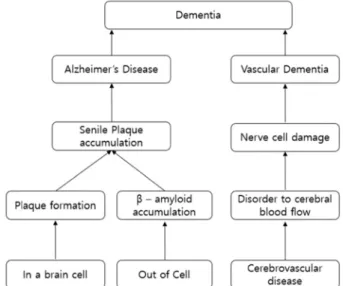
Fig. 1. Mechanisms of cause to different type of dementia.
서 론
우리나라의 현재 65세 이상의 노인 인구는 769만 명으로, 65세 이상의 고령 인구는 14.8%로 알려져 있다[52]. 현재 노인 인구는 매년 증가하는 추세이며, 대부분의 노인들은 수명의 증가와 더불어 노쇠, 저하된 면역체계, 및 대사 장애 등의 부정 적인 영향으로 신체의 각 부위가 퇴화하고 다양한 퇴행성 질 환의 발병 비율이 증가하고 있다.
특히, 기억장애 및 사회적, 직업적 기능 등 다양한 요인에 심각한 장애를 보이는 치매의 발병률 증가로 인하여 많은 사 회적 비용의 증가를 초래하는 실정에 있다[18].
치매는 독립적인 기능의 상실을 초래하는 점진적인 인지적 장애로 정의되며[36], 인지기능의 저하로 인해 삶의 질 저하를 초래하기도 한다[48]. 또한 치매는 신체활동, 흡연, 약물, 음주 등 다양한 요인에 의해 유발되며, 이러한 위험요인을 초기에 파악하는 것이 중요하다[8].
일반적으로 치매는 알츠하이머 치매, 혈관성 치매, 및 기타 치매 등 여러 가지 종류가 있으며, 발병 기전은 알츠하이머 치매의 경우 뇌 신경세포 안의 plaque 형성과 세포 밖에서 β-amyloid에 의한 노인반의 축적이 주된 원인으로 여겨지고
있으며[15], 혈관성 치매는 뇌혈관 질환에 의한 혈류 장애로 인해 신경세포가 손상되어 발병되는 것으로 알려져 있다 [49](Fig. 1). 하지만, 여러 가지 종류의 치매에 대한 정확한 원 인을 확인하기 어려워 완치 또한 어려운 실정이며, 현재 시행 되고 있는 대부분의 치매 치료 방법은 증상의 악화를 지연시 켜주거나 예방하는 방향으로 이루어지고 있다.
현재 치매는 일반적인 기능의 상실을 억제하기 위한 약물치 료에 의존하는 경우가 대부분이지만, 그 효과는 제한적이라고 할 수 있다[2, 38].
최근 많은 연구들에서는 신체활동이 뇌의 노화에 긍정적인 영향을 주는 것과 함께 인지기능 장애와 치매의 예방과 예후
- Review -
Fig. 2. Mechanisms of STZ cause to dementia.
에도 초점을 맞추고 있으며, 신체활동은 노화로부터 노쇠, 장 애 및 사망률을 줄이는 중요한 수단으로 인식되어지고 있다 [32]. 또한 운동은 치매에 걸린 사람들의 기능적인 능력, 신체 기능, 및 신경 정신과 같은 증상들을 개선하는 것으로 알려져 있다[11]. 하지만, 운동의 긍정적인 효과가 알려져 있는데도 불구하고, 대부분의 노인들은 규칙적인 운동을 하지 않으며 치매에 걸린 노인 또한 신체활동에 참여하는 비율이 낮다고 보고되었다[5].
운동을 통하여 뇌에 긍정적인 영향을 미칠 수 있는 대표적 인 인자는 뇌유래 신경성장 인자(brain-derived neurotrophic factor, BDNF), 인슐린 유사 성장 인자(Insulin like growth factor-1, IGF-1), Myokine 및 Melatonin 등이 있다[28]. 운동으 로 활성화된 이러한 뇌 신경계 성장 인자들은 뇌의 에너지 대사 및 혈류량의 상승을 통해 뇌에 긍정적인 영향을 미치게 된다[17]. 특히, 학습과 기억을 담당하는 뇌의 해마는 다른 부 위보다 대사적 요구량이 높기 때문에 운동을 통해 뇌에 긍정 적인 영향을 미칠 수 있는 인자들을 활성화시켜 주는 것이 필요하다[9].
치매환자 및 치매 모델 동물을 대상으로 한 선행 연구들을 살펴보면, ICV-STZ (Intracerebroventricular-Streptozotocin) 처치로 유도된 알츠하이머(Fig. 2). 치매 흰쥐를 대상으로 한 선행 연구에서 하루에 30분씩 주 5일, 6주간 8 m/min부터 14 m/min까지 점증적으로 증가하는 강도의 속도로 트레드밀 운동을 실시한 결과 인지기능이 개선되는 효과를 나타내었고 [24], 경증 치매가 의심되는 만 65세 이상의 노인을 대상으로 HRmax 40~60%의 강도로 주 3회, 회당 60~70분씩 12주간의 협응력 운동프로그램을 실시한 선행 연구에서도 인지기능이
향상되는 결과를 나타내었다[33].
이 외에도 경도인지장애에 해당되는 65세 이상의 여성 노인 을 대상으로 탄성 밴드를 이용하여 하루 60분, 주 3회, 총 12주 간 저항성 운동을 이용하여 치매를 살펴본 연구와[50] 매일 최소 15분씩 15개월간 장기간의 유산소 운동을 통한 치매 효 과 검증 연구에서는 인지기능의 향상을 나타내었다[7, 50]. 하 지만, 60세 이상의 치매 노인을 대상으로 유산소 운동과 저항 성 운동으로 구성된 복합운동을 주 2~3회씩 8주간 실시한 선 행 연구에서는 인지기능에 긍정적인 영향을 미치지 않았다는 상반된 결과를 나타내었다[16].
이처럼 다양한 선행연구들의 결과를 보면 수행된 운동의 종류, 강도, 지속기간, 연령 및 질환종류 등의 요인들에 따라 인지기능과 치매에 다른 영향을 주는 것을 알 수 있다.
이제까지 치매에 관한 선행연구로는 치매의 원인 분석에 관한 연구, 치매에 대한 약물치료에 관한 연구 등이 대부분 이었다. 하지만, 운동이 뇌의 여러 기능에 미치는 영향과 치매 예방인자로서 중요하게 작용함에도 불구하고 지금까지 운동 의 치매 예방 및 치료에 관한 연구는 미미한 실정에 있다.
따라서 본 연구에서는 운동이 뇌에 미치는 긍정적인 영향 및 운동으로 개선될 수 있는 치매관련인자들과 운동의 형태에 따른 다양한 연구결과들을 분석하여 치매의 예방과 치료에 도움을 주고, 치매환자들이 운동에 참여할 수 있도록 유도할 수 있는 기초자료를 제공하고자 한다.
본 론
수면의 질이 치매에 미치는 영향
치매환자의 수면 장애는 정서적, 신체적 건강에 영향을 미 치고, 인지적 증상을 악화시키거나, 치매환자와 그 가족들의 삶의 질을 저하시킬 수 있다[29].
수면과 관련된 대표적인 인자는 세로토닌(serotonin), 멜라 토닌(melatonin), 코티졸(cortisol) 등이 있으며, 인지기능 저하 와 퇴행성 치매의 발병은 수면의 질이 관련 있다고 보고되고 있다[21]. 물론, 신체활동량의 증가만으로 수면의 질과 치매에 대한 개선 효과가 나타난다고 단정할 수 없지만[42], 운동과 수면의 질에 관한 선행 연구에서 중강도의 유산소 운동은 고 령 여성의 수면의 질을 향상시켰으며[55], 건강한 수면은 뇌 건강을 유지하는데 중요한 역할을 할 수 있기 때문에 운동을 통한 수면의 질 향상이 중요하다고 분석된다[51].
하지만, 한 선행 연구에서는 너무 늦은 시간대의 고강도의 운동은 오히려 수면을 방해할 수도 있다고 주장하였다[26]. 따 라서 수면의 질을 증대시키기 위해서는 serotonin을 활성화 할 수 있는 낮 시간대에 햇빛을 보며 하는 적당한 강도의 운동 을 실시하는 것이 바람직하다고 생각된다.
한편, 고강도의 운동 혹은 장기간 지속적인 운동이 수면의
질을 저해하지 않는다고 주장하는 연구결과도 나타나 운동
강도와 수면의 질에 관한 기전적인 연구의 필요성이 대두되고 있다[41].
수면과 관련하여 멜라토닌의 기능 저하와 치매증상 사이의 관계를 시사하는 많은 연구들이 있는데[19], 신경 보호 효과가 있는 것으로 여겨지는 멜라토닌은 활성산소를 효과적으로 제 거하고, 산화, 항산화 관련 효소들을 조절하여 간접적으로 항 산화 효과를 나타낸다고 하였고[14], 멜라토닌 주사요법을 이 용한 동물 모델 연구에서 멜라토닌은 해마의 조직 형태학을 향상 시키고, β-AP와 S100β의 발현을 감소시켰다는 결과가 나타났다[14]. 또 다른 연구에서도 멜라토닌은 인지기능 장애, 불안, 및 무관심 등의 치매 관련 행동들을 개선시켰고, 실험 결과 amyloid와 Tau의 수치를 줄인 것으로 밝혔다[10]. 이 외 에도 수면 장애가 있는 폐경기 여성에게 중강도에서 고강도의 스텝 유산소 훈련을 10주간 시킨 결과 수면의 질이 향상되고 멜라토닌 수치가 증가된 것으로 나타났다[6]. 즉, 규칙적인 운 동이 멜라토닌 수치를 증가시켜 수면의 질을 향상시킨 것으로 보인다.
하지만, 멜라토닌 요법이 치매 환자의 수면 효율을 개선하 고 총 수면시간을 연장하는데 효과적이지만, 이러한 개선이 인지기능에 영향을 미친다는 증거는 없다고 주장하는 상반된 연구결과도 나타나[56] 멜라토닌과 수면에 관한 연구가 필요 한 실정이다. 추후 규칙적인 운동의 참여가 치매환자들의 수 면의 질 개선과 더불어 인지기능과 치매질환의 개선을 도모한 다는 기전을 밝혀내는 연구들이 수행되어져야 할 것이다.
운동이 치매 관련 인자에 미치는 영향
BDNF가 치매 환자의 뇌 기능에 미치는 영향
신체적 운동이 뇌에 유익한 영향을 미치고, 신경 가소성과 행동의 변화를 촉진하는 반면에, 이러한 효과를 중재하는 세 포와 분자 매커니즘은 아직까지 완전히 밝혀지지 않았다[37].
뇌기능은 운동을 통한 BDNF의 자극으로 활성화되어 뇌의 기 능에 상당한 영향을 미친다고 할 수 있다[31]. BDNF는 뇌 뿐만 아니라 골격근에서도 발현되며, 정상적인 신경 근육계 기능에 도 필요하다[25]. 이러한 BDNF는 뇌의 여러 부분에서 뉴런의 성장 및 발달을 위한 중요한 조절 작용을 하여 뇌 기능을 발달 시키는 것으로 보인다[20].
일반적으로, BDNF 수준이 증가할수록 치매의 위험요인이 감소하는 것으로 나타나며[30], 운동은 인지능력에 긍정적인 영향을 미치는 것으로 알려져 있다[39]. 고령여성에게 밴드운 동과 아쿠아로빅스 운동으로 구성된 복합운동을 주 3회, 16주 간 실시한 선행 연구에서 BDNF가 유의하게 증가한 결과를 나타내었는데[43], 이는 운동이 BDNF를 증가시켜 뇌에 긍정 적인 영향을 미치는 것으로 보인다. 하지만, 5개월간 치매노인 에게 저항성 탄성밴드를 이용하여 실시한 연구에서 타액 Tau 농도는 감소하였지만 타액 BDNF 농도는 차이가 나타나지 않 았다[1]. 이는 BDNF 농도를 측정하기 위한 방법의 차이로 타
액과 혈액의 차이가 나타난 것으로 보인다. 또 다른 이유로는 유산소성 운동의 효과를 고려하지 않고 저항성 운동만을 이용 하여 실시한 결과의 차이라 생각되며, BDNF의 농도는 운동의 기간이나 강도, 운동의 유형뿐만 아니라 측정하는 방법에도 영향을 받는 것이라 분석할 수 있다. 운동프로그램을 달리 적 용한 한 연구에서는[48] 수중운동 프로그램(Aquarobics), 코디 엑스운동프로그램(CODI-X: Coordination Exercise), 걷기운 동 프로그램(Walking)으로 그룹을 분류하여 각각 16주간 주 3회 50분씩 운동을 실시하였는데, 운동유형에 따른 여성노인 의 신체구성 및 뇌기능 관련 인자를 분석한 결과, 3집단 모두 16주 후에 BDNF의 향상을 나타냈지만, 특히 코디엑스운동과 걷기운동이 BDNF의 향상에 효과적인 운동이라 주장하였다.
따라서, 운동의 기간 및 강도 뿐만 아니라 운동의 유형에 의한 뇌 기능 관련 인자에 대한 심도 있는 연구가 필요하다고 생각 된다.
이외에도 운동을 통한 뇌기능의 활성화에 대한 가설은 다양 하게 나타나며, 대표적으로 Myokines, GLUT (Glucose Trans- porter), IGF-1은 뇌에 긍정적인 영향을 줄 수 있는 인자로 알 려져 있다.
Myokine이 치매 환자의 뇌 기능에 미치는 영향 운동 중 골격근의 수축은 다른 근육 외 기관과의 상호작용 을 통해 전신 대사를 조절하는 체액성 인자를 방출하며[28], 마이오카인은 autocrine, paracrine 또는 내분비 작용에 의해 신체 대사를 조절할 뿐만 아니라 뇌 기능을 향상시킬 수 있는 요소로 알려져 왔다[28]. 근력운동 중에 생성되는 마이오카인 은 해마의 치상회에서 BDNF합성의 발현에 영향을 미치며 [46], myostatin, IL-6 (interleukin-6), Irisin 등이 마이오카인의 대표적인 종류라고 할 수 있다[27].
한편, PGC-1α의 영향을 받는 근육 유전자 생성물인 FNDC5는 Irisin을 형성하게 된다[4]. Irisin은 BDNF의 조절을 포함하여 중추신경계와 말초신경계 모두에 보호기능을 가지 고 있으며, 특히 해마를 보호하는 것으로 알려져 있다[22]. 또 한, Irisin 형성에 관여하는 요인들은 알츠하이머의 병리학적 특징인 β-amyloid의 축적을 억제하는 것으로 보이며[22], 12 주간 40~60%HRR 강도의 걷기운동을 65세 이상의 여성에게 실시한 선행 연구에서 뇌세포 성장 및 BDNF의 발현을 증가시 키는 Irisin은 지구성 운동을 통해 증가한다는 결과를 나타내 었다[34].
이 외에 인지기능과 관련된 가설 중 하나는 운동으로 유발
된 IGF-1이다[53]. IGF-1은 신경세포 보호 및 세포 자멸을 막는
것으로 알려져 있다[12]. 또한, IGF-1은 신경 발생 그리고
BDNF 유전자 조절과 관련이 있으며, 이것은 성장과 뉴런의
분화를 포함한다[20]. 운동은 신경 영양 인자를 방출하고 뇌에
서 인슐린/IGF-1 신호 전달을 조절하기 때문에 신경 퇴행성
질환 예방에 효과적이다[3]. 인슐린 및 IGF-1에 의해 조절되는
PI3K/AKT 신호 전달의 하류 기질인 GSK3β [57]는 인지능력
Fig. 3. Combined effects of physical exercise, dementia and sleep-related factors on dementia.
과 기억력 저하의 주요 원인 인자인 Tau 단백질의 과인산화를 일으킴으로써 NFT (neurofibrillary tangle)를 형성하여 신경 세포에 독성작용을 유발한다[24]. 따라서 피질과 해마에서 GSK3β의 억제가 인지기능 장애를 개선시킬 수 있다고 할 수 있다[57]. 운동이 IGF-1을 유발하는지 알아보는 선행 연구로는 Streptozotocin을 투여하여 당뇨를 유도한 흰쥐를 이용하여 6 주간 트레드밀 운동을 시킨 연구에서, 트레드밀 운동이 당뇨 유발 흰쥐의 IGF-1의 발현을 증가시킨 결과를 나타내었다[23].
추후 운동에 의한 Myokine의 활성이 치매의 예방과 예후에 미치는 영향에 관한 기전적인 연구가 이루어져야 한다고 생각 한다.
GLUT가 치매 환자의 뇌 기능에 미치는 영향 양전자 방출 단층촬영을 이용한 연구에서 알츠하이머 환자 의 대뇌 피질에서 포도당 신진 대사율이 감소한 것으로 나타 났다[40]. 뇌 질환, 특히 알츠하이머 환자에게 신경 포도당 대 사의 이상이 나타나며, 뇌의 당 수송체인 GLUT-1과 GLUT-3 의 수준은 특히 대뇌 피질에서 감소하게 된다[54]. 그리고 Liu 등[35]은 뇌에서의 GLUT-1 및 GLUT-3의 발현 저하는 인지기 능에 영향을 미친다고 주장하였다. GLUT와 관련된 선행 연구 중 알츠하이머 질환 모델 생쥐에게 16주간 지구성 운동을 실 시한 연구에서 지구성 운동은 GLUT-1의 증가를 유도하는 것 으로 나타났다[13]. 이 외에도 ICV-STZ 처치를 통해 알츠하이 머를 유도한 생쥐를 이용한 연구에서도 ICV-STZ 처치를 통해 GLUT-1이 감소하였지만, 지구성 운동을 통해 GLUT의 발현 이 증가하는 것으로 나타났다[24].
GLUT (Glucose transporter)는 뇌의 지속적인 포도당과 에 너지 요구를 유지하며, 신경 및 신경혈관상태 등의 치료를 위 해 뇌, 중추신경계에 약물 전달을 위한 진입 경로를 제공하게 된다[45]. 즉, 포도당은 혈뇌 장벽에 주로 존재하는 글루코스 수송체를 통해 뇌에 들어가며, 글루코스 수송체의 기능 및 발 현의 변화는 뇌의 포도당 항상성과 기능에 극적으로 영향을 미치게 된다[47]. 즉, GLUT-1을 포함한 GLUT는 주요 에너지 원을 뇌에 전달하는 것을 촉진하는 역할을 한다[40]. 따라서, 뇌의 해마를 포함한 거의 모든 부분에서 뇌의 인지능력을 조 절해줄 수 있는 GLUT-1 단백질을 활성화 시켜줄 수 있는 방안 이 필요하다[44].
결 론
현재 우리나라는 저출산 문제 및 증가하는 수명으로 인해 급속도로 고령사회에 진입하였다. 인구의 고령화로 인해 노동 력의 상실, 국가 의료비용 손실과 같은 다양한 문제가 나타나 고, 노화로 인한 퇴행성 질환의 발병률 또한 증가하고 있다.
특히, 본인과 더불어 가족들에게도 치명적일 수 있는 치매의 발병률이 증가하고 있다. 치매의 원인은 종류에 따라 다양하 지만, 아직까지 확실한 원인을 밝혀내지 못하고 있는 실정이
며 현재 시행되고 있는 치매의 치료 방법은 약물치료가 대부 분이다. 하지만, 최근에는 다양한 치료방법 이외에도 ‘운동’이 치매에 긍정적인 효과를 나타낼 수 있다고 알려지고 있다. 이 는 운동이 치매에 긍정적인 영향을 줄 수 있는 인자들을 활성 화 하거나, 치매에 부정적인 인자들을 저하시킴으로써 치매환 자에게 긍정적인 효과를 나타내는데, BDNF, β-amyloid가 대 표적인 치매 관련 인자로 알려져 있다. 이외에도 치매에 긍정 적인 영향을 미치는 것으로 알려진 Myokine, GLUT, Melato- nin 등 다양한 요인들을 본 연구에서 다루었다. 연구결과 BDNF, β-amyloid 이외에도 Myokine (Irisin, IGF-1), GLUT, Melatonin은 치매의 증상을 완화 혹은 지연시켜줄 수 있는 인자로 판단되며, 이 인자들은 운동을 통하여 활성화 될 수 있다는 것을 발견하였다(Fig. 3). 하지만, 다양한 선행연구 결 과들을 검토한 결과 이와 상반되는 연구결과도 나타났는데, 그 이유는 운동의 유형 뿐만 아니라 강도, 기간 등 다양한 변인 들을 고려하지 않아 나타난 결과라 생각한다. 따라서, 앞으로 의 운동이 치매에 긍정적인 영향을 미치는 연구에서는 운동강 도, 운동기간, 운동의 유형 등의 변인들을 고려한 다양한 연구 가 이루어 져야 할 것으로 판단된다.
References
1. Ahn, N. Y. and Kim, K. J. 2017. The effects of rehabilitation exercise training on salivary BDNF and Tau protein concen- tration in dementia elderly people. Journal of Coaching Development 19, 85-91.
2. Atherton, N., Bridle, C., Brown, D., Collins, H., Dosanjh, S., Griffiths, F., Hennings, S., Khan, K., Lall, R., Lyle, S., Mc- Shane, R., Mistry, D., Nichols, V., Petrou, S., Sheehan, B., Slowther, A. M., Thorogood, M., Withers, E., Zeh, P. and Lamb, S. E. 2016. Dementia and physical activity (DAPA) -an exercise intervention to improve cognition in people with mild to moderate dementia: study protocol for a randomized controlled trial. Trials 17, 165.
3. Borges, M. E., Ribeiro, A. M., Pauli, J. R., Arantes, L. M.,
Luciano, E., de Moura, L. P., de Almeida Leme, J. A., Medeiros, A., Bertolini, N. O., Sibuya, C. Y. and Gomes, R. J. 2017. Cerebellar insulin/IGF-1 signaling in diabetic rats:
effects of exercise training. Neurosci. Lett. 639, 157-161.
4. Boström, P., Wu, J., Jedrychowski, M. P., Korde, A., Ye, L., Lo, J. C., Rasbach, K. A., Boström, E. A., Choi, J. H., Long, J. Z., Kajimura, S., Zingaretti, M. C., Vind, B. F., Tu, H., Cinti, S., Højlund, K., Gygi, S. P. and Spiegelman, B. M.
2012. A PGC1-α-dependent myokine that drives brown-fat- like development of white fat and thermogenesis. Nature 481, 463-468.
5. Buettner, L. and Kolanowski, A. 2003. Practice guidelines for recreation therapy in the care of people with dementia.
Geriatr. Nurs. 24, 18-23.
6. Cai, Z. Y., Wen-Chyuan Chen, K. and Wen, H. J. 2014. Effects of a group-based step aerobics training on sleep quality and melatonin levels in sleep-impaired postmenopausal women.
J. Strength Cond. Res. 28, 2597-2603.
7. Cancela, J. M., Ayán, C., Varela, S. and Seijo, M. 2016. Effects of a long-term aerobic exercise intervention on institutional- ized patients with dementia. J. Sci. Med. Sport. 19, 293-298.
8. Chen, J. H., Lin, K. P. and Chen, Y. C. 2009. Risk factors for dementia. J. Formos. Med. Assoc. 108, 754-764.
9. Choeiri, C., Staines, W., Miki, T., Seino, S. and Messier, C.
2005. Glucose transporter plasticity during memory process- ing. Neuroscience 130, 591-600.
10. Corpas, R., Griñán-Ferré, C., Palomera-Ávalos, V., Porquet, D., García de Frutos, P., Franciscato Cozzolino, S. M., Rodrí- guez-Farré, E., Pallàs, M., Sanfeliu, C. and Cardoso, B. R.
2018. Melatonin induces mechanisms of brain resilience against neurodegeneration. J. Pineal. Res. 65, e12515.
11. de Souto Barreto, P., Denormandie, P., Lepage, B., Armain- gaud, D., Rapp, T., Chauvin, P. and Vellas, B. 2016. Effects of a long-term exercise programme on functional ability in people with dementia living in nursing homes: research pro- tocol of the LEDEN study, a cluster randomised controlled trial. Contemp. Clin. Trials. 47, 289-295.
12. Doré, S., Kar, S. and Quirion, R. 1997. Rediscovering an old friend, IGF-I: potential use in the treatment of neurodegen- erative diseases. Trends Neurosci. 20, 326-331.
13. Eum, H. S., Kang, E. B., Lim, Y. H., Lee, J. R., Cho, I. H., Kim, Y. S., Chae, K. R., Hwang, D. Y., Kwak, Y. S., Oh, Y. S. and Cho, J. Y. 2008. The effect of exercise training on Aβ-42, GLUT-1 and HSP-70 proteins in a NSE/ APPsw- transgenic model for Alzheimer’s disease. J. Life Sci. 18, 796-803.
14. Fang, J., Li, Y. H., Li, X. H., Chen, W. W., He, J. and Xue, M. Z. 2018. Effects of melatonin on expressions of β-amyloid protein and S100β in rats with senile dementia. Eur. Rev.
Med. Pharmacol. Sci. 22, 7526-7532.
15. Hanson, A. J., Craft, S. and Banks, W. A. 2015. The APOE genotype: modification of therapeutic responses in Alzheim- er’s disease. Curr. Pharm. Des. 21, 114-120.
16. Hong, S. Y. 2012. Effects of an 8-week individualized ex- ercise program on parameters of functional capacity, mobi- lity and cognitive function in elderly persons with dementia.
J. Kor. Soc. Living Environ. Sys. 19, 352-361.
17. Ide, K., Horn, A. and Secher, N. H. 1999. Cerebral metabolic response to submaximal exercise. J. Appl. Physiol. 87, 1604- 1608.
18. Jang, J. S. 2017. Comparison of activities of daily living dif- ferences with dementia stage. Journal of the Korea Academia- Industrial Cooperation Society 18, 557-563.
19. Jansen, S. L., Forbes, D. A., Duncan, V. and Morgan, D. G.
2006. Melatonin for cognitive impairment. Cochrane Database Syst. Rev. 25, CD003802.
20. Jeon, Y. K. and Ha, C. H. 2017. The effect of exercise in- tensity on brain derived neurotrophic factor and memory in adolescents. Environ. Health Prev. Med. 22, 27.
21. Jeon, Y. K., Koh, B. R. and Lee, J. Y. 2018. The relationship between sleep-related factors and dementia-related factors in middle-aged women with exercise intensity. J. Wellness 13, 13-22.
22. Jin, Y., Sumsuzzman, D. M., Choi, J., Kang, H., Lee, S. R.
and Hong, Y. 2018. Molecular and functional interaction of the myokine irisin with physical exercise and Alzheimer’s disease. Molecules 23, E3229.
23. Jung, S. Y., Seo, J. H., Sung, Y. H., Kim, C. J., Kim, D. J.
and Kim, D. Y. 2011. Effect of treadmill exercise on memory impairment in the diabetic rats. The Kor. J. Stress Res. 19, 175-182.
24. Kang, E. B., Kim, C. H. and Cho, J. Y. 2014. Effects of tread- mill exercise on brain insulin signaling, glucose metabolism and Tau hyperphosphorylation in intracerebroventricular streptozotocin induced-memory impairment in rats. Exerc.
Sci. 23, 99-108.
25. Kim, H. J. and Lee, W. J. 2017. Insulin-like Growth Factor-I modulates BDNF expression by inhibition of histone deace- tylase in C2C12 skeletal muscle cells. J. Life Sci. 27, 879-887.
26. Kim, J. W. and Cho, W. J. 2018. The effects of aerobic ex- ercise intensities on the quality of sleep, dementia factors and metabolic syndrome factors in middle-aged women by morningness-eveningness sleep type. Kor. J. Spor. Sci. 27, 969-984.
27. Kim, S. J., Kim, H. S., Moon, S. H., Lee, M. J., Kang, J. H.
and Park, D. H. 2016. Effects of lactic acid on the expression of myokines in C2C12 myotubes. Exerc. Sci. 25, 174-182.
28. Kim, S., Choi, J. Y., Moon, S., Park, D. H., Kwak, H. B. and Kang, J. H. 2019. Roles of myokines in exercise-induced im- provement of neuropsychiatric function. Pflugers Arch. 471, 491-505.
29. Kinnunen, K. M., Vikhanova, A. and Livingston, G. 2017.
The management of sleep disorders in dementia: an update.
Curr. Opin. Psychiatry 30, 491-497.
30. Komulainen, P., Pedersen, M., Hänninen, T., Bruunsgaard, H., Lakka, T. A., Kivipelto, M., Hassinen, M., Rauramaa, T. H., Pedersen, B. K. and Rauramaa, R. 2008. BDNF is a novel marker of cognitive function in ageing women: the DR’s EXTRA study. Neurobiol. Learn Mem. 90, 596-603.
31. Kwak, Y. S. 2017. Impacts on different type of exercise on brain function. Sport Science 34, 47-53.
32. Lautenschlager, N. T., Cox, K. and Cyarto, E. V. 2012. The
influence of exercise on brain aging and dementia. Biochim.
Biophys. Acta. 1822, 474-481.
33. Lee, J. W. and Han, S. I. 2015. The effect of coordination exercise for 12 weeks on the cognitive function and Alz- heimer’s disease dementia factors in elderly women. J.
Wellness 10, 175-187.
34. Lee, S. S. and So, Y. S. 2014. The effects of endurance ex- ercise on and cognitive function, irisin and BDNF in elderly women. Kor. J. Spor. Sci. 23, 1149-1159.
35. Liu, Y., Liu, F., Iqbal, K., Grundke-Iqbal, I. and Gong, C.
X. 2008. Decreased glucose transporters correlate to abnor- mal hyperphosphorylation of tau in Alzheimer disease.
FEBS Lett. 582, 359-364.
36. Ljubenkov, P. A. and Geschwind, M. D. 2016. Dementia.
Semin. Neurol. 36, 397-404.
37. Llorens-Martín, M., Torres-Alemán, I. and Trejo, J. L. 2010.
Exercise modulates insulin-like growth factor 1-dependent and–independent effects on adult hippocampal neuro- genesis and behaviour. Mol. Cell Neurosci. 44, 109-117.
38. Mattson, M. P. and Magnus, T. 2006. Ageing and neuronal vulnerability. Nat. Rev. Neurosci. 7, 278-294.
39. Meeusen, R. 2014. Exercise, nutrition and the brain. Sports Med. 44, 47-56.
40. Mooradian, A. D., Chung, H. C. and Shah, G. N. 1997.
GLUT-1 expression in the cerebra of patients with Alzheim- er’s disease. Neurobiol. Aging 18, 469-474.
41. Myllymäki, T., Rusko, H., Syväoja, H., Juuti, T., Kinnunen, M. L. and Kyröläinen, H. 2012. Effects of exercise intensity and duration on nocturnal heart rate variability and sleep quality. Eur. J. Appl. Physiol. 112, 801-809.
42. Oudegeest-Sander, M. H., Eijsvogels, T. H., Verheggen, R.
J., Poelkens, F., Hopman, M. T., Jones, H. and Thijssen, D.
H. 2013. Impact of physical fitness and daily energy ex- penditure on sleep efficiency in young and older humans.
Gerontology 59, 8-16.
43. Park, C. H. and Cheon, J. U. 2016. The effect of 16-weeks combined exercise on the β-amyloid and BDNF among the elderly women. J. Wellness 11, 417-427.
44. Park, N. H., Lee, J., Jung, K. H., Choi, B. A., Jang, H. C., Lee, S. I., Lee, D. S. and Cho, J. Y. 2011. Effect of treadmill exercise training on the expression of PGC-1α, GLUT-1, Tfam proteins and antioxydent ezymes in brain of STZ-in- duced diabetic rats. J. Life Sci. 21, 435-443.
45. Patching, S. G. 2017. Glucose transporters at the blood-brain barrier: function, regulation and gateways for drug delivery.
Mol. Neurobiol. 54, 1046-1077.
46. Phillips, C., Baktir, M. A., Srivatsan, M. and Salehi, A. 2014.
Neuroprotective effects of physical activity on the brain: a closer look at trophic factor signaling. Front. Cell. Neurosci.
8, 170.
47. Shah, K., Desilva, S. and Abbruscato, T. 2012. The role of glucose transporters in brain disease: diabetes and Alzheim- er’s disease. Int. J. Mol. Sci. 13, 12629-12655.
48. Shin, W. T., Lee, S. Y. and Lee, J. W. 2012. The effects of exercise type on body composition and brain function re- lated hormones in elderly women. Kor. J. Sports 21. 979-991.
49. Son, H. H., Oh, J. L. and Park, R. J. 2010. The effect of an exercise program on activities of daily living (ADL), balance and cognition in elderly individuals with Alzheimer's dis- ease and vascular dementia. J. Kor. Soc. Phys. Ther. 22, 53-60.
50. Song, N. H. 2016. The effect of resistance exercise on cogni- tive function and risk factors of dementia for elderly women with mild cognitive impairment. Kor. J. Sports 14, 305-315.
51. Spira, A. P., Chen-Edinboro, L. P., Wu, M. N. and Yaffe, K. 2014. Impact of sleep on the risk of cognitive decline and dementia. Curr. Opin. Psychiatry 27, 478-483.
52. Statistics Korea. 2019. 2019 Elderly statistics. Retrieved April 8, 2019, from http://kostat.go.kr/
53. Stein, A. M., Silva, T. M. V., Coelho, F. G. M., Arantes, F.
J., Costa, J. L. R., Teodoro, E. and Santos-Galduróz, R. F.
2018. Physical exercise, IGF-1 and cognition a systematic re- view of experimental studies in the elderly. Dement. Neuro- psychol. 12, 114-122.
54. Szablewski, L. 2017. Glucose transporters in brain: in health and in Alzheimer’s disease. J. Alzheimers Dis. 55, 1307-1320.
55. Wang, X. and Youngstedt, S. D. 2014. Sleep quality im- proved following a single session of moderate-intensity aerobic exercise in older women: results from a pilot study.
J. Sport Health Sci. 3, 338-342.
56. Xu, J., Wang, L. L., Dammer, E. B., Li, C. B., Xu, G., Chen, S. D. and Wang, G. 2015. Melatonin for sleep disorders and cognition in dementia: a meta-analysis of randomized con- trolled trials. Am. J. Alzheimers Dis. Demen. 30, 439-447.
57. Yang, L., Wang, H., Liu, L. and Xie, A. 2018. The role of Insulin/IGF-1/PI3K/Akt/GSK3β signaling in Parkinson's disease dementia. Front. Neurosci. 12, 73.
초록:운동이 치매 환자의 수면 관련 인자, 치매 관련 인자에 미치는 영향 윤병곤․김종진․곽이섭*
(동의대학교 체육학과)
![Fig. 2. Mechanisms of STZ cause to dementia. 에도 초점을 맞추고 있으며, 신체활동은 노화로부터 노쇠, 장애 및 사망률을 줄이는 중요한 수단으로 인식되어지고 있다[32]](https://thumb-ap.123doks.com/thumbv2/123dokinfo/4996920.547612/2.892.176.337.756.1110/mechanisms-초점을-맞추고-신체활동은-노화로부터-사망률을-수단으로-인식되어지고.webp)

