Vol. 24, No. 5 (2014)
236
Reaction-Bonded Al
2O
3Ceramics Using Oxidation of Al Alloy Powder
Hyun-Kwuon Lee †
School of Advanced Materials & Systems Engineering, Kumoh National Institute of Technology, Gumi 730-701, Korea
(Received April 13, 2014 : Received in revised form April 22, 2014 : Accepted April 22, 2014)
Abstract
Fabrication of reaction-bonded Al2O3 (RBAO) ceramics using Al-Zn-Mg alloy powder was studied in order to improve traditional RBAO ceramic processing using Al powder. The influence on reaction-bonding and microstructure, as well as on physical and mechanical properties, of the particulate characteristics of the Al2O3-Al alloy powder mixtures after milling, was revealed. Variation of the particulate characteristics of this Al2O3-Al alloy powder mixture with milling time was reported previously. To start, the Al2O3-Al alloy powder mixture was milled, reaction-bonded, post-sintered, and characterized. During reaction-bonding of the Al2O3-Al alloy powder mixture compacts, oxidation of the Al alloy took place in two stages, that is, there was solid- and liquid-state oxidation of the Al alloy. The solid-state oxidation exhibited strong dependence on the density of surface defects on the Al-alloy particles formed during milling. Higher milling efficiency resulted in less participation of the Al alloy in reaction-bonding. This was because of its consumption by chemical reactions during milling, and subsequent powder handling, and could be rather harmful in the case of over-milling. In contrast to very little dependence of oxidation of the Al alloy on its particle size after milling, the relative density, microstructure, and flexural strength were strongly dependent on particle size after milling (i.e., on milling efficiency). The relative density and 4-point flexural strength of the RBAO ceramics in this study were ~98% and ~365 MPa, respectively, after post-sintering at 1,600 ºC.Key words
reaction-bonding, RBAO, Al alloy powder, Al2O3 powder, oxidation.1. Introduction
Reaction-bonded ceramic process is a fabrication pro- cess in which densification of ceramics is realized by chemical reactions. The densification process in con- ventional sintering is usually achieved by dimensional shrinkage owing to mass transport mechanisms only at higher temperatures, and shows theoretically no mass change. During reaction-bonding of ceramics, however, the densification of ceramic body is realized by increase in mass due to chemical reaction of one component in body with gas or liquid phase from outside without dimensional change, in principle. The conventional sintering can be combined with reaction-bonding process to cause more densification at higher temperatures after densification by reaction bonding itself usually at lower temperatures, which is called post-sintering.
Various ceramics have been fabricated by reaction- bonding process. The most well-knowns are reaction-
bonded silicon nitride
1)(RBSN) and reaction-bonded silicon carbide
2)(RBSC). Later, reaction-bonded alu- minum oxide
3-7)(RBAO) process, the first application of reaction-bonding process to oxide ceramics, was in- troduced and studied. In RBAO process, compacts of Al
2O
3-Al powder mixture(generally 35-50 vol% Al in precursor powder) milled by attritor are heat treated in oxidizing atmosphere, usually in air, so that Al oxidizes to small Al
2O
3crystallites, which sinter and bond the originally co-mixed Al
2O
3particles. The metallic Al in Al
2O
3-Al powder compact should be completely oxidized by solid state oxidation of Al for successful RBAO process. Because of bad wettability of liquid Al on Al
2O
3above Tm, the liquid Al is coagulated and is sometimes squeezed-out through open pore network of the body.
The out-squeezed liquid Al is not completely oxidized even over 1550
oC, hence is detrimental for RBAO process. It was also reported
3)that the fraction of solid state oxidation of Al is dependent on Al particle size
†
Corresponding author
E-Mail : [email protected] (H.-K. Lee, Kumoh Nat'l Inst. Tech.)
© Materials Research Society of Korea, All rights reserved.
This is an Open-Access article distributed under the terms of the Creative Commons Attribution Non-Commercial License (http://creative-
commons.org/licenses/by-nc/3.0) which permits unrestricted non-commercial use, distribution, and reproduction in any medium, provided the
original work is properly cited.
in Al
2O
3-Al powder mixture results in the less milling efficiency of Al due to more frequent rewelding of Al, that is, results in larger particle size of Al after milling.
However, it is also clear that more Al content should be incorporated and utilized in RBAO process considering its potential role. It is the objective of the present study to modify the RBAO process with incorporation of Al alloy powder instead of pure Al powder. Because Al alloy powder with Zn, Mg, and minor elements is well known to show good wettability of Al on Al
2O
3,
8-9)this improved wettability can be believed to make also Al oxidation above T
museful in RBAO process, by which relatively large particle size of Al alloy, i.e., less intensive milling, can be usefully applied.
In this study 40 vol% of Al alloy powder is added to Al
2O
3powder for RBAO process, and its effect on reaction-bonding, post-sintering, physical and mechanical properties will be presented. This work is a fundamental study to incorporate the higher content of Al alloy (over 50 vol%) in RBAO process successfully, which will be reported later.
2. Experimental Procedure
Chemical compositions of starting Al-Zn-Mg-Cu alloy powder and Al
2O
3powder, their particulate characteristics before and after milling, and the experimental procedure for 60 vol% Al
2O
3-40 vol% Al alloy powder mixture were reported previously.
10)Powder mixture of 60 vol%
Al
2O
3-40 vol% Al alloy were prepared by centrifugal ball milling up to 48 hr (Type S2, Retsch). Milling jar and milling balls used were high Al
2O
3(> 99 %) jar and 3 mm diameter balls of zirconia (TZ-3Y, Tosoh), respectively.
Acetone (> 99.5 %, max. 0.2 % H
2O, Riedel-deHan) was added as a milling fluid. Volume ratio of milling balls to precursor powders was fixed to 5.899. The milled powder slurry was dried at RT in air and then sieved through 200 µm of aperture size to remove extremely large agglomerates.
Two forms of specimen were prepared in this study.
dilatometer(DIL 402ES/3, Netzsch). Bulk density of par- tially or fully reaction-bonded body was determined by measuring the weight and volume of the body. Phase development during reaction-bonding was identified by XRD method. Microstructural changes were observed by SEM. The bulk density of the sintered body was measured by water immersion method.
The specimen for flexural strength measurement was prepared with heat treatment by which the highest bulk density could be reached. All the four surfaces of the sintered bar body were ground with a series of SiC paper and then a surface on which tensile stress is applied during measurement was polished with diamond pastes.
The specimen dimension after surface finishing was 3.5 × 4.5 × 45 mm. The flexural strength of the post-sintered body was measured by 4-point bending method. The inner and outer span was 20 and 40 mm, respectively.
The loading rate during measurement was 0.5 mm/min, by which the fracture takes place within 5-10 seconds.
The 10 specimens were tested for each experimental condition.
3. Results
Fig. 1 shows typical weight and thermal changes of Al
2O
3-Al alloy powder compact during reaction-bonding with temperatures. To ~350
oC weight loss always took place owing to evaporation of adsorbed H
2O, some volatile species forming on milling in acetone, and thermal decomposition of chemical reaction products forming on milling, drying, and subsequent powder handling.
10)At temperatures of ~350
oC - ~550
oC, weight increased ab- ruptly and rapidly with a highest reaction rate at ~510
oC, showing thermal oxidation of solid Al alloy powder. Up to melting temperature of Al alloy, 645
oC, weight gain by oxidation was relatively small and its rate is also low.
After melting temperature up to ~850
oC weight increased
abruptly again and the rate of weight gain showed the
highest value at ~760
oC - ~770
oC, showing thermal oxi-
dation of liquid Al alloy. After ~850
oC, no more weight
gain was observed, which means the oxidation of Al
2O
3- Al alloy powder compact was completed. Two strong exothermic peaks in thermal analysis corresponded to two highest oxidation rates at ~510
oC and at ~760
oC -
~770
oC.
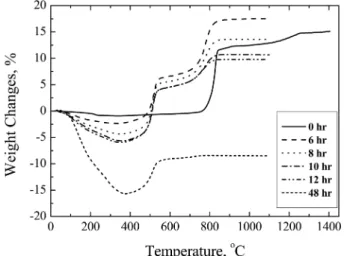
Fig. 2 and Fig. 3 show thermal weight changes and oxidation fraction during reaction-bonding of Al
2O
3-Al alloy powder compacts prepared by respective milling time. The longer milling time gave rise to more weight loss at temperatures up to ~350
oC. Especially, the weight loss of powder compact after 48 hr milling was very high ( −15.67 %) relatively to that (−0.92 %) of powder compact without milling, i.e., 0 hr milling. Considering thermal decomposition of chemical reaction products would generally result in its weight loss, it is evident some chemical reactions probably took place on milling, drying, and subsequent powder handling.
10)Fig. 2 reveals amount of chemical reaction products forming on milling and powder handling increases with longer milling time,
therefore, the weight loss by thermal decomposition of the reaction products becomes higher with milling time.
However, the weight change behavior of powder com- pact without milling was quite different from other powder compacts, showing little weight loss, only liquid state oxidation of Al alloy, and that its oxidation continued at temperatures over 1400
oC. In Fig. 2, actual weight gains from on-set of weight gain at ~350
oC to maximum weight gain decreased with longer milling time (6 hr-19.86 %, 8 hr-17.97 %, 10 hr-16.38 %, 12 hr- 15.77 %, and 48 hr-7.25 %). This relates to the fact that consumption of Al alloy powder on milling, reported previously,
10)leads to less participation of Al alloy in oxidation. The oxidation fraction in solid state of Al alloy in overall oxidation increases from 0.017(0 hr) to 0.926(48 hr) with longer milling time. Each fraction value is shown in Fig. 3.
Fig. 4 shows thermal linear changes of Al
2O
3-Al alloy Fig. 1. Typical weight and thermal changes of Al
2O
3-Al alloy
powder compact during reaction-bonding with temperatures.
Fig. 2. Thermal weight changes in reaction-bonding of Al
2O
3-Al alloy powder compacts prepared by respective milling time.
Fig. 3. Thermal oxidation fraction in reaction-bonding of Al
2O
3-Al alloy powder compacts prepared by respective milling time.
Fig. 4. Thermal linear change in reaction-bonding of Al
2O
3-Al
alloy powder compacts prepared by respective milling time.
powder compacts prepared by respective milling time. In general, Al
2O
3-Al alloy powder compacts expanded by
~1.5 %, up to melting temperature of Al alloy, which coincides with solid-state oxidation of Al alloy as shown in Fig. 2. Across the T
m, the compacts would shrink a little owing to rearrangements of Al alloy particles by melting. Thereafter, the compact expanded again by liquid-state oxidation of Al alloy at temperatures up to
~960
oC. However the extent of linear expansion at this temperature range was relatively very small (~0.1 -
~0.2 %) to that of solid-state oxidation (~1.5 %). Con- sidering fraction of liquid-state oxidation of Al alloy in Fig. 3, a little expansion by liquid-state oxidation of Al alloy means that the oxidation proceeded by filling of pore networks in powder compacts. Above ~960
oC, the compact begins to shrink by sintering process. It is also shown that the overall linear change at temperature up to
~1100
oC decreased with increasing milling time, which agrees to actual weight gain in Fig. 2.
Fig. 5 shows XRD profiles of powder compact prepared by 10 hr milling at temperatures of interest. It is clear that intensity of Al decreased by Al oxidation with increasing temperature, which disappears at 1100
oC. The monoclinic and tetragonal ZrO
2coming from wearing of ZrO
2milling media during milling appeared clearly at 1100
oC after recrystallization from disordered structure at R.T. At temperatures over 767
oC, Mg and/or Zn-spinel phases were also observed. This spinel compounds are thought to come from reaction of Al
2O
3with MgO and/
or ZnO following selective oxidation of Mg and/or Zn in Al alloy particle during reaction bonding. γ-Al
2O
3at 1100
oC was an oxidation product of Al at higher tem- peratures and high temperature form of Al-hydroxides forming during milling and subsequent powder handling.
Fig. 6 shows changes of relative density and linear shrinkage of Al
2O
3-Al alloy powder compacts after milling for 6~12 hr, reaction-bonding at 1000
oC for 3 hr, and post-sintering at each temperature for 2 hr. The powder
compacts prepared by 0 and 48 hr milling were discarded in post-sintering process because of incomplete oxidation (0 hr milling) and fracture during post-sintering (48 hr milling). The relative density increased with longer milling time and with higher post-sintering temperature. The influence of post-sintering temperature on relative density was greater at shorter milling time and this influence diminished with increasing milling time. The influence of milling time on relative density was greater at lower post- sintering temperature and this influence also diminished with increasing post-sintering temperature. The highest value of relative density was ~98 % at 1600
oC. The linear shrinkage also increased with longer milling time Fig. 6. Relative density and linear shrinkage of Al
2O
3-Al alloy powder compacts after milling for 6~12 hr, reaction-bonding at 1000
oC for 3 hr, and post-sintering at each temperature for 2 hr.
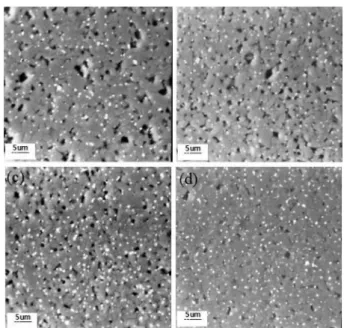
Fig. 7. Microstructural development of Al
2O
3-Al alloy powder compacts after post-sintering at 1550
oC for 2hrs with milling time, (a) 6 hr, (b) 8 hr, (c) 10 hr, and (d) 12 hr, respectively.
2 3
by 10 hr milling with temperatures of interest.
and with higher post-sintering temperature, showing the same proportional relation to changes in relative density.
The linear shrinkage of powder compacts at 1600
oC prepared by 8 hr, 10 hr, and 12 hr milling, showing ~98
% of relative density, are −16.9 %, −17.7 %, and −17.9 %, respectively.
Fig. 7 shows microstructural development of Al
2O
3-Al alloy powder compacts after post-sintering at 1550
oC for 2 hr with respective milling time. The increase in milling time from (a) 6 hr to (d) 12 hr resulted in improved densification in accordance with the relative density results in Fig. 6. The bright and very fine grains are ZrO
2debris incorporated on milling. Because (Mg and/or Zn)Al
2O
4spinel phases was not able to be observed in Fig. 7, back- scattered electron microscopy was applied to observe the
spinel phases, shown in Fig. 5. The result for Al
2O
3-Al alloy powder compact after 10 hr milling and post- sintering at 1550
oC for 2 hr is shown in Fig. 8. In this photograph, brightly fine grains are ZrO
2and larger gray grains are determined as (Mg and/or Zn)Al
2O
4spinel phases by energy dispersive system(EDS).
Fig. 9 shows flexural strength of reaction-bonded Al
2O
3ceramics prepared by respective milling time and post- sintering at 1600
oC for 2 hr following reaction-bonding at 1000
oC for 3 hr. The flexural strength increased with milling time, varying from 275 MPa for 6 hr milling to 365 MPa for 12 hr milling. It is interesting that the flexural strength made difference to some extent of
~100 MPa with milling time, despite this reaction-bonded Al
2O
3ceramics showed nearly the same relative densities at post-sintering temperature at 1600
oC, as in Fig. 6.
This feature will be discussed later in association with the change of particulate characteristics of Al alloy particles during milling procedure.
4. Discussion
The reaction bonding of Al
2O
3-Al alloy materials system is composed of two oxidation processes of Al alloy particle that are solid state oxidation and liquid state oxidation. The solid state oxidation is influenced to great extent by particulate properties of Al alloy particles after milling and, on the other hand, the liquid state oxidation is controlled by wetting property, regardless of particulate characteristics of Al alloy powder. This feature will be discussed with regards to processing parameters.
Fig. 10 shows weight changes of Al
2O
3-Al alloy powder compacts according to temperature range during reaction-bonding. Temperature, T
min, means the tempera- Fig. 8. Back-scattered electron microscopy of Al
2O
3-Al alloy
powder compact prepared by 10 hr milling and post-sintering at 1600
oC for 2hr, showing brightly fine ZrO
2debris and relatively larger gray (Mg and/or Zn)Al
2O
4phase.
Fig. 9. Flexural strength of reaction-bonded Al
2O
3ceramics prepared by respective milling time and post-sintering at 1600
oC for 2 hr.
Fig. 10. Weight changes of Al
2O
3-Al alloy powder compact
according to temperature range during reaction-bonding.
ture at which the highest weight loss happens in Fig. 2.
The number in column corresponds to percentages of weight change at each temperature range. Except for the compact at 0 hr milling showing no solid state oxidation, there shows a consistent overall weight changes of
~22%. This means that initial content of Al alloy powder is preserved during reaction-bonding process, although fraction of Al alloy contributing weight loss, solid state oxidation, and liquid state oxidation changes with milling time, i.e., milling efficiency. Fraction of weight loss in Fig. 10 is shown with fraction of solid state oxidation (Fig. 3) in Fig. 11. The dependence of two fractions on milling time is identical. This means that solid state oxidation of Al alloy in this study has a close relation to the content of Al alloy previously reacting with oxygen and moisture during milling and powder handling, i.e., weight loss. The freshly new surface of Al alloy, where oxidation and hydrolysis of Al can take place, can be created enough by high milling efficiency. Therefore, it is assumed that microcracks on the surface of Al alloy particles are solid state oxidation sites of Al alloy particle, and the microcracks are possibly responsible for the solid state oxidation of Al alloy particle, not as in RBAO process using pure Al particle where solid state oxidation of pure Al is dependent on its particle size after milling.
Final post-sintered density, microstructure, and flexural strength of reaction-bonded Al
2O
3ceramics in this study are strongly dependent on the milling efficiency. Although oxidation can be fully completed, relative density, micro- structure, and strength are function of microstructural homogeneity. In every experimental condition, higher milling efficiency results in dense and homogeneous microstructure leading to higher strength. The elongated or needle-like Al alloy powder shown at lower milling efficiency
10)hinders powder packing during compaction, that results in lower green density or in compaction
5. Conclusion
In present study, effect of particulate characteristics of Al
2O
3-Al alloy powder mixtures on reaction-bonding of Al
2O
3-Al alloy powder compacts were studied. During reaction-bonding of Al
2O
3-Al alloy powder compacts, oxidation of Al alloy takes place in two stages, that is, solid and liquid state oxidation of Al alloy. The solid state oxidation exhibits little dependence on Al alloy particle size after milling but strong dependence on density of surface defects such as microcracks of Al alloy forming on milling. On the contrary to little dependence of oxidation of Al alloy on its particle size after milling, relative density, microstructure, and flexural strength are strongly dependent on particle size of Al alloy after milling, i.e., on milling efficiency. The values of relative density, linear shrinkage, and flexural strength are ~98 %, −17.7 %, and ~365 MPa for RBAO ceramics in this study using Al alloy powder.
Acknowledgement
This paper was supported by Research Fund, Kumoh National Institute of Technology
References
1. R. Pompe, L. Hermansson and R. Carlsson, Proc. Br.
Ceram. Soc., 32(7), 65 (1981).
2. W. B. Hillig, R. L. Mehan, C. R. Morelock, V. J.
DeCarlo and W. Laskow, Am. Ceram. Soc. Bull., 54(12), 1054 (1975).
3. S. Wu, D. Holz and N. Claussen, J. Am. Ceram. Soc., 76(4), 970 (1993).
4. D. Holz, S. Wu, S. Scheppokat and N. Claussen, J. Am.
Ceram. Soc., 77(10), 2509 (1994).
5. N. Claussen, S. Wu and D. Holz, J. Eur. Ceram. Soc., 14(2), 97 (1994).
6. S. M. Goushegir, P. O. Guglielmi, J. G. P. da Silva, M.
P. Hablitzel, D. Hotza, H. A. Al-Qureshi and R. Janssen, J. Am. Ceram. Soc., 95(1), 159 (2012).
Fig. 11. Fraction of solid state oxidation and fraction of weight loss
during reaction-bonding of Al
2O
3-Al alloy powder compacts.
7. P. Mechnich and W. Braue, J. Eur. Ceram. Soc., 33(13- 14), 2645 (2013).
8. A. M. Korolkov, Casting Properties of Metals and Alloys, p.43, Consultants Bureau Enterprises Inc. (1963).
9. B. C. Pai, G. Ramani, R. M. Pillai and K. G. Satyanarayana, J. Mater. Sci., 30(8), 1903 (1995).
10. H. K. Lee, Kor. J. Mater. Res., 23(10), 574 (2013).