• 검색 결과가 없습니다.

Maxillofacial Trauma Trends at a Tertiary Care Hospital: A Retrospective Study

N/A
N/A
Protected

Academic year: 2021

Share "Maxillofacial Trauma Trends at a Tertiary Care Hospital: A Retrospective Study"

Copied!
6
0
0

로드 중.... (전체 텍스트 보기)

전체 글

(1)

ISSN 2288-8101(Print) ISSN 2288-8586(Online)

Original Article

RECEIVED August 25, 2014, REVISED September 7, 2014, ACCEPTED October 20, 2014 Correspondence to Jin-Wook Kim

Department of Oral and Maxillofacial Surgery, School of Dentistry, Kyungpook National University 2177 Dalgubeol-daero, Jung-gu, Daegu 700-412, Korea

Tel: 82-53-600-7551, Fax: 82-53-426-5363, E-mail: [email protected]

Copyright © 2014 by The Korean Association of Maxillofacial Plastic and Reconstructive Surgeons. All rights reserved.

CC
This is an open access article distributed under the terms of the Creative Commons Attribution Non-Commercial License (http://creativecommons.org/licenses/

by-nc/3.0) which permits unrestricted non-commercial use, distribution, and reproduction in any medium, provided the original work is properly cited.

Maxillofacial Trauma Trends at a Tertiary Care Hospital: A Retrospective Study

Eun-Gyu Jeon, Dong-Young Jung, Jong-Sung Lee, Guk-Jin Seol, So-Young Choi, Jung-Young Paeng, Jin-Wook Kim

Department of Oral and Maxillofacial Surgery, School of Dentistry, Kyungpook National University

Abstract

Purpose: Maxillofacial fractures are rapidly increasing from car accidents, industrial accidents, teenaged criminal activity, and sports injuries. Accurate assessment, appropriate diagnosis, and preparing individual treatment plans are necessary to reduce surgical complications. We investigated recent trends of facial bone fracture by period, cause, and type, with the objective of reducing surgical complications.

Methods: To investigate time trends of maxillofacial fractures, we reviewed medical records from 2,196 patients with maxillofacial fractures in 1981∼1987 (Group A), 1995∼1999 (Group B), and 2008∼2012 (Group C). We analyzed each group, comparing the number of patients, sex ratio, age, fracture site, and etiology.

Results: The number of patients in each period was 418, 516, and 1,262 in Groups A to C. Of note is the increase in the number of patients from Group A to C. The sex ratios were 5.6:1, 3.5:1, and 3.8:1 in Groups A, B, and C. The most affected age group for fracture is 20∼29 in all three groups. Traffic accidents are the most common cause in Groups A and B, while there were somewhat different causes of fracture in Group C. Sports-induced facial trauma was twice as high in Group C compared with Group A and B. Mandible fracture accounts for a large portion of facial bone fractures overall.

Conclusion: We observed an increase in facial bone fracture patients at Kyungpook National University Dental Hospital over the years. Although facial injury caused by traffic accidents was still a major cause of facial bone fracture in all periods, the percentage decreased. In recent years, isolated mandible fracture increased but mandible and mid-facial complex fracture decreased, possibly because of a reduction in traffic accidents.

Key words: Maxillofacial injury, Facial injury, Fractures, Traumatic

Introduction

The maxillofacial area is directly exposed to the outside environment. This area has a much higher possibility of damage from external force than the other skeletal sites.

The maxillofacial structure is composed of complex skeletal

bone, and is very important aesthetically and functionally, especially for masticatory and annunciation movements.

Benign tumors, malignant neoplasm or facial trauma on

the maxillofacial area can cause severe functional loss. Of

these, maxillofacial fractures due to trauma are frequently

associated with severe morbidity and loss of function.

(2)

Table 1. Time distribution of patients

Period Patients (n) Average per year (n) Group A (1981∼1987)

Group B (1995∼1999) Group C (2008∼2012)

418 516 1,262

59.7 103.2 252.4

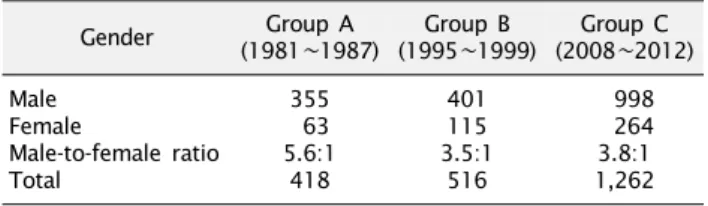
Table 2. Gender distribution and ratio by period

Gender Group A

(1981∼1987)

Group B (1995∼1999)

Group C (2008∼2012) Male

Female

Male-to-female ratio Total

355 63 5.6:1

418

401 115 3.5:1 516

998 264 3.8:1 1,262

Maxillofacial fracture location and treatment outcomes can seriously affect social function, and can be life threat- ening[1].

Facial bone fracture is increasing due to traffic accidents, teenaged criminals, industrial accidents, and sports injuries.

Depending on the aspect and severity of facial bone frac- tures, treatment requires evaluation of the degree of trauma and an accurate diagnosis. Accurate diagnosis, the physi- cian’s experience, and proper treatment will reduce com- plications from injury[2]. So, analyzing the causes and un- derstanding the trends of maxillofacial fractures is very im- portant for treatment and preventing complications.

The authors compared and analyzed the patients who came to the Department of Oral Maxillofacial Surgery in Kyungpook National University Hospital, the regional emergency center for Daegu City and Gyeongbuk province, for maxillofacial fracture during 1981∼1987, 1995∼1999, and 2008∼2012. Analysis examined the cause and area of facial bone fracture, and occurrence, age, and etiology of this fracture. The results help us understand changes over time in maxillofacial fracture.

Materials and Methods

The study compared two time spans at Kyungpook National University School of Dentistry[3]. Patients diag- nosed with facial bone fractures at Department of Oral and Maxillofacial Surgery were analyzed in terms of facial bone fracture aspect. The first period was from January 1st, 1981 to December 1987 (Group A). The second period was from January 1st, 1995 to December 1999 (Group B).

To confirm the latest trends and changes of facial bone fracture, a third period was added from January 1st, 2008 and December 2012 (Group C). The protocol of this study was reviewed and approved by Kyungpook National University Hospital Institutional Review Board (KNUH 2014-09-033).

The data were statistically analyzed using IBM SPSS

Statistics ver. 20 software (IBM Co., Armonk, NY, USA) by distribution of patients over time periods, gender dis- tribution and ratio, age, etiology of maxillofacial fracture, and regional distribution of maxillofacial fracture in each group. The etiology was categorized into five groups[3,4]:

traffic accident, falls, violence, sports, and miscellaneous.

Group C data enabled finer specification, of maxillofacial fracture etiology. Traffic accident has four different sub- groups[5], and falls has two subgroups[6].

Clinical diagnosis data were used from patient’s medical records and radiological diagnosis data were referenced by skull series, panorama, Waters view, Towne’s view, zygomatic arch view, and computed tomography.

Results

1. Patient distribution

The entire sample of 2,196 patients was separated into three groups based on year of diagnosis. We analyzed the distribution of patients by time period (Table 1). The average annual number of patients admitted in each group was 60 people, 103 people, and 252 people. The average annual number of patients was increased by a factor of 1.72 and 2.45.

2. Gender

The gender ratio of Group A was 5.6:1. In Group B, it decreased to 3.5:1, and increased slightly to 3.8:1 in Group C (Table 2). There were some differences by group, but the proportion of males is consistently higher.

3. Age

The 20∼29 age group in each period was the most nu- merous group. In Group A and B, the 30∼39 age group was second most numerous for facial bone fracture.

However, in Group C, the second most numerous was

(3)

Table 4. Detailed etiology of maxillofacial fractures for 2008∼2012

Etiology Group C (2008∼2012)

Total 0∼9 (yr) 10∼19 (yr) 20∼29 (yr) 30∼39 (yr) 40∼49 (yr) 50∼59 (yr) ≥ 60 (yr)

Traffic accident Fall from height Simple fall Violence Sports Miscellaneous Total

8 (3.1, 20.5) 3 (4.3, 7.7) 24 (5.5, 61.5) 0 (0.0, 0.0) 1 (1.1, 2.6) 3 (2.3, 7.7) 39 (3.1, 100.0)

58 (22.5, 40.9) 13 (18.8, 4.6) 78 (17.8, 27.4) 62 (25.2, 21.8) 44 (46.3, 15.4) 30 (23.1, 10.) 285 (22.6, 100.0)

69 (26.7, 60.4) 12 (17.4, 3.4) 111 (25.4, 31.4) 104 (42.3, 29.5) 35 (36.8, 9.9) 22 (16.9, 6.) 353 (28.0, 100.0)

30 (11.6, 17.3) 9 (13.0, 5.2) 74 (16.9, 42.8) 30 (12.2, 17.3) 7 (7.4, 4.0) 23 (17.7, 13.3) 173 (13.7, 100.0)

42 (16.3, 22.2) 12 (17.4, 6.3) 69 (15.8, 36.5) 33 (13.4, 17.5) 6 (6.3, 3.2) 27 (20.8, 14.3) 189 (15.0, 100.0)

39 (15.1, 31.5) 15 (21.7, 12.1) 44 (10.1, 35.5) 12 (4.9, 9.7) 1 (1.1, 0.8) 13 (10.0, 10.5) 124 (9.8, 100.0)

39 (15.1, 39.4) 5 (7.2, 5.1) 37 (8.5, 37.4) 5 (2.0, 5.1) 1 (1.1, 1.0) 12 (9.2, 12.1) 99 (7.8, 100.0)

285 (100.0, 22.6) 69 (100.0, 5.5) 437 (100.0, 34.6) 246 (100.0, 19.5) 95 (100.0, 7.5) 130 (100.0, 10.3) 1,262 (100.0, 100.0) Values are presented as number (row %, colume %). Traffic accident: automobile, bicycle, motorcycle and pedestrian accident.

Table 5. Major etiology of maxillofacial fractures

Etiology Group A (1981∼1987) Group B (1995∼1999) Group C (2008∼2012) Total

Traffic accident Falls

Violence Sports Miscellaneous Total

164 (25.2, 39.2) 82 (10.9, 19.6) 125 (25.8, 30.0) 16 (12.7, 3.8) 31 (25.3, 7.4) 418 (19.0, 100.0)

201 (30.9, 39.0) 165 (21.9, 32.0) 114 (23.5, 22.0) 15 (9.6, 3.0) 21 (11.5, 4.1) 518 (23.6, 100.0)

285 (43.8, 22.6) 506 (67.2, 40.1) 246 (50.7, 19.5) 95 (75.4, 7.5) 130 (71.4, 10.3) 1,262 (57.5, 100.0)

650 (100.0, 29.6) 753 (100.0, 34.3) 485 (100.0, 22.1) 126 (100.0, 5.7) 182 (100.0, 8.3) 2,196 (100.0, 100.0) Values are presented as number (row %, colume %). Traffic accident: automobile, bicycle, motorcycle and pedestrian accident; Falls:

fall from height and simple fall.

Table 3. Distribution of patients by age

Age (yr) Group A (1981∼1987) Group B (1995∼1999) Group C (2008∼2012)

Male Female Total Male Female Total Male Female Total

0∼9 10∼19 20∼29 30∼39 40∼49 50∼59

≥ 60 Total

11 (47.8, 3.1) 64 (90.0, 18.0) 159 (87.4, 44.8) 75 (85.2, 21.1) 25 (89.3, 7.0) 18 (90.0, 5.1) 3 (50.0, 0.8) 355 (84.9, 100.0)

12 (52.2, 19.0) 7 (10.0, 11.1) 23 (12.6, 36.5) 13 (14.8, 20.6) 3 (10.7, 4.8) 2 (10.0, 3.2) 3 (50.0, 4.8) 63 (15.1, 100.0)

23 (100.0, 5.5) 71 (100.0, 17.0) 182 (100.0, 43.5) 88 (100.0, 21.1) 28 (100.0, 6.7) 20 (100.0, 4.8) 6 (100.0, 1.4) 418 (100.0, 100.0)

11 (68.8, 2.7) 69 (89.6, 17.2) 160 (73.7, 39.9) 76 (81.7, 19.0) 53 (73.6, 13.2) 23 (92, 5.7) 9 (56.3, 2.2) 401 (77.7, 100.0)

5 (31.2, 4.3) 8 (10.4, 7.0) 57 (26.3, 49.6) 17 (18.3, 14.8) 19 (26.4, 16.5) 2 (8, 1.7) 7 (43.7, 6.1) 115 (22.3, 100.0)

16 (100.0, 3.1) 77 (100.0, 14.9) 217 (100.0, 42.1) 93 (100.0, 18.0) 72 (100.0, 14.0) 25 (100.0, 4.8) 16 (100.0, 3.1) 516 (100.0, 100.0)

20 (51.3, 2.0) 249 (87.4, 24.9) 292 (82.7, 29.3) 135 (78.0, 13.5) 139 (73.5, 13.9) 98 (79.0, 9.8) 65 (65.7, 6.5) 998 (79.1, 100.0)

19 (48.7, 7.2) 36 (12.6, 13.6) 61 (17.3, 23.1) 38 (22.0, 14.4) 50 (26.5, 18.9) 26 (21.0, 9.8) 34 (34.3, 12.9) 264 (20.9, 100.0)

39 (100.0, 3.1) 285 (100.0, 22.6) 353 (100.0, 28.0) 173 (100.0, 13.7) 189 (100.0, 15.0) 124 (100.0, 9.8) 99 (100.0, 7.8) 1,262 (100.0, 100.0) Values are presented as number (row %, colume %).

the 10∼19 age group. In addition, the facial bone fracture ratio of people over 60 continuously increased by a factor of 2.2 and 2.5 (Table 3).

4. Etiology

Traffic accident was the most frequent etiological factor of facial bone fracture in Group A and B. However, in Group C, the traffic accident proportion decreased to 22.6%. In Group C, simple fall was the main cause of maxillofacial fracture at 34.6% (Table 4). Violence caused a large portion of maxillofacial fracture but the ratio de- creased up to 30% in each period. Sports-related injuries in Group C were two times higher than Group A (Table 5). For Group C, automobile accident comprised the largest

portion in both genders. For males the number of motor- cycle accidents was the same as automobile accidents, but for females the number of motorcycle accidents was one fifth the number of automobile accidents. For both males and females, the proportion of bicycle accidents was sim- ilar: 17.1% and 17.6%. Males had three times more traffic accidents than females (Table 6).

5. Fracture

We stratified maxillofacial fracture into three categories:

mandible fracture, mid-facial fracture, and mandible and

mid-facial complex fracture. There were 326 (78.0%) man-

dible fractures in Group A, 351 (68.0%) in Group B, and

1,111 (88.0%) in Group C. The number of patients with

(4)

Table 6. Mode of traffic accident vs sex ratio in Group C

Traffic accident Male Female Total

Automobile accident Bicycle accident Motorcycle accident Pedestrian MVA Total

84 (68.3, 38.7) 37 (75.5, 17.1) 77 (91.7, 35.5) 19 (65.5, 8.8) 217 (76.1, 100.0)

39 (31.7, 57.4) 12 (24.5, 17.6) 7 (8.3, 10.3) 10 (34.5, 14.7) 68 (23.9, 100.0)

123 (100.0, 43.2) 49 (100.0, 17.2) 84 (100.0, 29.5) 29 (100.0, 10.2) 285 (100.0, 100.0) Values are presented as number (row %, colume %).

MVA, motor vehicle accident.

Table 7. Site distribution of maxillofacial fracture

Fracture site Group A (1981∼1987) Group B (1995∼1999) Group C (2008∼2012) Total

Middle third Mandible

Mandible+middle third Total

69 (32.4, 16.5) 326 (18.2, 78.0) 23 (11.8, 5.5) 418 (19.0, 100.0)

91 (42.7, 17.6) 351 (19.6, 68.0) 74 (37.9, 14.3) 516 (23.5, 100.0)

53 (24.9, 4.3) 1,111 (62.1, 88.0) 98 (50.3, 7.8) 1,262 (57.5, 100.0)

213 (100.0, 9.7) 1,788 (100.0, 81.4) 195 (100.0, 8.9) 2,196 (100.0, 100.0) Values are presented as number (row %, colume %).

mid-facial fracture was 69 (16.5%) in Group A, 91 (17.6%) in Group B, and 53 (4.2%) in Group C. Mandible and mid-facial complex fracture increased by a factor of 2.6 from Group A to B. Mandible and mid-facial complex frac- ture decreased by half from Group B to C (Table 7).

Discussion

The risk of facial bone fractures can be influenced by social status, custom, culture and traffic condition, and the direct causes of maxillofacial fracture are very diverse.

Therefore precise evaluation and diagnosis for the patient are necessary for a good prognosis. The maxillofacial frac- tures patients presenting at our hospital changed in cause and degree of trauma. Therefore, understanding the as- pects and causes of maxillofacial fracture can help establish an effective treatment plan and good post-operational prognosis.

In this study, males incur more injuries than females, agreeing with other research[7,8]. However, the proportion of males to females decreased from 5.6:1 to 3.8:1. Due to recent improvements in social opportunities for females, as well as increased female drivers, female injuries are increasing steadily, and the proportion of males to females will continue to decline[9]. Some authors report that higher participation of women in society influences the rates of facial fractures in women. The male to female ratio for facial fractures was as low as 2.1:1[10] in Greenland[11],

Finland[12], and Austria[10], where women are heavily en- gaged in social activity.

By age, similar to other results[11,13-17], those in their 20s have the most injuries. The percentage of 20s were 43.5% in Group A, 42.1% in group B and and 28% in group C. In Group A and B the next highest percentage was 30s, but in Group C, 10s were the second most common. Hence, Group A and B are similar in age group most affected, with at least 42% of patients in the 20s.

However, Group C is more evenly distributed, with a de- creased percentage of 20s and increased percentage of 10s, 50s and over 60s. As the nation is becoming an ‘Aging Society’, the risk of exposure to dangerous environments will increase in elderly people.

Oji[17] found that 20s frequently take part in dangerous exercises and sports, drive motor vehicles carelessly, and are more likely to be involved in violence. We found that as time progresses from Group A to C, the proportion of 20s injuries fell from 43.5% to 28.0%. Correspondingly the 50s and over 60s increased from 4.8% to 9.8% and from 1.4% to 7.8%. As one would expect, these changes accompanied etiologic changes in maxillofacial fractures.

The causes of facial fracture common in the 20s, such as traffic accidents and violence, decreased although sports injury did not. Traffic accidents decreased from 39.2% to 22.6% and violence went down from 30.0% to 19.3%.

Recent reports of the proportion of sports-related max-

illofacial fractures range up to 33.2%[18,19]. The proportion

(5)

of sports-related maxillofacial fractures is reported to be at least 5.6% more than a decade ago[20,21]. Females are becoming more active in sports[22]. In our study, despite a decreased portion of patients in their 20s, the ratio of sports-related maxillofacial fracture increased from 3.8%

to 7.5% during the past twenty years. This may be due to increased sports participation in all age groups, explain- ing part of the increase in maxillofacial fractures in females.

Some authors report that the most common cause of facial bone fractures was traffic accidents[17,23,24]. In con- trast, others report that traffic accidents have been reduced and private violence is the main reason of facial bone frac- ture[2,13]. In this study, traffic injuries are lower than in the past. A possible explanation is that traffic regulation is better enforced and use of safety equipment more common. Automobile accidents accounted for almost half of all traffic accidents at 43.2%, followed by motorcycle accidents at 29.5%, bicycle accidents at 17.2%, and pedes- trian accidents at 10.2% in Group C. In another study dur- ing a similar period, Brasileiro and Passeri[5] reported the proportion of bicycle accidents at 33.6%, automobile acci- dents at 31.0%, motorcycle accidents at 26.9% and pedes- trian accidents at 8.5%. These differences can be explained because in Brazil bicycles are an important means of trans- portation, differing from Korean society, where bicycles are for leisure, not transportation. Thus, traffic accidents are affected by the social environment, living level, and main transportation. Also, in this study, automobile acci- dents comprose the highest proportion of traffic accidents.

The proportion of falls increased from 19.6% to 40.1%

(Table 5). Yamamoto et al .[6] reported that simple falls were common in elderly patients, who comprised 61.1%

of all falls patients. In our results, simple falls comprised 86.4% of all the falls, and most frequently were younger patients (Table 6). One reason for this difference is that medical insurance normally does not cover damage by assault. Therefore, we assume that patients are motivated to report a different cause of the injury to get insurance reimbursement.

In this study, facial bone fractures were categorized by three broad types: mandible fracture, mid-facial bone frac- ture, and two types of complex fractures (mandible and mid-facial bone). The most frequently reported max- illofacial fracture is mandible[13-15,17,23]. Approximately

81.4% of our patients suffered a mandible fracture, and it was the main type in all time periods. Iida et al .[25]

reports that most mandible and mid-facial complex frac- tures are caused by traffic accidents. In our study, Group C had a portion of traffic accidents as the cause of fracture, as well as a lower proportion of mandible and mid-facial complex fracture. We assume that traffic accidents provoke multiple and powerful trauma; therefore the proportion of traffic accidents with maxillofacial fractures is related to the proportion of mandible and mid-facial complex fractures. Another consideration is that in our hospital the emergency treatment system for the maxillofacial fracture is divided into three departments: oral and maxillofacial surgery, plastic surgery, and neurosurgery. When an emer- gency situation occurs, the emergency department makes an evaluation of the patient and notifies the surgery depart- ment based on the state of the patient. In this situation, emergency departments tend to notify plastic surgery rather than other departments when mid-facial fracture and com- plex fracture of mandible show severe facial depression.

Therefore, the fracture site of maxillofacial facial area seems weighted to mandible fracture, a weak point of this study.

Conclusion

Our results indicate that the number of patients who are diagnosed with facial bone fractures in our department is gradually increasing. The male to female ratio is decreas- ing due to an increase in socioeconomic activity of females.

Maxillofacial fracture is still most common in patients in

their 20s, although the proportion of patients in their 20s

is decreasing, and therefore the proportion of 10s, elderly

groups, and females is increasing. In other words, there

is now a more even age distribution of maxillofacial

fractures. The proportion of sports-related maxillofacial

fracture nearly doubled from two decades ago. The pro-

portion of traffic accidents decreased because of enhanced

traffic regulation and use of safety equipment. This de-

crease is associated with reduction of mandible and mid-fa-

cial complex fractures. Nevertheless, the mandible is the

most frequently affected fracture site.

(6)

References

1. Qudah MA, Bataineh AB. A retrospective study of selected oral and maxillofacial fractures in a group of Jordanian children. Oral Surg Oral Med Oral Pathol Oral Radiol Endod 2002;94:310-4.

2. Torgersen S, Tornes K. Maxillofacial fractures in a Norwegian district. Int J Oral Maxillofac Surg 1992;21:335-8.

3. Kim HS, Lee SH, Jang HJ, Baek SH, Cha DW. Clinical study on facial bone fractures. J Korean Assoc Maxillofac Plast Reconstr Surg 2001;23:40-7.

4. Fasola AO, Nyako EA, Obiechina AE, Arotiba JT. Trends in the characteristics of maxillofacial fractures in Nigeria. J Oral Maxillofac Surg 2003;61:1140-3.

5. Brasileiro BF, Passeri LA. Epidemiological analysis of max- illofacial fractures in Brazil: a 5-year prospective study. Oral Surg Oral Med Oral Pathol Oral Radiol Endod 2006;102:

28-34.

6. Yamamoto K, Kuraki M, Kurihara M, et al . Maxillofacial fractures resulting from falls. J Oral Maxillofac Surg 2010;68:

1602-7.

7. Haug RH, Prather J, Indresano AT. An epidemiologic survey of facial fractures and concomitant injuries. J Oral Maxillofac Surg 1990;48:926-32.

8. Hill CM, Crosher RF, Carroll MJ, Mason DA. Facial frac- tures--the results of a prospective four-year-study. J Maxillofac Surg 1984;12:267-70.

9. Cook HE, Rowe M. A retrospective study of 356 midfacial fractures occurring in 225 patients. J Oral Maxillofac Surg 1990;48:574-8.

10. Gassner R, Tuli T, Hächl O, Rudisch A, Ulmer H. Cranio- maxillofacial trauma: a 10 year review of 9,543 cases with 21,067 injuries. J Craniomaxillofac Surg 2003;31:51-61.

11. Thorn JJ, Møgeltoft M, Hansen PK. Incidence and aetio- logical pattern of jaw fractures in Greenland. Int J Oral Maxillofac Surg 1986;15:372-9.

12. Lindqvist C, Sorsa S, Hyrkäs T, Santavirta S. Maxillofacial fractures sustained in bicycle accidents. Int J Oral Maxillofac Surg 1986;15:12-8.

13. Koorey AJ, Marshall SW, Treasure ET, Langley JD. Incidence of facial fractures resulting in hospitalisation in New Zealand from 1979 to 1988. Int J Oral Maxillofac Surg 1992;21:77-9.

14. Kieser J, Stephenson S, Liston PN, Tong DC, Langley JD.

Serious facial fractures in New Zealand from 1979 to 1998.

Int J Oral Maxillofac Surg 2002;31:206-9.

15. Al Ahmed HE, Jaber MA, Abu Fanas SH, Karas M. The pattern of maxillofacial fractures in Sharjah, United Arab Emirates: a review of 230 cases. Oral Surg Oral Med Oral Pathol Oral Radiol Endod 2004;98:166-70.

16. Hächl O, Tuli T, Schwabegger A, Gassner R. Maxillofacial trauma due to work-related accidents. Int J Oral Maxillofac Surg 2002;31:90-3.

17. Oji C. Jaw fractures in Enugu, Nigeria, 1985-95. Br J Oral Maxillofac Surg 1999;37:106-9.

18. Mourouzis C, Koumoura F. Sports-related maxillofacial frac- tures: a retrospective study of 125 patients. Int J Oral Maxillofac Surg 2005;34:635-8.

19. Maladière E, Bado F, Meningaud JP, Guilbert F, Bertrand JC. Aetiology and incidence of facial fractures sustained dur- ing sports: a prospective study of 140 patients. Int J Oral Maxillofac Surg 2001;30:291-5.

20. Sane J, Lindqvist C, Kontio R. Sports-related maxillofacial fractures in a hospital material. Int J Oral Maxillofac Surg 1988;17:122-4.

21. Seguin P, Béziat JL, Breton P, Freidel M, Nicod C. Sports and maxillofacial injuries: etiological and clinical aspects apropos of 46 cases. Preventive measures. Rev Stomatol Chir Maxillofac 1986;87:372-5.

22. Emshoff R, Schöning H, Röthler G, Waldhart E. Trends in the incidence and cause of sport-related mandibular fractures: a retrospective analysis. J Oral Maxillofac Surg 1997;55:585-92.

23. Adebayo ET, Ajike OS, Adekeye EO. Analysis of the pattern of maxillofacial fractures in Kaduna, Nigeria. Br J Oral Maxillofac Surg 2003;41:396-400.

24. Karyouti SM. Maxillofacial injuries at Jordan University Hospital. Int J Oral Maxillofac Surg 1987;16:262-5.

25. Iida S, Kogo M, Sugiura T, Mima T, Matsuya T. Retrospective

analysis of 1502 patients with facial fractures. Int J Oral

Maxillofac Surg 2001;30:286-90.

수치

Table 2. Gender distribution and ratio by period
Table 4. Detailed etiology of maxillofacial fractures for 2008∼2012
Table 6. Mode of traffic accident  vs  sex  ratio  in  Group  C

참조

관련 문서
