• 검색 결과가 없습니다.

PCR-based Identification of Microorganisms in a Kefir Grain

N/A
N/A
Protected

Academic year: 2021

Share "PCR-based Identification of Microorganisms in a Kefir Grain"

Copied!
7
0
0

로드 중.... (전체 텍스트 보기)

전체 글

(1)

* Corresponding author

Phone: +82-51-606-2335, Fax: +82-51-891-0004 E-mail: [email protected]

PCR-based Identification of Microorganisms in a Kefir Grain

Won Hoe Koo

1

, Min-gook Seo

1

and Jung Hoon Ahn

2*

1

Korea Science Academy, Busan, Korea

2

Korea Advanced Institute of Science and Technology, Institute for Gifted Students, Daejon, Korea

Abstract Nowadays many people are concerned about being healthy, and many dairy products are taken as health supplementary foods. Among dairy products, kefir, also called as Tibet mush- room, is a yogurt fermented by kefir grain, which is a mixture of lactic acid bacteria and yeasts.

Although there are many empirical evidences that kefir is very influential for human body, the exact reason is not definitively discovered. Therefore, it would be useful to understand character- istics of a kefir grain and to categorize bacteria in a kefir grain. In this paper, molecular biological apparatus such as PCR, electrophoresis, PCR purification, DNA sequencing were used to identify and classify the species of lactic acid bacteria and yeast in a kefir grain. We used PCR-based identification method using 16S rRNA primer and Internal Transcribed Spacer (ITS) primer. We identified 6 different species which were selected on different medium. In addition, observation with scanning electron microscope (SEM) enabled us to grasp an external shape of the kefir grain. Although we found a limited number of microbial species, more intensive research are needed for extensive identification of microorganism species in Korean kefir grain.

Key words : Kefir, Kefir grain, 16S rDNA(16S rRNA), PCR-based identification, lactic acid bacteria, Internal Transcribed Spacer (ITS)

Introduction

Kefir is a fermented milk beverage made in parts of Russia, Bulgaria and the former Yugoslavia. It is also called as Tibet mushroom because of its morphological similarity to mushroom. Generally, 24 hours after the inoculation of kefir grain to intact milk, the fermenta- tion process occurs in milk properly by mushroom-like clump of microorganism[14]. Milk is fermented by a mixed and varied population of organisms which usu- ally include Lactobacilli, Lactococcus lactis, and yeasts, for example, Saccharomyces spp. Lactic acid, ethanol and carbon dioxide which causes foaming are the main products. The organisms become embedded in an ex- tracellular polysaccharide (kefiran) to form whitish, ge- latinous granules which are carried to the surface by bubbles of carbon dioxide[13]. The granules are col- lected and used as an inoculum for subsequent fermen- tations and they can be stored for several days in cold milk or water[15]. Kefir grain is a solid form in which

many kinds of Lactobacilli are condensed. Many scien- tists have made clear the exact kinds of some Lactobacilli, the others are still on research[6].

Nevertheless, it is obvious that the kefir has many effec- tiveness like immune enhancement and antibody pro- duction[16].

In short, The purpose of this research is extracting different microorganisms from kefir using molecular bi- ological experiments, and analyzing population of mi- croorganisms in kefir to verify the beneficial effects of kefir by comparing the population of it to that of other lactic acids fermentation.

Two ways are commonly used to classify micro- organisms. The first is a traditional way using morpho- logical, chemical, and physiological traits. In Bergey's Manual of Systematic Bacteriology, the main factors for classification are gram staining, cell mor- phology and arrangement, and aerobic fermentation.

Another uses nucleic acids and proteins[8]. The other

one is a molecular biological way using DNA sequence.

(2)

DNA hybridization, comparing contents of G and C bases, and analysis of DNA sequence are mainly used methods for identification. Among these, analysis of 16S and 18S rDNA sequence is main avenue for this research. For yeasts, sequencing of ITS (Internal Transcribed Spacer) region is used. The reason using rDNA region is rRNA is transcribed from rDNA.

Moreover, rRNA is an essential element of ribosome which produces the protein from mRNA.

rDNA of small subunit rRNA(SSU rRNA), especially 16S rDNA, is mostly used for identification of prokaryotes. Because amplification of rDNA and se- quencing is available, it is easy to identify for unknown microorganism[7]. For eukaryotes, they have 3 closed rDNA regions, 18S, 5.8S, 28S, and among these regions ITS 1 and ITS 2 exist[3]. They are used importantly in identification of eukaryotes like 16S rDNA region of prokaryotes. In short, to get specific sequences of bacteria, amplifying 16s rDNA part makes more con- venient not only to amplify microflora of a kefir grain but also to shorten the time for the process[10]. Almost all of bacteria DNAs have very similar but not exactly same 16s rDNA region. That's the key to identify each species of bacteria. In this research, we extracted differ- ent types of microorganism contained in kefir and clas- sified them with molecular biological tools using rRNA sequences and ITS between rRNAs.

Materials and Methods

Cultivation

In this research, KSAK1 was obtained from internet kefir club (http://cafe.naver.com/.kefir) and was culti- vated and maintained by subculture in milk. We used four main sorts of solid culture medium. They were MRS-agar[4], Yeast extract-glucose chloramphenicol- agar (YGC-agar)[6], Lee medium[11], and acetic acid bacteria medium (AAB medium)[2]. MRS-agar was purchased from Difco, USA. YGC-agar, Lee medium, and AAB medium were made following previous articles. We mixed tryptone 10, yeast extract 10, lactose 5, sucrose 5, CaCO

3

3, K

2

HPO

4

0.5, bromocresol purple 0.02, agar 18 (g/ ℓ) for Lee medium, yeast extract 30, BCG 0.2, ethanol 20, agar 20 (g/ ℓ) for AAB (Acetic acid bacteria) medium, and bacto yeast extract 5, glu- cose 20, chloramphenicol 0.1, bacto agar 13 (g/ ℓ) for YGC-agar.

Different medium was used for the selective culti- vation of each species of bacteria. MRS-agar was used for lactobacillus, YGC-agar for saccharomyces, Lee medium lactococcus, AAB medium acetic acid bacteria.

For streaking to plates, inoculating loop was put into a grain of KSAK1.

PCR amplification

After the cultivation process, colonies were selected regarding various sizes of colonies in plates. For in- stance, in the Lee medium plate, 3 different colors of colonies are cultivated. 10 colonies from 4 plates were totally selected to be used for experiments. The colonies were named as MRS Big, MRS Small, AAB Small, Lee Biggest, Lee Medium, Lee Smallest, Lee Yellow, Lee Middle Color, YGC Big, and YGC Small regarding their plates and sizes and colors. Colonies were used directly in PCR reaction. Total volume of PCR reaction was 20 ㎕ and included a small amount of a colony, 2 ㎕ of 10x Buffer, 0.6㎕ of dNTP mix, 3.2㎕ of primer, 0.2 ㎕ of Taq Polymerase, 14㎕ of DDW. PCR reaction with a bacterial colony was performed as follows; The first denaturation cycle at 95 ℃ for 4 minutes, 40 cycles of 95 ℃ for 20 seconds, 55℃ for 20 seconds, and 72℃

for 30 seconds, and final elongation cycle at 72 ℃ for 5 minutes. PCR reaction with an yeast colony was same as above except annealing at 45 ℃.

In this research, 519f and 1492r for bacteria and ITS3 and ITS4 for yeasts were used as previous report[3].

Primer sequences are provided in Table 1. Because it is unknown that what colonies include bacteria or yeasts, the first PCR process is done for all the 10 colo- nies with both primers. It is strongly predicted YGC Big and YGC Small have yeasts because YGC-agar (Yeast extract-glucose chloramphenicol-agar) is speci- alized for yeast cultivation. Amplified sequences are observed by electrophoresis using 1.1% agarose gel.

From the results of electrophoresis experiments, we se- lected colonies which would be analyzed by DNA sequencing. Besides with this results, we repeated elec- trophoresis processes selectively for amplification of all 10 colonies.

DNA Purification and sequencing

After checking the amplification results, we purified

amplified PCR  products. The purification process was

performed with PCR Purification Kit (Solgent, Korea).

(3)

Table 1. Primers sequences used in this research

Primer name Sequences mer

prokaryote eukaryote

Forward 519f

1)

Reverse 1492r

2)

ITS3

3)

ITS4

3)

5'-CAGCMGCCGCGGTAATWC-3' 5'-GGTTACCTTGTTACGACTT-3' 5'-GCATCGATGAAGAACGCAGC-3'

5'-TCCTCCGCTTATTGATATGC-3'

18 19 20 20 1) 519f: 519-536 of E. coli 16S rRNA numbering[1, 9, 10]

2) 1492r: 1510-1492 of E. coli 16S rRNA numbering[5, 10]

3) ITS3, ITS4: partial sequence of S. cerevisiae Internal Transcribed Spacer 2[3, 12]

DNA sequencing process was requested to an expertise sequencing company, Solgent (Daejeon Korea).

Homology searches were conducted with sequences in the GenBank/EMBL/DDBJ database with the BLAST program.

Morphological Observation

Although this research did not identify bacteria in the KSAK1 by the traditional way, observing the KSAK1 kefir using ESEM (Quanta 200, Netherlands) was performed to grasp an external shape of KSAK1.

In this research, SEM pictures were taken with (LFD) large field detector, which is not ESEM mode but also takes pictures of wet materials easily.

Results

External Shape of KSAK1

Kefir grain is encapsulated by a protein layer called kefiran. Some bacteria protrude the layer, so we could see some shape of bacteria outside kefiran. The pictures taken by ESEM are shown from Fig. 1 and Fig. 2 It was not easy to take very accurate picture because it was quite difficult to cut the kefir grain properly. We could note that the surface of the grains is different from the inner surface of the grains.

Two aggregations of bacteria located in right center in Fig. 2. Kefiran dominantly covered almost all of sur- face of a kefir grain. However, kefiran was not smooth and flat. Some parts of kefiran were very sparsely con- nected with long and thin protein or polysaccharide masses. In summary, kefiran was a main capsulated structure that composes basic architecture, and some bacteria appeared outside kefiran.

PCR

Two different sets of primers were used in this report

Fig. 1. Morphological Shape of Kefir (40x).

Fig. 2. Bacteria Shape outside Kefiran (600x).

for amplification of bacterial 16S RNA and Eucaryotic

ITS region as shown in Fig. 3. We labeled a number

for each colony like MRS Big as 1, MRS Small as

2, AAB Small as 3, Lee Biggest as 4, Lee Medium

as 5, Lee Smallest as 6, Lee Yellow as 7, Lee Middle

Color as 8, YGC Big as 9, and YGC Small as 10. In

addition to primers targeting bacteria abbreviated to B,

primers targeting yeasts were abbreviated to Y. So, for

example, Lee Medium amplified with 519f and 1492r

(4)

A. The location of primer 519f and 1492r in E. coli genome

B. The location of primer ITS3 and ITS4 in S. cerevisiae genome Fig. 3. Schematic location of primers used in this research

B1 B2 B3 B4 B5 B6 B7 B8 B9 B10 Y1 Y2 Y3 Y4 Y5 Y6 Y7 Y8 Y9 Y10

Fig. 4. The PCR result abbreviated to B5. The electrophoresis was performed

to check the PCR results (Fig. 4). The first ten lanes except size marker were from B1 to B10 and the last ten lanes were from Y1 to Y10. As a result, Y1, Y2, Y3, Y4, Y5, Y8, and Y9 (300-500 bp) were amplified by yeast primers. However, Y10 was not amplified by yeast primers and colones from 1, 2, 3, 4, 5 and 8 were amplified with yeast primers although only colony from 9 was only from YGC-agar.

DNA Purification

As a summation, Y1, Y2, Y3, Y4, Y5, Y8, Y9, B3,

B4, B5, B6, Y7, and B10 were amplified and purified

to be analyzed for their DNA sequences (Fig. 5). B4

and B10 bands were nearly invisible. At last, B4 and

B10 could not be analyzed by sequence analysis. The

amplified PCR products showed similar length of DNA

around 900 bp for bacterial primer set and around 400

bp for yeast primer set.

(5)

Y1 Y2 Y3 Y4 Y5 Y8 Y9 B3 B4 B5 B6 Y7 B10

Fig. 5. Electrophoresis after PCR Purification

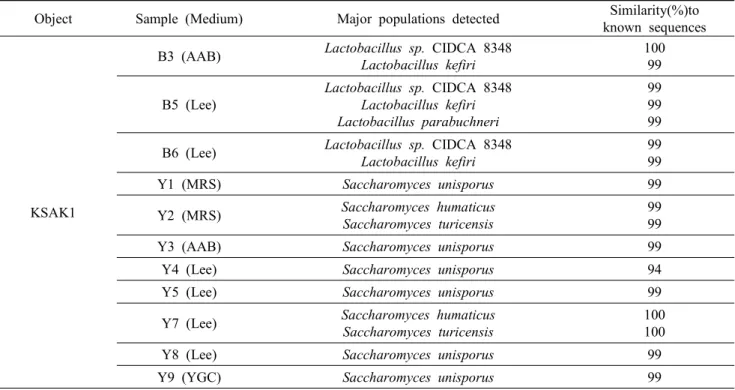
Table 2. Result of identification of KSAK1

Object Sample (Medium) Major populations detected Similarity(%)to

known sequences

KSAK1

B3 (AAB) Lactobacillus sp. CIDCA 8348

Lactobacillus kefiri

100 99

B5 (Lee)

Lactobacillus sp. CIDCA 8348 Lactobacillus kefiri Lactobacillus parabuchneri

99 99 99 B6 (Lee) Lactobacillus sp. CIDCA 8348

Lactobacillus kefiri

99 99

Y1 (MRS) Saccharomyces unisporus 99

Y2 (MRS) Saccharomyces humaticus

Saccharomyces turicensis

99 99

Y3 (AAB) Saccharomyces unisporus 99

Y4 (Lee) Saccharomyces unisporus 94

Y5 (Lee) Saccharomyces unisporus 99

Y7 (Lee) Saccharomyces humaticus

Saccharomyces turicensis

100 100

Y8 (Lee) Saccharomyces unisporus 99

Y9 (YGC) Saccharomyces unisporus 99

Sequencing analysis can extend to about 500-600 bp per a sequencing reaction. Because amplified 16S rDNA of bacteria was generally 900 bp, two primers were used to read the sequence from two opposite ends.

For example, in this research two primers, 519f and 1492r, were used for bacteria sequencing. 519f was used to read sequences in forward direction, 1492r was used in reverse direction[10]. On the other hand, one primer was enough for sequencing of yeasts because amplified ITS region of yeast was only about 500 bp.

Identification

The NCBI (National Center for Biotechnology Information) site, http://www.ncbi.nih.gov, was used for identification of bacteria and yeasts. Because two pri- mers were used for bacteria, we compared the result of 519f based sequencing and the result of 1492r based sequencing. The best species that showed the highest matching rate was selected.

As a result of identification, at least 4 species of

(6)

microorganisms appeared in KSAK1. From B3, B4, B5, B6, main species of bacteria were Lactobacillus sp. and Lactobacillus kefiri. Saccharomyces uni- sporous and Saccharomyces humaticus were main species of yeast in KSAK1. For elaborated ex- planation, Y1, Y3, Y4, Y5, Y8, Y9 showed 100%

matching sequence to Saccharomyces unisporous, and Y2 and Y7 showed 99% matching sequence to Saccharomyces humaticus. The result was shown in Table 2. Because some different kinds of bacteria showed same matching rates for their sequences, it was impossible to decide only one species and all the candidates were provided in the Table 2. The concen- tration of amplified B4 and B10 was too low to be analyzed by sequencing analysis.

Discussion

At least 6 species of microorganisms were identified through this experiment. The bizarre fact was that the identification results did not rely on medium. As it is mentioned in Materials and Methods, each medium was specified to cultivate different genus of bacteria, but all genus of bacteria identified in this research were Lactobacillus. For instance, B3 was from AAB-agar and found to be Lactobacillus albeit AAB-agar was op- timized for cultivation of acetic acid bacteria. Although the colonies from AAB plate were very small and rare, bacteria other than acetic acid bacteria could grow on this medium. It also applied to other medium.

For yeasts, Saccharomyces unisporous appeared in all of the colonies except Y2 and Y7. It was considerable that Saccharomyces unisporous was very strongly pro- ductive in KSAK1, which was a typical type of Korean kefir grains. If Saccharomyces unisporous had its uniquely beneficial trait, its application into Korean health foods such as toenjang, and fermented soy beans would be conducive.

For both bacteria and yeasts, the size of a colony means nothing about the species that comprises the colony. The result showed that, regardless of size of colony, Saccharomyces unisporous was identified in case of yeasts. On the other hand, we should consider about the relationship between color of a colony and its species. Y7 (yellow colony in Lee medium) showed different species, Saccharomyces humaticus or Saccharomyces turicensis, compared to other colonies in Lee culture medium.

In conclusion, main microflora of KSAK1, a typical Korean kefir grain, was discovered to be Lactobacillus and Sacchromyces and it was not quite different from general kefir grains in other sites.

References

1. Brosius, J., Palmer, M. L., Kennedy, P. J., and Noller, H. F. 1978. Complete nucleotide sequence of a 16S ribo- somal RNA gene from Escherichia coli. Proc Natl Acad Sci USA, 75, 4801-4805.

2. Carr, J. G. and Passmore, S. M. 1979. Methods for identi- fying acetic acid bacteria. In: Identification methods for microbiologist (Eds. Shinner, F. A. and Lovelock, D. W.).

London: Academic Press, Inc.

3. Chen, Y. C., Eisner, J. D., Kattar, M. M., Rassoulian-bar- rett, S. L., Lafe, A., Yarfitz, S. L., Limaye, A. P., and Cookson, B. T. 2000. Identification of medically im- portant yeasts using PCR-based detection of DNA se- quence polymorphisms in the internal transcribed spacer 2 region of the rRNA genes. J. Clin. Microbiol. 38(6), 2302-2310.

4. De Man, J. C., Rogosa, M., and Sharpe, M. 1960. A medium for cultivation of lactobacilli. J. .Appl. Bacteriol.

23, 130-135.

5. Eden, P. A., Schmidt, T. M., Blakemore, R. P., and Pace, N. R. 1991. Phylogenetic analysis of Aquaspirillum mag- netotacticum using polymerase chain reaction-amplified 16S rRNA-specific DNA. Int. J. Syst. Bacteriol, 41, 324-325.

6. Garrote, Graciela L., Abraham, Analia G., and De Antoni, Graciela L. 2001. Chemical and microbiological charac- terization of kefir grains. J. Dairy Res. 68, 639-652.

7. Hiraishi, A. 2004. Biseibutsu no Bunrui Doutei Jikkenhou.

(Eds. Suzuki, K., Hiraishi, A., and Yokota, A.). Tokyo:

Springer-Verlag Tokyo, Inc.

8. Krieg N. R. and Holt J. G. 1984. Bergey's Manual of Systematic Bacteriology, Vol. 2. Williams & Wilkins Baltimore/London pp 1235-1245.

9. Lane, D. J. Pace, B., Olsen, G. J., Stahl, D. A., Sogin, M. L., and Pace, N. R. 1985. Rapid determination of 16S ribosomal RNA sequences for phylogenetic analyses.

Proc Natl Acad Sci USA 82, 6955-6959.

10. Lee, Ji-Young, Jeong, Eun-Young, Lee, Kyu-Sang, Ju, Seul, Kim, Jong-Bae, Kang, Joon-Wun, and Lee, Hyeyoung. 2003. Development of a Monitoring System for Water-borne Bacteria by a Molecular Technique, PCR-RFLP-sequence Analysis. J. Biomed. Lab. Sci. 9, 139-144.

11. Lee, S., Vedamuthu, E., Washam, C., and Reinhold, G.

1974. An agar medium for the differential enumeration of yogurt starter bacteria. J. Milk Food Technol. 37, 272-276.

12. Lott, T. J., Burns, B. M., Zancope-Oliveira, R., Elie, C.

M., and Reiss, E. 1993. Nucleotide sequence analysis

ofthe 5.8S rDNA and adjacent ITS 2 region of Candida

(7)

albicans and related species. Yeast 9, 1199-1206.

13. Marshall, V. M. 1993. Starter cultures for milk fermenta- tion and their characteristics. J. Soc. Dairy Technol. 46, 49-56.

14. Saloff-Coste, C. J. 1996. Kefir. Nutritional and health benefits of yogurt and fermented milks. Danone World Newsletter 11, 1-7.

15. Singleton, P. and Diana Sainsbury, Dictionary of Microbiology and Molecular Biology, 3rd Edition, John Wiley and Sons, Ltd., 2001.

16. Vinerola, C. G., Duarte, J., Thangavel, D., Perdigon, G.,

Farnworth, E., and Matar, C. 2004. Immunomodulating

capacity of kefir. J. Dairy Res. 72, 195-200.

수치

Table  1.  Primers  sequences  used  in  this  research
Fig.  4.  The  PCR  resultabbreviated  to  B5.  The  electrophoresis  was  performed
Table  2.  Result  of  identification  of  KSAK1

참조

관련 문서

(1) PCR monitoring of bphC gene of Ralstonia eutropha H850 in soil Amount of bphC gene amplification of H850 cells was not generally proportional to the cell density

For confirmation of results of direct real-time melting curve analysis, we also performed an in-house JAK2 V617F ASP and a BsaXI-treated nested PCR-direct

Comparison of genotypes using REP-PCR and Integron-IS26 PCR results among 78 IRAB strains isolated from 2 university hospitals.. The result of REP-PCR genotypes and

Sequencing results of groEL gene of Anaplasma phagocytophilum detected in blood, kidney and spleen of wild rodents captured in Jeollanam-do area using a

The object of this study is to analyse the bacteria of periapical bascess and fascial space abscess using multiplex real-time polymerase chain reaction (MRT-PCR) before

In the present study, 10 study stations were established, and seasonal changes for various ecological aspects of the community such as species composition, number of

To assess the clinical usefulness of performing Q-PCR in practice as a diagnostic technique, we compared blindly the Q-PCR results using blood samples of the

As a result of pyrG N-PCR sequence analysis, the positive rate of Borrelia in 27 wild mice captured in October and November was 29.63% (8 positive / 27 total) and only