INTRODUCTION
Oxygen therapy and endotracheal intubation ventilation are standard medical treatments for hypoxemic acute respiratory
failure (hARF).
1Continuous positive airway pressure (CPAP) is a common mode in noninvasive ventilation (NIV) that delivers a constant positive airway pressure during both inspiration and expiration.
2,3CPAP has been demonstrated to improve oxygen saturation, relieve dyspnea, and avoid complications resulting from intubation, thus playing an important role in treating hARF.
4,5A recent multicenter randomized controlled trial (RCT) com- pared CPAP delivered by a full-face mask with standard oxygen therapy in patients with hARF, caused by various etiologies.
5The authors observed improved oxygenation during CPAP treat- ment; however, CPAP did not reduce the rates of intubation complications, in-hospital mortality, and adverse events.
The success of NIV is dictated in part by the choice of inter- face,
6which greatly affects patient comfort. In Europe, oral-
Helmet CPAP versus Oxygen Therapy in Hypoxemic Acute Respiratory Failure: A Meta-Analysis
of Randomized Controlled Trials
Yuwen Luo
1*, Yan Luo
1*, Yun Li
1*, Luqian Zhou
2*, Zhe Zhu
1, Yitai Chen
1, Yuxia Huang
1, and Xin Chen
11Department of Respiratory Medicine, Zhujiang Hospital, Southern Medical University, Guangzhou;
2The State Key Laboratory of Respiratory Disease, Guangzhou Institute of Respiratory Disease, Guangzhou Medical University, Guangzhou, China.
Purpose: The efficacy of helmet continuous positive airway pressure (CPAP) in hypoxemic acute respiratory failure (hARF) re-
mains unclear. The aim of this meta-analysis was to critically review studies that investigated the effect of helmet CPAP on gas ex- change, mortality, and intubation rate in comparison with standard oxygen therapy.
Materials and Methods: We performed a meta-analysis of randomized controlled trials (RCTs) by searching the PubMed, Em-
base, Cochrane library, OVID, and CBM databases, and the bibliographies of the retrieved articles. Studies that enrolled adults with hARF who were treated with helmet CPAP and measured at least one of the following parameters were included: gas ex- change, intubation rate, in-hospital mortality rate.
Results: Four studies with 377 subjects met the inclusion criteria and were analyzed. Compared to the standard oxygen therapy,
helmet CPAP significantly increased the PaO
2/FiO
2[weighted mean difference (WMD)=73.40, 95% confidence interval (95% CI):
43.92 to 102.87, p<0.00001], and decreased the arterial carbon dioxide levels (WMD=-1.92, 95% CI: -3.21 to -0.63, p=0.003), intu- bation rate [relative risk (RR)=0.21, 95% CI: 0.11 to 0.40, p<0.00001], and in-hospital mortality rate (RR=0.22, 95% CI: 0.09 to 0.50,
p=0.0004).Conclusion: The results of this meta-analysis suggest that helmet CPAP improves oxygenation and reduces mortality and intuba-
tion rates in hARF. However, the significant clinical and statistical heterogeneity of the literature implies that large RCTs are need- ed to determine the role of helmet CPAP in different hypoxemic ARF populations.
Key Words: Helmets, continuous positive airway pressure, respiratory failure, meta-analysis, endotracheal intubation, mortality Yonsei Med J 2016 Jul;57(4):936-941
http://dx.doi.org/10.3349/ymj.2016.57.4.936 pISSN: 0513-5796 · eISSN: 1976-2437
Received: June 16, 2015 Revised: October 2, 2015 Accepted: October 5, 2015
Corresponding author: Dr. Xin Chen, Department of Respiratory Medicine, Zhuji- ang Hospital, Southern Medical University, 253 Gongye Road, Guangzhou 510282, China.
Tel: 86-20-62782296, Fax: 86-20-61643010, E-mail: [email protected]
*Yuwen Luo, Yan Luo, Yun Li, and Luqian Zhou contributed equally to this work.
•The authors have no financial conflicts of interest.
© Copyright: Yonsei University College of Medicine 2016
This is an Open Access article distributed under the terms of the Creative Com- mons Attribution Non-Commercial License (http://creativecommons.org/licenses/
by-nc/3.0) which permits unrestricted non-commercial use, distribution, and repro- duction in any medium, provided the original work is properly cited.
nasal masks are the most commonly used interface for NIV;
7however, the helmet interface has gained wide acceptance in some countries, such as Italy, as a more comfortable interface for patients with hARF.
7Several studies have evaluated the efficacy of helmet CPAP for hARF,
8-12and most have found that helmet CPAP signifi- cantly reduced the intubation rate and mortality while im- proving clinical outcomes compared to standard oxygen ther- apy. However, a robust conclusion has not been reached on the utility of helmet CPAP owing to the small sample size in current RCTs. This problem would remain until a meta-analy- sis is performed to pool and quantify the results from these studies. For this purpose, the present study was designed and conducted to compare the efficacy of helmet CPAP with stan- dard oxygen therapy in hARF.
MATERIALS AND METHODS
Search strategy
According to the guidelines described by the Cochrane hand- book for reviews of intervention (version 5.0.1), we searched the PubMed, Embase, Cochrane library, OVID, and CBM da- tabases through March 2015. The literature search was limited to human studies using the following key words: NIV OR non- invasive ventilation OR continuous positive airway pressure OR CPAP OR pressure support ventilation AND acute respira- tory failure AND helmet. The reference lists of identified stud- ies were manually reviewed and additional search of related studies were performed if necessary. Two reviewers indepen- dently extracted the data using a pre-defined protocol. Any divergence between them was resolved by consensus or by a third reviewer. The following data were recorded from each study: first author, year of publication, study design, trial type, location, primary disease, sample size, experimental and con- trol treatment strategies, and outcome variables.
Selection criteria
Studies meeting the following criteria were included: RCT;
adult subjects (>18 y); helmet CPAP intervention versus stan- dard oxygen therapy; hARF diagnosed according to a respira- tory rate ≥25/min, PaO
2<60 mm Hg, oxygen saturation <90%
while breathing room air as measured by pulse oximetry, and PaO
2/FIO
2≤300; hARF secondary to acute exacerbation of chronic obstructive pulmonary disease, pneumonia, cardiogen- ic pulmonary edema, ALI/ARDS, or similar conditions; mea- surement of gas exchange, intubation, in-hospital mortality.
Studies were excluded according to the following criteria:
subjects <18 years of age; publication as an abstract only; and poor quality (small studies) or sparse data.
Risk of bias assessment
The two reviewers independently performed a methodologic
quality assessment with divergences resolved by consensus.
The risk of bias was assessed using the Cochrane Risk of Bias Tool and evaluated as high, low, or unclear.
13Heterogeneity assessment
The impact of heterogeneity on the pooled estimates of indi- vidual outcomes was assessed using the Cochran Q statistic and I
2test
14to identify inconsistencies between the study re- sults. Inconsistencies were considered as approximately the proportion of total variation in the study estimates that was due to heterogeneity rather than sampling error. Because the Cochran Q test has a low sensitivity for evaluating heteroge- neity, a p value of <0.1 was considered significant for the pres- ence of statistical heterogeneity. I
2<25%, 25%≤I
2<50%, and I
2≥50% were considered to indicate low, moderate, and high significance, respectively.
15Determination of the pooled treatment effect
The statistical analysis was performed using Review Manager (version 5.3.3, The Nordic Cochrane Center, The Cochrane Collaboration; Copenhagen, Denmark). For binary variables in each study, the relative risk (RR) and 95% confidence inter- vals (95% CI) were calculated, and we computed the weighted mean difference (WMD) and 95% CI for consecutive vari- ables. A fixed effects model was used initially; however, in case of significant heterogeneity across trials, a random effects model was used (p<0.10 and I
2>50%).
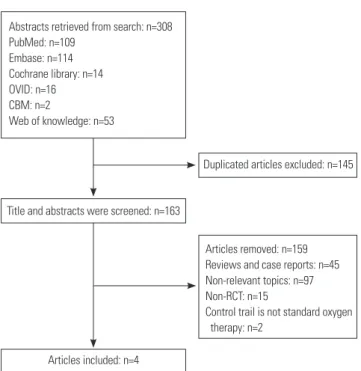
Fig. 1. Flow chart of the study selection process. RCT, randomized con- trolled trial.
Articles removed: n=159 Reviews and case reports: n=45 Non-relevant topics: n=97 Non-RCT: n=15
Control trail is not standard oxygen therapy: n=2
Title and abstracts were screened: n=163
Articles included: n=4
Duplicated articles excluded: n=145 Abstracts retrieved from search: n=308
PubMed: n=109 Embase: n=114 Cochrane library: n=14 OVID: n=16 CBM: n=2
Web of knowledge: n=53
RESULTS
Search and study selection
The database search yielded 308 studies (Fig. 1). Of these, 304 studies were excluded for the following reasons: 145 duplicate studies; 45 case reports and abstracts; 97 studies without ex- amination of hARF; 15 non-RCTs; one incomplete hARF study carried out by Fasano, et al.;
16and one study by Antonaglia, et al.
17using facial NIV in the control group.
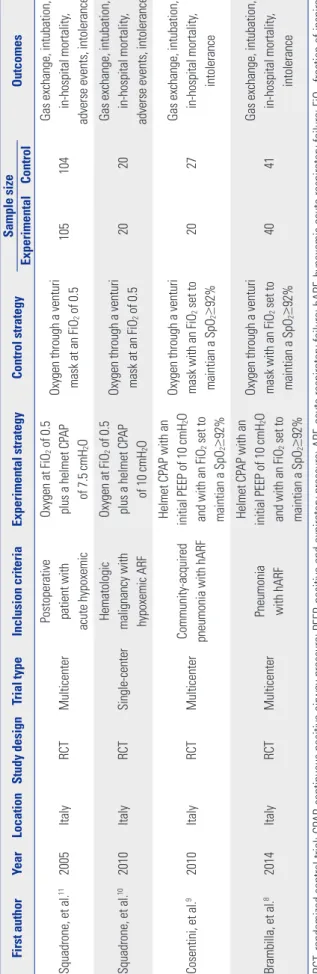
Four clinical
8-11trials comprising 377 subjects met the inclu- sion criteria (Table 1). All trials were RCTs, and three of these, were multicenter studies,
9-11and one
9was a single center study.
Risk of bias assessment
The risk of bias in all four trials is shown in Fig. 2. A random number generator was used to generate allocation sequences in all four trials. Appropriate allocation and concealment meth- ods were used in three trials
8,9,11but were not specified in the fourth.
17Blinding was not performed in any trial. Since the ap- pearance of the various NIV masks and treatment devices cannot be identical, the subjects were able to recognize easily the treatment they had received. As a result, trials with ade- quate randomization and a clear follow-up protocol were considered to be at low risk of bias. According to their random sequence generation, attribution bias, and reporting bias, all trials were at low risk.
Effect of helmet CPAP on gas exchange
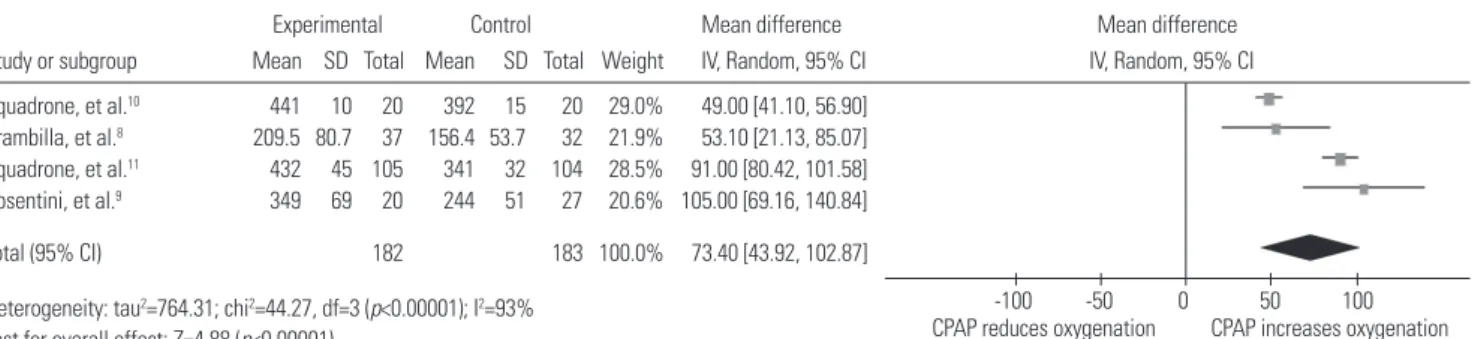
All four trials (377 subjects) reported gas exchange data, which are pooled and summarized in Fig. 3 and 4. In patients treated
Table 1. Main Characteristics of Included Studies First authorYearLocationStudy designTrial typeInclusion criteriaExperimental strategyControl strategySample size Outcomes ExperimentalControl Squadrone, et al.112005ItalyRCTMulticenterPostoperative patient with acute hypoxemic Oxygen at FiO2 of 0.5 plus a helmet CPAP of 7.5 cmH2O
Oxygen through a venturi mask at an FiO2 of 0.5105104Gas exchange, intubation, in-hospital mortality, adverse events, intolerance Squadrone, et al.102010ItalyRCTSingle-centerHematologic malignancy with hypoxemic ARF
Oxygen at FiO2 of 0.5 plus a helmet CPAP of 10 cmH2O
Oxygen through a venturi mask at an FiO2 of 0.52020Gas exchange, intubation, in-hospital mortality, adverse events, intolerance Cosentini, et al.92010ItalyRCTMulticenterCommunity-acquired pneumonia with hARF
Helmet CPAP with an initial PEEP of 10 cmH2O and with an FiO2 set to maintian a SpO2≥92%
Oxygen through a venturi mask with an FiO2 set to maintian a SpO2≥92%2027Gas exchange, intubation, in-hospital mortality, intolerance Brambilla, et al.82014ItalyRCTMulticenterPneumonia with hARF
Helmet CPAP with an initial PEEP of 10 cmH2O and with an FiO2 set to maintian a SpO2≥92%
Oxygen through a venturi mask with an FiO2 set to maintian a SpO2≥92%4041Gas exchange, intubation, in-hospital mortality, intolerance RCT, randomized control trial; CPAP, continuous positive airway pressure; PEEP, positive end-expiratory pressure; ARF, acute respiratory failure; hARF, hypoxemic acute respiratory failure; FiO2, fraction of inspiration O2; SpO2, pulse oximetry.
Fig. 2. The reviewers made judgments about risk of bias for each item in each included study. +, low risk; ?, unclear risk; -, high risk.
Brambilla, et al.8 Cosentini, et al.9 Squadrone, et al.11 Squadrone, et al.10
Random sequence generation (selection bias) Allocation concealment (selection bias) Blinding of outcome assessment (detection bias) Incomplete outcome data (attrition bias) Selective reporting (reporting bias) Other bias
by helmet CPAP, the WMD PaO
2/FiO
2was significantly higher at 73.40 (95% CI: 43.92 to 102.87, p<0.00001) (Fig. 3) despite the significant heterogeneity between the trials (I
2=93%). Helmet CPAP also decreased the WMD arterial carbon dioxide to
-1.92 (95% CI: -3.21 to -0.63, p=0.003) (Fig. 4), compared to pa- tients receiving standard oxygen therapy.
Fig. 3. Forest plot: effect of helmet CPAP on oxygenation (PaO2/FiO2) in patients with hARF. CI, confidence interval; CPAP, continuous positive airway pres- sure; hARF, hypoxemic acute respiratory failure.
Study or subgroup Squadrone, et al.10 Brambilla, et al.8 Squadrone, et al.11 Cosentini, et al.9
Heterogeneity: tau2=764.31; chi2=44.27, df=3 (p<0.00001); I2=93%
Test for overall effect: Z=4.88 (p<0.00001)
Total (95% CI) 182 183 100.0% 73.40 [43.92, 102.87]
441 10 20 392 15 20 29.0% 49.00 [41.10, 56.90]
209.5 80.7 37 156.4 53.7 32 21.9% 53.10 [21.13, 85.07]
432 45 105 341 32 104 28.5% 91.00 [80.42, 101.58]
349 69 20 244 51 27 20.6% 105.00 [69.16, 140.84]
Experimental Mean difference Mean difference
CPAP reduces oxygenation-100 -50 0 50 100 CPAP increases oxygenation Control
Mean SD Total Mean SD Total Weight IV, Random, 95% CI IV, Random, 95% CI
Fig. 4. Forest plot: effect of helmet CPAP on PaCO2 in patients with hARF. CI, confidence interval; CPAP, continuous positive airway pressure; hARF, hypox- emic acute respiratory failure.
Study or subgroup Cosentini, et al.9 Brambilla, et al.8 Squadrone, et al.10
Heterogeneity: chi2=3.91, df=2 (p=0.14); I2=49%
Test for overall effect: Z=2.92 (p=0.003)
Total (95% CI) 76 74 100.0% -1.92 [-3.21, -0.63]
33 5.6 20 37 6.7 22 12.0% -4.00 [-7.72, -0.28]
32.3 3.7 36 35.9 7.2 32 21.6% -3.60 [-6.37, -0.83]
41 2 20 42 3 20 66.4% -1.00 [-2.58, 0.58]
Experimental Mean difference Mean difference
CPAP reduces PaCO2 CPAP increases PaCO2
-100 -50 0 50 100 Control
Mean SD Total Mean SD Total Weight IV, Fixed, 95% CI IV, Fixed, 95% CI
Fig. 6. Forest plot: effect of helmet CPAP on in-hospital mortality in patients with hARF. CI, confidence interval; CPAP, continuous positive airway pressure;
hARF, hypoxemic acute respiratory failure.
Study or subgroup Brambilla, et al.8 Squadrone, et al.11 Squadrone, et al.10
Total events 5 25
Heterogeneity: chi2=0.25, df=2 (p=0.88); I2=0%
Test for overall effect: Z=3.56 (p=0.0004)
Total (95% CI) 165 165 100.0% 0.22 [0.09, 0.50]
2 40 7 41 27.2% 0.29 [0.06, 1.33]
0 105 3 104 13.8% 0.14 [0.01, 2.71]
3 20 15 20 59.0% 0.20 [0.07, 0.59]
Experimental Control Risk ratio Risk ratio
Events Total Events Total Weight M-H, Fixed, 95% CI M-H, Fixed, 95% CI
CPAP reduces mortality CPAP increases mortality 0.01 0.1 1 10 100 Fig. 5. Forest plot: effect of helmet CPAP on intubation in patients with hARF. CI, confidence interval; CPAP, continuous positive airway pressure; hARF, hy- poxemic acute respiratory failure.
Study or subgroup Cosentini, et al.9 Squadrone, et al.11 Brambilla, et al.8 Squadrone, et al.10
Total events 9 44
Heterogeneity: chi2=0.68, df=2 (p=0.71); I2=0%
Test for overall effect: Z=4.75 (p<0.00001)
Total (95% CI) 185 192 100.0% 0.21 [0.11, 0.40]
0 20 0 27 Not estimable
1 105 10 104 23.0% 0.10 [0.01, 0.76]
6 40 26 41 58.7% 0.24 [0.11, 0.51]
2 20 8 20 18.3% 0.25 [0.06, 1.03]
Experimental Control Risk ratio Risk ratio
Events Total Events Total Weight M-H, Fixed, 95% CI M-H, Fixed, 95% CI
CPAP reduces intubation CPAP increases intubation
0.01 0.1 1 10 100
Effect of helmet CPAP on in-hospital mortality and intubation rates
The intubation rate in patients receiving helmet CPAP was sig- nificantly lower than that in patients receiving standard oxy- gen therapy (RR=0.21, 95% CI: 0.11 to 0.40, p<0.00001) (Fig. 5).
The in-hospital mortality rate was also reduced in patients treated by helmet CPAP (RR=0.22, 95% CI 0.09 to 0.50, p=
0.0004) (Fig. 6).
DISCUSSION
The present meta-analysis may add to the currently lacking data comparing helmet CPAP and oxygen therapy in hypox- emic acute respiratory failure. Our results suggest that helmet CPAP improves gas exchange and decreases the intubation and in-hospital mortality rates. However, these results are limited by the presence of significant clinical and statistical heterogeneity.
CPAP does not rely on intubation and is still competent to improve the low alveolar ventilation, functional residual ca- pacity, which ultimately relieves dyspnea, ameliorate gas ex- change, and reduces the respiratory muscle load.
18-20CPAP improves gas exchange ability during hypoxemic ARF caused by various causes.
5,20-22Similarly, L’Her, et al.
23found that the use of CPAP in patients with acute lung injury, improved oxy- genation. Most studies have examined NIV delivered through a face mask or oro-nasal mask. Recent studies suggest differ- entiating use of CPAP and NIV in ARF according to the specif- ic clinical condition, but strong clinical evidence is still lack- ing.
24The efficacies of helmet CPAP and facial mask CPAP in hARF patients were evaluated by Tonnelier, et al.,
25who found that both helmet and face mask CPAP increased oxygenation and produced similar outcomes. In the present meta-analysis, we found that helmet CPAP significantly improved gas ex- change in patients with hARF, similar to previous reports.
However, the statistical heterogeneity was significant between the trials due to the presence of clinical heterogeneity and variations in the timing of blood gas analysis between the pri- mary diseases.
CPAP improves oxygenation and relieves dyspnea, which should decrease the intubation rate and in-hospital mortality rate. CPAP can improve gas exchange ability in patient with ARF, however, robust clinical data indicating that CPAP deliv- ered by facial mask cannot reduce the intubation and mortal- ity rates in hARF in different clinical conditions are lack- ing.
5,26,27This failure was attributed to the disadvantages of face mask NIV,
2,11such as intolerance, leakage, and discomfort, which hinder its continuous use.
28As a result, the success of NIV relies on properly establishment of the interface.
6Due to mostly favorable characteristics of the helmet, such as less air leakage and the absence of any contact with the face, the re- sult in the present study indicates fewer complications and
better tolerance of the helmet interface compared with a face mask.
21,25,28-30In contrary to the earlier study on facial mask CPAP, the present meta-analysis found that helmet CPAP re- duced the intubation and mortality rates significantly.
The present meta-analysis had several limitations. First, the major limitation of the present meta-analysis is the clinical heterogeneity of subjects and the statistical heterogeneity in the included trials. Among the 377 subjects, 128 had moder- ate-severe acute respiratory failure from pneumonia, whereas 209 had moderate acute respiratory failure in post-operative hypoxemia, and 40 subjects had acute lung injury with hema- tologic malignancy where pneumonia had been excluded. In addition, none of the included trials were blinded; although the interventions, clinical decisions, and measured variables were prioritized in the literature search, bias remained be- yond our control. Second, the number of eligible studies was relatively small, and we found high heterogeneity in their mea- surement of oxygenation and intolerance between the stud- ies. We attempted to mitigate this heterogeneity by stratifying the studies, based on potentially important variables such as primary disease, hypoxemia severity, and patient age. How- ever, due to the small number of eligible studies, this type of analysis was not feasible or yielded unreliable results. Hence, the results should be interpreted with prudence because they might have been influenced by the paucity and heterogeneity of analyzed data. Additional studies are needed comparing the efficacies of helmet CPAP and face mask CPAP.
In conclusion, the results of this meta-analysis suggest that helmet CPAP improves oxygenation and reduces mortality and intubation rates in hypoxemic acute respiratory failure. How- ever, the significant clinical and statistical heterogeneity of the literature implies that large RCTs are needed to determine the role of helmet CPAP in different hypoxemic ARF populations.
ACKNOWLEDGEMENTS
We are most grateful to Guangqiao Zeng, MD, State Key Labo- ratory of Respiratory Disease, Guangzhou Medical University, Guangzhou, China, for his assistances in medical writing.
This work was supported by the Guangdong Provincial Sci- ence and Technology Project (2013B022000072).
Yuwen Luo was involved in the conception and design of
the study, analysis of the data and drafting of the article. Xin
Chen was involved in analysis of the data and revision of the
manuscript. Yan Luo was involved in the conception of the
study and drafting of the article. Yun Li, Zhe Zhu, Luqian
Zhou, Yitai Chen, and Yuxia Huang were involved in the de-
sign of the study, drafting of the article and critical revision of
the manuscript. All authors approved the final version of the
manuscript.
REFERENCES
1. Esquinas Rodriguez AM, Papadakos PJ, Carron M, Cosentini R, Chiumello D. Clinical review: helmet and non-invasive mechani- cal ventilation in critically ill patients. Crit Care 2013;17:223.
2. Mehta S, Hill NS. Noninvasive ventilation. Am J Respir Crit Care Med 2001;163:540-77.
3. Hillberg RE, Johnson DC. Noninvasive ventilation. N Engl J Med 1997;337:1746-52.
4. Mas A, Masip J. Noninvasive ventilation in acute respiratory fail- ure. Int J Chron Obstruct Pulmon Dis 2014;9:837-52.
5. Delclaux C, L’Her E, Alberti C, Mancebo J, Abroug F, Conti G, et al.
Treatment of acute hypoxemic nonhypercapnic respiratory insuf- ficiency with continuous positive airway pressure delivered by a face mask: a randomized controlled trial. JAMA 2000;284:2352-60.
6. Nava S, Navalesi P, Gregoretti C. Interfaces and humidification for noninvasive mechanical ventilation. Respir Care 2009;54:71-84.
7. Crimi C, Noto A, Princi P, Esquinas A, Nava S. A European survey of noninvasive ventilation practices. Eur Respir J 2010;36:362-9.
8. Brambilla AM, Aliberti S, Prina E, Nicoli F, Del Forno M, Nava S, et al. Helmet CPAP vs. oxygen therapy in severe hypoxemic respira- tory failure due to pneumonia. Intensive Care Med 2014;40:942-9.
9. Cosentini R, Brambilla AM, Aliberti S, Bignamini A, Nava S, Maf- fei A, et al. Helmet continuous positive airway pressure vs oxygen therapy to improve oxygenation in community-acquired pneu- monia: a randomized, controlled trial. Chest 2010;138:114-20.
10. Squadrone V, Massaia M, Bruno B, Marmont F, Falda M, Bagna C, et al. Early CPAP prevents evolution of acute lung injury in patients with hematologic malignancy. Intensive Care Med 2010;36:1666-74.
11. Squadrone V, Coha M, Cerutti E, Schellino MM, Biolino P, Occella P, et al. Continuous positive airway pressure for treatment of post- operative hypoxemia: a randomized controlled trial. JAMA 2005;
293:589-95.
12. Cammarota G, Vaschetto R, Turucz E, Dellapiazza F, Colombo D, Blando C, et al. Influence of lung collapse distribution on the phys- iologic response to recruitment maneuvers during noninvasive continuous positive airway pressure. Intensive Care Med 2011;37:
1095-102.
13. Higgins JP, Altman DG, Gøtzsche PC, Jüni P, Moher D, Oxman AD, et al. The Cochrane Collaboration’s tool for assessing risk of bias in randomised trials. BMJ 2011;343:d5928.
14. Lau J, Ioannidis JP, Schmid CH. Quantitative synthesis in systematic reviews. Ann Intern Med 1997;127:820-6.
15. Higgins JP, Thompson SG, Deeks JJ, Altman DG. Measuring in- consistency in meta-analyses. BMJ 2003;327:557-60.
16. Fasano L, Mega C, Pisani L, Navalesi P, Bellone A, Scala R, et al. Ef- ficacy of helmet as interface for noninvasive ventilation (NIV) in acute hypercapnic respiratory failure (AHRF). Chest 2012;142(4_
MeetingAbstracts):946A.
17. Antonaglia V, Ferluga M, Molino R, Lucangelo U, Peratoner A, Ro- man-Pognuz E, et al. Comparison of noninvasive ventilation by se- quential use of mask and helmet versus mask in acute exacerba- tion of chronic obstructive pulmonary disease: a preliminary study. Respiration 2011;82:148-54.
18. Chiumello D, Esquinas AM, Moerer O, Terzi N. A systematic tech- nical review of the systems for the continuous positive airway pres- sure. Minerva Anestesiol 2012;78:1385-93.
19. Nava S, Hill N. Non-invasive ventilation in acute respiratory fail- ure. Lancet 2009;374:250-9.
20. Lindner KH, Lotz P, Ahnefeld FW. Continuous positive airway pressure effect on functional residual capacity, vital capacity and its subdivisions. Chest 1987;92:66-70.
21. Principi T, Pantanetti S, Catani F, Elisei D, Gabbanelli V, Pelaia P, et al. Noninvasive continuous positive airway pressure delivered by helmet in hematological malignancy patients with hypoxemic acute respiratory failure. Intensive Care Med 2004;30:147-50.
22. Brett A, Sinclair DG. Use of continuous positive airway pressure in the management of community acquired pneumonia. Thorax 1993;
48:1280-1.
23. L’Her E, Deye N, Lellouche F, Taille S, Demoule A, Fraticelli A, et al. Physiologic effects of noninvasive ventilation during acute lung injury. Am J Respir Crit Care Med 2005;172:1112-8.
24. Nava S, Carlucci A. Non-invasive pressure support ventilation in acute hypoxemic respiratory failure: common strategy for differ- ent pathologies? Intensive Care Med 2002;28:1205-7.
25. Tonnelier JM, Prat G, Nowak E, Goetghebeur D, Renault A, Boles JM, et al. Noninvasive continuous positive airway pressure ventila- tion using a new helmet interface: a case-control prospective pilot study. Intensive Care Med 2003;29:2077-80.
26. Pang D, Keenan SP, Cook DJ, Sibbald WJ. The effect of positive pres- sure airway support on mortality and the need for intubation in cardiogenic pulmonary edema: a systematic review. Chest 1998;
114:1185-92.
27. Keenan SP. Noninvasive positive pressure ventilation in acute re- spiratory failure. JAMA 2000;284:2376-8.
28. Chiumello D, Pelosi P, Carlesso E, Severgnini P, Aspesi M, Gam- beroni C, et al. Noninvasive positive pressure ventilation delivered by helmet vs. standard face mask. Intensive Care Med 2003;29:
1671-9.
29. Antonelli M, Pennisi MA, Pelosi P, Gregoretti C, Squadrone V, Rocco M, et al. Noninvasive positive pressure ventilation using a helmet in patients with acute exacerbation of chronic obstructive pulmonary disease: a feasibility study. Anesthesiology 2004;100:16- 24.
30. Patroniti N, Foti G, Manfio A, Coppo A, Bellani G, Pesenti A. Head helmet versus face mask for non-invasive continuous positive air- way pressure: a physiological study. Intensive Care Med 2003;29:
1680-7.