경락경혈학회지 Vol.29, No.1, pp.37 46, 2012∼ Korean Journal of Acupuncture
- 37 -
Kang-Pa Lee , Jin-Young Moon
Division of Bio Science, College of Science and Technology, Dongguk University Dept. of Meridian & Acupoint, College of Oriental Medicine, Dongguk University
Abstract
Objectives : The gnarl of Pinus densiflora, called Songjeol in Korea, has been used as a medicinal herb for the treatment of inflammatory-related diseases such as arthralgia, myalgia and bruise. However, the molecular actions and mechanisms have not been clearly investigated.
The aim of this study was to clarify the anti-inflammatory activity of Pinus densiflora gnarl pharmacopuncture (PDGP) in lipopolysaccharide (LPS)-stimulated RAW264.7 cells.
Methods : Cytotoxicity was assessed by XTT assay. The amount of nitric oxide (NO) production was determined by nitrite assay. The mRNA expressions of interleukin-1β (IL-1 ), interleukin-6β (IL-6), cyclooxygenase-2 (COX-2) and heme oxygenase-1 (HO-1) were analyzed by RT-PCR.
Reactive oxidative species (ROS) generation was measured using the fluorescence microscopy.
In addition, inducible nitric oxide synthase (iNOS) and redox factor-1 (Ref-1) protein expressions were detected by Western blotting.
Results : PDGP inhibited NO production and ROS generation in LPS-stimulated RAW264.7 cells. At the mRNA level, PDGP suppressed IL-1 , IL-6 and COX-2 expression. On the otherβ hand, PDGP induced HO-1 mRNA expression. Furthermore, PDGP suppressed iNOS and Ref-1 protein expression.
Conclusions : This result suggests that PDGP can act as a suppressor agent on NO and iNOS through induction of HO-1, and play an useful role in blocking inflammatory responses.
Key words : Pinus densiflora gnarl, pharmacopuncture, nitric oxide, heme oxygenase-1
β β
β
- 39 -
β
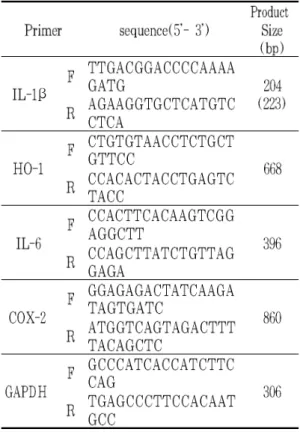
Table 1. Primer Sequences used for Semi- Quantitative RT-PCR
μ
- 41 - Fig. 1. Effect of PDGP on cell viability of RAW264.7.
Fig. 2. The inhibition effects of PDGP on NO production in LPS-stimulated RAW 264.7.
β
β β
β
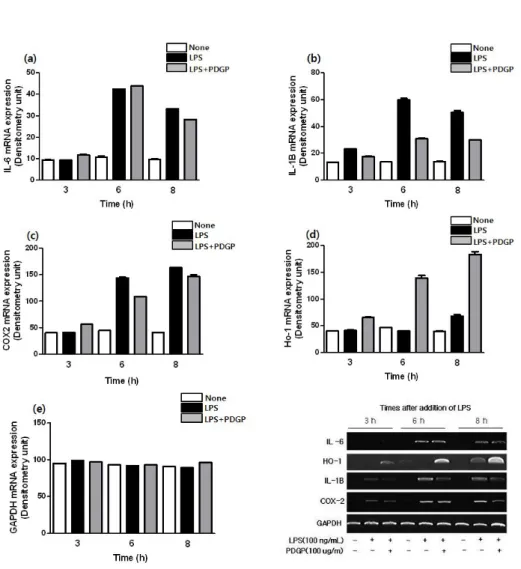
Fig. 3. The mRNA of inflammatory response factors were analyzed by RT-PCR.
β
- 43 -
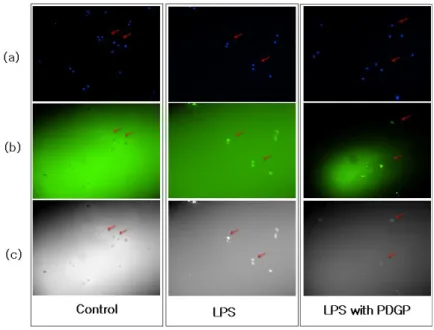
Fig. 4. Microscopic observations and effects of PDGP on ROS generation.
μ
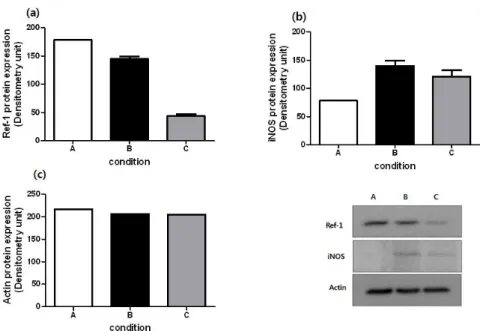
Fig. 5. Eeffects of PDGP on Ref-1 and iNOS expression in LPS-stimulated RAW 264.7.
β
- 45 - κ
β
β
κ