Background : The Sequential Organ Failure Assessment (SOFA) score can help to assess organ failure over time and is useful to evaluate morbidity. The aim of this study is to evaluate the performance of SOFA score as a descriptor of multiple organ failure in critically ill patients in a local unit hospital, and to compare with APACHE
Ⅲ scoring system.
Methods : This study was carried out prospectively. A total of ninety one patients were included who admitted to the medical intensive care unit (ICU) in Chuncheon Sacred Heart Hospital from May 1 through June 30, 2000. We excluded patients with a length of stay in the ICU less than 2 days following scheduled procedure, admissions for ECG monitoring, other department and patients transferred to other hospital. The SOFA score and APACHE Ⅲ score were calculated on admission and then consecutively every 24 hours until ICU discharge.
Results : The ICU mortality rate was 20%. The non-survivors had a higher SOFA score within 24 hours after admission. The number of organ failure was associated with increased mortality. The evaluation of a subgroup of 74 patients who stayed in the ICU for at least 48 hours showed that survivors and non-survivors followed a different course. In this subgroup, the total SOFA score increased in 81% of the non-survivors but in only 21% of the survivors.
Conversely, the total SOFA score decreased in 48% of the survivors compared with 6% of the non-survivors. The non-survivors also had a higher APACHE Ⅲ score within 24 hours and there was a correlation between SOFA score and APACHE Ⅲ score.
Conclusion : The SOFA score is a simple, but effective method to assess organ failure and to predict mortality in critically ill patients. Regular and repeated scoring enables patient's condition and clinical course to be monitored and better understood. The SOFA score well correlates with APACHE Ⅲ score. (Tuberc Respir Dis 2004;
57:329-335)
Key words : APACHE Ⅲ , Intensive Care Unit, Multiple Organ failure, Sequential Organ Failure Assessment (SOFA)
점수체계의 의의
한림대학교 의과대학 내과학교실, 강원대학교 의과대학 내과학교실1
김수호, 이명구, 박상면, 박용범, 장승훈, 김철홍, 전만조, 신태림, 엄광석, 현인규, 정기석, 이승준1
The SOFA Score to Evaluate Organ Failure and Prognosis in the Intensive Care Unit Patients
Su Ho Kim, M.D., Myung Goo Lee, M.D., Sang Myeon Park, M.D., Young Bum Park, M.D., Seung Hun Jang, M.D., Cheol Hong Kim, M.D., Man Jo Jeon, M.D., Tae Rim Shin, M.D., Kwang Seok Eom, M.D., In-Gyu Hyun, M.D., Ki-Suck Jung, M.D., Seung-Joon Lee, M.D.1
Department of Internal Medicine, College of Medicine, Hallym university, Chuncheon, Korea;
Department of Internal Medicine, Kangwon National University Hospital, Chuncheon, Korea1
본 논문의 요지는 2001년 제93차 대한결핵 및 호흡기학회 추계학술대회에서 구연 발표되었음.
Address for correspondence : Myung Goo Lee, M.D.
Department of Internal Medicine, Chuncheon Sacred Heart Hospital
153 Gyo-dong, Chuncheon-si, Gangwon-do, 200-704, Korea
Phone : 82-33-252-9970 Fax : 82-33-256-4291 E-mail : [email protected]
Received : May. 31. 2004.
Accepted : Aug. 17. 2004.
서 론
임상적 연구에서 예후판정지표(prognostic scoring
system)는 중환자의 중증도(severity)를 평가하고 병 의 경과를 이해하는 것을 향상시키며, 새로운 치료법 에 대한 평가를 가능하게 한다.
과거에는 병의 중증도를 평가하는 수단으로 Acute Physiology And Chronic Health Evaluation (APACHE) Ⅱ & Ⅲ, Simplified Acute Physiology Score (SAPS) Ⅱ가 많이 사용되었다. 그러나 이러한 점수체계는 이환율보다는 사망률을 예측하는 것이기 때문에 중환자실의 집중치료 및 치료 효과를 평가하 는 데에는 적합하지가 않다1.
이런 점 때문에 1996년에 European Society of Intensive Care and Emergency Medicine (ESICEM)
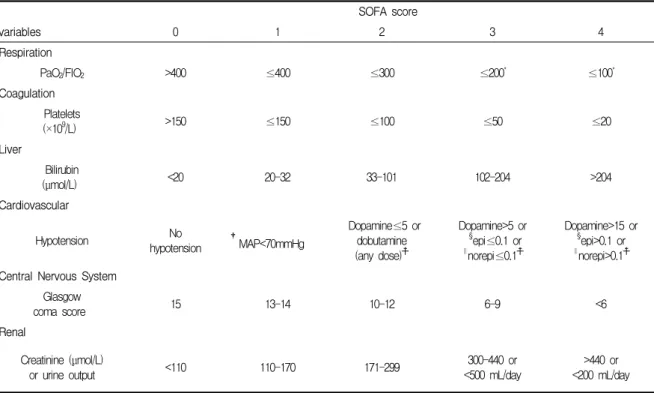
Table 1. The sequential organ failure assessment (SOFA) score
SOFA score
variables 0 1 2 3 4
Respiration
PaO2/FIO2 >400 ≤400 ≤300 ≤200* ≤100*
Coagulation Platelets
(×109/L) >150 ≤150 ≤100 ≤50 ≤20
Liver
Bilirubin
(μmol/L) <20 20-32 33-101 102-204 >204
Cardiovascular
Hypotension No
hypotension †MAP<70mmHg
Dopamine≤5 or dobutamine (any dose)☨
Dopamine>5 or
§epi≤0.1 or
∥norepi≤0.1☨
Dopamine>15 or
§epi>0.1 or
∥norepi>0.1☨ Central Nervous System
Glasgow
coma score 15 13-14 10-12 6-9 <6
Renal
Creatinine (μmol/L)
or urine output <110 110-170 171-299 300-440 or
<500 mL/day
>440 or
<200 mL/day
*With respiratory support.
†Mean arterial pressure.
☨Adrenergic agents administered for at least 1 hour (dosages are in μg/kg/min).
§epinephrine. ∥norepinephrine.
에서 이환율을 예측할 수 있는 Sequential Organ Failure Assessment (SOFA) 점수체계를 발표하였고, Vincent 등2은 다기관 전향적 연구를 통하여 SOFA 점수체계가 장기기능을 평가하고 경과를 감시하는 간 편하고 효과적인 점수체계임을 입증하였다.
이 연구는 춘천성심병원에서 내과계 중환자의 장기 부전을 평가하는 것에 대해 SOFA 점수체계의 유용 성을 조사하였고, 중환자실 입원 24시간 내 SOFA 점 수와 APACHE Ⅲ 점수와의 상관관계를 알아보았다.
대상 및 방법
2000년 5월 1일부터 6월 30일까지 춘천성심병원 내 과계 중환자실에 입원한 154명을 대상으로 전향적 연 구를 시행하였다. 이 중 타과환자, 타병원으로 전원된 경우, ECG 관찰만을 위하여 입원한 경우, 처치 후 관 찰을 위해 48시간 이내만 체류한 환자 49명을 제외한 105명을 연구에 포함시켰으며, 91명에서 평가가 가능 하였다.
SOFA 점수는 입원 시부터 매일 24시간 간격으로 중환자실에서 퇴실할 때까지 기록하였다(Table 1). 처 음 24시간 이내에 검사한 6개의 생리적 측정값 중 가 장 나쁜 측정치를 선택하여 각각 0∼4점의 점수를 주 고, 이들을 합하여 기록하였다. 또한 측정값이 3점 이 상인 경우 장기부전으로 정의하였다. Catecholamine 의 투여는 적절한 수액 공급 후에도 평균동맥압력 (mean arterial pressure)이 70 mmHg 미만인 경우에 dopamine 정맥투여를 시작하였고, 최대용량까지 증량 한 후 평균동맥압력이 유지되지 않을 경우 norepine
phrine을 투여하였으며, 심박출량을 증가시키고자 할 때 dobutamine을 병용하였다. 또한 평균동맥압력이 70 mmHg 이상 유지되고 저혈압에서 회복되면 cate
cholamine 투여를 종료하였다.
연구의 후반부터는 APACHE Ⅲ 점수를 함께 기록 하였으며, 총 62명에서 비교가 가능하였다. 중환자실 에서의 체류기간과 사망률은 중환자실을 퇴실할 때까 지의 생존상태로 하였다. 대상 환자들의 사망 여부에 따라서 생존군과 사망군으로 분류하였다. SOFA 점수
Table 2. Demographic data of study population
Number of patients 91
Age (years) 61±15
Gender Male 70
Female 21
Source of admission (%) - emergency department - general ward - outpatient
69 (76) 19 (21) 3 (3)
Median length of stay (days) 3 (1∼44)
¶MICU mortality (%) 18 (20)
¶Medical intensive care unit
Table 3. Comparison between SOFA score and APACHE Ⅲ score within 24 hours after admission (mean±SD).
SOFA score APACHE Ⅲ score
Survivors 3.85±3.24** 45.21±21.06††
Non-survivors 8.17±4.05** 90.85±45.65††
**p < 0.01, ††p < 0.01
Figure 1. Mortality rate (%) and number of failing organs.
Figure 2. The number of organ failure was associated with increased mortality (p < 0.0001, Mantel-Haenzel trend test).
의 변화는 중환자실의 입원 시와 치료기간 중 가장 높 게 혹은 가장 낮게 측정된 SOFA 점수와의 차이로 관 찰하였다.
자료 분석은 dBSTAT for Windows 통계 프로그램 을 이용하였다. 사망군과 생존군 간의 SOFA 점수와 APACHE Ⅲ 점수의 평균치의 차이는 Student's t-test를 이용하여 분석하였고, 장기부전의 수와 사망 률의 경향분석은 Mantel-Haenzel trend test를 이용 하였다. 통계학적 유의성은 p 값이 0.05 이하인 경우 로 하였다.
결 과
대상 환자는 91명으로 남자가 70명, 여자가 21명이 었고, 평균 연령은 61세였다. 중환자실에 입원한 환자 의 원인 질환을 보면, 급성 심근경색증 12명, 식도 정 맥류 또는 위궤양에 의한 상부위장관 출혈 11명, 폐렴 8명, 울혈성 심부전 7명, 패혈증 7명, 약물 중독 6명으 로 나타났으며, 그 외 당뇨병성 케톤산증, 만성 폐쇄성 폐질환의 급성악화, 신부전, 간성 혼수, 기흉, 악성 종 양 등의 질환이 있었다.
사망률은 20%였고, 중환자실 체류기간의 중앙값은
3일이었다(Table 2). 사망군과 생존군 간의 24시간 내 SOFA 점수는 각각 8.17±4.05, 3.85±3.24로 유의한 차 이가 있었다(Table 3). 사망률은 입원 시 장기부전의 수에 따라서 증가하였다. 장기부전이 없는 경우의 사 망률은 6.5%, 5개의 다발성 장기부전이 있는 경우 사 망률은 100%였다. 장기부전의 수가 많을수록 사망률 이 유의하게 높았다(Figure 1, 2).
임상경과에 따른 SOFA 점수의 변화를 알아보기 위해 48시간 이상 체류했던 74명을 대상으로 분석하 였다. 최대 SOFA 점수의 증가는 사망군에서 81%, 생 존군에서는 21%로 나타났으며, 최대 SOFA 점수의 감소는 사망군에서 6%, 생존군에서는 48%로 나타났 다(Table 4).
24시간 내 APACHE Ⅲ 점수는 사망군에서 90.85±45.65, 생존군에서 45.31±21.06으로 유의한 차이
Table 4. Total SOFA score changes according to clinical course. The evaluation of a subgroup of 74 patients who stayed in the ICU for at least 48 hours.
Increase vs. ☨☨others (%) Decrease vs. §§others (%)
Survivors 12/46 (21)∥∥ 28/30 (48)¶¶
Non-survivors 13/3 (81)∥∥ 1/15 (6)¶¶
☨☨decrease or no change
§§increase or no change
∥∥p < 0.01, ¶¶p < 0.01
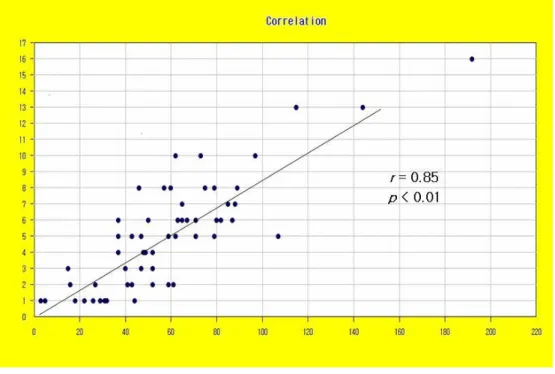
Figure 3. Correlation between SOFA score and APACHE Ⅲ score.
가 있었다. 또한 24시간 내 SOFA 점수와 APACHE
Ⅲ 점수와의 관련성을 평가한 결과 r = 0.85 (p <
0.01)로 유의한 상관관계를 보였다(Figure 3).
고 찰
다발성 장기부전은 중환자실에서의 사망률, 이환율 의 주요 원인이므로 치료 시 중환자의 위험요인과 질 병의 중증도를 정확히 평가하면 1) 집중적인 치료로 써 환자 예후가 좋아질 수 있는 환자 선택이 가능하 며, 2) 치료 시작과 종료 시기에 관한 객관적인 기준 설정이 가능하며, 3) 정확하고 객관적인 예후 평가로 각 중환자실 간의 임상성적에 대한 정보 교환 및 질적 인 평가가 가능해지며, 4) 새로운 치료법의 결과를 기
존의 치료법에 의한 결과와 비교 분석하여 새로운 치 료법에 대한 확실한 평가가 가능하게 된다3.
중환자에 대한 중증도 및 예후판정에 대한 객관적 인 기술이나 분류법의 부재로 인하여 서로 간의 정보 교환 및 예후판정을 위한 방법의 개발이 필요하였으 며 이에 따라 환자의 질병의 중증도를 파악하는 여러 가지 방법이 연구되었다. 1970년 초에 Cullen 등4은 Therapeutic Intervention Scoring System (TISS)을 소개하였고, 1981년에 Kanus 등5이 34가지의 급성 생 리적 점수(Acute Physiologic Score)를 이용한 APACHE 점수체계를 소개하였다. 이후 APACHE 점 수체계를 단순화한 Simplified Acute Physiologic Score (SAPS)와 Mortality Prediction Model (MPM) 이 발표되었다6,7. APACHE 점수체계를 발표하였던 Kanus 등8,9은 생리적 측정치를 12가지로 줄이고 나이 에 따른 점수와 만성 병력에 따른 점수를 추가 또는 개선하여 새로운 APACHE Ⅱ 점수체계를 발표하였 으며, 이후 APACHE Ⅱ 점수체계의 결점을 보완하여 APACHE Ⅲ 점수체계를 발표하였다.
다발성 장기부전은 사건(event)이라기보다는 과정 (process)이고, 장기의 점진적인 생리적 기능부전에 의해 발생한다. 따라서 장기부전을 평가하는데 있어
서는 다음의 3가지 중요한 원칙에 근거해야 한다. 첫째, 장기부전은 all-or-none phenomenon이 아니라 변화 의 연속으로 보아야 하고, 둘째, 장기부전은 동적인 진 행과정이므로 시간의 흐름을 염두에 두어야 하며, 셋 째, 장기부전을 기술하는데 있어서는 단순하면서도 장 기에 특이적이고 일상적으로 검사가 가능한 변수를 이 용해야 한다2. 이러한 원칙 하에 European Society of Intensive Care and Emergency Medicine (ESICEM) 에서 Sequential Organ Failure Assessment (SOFA) 점수체계를 제안하였으며10, 다기관 전향적 연구를 통 하여 SOFA 점수체계가 장기기능을 평가하고 경과를 검사하는 간편하고 효과적인 점수체계임을 입증하였 다2.
현재 유용한 예후판정지표는 사망률을 예측하는데 초점을 두고 있으며, 사망률을 계산하기 위해 환자 자 료의 단순 분석에 의존하고 있어 장기부전을 기술하 는데 어려움이 있다. 하지만 새로운 치료의 효능과 비 용효과를 평가하는데 있어서는 사망률만으로는 부족 하다고 여겼으며, 이환율을 분석하는 것이 중요하다 는 것을 인식하게 되었다11. 또한 반복측정에 의한 연 속적인 환자평가의 중요성은 여러 연구에서 보여주었
다12-15. APACHE Ⅱ와 APACHE Ⅲ 점수체계에서 측
정하는 많은 생리적 측정치는 혈관 수축제의 투여, 인 공 환기요법, 신대체 요법(renal replacement therapy) 등을 포함한 다양한 치료법에 의해 쉽게 영향을 받는 다. 그러므로 이러한 예후판정지표는 환자가 중환자 실에 입원할 때의 다발성 장기부전의 중증도를 평가 하는 데에는 적합하지만, 입원한 이후의 연속적인 평 가를 하는 데에는 문제가 있다. 이에 비해서 SOFA 점 수체계는 개개의 장기부전 정도를 간편하게 연속적으 로 평가할 수 있으며, 생리적 변수뿐만 아니라 인공 환기요법의 유무, catecholamine의 투여량, 소변량을 변수로 사용하여 치료법에 영향을 받지 않으면서 각 환자의 장기부전 정도를 기술할 수가 있다10. 따라서 이환율에 초점을 두고 있는 SOFA 점수체계는 반복 측정을 통해 장기부전을 동적인 진행과정으로 분석하 므로 중환자실의 치료 효과를 평가하는데 유용할 것 으로 생각된다. 본 연구에서는 사망군에서 생존군에 비해 SOFA 점수가 증가한 경우가 더 높게 나타나서
SOFA 점수가 증가할수록 다발성 장기부전이 발생할 가능성이 높고 따라서 나쁜 예후가 나타날 것으로 예 상할 수 있었다.
많은 임상연구에서 SOFA 점수체계로 장기부전을 평가한 정도가 높은 점수로 나타난 경우 사망률이 증 가한다는 상관관계가 밝혀졌다2,16-18. 본 연구에서도 장기부전이 없는 경우의 사망률은 6.5%, 장기부전이 1개 있는 경우 20%, 2개 있는 경우 30%, 3개 있는 경 우 67%, 5개의 다발성 장기부전이 있는 경우 사망률 은 100%로 나타나 SOFA 점수가 사망률 예측에 유용 한 것으로 나타났다. 48시간 이상 체류했던 74명을 분 석한 결과에서는 사망군에서 최대 SOFA 점수가 81%
에서 증가하고, 생존군에서 21%에서 증가하였으며, 반대로 사망군에서는 최대 SOFA 점수가 6%에서 감 소하였고 생존군에서는 48%에서 감소하였다. 따라서 중환자실에 입원하는 기간 중에 나타나는 장기부전 변화도 생존여부와 상관관계를 갖는다는 것을 알 수 있었다. 다른 연구들에서는 이것을 ∆-SOFA로 정의 하여 ∆-SOFA 점수가 증가하였을 때 병원 사망률이 증가한다는 것을 보여주었고, 의사가 매일 환자를 관 찰하면서 치료에 대한 반응을 객관적으로 평가할 수 있게 한다고 하였다17-20. 또한 SOFA 점수체계가 질병 의 경과를 평가하며, 다발성 장기부전이 발생하는 것 을 예측하는데 유용하다는 것을 보여주었다21-24. 본 연구에서는 중환자실 입원 24시간 내 SOFA 점 수와 APACHE Ⅲ 점수와의 상관분석을 한 결과 유의 한 상관관계를 보여서 SOFA 점수가 입원 24시간 내 의 소견으로 예후를 예측하는 데에도 APACHE Ⅲ 점 수체계 못지않게 유용함을 알 수 있었다.
이번 연구에서는 SOFA 점수와 사망률 간의 관계 를 내과 질환 전체에 대해서만 계산하였으나 질환별 로는 각 환자 수가 통계적인 의의를 부여할 만큼 많지 않았기 때문에 산출하지 않았다. 이를 위해서는 대상 병원 수를 늘리고 보다 충분한 기간동안 자료를 축적 하여야 할 것이다. 그리고 각 병원별로 SOFA 점수체 계를 사망률뿐만 아니라 다발성 장기부전의 발달 및 이환율 예측에 이용하게 되면 각 중환자실 간의 임상 성적에 대한 정보 교환 및 질적인 평가가 가능해지며, 새로운 치료법에 대한 평가를 통해 다발성 장기부전
환자에 대한 치료법의 향상을 가져올 것으로 기대한 다.
요 약
연구 배경 :
중환자의 예후를 예측할 수 있는 지표로 현재까지 APACHE Ⅱ, Ⅲ 점수체계와 SAPS 등이 임상에 응용 되고 있다. 1996년 유럽에서 SOFA 점수체계가 제안 되었고 1998년 다기관 전향적 연구를 통하여 장기부 전을 평가하고 경과를 감시하는 간편하고 효과적인 점수체계임을 입증하였다. 이 연구는 춘천성심병원에 서 내과계 중환자만을 대상으로 SOFA 점수체계의 유용성을 조사하였다.
방 법 :
2000년 5월 1일부터 6월 30일까지 춘천성심병원 내 과계 중환자실에 입원한 154명을 대상으로 하였고, 이 중 타과환자, 타병원으로 전원된 경우, ECG 관찰만을 위하여 입원한 경우, 처치 후 관찰을 위해 48시간 이 내만 체류한 환자를 제외한 105명을 연구에 포함시켰 으며, 91명에서 평가가 가능하였다. SOFA 점수와 APACHE Ⅲ 점수는 입원 시부터 매일 24시간 간격으 로 중환자실에서 퇴실할 때까지 하였다.
결 과 :
1) 사망률은 20%였고 중환자실 체류기간의 중앙값 은 3일이었다. 2) 사망군과 생존군 간의 24시간 내 SOFA 점수는 각각 8.17±4.05, 3.85±3.24로 유의한 차 이가 있었다. 3) 장기부전이 없는 경우의 사망률은 6.5%, 5개의 다발성 장기부전이 있는 경우 사망률은 100%였다. 4) 48시간 이상 체류했던 74명을 분석한 결과 사망군에서는 최대 SOFA 점수가 81%에서 증가 하였고 생존군에서는 21%에서 증가하여 유의한 차이 를 보였다. 5) 24시간 내 SOFA 점수와 APACHE Ⅲ 점수와의 관련성을 평가한 결과 r = 0.85 (p < 0.01)로 유의한 상관관계가 있었다.
결 론 :
SOFA 점수체계는 다발성 장기부전이 있는 환자에 서 장기부전을 평가하고 예후를 예측하며 임상경과를 관찰하는데 이용할 수 있는 간편하고 임상적 효용성
이 있는 지표로서 임상적으로 많은 도움이 될 것으로 생각한다.
참 고 문 헌
1. Vincent JL, Ferreira FL. Evaluation of organ failure:
we are making progress. Intensive Care Med 2000;
26:1023-4.
2. Vincent JL, de Mendonca A, Cantraine F, Moreno R, Takala J, Suter PM, et al. Use of the SOFA score to assess the incidence of organ dysfunction/failure in intensive care units: results of a multicenter, pro
spective study. Working group on “sepsis-related problems” of the European Society of Intensive Care Medicine. Crit Care Med 1998;26:1793-800.
3. Hall JB, Schmidt GA, Wood LD. Principle of critical care. 1st ed. New York: McGraw-Hill Inc; 1992.
4. Cullen DJ, Civetta JM, Briggs BA, Ferrara LC.
Therapeutic intervention scoring system: a method for quantitative comparison of patient care. Crit Care Med 1974;2:57-60.
5. Knaus WA, Zimmerman JE, Wagner DP, Draper EA, Lawrence DE. APACHE-acute physiology and chronic health evaluation: a physiologically based classifi
cation system. Crit Care Med 1981;9:591-7.
6. LE Gall JR, Loirat P, Alperovitch A, Glaser P, Gran
thil C, Mathieu D, et al. A simplified acute physiology score for ICU patients. Crit Care Med 1984;12:975-7.
7. Lemeshow S, Klar J, Teres D, Avrunin JS, Gehlbach SH, Rapoport J, et al. Mortality probability models for patients in the intensive care unit for 48 or 72 hours: a prospective, multicenter study. Crit Care Med 1994;22:1351-8.
8. Knaus WA, Draper EA, Wagner DP, Zimmerman JE.
APACHE Ⅱ : a severity of disease classification sys
tem. Crit Care Med 1985;13:818-29.
9. Knaus WA, Wagner DP, Draper EA, Zimmerman JE, Bergner M, Bastos PG, et al. The APACHE Ⅲ pro
gnostic system. Risk prediction of hospital mortality for critically ill hospitalized adults. Chest 1991;100:
1619-36.
10. Vincent JL, Moreno R, Takala J, Willatts S, de Mendonca A, Bruining H, et al. The SOFA (Sepsis- related Organ Failure Assessment) score to describe organ dysfunction/failure. On behalf of the Working Group on Sepsis-Related Problems of the European Society of Intensive Care Medicine. Intensive Care Med 1996;22:707-10.
11. Suter PM, Armaganidis A, Beaufils F. Predicting outcome in ICU patients. 2nd European Concensus
Conference in Intensive Care Medicine. Intensive Care Med 1994;20:390-7.
12. Chang RWS, Jacobs S, Lee B. Predicting outcome among intensive care unit patients using compu
terized trend analysis of daily APACHE Ⅱ scores corrected for organ system failure. Intensive Care Med 1988;14:558-66.
13. Marshall JC, Cook DJ, Christou NV, Bernard GR, Sprung CL, Sibbald WJ. Multiple Organ Dysfunction Score: a reliable descriptor of a complex clinical outcome. Crit Care Med 1995;23:1638-52.
14. Wagner DP, Knaus WA, Harrell FE, Zimmerman JE, Watts C. Daily prognostic estimates for critically ill adults in intensive care units: results from a pro
spective, multicenter, inception cohort analysis. Crit Care Med 1994;22:1359-72.
15. Yzerman EP, Boelens HA, Tjhie JH, Kluytmans JA, Mouton JW, Verbrugh HA. Delta APACHE Ⅱ for predicting course and outcome of nosocomial Staphy
lococcus aureus bacteremia and its relation to host defense. J Infect Dis 1996;173:914-9.
16. Bota DP, Melot C, Ferreira FL, Nguyen Ba V, Vincent JL. The Multiple Organ Dysfunction Score (MODS) versus the Sequential Organ Failure Asses
sment (SOFA) score in outcome prediction. Intensive Care Med 2002;28:1619-24.
17. Ferreira FL, Bota DP, Bross A, Melot C, Vincent JL.
Serial evaluation of the SOFA score to predict ou
tcome in critically ill patients. JAMA 2001;286:
1754-8.
18. Moreno R, Vincent JL, Matos R, Mendonca A, Cantrine F, Thijs L, et al. The use of maximum SOFA score to quantify organ dysfunction/failure in
intensive care. Results of a prospective, multicentre study. Working Group on Sepsis related problems of the ESICM. Intensive Care Med 1999;25:686-96.
19. Ceriani R, Mazzoni M, Bortone F, Gandini S, Solinas C, Susini G, et al. Application of the Sequential Organ Failure Assessment score to cardiac surgical patients. Chest 2003;123:1229-39.
20. Janssens U, Graf C, Graf J, Radke PW, Konigs B, Koch KC, et al. Evaluation of the SOFA score: a single-center experience of a medical intensive care unit in 303 consecutive sequential Organ Failure Assessment patients with predominantly cardiovascu
lar disorders. Intensive Care Med 2000; 26:1037-45.
21. Di Filippo A, De Gaudio AR, Novelli A, Paternostro E, Pelagatti C, Livi P, et al. Continuous infusion of vancomycin in methicillin-resistant staphylococcus infection. Chemotherapy 1998;44:63-8.
22. Hynninen M, Valtonen M, Markkanen H, Vaara M, Kuusela P, Jousela I, et al. Interleukin 1 receptor antagonist and E-selectin concentrations: a compari
son in patients with severe acute pancreatitis and severe sepsis. J Crit Care 1999;14:63-8.
23. Vincent JL, Angus DC, Artigas A, Kalil A, Basson BR, Jamal HH, et al. Recombinant Human Activated Protein C Worldside Evaluation in Severe Sepsis (PROWESS) Study Group, Effects of drotrecogin alfa (activated) on organ dysfunction in the PROWESS trial. Crit Care Med 2003;31:834-40.
24. Wehler M, Kokoska J, Reulbach U, Hahn EG, Strauss R. Short-term prognosis in critically ill patients with cirrhosis assessed by prognostic scoring systems. Hepatology 2001;34:255-61.