Hoe-Chang Yang, Young-Ei Kim / Journal of Asian Finance, Economics and Business Vol 5 No 3 (2018) 121-132 121
Print ISSN: 2288-4637 / Online ISSN 2288-4645 doi:10.13106/jafeb.2018.vol5.no3.121
The Effects of Corporate Social Responsibility on Job Performance:
Moderating Effects of Authentic Leadership and Meaningfulness of Work
Hoe-Chang Yang
1, Young-Ei Kim
2Received: May 30, 2018 Revised: July 20, 2018 Accepted: July 30, 2018
Abstract
The study aims to investigate methods for companies to contribute to not only social and national developments, but also on the promotion of individuals and companies by re-examining the various phenomena that define companies. The study examines the relationship between subordinate factors of social responsibility activities and job performances as well as the role of CEOs in showing authentic leadership and meaningfulness of work. A total of 312 valid questionnaires were obtained, and hypotheses were tested using regression analysis, hierarchical regression analysis, and 3-way interactions. The results suggest that corporate social responsibility activities not only enhanced the performance of the members, but also confirmed the importance of the authentic leadership of the CEO. Additionally, the role of the members in the company also showed to play a very significant role in a company’s developments. The results also show that the CEO and members need to make efforts to increase ethics as well as gain more competitiveness and improve their reputation by promoting their sense of calling and feeling of compassion in the workplace. In other words, the members of the high-ranking book and the members of the relatively low position will have different degrees of information transfer and evaluation of the company policy may be different.
Keywords: Corporate Social Responsibility, Job Performance, Authentic Leadership, Meaningfulness of Work, 3-way Interaction, Korea
JEL Classification Code: J17, L10, M10, M12.
1. Introduction
1
The revitalization of the Internet and the spread of mobile devices are causing rapid changes in many areas of our society. It is progressing at a rapid rate that we cannot predict how they will change. These changes will not only lead to structural changes in the business, but also to people's communication patterns, procedures, and participation patterns, as well as the flow and sharing of information for the future (Kim & Kim, 2012). This phenomenon of social change has made it desirable for companies to build a positive image through active social responsibility activities, but it also increases the risk of exposure to mass confusion. A positive example is Otto Gigi's Chairman Ham Tae-ho and LG Group Chairman Koo
1 First Author, Assistant Professor, Dept. of Distribution Management, Jangan University, Hwaseong, Korea.
Email: [email protected]
2 Corresponding Author, Professor, Dept. of Business Administration, Seoul Digital University, Seoul, Korea [Postal Address: 424 Gonghang-daero, Gangseo-gu, Seoul, 07654, South Korea]
Email: [email protected]
Bon-moo, deceased, who are well known for their well-being.
As a result, the Ottogi brand has been sold to consumers through 'Guttaegi'. The positive reputation and the effect of the 'Gubomu Syndrome' is reaffirming the perceptions of LG brand as the image of everyday life of modest and sophistication. However, negative examples include not only the 'Korean Air Peanut Circumstance' incident, 'Hanjin Group's ranting and assault on the family', but also various examples of CEOs of famous companies.
When major social events occur, the reason it can spread
to a mass number of people than it could ever have in the
past can be contributed to the development of SNS. In other
words, information produced by a large portal company was
transmitted unilaterally to individuals who needed it in the
past. Recently, various sources of information produced in
real time through SNS are shared among individuals,
through individuals, and to individuals (Kim & Kim, 2012). As
a result, efforts to build a positive corporate image through
various activities from the company are suddenly becoming
harder and harder to do. A typical example is that of the
assault of airline employees by CEO B, a representative
outdoor company in 2013, causing the effect of social
responsibility activities promised to operate about 10 billion
won in social contribution funds to be bumped up. The cause of this phenomenon is the change of information flow using SNS. Therefore, companies should seriously accept that this change in information flow has a great influence on the agenda setting, which is a common concern of society (Kim & Kim, 2012).
Thus, this study focuses on the responsibilities of social corporate activities and re-examines the many types of phenomena that occur in companies that have caused some controversies in the past. The concept of socially responsible activities was first introduced in the United States in the 1930s and has come into being in the 1990s and is called "corporate sustainability & responsibility" (Jung, 2006). The reason why this study focuses on corporate social responsibility activities is that these factors affect not only the public but also the various performances of the internal work in the companies. In addition, this study focuses on the importance of the authentic leadership in the CEO's leadership capacity roles as well as the meaningfulness of work perceived by the members of their own work in the company. It is defined that a true leader is a person who shares his authentic mission with the members (George & Sims, 2007). Moreover, a leader is able to exercise a voluntary influence on the members' missions based on their internalized characters. This is because authentic leaders are highly likely to improve their positive and moral atmospheres, as well as their members’, to many stakeholders (Walumbwa et al., 2008). In correlation with this phenomenon, the significance of the members' job is also highly likely to affect the emphasis of positive and moral aspects in terms of interpreting their jobs as well as pursuing and attaining the goal of the job itself (Wong, 1998).
In this respect, members should also be able to work on an equal footing with external stakeholders, such as suppliers.
Therefore, this study aims to examine the effect of four economic, legal, ethical and charitable activities on job performance of the members of Carroll (1979). In addition, we confirm that the CEO's authentic leadership and the job merits of each employee are controlled by social responsibility activities and job performance, and the effect of social responsibility activities, authentic leadership, and meaningfulness of work on job performance is specifically confirmed by a 3-way interaction. In addition to the role of legal, economic, and ethical responsibility activities, we examined the influence of the CEO's authentic leadership and employees in the workplace. It is expected that it will be possible to present various implications on what efforts should be made at the enterprise level and the individual level to improve job performance overall for the company.
2. Theoretical Background
Bowen (1953) has mentioned the phrase "accepted for the purpose and value of our society, following the actions that are deemed desirable, making decisions and pursuing principles". Not only has its significance been emphasized from the perspective of strategic use of the concept, but it has also been expanded. For example, Buono and Nicholas (1990) argue that companies should contribute not only to the main stakeholders, but also to more stakeholders across society, and contribute to the realization of human values over a broader range of economic values. Other researchers (Brown & Dacin, 1997; Donaldson & Preston, 1995; Petkus & Woodruff, 1992; Wood & Jones, 1995) have similarly comprehensively enforced the corporate social obligations and a comprehensive obligation to internal and external stakeholders.
The reason why corporate social responsibility activities are considered as an essential and strategic factor rather than an optional one is that the source of the ability to continuously generate wealth is determined by the relationship with all stakeholders (Hahn & Lee, 2010; Post, Preston, & Sachs, 2002). Therefore, for sustainable growth and development, companies should not pursue the goal of only maximizing shareholder profit (Friedman, 1980). In other words, not only do all the behaviors that are implemented in the whole process of corporate purpose have to conform to the ethical standards of society (Drucker, 1984), but also actively carry out social responsibility activities in order to improve corporate value over the long term (Donaldson & Preston, 1995; Hamann, 2003; Hillman
& Keim, 2001; McWilliams & Siegel, 2001; Wood & Jones, 1995).
From this point of view, it is somewhat problematic for
Korean corporations to focus on charitable responsibility
activities mainly in large corporations. This is because
charitable actions are likely to be seen only as efforts to
improve corporate image through support for relatively
isolated groups. In addition, if these efforts are perceived to
be unintentional, it is likely to cause adverse effects due to
negative corporate images. Therefore, in this study,
corporate social responsibility activities were classified into
economic, legal, ethical and charitable activities that Carroll
(1979) systematically conceptualized. Specifically, economic
accountability is the expectation of a company that it will
make sound strategies and decisions related to profit
creation. Legal accountability means the expectations of the
society that the company will comply with relevant laws and
regulations related to business activities. Additionally,
ethical responsibility means the expectation of the society
that the company will do the right and fair action in business
activities and charitable responsibility means the
Hoe-Chang Yang, Young-Ei Kim / Journal of Asian Finance, Economics and Business Vol 5 No 3 (2018) 121-132 123
expectations and the desire for the social contribution and support of companies through good citizenship.
Inherent leadership is the practice of self-awareness and self-discipline by the leader based on his experience, positive competence, and high ethical standards (Park, Seol,
& Lee, 2014). Therefore, the leaders' efforts to recognize the true self based on their reflection of themselves, and to reduce the difference between the ideal self and the present self, leads to the authenticity and development of not only the leader himself but also the members as well (Park et al., 2014; Yang & Kwon, 2015). This is the most widely used method in the field of aerospace engineering (Avolio &
Gardner, 2005; Gardner, Avolio, Luthans, May, &
Walumbwa, 2005). The reason for focusing on authentic leadership in this study is that authentic leaders may be transactional, participatory, or transformational (Bass &
Steidlmeier, 1999), despite the complexity of leader orientation (Yoon, 2012; Zhu, Avolio, Riggio, & Sosik, 2011).
Meaningfulness of work was gleaned from the basis of observing Jews who survived forced labor in Nazi prison camps and discovered that the power to maintain life is a meaning of life regardless of physical health (Frankl, 1959;
Lim, 2008). Recently, it has also been highlighted by positive psychology. Positive psychology is the process of forming a schema with sense formation to create a sense of security as a key component of how individuals connect one side of life to another (Baumeister & Vohs, 2005). Therefore, if people find meaning in a variety of situations and events, their motivation for life can be enhanced (Arnold, Turner, Barling, Kelloway, & McKee, 2007; Britt, Adler, & Bartone, 2001). From this point of view, meaningfulness of work can be motivated by feeling a positive sense of a worker's job.
The logic that motivation is possible through the job itself has also been presented earlier in the two factor theory of Herzberg (1968). Hackman and Oldham (1976) also found that as job diversity, job identity, and task importance become more significant, job satisfaction increases and job absenteeism and turnover rate decrease.
Park (2012) indicated that the extent to which a member has successfully performed his or her job is one of the indicators of organizational effectiveness. Brown and Peterson (1994) have mentioned that along with this, status (Woo, 2001) has also influencing power in the success of the organization (Ko, Jung, & Jun, 2013). Therefore, the job performance of corporate members is an important variable that is closely related to the quantitative KPI (Key Performance Indicator) as well as the company’s critical CSF (Critical Success Factors) for strengthening competitiveness.
3. Research Methods
3.1. Design of the Research
The purpose of this study is to clarify the role of corporate social responsibility, the CEO's authentic leadership roles and meaningfulness of work. This research has been to investigate and resolve the controversy about gang issues which are emerging as a social problem in recent years. In addition to philanthropic responsibility activities centered on large corporations, it is necessary to determine whether factors play a positive role in this scenario, and to see whether it is because they have a more positive effect.
Additionally, it is generally evaluated that many leadership theories emphasize not only technological aspects for achieving organizational goals (Choi & Ahn, 2016) but also lack of interest in social care and social responsibilities (Song & Seomum, 2014). This study will also identify the effects of social responsibility activities on job performance and examine the effects of authentic leadership and job merit on job performance. This was done by K. Lewin's Field Theory (Burnes & Cooke, 2012), which is a personalized version of Bertz and Judge (2004), which emphasizes the interrelationship of individual and organizational requirements. It also emphasized on the fit between the organization and that it would have a positive impact on not only the group to which it belongs but also to various stakeholders and our society.
Chatman (1989) has made claims that personal - organizational suitability is defined as the correspondence between individual value and organization's value, and the relationship between social responsibility activities and CEO's authentic leadership roles. It can be expected that it will be possible not only to achieve optimal job performance but also to enhance organizational performances and play positive roles in society voluntarily. In other words, by confirming the effectiveness of factors such as social responsibility activities, authentic leadership, and meaningfulness of work, it is possible to derive clues that can alleviate many social problems such as various tyrannies of company members in the company's high positions.
Therefore, in this study, we tried to confirm the direct
effect of the sub-factors of corporate social responsibility
activities on job performance, and confirm whether CEO's
authentic leadership and the quality of the job are controlled
by social responsibility activities and job performances. In
order to apply the personal-organizational fit, we tried to
verify the three-way interaction between authentic
leadership and job satisfaction between social responsibility
activities and and hypothes
Note: The mod sub-facto F
3.2. Comp The scale u the research (2002), and questions tha legal respon committed to company is a 6 items of ch point Likert sc
Authentic le Questionnaire and Peterson
"My CEO h mistake". In Spreitzer's (1 used to mea perform in my point Likert Anderson (19 five-point Like improved."
4. Empiric
4.1. Data C
In order questionnaire the metropoli
job performa ses for this stu
erating effect co ors of social resp igure 1. Resear
position of th used in this st hes of Carrol Swaen and at included "Ou nsibilities and o creating an actively engage haritable respo
cale.
eadership use e) of Walumb n (2008) to ma honestly ackn
terms of 995) Subscale asure three i y job are mean
scale. Based 991), job perfo ert-type scale
cal Result
Collection a
to conduct es to corporate
tan area and
ance. Structure dy are presen
onsists of four h ponsibility activit rch Model & Hyp
he Question tudy is as follo l (1991), Ma
Chumpitaz (2 ur company is standards", ethical busin ed in social se onsibilities wer
es the ALQ (A bwa, Avolio, G
ke a total of 16 nowledges w
the meaning e of Meaningf items such a ningful to me p d on a study ormance was m
, i.e., "I think
ts
and Analysis
t this study e members wo
used 312 valid
ed research m nted in Figure 1
ypotheses for th ties.
potheses
nnaire ows. First, bas
ignan and R 2008), a total s in complianc
"Our compa ness climate", ervice activities
re measured o
Authentic Lead Gardner, Wer 6 questions su when he mak gfulness of fulness of Wor as "The activ personally" on y by Williams measured usin my work effic
s Methods
y, we distr orking in Seou d questionnair
models 1.
he
sed on Ralston l of 7 ce with any is
, "Our s" and on a 5
ership rnsing, uch as kes a
work, rk was vities I
a five s and ng the ciency
ributed ul and res for
ana the ana vari are mal com the 127 91 was (46
T follo ana that veri inde perf 3-w two perf
4 4
T follo item cos is le Ave the item less item 0.5 mea Con 0.90 was resp cha 0.93 0.89 T vari all exp corr
alysis. In orde reliability an alysis to conf
iables. The de as follows. In le and 122 (3 mmon (missing
50s, and 61 ( 7 (40.9%), follo
(29.4%) profe s married wit
.3%) with unm The analysis ows. Direct eff alysis after co
t were relat ification cons ependent var forms regress way interaction o control varia
formed.
.2. Results o
.2.1. Results Correla The results of ows. As a res m "Our compa st" of the subo ess than 0.5, erage Varianc case of auth m" My CEO re s than 0.5. As m, the constru 14. On the o aningfulness o nstruct reliabili 010 and 0.64 s 0.874 for ponsibility, 0.
aritable respon 30 for job res 94.
The results o iables are sho the variable pected to be
relation betw
r to verify the nd validity, a firm the relati emographic c n the gender co 39.4%) were m g, 2) (24.1%) (19.6%) in the owed by 92 (2 essional colle th 167 (53.7%
married.
method for h fect validation ontrolling for ted to variab structs the in
riable and th sion with hiera n term of the i ables was con
of Data Anal
s of Reliabili ation Analys f the confirma
ult of the fact ny strives to r rdinate factor Construct relia ce Extracted (A hentic leadersh ejects the pres
s a result of c uct reliability w other hand, th of work was 0
ity and AVE of 48, respective economic re .893 for ethic nsibility, 0.930 sponsiveness.
of the correla own in Table 1 es were stat
e causal. H ween econo
hypothesis, w and conducted ionship and d characteristics
omparison, 18 male, and mal
in the forties 30s. The edu 29.7%) college ege graduates
%) and over
hypothesis ve was performe demographic bles. The re teraction term he regulatory archical regres independent v nstructed and
lysis
ity, Validity a sis
atory factor a that the stand reduce the cos of social respo ability was 0.8 AVE) was 0.5 hip, the stand ssure against controlling and was 0.940 an he construct r
.918 and the A f the depende ely. Cronbach sponsibility, 0 cal responsib for authentic For job perfo
ation analysis 1. As a result tistically signi However, the
omic respo
we first checke d a correlatio direction of th of responden 88 (60.6%) we e was the mo s, 73 (23.5%) cation level w e graduates an s. The marriag half, and 14
erification is ed by regressio c characteristi
egulatory effe m between th y variable an ssion. Finally, variable and th
regression wa
and
analysis are dard load of th st and operatio onsibility activ 859 ~ 0.896 an 504 ~ 0.590. "
dard load of th his beliefs "w d analyzing th
d the AVE w reliability of th AVE was 0.79 nt variable we h's α coefficie 0.885 for leg bility, 0.926 f leadership, an ormance, it w
s between th of the analys ificant (+) an
coefficient nsibility, leg
ed on he nts ere ost in as nd ge 44
as on cs ect he nd a he as
as he on vity nd
"In he as his as he 90.
ere ent gal for nd as
he
is,
nd
of
gal
Hoe-Chang Yang, Young-Ei Kim / Journal of Asian Finance, Economics and Business Vol 5 No 3 (2018) 121-132 125
responsibility and ethical responsibility was higher than 0.7.
All three parameters were applied and multiple collinearity diagnosis was performed through multiple regression analysis of job performance. As a result of the collinearity test, Durbion-Watson coefficient was 1.969, Tolerance was 0.345, Legal liability was 0.291, Ethical liability was 0.224, Variance Inflation Factor (VIF) was 2.895, 3.439 and 4.469, respectively, and it was concluded that there was no multi- collinearity problem at the standard of 10 or less.
4.2.2. Hypothesis Verification
In order to verify each of the hypotheses presented in Figure 2, the variables gender, age, educational attainment, marital status, tenure and job title (duties composed of workers and executives) were observed. Regression analysis was performed, and 3-way interaction regression was used. For regression analysis, each variable was converted to z-score and used for analysis. The results of analysis are presented in Table 2 and Table 5.
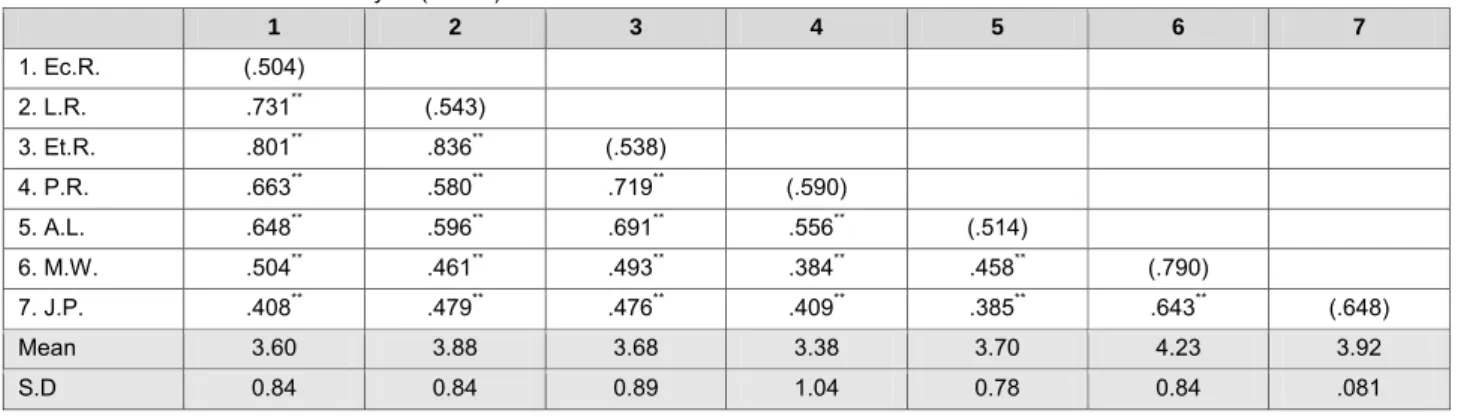
Table 1. Results of Correlation Analysis (n=312)
1 2 3 4 5 6 7
1. Ec.R. (.504)
2. L.R. .731** (.543)
3. Et.R. .801** .836** (.538)
4. P.R. .663** .580** .719** (.590)
5. A.L. .648** .596** .691** .556** (.514)
6. M.W. .504** .461** .493** .384** .458** (.790)
7. J.P. .408** .479** .476** .409** .385** .643** (.648)
Mean 3.60 3.88 3.68 3.38 3.70 4.23 3.92
S.D 0.84 0.84 0.89 1.04 0.78 0.84 .081
Note: ** p<.01, AVE is marked in ( ). Ec.R.: Economic Responsibility, L.R.: Legal Responsibility, Et.R.: Ethical Responsibility, A.L. :Authentic Leadership, M.W.: Meaningfulness of Work, J.P.: Job Performance
Table 2. Direct effects of economic responsibility and job performance, and moderating effect of authentic leadership and meaningfulness of work.
Dependent Variable: Job Performance
Step 1 Step 2 Step 3
Step 4
ⓐ ⓑ
Control Variable
Gender Age Education Marital Status Year of Con.
Position_dummy
-.081 -.041 .149* -.013 .160* .102
-.075 .002 .157**
-.052 .101 .054
-.064 .026 .151**
-.052 .061 .051
-.043 -.068 .161**
-.065 .092 .045
-.031 -.016 .138**
-.067 .052 .038
I.V Ec.R. .390*** .300*** .110* .072
M.V A.L.(ⓐ) .180** .025
M.W.(ⓑ) .598*** .571***
I.T
Ec.R.*A.L.(ⓐ) .082 .044
Ec.R*M.W.(ⓑ) .060 .057
A.L*M.W .107
3-way I.T Ec.R*A.L.*M.W. .168*
R2 .074 .219 .242 .454 .468
ΔR2 .145 .023 .235 ⓐ(.226)
ⓑ(.014)
F 4.014** 12.010*** 10.522*** 27.441*** 19.803***
Note: * p<.05, ** p<.01, *** p<.001, I.V: Independent Variable, M.V: Moderating Variable, I.T: Interaction Term, Year of Con.: Years of continuous service.
Table 2 sh
<.01) positive in step 3 performance meaningfulne (β= .168, p leadership, a significant p Hypothesis 7 Hypothesis 6 Figure 2.
Figure 2. 3 authe
Table 3. Direct
Control Variable
I.V M.V
I.T
3-way I.T R2 ΔR2 F
Note: * p<.05, continuou
hows that eco ely affects job
and ⓑ, ec have no cont ess of work. H
<.05) on eco nd job merit w positive effec
7-1 were ado -1 were reject
3-way interactio entic leadership
t effects of legal
Gender Age Educatio Marital S Year of C Position_
L.R.
A.L.(ⓐ) M.W.(ⓑ) L.R.*A.L.
L.R*M.W A.L*M.W L.R*A.L.*
** p<.01, *** p us service.
onomic respon performance.
conomic resp rol over authe However, 3-wa
onomic respo were found to ct. Thus, H opted, but H ted. Specific r
n results of econ and meaningful
responsibility a
n Status
Con.
_dummy
) .(ⓐ) W.(ⓑ) W
*M.W.
p<.001, I.V: Ind
nsibility (β= .3 However, as s ponsibility and entic leadershi
y interaction r onsibility, aut have a statis Hypothesis 1
ypothesis 5-1 results are sho
nomic responsib ness of work
nd job performa
Step 1 -.081 -.041 .149* -.013 .160* .102
.074
4.014**
ependent Varia
390, p shown d job ip and results thentic stically and 1 and own in
bility,
T dra and con com com high mem job man acti is lo CEO mer be i T corp and wor liab perf con wor and resu lead sign
<Hy
<Hy
ance, moderatinDe Step
-.08 -.03 .153 -.10 .116 .121 .474
.288 .214
* 17.29 able, M.V: Mode
This result i matically incre d high level o ntext of high mpared to low mpanies. On t h level of eco mbers' job is performance nifests authen ivity situation, ower when m O’s authentic rit is low, it ca improved by e Table 3 shows porate legal r d the role of a rk. As shown bility activities formance. Ho nfirmed that au
rk are not cont d job performa ults (β=.218, p dership and jo nificant positiv ypothesis 7-2>
ypothesis 6-2>
g effects of auth ependent Varia p 2
0 1 3**
3 6 1
- - .1 -
. .
*** .4
.
.
8 .
4 .
6*** 14 erating Variable
mplies that eased if high of job satisfa h economic w economic re
the other han onomic respon high, if the in e may be lo ntic leadershi
it is also note eaningfulness c leadership o
an be interpre enhancing eco the results of responsibility a authentic leade in the second (β= .474, p <
owever, as sh uthentic leade trolled betwee ance. On the o p<.01) on statu ob merit were ve effect. The
> were adopte
> were rejected
hentic leadership able: Job PerfoStep 3
ⓐ .074 .015 152**
.097 .088 .113 428***
.110
.069
.299 .011 .103***
e, I.T: Interactio
job perform level of authe action are rec
responsibility esponsibility a nd, if a comp nsibility and th nherent leader owered. Eve p in the sam eworthy that j s of work is lo or lack of aw
ted that job p nomic respons f the analysis activities on jo ership and me d stage of Tab
<.01) also pos hown in step ership and me
n legal respon other hand, 3 utory accounta e found to hav erefore, <Hyp ed, but <Hypo
d.
p and meaningf ormance
ⓑ -.049 -.074 .158***
-.096 .091 .072 .245***
.538***
.050
.491 .203 31.840***
on Term, Year o
mance can b entic leadersh cognized in th y activities activities of the
any performs he quality of th rship is low, th n if the CE me responsibil
ob performanc w. Lastly, whe wareness of jo performance ca sibility activitie
of the effects ob performan eaningfulness ble 3, corpora itively affect jo
3 and 4, it eaningfulness nsibility activiti -way interactio ability, authen ve a statistica othesis 2> an othesis 5-2> an
fulness of work.Step 4 -.037 -.046 .130**
-.087 .067 .074 .239***
-.072 .541***
.045 .082 .119 .218**
.510
ⓐ(.211)
ⓑ(.019) 23.438***
of Con.: Years
be hip he as eir a he he EO ity ce en ob an es.
of ce of ate ob is of es on tic ally nd nd
of
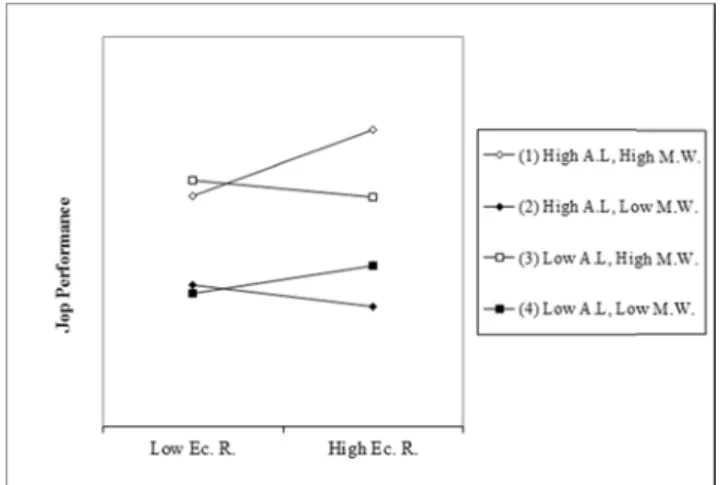
In Figure 3 leadership an performance.
responsibility performance authentic lea leadership, w enhance jo accountability
Figure 3. 3-wa l
Table 4. Direct work.
Control Variable
I.V
M.V
I.T
3-way I.T R2 ΔR2 F
Hoe-Chang Y
, it is found tha nd recognition In addition to activities, is high, even adership, or when the per b performan y.
ay interaction re eadership and m
t effects of ethic
Gender Age Educatio Marital S Year of C Position_
L.R.
A.L.(ⓐ) M.W.(ⓑ) L.R.*A.L.
L.R*M.W A.L*M.W L.R*A.L.*
Yang, Young-Ei K
at CEO's high n of high job o the above-m
even if th n if they reco if the CEO ception of Ko nce by enh
esults of legal re meaningfulness
cal responsibilit
n Status
Con.
_dummy
) .(ⓐ) W.(ⓑ) W
*M.W.
Kim / Journal of A
degree of aut merits increas mentioned eco
he members ognize low le develops aut orea is low, hancing corp
sponsibility, aut of work
ty and job perfo
Step -.08 -.04 .149 -.01 .160 .102
.074
4.014
Asian Finance, Ec
thentic se job onomic ' job evel of
thentic it can porate
thentic
T the perf of w of
= .4 add resp cha
= .1
< ) whe CEO perf mea the lead The the perf O
<.0 mer effe and
ormance, and m
D
p 1 Ste
81 41 9*
3 0* 2
-.0 .00 .16 -.0 .04 .08 .46
4 .2 .19 4** 15.9
conomics and Bus
The results of t effects of formance and work are show Table 4, cor 464, p <.01) dition, as sh ponsibility a aracterized by 138, p <.01) an
were found to en the ethical O's level of formance will aningfulness o
company is dership is in erefore, it was members is formance than On the other h 1) on ethical rit were found ect. Thus, Hyp d Hypothesis 7
moderating effec
Dependent Vari
ep 2 043
02 62**
064 49 83 64***
72 98
944*** 13
siness Vol 5 No 3
this study are ethical resp d authentic lea wn in Table 4. A rporate ethica
also positivel hown in ste activities and y authentic le
nd job qualitie o have modul responsibility authentic lea l increase. H of work, when
high, if the l ncreased, the s found that th a more impo n the CEO's au hand, 3-way in
responsibility, d to have a s pothesis 3, Hy 7-3 were all ad
ct of authentic le
iable: Job Perfo Step 3
ⓐ -.032 -.002 .153**
-.044 .024 .086 .447***
.088
.138**
.292 .02 3.617***
(2018) 121-132
summarized a ponsibility act adership and As shown in th al responsibili ly affect job p
p 3 (a) an d job per eadership (inte
s (interaction latory effects.
of the compa adership is r
owever, in th n the ethical
evel of the C e job perform he meaningfuln ortant factor in uthentic leade nteraction resu
authentic lea statistically sig ypothesis 5-3, dopted.
eadership and m
ormance
ⓑ -.036 -.084 .168***
-.061 .068 .057 .199***
.586***
.122*
.472 .200 31.353***
12
as follows. Fir tivities on jo meaningfulne he second stag
ity activities performance.
nd (b), ethic rformance a eraction term
term β = .122, In other word ny is high, if th raised, the jo he case of th responsibility CEO's authen mance is hig ness of work f n enhancing jo
rship.
ults (β = .230, dership and jo gnificant positiv Hypothesis 6-
meaningfulness
Step 4 -.019 -.038 .134**
-.058 .028 .061 .223***
-.066 .537***
.096 .200**
.008 .230**
.513
ⓐ(.221)
ⓑ(.041) 23.725***
27
st, ob ss ge (β In cal are β , p ds, he ob he of tic gh.
for ob
, p ob ve -3,
of
Figure 4.
authe
The results authentic lead the higher the a company ha and the quali that even tho
Table 5. Dire meaningfulnessControl Variable
I.V
M.V
I.T
3-way I.T R2 ΔR2 F
3-way interactio entic leadership
s of Figure 4 in dership and th e job performa as a high leve ity of the mem ough the CEO'
ect effects of ss of work.
Gende Age Educat Marital Year of Positio L.R.
P.L.(ⓐ
M.W.(ⓑ
P.R.*A P.R*M.
A.L*M.W P.R*A.
on results of ethi and meaningful
ndicate that th he higher leve ance can be. O el of ethical res mbers 'job is h 's authentic le
support responr tion
Status f Con.
n_dummy
ⓐ)
ⓑ) A.L.(ⓐ)
.W.(ⓑ) W L.*M.W.
ical responsibilit ness of work
e higher the le el of job satisfa On the other h
sponsibility act high, it can be adership is low
nsibilities and jStep 1 -.081 -.041 .149* -.013 .160* .102
.074
4.014**
ty,
evel of action, and, if tivities e seen w, the
job the mea acti be job ethi mea they lead F resp auth sho acc perf lead stat sup othe CEO sup 3 ⓑ sho resp
ob performancDe
Step -.089
.002 .157 -.063
.058 .080 .393*
.216 .198
* 15.944
performance CEO's auth aningfulness o ivities can imp noted that, in
is low, the pe ical responsib ans that if the y do not car dership and et Finally, Table ponsibility act hentic leaders own in the sec countability (β formance. In dership (inte tistically sig pportive respo er words, the O enhances pportive respon
ⓑ, job satisfa owed no a ponsibility acti
ce, and moderaependent Varia
2 9 2 7**
3 8 0
-.
. .1 -.
. .
*** .2
.2
.1
6 .
8
4*** 11.
becomes a li hentic leaders of work is low prove job perf the case wher erformance of bility of the C members do n re about enh thical respons e 5 shows
tivities on job ship and the cond stage of
= .393, p<.01 addition, as s eraction term nificant mod onsibility activi e high level o the job perfo nsibility is high ction (interact adjustment e
ivities and job
ating effects oable: Job Perfo Step 3
ⓐ .066
041 142**
.070 006 070 299***
238***
151**
266 .05 .981***
ittle higher. In ship is low a w, higher ethic formance. How re the quality o the CEO is low EO is enhanc not have mean ancing the C ibility activities the effects performance meaningfulne Table 5, corp 1) also positiv shown in step
β= .151, derating eff ties and job p f authentic le ormance when
h. However, a tion term β=
effect betwe performance.
of authentic lea
rmance
ⓑ -.046 -.052 .155**
-.081 .055 .050 .190***
.578***
.049
.475 .259 29.848***
n addition, whe and employee cal responsibil
wever, it shou of the membe wered when th ced. This res ning for their jo CEO's authen
s.
of charitab and the role ess of work. A porate charitab
vely affects jo 3 (a), authen
p<.01) show fects betwee performance.
adership of th n the corpora as shown in ste
.049, p = .28 een supportiv
adership and t
Step 4 -.030 -.009 .134**
-.085 .022 .049 .173**
.013 .542***
.091 .044 .008 .142 .491
ⓐ(.225)
ⓑ(.016) 21.761***
en es' ity uld rs' he ult ob, tic
ble of As ble ob tic ws en In he ate ep 84) ve
the
Hoe-Chang Yang, Young-Ei Kim / Journal of Asian Finance, Economics and Business Vol 5 No 3 (2018) 121-132 129
On the other hand, the 3-way interaction results (β = .142, p =. 058) on charitable accountability, authentic leadership, and job merit were not statistically significant. This result should be interpreted as the fact that charitable responsibility activities currently carried out do not have an effect on the enhancement of job performance in the case where the workability of members is not secured. Thus, Hypothesis 4 and Hypothesis 5-4 were adopted, but Hypothesis 6-4 and Hypothesis 7-4 were rejected. Although we did not set the hypothesis, we examined whether factors such as corporate social responsibility activities increase job performance, subordinate factors of social responsibility activities, authentic leadership, and job satisfaction, respectively. As a result of the analysis, it was confirmed that only statutory responsibility activities (β= .324, p <.01) and charitable responsibility activities (β= .152, p <.05) were statistically significant for social responsibility activities. On the other hand, the results of all variables showed that job satisfaction (β= .534, p <.01), legal accountability (β = .266, p <.01), social responsibility activities (β = .156, p < (P <.05).
5. Discussion and Managerial Implication
This study examines the relationship between the subordinate factors of corporate social responsibility activities and job performance as well as the role of CEO's authentic leadership and the meaningfulness of work and its conclusion and implication.
First, it was confirmed that each factors of corporate social responsibility activities increase the job performance of members. Among them, legal responsibility activities were identified as one of the most important factors. In this respect, it is very likely that the illegal acts of CEOs representing a company will inevitably have a negative impact on the performance of its members and affect the organization as a whole. Therefore, at the enterprise level, it is necessary not only to comply with laws and regulations related to business, but also to adhere to the laws and regulations on corruption among stakeholders.
Second, the moderating effects of the CEO's authentic leadership roles and the meaningfulness of work in terms of the corporate social responsibility activities and the job performance demonstrate that authentic leadership is controlled for each factors of ethical responsibility activity, job performance, charitable responsibility activity and job performance. In the case of the meaningfulness of work, it was confirmed that statistically significant adjustments were made between ethical responsibility activities and job performances. This result can enhance the performance of the company when the CEO's authentic leadership is implemented while performing a high level of ethical
responsibility activities and philanthropic responsibility activities. Also, when performing a high level of ethical responsibility activities, this can also be an indication that the job performance can be enhanced. This result suggests that the role of the CEO's authentic leadership and the meaningfulness of work of the members and the ways to promote it are needed.
Third, it was confirmed that the results of the 3-way interaction on each sub-factor of corporate social responsibility activities, authentic leadership, and job merit derived somewhat different results. In general, when a company performs a high level of social responsibility activities, it is natural that the performance of the CEO can be enhanced if the executive leadership of the CEO is realized and the quality of the members' job is highly recognized. It is noteworthy, however, that in the case of economic responsibility activities, job performance may be deteriorated if the meaningfulness of work of the member and the perception of the CEO's authentic leadership are in opposition. In other words, if a firm recognizes negative effects of either job meaningfulness or authentic leadership in cost reduction efforts and restructuring efforts to secure competitiveness, it can be expected that a competitive strategy can fail. Therefore, at the corporate level, it is necessary to establish and operate various strategies that enable the CEO to be authentic and give meaning to his or her job. In the case of legal responsibility activities, unlike the previous results, it is an important strategy to improve job performance even when employees' sense of duty and CEO's perception of authentic leadership are in opposition, or when both the meaningfulness of work and authentic leadership are low. Therefore, it can be concluded that the efforts to actively protect the related laws and regulations are very important factors for securing the competitiveness of enterprises.
Ethical accountability, however, presents somewhat different results. Specifically, when the quality of the members ’job is low, the CEO's authentic leadership and ethical responsibility activities are enhanced. This implies that if the members do not have meaning for their job, it is highly likely that the CEO’s authentic leadership or the company will take a bad view of enhancing ethical responsibility activities. These results suggest that even if the company develops various social responsibility activities, if the problems of corporations or CEOs are encountered, the authenticity of the company or the CEO may be damaged, which may adversely affect the performance of the members. On the other hand, if the company or the CEO of the company loses the qualities of his or her job due to the controversy of the society, or loses his or her job due to any reason, the performance of the individual is lowered.
It is highly likely to be a burden to success.
As a result of reviewing the results of this study and reviewing previous studies, it is concluded that the ethics, calling and compassion of the company (or CEO) and its members will be a key factor in the company's development through individual performance. The following suggestions were made. First, the interaction with the informal system, such as formal activities which can range from the declaration of education or training or ethics that are carried out to promote the ethics defined as the right and just act of the individual or the organization (Carroll, 1979) or compliance with the ethical rules of voluntary members (Treviño, Butterfield, & McCabe, 1998), can be settled as an ethical culture. This suggests that if the CEO is perceived by the members as an ethical or unethical role model, as in the theory of social learning (Bandura, 1977), the members will also establish standards for their degree of ethics by learning from them.
Therefore, companies and CEOs should encourage high ethical awareness, so that members can learn through their efforts to fully qualify as role models. Second, in the case of the vocation, the CEO will be the basis of the implementation of authentic leadership, and the members can be an important factor to solidify the merits of the job. It is one of the perceptions that members have about the meaning of work by themselves through their interaction with the organization, and through the process of pursuing meaning and goal within it (Dik & Duffy, 2009). Therefore, it is important for the company to make active social responsibility activities, the CEO to implement practical actions to implement his / her true leadership, and the members to strengthen their respective vocation awareness activities to confirm the meaningfulness of their work.
Development can be achieved together. Finally, compassion should be interpreted in the same context. In other words, the sense of mercy is defined as a propensity to solve others' pain by internalizing it with pain (Yoon, 2012).
Therefore, when a company, a CEO, or a member of the team responds as if it is my problem, it is hoped that it will be able to become a competitive company that can contribute to society and the nation by containing meaningfulness and authenticity in its job.
6. Conclusion and Limitations
This study examines the relationship between the subordinate factors of corporate social responsibility activities and job performance as well as the role of CEO's authentic leadership and the meaningfulness of work and its conclusion and implication. Although this study has found various implications for solving the problems of the CEOs and company members who are currently facing social
issues, there are some limitations that need to be supplemented in future studies.
First, respondents who responded to the questionnaire for this study did not clearly reflect actual social responsibility activities for the company. In other words, there was a lack of confirmation of respondents' awareness of various actual activities of companies. Therefore, in future research, it will be possible to elaborate more sophisticated implications by reflecting the members' perception of the degree of corporate social responsibility activities and confirming their effectiveness.
Second, despite the fact that the influential factors such as the positions of the respondents were controlled, they could not confirm the visual differences according to the positions. In other words, the members of the high-ranking book and the members of the relatively low position will have different degrees of information transfer and evaluation of the company policy may be different. Therefore, in future studies, it is necessary to draw more clear implications by examining these factors. Finally, the limitations of common method biases on the limits and measures of self-report questionnaires will need to be solved through various approaches in future researches.
References
Arnold, K. A., Turner, N., Barling, J., Kelloway, E. K., &
McKee, M. C. (2007). Transformational leadership and psychological well-being: The mediating role of meaningful work. Journal of Occupational Health Psychology, 12(3), 193-203.
Avolio, B. J., & Gardner, W. L. (2005). Authentic leadership development: Getting to the root of positive forms of leadership. Leadership Quarterly, 16(3), 315−338.
Bandura, A. (1977) Social Learning Theory. Englewood Cliffs, NJ: Prentice Hall.
Baumeister, R. F., & Vohs, K. D. (2005). The pursuit of meaningfulness in life. In C.R. Snyder & S.J. Lopez (Eds.), Handbook of Positive Psychology (pp. 608- 618). Oxford, UK: Oxford University Press.
Bretz, R. D., & Judge. T. A. (1994). Person-organization fit and the theory of work adjustment: Implications for satisfaction, tenure, and career success. Journal of Vocational Behavior, 44(1), 32-54.
Britt, T. W., Adler, A. B., & Bartone, P. T. (2001). Deriving benefits from stressful events: The role of engagement in meaningful work and hardiness.
Journal of Occupational Health Psychology, 6, 53–
63.
Hoe-Chang Yang, Young-Ei Kim / Journal of Asian Finance, Economics and Business Vol 5 No 3 (2018) 121-132 131