Recent Progress in Strain Development of Zymomonas mobilis for Lignocellulosic Ethanol Production
Young Jae Jeon*
Department of Microbiology, Pukyong National University, Busan 48513, Korea
Received December 5, 2018 /Revised January 3, 2019 /Accepted January 3, 2019
Zymomonas mobilis has been recognized as a potential industrial ethanologen for many decades due to its outstanding fermentation characteristics, including high ethanol tolerance, fast sugar uptake rate, and high theoretical ethanol yield. With the emergence of the postgenomic era and the recent an- nouncement of DuPont’s world largest cellulosic ethanol production process, research on this bacte- rium has become even more important to harness successful application not only for use in the bio- ethanol process but also in other biochemical processes, which can be included in bio-refinery. As an important industrial microorganism, Z. mobilis will likely be exposed to various stressful environments, such as toxic chemicals, including the end-product ethanol and fermentative inhibitory compounds (e.g., furan derivatives, organic acids, and lignin derivatives in pretreatment steps), as well as physical stresses, such as high temperature during large-scale ethanol fermentation. This review focuses on recent information related to the industrial robustness of this bacterium and strain development to improve the ethanol yield and productivity in the lignocellulosic ethanol process. Although several excellent review articles on the strain development of this bacterium have been published, this review aims to fill gaps in the literature by highlighting recent advances in physiological understanding of this bacte- rium that may aid strain developments and improve the ethanol productivity for lignocellulosic biomass.
Key words : Bacterial physiology, industrial robustness, lignocellulosic ethanol, strain developments,
Zymomonas mobilis
*Corresponding author
*Tel : +82-51-629-5612, Fax : +82-51-629-5619
*E-mail : [email protected]
This is an Open-Access article distributed under the terms of the Creative Commons Attribution Non-Commercial License (http://creativecommons.org/licenses/by-nc/3.0) which permits unrestricted non-commercial use, distribution, and reproduction in any medium, provided the original work is properly cited.
Journal of Life Science 2019 Vol. 29. No. 1. 135~145 DOI : https://doi.org/10.5352/JLS.2019.29.1.135
Introduction
Seeking an alternative to replace the energy use from the conventional hydrocarbon resources has been devoted to considerable public attention over last several decades.
Thoughtless use of fossil fuel, its associated air pollution and global warming have been recognized as main causatives.
Several candidates have been developed and used such as bioethanol, solar and hydrogen energy. The current technol- ogy for major ethanol production is based on the fermenta- tion of sugars derived from biomass including starch or sug- ar-based crops, agricultural residues. Such biochemical proc- ess is related to the manufacture of alcoholic beverages.
However, due to cost-competitive process development and ethical dilemma feed use for energy, current industrial etha- nol production need further optimization to use cheaper raw
materials such as lignocellulosic materials.
Zymomonas mobilis is one of unique bacteria that can pro- duce ethanol as a major product via Enter-doudouroff path- way with the conjunction of ethanol fermentation pathway.
This bacterium has been studied for more than several deca- des for fuel ethanol production via biochemical processes.
Since its substrate usage ranges for lignocellulosic ethanol process for this bacterium had been successfully extended via metabolic engineering of pentose utilization, several im- portant genomes of type strains as well as their mutants with system approaches have been analyzed to further under- stand genetic characteristics [4, 9, 26, 27, 39, 65]. Recent re- search activities on this bacterium has contributed to the in- creased potential for further industrial application used in other chemical production [50, 53]. This paper reviews the relatively recent information related to strain development and physiological characteristics associated with this bacterium.
The availability of multiple genome sequence of Z.
mobilis
After early pioneering attempts to understand physio- logical characteristics associated with ethanol production,
- Review -
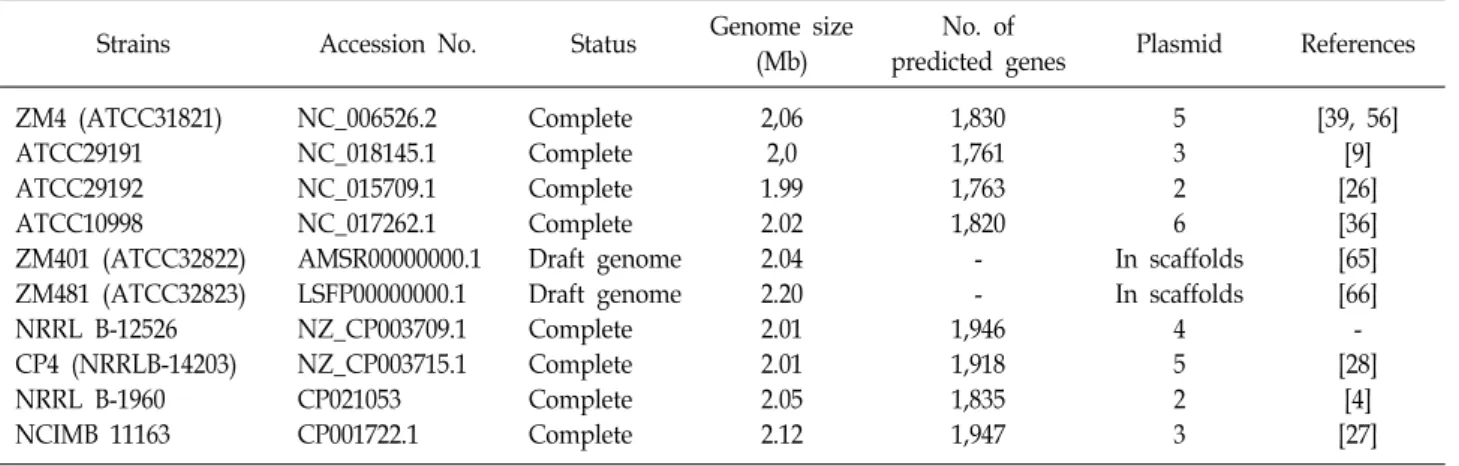
Table 1. The list of Z. mobilis strains genome sequenced
Strains Accession No. Status Genome size
(Mb)
No. of
predicted genes Plasmid References ZM4 (ATCC31821)
ATCC29191 ATCC29192 ATCC10998
ZM401 (ATCC32822) ZM481 (ATCC32823) NRRL B-12526 CP4 (NRRLB-14203) NRRL B-1960 NCIMB 11163
NC_006526.2 NC_018145.1 NC_015709.1 NC_017262.1 AMSR00000000.1 LSFP00000000.1 NZ_CP003709.1 NZ_CP003715.1 CP021053 CP001722.1
Complete Complete Complete Complete Draft genome Draft genome Complete Complete Complete Complete
2,06 2,0 1.99 2.02 2.04 2.20 2.01 2.01 2.05 2.12
1,830 1,761 1,763 1,820 - - 1,946 1,918 1,835 1,947
5 3 2 6 In scaffolds In scaffolds
4 5 2 3
[39, 56]
[9]
[26]
[36]
[65]
[66]
- [28]
[4]
[27]
this bacterium has been recognized as an alternative ethanol producer [38]. Many fermentation kinetic based studies in- dicated that this bacterium has several industrial advantages such as generally regarded as safe (GRAS) bacterium, dis- playing high ethanol tolerance up to 16% (v/v), higher spe- cific glucose uptake rate leading to higher ethanol productiv- ities and less energy use for biomass yield relative to Saccharomyces cerevisiae which can allow to produce ethanol close to the maximum theoretical yield [37, 38]. Such advan- tages on this bacterium heightened the interests to under- stand genetic information associated with ethanol pro- duction characteristics. Since the first genome analysis and annotation have been announced by Seo et al. [39], other type strains of the genome information as well as their mutants have been analyzed as shown in Table 1. In general the ge- nome size of all Z. mobilis strains were in the range of 2.1 to 2.22 Mb with two to eight plasmids contained which is only half of the genome size of E. coli (4.8Mb). By virtue of the multiple genome availabilities of this bacterium, sys- tem based research using transcriptomic and proteomic anal- yses allows the further understanding of global responsible genes associated with particular genetic traits as well as the genes involved in fermentation associated stress conditions [6, 16, 22, 55, 59, 61].
Ethanol production from lignocellulosic materials via substrate usage extension of Z. mobilis
Fuel grade ethanol can be readily produced by fermenta- tion of starch hydrolysate or hexose sugar from crop-based resource such molasses, sucrose-containing juices from sugar cane or sugar beets, potatoes, fruits and grains including maize and wheat etc. However, such raw materials used in ethanol fermentation step account for about 55-60% of the
production cost [48]. Therefore, for the cost effective ethanol production have been needed the use of cheaper raw materi- als such as lignocellulosic biomass. Such cheaper raw materi- als are the most abundant renewable energy source and available from various industries including agricultural, for- estry and food wastes. Although their compositions vary, generally composed of 45-50% cellulose, 25-30% hemicellu- lose and 15-25% lignin. The bioconversion process of ligno- cellulose to ethanol in general needs the saccharification of both the hemicellulose and cellulose fraction. Hemicellulose are highly branched non-crystalline hetero-polysaccharides comprising of pentose, hexose and uronic acid. Wild type strains of Z. mobilis can only utilize glucose, fructose and sucrose as carbon source, but not abundant pentose sugars such as xylose and arabinose derived from lignocellulosic materials [37]. To overcome such limitation, bioethanol re- search on this bacterium as an alternative has been carried out for one of main challenges on substrate usage extension via metabolic engineering. Despite several early pioneering challenges on this mission by several authors [7, 11], their work was not successful due to the lack of genome in- formation for metabolic engineering. However, with con- tinuous efforts NREL group announced the successful devel- opment of a xylose utilizing plasmid bearing strain of CP4 (pZB5) via heterogeneous genes from E. coli [62]. Since then, various pentose sugar fermenting strains via metabolic en- gineering have been reported for lab- or industrial- scale ethanol production as shown in Table 2.
Since then many research to evaluate the recombinant
strains via fermentation kinetics, ethanol production yield
and productivities using various lignocellulose feedstock
have been carried out. The most all recombinant xylose-fer-
menting Z. mobilis showed decreased in the yields and volu-
Table 2. The list of heterologous genes expressed in Z. mobilis to broaden its substrate usages for ethanol production
Strains Genes Functions Source Goal Ethanol
yield (g g-1) Ref.
CP4 (pZB5) xylA, xylB, talB, tktA
xylose isomerase, xylulokinase,
transaldolase, transketolase E. coli Xylose utilization 0.44 [62]
ATCC39676 (pZB206)
araA, araB, araD, talB, tktA
Arabinose isomerase, ribulokinase, ribulose-5-phosphate-4-epimerase, transaldolase, transketolase
E. coli Arabinose utilization 0.50 [8]
CP4 (pZY228) xylA, xylB; tktA Xylose isomerase,
xylulokinase; transketolase
Klebsiella pneumonia;
E. coli
Xylose utilization ND [11]
CP4 (pZY228, pZY557tal)
xylA, xylB, talB, tktA
xylose isomerase, xylulokinase,
transaldolase, transketolase E. coli Xylose utilization 0.29 [7]
ZM4 (pKLD3, pKLD4,5)
xylA, xylB, talB, tktA, XylE
xylose isomerase, xylulokinase, transaldolase, transketolase, xylose transporter
E. coli Xylose utilization 0.40 [10]
8b
xylA, xylB, talB, tktA, araA, araB, araD, talB, tktA
xylose isomerase, xylulokinase, transaldolase, transketolase, Arabinose isomerase, ribulokinase,
ribulose-5-phosphate-4-epimerase, transaldolase, transketolase
E. coli Xylose and arabinose
utilization 0.4 [34]
CP4HYMX3
xylA, xylB, tktA, talB, yfdZ, metB;
Pfu-sHSP
xylose isomerase, xylulokinase, transaldolase, transketolase, aminotransferase, cystathionine gamma-synthase, heat shock protein
E. coli;
Pyrococcus furious
Xylose utilization, Vitamin self-use, low nutritional
requirement, high temperature resistance
0.41 [63]
Table 3. Effect of lignocellulosic inhibitory compounds on specific rates of xylose uptake, ethanol production, and ethanol yield of Z. mobilis ZM4 (pZB5) at 30℃ and initial pH 6 investigated by Kim et al. [25]
Compounds Compounds
concentration (g l-1)
Specific xylose utilization rate (g (g h)-1)
Specific ethanol production rate (g (g h)-1)
Ethanol yield (g g-1) Control
Sodium acetate Furfural HMFa Vanillin Vanillic acid Syringaldehyde
10.9 0.3 0.9 0.043 0.084 0.13
1.58 1.15 1.40 1.36 1.24 1.57 1.24
0.63 0.46 0.53 0.54 0.49 0.63 0.50
0.40 0.40 0.38 0.40 0.40 0.40 0.40
a: HMF abbreviates hydroxymethylfurfural.
metric productivities of ethanol. For an example, Z. mobilis ZM4(pZB5) are significantly reduced in ethanol yield, xylose uptake rate and ethanol productivity due to the fermentation inhibitory compounds derived during the pretreatment step as compared to those from artificial lignocellulosic hydro- lysates as shown in Table 3. Such inhibitory compounds categorized based on their origins. Sugar derivatives include furfural, hydroxyl methyl furfural (HMF) and levulinic acid, organic acids including acetic acid and formic acid, and lig- nin derivatives including vanillin, vanillic acid and syn- ringaldehyde. Besides such inhibitory toxic compounds,
ethanol it-self and high temperature during fermentation could also result in negative effects on cell growth and me- tabolism for ethanol production by this bacterium. Owing to the recent multiple genome availability and strain devel- opment strategies for this bacterium, many research to im- prove its robustness with physiological understanding of various mutant strains against such inhibitory compounds will be further described in following sections.
Alcohol tolerance mechanism of Z. mobilis
During ethanol fermentation, all ethanol producing strains
are progressively faced to ethanol toxicity which decreases the rate of sugars being converted into ethanol. Previous studies indicated that this bacterium started to express stress response in the presence of more than 60 g l
-1ethanol where glucose uptake rate and cell biomass yields are decreased, although ethanol tolerance in this bacterium tolerate up to 16%(w/v) ethanol [37]. This limits the final concentrations of ethanol in the fermentation step, which leads to the in- crease in overall cost of ethanol production. Several papers describe the mechanism of ethanol toxicities in this bacte- rium as well as in other ethanologens [5, 20, 21, 33, 60]. The accumulated ethanol surrounding the medium causes two toxic effects resulting in the irreversible fates of bacteria. One physiological response is an increase in cell-envelope perme- ability. As alcohols accumulated inside of cell membrane and this disorganizes their structure, which results in a loss of ions, metabolites, changes the intracellular pH and mem- brane electrical potential, and eventually leads to cell death.
The other is several decoding machineries involved in tran- scription and translation steps are more likely susceptible to coordinate the central cell functionality [15].
Recently Wang et al [45] reported a recombinant xylose fermenting strain enhancing free fatty acid biosynthesis for ethanol tolerance increase via heterologous expression of fat- ty acid synthesis pathway including thioesterase (TesA) and the wax ester synthase/acyl-CoA–diacyl glycerol acyl- transferase (WS/DGAT) from Acinetobacter baylyi together with fatty acyl-CoA reductases from jojoba (FAR). The ap- proach attempted to make more stable cell envelope for this bacterium under high ethanol concentrations. In particular the authors demonstrated that this strain can be used in very high gravity ethanol fermentation process containing high concentration of sugar more than 250 g l
-1which allows to exposure to a high ethanol concentration.
Previously believed that ethanol tolerance mechanism have been supposed to be accumulation of hopanoids in cell envelope in this bacterium which is enable to maintain mem- brane stability and viscosity like sterols in eukaryotes [19-21, 40]. However other group found no indication of accumu- lated hopanoids as a real responsible mechanism for ethanol tolerance [18, 35, 55]. In this respect to understand global response involved in central decoding machineries on the ethanol tolerance mechanism in this bacterium, He et al.
[16] investigated transcriptome response to identify the genes expression required for tolerance to ethanol. The au- thors found that 127 genes were differentially expressed in
response to ethanol which were involved in a wide range of cellular processes including carbohydrate metabolism, cell wall/membrane biogenesis, respiratory chain, terpenoid bio- synthesis, DNA replication, DNA recombination, DNA re- pair, transport, transcriptional regulation, some universal stress response, etc. They concluded that major response were associated with chaperons and transcriptional regu- lators. The results were also agree to integrated omics stud- ies by other group [55]. In this respect, Tan et al. [43] have also studied to improve its genetic traits of ethanol tolerance via the random mutagenesis of global transcription factor RpoD protein which has been known as a sigma factor. Their results demonstrate that the RpoD mutation can enhance ethanol tolerance in this bacterium. All mutants isolated from error-prone PCR libraries of RpoD gene showed sig- nificant growth improvement in the presence of ethanol stress as compared to the control strain. Therefore, ethanol productivities can be improved via global transcriptional transcription machinery engineering. However, the ster- ol-like hopanoids was not identified as a major response or difference under the stress conditions. In this respect, hopa- noids synthesis pathway in this bacterium requires further investigation to understand ethanol stress concerns.
Responsive small RNAs (sRNA) to understand how this bacterium regulate their specific metabolic pathway under ethanol stress conditions have been also investigated [6].
Fifteen novel sRNAs haven been identified from this bacterium. Among them, three of sRNAs (Zms2, Zms6, and Zms18) were differentially expressed under 5% ethanol stress conditions although their functionalities need to be further investigated.
Osmotolerance
Previous investigation suggested that Z. mobilis can tol- erated up to 400 g l
-1carbohydrate which is one of unique characteristic of this ethanol producing bacterium [37]. Z.
mobilis also produces sorbitol as a major by-product when it is grown in sucrose or mixtures of glucose and fructose, although sorbitol are formed as minor product as glucose or fructose alone respectively used as substrates for this bac- terium [3, 30, 32]. The formation of sorbitol resulted from the in vivo inhibition of fructokinase by glucose. Subsequently, fructose is accumulated and then converted into sorbitol by the action of glucose-fructose oxidoreductase (GFOR) [32].
The addition of sorbitol into culture medium promotes the
growth of Z. mobilis when grown in a high-sugar medium
suggested that sorbitol protected cells from harmful effects caused by high osmotic pressures.
In addition to the osmoprotective function by sorbitol, its protective function associated with heat and ethanol stresses have also been investigated [41]. In this respect, gfo gene encoded for GFOR was inactivated by gene disruption tech- nique, and the strain was designated as Z. mobilis Δgfo. The Δgfo strain show the reduction of cell growth and ethanol production under osmotic stress as well as under heat and ethanol stresses indicating that sorbitol not only promoted cell growth but also increased the fermentation capability of Z. mobilis under heat and ethanol stresses conditions tested.
Temperature tolerance
Ethanol fermentation process has been known as one of exothermic reaction [44] that progressively increases heat stress to ethanologens which reduces their growth or via- bility during the ethanol fermentation process. Therefore if ethanologens have abilities tolerate to over critical high tem- peratures, it can introduce several advantages into the proc- ess such as reduction in cooling cost, saving of enzyme cost in simultaneous saccharification and fermentation (SSF) or prevention of contamination from unfavorable microbes[33, 44] . With this aim several research on developing thermoto- lerant strain of Z. mobilis have been investigated using gene disruption technique, heterologous expression and conven- tional chemical mutagenesis followed by acclimated high temperature condition [5, 33, 41, 45, 63]. Charoensuk et al.
[5] investigated transposon mutagenesis to identify essential genes associated with thermotolerant mechanisms for sur- vival at a critical high temperature at 39℃ using Z. mobilis TISTR 548 which is a natural thermotolerant stain isolated via chemical mutagenesis with acclimated high temperature conditions. The authors found that thermotolerant of this bacterium were related to one of heat shock protein called degP. The authors conclude that thermo-tolerance by the heat shock protein was also associated with Reactive Oxygen Species (ROS) indicating oxidative stress is also related to thermal tolerance, and membrane stabilization associated with fatty acid synthesis pathway.
In the respect of heat shock protein involvement, heterolo- gous expression of small heat shock protein gene (Pfu-sHSP) from Pyrococcus furious was also investigated to increase the heat-tolerance in this bacterium [45, 63]. The recombinant strain designated as HYMX demonstrated the high tolerance to high temperature.
In other respect to membrane stabilization, Wang et al.
[45] investigated heterologous expression of fatty acid syn- thesis pathway including thioesterase (TesA) and the wax ester synthase/acyl-CoA–diacyl glycerol acyltransferase (WS/DGAT) from Acinetobacter baylyi together with fatty ac- yl-CoA reductases from jojoba (FAR). The recombinant strain have been demonstrated multiple tolerance including temperature associated stress existed in very high gravity (VHG) ethanol fermentation process.
Acetate tolerance
Acetic acid is one of ubiquitous fermentative inhibitory compounds for ethanologen. This compound is derived dur- ing pretreatment step for the destruction of lignocellulosic feedstocks. Acetic acid is a weak acid with a pKa of 4.75 and is considered as an anti-microbial compound in the food and beverage industries. This chemical dissociates into an anionic species and a proton with the degree of dissociation dependent on the pH. Inhibitory concentrations of this com- pound for this bacterium have been investigated by several previous studies which reveal that around 10.9 g 1
-1at pH 5.0 [25, 31]. The resistance against this compound in partic- ular have been attention to develop acetate resistance strains via chemical mutagenesis such as N-methyl-N’-nitro-N-ni- trosoguanidine followed by acclimated acetate stress con- ditions [12, 23, 31, 51]. Acetate tolerance associated genes have also been elucidated via genomic, transcriptomic and proteomic analyses [52, 54]. The authors found that so- dium-proton antiporter gene nhaA (ZMO0119) is associated with sodium acetate tolerance. Yang et al. [51] also inves- tigated gene related to acetate toxicity using a xylose/arabi- nose fermenting strain 8b. Their transcriptome results also suggested that the presence of acetate caused the genes re- lated to biosynthesis, the flagellar system, and glycolysis to be downregulated, and genes related to stress responses and energy metabolism to be upregulated. Among the several gene candidates, the gene knockout mutant of TonB-depend- ent receptor (ZMO0128) is associate with acetate tolerance, although its function needs to be further understood.
Furfural, hydroxymethylfurfural and phenolic com- pounds associated tolerance
Furfural and hydroxymethylfurfural (HMF) formed by
dehydration of pentoses and hexoses, and phenolic com-
pounds produced from the partial breakdown of lignin com-
ponents during the harsh pretreatment process, are another
major inhibitors of lignocelluloses hydrolysates [13, 17, 47, 59]. As a result, ethanol fermentation of Z. mobilis is sig- nificantly affected by furfural and HMF for lignocellulosic ethanol process. It has been reported that this bacterium has an ability to reduce furfural or HMF into corresponding fur- furly alcohol or HMF alcohol, suggesting that the bacterium has native alcohol dehydrogenases or aldo-keto reductases [13]. In this respect, Wang et al. [47] identified the gene en- coding a NADPH-dependent alcohol dehydrogenase (ZMO 1771) which is related to the conversion of the two furan aldehyde to less toxic phenolic alcohol. In this respect, the authors developed a strain overexpressing the alcohol de- hydrogenase together with co-expression of the transhydro- genase gene, udhA for its cofactor generation[47]. The re- combinant strain showed a significant improvement against the furan aldehyde inhibitors found in lignocellulosic hydro- lysate. In the similar respect, aldose reductase gene ZMO 0976 from Z. mobilis ZM4 has been reported to be responsible for converting furfural and hydroxymethyl furfural (HMF) to less toxic furfuryl alcohol and HMF alcohol respectively [1].
Stress resistance is well known to be the result of several gene regulation by transcriptional factors. In this respect to increase resistance to furfural and HMF in this bacterium, Tan et al [43] reported a strategy by regulating the transcrip- tional level via engineering global transcription factor sigma gene (σ
70, RpoD). The three rpoD mutant strains isolated via error-prone PCR showed the improvement of furfural and HMF tolerance together with ethanol production in this bacterium. In the similar respect, Yang et al [57]investigated the function of a global regulator hfq (ZMO0347), as an RNA binding protein, using insertional mutation technique. The authors found that the gene is involved in coordinating reg- ulatory responses to multiple stresses including aldehyde stress, although the authors could not conclude how hfq reg- ulates and controls the gene expression response.
Gu et al. [14] demonstrated that the physiological response of this bacterium in comparison with traditional yeast strain against to the twelve typical phenolic compounds derived from the part of lignin from lignocellulose. Z. mobilis ZM4 showed nearly the same tolerance to the phenolic aldehydes with S. cerevisiae DQ1, but the strain showed the stronger tolerance to the phenolic acids originated from corncob hy- drolysates including 2-furoic acid, p-hydroxybenzoic acid, p-coumaric acid, vanillic acid, ferulic acid, and syringic acid.
The results indicated that this bacterium has the capability
for in situ detoxification of phenolic aldehydes together with lipopolysaccharide on the cell outer membrane of this bacte- rium providing the permeable barrier for such phenolic acids. In this respect, Yi et al. [59] also elucidated tolerance and detoxification mechanism of phenolic aldehyde in- hibitors via transcriptome analysis. The authors found that 272 genes showed twofold greater expressions than non-treated controls, and 36 gene clusters in response to these phenolic aldehydes were identified. Several reductases encoded by glutamate synthase (ZMO1116), alcohol de- hydrogenase (ZMO1696), and NADH oxidase (ZMO1885) were found to play the key roles in reducing phenolic alde- hydes into the corresponding phenolic alcohols confirmed by overexpression of respective genes (ZMO1116, ZMO1696 and ZMO 1885) in Z. mobilis ZM4.
Salt tolerance
Inorganic salts from lignocellulosic materials can also be introduced during the acid or alkali pretreatment processes as well as subsequent neutralization or conditioning steps for saccharification and fermentation. Recently wide range of inorganic chemicals found in biomass feedstock hydro- lysate have been tested using an industrial strain of Z. mobilis 8b by Franden et al [13]. Among the cations, Ca
++and Na
+ions showed high cell toxicity to Z. mobilis. In this regard, Na
++tolerant strain of ZMT2 have been isolated by Wang et al [46]. The authors demonstrated that the strain of salt tolerance against Na
++can be achieved via himA gene (ZMO1122 encoding integration host factor) disruption via Tn5-based transposon mutagenesis. Among the isolates, the mutant strain ZMT2 with improved salt tolerance phenotype was obtained in the presence of high amount of Na
++. The strain ZMT2 was further confirmed to exhibit better fermen- tation performance under NaCl stress than the wild type strain of ZM4.
The other sodium salt tolerance gene encoding sodium-
proton antiport gene nhaA was also identified by via micro-
array analysis, and further confirmed by the gene over-
expression studies using the mutant strain of acetate resist-
ance (ZM4Ac
R) isolated via the chemical mutagenesis fol-
lowed by under high sodium acetate condition. Comparing
the fermentation characteristics of ZM4Ac
Rin the presence
of sodium acetate and NaCl, the glucose consumption and
ethanol production by this mutant strain was higher than
those of the parental strain ZM4. Although the ZM4Ac
Rstrain was originally selected for sodium acetate tolerance,
A B
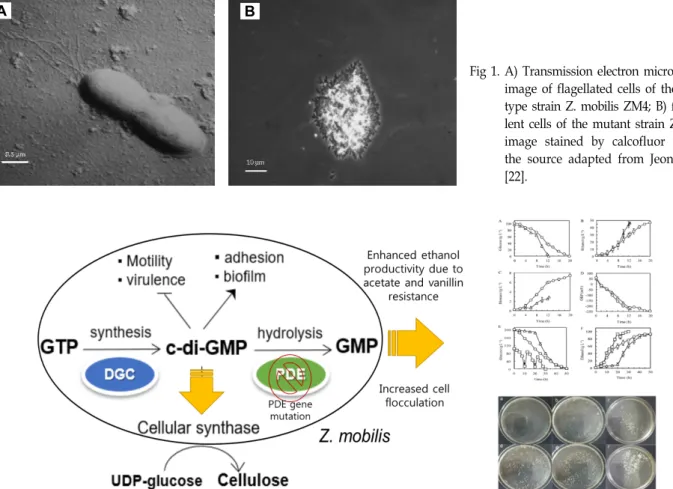
Fig 1. A) Transmission electron microscopic image of flagellated cells of the wild type strain Z. mobilis ZM4; B) floccu- lent cells of the mutant strain ZM401 image stained by calcofluor white, the source adapted from Jeon et al.
[22].
Fig 2. Schematic diagram of cell flocculating mechanims in Z. mobilis ZM401 caused by a single point mutation in phophodiesterase domain which allow to increase intracellular level of c-di-GMP. The increased intracellular c-di-GMP subsequently results in increase in cellulose synthsis and decrease in motility. The increased cellulose synthesis metabolism with increased cell flocculation phenotype finally contributed to the enhanced volumatric ethanol productivity due to the acetate and vanillin resistance. DGC: Diguanyl cylase; PDE: Phophodiesterase.
this strain also had enhanced tolerance to NaCl [52].
Cell flocculation contribution to the multiple toler- ance against various fermentation inhibitors
The cell to cell attachment phenomena called cell floccu- lation is one of advantage characteristics for ethanol produc- ing microorganism used in the large-scale ethanol pro- duction process. A simple and cost-effective way to separate cell biomass from fermentation broth and high volumetric productivities derived from high cell density characteristics provides potential economic feasibility for lignocellulosic ethanol production. In this respect, the flocculent strain Z.
mobilis ZM401 strain have been isolated via chemical muta- genesis as shown in Fig 1. In addition, its fermentation char- acteristics and genomic information have been investigated by several studies [22, 29, 49, 64, 65]. Xia et al. [64] demon- strated that this flocculating strain has superior ethanol fer-
mentation characteristics than those from planktonic cell, es-
pecially in the presence of acetic acid and vanillin derived
from lignocellulose. With this regard, to understand the cell
flocculation mechanism in Z. mobilis, Jeon et al [22] carried
out expression microarray studies. The authors found that
the mutation in the secondary messenger, c-di-GMP regulat-
ing bifunctional enzyme, c-di-guanyl cyclase/phosphodies-
terase (ZMO1055) was one of causatives for cell flocculation
in this bacterium. The authors hypothesized that high intra-
cellular concentration of c-di-GMP caused by mutated phos-
phodiesterase domain may result in the increase in bacterial
cellulose synthesis metabolism and decrease in flagellar syn-
thesis metabolism as shown in Fig 2. In this respect, Xia et
al [49] demonstrated that cell flocculation matrix used by
Z. mobilis is bacterial cellulose by the gene disruption of cel-
lulose synthase gene encoded by ZMO1083. Therefore, the
self-immobilized strain Z. mobilis would be one of promising
Table 4. List of genes from Z. mobilis involved in stress responds confirmed by various techniques
Gene Annotation Host Techniques Phenotypes Ref.
ZZ6_0980 Serine protease DegP TISTR 548 Transposon insertion
Essential thermo-tolerant gene allowing to
survive at 39℃ [5]
ZMO1083 Bacterial cellulose
synthase A ZM401 Gene disruption
Self-flocculation and development of cellulose fibrils increased in multiple tolerance against furfural, HMF, acetic acid etc.
[58]
ZMO1649 Gluconolactonase ZM4 Gene disruption
Reduced in ethanol productivity in the presence of high glucose concentration (>200 g l-1) under aerobic or fermentative conditions allowing the multiple tolerance against lignocellulosic derivative compounds such as furfural, HMF and acetate etc.
[2]
ZMO0976 NADH- dependent
furfural reductase E. coli Heterologous expression
Involved in reducing the formation of xylitol,
furfural and HMF [1]
ZMO1122 (himA) Integration host factor ZM4 Transposon insertion
Essential salt tolerant gene allowing to grow
up to 2% NaCl [46]
ZMO0119 (nhaA) Sodium-proton
antiport gene ZM4AcR Overexpression Acetate and sodium tolerance [52]
ZMO1623 (rpoD) RNA polymerase
sigma factor ZM4 Error-prone PCR Furfural tolerance [43]
ZMO1771
NADPH-dependent alcohol
dehydrogenase
ZM4 Overexpression Furfural, HMF tolerance [47]
ZMO0128 TonB-dependent
receptor 8b Gene disruption Ammonium acetate tolerance (15 g l-1) [51]
ZMO0689 Glucose-fructose
oxidoreductase TISTR548 Gene disruption
Sorbitol production associated with osmotolerance, ethanol tolerance and high temperature tolerance
[41]
ZMO1116, ZMO1696, and ZMO1885
Glutamate synthase, alcohol
dehydrogenase, and NADH oxidase
8b Overexpression 4-hydroxybenzaldyhyde, vanillin [59]
ZM01055 and ZMO1083
di-guanyl
cyclase/phosphodiest erase and cellulose synthase A
ZM401 Microarray and gene disruption
Cell flocculation enhancement associated with acetic acid and vanillin tolerance [22, 49]
host to be engineered for biofuel ethanol production from lignocellulosic biomass with increased in the tolerance to toxic compounds and high volumetric ethanol production.
Decrement in nutritional requirement
The nascent cellulosic ethanol industry is more likely to be struggle to cost-competitive against corn, sugar cane etha- nol and gasoline. Therefore, simple nutrient requirement for industrial ethanologen would provide substantial benefits for economically feasible ethanol production. In particular lignocellulosic feedstocks have low contents of nitrogen source which requires for the ethanologen to grow. Corn
steep liquor is a popular industrial nitrogen sources that serves as a source of nitrogen and vitamin. In this respect, Kremer et al. [24] hypothesized that this bacterium may have nitrogen fixation capacity since most of the strains Z. mobilis genomes encode a nitrogenase, which is required for the N
2fixation allowing to use N
2as a nitrogen source through the nitrogen fixation pathway. The authors carried out nitrogen fixation capacity with N
2enriched with the heavy isotope
15
N in the fermentation studies. They found that the synthe-
sized protein from Z. mobilis culture contained
15N. There-
fore, this demonstrated that N
2can be used as nitrogen
source for Z. mobilis which could save a cellulosic ethanol
production facility more than $1 million per year [24].
Future prospects
For an economically sensible lignocellulosic ethanol pro- duction using Z. mobilis, large amount of literature have been primary focused on increasing its industrial robustness against fermentation inhibitory compounds and physical stress conditions which will be more likely to affect in large scale ethanol production cost. Owing to successful metabolic engineering for substrate usage range for pentose sugars de- rived from lignocellulosic materials and multiple genome in- formation availability, some responsible genes related to physiological behavior of Z. mobilis under such environ- mental stress conditions have been elucidated which is sum- marized in Table 4. This valuable information would lead to develop further efficient strains improvement for ligno- cellulosic ethanol production. However, to be cost com- petitive ethanol production, this strain needs to be further engineered for consolidated bioprocessing in which includes cellulase production, substrate hydrolysis and fermentation are achieved in a single step with only one microorganism.
In addition, the recent strain development on this bacterium related to industrial robustness would attract much attention not only in the field of ethanol strain engineering for this bacterium, but also in other chemical production as a possi- ble solution for bio-refinery facilities.
Acknowledgement
This work was supported by the Pukyong National University Research fund in 2017 (CD20171180).
References
1. Agrawal, M. and Chen, R. R. 2011. Discovery and character- ization of a xylose reductase from Zymomonas mobilis ZM4.
Biotechnol. Lett. 33, 2127-2133.
2. Alvin, A., Kim, J., Jeong, G. T., Tsang, Y. F., Kwon, E. E.
and Neilan, B. A., et al. 2017. Industrial robustness linked to the gluconolactonase from Zymomonas mobilis. Appl.
Microbiol. Biotechnol. 101, 5089-5099.
3. Barrow, K. D., Collins, J .G., Leight, D. A., Rogers, P. L. and Warr, R. G. 1984. Sorbitol production by Zymomonas mobilis.
Appl. Microbiol. Biotechnol. 20, 225-232.
4. Chacon-Vargas, K., Chirino, A. A., Davis, M. M., Debler, S.
A., Haimer, W. R. and Wilbur, J. J., et al. 2017. Genome Sequence of Zymomonas mobilis subsp. mobilis NRRL B-1960.
Genome Announc. 5, e00562-17.
5. Charoensuk, K., Sakurada, T., Tokiyama, A., Murata, M.,
Kosaka, T. and Thanonkeo, P., et al. 2017. Thermotolerant genes essential for survival at a critical high temperature in thermotolerant ethanologenic Zymomonas mobilis TISTR 548. Biotechnol. Biofuels. 10, 204.
6. Cho, S. H., Lei, R., Henninger, T. D. and Contreras, L. M.
2014. Discovery of ethanol-responsive small RNAs in Zymomonas mobilis. Appl. Environ. Microbiol. 80, 4189-4198.
7. De Graaf, A. A., Striegel, K., Wittig, R. M., Laufer, B., Schmitz, G. and Wiechert, W., et al. 1999. Metabolic state of Zymomonas mobilis in glucose-, fructose-, and xylose-fed continuous cultures as analysed by 13C- and 31P-NMR spec- troscopy. Arch. Microbiol. 171, 371-385.
8. Deanda, K., Zhang, M., Eddy, C. and Picataggio, S. 1996.
Development of an arabinose-fermenting Zymomonas mobilis strain by metabolic pathway engineering. Appl. Environ.
Microbiol. 62, 4465-4470.
9. Desiniotis, A., Kouvelis, V. N., Davenport, K., Bruce, D., Detter, C. and Tapia, R., et al. 2012. Complete genome se- quence of the ethanol-producing Zymomonas mobilis subsp.
mobilis centrotype ATCC 29191. J. Bacteriol. 194, 5966-5967.
10. Dunn, K. L. and Rao, C. V. 2014. Expression of a xylose-spe- cific transporter improves ethanol production by metabol- ically engineered Zymomonas mobilis. Appl. Microbiol.
Biotechnol. 98, 6897-6905.
11. Feldmann, S. D., Sahm, H. and Sprenger, G. A. 1992. Pentose metabolism in Zymomonas mobilis wild-type and recombi- nant strains. Appl. Microbiol. Biotechnol. 38, 354-361.
12. Franden, M. A., Pienkos, P. T. and Zhang, M. 2009.
Development of a high-throughput method to evaluate the impact of inhibitory compounds from lignocellulosic hydro- lysates on the growth of Zymomonas mobilis. J. Biotechnol.
144, 259-267.
13. Franden, M. A., Pilath, H. M., Mohagheghi, A., Pienkos, P.
T. and Zhang, M. 2013. Inhibition of growth of Zymomonas mobilis by model compounds found in lignocellulosic hy- drolysates. Biotechnol. Biofuels. 6, 99.
14. Gu, H., Zhang, J. and Bao, J. 2015. High tolerance and phys- iological mechanism of Zymomonas mobilis to phenolic in- hibitors in ethanol fermentation of corncob residue.
Biotechnol. Bioengin. 112, 1770-1782.
15. Haft, R. J., Keating, D. H., Schwaegler, T., Schwalbach, M.
S., Vinokur, J. and Tremaine, M., et al. 2014. Correcting di- rect effects of ethanol on translation and transcription ma- chinery confers ethanol tolerance in bacteria. Proc. Natl.
Acad. Sci. USA. 111, E2576-2585.
16. He, M. X., Wu, B., Shui, Z. X., Hu, Q. C., Wang, W. G. and Tan, F. R., et al. 2012. Transcriptome profiling of Zymomonas mobilis under ethanol stress. Biotechnol. Biofuels. 5, 75.
17. He, M. X., Wu, B., Shui, Z. X., Hu, Q. C., Wang, W. G. and Tan, F. R. 2012. Transcriptome profiling of Zymomonas mobi- lis under furfural stress. Appl. Microbiol. Biotechnol. 95, 189-199.
18. Hermans, M. A., Neuss, B. and Sahm, H. 1991. Content and composition of hopanoids in Zymomonas mobilis under vari- ous growth conditions. J. Bacteriol. 173, 5592-5595.
19. Horbach, S., Neuss, B. and Sahm, H. 1991. Effect of azasqua-
lene on hopanoid biosynthesis and ethanol tolerance of Zymomonas mobilis. FEMS Microbiol. Lett. 79, 347-350.
20. Ingram, L. O. 1986. Microbial tolerance to alcohols: role of the cell membrane. Trends Biotechnol. 4, 40-44.
21. Ingram, L. O. 1989. Ethanol tolerance in bacteria. Crit. Rev.
Biotechnol. 9, 305-319.
22. Jeon, Y. J., Xun, Z., Su, P. and Rogers, P. L. 2012. Genome-wide transcriptomic analysis of a flocculent strain of Zymomonas mobilis. Appl. Microbiol. Biotechnol. 93, 2513-2518.
23. Joachimsthal, E., Haggett, K. D., Jang, J. H. and Rogers, P.
L. 1998. A mutant of Zymomonas mobilis ZM4 capable of ethanol production from glucose in the presence of high ace- tate concentrations. Biotechnol. Lett. 20.
24. Kremer, T. A., LaSarre, B., Posto, A. L. and McKinlay, J.
B. 2015. N2 gas is an effective fertilizer for bioethanol pro- duction by Zymomonas mobilis. Proc. Natl. Acad. Sci. USA.
112, 2222-2226.
25. Kim, I. S., Barrow, K. D. and Rogers, P. L. 2000. Nuclear magnetic resonance studies of acetic acid inhibition of rec Zymomonas mobilis ZM4(pZB5). Appl. Biochem. Biotechnol.
84-86, 357-370.
26. Kouvelis, V. N., Davenport, K. W., Brettin, T. S., Bruce, D., Detter, C. and Han, C. S., et al. 2011. Genome sequence of the ethanol-producing Zymomonas mobilis subsp. pomaceae lectotype strain ATCC 29192. J. Bacteriol. 193, 5049-5050.
27. Kouvelis, V. N., Saunders, E., Brettin, T. S., Bruce, D., Detter, C. and Han, C., et al. 2009. Complete genome sequence of the ethanol producer Zymomonas mobilis NCIMB 11163. J.
Bacteriol. 191, 7140-7141.
28. Kouvelis, V. N., Teshima, H., Bruce, D., Detter, C., Tapia, R. and Han, C., et al. 2014. Finished genome of Zymomonas mobilis subsp. mobilis strain CP4, an applied ethanol roducer.
Genome Announc. 2, e00845-13.
29. Lee, J. H., Skotnicki, M. L. and Rogers, P. L. 1982. Kinetic studies on a flocculent strain of Zymomonas mobilis.
Biotechnol. Lett. 4, 615-620.
30. Liu, C., Dong, H., Zhong, J., Ryu, D. D. and Bao, J. 2010.
Sorbitol production using recombinant Zymomonas mobilis strain. J. Biotechnol. 148, 105-112.
31. Liu, Y. F., Hsieh, C. W., Chang, Y. S. and Wung, B. S. 2017.
Effect of acetic acid on ethanol production by Zymomonas mobilis mutant strains through continuous adaptation. BMC Biotechnol. 17, 63.
32. Loos, H., Kramer, R., Sahm, H. and Sprenger, G. A. 1994.
Sorbitol promotes growth of Zymomonas mobilis in environ- ments with high concentrations of sugar: evidence for a physiological function of glucose-fructose oxidoreductase in osmoprotection. J. Bacteriol. 176, 7688-7693.
33. Matsushita, K., Azuma, Y., Kosaka, T., Yakushi, T., Hoshida, H. and Akada, R., et al. 2016. Genomic analyses of thermoto- lerant microorganisms used for high-temperature fermenta- tions. Biosci. Biotechnol. Biochem. 80, 655-668.
34. Mohagheghi, A., Dowe, N., Schell, D., Chou, Y. C., Eddy, C. and Zhang, M. 2004. Performance of a newly developed integrant of Zymomonas mobilis for ethanol production on corn stover hydrolysate. Biotechnol. Lett. 26, 321-325.
35. Moreau, R. A., Powell, M. J., Fett, W. F. and Whitaker, B.
D. 1997. News & notes: the effect of ethanol and oxygen on the growth of Zymomonas mobilis and the levels of hopa- noids and other membrane lipids. Curr. Microbiol. 35, 124-128.
36. Pappas, K, M., Kouvelis, V. N., Saunders, E., Brettin, T. S., Bruce, D. and Detter, C., et al. 2011. Genome sequence of the ethanol-producing Zymomonas mobilis subsp. mobilis lec- totype strain ATCC 10988. J. Bacteriol. 193, 5051-5052.
37. Rogers, P. L., Jeon, Y. J., Lee, K. J. and Lawford, H. G. 2007.
Zymomonas mobilis for fuel ethanol and higher value prod- ucts. Adv. Biochem. Eng. Biotechnol. 108, 263-288.
38. Rogers, P. L., Lee, K. J. and Tribe, D. E. 1979. Kinetics of alcohol production by Zymomonas mobilis at high sugar con- centrations. Biotechnol. Lett. 1, 165-170.
39. Seo, J. S., Chong, H., Park, H. S., Yoon, K. O., Jung, C. and Kim, J. J., et al. 2005. The genome sequence of the ethanolo- genic bacterium Zymomonas mobilis ZM4. Nat. Biotechnol. 23, 63-68.
40. Shigeri, Y., Nishino, T., Yumoto, N. and Tokushige, M. 1991.
Hopanoid biosynthesis of Zymomonas mobilis. Agric. Biol.
Chem. 55, 589-591.
41. Sootsuwan, K., Thanonkeo, P., Keeratirakha, N., Thanonkeo, S., Jaisil, P. and Yamada, M. 2013. Sorbitol required for cell growth and ethanol production by Zymomonas mobilis under heat, ethanol, and osmotic stresses. Biotechnol. Biofuels. 6, 180.
42. Tan, F., Wu, B., Dai, L., Qin, H., Shui, Z. and Wang, J., et al. 2016. Using global transcription machinery engineering (gTME) to improve ethanol tolerance of Zymomonas mobilis.
Microb. Cell Fact. 15, 4.
43. Tan, F. R., Dai, L. C., Wu, B., Qin, H., Shui, Z. X. and Wang, J. L., et al. 2015. Improving furfural tolerance of Zymomonas mobilis by rewiring a sigma factor RpoD protein. Appl.
Microbiol. Biotechnol. 99, 5363-5371.
44. Van Uden, N. and da Cruz Duarte, H. 1981. Effects of etha- nol on the temperature profile of Saccharomyces cerevisiae.
J. Basic Microbiol. 21, 743-750.
45. Wang, H., Cao, S., Wang, W. T., Wang, K. T. and Jia, X.
2016. Very high gravity ethanol and fatty acid production of Zymomonas mobilis without amino acid and vitamin. J.
Ind. Microbiol. Biotechnol. 43, 861-871.
46. Wang, J. L., Wu, B., Qin, H., You, Y., Liu, S. and Shui, Z.
X., et al. 2016. Engineered Zymomonas mobilis for salt toler- ance using EZ-Tn5-based transposon insertion mutagenesis system. Microb. Cell Fact. 15, 101.
47. Wang, X., Gao, Q. and Bao, J. 2017. Enhancement of furan aldehydes conversion in Zymomonas mobilis by elevating de- hydrogenase activity and cofactor regeneration. Biotechnol.
Biofuels. 10, 24.
48. Wilke, D. 1999. Chemicals from biotechnology: molecular plant genetics will challenge the chemical and the fermenta- tion industry. Appl. Microbiol. Biotechnol. 52, 135-145.
49. Xia, J., Liu, C. G., Zhao, X. Q., Xiao, Y., Xia, X. X. and Bai, F. W. 2018. Contribution of cellulose synthesis, formation of fibrils and their entanglement to the self-flocculation of
초록: Zymomonas mobilis 를 이용한 목질계 에탄올 생산을 위한 균주 개선에 관한 연구 동향
전용재*
(부경대학교, 미생물학과 응용미생물연구실)
자이모모나스 모빌리스(Zymomonas mobilis)는 수십 년 동안 생화학적 발효 기술을 통한 수송용 에탄올을 생산 하기에 적합한 산업용 미생물로 각광을 받아왔다. 최근 이 균주의 포스트 게놈 시대 도래 및 미국 듀폰사(DuPont, USA)의 세계 최대 산업용 목질계 에탄올 생산 시설 완료 등은, 이 미생물을 이용한 산업적 에탄올 생산 공정 가시 화를 위한 다양한 연구들을 파생시키고 있다. 특히, 산업용 셀룰로오스 에탄올 발효공정에 이용되는 미생물은 다
양한 독성 발효 저해물질 및 물리적 스트레스에 보다 쉽게 노출 될 수 있다. 따라서 본 논문은 이 미생물이 보유한
최신 생리학적 이해와 관련 된 정보와 다양한 환경적 스트레스에 견딜 수 있는 산업적 강건성 및 산업용 균주 개발 방법에 대한 사례 및 이 균주를 이용한 가격 경쟁적인 목질계 에탄올 생산 공정 개발에 필요한 균주 개발에 대한 미래 지향적 연구 방향에 대하여 기술하였다.
Zymomonas mobilis. Biotechnol. Bioengin. 115, 2714-2525 50. Yang, S., Fei, Q., Zhang, Y., Contreras, L. M., Utturkar, S.
M. and Brown, S. D., et al. 2016. Zymomonas mobilis as a model system for production of biofuels and biochemicals.
Microbial. Biotechnol. 9, 699-717.
51. Yang, S., Franden, M. A., Brown, S. D., Chou, Y. C., Pienkos, P. T. and Zhang, M. 2014. Insights into acetate toxicity in Zymomonas mobilis 8b using different substrates. Biotechnol.
Biofuels. 7, 140.
52. Yang, S., Land, M. L., Klingeman, D. M., Pelletier, D. A, Lu, T. Y. and Martin, S. L., et al. 2010. Paradigm for in- dustrial strain improvement identifies sodium acetate toler- ance loci in Zymomonas mobilis and Saccharomyces cerevisiae.
Proc. Natl. Acad. Sci. USA. 107, 10395-10400.
53. Yang, S., Mohagheghi, A., Franden, M. A., Chou, Y. C., Chen, X. and Dowe, N., et al. 2016. Metabolic engineering of Zymomonas mobilis for 2,3-butanediol production from lignocellulosic biomass sugars. Biotechnol. Biofuels. 9, 189.
54. Yang, S., Pan, C., Hurst, G. B., Dice, L., Davison, B. H. and Brown, S. D. 2014. Elucidation of Zymomonas mobilis physiol- ogy and stress responses by quantitative proteomics and transcriptomics. Front. Microbiol. 5, 246.
55. Yang, S., Pan, C., Tschaplinski, T. J., Hurst, G. B., Engle, N. L. and Zhou, W., et al. 2013. Systems biology analysis of Zymomonas mobilis ZM4 ethanol stress responses. PLoS One 7, e68886.
56. Yang, S., Pappas, K. M., Hauser, L. J., Land, M. L., Chen, G. L. and Hurst, G. B., et al. 2009. Improved genome annota- tion for Zymomonas mobilis. Nat. Biotechnol. 27, 893-894.
57. Yang, S., Pelletier, D. A., Lu, T. Y. and Brown, S. D. 2010.
The Zymomonas mobilis regulator hfq contributes to tolerance against multiple lignocellulosic pretreatment inhibitors.
BMC Microbiol. 10, 135.
58. Yang, S., Vera, J. M., Grass, J., Savvakis, G., Moskvin, O.
V. and Yang, Y., et al. 2018. Complete genome sequence and
the expression pattern of plasmids of the model ethanologen Zymomonas mobilis ZM4 and its xylose-utilizing derivatives 8b and 2032. Biotechnol. Biofuels. 11, 125.
59. Yi, X., Gu, H., Gao, Q., Liu, Z. L. and Bao, J. 2015.
Transcriptome analysis of Zymomonas mobilis ZM4 reveals mechanisms of tolerance and detoxification of phenolic al- dehyde inhibitors from lignocellulose pretreatment.
Biotechnol. Biofuels. 8, 153.
60. Yomano, L. P., York, S. W. and Ingram, L. O. 1998. Isolation and characterization of ethanol-tolerant mutants of Escherichia coli KO11 for fuel ethanol production. J. Ind.
Microbiol. Biotechnol. 20, 132-138.
61. Zhang, K., Shao, H., Cao, Q., He, M. X., Wu, B. and Feng, H. 2015. Transcriptional analysis of adaptation to high glu- cose concentrations in Zymomonas mobilis. Appl. Microbiol.
Biotechnol. 99, 2009.
62. Zhang, M., Eddy, C., Deanda, K., Finkelstein, M. and Picataggio, S. 1995. Metabolic engineering of a pentose me- tabolism pathway in ethanologenic Zymomonas mobilis.
Science 267, 240-243.
63. Zhang, X., Wang, T., Zhou, W., Jia, X. and Wang, H. 2013.
Use of a Tn5-based transposon system to create a cost-effec- tive Zymomonas mobilis for ethanol production from ligno- celluloses. Microb. Cell Fact. 12, 41-41.
64. Zhao, N., Bai, Y., Liu, C. G., Zhao, X. Q., Xu, J. F. and Bai, F. W. 2014. Flocculating Zymomonas mobilis is a promising host to be engineered for fuel ethanol production from lignocellulosic biomass. Biotechnol. J. 9, 362-371.
65. Zhao, N., Bai, Y., Zhao, X. Q., Yang, Z. Y. and Bai, F. W.
2012. Draft genome sequence of the flocculating Zymomonas mobilis strain ZM401 (ATCC 31822). J. Bacteriol. 194, 7008-7009.
66. Zhao, N., Pan, Y., Liu, H. and Cheng, Z. 2016. Draft Genome Sequence of Zymomonas mobilis ZM481 (ATCC 31823).
Genome Announc. 4, e00193-16.