Brief Report
Vol. 29, No. 4, 2017 525
Received June 28, 2016, Revised August 25, 2016, Accepted for publication August 29, 2016
Corresponding author: Hyun-sun Park, Department of Dermatology, SMG-SNU Boramae Medical Center, 20 Boramae-ro 5-gil, Dongjak-gu, Seoul 07061, Korea. Tel: 82-2-870-2385, Fax: 82-2-831-0714, E-mail: [email protected]
This is an Open Access article distributed under the terms of the Creative Commons Attribution Non-Commercial License (http://creativecommons.org/
licenses/by-nc/4.0) which permits unrestricted non-commercial use, distribution, and reproduction in any medium, provided the original work is properly cited.
Copyright © The Korean Dermatological Association and The Korean Society for Investigative Dermatology
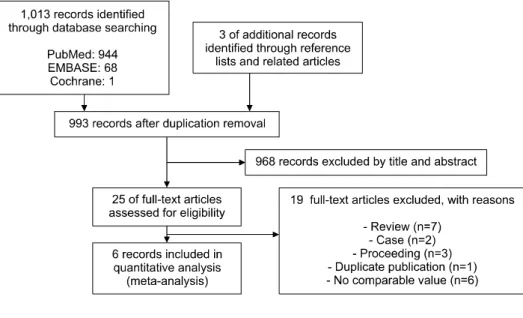
Fig. 1. Flow diagram of study selection (search date: November 24, 2015).
https://doi.org/10.5021/ad.2017.29.4.525
Five-Alpha Reductase Inhibitor and Breast Cancer Risk in Men: A Systematic Review
Min-Woo Kim, Hyun-sun Park, Jong Seo Park, Seong-Joon Koh1, Soyun Cho
Departments of Dermatology and 1Internal Medicine, SMG-SNU Boramae Medical Center, Seoul, Korea
Dear Editor:
The 5-alpha reductase inhibitors (5ARIs), including finas- teride and dutasteride, are commonly prescribed to treat benign prostatic hyperplasia (BPH), lower urinary tract symptoms (LUTS), and androgenetic alopecia (AGA). In addition to well-known adverse reactions of 5ARIs such as erectile dysfunction and decreased libido, previous rando- mized controlled trials (RCTs) in male subjects on the ef- fect of 5ARI for BPH revealed a higher frequency of breast cancer in a finasteride 5 mg group than in a placebo group1. However, another large RCT demonstrated a con- tradictory result2; therefore, the relationship between 5ARIs and male breast cancer remains controversial. Therefore,
we performed a literature search to acquire all the avail- able evidence regarding the association between 5ARIs and breast cancer risk in men.
We searched PubMed, EMBASE, and The Cochrane Library databases on November 24th, 2015 using the fol- lowing keywords: “finasteride,” “dutasteride,” “reductase inhibitor,” “breast cancer,” “breast carcinoma,” “breast tu- mor,” “breast malignancy” or “breast malignancies,” and
“breast neoplasm.” No language restriction was applied, articles were selected by title and abstract, and the full texts were reviewed for eligibility (Fig. 1).
We followed the Preferred Reporting Items for Systematic Reviews and Meta-Analysis (PRISMA) guidelines. Case-con-
Brief Report
526 Ann Dermatol
Table 1. Study characteristics of 6 studies included in the meta-analysis First author (year)Study designCountryBreast cancer patients (n) Age (yr)Follow up (yr)
Quality assess- mentStudy populationRisk of breast cancer (95% confidence interval)Exposed to 5ARINon- exposed McConnell et al.2 (1998)RCTUSA 0/1,524 2/1,51664 (mean)44BPH patients with moderate to severe symptoms of urinary destruction Crude RR=0.19 (0.01∼4.14) Thompson et al.7 (2003)RCTUSA 1/9,423 1/9,457At least 5575Normal population with prophylactic use of 5ARI to prevent prostate cancer
Crude RR=1.00 (0.06∼16.04) McConnell et al.1 (2003)RCTUSA 4/1,554 0/1,49362 (mean)4.55BPH patients with moderate to severe symptomsCrude RR=8.64 (0.46∼160.46) Bird et al.6 (2013)Case-controlUSA 8/339331/6,78060 (median)At least 13Prescription and medical coverage data in the United States IMS LifeLinkTM Health Plan claims database
Adjusted rate ratio=0.70 (0.34∼1.45) Adjusted to drug exposure, gynecomastia, Klinefelter syndrome, liver damage, obesity, estrogen, orchiectomy, radiation Duijnhoven et al.5 (2014)Case-controlUnited Kingdom17/398381/3,93071 (mean)At least 13Data from the United Kingdom Clinical Practice Research Datalink database
Adjusted odds ratio=1.08 (0.62∼1.87) Adjusted to history of lymphoma, gynecomastia, testicular cancer, treatment with luteinizing-hormone-releasing hormone-blockers Robinson et al.4 (2015)CohortSweden 9/124,183 90/545,29369.6 (mean)Median 6Data on prescriptions for 5ARI used for LUTS from the Prescribed Drug Register, Patient Register, Cancer Register Adjusted hazard ratio=0.65 (0.32∼1.31) Adjusted to education level, antidiabetic drugs, statins RCT: randomized controlled trial, BPH: benign prostatic hyperplasia, RR: relative risk, 5ARI: 5-alpha reductase inhibitor, LUTS: lower urinary tract symptoms.
Brief Report
Vol. 29, No. 4, 2017 527 trol studies, cohort studies, and RCTs on 5ARIs and breast
cancer risk were included. Case reports or reviews were excluded. Two authors (HSP and JSP) independently ex- tracted the data and any discrepancies were discussed to reach consensus. The quality of included studies was eval- uated using a modification of a previously reported scor- ing system3. Details are as follows: study design−cohort studies or RCTs (2), population-based case control studies (1); exposure assessment−pill counts (2), personal recall or assignment to 5ARI group during trial (1), pharmacy da- tabase or not stated (0); breast cancer diagnosis−histo- pathological confirmation (2), personal recall or breast cancer diagnosis report (1), insurance database or not stat- ed (0); confounder adjustment−additional adjustment for more than 2 confounders (2), adjustment for 2 con- founders (1), no adjustment or not stated (0). A total score of 5 to 8 was considered high quality and 1 to 4 was con- sidered low quality. All analyses were performed using Comprehensive Meta-Analysis software, version 3 (Biostat, Englewood, NJ, USA).
The search process was summarized in a PRISMA flow di- agram (Fig. 1) and our analysis included six studies (137,421 subjects exposed to 5ARI and 568,469 control subjects), and their characteristics are summarized in Table 11,2,4-7. All studies presented data from male populations only.
The three RCTs included finasteride 5 mg only1,2,7, the two case-control studies included finasteride 5 mg or dutas- teride5,6, and the single cohort study included finasteride (dosage not mentioned) or dutasteride4. While some re- searchers planned to include finasteride 1 mg, no study subjects were prescribed the medicine at this dose5; other researchers purposely excluded finasteride 1 mg because of its different indication and lower dose6. Although the cohort study did not clarify dosage in the methodology, the authors mentioned that prescriptions for 5ARIs used for the treatment of LUTS were extracted from a drug reg- ister4. The included studies were too heterogeneous to pool for a meta-analysis and only systematic review was done. Three RCTs reported number of breast cancer pa- tients in 5ARI-exposed and non-exposed groups, and crude relative risk was calculated. The RCTs demonstrated variable risks, but the risks were not significant as 95%
confidence interval contained 1. The rest two case-control and one cohort studies also revealed insignificant adjusted risk variables.
Breast cancer in men is rare with incidence in general population of 1/100,000 man-years. Its risk factors include breast carcinoma history among female relatives, BRCA1 or 2 mutations, Klinefelter syndrome, altered estrogen to testosterone balance, obesity, testicular diseases, and pros- tate cancer8. Association of male breast cancer and 5ARI
use had been mostly investigated focusing on sex hormo- nal imbalance, because 5ARI inhibits the conversion of testosterone to dihydrotestosterone and decreases androgen activity. Previous studies have suggested that 5ARI therapy increases estrogen levels because estrogen is partly pro- duced by the conversion of testosterone to estradiol and subsequently increases breast cancer risk, in the same manner that Klinefelter syndrome patients with increased estrogen-to-testosterone ratios are more likely to develop breast cancer8,9. This speculation is supported by 50 glob- al case reports of male breast cancer in BPH patients who received 5ARI treatment8. Consequently, 5ARI product la- beling has been updated to include breast cancer case reports.
However, in the present comprehensive search, we could not find evidence that 5ARIs increase breast cancer in male populations. Our finding is supported by studies in which 5ARIs did not increase estrogen10, contrary to the previous hypothesis8,9. Amory et al.10 reported that both dutasteride and finasteride 5 mg transiently increased tes- tosterone after 2 months of treatment but did not alter es- tradiol levels over a year of treatment in healthy men. In accordance with these findings, Robinson et al.4 hypothe- sized that 5ARI had no effect on breast cancer risk but that BPH itself may be implicated.
Our study has certain strengths that we performed a broad search without language restriction using multiple data- bases, with a manual review and the inclusion of addi- tional articles1,2,7. However, our study also has limitations.
The analysis included only a small number of studies, some of which were of low quality. This low number may be partly attributable to the rarity of male breast cancer, which makes it a difficult disease to study. Additionally, the selected studies addressed the effect of finasteride 5mg or dutasteride for BPH or LUTS, but none included finas- teride 1 mg for AGA. However, it can present useful in- formation to dermatologists, because they often prescribe dutasteride for AGA.
We did not find evidence of increased breast cancer risk in male populations exposed to 5ARI. However, large-scale studies of high quality are required to confirm these findings. Further studies on the effects of 5ARI on the en- docrine milieu will also promote understanding of breast cancer risk in 5ARI-exposed male populations.
CONFLICTS OF INTEREST
The authors have nothing to disclose.
Brief Report
528 Ann Dermatol
REFERENCES
1. McConnell JD, Roehrborn CG, Bautista OM, Andriole GL Jr, Dixon CM, Kusek JW, et al. The long-term effect of doxazosin, finasteride, and combination therapy on the clinical progression of benign prostatic hyperplasia. N Engl J Med 2003;349:2387-2398.
2. McConnell JD, Bruskewitz R, Walsh P, Andriole G, Lieber M, Holtgrewe HL, et al. The effect of finasteride on the risk of acute urinary retention and the need for surgical treatment among men with benign prostatic hyperplasia. Finasteride Long-Term Efficacy and Safety Study Group. N Engl J Med 1998;338:557-563.
3. Muranushi C, Olsen CM, Green AC, Pandeya N. Can oral nonsteroidal antiinflammatory drugs play a role in the prevention of basal cell carcinoma? A systematic review and metaanalysis. J Am Acad Dermatol 2016;74:108-119.e1.
4. Robinson D, Garmo H, Holmberg L, Stattin P. 5-α reductase inhibitors, benign prostatic hyperplasia, and risk of male breast cancer. Cancer Causes Control 2015;26:1289-1297.
5. Duijnhoven RG, Straus SM, Souverein PC, de Boer A, Bosch
JL, Hoes AW, et al. Long-term use of 5α-reductase inhibitors and the risk of male breast cancer. Cancer Causes Control 2014;25:1577-1582.
6. Bird ST, Brophy JM, Hartzema AG, Delaney JA, Etminan M.
Male breast cancer and 5α-reductase inhibitors finasteride and dutasteride. J Urol 2013;190:1811-1814.
7. Thompson IM, Goodman PJ, Tangen CM, Lucia MS, Miller GJ, Ford LG, et al. The influence of finasteride on the development of prostate cancer. N Engl J Med 2003;349:
215-224.
8. Shenoy NK, Prabhakar SM. Finasteride and male breast cancer: Does the MHRA report show a link? J Cutan Aesthet Surg 2010;3:102-105.
9. Lee SC, Ellis RJ. Male breast cancer during finasteride therapy. J Natl Cancer Inst 2004;96:338-339.
10. Amory JK, Wang C, Swerdloff RS, Anawalt BD, Matsumoto AM, Bremner WJ, et al. The effect of 5alpha-reductase inhibition with dutasteride and finasteride on semen parameters and serum hormones in healthy men. J Clin Endocrinol Metab 2007;92:1659-1665.