Cardiac Resynchronization Therapy and QRS Duration:
Systematic Review, Meta-analysis, and Meta-regression
Cardiac resynchronization therapy (CRT) has been shown to reduce the risk of death and hospitalization in patients with advanced heart failure with left ventricular dysfunction.
However, controversy remains regarding who would most benefit from CRT. We performed a meta-analysis, and meta-regression in an attempt to identify factors that determine the outcome after CRT. A total of 23 trials comprising 10,103 patients were selected for this meta-analysis. Our analysis revealed that CRT significantly reduced the risk of all-cause mortality and hospitalization for heart failure compared to control treatment. The odds ratio (OR) of all-cause death had a linear relationship with mean QRS duration (P = 0.009).
The benefit in survival was confined to patients with a QRS duration ≥ 145 ms (OR, 0.86;
95% CI, 0.74-0.99), while no benefit was shown among patients with a QRS duration of 130 ms (OR, 1.00; 95% CI, 0.80-1.25) or less. Hospitalization for heart failure was shown to be significantly reduced in patients with a QRS duration ≥ 127 ms (OR, 0.77; 95% CI, 0.60-0.98). This meta-regression analysis implies that patients with a QRS duration ≥ 150 ms would most benefit from CRT, and in those with a QRS duration < 130 ms CRT implantation may be potentially harmful.
Keywords: Cardiac Resynchronization Therapy; Heart Failure; Meta-Analysis Si-Hyuck Kang,1,* Il-Young Oh,1,*
Do-Yoon Kang,2 Myung-Jin Cha,2 Youngjin Cho,2 Eue-Keun Choi,2 Seokyung Hahn,3 and Seil Oh2
1Department of Internal Medicine, Seoul National University College of Medicine and Seoul National University Bundang Hospital, Seongnam;
2Department of Internal Medicine, Seoul National University College of Medicine and Seoul National University Hospital, Seoul; 3Medical Research Collaborating Center, Seoul National University Hospital, Seoul, Korea
*Si-Hyuck Kang and Il-Young Oh contributed equally to this work.
Received: 30 May 2014 Accepted: 4 September 2014 Address for Correspondence:
Seil Oh, MD
Department of Internal Medicine, Seoul National University College of Medicine, 101 Daehak-ro, Jongno-gu, Seoul 110-744, Korea
Tel: +82.2-2072-2088, Fax: +82.2-762-9662 E-mail: [email protected]
http://dx.doi.org/10.3346/jkms.2015.30.1.24 • J Korean Med Sci 2015; 30: 24-33
INTRODUCTION
Heart failure is a leading cause of death in developed countries (1). Cardiac resynchronization therapy (CRT) with multisite ventricular pacing was first conceived (2) based on the finding that approximately one third of patients with advanced heart failure (HF) have prolonged ventricular conduction (3). Multi- ple large-scale clinical trials have shown that CRT modifies ven- tricular electromechanical delay, induces improvements in ven- tricular structure and function (4), leads to better exercise toler- ance and quality of life (5, 6), and reduces mortality and hospi- talization rates (7, 8).
These trial results led to the acceptance of CRT into current clinical practice guidelines (9, 10). However, there are still some controversies on specific indications for CRT in patients with HF. These disagreements mainly stem from questions of who would most and least benefit from CRT (11-13). The most de- bated issues include optimal QRS duration and morphology, etiology (ischemic or not), and baseline functional capacity.
Recent trials, which sought to expand the indication for CRT, showed variable and conflicting results (14-18).
Given the broad spectrum of patient groups studied in recent
trials, we hypothesized that by using meta-regression analysis more knowledge could be obtained on the factors determining the benefit of CRT. Meta-regression is an analysis tool used to examine the relationship between moderating variables and treatment effect using regression-based techniques. In this study, we conducted a comprehensive systematic review, meta-anal- ysis, and meta-regression of data from contemporary random- ized controlled trials (RCT) to determine which factors may de- termine the outcome of CRT.
MATERIALS AND METHODS Eligibility criteria
We included all RCTs that compared CRT with medical treat- ment or implantable cardioverter-defibrillator (ICD) alone. We included RCTs that 1) enrolled patients with systolic heart fail- ure with a left ventricular ejection fraction (LVEF) ≤ 40%, 2) compared CRT with control treatment, 3) studied mainly pa- tients with sinus rhythm, and 4) reported data on clinical events such as death and hospitalization for heart failure. We excluded trials that 1) exclusively enrolled patients with atrial fibrillation, 2) compared CRT with left ventricular (LV) pacing only as the ORIGINAL ARTICLE
Cardiovascular Disorders
Kang S-H, et al. • Cardiac Resynchronization Therapy and QRS Duration
control arm, 3) compared different types of programming (such as simultaneous versus sequential biventricular pacing), and 4) compared different methods of procedure (such as transve- nous versus epicardial LV lead placement or triple site versus double site pacing). No restrictions were imposed on the mode of treatment in control groups, etiology of HF, study period, sam- ple size, or publication status.
Data sources and searches
We performed an electronic search of the PubMed, Embase, and Cochrane Central Register of Controlled Trials (CENTRAL) from the inception of each database to October 2013. The elec- tronic search strategy was complemented by a manual review of the reference lists of included articles. References of recent reviews, editorials, and meta-analyses were also examined. One investigator performed the screening of titles and abstracts, iden- tified duplicates, reviewed full articles, and determined their el- igibility. This work was subsequently cross-checked by a second reviewer. Disagreement between reviewers was resolved by dis- cussion. The most updated data for each study were searched manually, and chosen for abstraction. Data extraction was in- dependently done by two reviewers and checked by a third re- viewer.
Risk of bias assessment
The quality of eligible RCTs was assessed using the Cochrane Collaboration’s tool for the risk of bias (19). Both the manuscript and protocol, if available (published or online), were reviewed for relevant information. Risk of bias was assessed by one re- viewer and cross-checked by a second reviewer.
Study outcomes and definitions
Independent variables in this study were hard clinical outcomes.
The primary study endpoint was all-cause mortality, while the secondary endpoint was hospitalization for heart failure.
Data synthesis and analysis
Odds ratios (OR) with 95% confidence intervals (CI) were pre- sented as a summary statistic. We calculated pooled ORs with the use of the random effects model postulated by DerSimoni- an and Laird (20). Statistical heterogeneity was assessed with Cochran Q via a chi-square test and was quantified with the I2 test (21). Publication bias was assessed by funnel plot asymme- try and Egger’s test.
Exploratory meta-regressions were performed to assess het- erogeneous study effects. Covariates that were tested include: 1) QRS duration, 2) QRS morphology, 3) ischemic origin, 4) base- line New York Heart Association (NYHA) functional class, 5) baseline LVEF, 6) LV end-diastolic dimension (LVEDD), and 7) LV end-diastolic volume (LVEDV). QRS morphology was quan- tified as the proportion of left bundle branch block (LBBB) doc-
umented in each trial, excluding those which exclusively enroll- ed HF patients with a narrow QRS duration. Analysis for NYHA classification was done with the proportion of patients with NYHA functional class III or IV as a covariate. We performed meta-regression analyses using two different statistical models to estimate residual between-trial variance: 1) a random effects model with a restricted maximum likelihood (REML) estimate (22), and 2) a Bayesian random effects model (23).
Subgroup analysis was planned with stratification according to 1) treatment modality of the control groups (ICD vs. medical therapy), 2) NYHA function class (predominantly class I/II vs.
III/IV), or 3) follow-up duration (< 1 vs. ≥ 1 yr). Interaction was tested with the use of a mixed-effects meta-regression model (REML method). Sensitivity analysis was done on studies with a low risk of bias. Excluded in the sensitivity analysis were stud- ies with > 1 entry assigned to be at high or unclear risk of bias assessed with the Cochrane Collaboration’s tool (except for the domains of blinding on patient and physician).
Articles after duplication removed (N = 785)
Full article obtained (N = 63)
Articles included (N = 36)
Trials included (N = 23)
Articles included after manual search (N = 3) Articles excluded (N = 722)
- Irrelevant subjects, patients, or design (N = 495) - Editorials, comments (N = 72)
- Review or meta-analysis (N = 136) - Observational studies (N = 4) - Substudy of RCT (N = 14)
- Only abstract with data unabstractable (N=1)
Articles excluded (N = 30)
- Irrelevant subjects, patients, or design (N = 18) - No clinical events reported (N = 4)
- Not a randomized controlled trial (N = 1) - Duplicates (N = 3)
- Post-hoc analysis of RCTs (N = 4) Medline
Articles found (N = 286)
EMBASE Articles found
(N = 551)
CENTRAL Articles found
(N = 371)
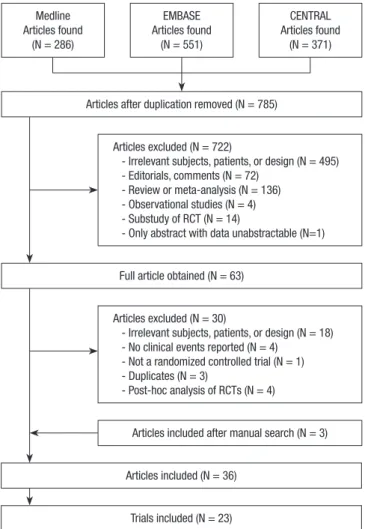
Fig. 1. Flow diagram of systematic review. The flow diagram depicts the detailed process of systematic literature review according the statement of the Preferred Re- porting Items for Systematic Reviews and Meta-Analyses (PRISMA) statement. RCT, randomized controlled trial.
Kang S-H, et al. • Cardiac Resynchronization Therapy and QRS Duration
Statistical analysis
Statistical analysis was performed using the “metafor” and “me- ta-commands” packages in R programming, version 3.0.2 (The R Foundation for Statistical Computing, Vienna, Austria). Re- sults were considered statistically significant if the 2-sided P <
0.05. The Bayesian random effects model was constructed with WinBUGS v.1.4.3 (MRC Biostatistics Unit, Cambridge, UK) (24).
Odds ratios (OR) with 95% credible intervals (CrIs) are present- ed as summary statistics, and results for which the CrIs of the ORs did not include one were considered significant. Non-in- formative prior distributions were selected so as to allow the data to dominate the final results. We ran Markov chain Monte Carlo samplers in WinBUGS, running three chains with differ-
ent starting values. A burn-in phase of 20,000 iterations was fol- lowed by 50,000 updates, where the number of burn-in iterations was chosen according to the Brooks-Gelman-Rubin method for convergence checks (25).
RESULTS Study selection
Fig. 1 describes the flow of systematic literature review accord- ing the Statement of the Preferred Reporting Items for System- atic Reviews and Meta-Analyses (PRISMA) statement. Among 785 potentially relevant items, 23 trials comprising 10,103 pa- tients were finally selected for this meta-analysis.
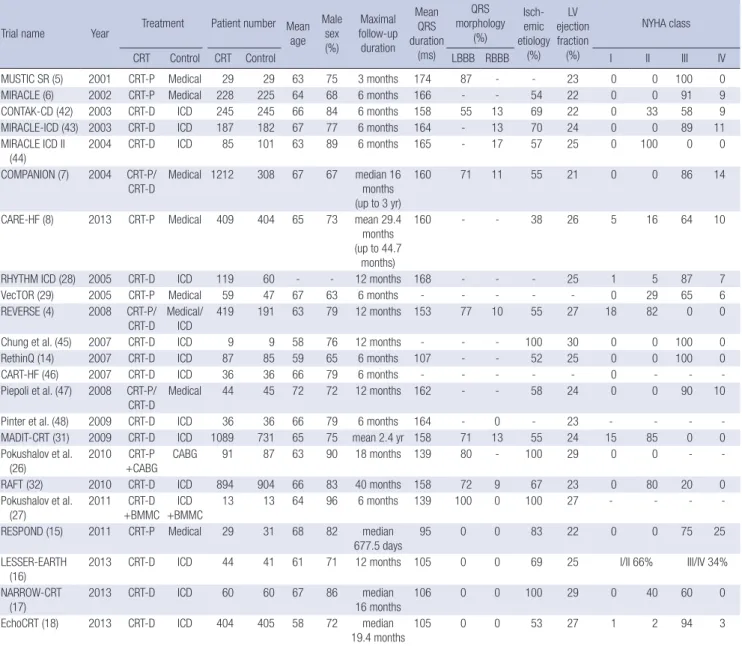
Table 1. Main characteristics of included studies
Trial name Year Treatment Patient number Mean age
Male sex (%)
Maximal follow-up duration
Mean QRS duration
(ms)
QRS morphology
(%)
Isch- emic etiology
(%) LV ejection fraction
(%)
NYHA class
CRT Control CRT Control LBBB RBBB I II III IV
MUSTIC SR (5) 2001 CRT-P Medical 29 29 63 75 3 months 174 87 - - 23 0 0 100 0
MIRACLE (6) 2002 CRT-P Medical 228 225 64 68 6 months 166 - - 54 22 0 0 91 9
CONTAK-CD (42) 2003 CRT-D ICD 245 245 66 84 6 months 158 55 13 69 22 0 33 58 9
MIRACLE-ICD (43) 2003 CRT-D ICD 187 182 67 77 6 months 164 - 13 70 24 0 0 89 11
MIRACLE ICD II
(44) 2004 CRT-D ICD 85 101 63 89 6 months 165 - 17 57 25 0 100 0 0
COMPANION (7) 2004 CRT-P/
CRT-D Medical 1212 308 67 67 median 16 months (up to 3 yr)
160 71 11 55 21 0 0 86 14
CARE-HF (8) 2013 CRT-P Medical 409 404 65 73 mean 29.4 months (up to 44.7
months)
160 - - 38 26 5 16 64 10
RHYTHM ICD (28) 2005 CRT-D ICD 119 60 - - 12 months 168 - - - 25 1 5 87 7
VecTOR (29) 2005 CRT-P Medical 59 47 67 63 6 months - - - - - 0 29 65 6
REVERSE (4) 2008 CRT-P/
CRT-D Medical/
ICD 419 191 63 79 12 months 153 77 10 55 27 18 82 0 0
Chung et al. (45) 2007 CRT-D ICD 9 9 58 76 12 months - - - 100 30 0 0 100 0
RethinQ (14) 2007 CRT-D ICD 87 85 59 65 6 months 107 - - 52 25 0 0 100 0
CART-HF (46) 2007 CRT-D ICD 36 36 66 79 6 months - - - - - 0 - - -
Piepoli et al. (47) 2008 CRT-P/
CRT-D Medical 44 45 72 72 12 months 162 - - 58 24 0 0 90 10
Pinter et al. (48) 2009 CRT-D ICD 36 36 66 79 6 months 164 - 0 - 23 - - - -
MADIT-CRT (31) 2009 CRT-D ICD 1089 731 65 75 mean 2.4 yr 158 71 13 55 24 15 85 0 0
Pokushalov et al.
(26) 2010 CRT-P
+CABG CABG 91 87 63 90 18 months 139 80 - 100 29 0 0 - -
RAFT (32) 2010 CRT-D ICD 894 904 66 83 40 months 158 72 9 67 23 0 80 20 0
Pokushalov et al.
(27) 2011 CRT-D
+BMMC ICD
+BMMC 13 13 64 96 6 months 139 100 0 100 27 - - - -
RESPOND (15) 2011 CRT-P Medical 29 31 68 82 median
677.5 days 95 0 0 83 22 0 0 75 25
LESSER-EARTH (16)
2013 CRT-D ICD 44 41 61 71 12 months 105 0 0 69 25 I/II 66% III/IV 34%
NARROW-CRT
(17) 2013 CRT-D ICD 60 60 67 86 median
16 months 106 0 0 100 29 0 40 60 0
EchoCRT (18) 2013 CRT-D ICD 404 405 58 72 median
19.4 months 105 0 0 53 27 1 2 94 3
CRT, cardiac resynchronization therapy; CRT-P, cardiac resynchronization therapy pacemaker; CRT-D, cardiac resynchronization therapy defibrillation; ICD, implantable cardio- verter–defibrillator; CABG, coronary artery bypass graft; BMMC, bone marrow mononuclear cell transplantation; LBBB, left bundle branch block; RBBB, right bundle branch block;
LV, left ventricle; NYHA, New York Heart Association.
Kang S-H, et al. • Cardiac Resynchronization Therapy and QRS Duration
Systematic review and study characteristics
Table 1 briefly describes the key features of the included trials.
While many of the studies compared cardiac resynchronization therapy defibrillation (CRT-D) with ICD, some compared car- diac resynchronization therapy pacemaker (CRT-P) with medi- cal therapy. One study enrolled patients undergoing coronary artery bypass graft (CABG) surgery and randomized to CRT-P with CABG or CABG alone (26). Another study compared CRT- D plus bone marrow mononuclear cell transplantation (BMMC) to BMMC alone (27). Two trials had not been published in peer- reviewed journals, so data were extracted from online source (28, 29).
Mean age in the individual studies ranged from 58 to 72 yr, and the proportion of males ranged from 63% to 96%. Mean duration of the QRS complex was highly variable across trials and ranged from 95 ms to 174 ms. Meanwhile, LVEF was uni- formly low (21% to 30%). Estimated median duration of follow- up was 14.1 months.
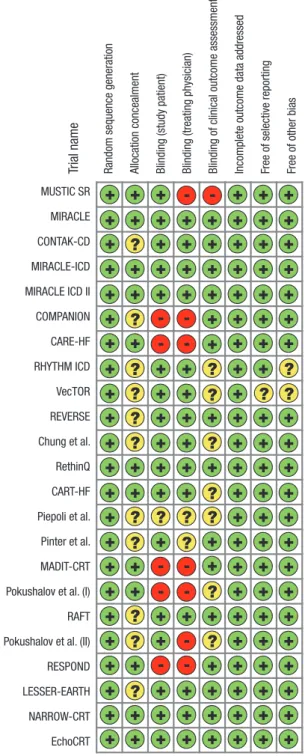
Risk of bias within studies
The risk of bias of each trial was assessed with the Cochrane Collaboration’s tool and is summarized in Fig. 2. All of the in- cluded studies were described as randomized trials. Allocation concealment was appropriately described in 12 trials, while clin- ical outcomes were adjudicated under proper blinding in 16 out of the 23 trials. Double blinding was done in 14 trials, while two trials blinded only participating patients but not treating physicians.
All-cause mortality
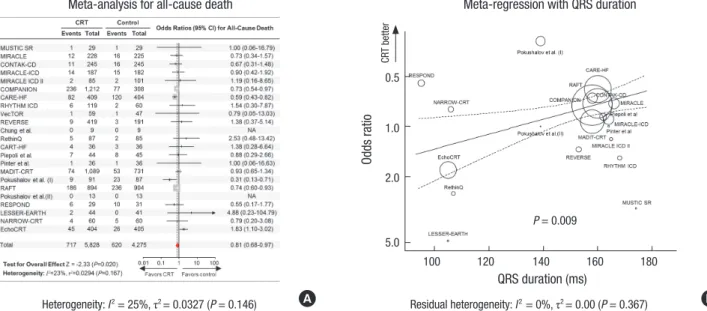
Pooling of the 23 trials with the random-effects model showed a significant benefit of CRT over control treatment in terms of overall survival (OR, 0.82; 95% confidence intervals [CI], 0.68- 0.98; P = 0.027) (Fig. 3A). There was no significant publication bias (P = 0.150 by Egger’s test). The effects of CRT varied across trials with small to moderate heterogeneity (I2= 25%, P = 0.146).
Meta-regression analyses were performed with the aim to ex- plore factors explaining the heterogeneity. As shown in Fig. 3B, we found a significant linear association between the benefit of CRT and the length of the QRS duration [log OR = -0.01 × (QRS duration)+1.34; P = 0.009]. The model incorporating QRS du- ration as a covariate yielded no residual heterogeneity (I2= 0%, P = 0.367). There was no effect of CRT in patient with a QRS du- ration of 130 ms (OR, 1.00; 95% CI, 0.80-1.25). The benefit of CRT was more apparent as QRS lengthened and was statistically sig- nificant at a QRS duration ≥ 145 ms (OR, 0.86; 95% CI, 0.74-0.99).
The estimated OR derived from the random-effects meta-re- gression model was 0.81 (95% CI, 0.72-0.93) for 150 ms. With a QRS duration < 130 ms, the model suggested a potential harm with CRT without statistical significance: for example the estima- ted ORs at a QRS duration of 120 ms was 1.11 (95% CI, 0.83-1.49).
The relationship was not significant for any other study variables including QRS morphology, ischemic origin, NYHA functional class, LVEF, LVEDD, and LVEDV (Table 2).
The Bayesian random effects model yielded a wider range of credible intervals. As a result, the pooled OR of CRT compared to control treatment was statistically insignificant (OR, 0.84; 95%
CrI, 0.67-1.10). Meta-regression with the Bayesian model show- MUSTIC SR
MIRACLE CONTAK-CD MIRACLE-ICD MIRACLE ICD II COMPANION CARE-HF RHYTHM ICD VecTOR REVERSE Chung et al.
RethinQ CART-HF Piepoli et al.
Pinter et al.
MADIT-CRT Pokushalov et al.(I) RAFT Pokushalov et al. (II) RESPOND LESSER-EARTH NARROW-CRT EchoCRT
Random sequence generation Allocation concealment Blinding (study patient) Blinding (treating physician) Blinding of clinical outcome assessment Incomplete outcome data addressed Free of selective reporting Free of other bias
+ + + + + + + + + + + + + + + + + + + + + + +
+ + + + +
+ + +
+ + +
?
?
?
?
?
?
?
?
?
?
? + + + + +
+ + + + + + +
+ + + + + - -
? - - -
+ + + +
+ + + + + +
+
+ + + - -
? - - - -
?
- + + + + + +
+ +
+
+ + +
?
?
?
?
+ +
?
+
? + + + + + + + + + + + + + + + + + + + + + + +
+ + + + + + + + + + + + + + + + + + + + + +
+ + + + + + +
+ + + + + + + + + + + + + +
?
?
?
?
+
-
Random sequence generation Allocation concealment Blinding (study patient) Blinding (treating physician) Blinding of clinical outcome assessment Incomplete outcome data addressed Free of selective reporting Free of other bias MUSTIC SR
MIRACLE CONTAK-CD MIRACLE-ICD MIRACLE ICD II COMPANION CARE-HF RHYTHM ICD VecTOR REVERSE Chung et al.
RethinQ CART-HF Piepoli et al.
Pinter et al.
MADIT-CRT Pokushalov et al. (I) RAFT Pokushalov et al. (II) RESPOND LESSER-EARTH NARROW-CRT EchoCRT
Fig. 2. Risk of bias assessment. Risk of bias of each included trial was assessed with the Cochrane Collaboration’s tool. This ‘risk of bias’ summary presents all of the judg- ments in a cross-tabulation of study by entry. Green represents ‘Yes (low risk of bias)’;
yellow, ‘Unclear’; red, ‘No (high risk of bias)’.
Trial name
Kang S-H, et al. • Cardiac Resynchronization Therapy and QRS Duration
ed a similar relationship and slope with wider credible ranges than did the REML estimate model. The ORs estimated from the Bayesian approach were 1.00 (95% CrI, 0.73-1.36) for a QRS duration of 125 ms, and 0.78 (95% CrI, 0.64-1.00) for 156 ms.
Hospitalization for HF
A total of 16 trials comprising 7,511 patients contributed to the analysis for the secondary endpoint, hospitalization for HF. No significant publication bias was present (P = 0.113). While CRT was shown to reduce the risk by as much as 41% (OR, 0.59; 95%
CI, 0.47-0.74; P < 0.001), there was a high degree of heterogene- ity between studies (I2= 54%, P = 0.006) (Fig. 4A). Among a va- riety of study-level variables, QRS duration best explained the difference between studies (Fig. 4B). The meta-regression show- ed that the magnitude of risk reduction in HF hospitalization was greater with an increased duration of the QRS complex (log OR = -0.01 × [QRS duration]+1.11; P = 0.009). According to the model, the estimated ORs were 0.83 (95% CI, 0.62-1.11) for a QRS duration of 120 ms and 0.60 (95% CI, 0.50-0.71) for 150 ms.
The shortest QRS duration at which CRT was significantly bet- ter was 127 ms (OR, 0.77; 95% CI, 0.60-0.98). The QRS duration where CRT was equivalent to control treatment in terms of HF hospitalization was found to be 103 ms. No other study covari- ates were significantly associated with the relative efficacy of CRT, while QRS morphology showed marginal significance (P = 0.097) (Table 2).
The Bayesian random effects model yielded similar results.
The pooled estimate of OR was 0.58 (95% CrI, 0.44-0.75). Meta- regression with empirical Bayesian estimates showed that for QRS durations ≥ 127 ms CRT significantly reduced the risk of HF hospitalization (OR, 0.74; 95% CrI, 0.50-0.99).
Subgroup analysis
Included trials were divided into two subgroups according to the treatment modality of the control group, i.e. medical treat- ment or ICD. Two trials were excluded from this analysis be- cause of difficulties determining the precise classification. In one of these trials, the decision to implant CRT-P or CRT-D was Table 2. Meta-regression for all-cause death or hospitalization for heart failure (HF) as
a function of covariates
Covariate All trials Trials with low risk
of bias
β P value β P value
All-cause death – ln (OR) QRS duration (ms) LBBB (%) Ischemic origin (%) NYHA III/IV (%) LV ejection fraction (%) LV end-diastolic dimension (mm) LV end-diastolic volume (mL)
-0.0103 -0.0065 -0.0092 0.0003 0.0153 -0.0107 0.0032
0.009 0.746 0.228 0.906 0.756 0.693 0.494
-0.0107 -0.0080 -0.0100 0.0003 0.0126 -0.0107 0.0036
0.008 0.705 0.207 0.923 0.808 0.695 0.486 Hospitalization for heart failure – ln (OR)
QRS duration (ms) LBBB (%) Ischemic origin (%) NYHA III/IV (%) LV ejection fraction (%) LV end-diastolic dimension (mm) LV end-diastolic volume (mL)
-0.0108 -0.0250 -0.0021 0.0004 -0.0139 -0.0246 0.0044
0.009 0.097 0.802 0.896 0.806 0.523 0.539
-0.0104 -0.0275 -0.0052 0.0013 -0.0337 -0.0146 0.0083
0.013 0.080 0.552 0.712 0.566 0.721 0.316
Fig. 3. Meta-analysis and meta-regression for all-cause mortality. (A) Forest plot with odds ratios (OR) for all-cause death after cardiac resynchronization therapy (CRT) com- pared to control treatment for individual trials and the pooled population. The squares and the horizontal lines indicate the ORs and the 95% confidence intervals (CI) for each included trial. The size of each square is proportional to the statistical weight of a trial in the meta-analysis. A diamond indicates the effect estimate derived from the meta-anal- ysis, with the center indicating the point estimate and the left and the right ends the 95% CI. (B) OR of CRT compared to control as a function of the mean QRS duration of par- ticipants at enrollment. ORs are displayed on a logarithmic scale. Circles represent the individual studies, and the size of each circle is proportional to the statistical weight of a trial in the meta-analysis. The fitted meta-regression function is drawn in a solid line accompanied by the upper and lower bounds for the 95% mean prediction interval (dotted lines).
Heterogeneity: I2=25%, τ2=0.0327 (P=0.146) Residual Heterogeneity: I2=0%, τ2=0.00 (P=0.367) (A) Meta-Analysis for All-Cause Death
Figure 3.
(B) Meta-Regression with QRS duration
A B
Heterogeneity: I2 = 25%, τ2 = 0.0327 (P = 0.146) Residual heterogeneity: I2 = 0%, τ2 = 0.00 (P = 0.367) Heterogeneity: I2=25%, τ2=0.0327 (P=0.146) Residual Heterogeneity: I2=0%, τ2=0.00 (P=0.367) (A) Meta-Analysis for All-Cause Death
Figure 3.
(B) Meta-Regression with QRS duration
Odds ratio
QRS duration (ms)
100 120 140 160 180 0.5
1.0
2.0
5.0
CRT better
P = 0.009
Meta-analysis for all-cause death Meta-regression with QRS duration
Kang S-H, et al. • Cardiac Resynchronization Therapy and QRS Duration
left to the discretion of the treating physician, and patients were randomized to CRT-ON or CRT-OFF groups while keeping a double dummy (4). Another trial enrolled patients undergoing BMMC, which cannot be classified as a “conventional” medical treatment (27). Meta-analysis showed that CRT was associated with a significant survival benefit when compared to medical treatment (OR, 0.64; 95% CI, 0.53-0.78; P < 0.001) but not when compared to ICD (OR, 0.98; 95% CI, 0.77-1.26; P = 0.901, P for interaction = 0.024). Notably, the relative efficacy of CRT vs. ICD relied upon the duration of the QRS complex (P = 0.002): CRT was better than ICD only when the QRS complex was wide. Mean- while, the benefit of CRT versus medical treatment was indepen- dent of the QRS duration (P = 0.271) (P for interaction = 0.015).
No significant interactions were found in subgroup analyses for either NYHA function class (P = 0.628) or follow-up dura- tion (P = 0.626).
Sensitivity analysis
A sensitivity analysis was done for studies with a low risk of bias.
Eighteen out of 23 trials met the “low risk of bias” criteria that were defined in this study. The sensitivity analysis generally agre ed with the main analysis: the pooled OR was 0.81 (95% CI, 0.67-0.99;
P = 0.041) for all-cause mortality and 0.60 (95% CI, 0.48-0.75;
P < 0.001) for HF hospitalization. In addition, meta-regression for trials with low risk of bias also resulted in similar outcomes compared with analyses including all trials (Table 2).
DISCUSSION
In this systematic review and meta-analysis, we found that 1) CRT reduced the risk of all-cause mortality and hospitalization for HF, 2) the benefit of CRT was dependent on the duration of QRS complex, 3) the cutoff value of a QRS duration at which significant benefit was observed differed according to which endpoint of interest was investigated, and 4) the relationship between the advantage of CRT and QRS duration was signifi- cant only when compared to ICD, not to medical treatment.
Current guidelines strongly recommend CRT implantation in symptomatic HF patients with sinus rhythm, low LVEF, and a prolonged QRS duration (9, 10). However, there are ongoing controversies regarding specific indications for CRT, among which QRS duration is one of the most debated. Recently, the ACCF/AHA guidelines limited the Class I indication for CRT to patients with a QRS duration ≥ 150 ms (9, 30). However, a QRS duration of 120-150 ms is still recommended as the Class I indi- cation in the European Society of Cardiology (ESC) guidelines if the patient has an LBBB pattern and depressed LVEF (30). The recent change in the ACCF/AHA guidelines was triggered by evidence from clinical trials where subgroup analyses showed a better response to CRT in patients with a wider QRS duration ( ≥ 150 ms) (4, 7, 31, 32). A recent meta-analysis also showed the reduction in adverse events associated with CRT was limit- ed to patients with a QRS duration ≥ 150 ms, but not evident in patients with a QRS duration < 150 ms (11). Contradictory evi- dence also exists. A post-hoc analysis of CARE-HF, one of the Fig. 4. Meta-analysis and meta-regression for hospitalization for heart failure (HF). (A) Forest plot with odds ratios (OR) for hospitalization for HF after cardiac resynchronization therapy (CRT) compared to control treatment for individual trials and the pooled population. The squares and the horizontal lines indicate the ORs and the 95% confidence in- tervals (CI) for each trial included. The size of each square is proportional to the statistical weight of a trial in the meta-analysis. A diamond indicates the effect estimate derived from the meta-analysis, with the center indicating the point estimate and the left and the right ends the 95% CI. (B) OR for HF hospitalization after CRT compared to control as a function of the mean QRS duration of participants at enrollment. ORs are displayed on a logarithmic scale. Circles represent the individual studies, and the size of each circle is proportional to the statistical weight of the trial in the meta-analysis. The fitted meta-regression function is drawn in a solid line accompanied by the upper and lower bounds for the 95% mean prediction interval (dotted lines).
Heterogeneity: I2=54%, τ2=0.0749 (p=0.006) Residual Heterogeneity: I2=29%, τ2=0.0261 (P=0.165)
Figure 4.
(A) Meta-Analysis for Hospitalization for HF (B) Meta-Regression with QRS duration
A B
Heterogeneity: I2 = 54%, τ2 = 0.0749 (P = 0.006) Residual heterogeneity: I2 = 29%, τ2 = 0.0261 (P = 0.165) Heterogeneity: I2=54%, τ2=0.0749 (p=0.006) Residual Heterogeneity: I2=29%, τ2=0.0261 (P=0.165)
Figure 4.
(A) Meta-Analysis for Hospitalization for HF (B) Meta-Regression with QRS duration
Odds ratio
QRS duration (ms)
100 120 140 160 180 0.5
1.0
1.5 2.0
CRT better
P = 0.009
Meta-analysis for hospitalization for HF Meta-regression with QRS duration
Kang S-H, et al. • Cardiac Resynchronization Therapy and QRS Duration
pivotal trials, showed that QRS duration at baseline had no val- ue in predicting unfavorable outcomes (12).
Recent major CRT trials focused on expanding the indica- tions for CRT. The NARROW-CRT and EchoCRT trials studied patients in whom the QRS interval was narrow but intraventric- ular dyssynchrony was evident on echocardiography (11, 17).
The LESSER-EARTH and RESPOND trials also enrolled patients with a narrow QRS complex, but did not require the presence of LV dyssynchrony (15, 16). The rationale of these trials was built on the findings of a discrepancy between dyssynchrony as assessed by echocardiography and QRS duration assessed by electrocardiogram (33, 34). However, these trials showed con- flicting results: some were positive (15, 17), while the others were negative including a well-designed large-scale trial (16, 18). They are reflected in this meta-analysis in the marginal ben- efit of CRT observed and the substantial degree of heterogene- ity across trials. The results here are in contrast to previous me- ta-analyses which clearly showed a significant survival gain with little or no heterogeneity (35, 36). Understanding the source of the wide heterogeneity with a meta-regression method was the primary objective of this study.
To the best of our knowledge, this study is the first systematic study-level meta-regression to explore covariates that explain the benefit of CRT. With the use of the meta-regression method, we were able to identify QRS duration at baseline as the most reliable predictor for hard clinical events after CRT. There was a clear linear relationship between the benefit of CRT and the du- ration of the QRS complex. This study provides an important new data that highlights the importance of considering QRS du- ration when selecting patients for CRT implantation. The expect- ed benefit of CRT in patients with a QRS duration ≥ 150 ms is unquestionable in terms both of all-cause death and HF hospi- talization. In patients with a QRS duration between 130-150 ms, the odds for survival tended to be favorable, but is not defini- tive. However, a risk reduction in terms of hospitalization for HF is still expected for these patients. In the meantime, CRT use in patients with a QRS duration < 130 ms showed little advan- tage, if any, in terms of admission for HF aggravation. Interest- ingly, this may actually do more harm than good in terms of death from any cause. It should be reminded that periprocedur- al complications and inappropriate defibrillator shocks may follow CRT implantation (18, 37). We believe this study provides an important insight into the understanding of current CRT tri- als, and a firm basis to clinical practice guidelines.
The variable effects of a prolonged QRS duration between trials may be explained by differences in the study design. This meta-regression implied the benefit of CRT does not depend on QRS duration when compared to medical therapy. In CARE- HF and COMPANION, in which the control arm was medical treatment, the influence of a prolonged QRS duration was less evident (7, 8). In contrast, MADIT-CRT, and RAFT compared
CRT-D versus ICD (31, 32), and in the REVERSE trial, more than 80% of patients received CRT-D (4). These trials revealed a prom- inent impact of an increased QRS duration on the benefit of CRT.
The major strength of this study is the fact that this is the only existing meta-regression in its true sense. A meta-analysis by Sipahi did analyze relative risks according to QRS duration, but they did not measure actual QRS durations. Instead that study used ranks estimated according to the degree of prolongation among all subgroups (11). In addition, a variety of statistical models performed in this study corroborated the main find- ings. In statistical terms, REML or Bayes estimates are the pre- ferred methods for meta-regression, as conventional random effects models ignore the imprecision in the between-trial vari- ance estimate (38). The main results here were also confirmed by a sensitivity analysis done with low risk-of-bias trials only af- ter all included trials were thoroughly examined for potential risks of bias with the Cochrane Collaboration’s tool.
Caution should be taken in interpreting the negative results of this study, especially regarding LBBB. In the current study, the benefit of CRT had only marginal significance with the pro- portion of LBBB in terms of HF hospitalization. However, sub- group analyses of major clinical trials and a meta-analysis con- sistently showed a greater benefit in patients with complete LBBB compared with nonspecific intraventricular conduction delay or RBBB (7, 8, 31, 32, 39, 40). It should be noted that this meta-regression for QRS morphology was limited in several as- pects. First, trials with narrow QRS duration were excluded in this analysis (15-18). As a result, only 7 trials contributed to this analysis so that the statistical power was too low to show statis- tical significance. Second, the proportions of LBBB in each trial were in too a narrow range. Third, in addition, the 2 trials with the highest weight had a similar proportion of LBBBB (71% in the MADIT-CRT, and 72% in the RAFT) (31, 32).
This study has several limitations. First, this meta-analysis was comprised of 23 randomized trials and inherently shares the limitations of each trial. Two trials included in this analysis have not been peer-reviewed, and several studies were revealed to have a profound risk of bias. However, sensitivity analysis ex- cluding those high risk-of-bias trials validated the main analy- sis. Second, each study included had a different trial design. The duration of follow-up was profoundly inhomogeneous, and the spectrum of optimal medical treatment evolved drastically over the last 15 yr since the landmark MUSTIC SR trial began enroll- ing patients (5). To overcome this limitation, we performed sev- eral subgroup analyses according to the study design. Third, the benefit of CRT depends not only on baseline patient character- istics, but also on technical factors such as left ventricular lead position or device optimization. However, we still lack data on the optimal protocol or lead positioning except for unfavorable outcomes observed after LV apex positioning (41). These fac- tors were beyond the scope of this study. Fourth, this study was
Kang S-H, et al. • Cardiac Resynchronization Therapy and QRS Duration
a study-level meta-regression and lacked individual patient- level data which would have permitted a more thorough inves- tigation. Fifth, since multiple testing was done in this study, we cannot exclude the possibility of false positives. Last but not least, the meta-regression associations are observational in na- ture and should not be interpreted as if they came from rando- mized comparisons (38).
As a conclusion, CRT compared to control treatment was shown to reduce the risk of all-cause mortality and hospitaliza- tion for HF. The relative benefit increased with the prolongation of the QRS duration. This study concludes that patients with a QRS duration ≥ 150 ms would most benefit from CRT, and pa- tients with a QRS duration < 130 ms should not be considered for CRT implantation as it may be potentially be harmful in terms of clinical adverse events.
DISCLOSURE
The authors have no potential financial conflicts on this subject.
AUTHOR CONTRIBUTIONS
Conception and design of the study: IY Oh, S Oh. Acquisition of data: SH Kang, IY Oh, DY Kang. Statistical analysis: SH Kang, S Hahn. First draft of manuscript: SH Kang, IY Oh. Revision and critical review of the manuscript: MJ Cha, Y Cho, EK Choi, S Oh.
Manuscript approval: all authors.
ORCID
Si-Hyuck Kang http://orcid.org/0000-0003-4755-6367 Il-Young Oh http://orcid.org/0000-0002-5584-605X Do-Yoon Kang http://orcid.org/0000-0002-6307-0562 Myung-Jin Cha http://orcid.org/0000-0001-6180-0157 Youngjin Cho http://orcid.org/0000-0002-9263-9957 Eue-Keun Choi http://orcid.org/0000-0002-0411-6372 Seokyung Hahn http://orcid.org/0000-0002-4684-4917 Seil Oh http://orcid.org/0000-0002-3836-6038
REFERENCES
1. Roger VL, Go AS, Lloyd-Jones DM, Benjamin EJ, Berry JD, Borden WB, Bravata DM, Dai S, Ford ES, Fox CS, et al.; American Heart Association Statistics Committee and Stroke Statistics Subcommittee. Heart disease and stroke statisticsz: 2012 update: a report from the American Heart Association. Circulation 2012; 125: e2-e220.
2. Cazeau S, Ritter P, Bakdach S, Lazarus A, Limousin M, Henao L, Mundler O, Daubert JC, Mugica J. Four chamber pacing in dilated cardiomyopa- thy. Pacing Clin Electrophysiol 1994; 17: 1974-9.
3. Aaronson KD, Schwartz JS, Chen TM, Wong KL, Goin JE, Mancini DM.
Development and prospective validation of a clinical index to predict
survival in ambulatory patients referred for cardiac transplant evalua- tion. Circulation 1997; 95: 2660-7.
4. Linde C, Abraham WT, Gold MR, St John Sutton M, Ghio S, Daubert C;
REVERSE (REsynchronization reVErses Remodeling in Systolic left vEntricular dysfunction) Study Group. Randomized trial of cardiac re- synchronization in mildly symptomatic heart failure patients and in as- ymptomatic patients with left ventricular dysfunction and previous heart failure symptoms. J Am Coll Cardiol 2008; 52: 1834-43.
5. Cazeau S, Leclercq C, Lavergne T, Walker S, Varma C, Linde C, Garrigue S, Kappenberger L, Haywood GA, Santini M, et al.; Multisite Stimulation in Cardiomyopathies (MUSTIC) Study Investigators. Effects of multisite biventricular pacing in patients with heart failure and intraventricular conduction delay. N Engl J Med 2001; 344: 873-80.
6. Abraham WT, Fisher WG, Smith AL, Delurgio DB, Leon AR, Loh E, Ko- covic DZ, Packer M, Clavell AL, Hayes DL, et al.; MIRACLE Study Group.
Multicenter InSync Randomized Clinical Evaluation. Cardiac resynchro- nization in chronic heart failure. N Engl J Med 2002; 346: 1845-53.
7. Bristow MR, Saxon LA, Boehmer J, Krueger S, Kass DA, De Marco T, Carson P, DiCarlo L, DeMets D, White BG, et al. Cardiac-resynchroniza- tion therapy with or without an implantable defibrillator in advanced chronic heart failure. N Engl J Med 2004; 350: 2140-50.
8. Cleland JG, Daubert JC, Erdmann E, Freemantle N, Gras D, Kappen- berger L, Tavazzi L; Cardiac Resynchronization-Heart Failure (CARE- HF) Study Investigators. The effect of cardiac resynchronization on mor- bidity and mortality in heart failure. N Engl J Med 2005; 352: 1539-49.
9. Tracy CM, Epstein AE, Darbar D, DiMarco JP, Dunbar SB, Estes NA 3rd, Ferguson TB Jr, Hammill SC, Karasik PE, Link MS, et al.; American Col- lege of Cardiology Foundation; American Heart Association Task Force on Practice Guidelines; Heart Rhythm Society. 2012 ACCF/AHA/HRS focused update of the 2008 guidelines for device-based therapy of cardi- ac rhythm abnormalities: a report of the American College of Cardiology Foundation/American Heart Association Task Force on Practice Guide- lines and the Heart Rhythm Society. [corrected]. Circulation 2012; 126:
1784-800.
10. Brignole M, Auricchio A, Baron-Esquivias G, Bordachar P, Boriani G, Breithardt OA, Cleland J, Deharo JC, Delgado V, Elliott PM, et al. 2013 ESC Guidelines on cardiac pacing and cardiac resynchronization thera- py: the Task Force on cardiac pacing and resynchronization therapy of the European Society of Cardiology (ESC). Developed in collaboration with the European Heart Rhythm Association (EHRA). Eur Heart J 2013;
34: 2281-329.
11. Sipahi I, Carrigan TP, Rowland DY, Stambler BS, Fang JC. Impact of QRS duration on clinical event reduction with cardiac resynchronization ther- apy: meta-analysis of randomized controlled trials. Arch Intern Med 2011;
171: 1454-62.
12. Gervais R, Leclercq C, Shankar A, Jacobs S, Eiskjaer H, Johannessen A, Freemantle N, Cleland JG, Tavazzi L, Daubert C; CARE-HF investigators.
Surface electrocardiogram to predict outcome in candidates for cardiac resynchronization therapy: a sub-analysis of the CARE-HF trial. Eur J Heart Fail 2009; 11: 699-705.
13. Zareba W, Klein H, Cygankiewicz I, Hall WJ, McNitt S, Brown M, Cannom D, Daubert JP, Eldar M, Gold MR, et al.; MADIT-CRT Investigators. Ef- fectiveness of Cardiac Resynchronization Therapy by QRS Morphology in the Multicenter Automatic Defibrillator Implantation Trial-Cardiac Resynchronization Therapy (MADIT-CRT). Circulation 2011; 123: 1061-
Kang S-H, et al. • Cardiac Resynchronization Therapy and QRS Duration
72.
14. Beshai JF, Grimm RA, Nagueh SF, Baker JH 2nd, Beau SL, Greenberg SM, Pires LA, Tchou PJ. Cardiac-resynchronization therapy in heart failure with narrow QRS complexes. N Engl J Med 2007; 357: 2461-71.
15. Foley PW, Patel K, Irwin N, Sanderson JE, Frenneaux MP, Smith RE, Stegemann B, Leyva F. Cardiac resynchronisation therapy in patients with heart failure and a normal QRS duration: the RESPOND study.
Heart 2011; 97: 1041-7.
16. Thibault B, Harel F, Ducharme A, White M, Ellenbogen KA, Frasure- Smith N, Roy D, Philippon F, Dorian P, Talajic M, et al.; LESSER-EARTH Investigators. Cardiac resynchronization therapy in patients with heart failure and a QRS complex <120 milliseconds: the Evaluation of Resyn- chronization Therapy for Heart Failure (LESSER-EARTH) trial. Circula- tion 2013; 127: 873-81.
17. Muto C, Solimene F, Gallo P, Nastasi M, La Rosa C, Calvanese R, Iengo R, Canciello M, Sangiuolo R, Diemberger I, et al. A randomized study of cardiac resynchronization therapy defibrillator versus dual-chamber implantable cardioverter-defibrillator in ischemic cardiomyopathy with narrow QRS: the NARROW-CRT study. Circ Arrhythm Electrophysiol 2013; 6: 538-45.
18. Ruschitzka F, Abraham WT, Singh JP, Bax JJ, Borer JS, Brugada J, Dick- stein K, Ford I, Gorcsan J 3rd, Gras D, et al.; EchoCRT Study Group. Car- diac-resynchronization therapy in heart failure with a narrow QRS com- plex. N Engl J Med 2013; 369: 1395-405.
19. Cochrane Handbook for Systematic Reviews of Interventions Version 5.1.0 (updated March 2011): the Cochrane Collaboration. Available at http://www.cochrane-handbook.org/ [accessed on 06 December 2013].
20. DerSimonian R, Laird N. Meta-analysis in clinical trials. Control Clin Trials 1986; 7: 177-88.
21. Higgins JP, Thompson SG, Deeks JJ, Altman DG. Measuring inconsis- tency in meta-analyses. BMJ 2003; 327: 557-60.
22. Thompson SG, Sharp SJ. Explaining heterogeneity in meta-analysis: a comparison of methods. Stat Med 1999; 18: 2693-708.
23. NICE Decision Support Unit. Heterogeneity: subgroups, meta-regres- sion, bias and bias-adjustment. Available at http://www.nicedsu.org.
uk/TSD3%20Heterogeneity.final%20report.08.05.12.pdf [accessed on 06 December 2013].
24. Jonas DE, Wilkins TM, Bangdiwala S, Bann CM, Morgan LC, Thaler KJ, Amick HR, Gartlehner G. Findings of Bayesian mixed treatment com- parison meta-analyses: comparison and exploration using real-world trial data and simulation Available at http://www.ncbi.nlm.nih.gov/
books/NBK126104/ [accessed on 06 December 2013].
25. Gelman A, Rubin DB. Inference from iterative simulation using multiple sequences. Stat Sci 1992: 457-72.
26. Pokushalov E, Romanov A, Prohorova D, Cherniavsky A, Goscinska- Bis K, Bis J, Bochenek A, Karaskov A. Coronary artery bypass grafting with concomitant cardiac resynchronisation therapy in patients with ischaemic heart failure and left ventricular dyssynchrony. Eur J Cardio- thorac Surg 2010; 38: 773-80.
27. Pokushalov E, Romanov A, Corbucci G, Prohorova D, Chernyavsky A, Larionov P, Terekhov I, Artyomenko S, Kliver E, Shirokova N, et al. Car- diac resynchronization therapy and bone marrow cell transplantation in patients with ischemic heart failure and electromechanical dyssyn- chrony: a randomized pilot study. J Cardiovasc Transl Res 2011; 4: 767- 78.
28. Summary of Safety and Effectiveness Data: St. Jude Epic and Atlas+HF CRT-D Systems Available at http://www.fda.gov/ohrms/dockets/dockets/
05m0492/05m-0492-aav0001-03-SSED-vol1.pdf [accessed on 02 Novem- ber 2013].
29. Summary of Safety and Effectiveness Data: St. Jude Frontier Cardiac Resynchronizatio Therapy. Available at http://www.fda.gov/ohrms/dock- ets/dockets/05m0289/05m-0289-aav0001-03-SSED-vol1.pdf [accessed on 02 November 2013].
30. Yancy CW, Jessup M, Bozkurt B, Butler J, Casey DE Jr, Drazner MH, Fo- narow GC, Geraci SA, Horwich T, Januzzi JL, et al. 2013 ACCF/AHA gui- deline for the management of heart failure: executive summary: a report of the American College of Cardiology Foundation/American Heart As- sociation Task Force on practice guidelines. Circulation 2013; 128: 1810- 52.
31. Moss AJ, Hall WJ, Cannom DS, Klein H, Brown MW, Daubert JP, Estes NA 3rd, Foster E, Greenberg H, Higgins SL, et al. Cardiac-resynchroni- zation therapy for the prevention of heart-failure events. N Engl J Med 2009; 361: 1329-38.
32. Tang AS, Wells GA, Talajic M, Arnold MO, Sheldon R, Connolly S, Hohn- loser SH, Nichol G, Birnie DH, Sapp JL, et al.; Resynchronization-Defi- brillation for Ambulatory Heart Failure Trial Investigators. Cardiac-re- synchronization therapy for mild-to-moderate heart failure. N Engl J Med 2010; 363: 2385-95.
33. Yu CM, Lin H, Zhang Q, Sanderson JE. High prevalence of left ventricu- lar systolic and diastolic asynchrony in patients with congestive heart failure and normal QRS duration. Heart 2003; 89: 54-60.
34. Ku SY, Cho GY, Han SW, Choi SH, Park WJ, Doo YC, Hong KS, Oh DJ, Lee Y. Doppler tissue image for diagnosis of myocardial dyssynchronic- ity in congestive heart failure: comparison with EKG. Korean Circ J 2004;
34: 388-94.
35. McAlister FA, Ezekowitz J, Hooton N, Vandermeer B, Spooner C, Dryden DM, Page RL, Hlatky MA, Rowe BH. Cardiac resynchronization therapy for patients with left ventricular systolic dysfunction: a systematic review.
JAMA 2007; 297: 2502-14.
36. Al-Majed NS, McAlister FA, Bakal JA, Ezekowitz JA. Meta-analysis: car- diac resynchronization therapy for patients with less symptomatic heart failure. Ann Intern Med 2011; 154: 401-12.
37. Yancy CW, McMurray JJ. ECG: still the best for selecting patients for CRT.
N Engl J Med 2013; 369: 1463-4.
38. Thompson SG, Higgins JP. How should meta-regression analyses be un- dertaken and interpreted? Stat Med 2002; 21: 1559-73.
39. Gold MR, Thébault C, Linde C, Abraham WT, Gerritse B, Ghio S, St John Sutton M, Daubert JC. Effect of QRS duration and morphology on car- diac resynchronization therapy outcomes in mild heart failure: results from the Resynchronization Reverses Remodeling in Systolic Left Ven- tricular Dysfunction (REVERSE) study. Circulation 2012; 126: 822-9.
40. Sipahi I, Chou JC, Hyden M, Rowland DY, Simon DI, Fang JC. Effect of QRS morphology on clinical event reduction with cardiac resynchroni- zation therapy: meta-analysis of randomized controlled trials. Am Heart J 2012; 163: 260-7.e3.
41. Singh JP, Klein HU, Huang DT, Reek S, Kuniss M, Quesada A, Barshesh- et A, Cannom D, Goldenberg I, McNitt S, et al. Left ventricular lead po- sition and clinical outcome in the multicenter automatic defibrillator implantation trial-cardiac resynchronization therapy (MADIT-CRT) trial. Circulation 2011; 123: 1159-66.
Kang S-H, et al. • Cardiac Resynchronization Therapy and QRS Duration
42. Higgins SL, Hummel JD, Niazi IK, Giudici MC, Worley SJ, Saxon LA, Boehmer JP, Higginbotham MB, De Marco T, Foster E, et al. Cardiac re- synchronization therapy for the treatment of heart failure in patients with intraventricular conduction delay and malignant ventricular tachyar- rhythmias. J Am Coll Cardiol 2003; 42: 1454-9.
43. Young JB, Abraham WT, Smith AL, Leon AR, Lieberman R, Wilkoff B, Canby RC, Schroeder JS, Liem LB, Hall S, et al.; Multicenter InSync ICD Randomized Clinical Evaluation (MIRACLE ICD) Trial Investigators.
Combined cardiac resynchronization and implantable cardioversion defibrillation in advanced chronic heart failure: the MIRACLE ICD Tri- al. JAMA 2003; 289: 2685-94.
44. Abraham WT, Young JB, León AR, Adler S, Bank AJ, Hall SA, Lieberman R, Liem LB, O’Connell JB, Schroeder JS, et al.; Multicenter InSync ICD II Study Group. Effects of cardiac resynchronization on disease progres- sion in patients with left ventricular systolic dysfunction, an indication for an implantable cardioverter-defibrillator, and mildly symptomatic
chronic heart failure. Circulation 2004; 110: 2864-8.
45. Chung ES, Menon SG, Weiss R, Schloss EJ, Chow T, Kereiakes DJ, Ma- zur W, Salo RW, Galle E, Pastore JM. Feasibility of biventricular pacing in patients with recent myocardial infarction: impact on ventricular re- modeling. Congest Heart Fail 2007; 13: 9-15.
46. Bentkover JD, Dorian P, Thibault B, Gardner M. Economic analysis of a randomized trial of biventricular pacing in Canada. Pacing Clin Elec- trophysiol 2007; 30: 38-43.
47. Piepoli MF, Villani GQ, Corrà U, Aschieri D, Rusticali G. Time course of effects of cardiac resynchronization therapy in chronic heart failure: ben- efits in patients with preserved exercise capacity. Pacing Clin Electrophysi- ol 2008; 31: 701-8.
48. Pinter A, Mangat I, Korley V, Connolly S, Connors S, Gardner M, Philip- pon F, Sterns L, Thibault B, Dorian P. Assessment of resynchronization therapy on functional status and quality of life in patients requiring an implantable defibrillator. Pacing Clin Electrophysiol 2009; 32: 1509-19.