ORIGINAL ARTICLE
내시경괄약근절개술과 담낭절제술은 급성 담석성 췌장염의 재발을 줄일 수 있는가?
방기배, 김홍주, 조용균, 전우규
성균관대학교 의과대학 강북삼성병원 내과학교실
Does Endoscopic Sphincterotomy and/or Cholecystectomy Reduce Recurrence Rate of Acute Biliary Pancreatitis?
Ki Bae Bang, Hong Joo Kim, Yong Kyun Cho, and Woo Kyu Jeon
Department of Internal Medicine, Kangbuk Samsung Hospital, Sungkyunkwan University School of Medicine, Seoul, Korea
Background/Aims: Practice guidelines from international societies have recommended cholecystectomy during the same hospital- ization for acute biliary pancreatitis (ABP). The aim of this study is to investigate the question of whether endoscopic sphincterotomy (EST) and/or cholecystectomy during the same hospitalization can reduce the recurrence rate of ABP.
Methods: A total of 119 patients with ABP admitted to our institution between May 2005 and May 2010 who had complete follow-up data until May 2012 were enrolled.
Results: No significant differences in initial CT severity index and Charlson comorbidity index were observed between EST (n=64) and non-EST group (n=55) and among subgroups classified according to interventions performed. In Kaplan-Meier analyses, significantly higher recurrence rates of ABP were observed in the non-EST group compared to the EST group (p<0.01), and in the conservative treatment group compared to other intervention groups (p<0.01). The frequency of complications from ABP was significantly higher in the conservative treatment group (35.7%) and lowest in the EST plus cholecystectomy group (5.0%, p=0.008). In multivariate analysis, conservative treatment without EST and/or cholecystectomy, and non-EST group were independent risk factors for recurrence after the initial attack of ABP.
Conclusions: ERCP with EST and cholecystectomy during the index admission is associated with reduced recurrence rates of ABP. (Korean J Gastroenterol 2015;65:297-305)
Key Words: Acute biliary pancreatitis; Recurrence; Endoscopic sphincterotomy; Cholecystectomy
Received December 5, 2014. Revised March 11, 2015. Accepted March 16, 2015.
CC This is an open access article distributed under the terms of the Creative Commons Attribution Non-Commercial License (http://creativecommons.org/licenses/
by-nc/4.0) which permits unrestricted non-commercial use, distribution, and reproduction in any medium, provided the original work is properly cited.
Copyright © 2015. Korean Society of Gastroenterology.
교신저자: 김홍주, 110-746, 서울시 종로구 새문안로 29, 성균관대학교 의과대학 강북삼성병원 내과학교실
Correspondence to: Hong Joo Kim, Department of Internal Medicine, Kangbuk Samsung Hospital, Sungkyunkwan University School of Medicine, 29 Saemunan-ro, Jongno-gu, Seoul 110-746, Korea. Tel: +82-2-2001-8556, Fax: +82-2-2001-8340, E-mail: [email protected]
Financial support: None. Conflict of interest: None.
INTRODUCTION
Many observational studies and practice guidelines of in- ternational academic societies have recommended chol- ecystectomy during the same hospitalization for acute biliary pancreatitis (ABP), particularly for milder cases.1-4 Other known biliary interventions such as ERCP with endoscopic
sphincterotomy (EST) can also independently decrease the rates of recurrence, but may result in higher rates of biliary complications compared to cholecystectomy.1,5 Early ERCP has been performed based on the hypothesis that early relief of pancreatobiliary obstruction can prevent further deterio- ration of pancreatitis.6 Early ERCP is generally accepted in cases of ABP associated with cholangitis and prolonged pas-
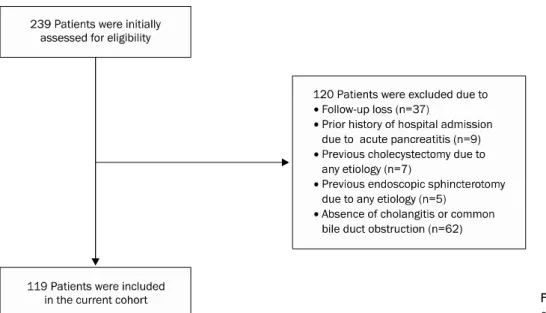
Fig. 1. The process for selection of our enrolled patients.
sage abnormalities of the biliary tract.1,7 However, no statisti- cally significant differences in overall mortality, local and sys- temic complications as defined by the Atlanta Classification between the early routine ERCP versus early conservative management strategy have been reported.7 Another meta- analysis8 also reported insignificant differences in morbidity and mortality between the early routine ERCP versus early conservative management strategy.
No clinical trials assessing the efficacy of biliary inter- ventions, such as early ERCP with EST strategy, for reducing the recurrence of ABP after the first attack have been reported. Results of an observational study9 showed that EST could reduce recurrence of ABP and other gallstone-induced complications in a selected group of patients. In a recent ret- rospective cohort study conducted in Canada, index chol- ecystectomy and ERCP performed for ABP were accom- panied by reduced readmission rate in patients with ABP.3 However, in this study, the diagnosis of ABP was based on the primary diagnosis listed on the hospital discharge and their database did not include clinical, laboratory, or imaging data to confirm whether or not diagnoses of ABP fulfilled standard criteria. The possibility of potential misdiagnosis of pan- creatitis from causes other than ABP may weaken the meas- ured effects of cholecystectomy and ERCP. In an ob- servational study by Lee et al.,10 60% of ABP patients who did not undergo biliary interventions such as ERCP with or with- out EST and cholecystectomy experienced relapses of ABP.
In addition, the authors reported development of acute chol-
ecystitis in 9.1% of patients with ABP who did not undergo cholecystectomy and those who had both gallbladder and common bile duct (CBD) stones were particularly prone to this complication.
The aim of the current study was to investigate the question of whether ERCP and EST with or without cholecystectomy during the same hospitalization in patients with ABP can re- duce the recurrence rate of ABP.
SUBJECTS AND METHODS
This single-center, retrospective cohort study was con- ducted at Kangbuk Samsung Hospital, Seoul, Korea, a ter- tiary care, university-affiliated hospital. All procedures, in- cluding obtaining written informed consent from the patient or a responsible relative, were performed in accordance with the recommendations of the Ethics Committee of Kangbuk Samsung Hospital (KBC12126).
1. Patients
Among 239 patients with clinical diagnosis of ABP who were admitted to our institution between May 2005 and May 2010, 119 patients who showed clinical symptoms and signs of cholangitis and/or CBD obstruction and had complete fol- low-up data until May 2012 were enrolled in the current study (Fig. 1). The diagnosis of ABP was based on the presence of the following criteria: 1) abdominal pain typical of acute pan- creatitis; 2) greater than or equal to three-fold elevation in se-
rum amylase and/or lipase; 3) evidence of acute pancreatitis on CT; and 4) presence of gallstones on imaging studies, in the absence of other etiologies such as alcohol.11 Cholangitis was defined as increased temperature (>38oC), leukocy- tosis (>15,000/mm3), and right upper quadrant or epi- gastric pain that were considered to have a biliary cause, with or without concomitant evidence of acute cholecystitis. CBD obstruction was suspected if the CBD dilation was more than 9 mm and/or high attenuation or echogenic CBD stones/
sludge were observed in imaging studies, such as multiple detector computed tomography (MDCT), MRCP, or EUS.
Patients who fulfilled any of the following criteria were ex- cluded: 1) age <19 years; 2) positive urine pregnancy test;
3) prior history of hospital admission due to acute pan- creatitis; 4) previous cholecystectomy due to any etiology;
and 5) previous EST due to any etiology. The medical records, laboratory data, radiologic images, and endoscopic results were reviewed retrospectively. Initial treatment included sup- portive measures, including intravenous fluids, analgesia, oxygen administration, and nasogastric tube drainage if necessary. The co-morbid conditions of the patients were scored using the Charlson co-morbidity index12 assessed at the time of admission. All of the enrolled patients underwent contrast-enhanced multi-detector CT scan at the time of ad- mission and the severity of ABP was determined by CT se- verity index proposed by Balthazar et al.13 Subsequent EUS (GF-UM2000, UM-240; Olympus Optical, Seoul, Korea) was performed for detection of CBD stones and/or sludge in our enrolled patients. The decision regarding whether or not to perform ERCP and EST in this circumstance was made based on the presence or absence of CBD stones and/or sludge by CT and/or EUS. According to whether the patient underwent ERCP with EST, the patients were divided into EST (n=64, 53.8%) and non-EST group (n=55, 46.2%). Non-EST group in- cluded the patients for whom ERCP and EST were not intended. No cases of technical failure for ERCP and EST were included in this group. The enrolled patients were further sub- classified according to the interventions performed as fol- lows: EST plus cholecystectomy group (n=40, 33.6%), EST only group (n=24, 20.2%), cholecystectomy only group (most received percutaneous biliary drainage treatment; n=41, 34.5%), and conservative treatment group (those who un- derwent neither ERCP nor cholecystectomy; n=14, 11.8%).
Patients in the conservative treatment group were allocated
to this treatment arm due to their refusal to undergo endo- scopic and/or surgical treatment (n=12), and underlying medical illnesses which hinder further endoscopic and/or surgical treatment (n=2).
2. Interventions
ERCP with EST was performed within 72 hours after the in- dex admission by a single experienced endoscopist (K.H.J.) in the standard manner. EST was performed if CBD sludge materials or CBD stone(s) were found on EUS and/or endo- scopic retrograde cholangiography. In case of incomplete stone removal, a plastic biliary stent (10 cm, 7 or 10 Fr., dou- ble pigtail stent; Cook Medical Inc., Bloomington, IN, USA) was inserted and ERCP was repeated 24 hours later.
Laparoscopic or open cholecystectomies were also per- formed by a single experienced surgeon in the standard manner. During laparoscopic or open cholecystectomies, a surgeon routinely performed intraoperative choledocho- scopy via cystic duct stump site for detection of undiscovered choledocholithiasis.
3. Definitions
Time to recovery from ABP (days) was defined according to the following criteria: the number of days elapsed from ad- mission to 1) starting time point of diet (more than soft diet);
2) no abdominal discomfort/pain and fever; and 3) improve- ment of ileus on plain abdominal X-ray. Complications due to ABP included the formation of pseudocysts, pancreatic ab- scess, splenic artery pseudoaneurysms, bleeding from ero- sions into splenic artery and vein, thrombosis of the splenic vein, superior mesenteric vein and portal veins, duodenal ob- struction, CBD obstruction, and progression to chronic pancreatitis.
4. Outcome measures
The primary end points of the study were to compare the recurrence rates of ABP between EST and non-EST groups and among the EST plus cholecystectomy group, EST only group, cholecystectomy only group, and conservative treat- ment group. The secondary end points of the study were to compare the length of hospital stay, time to recovery from ABP, the frequency of occurrence of complications due to ABP, and overall survival between EST and non-EST groups and among the EST plus cholecystectomy group, EST only
Table 1. Demographics and Clinical Characteristics of the Study Participants
Characteristic
Total patients (n=119)
Group
p-value
Group
p-value EST
(n=64)
Non-EST (n=55)
EST+cholecy- stectomy (n=40)
EST only (n=24)
Cholecystectomy only (n=41)
Conservative treatment (n=14) Age (yr) 62.0±16.5 64.5±15.0 59.1±17.8 0.076 62.6±15.4 67.8±14.0 58.8±18.3 59.9±16.9 0.189 Gender, male (%) 64 (53.8) 39 (60.9) 25 (45.5) 0.101 20 (50.0) 19 (79.2) 17 (41.5) 8 (57.1) 0.649 Follow-up (mo) 41.5±20.6 41.8±17.8 41.1±23.7 0.849 38.2±15.5 47.8±20.0 41.6±24.1 39.5±23.2 0.343 CT severity index 3.1±1.2 2.9±1.0 3.3±1.4 0.132 2.9±1.0 3.0±1.0 3.1±1.3 3.8±1.5 0.122 Charlson
comorbidity index
1.4±1.5 1.4±1.7 1.3±1.2 0.511 1.3±1.7 1.8±1.8 1.0±0.7 1.9±1.9 0.117
Values are presented as mean±SD or n (%).
EST, endoscopic sphincterotomy.
group, cholecystectomy only group, and conservative treat- ment group.
5. Statistical analyses
Continuous variables were expressed as mean and SD and compared using independent samples t-test or Mann- Whitney U-test in the setting of nonparametric test. Multiple comparisons for continuous variables were performed using Kruskal-Wallis oneway ANOVA. Categorical variables were compared using the chi-square or Fisher exact test.
Kaplan-Meier analysis with log rank comparison was per- formed for comparison of cumulative incidence rates of ABP recurrence, newly developed cholangitis, and overall survival. Cox proportional hazard model was performed for identification of independent risk factors for recurrence of ABP. Statistical analysis was performed using the PASW Statistics software version 18.0 (IBM Co., Armonk, NY, USA).
RESULTS
Of a total of 119 enrolled patients, 90 patients (75.6%) showed CBD dilation more than 9 mm and/or high attenu- ation or echogenic CBD stones/sludge in imaging studies, such as MDCT, MRCP, or EUS. Eighty patients (67.2%) had CBD stones/sludge on EUS, but not on MDCT, and 54 pa- tients (45.4%) had CBD stones/sludge on ERCP, but not on MDCT. Sixty five patients (54.6%) showed clinical symptoms and signs compatible with cholangitis.
The demographics and clinical characteristics of all en- rolled patients, and the comparisons between the EST and non-EST groups, and among the groups of patients classified according to the interventions they underwent are shown in
Table 1. Notably, there were no significant differences in age, gender, follow-up period, initial CT severity index, and Charlson comorbidity index between the EST and non-EST groups and among the patients groups classified according to the interventions they underwent. Among the 64 patients in the EST group, one patient (1.6%) showed post-EST bleed- ing requiring second-look endoscopy with hemoclipping and epinephrine injections.
Fifteen patients (12.6%) experienced recurrences of ABP during the follow-up period. In comparison using Kaplan- Meier analyses with log rank, significantly higher recurrence rates of ABP were observed in the non-EST group compared to the EST group (p<0.01; Fig. 2) and in the conservative treatment group compared to other intervention groups (p
<0.01; Fig. 2). In addition, recurrence rates of ABP were sig- nificantly higher in patients group with higher CT severity in- dex (>3, p<0.01; Fig. 2) and in patients group with compli- cations of ABP by log rank comparisons (p<0.01; Fig. 2).
However, baseline age, gender, presence or absence of CBD obstruction, and cholangitis had no impact on the cumulative recurrence rate of ABP (Fig. 2). Time to recovery from ABP (days) defined by clinical criteria was significantly longer in the non-EST group compared to the EST group (5.0±3.0 vs.
2.4±1.3, p<0.01; Fig. 3A). Among the patients classified ac- cording to the interventions performed, the conservative treatment group and cholecystectomy only group were asso- ciated with significantly longer recovery time from ABP (days) compared with the EST plus cholecystectomy group and the EST only group by post hoc tests (5.4±3.9 and 4.8±2.7 vs.
2.2±1.0 and 2.8±1.6, respectively, p<0.01; Fig. 3B). The length of hospital stay (days), probably a relevant clinical pa- rameter of recovery time from ABP, was significantly longer
Fig. 2. Fifteen patients (12.6%) experienced recurrences of acute biliary pancreatitis (ABP) during the follow-up period. By Kaplan-Meier analyses with log rank comparison, recurrence rates of ABP were significantly higher in the non-endoscopic sphincterotomy (EST) group compared to the EST group (p<0.01), and in the conservative treatment group compared to other intervention groups by log rank comparisons (p<0.01).
CBD, common bile duct.
in the non-EST group compared to the EST group (15.0±22.8 vs. 4.4±2.2, p<0.01; Fig. 3C). In post hoc tests, the con- servative treatment group and cholecystectomy only group were associated with significantly longer hospital stay (days) compared with the EST plus cholecystectomy group and the EST only group (15.1±14.6 and 15.0±25.1 vs. 3.8±1.4 and 5.4±2.8, respectively, p<0.01; Fig. 3D).
Four patients (6.3%) in the EST group and 10 patients (18.2%) in the non-EST group experienced complications of ABP defined in the current study. The comprehensive list of complications that occurred in our enrolled patients was as follows: pseudocyst(s) formation (n=9, 64.3%), pancreatic
abscess formation (n=2, 14.3%), and aggravation of chol- angiohepatitis due to CBD obstruction (n=3, 21.4%). All of these complications were managed successfully by endo- scopic or conservative treatment. A significantly higher oc- currence rate of ABP complications was observed in the non-EST group compared to the EST group (p=0.02; Fig. 4A).
Significantly higher complications rates were observed in the conservative treatment group (35.7%) and were lowest in the EST plus cholecystectomy group (5.0%, p=0.008; Fig. 4B).
Using the clinical parameters significant in univariate analy- ses (cut-off p-value in the univariate analysis used for se- lection of variables for multivariate analysis was 0.10) and
Fig. 3. (A) Time to recovery from ABP (days) was significantly longer in the non-endoscopic sphincterotomy (EST) group compared to the EST group (5.0±3.0 vs. 2.4±1.3; p<0.001). (B) Among the groups of patients classified according to the interventions performed, the conservative treatment group and cholecystectomy only group were associated with significantly longer recovery time from ABP (days) compared with the EST plus cholecystectomy group and EST only group by post hoc tests (5.4±3.9 and 4.8±2.7 vs. 2.2±1.0 and 2.8±1.6, respectively; p<0.01).
(C) The length of hospital stay (days) was significantly longer in the non-EST group compared to the EST group (15.0±22.8 vs. 4.4±2.2, respectively; p<0.01). (D) By post hoc tests, the conservative treatment group and cholecystectomy only group were associated with significantly longer hospital stay (days) compared with the EST plus cholecystectomy group and EST only group (15.1±14.6 and 15.0±25.1 vs.
3.8±1.4 and 5.4±2.8, respectively; p<0.01).
adopting age and gender as covariates for multivariate analy- sis using the Cox forward stepwise linear regression, con- servative treatment without EST and/or cholecystectomy, and non-EST group were found be independent risk factors for recurrence after the initial attack of ABP (Table 2).
DISCUSSION
The current retrospective cohort study was conducted in order to validate the important roles of ERCP and chol- ecystectomy in the early management of ABP. Our study is a large, Asian, hospitalized patient-based, retrospective co- hort study designed to demonstrate the effectiveness of ear-
ly biliary interventions to reduce the recurrence rate of ABP and the results support the international guidelines advocat- ing such interventions. In the current study, 15 patients (12.6%) experienced recurrences of ABP during follow-up.
Significantly lower cumulative recurrence rates of ABP were observed in the EST group compared to the non-EST group (p
<0.01; Fig. 2), and early biliary intervention group (EST and/or cholecystectomy) compared to the conservative treatment group (p<0.01; Fig. 2).
Despite wide acceptance in clinical practice guidelines, there is a deficiency of clinical trial data to support the impact of early EST and/or cholecystectomy after hospitalization for ABP on long-term outcomes. In one retrospective cohort
Fig. 4. Complication rates. (A) Three patients (4.7%) in the endoscopic sphincterotomy (EST) group and 11 patients (20.0%) in the non-EST group experienced complications of acute biliary pancreatitis (ABP) defined in the current study. Significantly higher occurrence rates of complications of ABP were observed in the non-EST group compared to the EST group (p=0.02). (B) Significantly higher complications rates were observed in the conservative treatment group (35.7%) and the lowest in the EST plus cholecystectomy group (5.0%, p=0.008).
Table 2. Cox Regression Analyses for the Independent Risk Factors of Recurrence of ABP
Variable OR 95% CI p-value
Age ≥65 yr 1.032 0.29-3.74 0.962
Gender, male 1.58 0.44-5.71 0.487
CT severity index >3 1.13 0.28-4.53 0.861 Complications of ABP (+) 1.76 0.47-6.58 0.399
Non-EST group 11.63 1.87-71.43 <0.01
Conservative treatment without EST and/or cholecystectomy
11.63 2.78-50.0 <0.01
ABP, acute biliary pancreatitis; EST, endoscopic sphincterotomy.
study of 8,419 patients admitted for ABP, the 12-month rate of readmission for biliary complications was 76% among those undergoing neither cholecystectomy nor ERCP with EST, compared with 5% among those who underwent chol- ecystectomy during the index hospitalization.14 In the current study, five patients (35.7%) in the conservative treatment group (who underwent neither EST nor cholecystectomy dur- ing the index admission) had recurrences of ABP during the 12 months after the index admission. The reason for the sig- nificantly higher 12-month readmission rates for patients who underwent neither cholecystectomy nor ERCP reported by Sandzén et al.14 may be due in part to the fact that we re- ported only readmissions for ABP and not all biliary compli- cations. Notably, authors of the previous studies also re- ported a prolonged hospital stay for patients who underwent cholecystectomy during index admission. In the current
study, the conservative treatment group and cholecystec- tomy only group were associated with significantly longer hospital stay (days) compared with the EST plus chol- ecystectomy group and the EST only group (Fig. 3D). The study by Sandzén et al.14 did not account for comorbidity of enrolled patients, and the diagnosis of ABP was based on the primary diagnosis listed on the hospital discharge. In addition, their database did not include clinical, laboratory or imaging data necessary to confirm whether the diagnoses of ABP fulfilled standard criteria.
Our study highlights the long-term effectiveness of ERCP with EST in the early management of ABP. ERCP with EST is preferable over cholecystectomy in the initial management of ABP in patients with severe acute pancreatitis or those deemed unfit for surgery. This recommendation is based on randomized trials demonstrating the benefit of early ERCP in reducing biliary complications of ABP, especially in sub- groups with severe ABP.15 In the current study, the EST only group showed cumulative recurrence rates of ABP similar to those observed in the cholecystectomy only group (Fig. 2). In addition, significantly lower cumulative recurrence rates of ABP were observed in the EST group compared to the non-EST group (Fig. 2). These findings raise the possibility of a role for therapeutic ERCP as a standard-alone intervention for treat- ment of ABP, regardless of severity.
Several studies3,16,17 have reported on the additive or in- cremental benefits of EST plus cholecystectomy in patients
with biliary diseases. Boerma et al.16 reported significantly lower recurrence rates of biliary symptoms at 2 years among patients who underwent elective cholecystectomy in addi- tion to EST compared to EST alone (wait-and-see policy, 2%
vs. 47%, p<0.0001). However, there were no cases of pan- creatitis during follow-up in either group. A meta-analysis by McAlister et al.17 similarly reported lower rates of mortality and biliary complications among patients who underwent cholecystectomy plus EST compared to those who under- went EST alone, but the rates of pancreatitis were not sig- nificantly different. However, in a recent retrospective cohort study conducted in Canada,3 combined cholecystectomy and EST during index admission were associated with sub- stantially lower 12-month readmission rates for ABP com- pared with EST alone or cholecystectomy alone (2.3% vs.
6.2% and 6.4%, respectively). In the current study, the pa- tients group who underwent EST and subsequent chol- ecystectomy during index admission showed a tendency of lower 12-month cumulative recurrence rates of ABP com- pared to the EST only and cholecystectomy only groups, but without statistical significance (0% vs. 4.0% and 5.0%, re- spectively, p=0.234). Several factors may be related to the above-mentioned differences in each study. Suboptimal pre- operative or intraoperative evaluation for CBD among pa- tients who underwent cholecystectomy without ERCP may ex- plain higher cumulative recurrence rates of ABP in this group compared to those who received combined interventions. In the current study, preoperative EUS and intraoperative chol- edochoscopy were performed routinely via cystic duct stump site for detection of undiscovered choledocholithiasis. These pre- and intraoperative measures may be related to the sim- ilar cumulative recurrence rates of ABP between the patients group who underwent EST and subsequent cholecystectomy and the cholecystectomy only group. An additional factor to consider is that gallstones may migrate from gallbladder to the CBD in the interval between preoperative evaluation for CBD stones and surgery.
Time to recovery from ABP (days) was defined as the rele- vant clinical parameter. Although this parameter may be re- lated to the length of hospital stay (days), the pace or speed of clinical improvement defined by the time to recovery from ABP may reflect the therapeutic effectiveness of each biliary intervention. Time to recovery from ABP (days), which re- flected the therapeutic effectiveness of each biliary inter-
vention, was significantly shorter in the EST group compared to the non-EST group (Fig. 3A). Among the groups of patients classified according to the interventions performed, the con- servative treatment group and cholecystectomy only group were associated with significantly longer recovery time from ABP (days) compared with the EST plus cholecystectomy group and EST only group by post hoc tests (Fig. 3B), respectively.
The current study has certain limitations that must be acknowledged. First, our study design was retrospective in nature, and it was conducted at a single tertiary care in- stitution, thus the results are prone to treatment-selection bias, in which individuals with more severe ABP and a worse prognosis are less likely to undergo cholecystectomy.
Although we made an effort to avoid the possibility of treat- ment-selection bias by controlling the baseline epidemio- logic and clinical characteristics, including age, gender, co- morbidity, and CT severity index scores between EST and non-EST groups and among the patients group classified ac- cording to the interventions they underwent, our study was a retrospective observational study, and the possibility of treatment-selection bias must be considered. Second, the number of enrolled patients in the conservative treatment group was relatively small, and the results obtained in this retrospective cohort study might be interpreted as marginal.
However, in the current study, we enrolled ABP patients who had complete clinical, laboratory, imaging, and endoscopic (including EUS) data in order to confirm whether diagnoses of ABP fulfilled standard criteria. In addition, ABP patients en- rolled in the current study have complete follow-up data to verify the cumulative recurrence rates of ABP and overall survival. Hence, although the current study was not a pro- spective trial, given the strength of well controlled baseline epidemiologic and clinical data, and complete and relatively long-term follow-up data, our study could provide reliable da- ta to support the evidences of international guidelines for the importance of early biliary interventions to reduce the re- currence rates of ABP.
In conclusion, early biliary interventions such as ERCP and EST and subsequent cholecystectomy in patients with ABP were associated with reduced recurrence rates of ABP.
REFERENCES
1. Kimura Y, Arata S, Takada T, et al. Gallstone-induced acute
pancreatitis. J Hepatobiliary Pancreat Sci 2010;17:60-69.
2. Toouli J, Brooke-Smith M, Bassi C, et al; Working Party of the Program Commitee of the Bangkok World Congress of Gastroen- terology 2002. Guidelines for the management of acute pancreatitis. J Gastroenterol Hepatol 2002;17(Suppl):S15-S39.
3. Nguyen GC, Rosenberg M, Chong RY, Chong CA. Early chol- ecystectomy and ERCP are associated with reduced read- missions for acute biliary pancreatitis: a nationwide, pop- ulation-based study. Gastrointest Endosc 2012;75:47-55.
4. Uhl W, Warshaw A, Imrie C, et al; International Association of Pancreatology. IAP guidelines for the surgical management of acute pancreatitis. Pancreatology 2002;2:565-573.
5. van Geenen EJ, van der Peet DL, Bhagirath P, Mulder CJ, Bruno MJ. Etiology and diagnosis of acute biliary pancreatitis. Nat Rev Gastroenterol Hepatol 2010;7:495-502.
6. Oría A, Cimmino D, Ocampo C, et al. Early endoscopic inter- vention versus early conservative management in patients with acute gallstone pancreatitis and biliopancreatic obstruction: a randomized clinical trial. Ann Surg 2007;245:10-17.
7. Tse F, Yuan Y. Early routine endoscopic retrograde chol- angiopancreatography strategy versus early conservative man- agement strategy in acute gallstone pancreatitis. Cochrane Database Syst Rev 2012;5:CD009779.
8. Uy MC, Daez ML, Sy PP, Banez VP, Espinosa WZ, Talingdan-Te MC.
Early ERCP in acute gallstone pancreatitis without cholangitis:
a meta-analysis. JOP 2009;10:299-305.
9. van Geenen EJ, van der Peet DL, Mulder CJ, Cuesta MA, Bruno MJ. Recurrent acute biliary pancreatitis: the protective role of
cholecystectomy and endoscopic sphincterotomy. Surg Endosc 2009;23:950-956.
10. Lee JK, Ryu JK, Park JK, et al. Roles of endoscopic sphincter- otomy and cholecystectomy in acute biliary pancreatitis.
Hepatogastroenterology 2008;55:1981-1985.
11. Banks PA, Freeman ML; Practice Parameters Committee of the American College of Gastroenterology. Practice guidelines in acute pancreatitis. Am J Gastroenterol 2006;101:2379-2400.
12. Charlson ME, Pompei P, Ales KL, MacKenzie CR. A new method of classifying prognostic comorbidity in longitudinal studies: de- velopment and validation. J Chronic Dis 1987;40:373-383.
13. Balthazar EJ, Robinson DL, Megibow AJ, Ranson JH. Acute pan- creatitis: value of CT in establishing prognosis. Radiology 1990;174:331-336.
14. Sandzén B, Haapamäki MM, Nilsson E, Stenlund HC, Oman M.
Cholecystectomy and sphincterotomy in patients with mild acute biliary pancreatitis in Sweden 1988-2003: a nationwide register study. BMC Gastroenterol 2009;9:80.
15. Ayub K, Slavin J, Imada R. WITHDRAWN. Endoscopic retrograde cholangiopancreatography in gallstone-associated acute pan- creatitis. Cochrane Database Syst Rev 2010;(1):CD003630.
16. Boerma D, Rauws EA, Keulemans YC, et al. Wait-and-see policy or laparoscopic cholecystectomy after endoscopic sphincter- otomy for bile-duct stones: a randomised trial. Lancet 2002;
360:761-765.
17. McAlister VC, Davenport E, Renouf E. Cholecystectomy deferral in patients with endoscopic sphincterotomy. Cochrane Database Syst Rev 2007;(4):CD006233.