• 검색 결과가 없습니다.

관상동맥 Microstent Ⅱ 시술후 재협착 예측인자

N/A
N/A
Protected

Academic year: 2022

Share "관상동맥 Microstent Ⅱ 시술후 재협착 예측인자"

Copied!
8
0
0

로드 중.... (전체 텍스트 보기)

전체 글

(1)

Original Articles Korean Circulation J 1998;;;;28((((6))))::::879-886

관상동맥 Microstent Ⅱ 시술후 재협착 예측인자

전남대학교 의과대학 내과학교실,

1

전남대학교 의과학연구소,

2

원광대학교 의과대학 내과학교실

3

강경태

1

·정명호

1,2

·안영근

1

·배 열

1

·차광수

1

·박종철

1

·서정평

1

박주형

1

·조정관

1,2

·박종춘

1,2

·강정채

1,2

·박옥규

3

Predictors for In-stent Restenosis after Coronary Microstent Ⅱ Ⅱ Ⅱ Ⅱ Implantation

Kyung Tae Kang, MD

1

, Myung HovJeong, MD

1,2

, Young Keun Ahn, MD

1

, Youl Bae, MD

1

, Kwang Soo Cha, MD

1

, Jong CheolvPark, MD

1

, Jeong Pyeong Seo, MD

1

, Joo Hyung Park, MD

1

, Jeong Gwan Cho, MD

1,2

, Jong Chun Park, MD

1,2

, Jung Chaee Kang, MD

1,2

and Ock Kyu Park, MD

3

1

Departments of Internal Medicine,

2

The Research Institute of Medical Sciences, Chonnam University Medical School, Kwangju,

3

Department of Internal Medicine, Wonkwang University School of Medicine, Iksan, Korea

ABSTRACT

Background:Coronary stent is known as an effective treatment in the intimal dissection after angioplasty and the prevention of restenosis. However, in-stent restenosis still remains a major concern in clinical stenting.

Method:The Microstents were placed in 151 patients from May ‘96 to Aug ‘97 and performed follow-up coronary angiograms in 49 (32.5%) patients. To identify the clinical, angiographic and procedure-related variables that predict late restenosis within the stented artery, 49 patients (58±8 year;38 M, 11 F) were studied. Indications for stenting were 25 de novo (52.8%), 9 restenotic (18.7%), 8 suboptimal PTCA (16.7%) and 6 bail-out lesions (12.6%). All patients were treated with aspirin and ticlopidine for one month after stenting. The follow-up angiograms were obtained at 5±3 months and variables of 13 patients with restenosis were compared with those of 36 patients without restenosis. Results:The in-stent restenosis rate was 26.5%.

Univariate logistic regression analysis was used to determine how in-stent restenosis was influenced. Clinical diagnosis, presence of risk factors, lipid profiles, numbers of involved vessels, target arteries, lesion length, lesion types, stent length, maximal inflation pressure, predilation balloon size, reference vascular diameter, minimal luminal diameter, and stent to artery diameter ratio were analyzed. Among these variables, only lesion length before stent implantation was a predictor for in-stent restenosis (19.9±11.1 mm vs. 10.9±7.3 mm, p=0.017). Conclusion:Lesion length before Microstent II implantation is the single predictor of late in-stent restenosis. ((((Korean Circulation J 1998;28((((6)))):879-886))))

KEY WORDS:Stent·Restenosis.

서 론

최근 국내에서도 동맥경화에 의한 허혈성 심장질환

의 발병률이 급증하는 추세이며, 이에 대한 비수술적 치료로 경피적 관상동맥 성형술(PTCA:percutane- ous transluminal coronary angioplasty)이 관상동맥 우회술을 대신하여 많이 이용되고 있다.

PTCA의 일차 성공률은 매우 높아지고 있으나 PTCA 후에 생기는 내막 박리 혹은 혈전형성 등에 의한 급성 혈관폐쇄 합병증이 10% 그리고 만성 합병증인 재협착

논문접수일:1997년 9월 22일

심사완료일:1998년 6월 25일

교신저자:정명호, 501-757 광주광역시 동구 학1동 8번지 전남대학교 의과대학 내과학교실

전화:(062) 220-6243・전송:(062) 228-7174 E-mail:[email protected]

(2)

이 30~50%에 이르고 있다.

1-6)

이에 대한 예방 및 치 료방법으로 최근에 개발된 관상동맥 스텐트가 임상적 으로 널리 이용되기 시작하였다.

7)8)

그러나 이러한 스 텐트시술 역시 약 20~30%에서 후기 재협착이 발생하 며,

9)

이를 방지하기 위한 여러 가지 방법들이 개발되고 있으나 아직 뚜렷이 발견된 효과적 치료는 없는 상태로 이에 대한 연구가 요구되고 있는 실정이다.

본 연구는 관상동맥 스텐트 시술후 재협착에 관여하 는 인자를 파악함으로써, 스텐트 재협착의 요소에 대한 예방과 적극적인 치료를 통해 관상동맥 스텐트 재협착 율을 줄이고자 시행하였다.

대상 및 방법

대 상

1996년 5월부터 1997년 8월까지 전남대학교 병원 에서 Microstent Ⅱ를 시술 받은 151명 중 추적 관상 동맥 조영술이 가능했던 49명(32.5%)을 대상으로 하 였다. 추적 관상동맥을 시행한 대상 환자는 외래 방문 시 흉통을 호소하였던 25예, 핵의학적 심장 관류 검사 나 운동부하 심전도에서 재협착이 의심되었던 환자 6예 와 Microstent Ⅱ 시술후 6개월이 경과하여 추적관상 동맥 조영술이 필요했던 18예 등이었다. 평균 추적기간 은 5±3 개월이었다.

남성이 38명(77.8%)이었고 여성이 11명(22.4%) 이었다. 평균연령은 58±8세이었다. 임상적 진단으로 안정형 협심증이 4명(8.2%), 불안정형 협심증 환자가 22명(44.9%), 급성심근경색이 23명(46.9%)이었다.

방 법

대상환자에서 Microstent Ⅱ시술 6개월 후(5±3개 월) 추적 관상동맥 조영술을 시행하였으며, 재협착은 스텐트시술 후 최소 내경의 50% 이상 협착병변이 있 을 때로 정의하였다. 모든 환자는 aspirin 200~300 mg과 ticlopidine 500 mg을 스텐트 시술 후 적어도 1 개월 간 복용하였고 ticlodipine은 한 달 후 중지하였으 며, aspirin은 추적 관상동맥 조영술을 시행 때까지 복 용하였다. 추적 관상동맥 조영술을 실시하여 재협착 여 부를 관찰하고 재협착이 발생한 군과 발생하지 않은 군 에서 후기 재협착에 관여하는 임상적, 관상동맥 조영술 상 병변부위의 특성 및 스텐트시술시 수기와 관련되는

여러 인자 등을 조사하여 비교분석하였다.

비교항목으로 임상양상의 요소로서는 연령, 성별, 허 혈성 심장질환의 분류, 허혈성 심장질환의 위험인자 등 을 조사하였고, 관상동맥 조영술 요소로서는 병변의 길 이, 병변혈관의 형태적 분류인 AHA/ACC(American Heart Association/American College of Cardiol- ogy) 분류, 병변혈관의 개수 등을 조사하였다. 스텐트 시술 관련요소로서 스텐트의 길이, 협착 근위부와 원위 부의 비교 혈관내경, 스텐트 시술시 사용한 풍선의 크 기와 최대압력, 스텐트 시술 전과 후에 측정한 협착혈 관 최소내경 등을 비교 분석하였다.

AHA/ACC 분류는 관상동맥 조영술상 병변혈관의 형태학상의 특성에 따라 분류한 것으로 A형 병변은 길 이 10 mm 이하의 짧고 동심성인 병변으로 45° 이하의 병변이며, B

1

형 병변은 10~20 mm의 비교적 길고 편 심성인 병변이고 45° 이상의 굴곡이 심한 병변 및 석회 화된 경우, 완전폐쇄의 기간이 3개월미만인 경우, 혈관 개구부나 분지부위에서 발생하는 병변이다. C형 병변은 병변의 길이가 20 mm 이상 긴 병변이거나 완전폐쇄의 기간이 3개월 이상, 60° 이상의 굴곡이 심한 병변이다.

B

2

형 병변은 B

1

형 병변과 C형의 중간형태이다.

통계학적 분석

연속 변수들은 평균±표준편차로 기술하였으며 통계 학적 분석은 independent sample test와 univariate logistic regression analysis로 하였다. 통계학적 유의 성은 p 값이 0.05이하로 하였다.

결 과

대상 환자의 임상적 특징

1996년 5월부터 1997년 8월까지 관상동맥 질환의 진단하에 Microstent Ⅱ를 시술하였던 151명의 환자 중 추적 관상동맥 조영술을 시행한 49명(32.5%)중 13명이 재협착이 발생하여 재협착율은 26.5%였다. 평 균연령은 58세였고 성별은 남자가 38명, 여자는 11명 이었다. 안정형 협심증은 4명(8.2%), 불안정형 협심증 은 22명(44.9%), 급성 심근경색은 23명(46.9%)으로 급성 심근경색환자에서 스텐트 시술의 빈도가 높았다.

허혈성 심장질환의 위험인자로 당뇨병이 5, 흡연 10,

고혈압 15, 고지질혈증 27명이였다.

(3)

스텐트시술의 적응증으로는 de novo 병변 25예 (52.8%), 아적합형 PTCA 8예(16.7%), 구제적 시술 6 예(12.6%) 그리고 재협착 병변 9예(18.7%) 등이었다.

관상동맥 조영술 소견

재협착의 정의는 스텐트시술후 추적 관상동맥 조영술 에서 스텐트 시술부위의 최소 혈관내경이 50% 이상 협 착되었을 때로 하였다. Microstent Ⅱ 시술 후의 재협착 율은 49예 중 13예에서 관찰되어 재협착율은 26.5%이 었다. 관상동맥 혈관촬영상의 특징을 보면, 병변의 형태 는 AHA/ACC(American Heart Association/Ameri- can College of Cardiology) A형 병변이 4명, B

1

형 병 변이 25명, B

2

형 병변이 12명, C형 병변이 8명으로 B

1

형 병변이 가장 많았고, 좌전하행 관상동맥혈관이 협착 부위중 가장 높은 빈도를 차지하였다. 두 혈관병변이 23명(47.9%)으로 다혈관 병변중 가장 많은 비율을 차 지하였다(Table 1).

임상적 예측 인자

임상적 예측인자로 연령, 성별, 다혈관 질환의 여부, 허혈성 심장질환의 종류(급성 심근경색, 불안정형 협심

증, 안정형 협심증), 허혈성 심장질환의 위험인자인 당 뇨병, 고혈압, 고지혈증, 현성 흡연 등에 대하여 재협착 이 있는 군과 없는 군을 비교하였으나, 양 군 사이에서 유의한 차이는 없었다(Table 2).

관상동맥 조영술상 예측인자

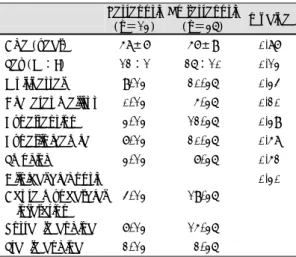
병변혈관의 종류와 개수, AHA/ACC에 의한 병변형 태의 분류, 병변길이 등을 비교 분석한 결과, 스텐트 시 술전에 시행한 병변의 길이(19.9±11.4 mm vs 10.9

±7.3 mm, p=0.017)가 재협착의 유의한 예측인자이 었다(Table 3).

관상동맥 스텐트시술 관련 인자

스텐트시술과 관련된 인자로 스텐트의 길이, 스텐트 시술시 사용한 풍선의 크기와 최대압력, 협착근위부와 원위부의 비교혈관 내경, 협착혈관 최소내경, 스텐트 시술후의 혈관 최소내경 등을 비교 분석하였으나, 재협 착군과 재협착이 없는 군 사이에 유의한 차이를 보이는 예측인자는 없었다(Table 4).

고 안

1977년 Gruentzig에 의하여 협착된 관상동맥을 풍선 도자로 확장시키는 PTCA가 시작된 이후로 새로운 풍선 도자의 개발과 시술 기술의 발달

10-13)

및 시술기구의 개 발로 일차 성공률이 90% 이상으로 높아졌고 관동맥우 회술에 대한 의존도도 현저히 감소하게 되었다.

14-17)

Table 1. Angiographic characteristics

Number (%)

Location

LAD 31 (63.3)

LCX 10 (20.4)

RCA 8 (16.3)

Lesion type (AHA/ACC classification)

A 4 ( 8.2)

B1 25 (51.1)

B2 12 (24.5)

C 8 (16.3)

Indication de novo lesion 25 (52.8)

Suboptimal result 8 (16.7)

Bail-out 6 (12.6)

Restenotic lesion 9 (18.7) Number of involved vessels

One 19 (39.6)

Two 23 (47.9)

Three 6 (12.5)

LAD:left anterior descending artery LCX:left circumflex artery

RCA:right coronary artery

Table 2. The comparison of clinical characteristics

between restenosis and no restenosis groups

Restenosis (n=13)

No restenosis

(n=36) p value Age (year) 58±7 57±9 0.87 Sex (M:F) 12:1 26:10 0.13 Multivessel 9/13 20/36 0.34 Diabetes mellitus 0/13 5/36 0.20

Hypertension 3/13 12/36 0.39 Hyperlipidemia 7/13 20/36 0.58

Smoking 3/13 7/36 0.52

Clinical diagnosis 0.30 Acute myocardial

infarction

4/13 19/36

Unstable angina 7/13 15/36 Stable angina 2/13 2/36

(4)

PTCA의 가장 큰 단점으로서 시술 중에 급성으로 생 길 수 있는 내막박리(intimal dissection), 혈전형성, 혈관 수축(spasm)와 탄성반동(elastic recoil)에 의한 급성 혈관 폐쇄 그리고 시술 후 3~6개월에 발생하는 후기 재협착등이 있으며,

18)

여러 가지 치료와 예방 노 력에도 불구하고 해결되지 않고 있다. 이 중 급성 합병 증은 그간 중재적 관상동맥 스텐트의 발전으로 많이 감 소하였으나 후기 재협착은 시술전체 환자의 약 30~

50%에서 발생하고 반복적인 재관류를 요하는 예가 많 았다.

1-6)18)

PTCA 시행 후에 발생하는 후기 재협착은 혈관재구 성(arterial remodeling)이 가장 중요한 기전으로 밝혀

져 있다.

19)

이를 극복하기 위한 시도의 하나로 1986 년부터 관상동맥 스텐트가 임상에서 시술되기 시작되 었다. 스텐트는 혈관벽을 확장시킨 후 혈관 재구성을 방지하여 재협착의 발생률을 감소시켰으며, 이러한 스 텐트의 후기 재협착의 감소 효과는 관동맥 풍선 성형술 과 스텐트의 재협착율에 대한 여러 비교 연구들에서 최 근에 밝혀지고 있지만,

20)21)

아직도 스텐트 재협착율은 STRESS trial 31.6%, BENESTENT trial 22%로서 비교적 높은 편이어서 해결되어야 할 문제점들이 많이 남아 있다.

초기 스텐트 시술의 문제점이었던 과도한 항응고요 법에 의한 출혈성 합병증과 급성폐쇄는 스텐트시술 기 Table 3. The comparison of angiographic characteristics between restenosis and no restenosis groups

Restenosis (n=13) No restenosis (n=36) Total (n=49) P value

LVEF (%) 67±20 66±14

Target vessel 0.85

LAD 9 (69.2) 22 (61.1) 31

LCX 2 (15.4) 8 (22.2) 10

RCA 2 (15.4) 6 (16.7) 8

ACC/AHA 0.51

A 2/ 4 (50) 2/13 (15) 2/ 4 (50) 2/36 (5.6) 4 B1 6/25 (24) 6/13 (46) 19/25 (76) 19/36 (53) 25 B2 2/12 (18) 2/13 (15) 10/12 (83) 10/36 (28) 12 C 3/ 8 (38) 3/13 (23) 5/ 8 (63) 5/36 (14) 8

Number of involved vessel 0.12

One 4 (31) 15 (43) 19

Two 9 (69) 14 (40) 23

Three 0 6 (17) 6

Lesion length (mm) 19.9±11.1 10.9±7.3 0.017

Table 4. The comparison of coronary stenting procedure-related characteristics between restenosis and no restenosis groups

Restenosis (n=13) No restenosis (n=36) P value Pre-stent

Proximal reference diameter(mm) 2.59±0.44 2.95±0.64 0.06 Distal reference diameter(mm) 2.57±0.45 2.61±0.79 0.64 Minimal lumen diameter(mm) 0.84±0.48 0.95±0.50 0.83 Post-stent

Minimal luminal diameter(mm) 3.17±0.62 3.14±0.42 0.70 Maximal balloon pressure(mm) 9.86±2.48 10.6±2.82 0.43 Balloon size(mm) 2.96±0.14 2.98±0.34 0.92

Balloon-to-artery ratio 1.19±0.16 1.14±0.29 0.51

Stent length(mm) 27.4±6.45 25.5±0.80 0.24
(5)

술과 항혈전 약물요법의 발전,

22-24)

스텐트 재질과 디자 인의 개선 등

25)26)

으로 그 안정성이 매우 높아지게 되었 다. 본 연구에서는 aspirin과 ticlopidine 병합요법으로 아급성 스텐트 혈전에 의한 폐쇄는 발생하지 않았다.

스텐트 시술 기술과 경험의 축적 그리고 여러 효과적 약물의 발전에 힘입어 국내에서도 스텐트 시술이 점차 증가하고 있는 추세이다. 또한 스텐트 재질, 디자인, 시 술의 기술과 경험의 축적으로 발전을 거듭하여 적응증 만 보더라도 초반기에는 주로 구제시술이나 아적합형 PTCA가 과반수를 넘었으나 요즘에는 de novo 병변에 대한 elective 시술이 급증하는 추세이다.

27)

본 연구에 서도 de novo 병변에 대한 시술이 전체 대상환자의 58%로 가장 많은 부분을 차지하였다. 이러한 스텐트 시술의 양적 그리고 질적인 향상에도 불구하고 관상동 맥 스텐트를 시술한 후에도 여전히 후기 재협착이 13

~61%까지 보고되고 있어 이에 대한 해결이 시급하 다.

9)

본 연구에서 시술한 Microstent Ⅱ의 재협착율은 26.5%로서 다른 연구에서 보고한 스텐트 재협착율과 비교하였을 때 비교적 양호한 결과를 얻었다. 또한, 연 구의 대상환자는 스텐트 시술후 외래 방문 중 협심증을 의심할 만한 흉통을 호소하였거나, 부하검사에서 재협 착을 의심할 만한 경우에 추적 관상동맥 조영술을 실시 하였으므로, 모든 환자를 추적 검사를 실시한다면 더 낮은 재협착율을 기대할 수 있을 것으로 생각된다.

스텐트 재협착 원인의 가장 중요한 기전은 신생내막 증식(neointimal hyperplasia)에 의한 혈관 내경 감소 이며, 신생내막의 증식은 주로 스텐트시술 시 발생하는 혈전형성과 혈관손상에 의해서 유발된다고 알려져 있 다.

28)

본 연구의 결과에서 스텐트 재협착의 유일한 예 측인자는 스텐트 시술전 병변의 길이이었으며, 긴 병변 일수록 스텐트 시술후에 신생내막의 증식이 많음을 시 사하였다.

스텐트 재협착에 대한 치료로써 전신 및 국소 약물 전달 요법,

29-32)

도자를 이용한 국소 혈관내 혹은 체외 방사성 요법,

33-35)

방사성 동위원소 스텐트,

36)37)

pol- ymer-coated stent.

38)

스텐트 재질과 디자인의 개선 등이 세계적으로 활발하게 진행되고 있지만 아직 뚜렸 한 성과를 거두지 못하고 있는 실정이다.

지금까지 스텐트 재협착에 관여하는 예측인자로 잘 알려진 것으로는 다중 스텐트, 재협착 병변에 시행한 스

텐트,

39)40)

스텐트 시술후 잔여협착의 정도가 많은 경우,

완전 폐쇄병변 등이 잘 알려진 재협착의 유발 위험인 자이며, 그 밖에도 스텐트 재협착에 관여할 수 있는 인 자로 알려진 것으로서는 혈관의 크기, 스텐트/혈관 비 율, 시술후 내경 증가정도 및 시술후 최소 내경,

41-52)

스텐트 재질과 디자인, 다수의 스텐트,

45-52)

완전 폐쇄 병변, 대동맥 개구부 병변,

53)

스텐트 시술시 고압력 유 무,

46)51)

병변의 길이,

45)

시술전 동맥경화 죽상반 면 적,

54)

재협착 병변,

46)50)

당뇨병, 복재정맥이식편, 궤양성 병변 및 석회화 병변

55)

등이 있으나, 한 가지 요인이 아 닌 여러 요인이 복합적으로 스텐트 재협착에 관여한다 고 생각된다.

현재까지 국내에서 사용중인 스텐트의 종류로는 Pa- lmaz-Schatz, Giaturco-Roubin이 1990년에 주로 사 용되었으나 현재는 Gianturco-Roubin Ⅰ, Ⅱ, Cordis tantalum, AVE Microstent Ⅰ, Ⅱ, GFX, ACT-one, ACS Multi-link, Wallstent, Less-shortening Wall- stent, Wiktor, NIR, Cordis stainless steel Cross- Flex, Crown, Freedom stent, MAC 스텐트 등이 있 으며, 본 연구에서 사용한 Microstent Ⅱ도 이중 하나 이다. AVE Microstent는 풍선 확장식이며 stainless steel 스텐트로 왕관모양의 철심이 지그재그 형태로 관 절을 형성하면서 용접되어 있어 장축 방향으로 유연성 이 좋고 관상동맥의 경화가 심하거나 불규칙한 병변의 하방까지도 시술이 용이하다.

10)

또한, 조영시 모습이 잘 나타나서 병변 부위에 위치시키기 용이하다. 스텐트의 길이가 약 18 mm에서 40 mm까지 다양하여 긴병변에 대해서도 스텐트 숫자를 늘리지 않고서도 시술할 수 있 다. Webb JG 등

10)

의 보고에 의하면 주로 불만족스러 운 PTCA 결과나 재협착의 병변에 대해서 Microstent 를 시술하여 만족스러운 결과를 얻었으며, 스텐트의 조 기 혈관합병증인 아급성 혈전 폐쇄와 기타 혈관 합병증 이 다른 스텐트군보다 적었다. Microstent의 후기 재협 착에 관한 큰 대조 연구의 결과는 아직 드문 실정이다.

PTCA에 의한 재협착의 주된 기전이 혈관 재구성인

반면, 스텐트 재협착은 신생내막 증식이라고 생각되며,

본 연구의 결과에 의하면 스텐트 시술전 병변의 길이가

길수록 신생내막 증식이 심하였다고 생각된다. 따라서,

스텐트 재협착을 예방하기 위해서는 긴 병변을 스텐트

로서 치료할 때에는 시술시 혈관 손상을 최소화하고 pl-

atelet glycoprotein Ⅱb/Ⅲa receptor blocker와 같은

강력한 항혈소판제제를 사용하거나 국소 전달 요법 등

(6)

적극적인 치료가 필요하다고 생각된다. 또한, 유발된 신생내막 증식을 적극적으로 억제하는 약물이나 방사 성 의약품을 부착한 스텐트 시술 등의 방법도 시도될 수 있을 것으로 생각된다.

요 약

연구배경:

경피적 관상동맥 성형술(PTCA:percutaneous tr- ansluminal coronary angioplasty)이 최근에 도입되어 수술 요법을 대신하여 관상동맥 질환의 치료에 많이 이 용되고 있다. PTCA 일차 성공률은 증가하고 있으나, 시술후 30~50%에서 발생할 수 있는 급성 및 만성 합 병증이 임상적인 문제가 되고 있다. 이러한 합병증을 감소시켜 줄 수 있는 새로운 시술 기구중 하나가 관상 동맥 스텐트이라고 알려져 있지만, 관상동맥 스텐트 시 술 후에도 만성 합병증인 후기 재협착율은 아직도 비교 적 높은 편이다. 관상동맥 Microstent Ⅱ 시술 후 재협 착에 관여하는 인자를 분석하고자, Microstent Ⅱ 시술 후 추적 관상동맥 조영술을 시행하여 다음과 같은 결과 를 얻었다.

대상 및 방법:

1996년 5월부터 1997년 8월까지 전남대학교 병원 에서 관상동맥질환의 진단하에 Microstent Ⅱ를 시술 받은 151명중 1997년 8월까지(5±3개월) 추적 관상 동맥 조영술을 시술한 49명(전체 환자의 32.5%)을 대 상으로 하였다. 추적 관상동맥을 시행한 대상 환자는 외래 방문시 흉통을 호소하거나, 심전도 및 핵의학적 심장 관류 검사 그리고 운동부하 심전도상 재협착이 의 심되었던 환자와 관상동맥 Microstent Ⅱ 시술후 6개 월이 지나 추적검사가 필요했던 경우로 하였다. 평균 추적기간은 5±3개월이었다. 스텐트 재협착에 관여하 는 임상 및 관상동맥 병변 특성, 스텐트 시술시 수기 등을 재협착이 발생한 군과 발생하지 않은 군에서 비교 분석하였다.

결 과:

관상동맥 Microstent Ⅱ를 시술한 후 추적 관상동맥 조영술을 실시한 49예중 13명에서 스텐트 재협착이 발생하여, 스텐트 재협착율은 26.5%였다. 예측인자로 연령, 성별, 허혈성 심장질환의 종류, 허혈성 심장질환 의 위험인자, AHA/ACC(American Heart Associati-

on/American College of Cardiology) 분류, 병변혈관 의 갯수, 스텐트 길이, 스텐트 시술시 사용한 풍선의 크 기와 최대압력, 협착근위부와 원위부의 비교혈관 내경, 협착혈관 최소내경, 스텐트 시술후 혈관최소내경 등은 스텐트 재협착이 있는 군과 없는 군사이에 유의한 차이 를 보이지 않았다. 그러나 스텐트 시술 전에 관찰된 최 초의 병변길이(19.9±11.1 mm vs 10.9±7.3 mm)만 이 유의한 차이를 보였다(p=0.017).

결 론:

Microstent Ⅱ 재협착에 관여하는 유일한 예측인자 는 관상동맥 병변의 길이였다.

중심 단어 :관상동맥 스텐트・재협착..

REFERENCES

1)

Thornton MA, Gruentzig AR, Hollman J, King SB III, Douglas JS. Coumadin and aspirin in prevention of

recurrence after transluminal coronary angioplasty : A randomized study. Circulation 1984 ; 69 : 721-7.

2)

Coreos T, David PR, Renkin J, Kangoissac V, Rapold HG, Bourass MG. Failure of diltiazem to prevent reste-

nosis after percutaneous transluminal coronary angiopl- asty. Am Heart J 1985 ; 109 : 926-31.

3)

Reis GJ, Sipperly ME, Boucher TM. Randomized trial

of fish oil for prevention of restenosis after coronary ang- ioplasty. Lancet 1989 ; 2 : 177-81.

4)

Buchwald A, Werner G, Unterber C, Wieand V. Mali-

gnant restenosis after primary successful excimer laser coronary angioplasty. Clin Cardiol 1990 ; 13 : 397-400.

5)

Gant KN, Holmes DR, Bell MR, Garratt KN, Holmes DR Jr, Bell MR, et al. Restenosis after directional coro-

nary atherectomy : Difference between primary athero- matous and restenosis lesions and influence of subintimal tissue resection. J Am Coll Cardiol 1990 ; 16 : 1665-71.

6)

Topol EJ, Leya F, Pinkerton CA, Whitlow PL, Hofling B, Simonton CA, et al. A comparison of directional ath-

erectomy with coronary angioplasty in patient with coro- nary artery disease. N Engl J Med 1993 ; 329 : 221-7.

7)

Coronary Artery Stenting Groups. Palmaz-Schatz coro-

nary stenting. Korean Circulation J 1995 ; 25 : 889-95.

8)

Coronary Artery Stenting Groups. Gianturco-Roubin

coronary stenting : Analysis of multicenter results. Kor- ean Circulation J 1995 ; 25 : 896-902.

9)

Ellis SG, Savage M, Fischman D, Baim DS, Leon M, Goldberg S, et al. Restenosis after placement of Palmaz-

Schatz stents in native coronary artery. Circulation 1992 ; 86 : 1836-44.

10)

Webb JG, Popma JJ, Lansky AJ, Carere RG, Rabin- owitz A, Singer J, et al. Early and late assessment of the

Microstent PL coronary stent for restenosis and subop- timal balloon angioplasty. Am Heart J 1997 ; 133 : 369-74.

11)

Jeong MH, Cho IJ, Lee MK, Park JS, Ahn YK, Park JH,

et al. Predictors for successful percutaneous transluminal

coronary angioplasty in multivessel disease. Korean Cir-

(7)

culation J 1993 ; 23 : 837-42.

12)

Jeong MH, Yang SJ, Gill GC, Park JH, Bom HS, Cho JG, et al. The effects of collateral circulation on myocar-

dial perfusion during PTCA in patients with angina pe- ctoris. Korean Circulation J 1994 ; 25 : 543-53.

13)

Ryu MH, Rew JY, Bae Y, Cho IJ, Seo JP, Gill GC, et al.

Clinical experiences of long-balloon percutaneous trans- luminal coronary angioplasty. Korean Circulation J 1995 ; 25 : 1084-900.

14)

Lee KW, Ahn YK, Park JH, Cho KW, Jeong MH, Cho JG, et al. Clinical experiences of percutaneous coronary

coronary angioplasty. Kor J Int Med 1992 ; 42 : 485-90.

15)

Ahn YK, Park JH, Lee MK, Jeong MH, Cho JC, Kang JC. Early outcome of PTCA in totally occluded coronary

arteries. Kor J Int Med 1993 ; 8 : 15.

16)

Jeong MH, Park CH, Cho JG, Park JC, Kang JC. Predi-

ctive factors for successful percutaneous transluminal coronary angiopasty. Chonnam Med J 1996 ; 32 : 121-43.

17)

Jeong MH, Cha KS, Seo JP, Park JC, Song HC, Bom HS, et al. Hibernating myocardium in chronic coronary

artery disease. Korean Circulation J 1997 ; 27 : 206-12.

18)

Jeong MH, Cho IJ, Seo JP, Ryu MH, Lee MK, Park JS,

et al. Predictive factors of restenosis after percutaneous transluminal coronary angioplasty. Korean Circulation J 1994 ; 24 : 762-8.

19)

Mintz GS, Popma JJ, Pichard AD, Kent KM, Satler LF, Wong SC, et al. Arterial remodeling after coronary ang-

ioplasty. Circulation 1996 ; 94 : 35-43.

20)

Rodriguez AE, Santaera O, Larriban M, Fernandez M, Sarmiento R, Newell JB, et al. Coronary stenting decre-

ases restenosis in lesions with early loss in luminal diam- eter 24 hours after successful PTCA. Circulation 1995 ; 91 : 1397-402.

21)

Serruys PW, de Jaegere P, Kiemenief F, Macaya C, Rutsch WS, Heyndrickx G, et al. A comparison of bal-

loon-expandable stent implantation with balloon angiopl- asty in patients with coronary artery disease. N Eng J Med 1994 ; 331 : 489-95.

22)

Jeong MH, Owen WG, Staab ME, Srivatsa SS, Sang- iorgi G, Stewart ML, et al. Porcine model for stent thro-

mbosis. Cathet Cardiovasc Diag 1996 ; 38 : 38-43.

23)

Jeong MH, Kang JC, Holmes DR, Schwartz RS. Comb-

ination of asprin and ticlodipine is effective in the pre- vention of acute stent thrombosis. Chonnam J Med Sci 1997 ; 10 : 27-34.

24)

Park JC, Cha KS, Seo JP, Park JH, Jeong MH, Cho JG,

et al. Local NO donor delivery prevents acute and subacute stent thrombosis. Chonnam J Med Sci 1997 ; 10 : 21-6.

25)

Jeong MH, Kang JC, Schwartz RS, Holmes DR. Fibrin-

loaded fibrin stent prevents acute stent thrombosis and bleeding complication. Chonnam J Med Sci 1996 ; 9 : 173-8.

26)

Cha KS, Park JC, Seo JP, Lim SC, Park JH, Jeong MH,

et al. Early oucome of long coronary stenting. Korean Ci- rculation J 1997 ; 27 : 821-9.

27)

Jeong MH, Cho IJ, Seo JP, Ryu MH, Lee MK, Park JS,

et al. Clinical study for coronary artery stenting. Korean Circulation J 1994 ; 24 : 373.

28)

Hoffmann R, Mintz GS, Gaston R, Dussaillant GR, Po- pma JJ, Pichard AD, et al. Circulation 1996

; 94 : 1247-54.

29)

Jeong MH. Local drug delivery in prevention of resten-

osis. Korean Circulation J 1996 ; 26 : 237-45.

30)

Jeong MH, Park JC, Cha KS, Bae Y, Ahn YK, Park JH,

et al. The effects of local nitric oxide donor delivery in st- ented patients. Korean Circulation J 1997 ; 27 : 592-9.

31)

Jeong MH, Ahn YK, Bae Y, Park JC, Cha KS, Cho JG,

et al. Successful coronary stenting without systemic hep- arin therpay : Use of local heparin. Korean Circulation J 1997 ; 27 : 988-94.

32)

Hong MK, Kent KM, Tio FO, Foegh ML, Wong SC, Cathapermal S, et al. Continuous subcutaneous angiope-

ptin reduces neointimal hyperplasia in a porcine coronary in-stent restenosis model. Circulation 1996 ; 94 :Ⅰ -620.

33)

Shimatakaharas S, Mayberg MR. Gamma irradiation in-

hibits neointimal hyperplasia in rats after arterial injury.

Stroke 1994 ; 25 : 424-8.

34)

Teirstein PS, Massullo V, Jani S, Popma JJ, Mina GS, Russo RJ, et al. Radiation therapy following coronary

stenting 6 month follow-up of a randomized clinical trial.

Circulation 1996 ; 94 :Ⅰ -120.

35)

Urban P, Verin V, Popowski Y, Schwager M, Papirov I, Chatelain P, et al. Clinical feasibility and safety of intra-

luminal beta irradiation to prevent restenosis after coro- nary balloon angioplasty. Circulation 1996 ; 94 :Ⅰ -210.

36)

Fischell TA, Kharma BK, Fischell DR, Loges PG, Coffey CW, Duggan DM, et al. Low-dose, beta-particle

emission from stent wire results in complete localized in- hibition of smooth muscle cell proliferation. Circulation 1994 ; 90 : 2956-63.

37)

van der Giessen WJ, Serruys PW. Beta-particle emitting

stents radiate enthusiasm in the search for effective prevention of restenosis. Circulation 1996 ; 94 : 2358-60.

38)

Holmes DR, Camrud AR, Jorgenson MA, Edwards WD, Schwartz RS. Polymeric stenting in porcine coronary

artery model : Differentil outcome of exogenous fibrin sle- eves versus polyurethane-coated stents. J Am Coll Cardiol 1994 ; 24 : 525-31.

39)

Johnson DE, Wakely PE. The morphology of restenosis

after coronary artery balloon angioplasty. Circulation 1989 ; 80 :Ⅱ -64.

40)

Ohara T, Nanto S, Asada S, Matsumura Y, Lee JM, Kodama K. Electron microscopical evaluation of repeat

PTCA for restenosis. Circulation 1989 ; 80 :Ⅱ -65.

41)

Kuntz RE, Safian RD, Carrozza JP, Fishman RF, Mans- our M, Baim DS. The importance of acute luminal diameter

in determining restenosis after coronary atherectomy or stenting. Circulation 1992 ; 86 : 1827-35.

42)

Ali NM, Lowry RW, Tawa CB, Joseph J, Abukhalil J, Marks GF, et al. Predictors of restenosis after Gianturco-

Roubin coronary stent deployment. Analysis of 135 cons- ecutive patients from a single center. J Am Coll Cardiol 1994 ; 23 : 71A.

43)

Fischman D, Savage MP, Bailey S, Werner JA, Rake R, Goldberg S. Predictors of restenosis after saphenous

vein graft interventions. Circulation 1996 ; 94 :Ⅰ -621.

44)

Mehran R, Mintz GS, Pichard AD, Satler LF, Hong MK, Hoffmann R, et al. Impact of vessel wall injury on in-stent

restenosis. A serial quantitative angiographic and intrava- scular ultrasound study. Circulation 1996 ; 94 :Ⅰ -262.

45)

Colombo A, Hall P, Nakamura S, Gaglione A, Maiello L, Blegngino S, et al. Angiographic follow-up and reste-

nosis results after Palmaz-Schatz intracoronary stenting

without anticoagulation. Circulation 1994 ; 90 :Ⅰ -124.

(8)

46)

Lablanche JM, Danchin N, Grollier G, Bonnet JL, Bed- ossa M, Vahanian A, et al. Factors predictive of restenosis

after stent implantation managed by ticlopidine and asp- irin. Circulation 1996 ; 94 :Ⅰ -256.

47)

Nunes G, Pinto I, Mattos L, Feres F, Chaves A, Tanajura L,

et al. Coronary stent implantation in vessels smaller than 3 mm is associated with higher restenosis rates. Eur Heart J 1996 ; 17 : 173.

48)

Romero M, Suarez de Lezo J, Medina A, Pan M, Hern- andez E, Segura J, et al. Elective stenting for the treat-

ment of lesions located in small coronary arteries. Eur Heart J 1996 ; 17 : 217.

49)

Fernandez-Aviles F, Alonso JJ, Duran JM, Gimeno F, San Roman JA, Fuente L, et al. Clinical and angiographic

restenosis after coronary stenting. Incidence and predictors.

Eur Heart J 1996 ; 17 : 307.

50)

Carrozza JP, Kuntz RK, Schatz RA, Leon MB, Goldb- erg S, Savage M, et al. Inter-series differences in the res-

tenosis rate of Palmaz-Schatz coronary stent placement : Differences in demographics and post-procedure lumen diameter. Cathet Cardiovasc Diagn 1994 ; 31 : 173-8.

51)

Walksman R, Shen Y, Ghazzal Z, Scott NA, Douglas Jr JS, King III SB. Optimal balloon inflation pressure for

stent deployment and correlates of stent thrombosis and in-stent restenosis. Circulation 1996 ; 94 :Ⅰ -258.

52)

Pulsipher MW, Baker WA, Sawchak SR, Harrion JK, Sktech MH, Wang A, et al. Outcomes in patients treated

with multiple coronary stents. Circulation 1996 ; 94 : 1-332.

53)

Mehran R, Mintz GS, Bucher TA, Greenberg A, Satler LF, Hong MK, et al. Aorto-ostial instent restenois

: Mec- hanisms, treatment, and results. A serial quantiative ang- iographic and intravascular ultrasound study. Circulation 1996 ; 94 :Ⅰ -200.

54)

Moussa I, Di Mario C, Mosses J, Di Francesco L, Rei- mers B, Tobis J, et al. The impact of preinterventional

plaque area determined by intravascular ultrasound on luminal renarrowing following coronary stenting. Circ- ulation 1996 ; 94 :Ⅰ -261.

55)

Yokoi H, Nobuyoshi M, Nosaka H, Kimura T, Yokoi H, Hamasake N, et al. Palmaz-Schatz stent implantation in

calcified lesions : Immediate and follow-up results. Circu-

lation 1996 ; 94 :Ⅰ -453.

수치

Table 2. The comparison of clinical characteristics  between restenosis and no restenosis groups
Table 4. The comparison of coronary stenting procedure-related characteristics between restenosis and no restenosis groups  Restenosis (n=13)  No restenosis (n=36)  P value  Pre-stent

참조

관련 문서

Postoperative adhesion formation and reproductive outcome using interceed ® after ovarian surgery: a randomized trial in the rabbit model.. Adhesion reformation

[r]

A A A A Study Study Study Study Analysis Analysis Analysis Analysis of of of of the the the the J. Bach, a representative composer in Baroque period. Composed

회원국의 영토밖에서 다른 회원국의 , 영토내에서 회원국의 서비스 소비자에게

[r]

약국은 당초 수집 목적과 합리적으로 관련된 범위에서 정보주체에게 불이익이 발생하는지 여부, 암호화 등 안전성 확보에 필요한 조치를 하였는지 여부 등을

Prevention of coronary and stroke events with atorvastatin in hypertensive patients who have average or lower-than-average cholesterol concentrations, in

(Taekwondo, Weight Lifting Players) (90 min × 6 days/week) Warming