• 검색 결과가 없습니다.

Seed Purity Test and Genetic Diversity Evaluation Using RAPD Markers in Radish (Raphanus sativus L.)

N/A
N/A
Protected

Academic year: 2021

Share "Seed Purity Test and Genetic Diversity Evaluation Using RAPD Markers in Radish (Raphanus sativus L.)"

Copied!
5
0
0

로드 중.... (전체 텍스트 보기)

전체 글

(1)

346

Corresponding author: (Phone) +82-51-890-1529

(E-mail) [email protected] <Received January 29, 2008>

Seed Purity Test and Genetic Diversity

Evaluation Using RAPD Markers in Radish ( Raphanus sativus L.)

Man Kyu Huh

and Joo Soo Choi

Department of Molecular Biology, Dong-eui University, Busan 614-714

ABSTRACT The cultivated radish (Raphanus sativus L.) is a major vegetable crop in the world wide and fast-growing species that grows inhabitats of six continents. It is very important to determine hybrid seed purity in the production of hybrid Brassica vegetable seeds to avoid unacceptable contamination with self-inbred (sib) seeds. The use of random amplified polymorphic DNA (RAPD) markers for evaluating seed purity in F

2

-hybrid radish cultivars demonstrated. One hundred eighty seeds from the F

1

male and female harvest were subsequently screened for seed purity using 13 primers.

The 13 primers result in 17 cultivar-specific bands and 23 variable RAPD bands scored for cultivar. RAPD analysis of hybrid seeds from the harvest revealed 128 seeds tested except underdevelopment and decayed seeds were sibs. Especially, F

2

hybrids of radish, OPC13, OPD20 were presented clear hybrid bands. It maintains higher than average level of genetic diversity compared with their correspondent parents. RAPD amplification of DNA extracted from germinated individuals from the female harvest reveal that 10 of 208 seeds tested were self-inbred (4.8%). RAPD analysis of hybrid seeds from the male harvest revealed 7 of the 208 seeds tested were sibs (3.4%). The RAPD may lead to a better insight in to the hybrid seed purity.

Keywords : F

2

-hybrid, radish, seed purity, genetic diversity

The cultivated radish (Raphanus sativus L.) is a major vegetable crop of special economic importance in the world and fast-growing species that grows inhabitats of six continents (Ellstrand & Marshall, 1985). Most of the present-day cultivars of radish are F

2

hybrids of R. sativus. The somatic chromosome number of this species is 2n = 18 (Karpechenko, 1924). R.

sativus is self-incompatible and therefore requires insect pollination for successful reproduction (Rush et al., 1995).

It is very important to define identity, purity, and stability of varieties for breeder’s rights protection as well as for an effective seed quality control program (Ilbi, 2003; Macko

& Grzebelus, 2008).

To determine quality of hybrid seeds, seed companies need to operate quality controls. These controls are convinced to verify that the designed cross occurred, the limited number of self or sib-pollination between plants of the female parent meets the necessary purity required by law, and the product has an adequate quality based on vigor and viability (Ballester

& de Vicente, 1998; Liu et al., 2007). The grow-out trial has been used a common method for seed purity analysis by commercial seed enterprises (Ballester & de Vicente., 1998).

The trial commonly consists of culturing a representative number of hybrid seeds and identifying phenotypes based on morphological markers that can vary depending on environmental conditions. This type of trial is time-consuming and space- demanding. In addition, it is usually performed off-season and often has the equivocal identification of genotypes (Crockett et al., 2000; Mongkolporn et al., 2004).

Genetic test in genus Brassica has been investigated in several studies using isozyme and protein polymorphism (Arus et al., 1985; Rush et al., 1995). However this procedure may be limited by environmental conditions and tissue type, and may require selection of a suitable isozyme for purity test (Liu et al., 2007). Other methods, such as random amplified polymorphic DNA (RAPD) and restriction fragment length polymorphism (RFLP), have been used for the detection of contamination in hybrid seed lots (Liu & Furnier, 1993;

Przybylska et al., 2000).

This study was to establish whether RAPD analysis could

be use for hybrid seed purity testing of a commercial radish

cultivar.

(2)

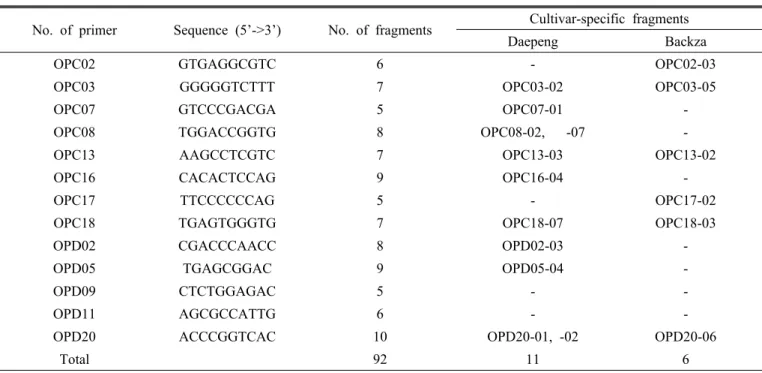
Table 1. List of 10-mer primers selected from screening with 40 primers based on polymorphic fragments amplified in radish.

No. of primer Sequence (5’->3’) No. of fragments Cultivar-specific fragments

Daepeng Backza

OPC02 GTGAGGCGTC 6 - OPC02-03

OPC03 GGGGGTCTTT 7 OPC03-02 OPC03-05

OPC07 GTCCCGACGA 5 OPC07-01 -

OPC08 TGGACCGGTG 8 OPC08-02, -07 -

OPC13 AAGCCTCGTC 7 OPC13-03 OPC13-02

OPC16 CACACTCCAG 9 OPC16-04 -

OPC17 TTCCCCCCAG 5 - OPC17-02

OPC18 TGAGTGGGTG 7 OPC18-07 OPC18-03

OPD02 CGACCCAACC 8 OPD02-03 -

OPD05 TGAGCGGAC 9 OPD05-04 -

OPD09 CTCTGGAGAC 5 - -

OPD11 AGCGCCATTG 6 - -

OPD20 ACCCGGTCAC 10 OPD20-01, -02 OPD20-06

Total 92 11 6

MATERIALS AND METHODS

Plant materials and hybridization

Two cultivars and their hybrid were provided for this study.

Randomly selected seeds from R. sativus cv. Daepeng (thereafter Daepeng) and R. sativus cv. Backza (thereafter Backza) were sown in to an outdoor plot and 90 seedling plants from each origin (total 180) were randomly sampled. Allozyme analyses for two cultivars were carried out to pure lines for 6-phosphogluconate dehydrogenase (PGD) according to the methods of Soltis et al. (1983). Flowering plants of Daepeng and Backza were divided with two groups. Male parent (R.

sativus cv. Backza, F

1

) was used the pure line for 6-PGD- AA and female parent (R. sativus cv. Daepeng, F

1

) was used the pure line for 6-PGD-BB. We ascertained that F

1

is all type AB and F

2

was the truth of 1 : 2 : 1 using chi- square and significant tests. We reused the ascertained F

1

to get F

2

and to determine hybrid seed purity.

All plants which were shown the selected phenetics were performed RAPD analysis and labelled phenetics. Before the buds are swollen to bursting, their stamens were removed from buds and cover with a paper bag to avoid contaminating.

Plants were crossed the labelled female and male parents.

One maternal plant has many flowers and can be crossed

with other plants of same cultivar. However, it is meanless for this study to test seed purity by hybrid between other cultivars. 128 F

2

hybrids of Daepeng x Backza except underdevelopment and decayed seeds and their correspondent parents were performed RAPD analysis.

In addition, each parent and hybrids were used to validate the homogeneity of the inbred lines.

RAPD analysis

DNA was extracted using the plant DNA Zol Kit (Life Technologies Inc., Grand Island, New York, USA) according to the manufacturer’s protocol. The DNA concentration of each sample was determined spectrometrically and was electro- phoresed on a 0.8% agarose gel to confirm quality.

RAPD primers were obtained from Operon Technologies Inc. (USA). All the reactions were repeated twice and only reproducible bands were scored for analyses. Of 40 primers (OPC01-OPC20 and OPD01-OPD20) used for a preliminary RAPD analysis, 13 primers produced good amplification products both in quality, reproducibility, and variability (Table 1).

Amplification reactions were performed in 0.6 ml tubes

(25 ul volume) containing 2.5 µl of the reaction buffer, 10

mM Tris-HCl (pH 8.8), 1.25 mM dNTP, 5.0 pM primer,

2.5 units Taq DNA polymerase, and 25 ng of genomic DNA.

(3)

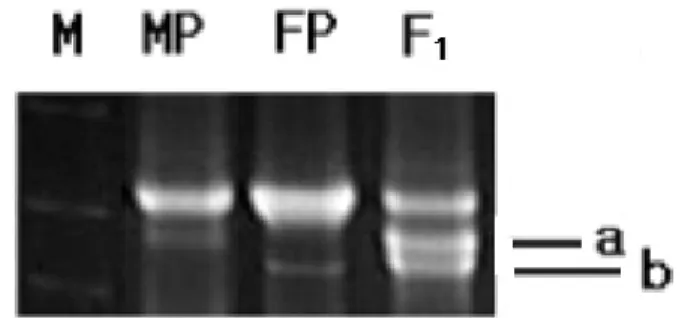
Fig. 1. DNA amplification patterns with the primer OPC13 in R. sativus.

MP; Male parent (R. sativus cv. Backza), F

1

. FP; Female parent (R. sativus cv. Daepeng), F

1

. F

1

; Hybrid.

a; Specific band to male parent.

b; Specific band to female parent.

M; Standard marker.

The amplification products were separated by electrophoresis on 1.5% agarose gels, stained with ethidium bromide, and photographed under UV light using AlphaImage TM (Alpha Innotech Co., USA).

Data analysis

All RAPD bands were scored by naked eye and only unambiguously scored bands were used in the analyses.

For the RAPD resolved in more than one zone of activity, the most anodally migrating band was designated as '1', and other subsequent fragments were sequentially numbered.

Homogeneity of variance among varieties was tested by Bartlett’s statistics (Zar, 1984).

The degree of polymorphism was quantified using Shannon’s index of phenotypic diversity (Bowman et al., 1971):

H

O

= –∑pi log pi

where pi is the frequency of a particular phenotype i.

H

O

can be calculated and compared for different varieties. Let H

VAR

=1/n∑H

O

be the average diversity over the n different varieties and let H

SP

= –∑p log p

be the diversity of species calculated from the phenotypic frequencies p in all the varieties considered together. Then the proportion of diversity presented within varieties, H

VAR

/H

SP

, can compared with that of between varieties (H

SP

H

VAR

) /H

SP

(=G

ST

).

An analysis of non-shared bands (NSB) was performed with all pairs of inbred lines (Skroch et al., 1992).

RESULTS

A total of 40 primers were surveyed for this analysis using 308 different individuals (90 F

1

Daepeng, 90 F

1

Backza, and 128 F

2

hybrids from their parents underdevelopment and decayed seeds). Thirteen of these primers were found to be suitable for this investigation based on the criteria outlined above. The remaining 27 primers were noninformative across all individuals surveyed, or no amplification products.

The 13 primers result in 17 cultivar-specific. The 23 poly-

morphic and 52 monomorphic bands were scored for all individuals across cultivar. These data were used to calculate the frequency of each locus among the individuals of all cultivars. The 17 cultivar-specific bands were used to test seed purity. F

2

-hybrid seeds were only collected from female parent. In addition, for the cultivars tested in this study we used hybrid seeds from both the male and female parents, because commercial F

2

-hybrid seeds of this radish are sold as a blend from male and female harvests. A total of 180 seeds from each parental cultivar were also tested to ensure homozygosity, and reproducibility of polymorphic markers.

We found many phenetic bands for determining the seed purity of two cultivar (Daepeng and Backza) and their hybrids.

Eleven fragments (OPC03-11, OPC07-01, OPC08-02, OPC08-07, OPC13-03, OPC16-04, OPD02-03, OPD05-04, OPD17-06, OPD20-01, and OPD20-02) are specific for Daepeng (Table 1).

Six fragments (OPC02-03, OPC03-05, OPC13-02, OPC17-02,

OPC18-03, and OPD20-06) are specific for Backza. For

example, Daepeng (female parent) generated the OPC13-02

band which was absent in Backza (male parent) with OPC13

primer (Fig. 1). Backza (female parent) have OPC13-03 band

with same OPC13 primer which was absent in Daepeng

(male parent). All F

2

hybrids of Daepeng x Backza had

both bands, OPC13-02 (from female parent) and OPC13-03

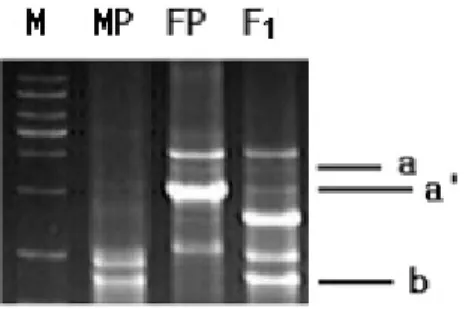
(from male parent). OPD20-01, OPD20-02, and OPD20-06

showed same trends. OPD20-01(a), OPD20-02(a') (female

parent), and OPD20-06(b) (male parent) were also found for

F

2

hybrids of Daepeng x Backza (Fig. 2). Thus these primers

(4)

Fig. 2. DNA amplification patterns with the primer OPD20 in R. sativus.

MP, FP, and F

1

are the same as Fig. 1.

a and a'; Specific bands to female parent.

b; Specific band to male parent.

Table 2. Comparison of the number of sibs detected in a commercial radish cultivar using RAPD markers.

Parent No. of seeds No. of sibs % sibs

Daepeng (female) 208 10 4.8

Backza (male) 208 7 3.4

Table 3. Partitioning of the genetic diversity into within and among varieties of radish.

Parent H

VAR

H

SP

H

VAR

/H

SP

(H

SP

- H

VAR

) /H

SP

F

1

Daepeng (female) 3.588 3.664 0.979 0.021 F

1

Backza (male) 3.579 3.641 0.983 0.017

F

2

3.612 3.707 0.974 0.026

(OPC13 and OPD20) were good to solve the hybrid purity test.

RAPD amplification of DNA extracted from germinated individuals from the female harvest reveal that 10 of 208 seeds tested were self-inbred (4.8%) (Table 2). RAPD analysis of hybrid seeds from the male harvest revealed 7 of the 208 seeds tested were sibs (3.4%).

The levels of variability of the hybrids are examined because they were not subject to any of the selection pressures of hybridization. Hybrids had higher average genetic diversity compared with their correspondent parents (Table 3). Shannon’s index of phenotypic diversity (H

O

) of hybrids was the highest in all cultivars (Daepeng, Backza, and their hybrids). Although the mean H

E

value for the female parent was slightly greater than for the male parent, it was not significantly so (U<0.05;

one-tailed Mann-Whitney test).

In order to have a better understanding on the degree of dissimilarity between two genotypes (NSB = 0: two genotypes are similar and NSB = 1: two genotypes are different), an analysis of non-shared bands (NSB) was performed with data from those resolved by 13 primers (including monomorphic markers) for all pairs of inbred lines. The results of applying the NSB algorithm showed that the parents were very related (0.044).

An assessment of the proportion of diversity present within varieties, H

VAR

/H

SP

, indicated that about 9.8% the total genetic diversity was among varieties. Thus, about 90.2% of genetic variation resided within varieties (Table 3).

DISCUSSION

In order to test determine hybrid seed purity, we conducted RAPD analyses. A large amount of molecular variation in radish was detected in molecular marker systems. The level of genetic variation of radish was high. For example, polymorphic values for RAPD were 66.7% (Huh & Ohnishi, 2001). However, the majority of genetic diversity observed at the polymorphic loci in radish occurred within populations or varieties (Huh

& Ohnishi, 2001). In this study, RAPD variations were also maintained within cultivars rather than among cultivars (male, female, and hybrid lines), judging from the partitioning degree of the genetic diversity [(H

SP

-H

VAR

)/H

SP

] (Table 3). Hence, the genetic similarity among the varieties is very high.

Fig. 1 showed a part of the results of typical RAPD for R. sativus using the selected primer OPC13. Primer OPC13 produced a male parent specific marker (~ 600 bp) and was chosen to screen F

2

seeds from the female harvest. Use of primer OPD20 also resulted in amplification of a female specific band (~ 800 bp), hence was chosen the hybrid seeds from the male harvest.

We found RAPD markers useful in determining the seed

purity of hybrids. The efficiency of RAPD marker for purity

determination was about 5.0%. The value was similar to

that found for tomato hybrids, another Salanaces species,

in which 13 primers showed good polymorphism between

parents out of 160 primers tested (Ballester & de Vicente,

1998). In carrot, among the 56 polymorphic DcMaster transposon

markers, 13 markers appeared to be potentially useful for

hybrid seed purity testing (Paran et al., 1995). Watermelon

was also shown useful markers for seed purity testing using

(5)

RAPD (Hashizume et al., 1993).

The use of NSB was preferred to other parameters based on similarity because bands of equal size originated from RAPDs are not necessarily analogous and their use such might lead to doubtful conclusions. As expected, the results of applying the NSB algorithm showed that the parents were very related (0.133). The results of the NSB algorithm showed that the parents were very related (0.044).

The rate of contamination by plants is estimated by bulk PCR analysis (Komori & Nitta, 2004). When qualified seeds of Daepeng x Backza and their cultivars are used for hybrid seed production, it is likely that the seed purity of the resultant hybrid will be high enough for commercial use. Nevertheless, it is necessary to test the seed purity of the hybrid because seed contamination can be occur during the hybrid production process (Mongkolporn et al., 2004;

Macko & Grzebelus, 2008).

We have shown in this report that RAPD analyses can be used as an useful method for seed purity testing of commercial radish cultivar and for detecting varieties in the radish cultivar tested.

Acknowledgements

We thank Prof. O. Ohinshi, Plant Germ Plasm Institute, Graduate School of Agriculture, Kyoto University, Japan. This work was supported by Dongeui University Research Grant (2008AA105).

REFERENCES

Arus, P., C. R. Shields, and T. J. Orton. 1985. Application of isozyme electrophoresis for purity testing and cultivar identification of F

1

hybrids of Brassica oleraceae. Euphytica 34 : 651-657.

Ballester, J. and M. C. de Vicente. 1998. Determination of F

1

hybrid seed purity in pepper using PCR-based markers.

Euphytica 103 : 223-226.

Bowman, K. D., K. Hutcheson, E. P. Odum, and L. R. Shenton.

1971. Comments on the distribution of indices of diversity.

Stat. Ecol. 3 : 315-359.

Crockett, P. A., P. L. Bhalla, C. K. Lee, and M. B. Singh.

2000. RAPD analysis of seed purity in a commercial hybrid cabbage (Brassica oleraceae var. capitata) cultivar. Genome 43 : 317-321.

Ellstrand, N. C. and D. R. Marshall. 1985. Interpopulational gene flow by pollen in wild radish, Raphanus sativus. Am.

Nat. 126 : 606-616.

Hashizume, T., T. Sato, and M. Hirai. 1993. Determination of genetic purity of hybrid seed in watermelon (Citrillus lanatus) and tomato (Lycopersicon esculentum) using random amplified polymorphic DNA (RAPD). Jpn. J. Breed. 43 : 367-375.

Huh, M. K. and O. Ohnishi. 2001. Allozyme diversity and population structure of Japanese and Korean populations of wild radish, Raphanus sativus var. hortensis f. raphanistroides (Brassicaceae). Genes Genet. Syst. 76 : 15-23.

Ilbi, H. 2003. RAPD markers assisted varietal identification and genetic purity test in pepper, Capsicum annuum. Sci.

Hort. 97 : 211-218.

Karpechenko, G. D. 1924. Hybrids of Raphanus sativus L. x Brassica oleracea L. J. Genetics 14 : 375-396.

Komori, T. and N. Nitta. 2004. A simple method to control the seed purity of japonica hybrid rice varieties using PCR-based markers. Plant Breeding 123 : 549-553.

Liu, Z. and G. R. Furnier. 1993. Comparison of allozyme, RFLP, and RAPD markers for revealing genetic variation in wild and cultivated Amaranthus species (Amaranthaceae).

Theor. Appl. Genet. 93 : 722-732.

Liu, L. W., Y. Wang, Y. Q. Gong, T. M. Zhao, G. Liu, X.

Y. Li, and F. M. Yu. 2007. Assessment of genetic purity of tomato (Lycopersicon esculentum L.) hybrid using molecular marker. Sci. Hort. 115 : 7-12.

Macko, A. and D. Grzebelus. 2008. DcMater trasposon display markers as a tool for diversity evaluation of carrot breeding materials and for hybrid seed purity testing. J. Appl. Genet.

49 : 33-39.

Mongkolporn, O., Y. Dokmaihom, C. Kanchana-udomkan, and P. Pakdeevaraporn. 2004. Genetic purity test of F

1

hybrid Capsicum using molecular analysis. J. Hort. Sci. Biotechnol.

79 : 449-451

Paran, I., D. Horowwitz, D. Zamir, and S. Wolf. 1995. Random amplified polymorphic DNA markers are useful for purity determination of tomato hybrids. HortSci. 30 : 377.

Przybylska, J., Z. Z. Przybylska, and P. Krajewski. 2000. Diversity of seed globulins in Lathyrus sativus L. and some related species. Genet. Res. Crop Evol. 47 : 239-246.

Rush, S., J. K. Conner, and P. Jennetten. 1995. The effects of natural variation in pollinator visitation on rates of pollen removal in wild radish, Raphanus raphanistrum (Brassicaceae).

Am. J. Bot. 82 : 1522-1526.

Skroch, D., J. Tivang, and J. Nienhuis. 1992. Analysis of genetic relationships using RAPD marker data, In: Application of RAPD technology to plant breeding. Joint Plant Breeding Symposia Series. November, Minneapolis, Minnesota, pp.

26-30.

Soltis, D. E., H. Haufer, D. C. Darrow, and G. J. Gastony. 1983.

Starch gel electrophoresis of ferns: A compilation of grinding buffers, gel and electrode buffers, and staining schedules.

Am. Fern J. 73 : 9-27.

Zar, J. H. 1984. Biostatistical analysis, 2nd Eds.; Prentice-Hall,

Englewood Cliffs : New Jersey, pp. 718.

수치

Table 1. List of 10-mer primers selected from screening with 40 primers based on polymorphic fragments amplified in radish.
Fig. 1. DNA amplification patterns with the primer OPC13  in  R. sativus.
Fig. 2. DNA amplification patterns with the primer OPD20  in  R. sativus.

참조

관련 문서

Therefore, head and neck massage is an exercise program that is effective for brain function activation and stress factors in middle-aged women, and it is judged that it can be

The results show that the green seed extracts are only shown as antioxidants, but the others are shown as a prooxidants against DNA damage and Escherichia coli

Seed germination, cutting propagation and early growth characteristics were investigated in order to develop the method of cutting propagation and to find

replicate designs obtained using the classical method of confounding are shown to be particularly useful for deriving suitable balanced designs for

Biochemical markers of bone turnover can be classified according to the process that underlie in markers of bone formation, products of the osteoblast

Third, this study developed a music education program using block coding that can be used in music class, explained its content and functions and

This study, therefore, suggests that cooperative art activity based on collage can be used in the child education field for the improvement of

In this study, it can be seen that sex and metabolic syndrome are important for biological factors, and occupation, smoking, and exercise are important