ORIGINAL ARTICLE
수술 고위험 중증 환자에게서 발생한 급성 담낭염의 경피적 담낭배액술 단독 치료와 담낭절제술 비교: 단일 기관, 단면 연구
차병효*, 송하헌1, 김영남, 전원중, 이상진, 김진동, 이학현, 이반석, 이상협2*
제주한라병원 내과 소화기병센터, 방사선학과1, 서울대학교 의과대학 내과학교실 간연구소2
Percutaneous Cholecystostomy Is Appropriate as Definitive Treatment for Acute Cholecystitis in Critically Ill Patients: A Single Center, Cross-sectional Study
Byung Hyo Cha*, Ha Hun Song1, Young Nam Kim, Won Jung Jeon, Sang Jin Lee, Jin Dong Kim, Hak Hyun Lee, Ban Seok Lee and Sang Hyub Lee2*
Digestive Disease Center, Department of Internal Medicine, Department of Radiology1, Cheju Halla General Hospital, Jeju, Department of Internal Medicine, Liver Research Institute, Seoul National University College of Medicine, Seoul2, Korea
Background/Aims: Percutaneous cholecystostomy (PC) is an effective treatment for cholecystitis in high-risk surgical patients.
However, there is no definitive agreement on the need for additional cholecystectomy in these patients.
Methods: All patients who were admitted to Cheju Halla General Hospital (Jeju, Korea) for acute cholecystitis and who underwent ultrasonography-guided PC between 2007 and 2012 were consecutively enrolled in this study. Among 82 total patients enrolled, 35 underwent laparoscopic cholecystectomy after recovery and 47 received the best supportive care (BSC) without additional surgery.
Results: The technical and clinical success rates for PC were 100% and 97.5%, respectively. The overall mean survival was 12.8 months. In the BSC group, mean survival was 5.4 months, and in the cholecystectomy group, mean survival was 22.4 months (p<0.01). However, there was no significant difference between these groups in multivariate analysis (relative risk [RR]=1.92; 95% CI, 0.77-4.77; p=0.16). However, advanced age (RR=1.05; 95% CI, 1.02-1.08; p=0.001) and higher class in the American Society of Anesthesiologists’ physical status (RR=3.06; 95% CI, 1.37-6.83, p=0.006) were significantly associated with survival in the multivariate analysis. Among the 47 patients in the BSC group, the cholecystostomy tube was removed in 31 patients per protocol. Recurrent cholecystitis was not observed in either group of patients during the follow-up period.
Conclusions: In high-risk surgical patients, PC without additional cholecystectomy might be the best definitive management.
Furthermore, the cholecystostomy drainage catheter can be safely removed in certain patients. (Korean J Gastroenterol 2014;63:32-38)
Key Words: Acute cholecystitis; Cholecystectomy; Comorbidity; Cholecystostomy; Elderly
Received November 8, 2013. Revised December 10, 2013. Accepted December 10, 2013.
CC This is an open access article distributed under the terms of the Creative Commons Attribution Non-Commercial License (http://creativecommons.org/licenses/
by-nc/3.0) which permits unrestricted non-commercial use, distribution, and reproduction in any medium, provided the original work is properly cited.
*Byung Hyo Cha and Sang Hyub Lee equally contributed as co-first authors.
교신저자: 차병효, 690-766, 제주시 도령로 65, 제주한라병원 내과 소화기병센터
Correspondence to: Byung Hyo Cha, Digestive Disease Center, Department of Internal Medicine, Cheju Halla General Hospital, Doreongno 65, Jeju 690-766, Korea.
Tel: +82-64-740-8050, Fax: +82-64-743-3110, E-mail: [email protected] Financial support: None. Conflict of interest: None.
INTRODUCTION
Acute cholecystitis is a disease commonly treated in sec-
ondary health care institutions.1,2 Cholecystectomy is the standard treatment for acute cholecystitis, and emergency laparoscopic cholecystectomy is acceptable as an effective
Fig. 1. Clinical outcomes of 82 patients that underwent percutaneous cholecystostomy in Cheju Halla General Hospital (Jeju, Korea) between 2007 to 2012.
BSC, best supportive care.
and safe treatment modality.3-6
However, patients with poor physical status often cannot undergo surgery on admission because of problems such as severe sepsis, extreme old age, and comorbidities. Although cholecystectomy is generally safe, the mortality rate of chol- ecystectomy in patients with high surgical risk, especially the elderly or critically ill, has been reported between 14% and 30%.7-9
Ultrasonography-guided transhepatic percutaneous chol- ecystostomy (PC) is a minimally invasive, image-guided inter- vention performed under local anesthesia. Therefore, it has become a useful therapeutic intervention in elderly or crit- ically ill patients.10,11 However, it has been considered as a bridging modality for high-risk surgical patients until surgical treatment, cholecystectomy.12,13 It remains controversial whether this procedure should only be used as a temporary measure to delay definitive cholecystectomy or if this proce- dure can be a definitive treatment.
The aim of this study was to determine if PC is appropriate as definitive treatment for acute cholecystitis in patients with high surgical risks, using a well-designed management protocol.
SUBJECTS AND METHODS
1. Study population
All patients who were admitted to Cheju Halla General Hospital (Jeju, Korea) via the emergency center or outpatient clinic with acute cholecystitis and who underwent ultra- sonography-guided PC between November 2007 and November 2012 were consecutively enrolled in this study (Fig. 1). The diagnosis of acute cholecystitis was established
at admission based on clinical findings, laboratory data, and radiologic tests, including abdominal ultrasonography (US) and/or CT. Positive clinical findings were defined as right up- per quadrant or epigastric pain, tenderness, and fever.
Positive laboratory findings were defined as leukocytosis or positive C-reactive protein. Positive diagnostic through US or CT findings included gallbladder wall thickening, gallbladder distension, and presence of inflammatory material.14
This study protocol was approved by the Institutional Review Board of Cheju Halla General Hospital. And this study protocol also was registered to www.clinicaltrials.gov. and was approved (No. NCT01894321).
2. Procedure techniques
Percutaneous transhepatic cholecystostomy was per- formed by an expert interventional radiologist with US and fluoroscopic guidance in the interventional unit. After local anesthesia was injected, an 18-gauge needle was inserted at the sterile puncture site, and a 7F to 10F locking pigtail cholecystostomy catheter was placed into the gallbladder fundus through the guidance of wire. Bile samples were ob- tained for culture, and the catheter was kept in place for gall- bladder drainage. The catheter lumen was then flushed ev- ery 8 to 12 hours to prevent obstruction.
Technical success was defined as the proper positioning of the cholecystostomy tube into the gallbladder lumen and proper bile juice drainage without any complications. Clinical success was defined as the resolution of clinical symptoms and abnormal laboratory results after successful technical drainage. All patients recovering from acute treatment were re-assessed for elective cholecystectomy after successful cholecystostomy.
3. Post-cholecystostomy management
The physician, surgeon, anesthesiologist, and interven- tional radiologist discussed each case to determine further strategies, including elective cholecystectomy. The American Society of Anesthesiologists’ (ASA) physical status classi- fication,15 Eastern Cooperative Oncology Group (ECOG) per- formance scores,16 clinical condition, and comorbidities that might affect surgical outcomes were considered for each patient. Then, cholecystectomy was recommended for low-risk surgical patients, and best supportive care (BSC) for high-risk patients.
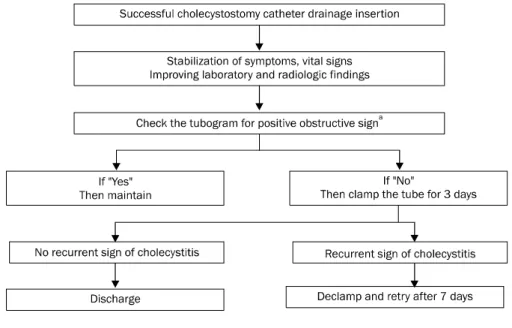
Fig. 2. Flow chart of the post-cho- lecystostomy management protocol devised by Digestive Disease Center in Cheju Halla General Hospital (Jeju, Korea).
aImpacted stone, obstructive mass, or sustained radiocontrast media (remai- ning >3 hours).
No published guidelines regarding tube removal were available to follow when this study began. Therefore, we cre- ated a protocol for the management of cholecystostomy tubes based on our experiences from previous chol- ecystostomy cases. All patients in this study were evaluated for removal of their cholecystostomy tube according to the de- vised protocol, for which we obtained consent from the Digestive Disease Center of Cheju Halla General Hospital (Fig. 2).
We checked the patency of the biliary tract in all patients who had been stabilized clinically (except medically deterio- rating cases), and performed follow-up cholecystogram un- der fluoroscopy. If contrast media injected through the chol- ecystostomy tube drained into the duodenal lumen without any obstruction, then the catheter was clamped from that day forward. All clamped patients were assessed through their clinical conditions and laboratory results 3 days later. Then, the decision was made whether or not to remove the catheter and discharge the patient.
If the patient complained of symptoms that suggested re- currence of cholecystitis, or showed worsening laboratory re- sults, then the tube was de-clamped, the drainage kept open for 7 days, and the tube was re-locked. If the patient’s chol- ecystogram showed any obstruction in the biliary tract, in- cluding the cystic and common bile ducts, or stasis of the con- trast media for more than 3 hours, then we maintained the drainage and recommended the patient discharged with the
catheter in place.
4. Data analysis
Through retrospective analysis of hospital records, all pa- tients in the study who underwent PC were assessed for clin- ical measures including underlying morbidities; past history;
laboratory and imaging findings; complication rate after chol- ecystostomy or cholecystectomy; recurrence of biliary com- plications including cholecystitis; cholangitis and biliary pan- creatitis; and cause of death. Preoperative surgical risks were assessed using the ASA physical status classification and ECOG performance scale. For some patients who were discharged to their home, their date and cause of death were obtained by telephone interview with family members. In the cases of patients transferred to local nursing homes, in- formation related to their death, such as causes and dates of death, were obtained through medical teams working in their respective institutes.
5. Statistics
Descriptive statistics, including continuous and catego- rical variables, were given as mean±SD, frequencies, and percents. To compare the variables between groups, Student’s t-test was used for continuous variables and chi-square test for categoricals. Values of p<0.05 were ac- cepted as significant. The overall survival of each treatment group was analyzed using Kaplan-Meier methods, and study
Table 1. Comorbidities of the Subjectsa
Disease category Value
Advanced malignant disease 23 (16.5)
Renal failure 20 (14.4)
Severe cardiovascular disease 19 (13.7)
Septic shock 18 (12.9)
Severe cerebrovascular disease 15 (10.8) Severe neuropsychiatric disease 13 (9.4) Severe bone and spinal disease 9 (6.5)
COPD 7 (5.0)
Miscellaneous 6 (4.3)
Heart failure 4 (2.9)
Chronic repiratory disease 3 (2.2)
Decompesated liver cirrhosis 2 (1.4)
Total response 139 (100.0)
Values are presented as n (%).
aEighty-seven patients who underwent percutaneous cholecystos- tomy in Cheju Halla General Hospital, Jeju, Korea, between 2007 and 2012.
COPD, chronic obstructive pulmonary disease.
Table 2. Baseline Characteristics of the Subjectsa
Cholecystec- tomy group
(n=35)
Best supportive care group
(n=47)
Total
(n=82) p-value
Age (yr) 71.0±12.2 73.0±14.7 72.1±13.7 0.519
Sex 0.460
Male 20 (57.1) 23 (48.9) 43 (52.4) Female 15 (42.9) 24 (51.1) 39 (47.6)
ASA class <0.001
≤3 31 (88.6) 18 (38.3) 49 (59.8)
≥4 4 (11.4) 29 (61.7) 33 (40.2)
ECOG class <0.001
≤2 26 (74.3) 6 (12.8) 32 (39.0)
≥3 9 (25.7) 41 (87.2) 50 (61.0)
Gallstone 0.130
Acalculous 12 (34.3) 24 (51.1) 36 (44.0) Calculous 23 (65.7) 23 (48.9) 46 (56.0)
Hypotension 0.210
Yes 5 (14.3) 12 (25.5) 17 (20.7) No 30 (85.7) 35 (74.5) 65 (79.3)
Renal failure 0.340
Yes 6 (17.1) 12 (26.1) 18 (22.2) No 29 (82.9) 34 (73.9) 63 (77.8)
ICU admission <0.01
Yes 1 (2.9) 20 (43.5) 21 (25.9)
No 34 (97.1) 26 (56.5) 60 (74.1) Follow-up
duration (mo)
9.5 (0.8-87.7)
4.0 (4.0-51.5)
5.2 (5.4-87.7)
0.623
Survival time (mo)
15.3 (0.8-92.0)
2.4 (0.1-24.8)
4.4 (0.1-92.0)
0.001
Values are presented as mean±SD, n (%), or median (range).
aEighty-two enrolled acute cholecystitis patients who underwent ultrasound-guided percutaneous cholecystostomy.
ASA class, American Society of Anesthesiologists’ physical status classification; ECOG, Eastern Cooperative Oncology Group; ICU, intensive care unit.
groups were compared with the use of the log rank test. The hazard ratio was estimated using a stratified Cox propor- tional hazard model. All the statistical analyses were carried out using SPSS software version 15.0 (SPSS Inc., Chicago, IL, USA).
RESULTS
A total 82 subjects that underwent ultrasound-guided PC were enrolled in this study. Listed comorbidities are shown in Table 1. Baseline characteristics of the enrolled patients and the two groups are described in Table 2.
The technical success rate for PC was 100%, and the clin- ical success rate was 97.5% (80 of 82 patients). A 76-year-old male patient underwent emergent cholecystectomy be- cause of ongoing severe pain with fever and insufficient drainage despite appropriate medical treatment with anti- biotics and analgesics. A 71-year-old male patient, who was admitted with multiple organ failure (septic shock, renal fail- ure, respiratory distress syndrome, and loss of conscious- ness), died of organ failure in the intensive care unit (ICU), de- spite successful drainage and aggressive medical therapy, including infusion of inotropic agents, mechanical ven- tilation, and administration of antibiotics. Caregivers of the patient refused urgent operative management. Procedure- related complications occurred in 2 cases (2.4%) with bile leakage peritonitis, and the condition of these patients im-
proved with medical treatment alone.
Among the 82 PC patients, 35 patients underwent laparo- scopic cholecystectomy and 47 were managed by BSC. In the cholecystectomy group, the mean bridging period (defined as the time between cholecystostomy and elective cholecystec- tomy) was 7.43±4.99 days. Operation related mortality oc- curred in 2 cases (5.71%), 1 with bile peritonitis and 1 with wound infection. In the BSC group, 16 patients treated with cholecystostomy had their tube left in place, while 31 pa- tients were extubated following cholecystostomy manage- ment protocols.
1. Baseline characteristics and clinical outcomes be- tween cholecystectomy and BSC groups
Baseline characteristics of the 2 treatment groups are
Fig. 3. Cumulative survival rates of 2 treatment groups (cholecy- stectomy vs. the best supportive care [BSC]) after percutaneous cholecystostomy.
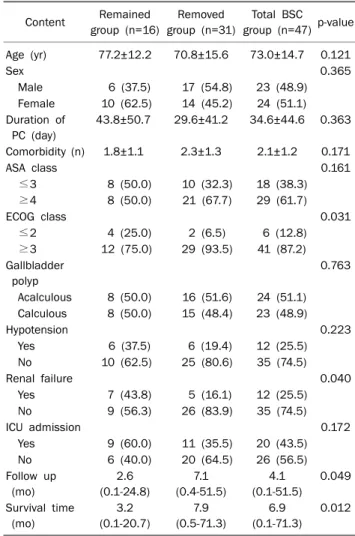
Table 4. Baseline Characteristics and Clinical Outcomes of 2 Sub- groups among 47 Best Supportive Care (BSC) Patients
Content Remained group (n=16)
Removed group (n=31)
Total BSC group (n=47) p-value Age (yr) 77.2±12.2 70.8±15.6 73.0±14.7 0.121
Sex 0.365
Male 6 (37.5) 17 (54.8) 23 (48.9)
Female 10 (62.5) 14 (45.2) 24 (51.1) Duration of
PC (day)
43.8±50.7 29.6±41.2 34.6±44.6 0.363
Comorbidity (n) 1.8±1.1 2.3±1.3 2.1±1.2 0.171
ASA class 0.161
≤3 8 (50.0) 10 (32.3) 18 (38.3)
≥4 8 (50.0) 21 (67.7) 29 (61.7)
ECOG class 0.031
≤2 4 (25.0) 2 (6.5) 6 (12.8)
≥3 12 (75.0) 29 (93.5) 41 (87.2)
Gallbladder polyp
0.763
Acalculous 8 (50.0) 16 (51.6) 24 (51.1) Calculous 8 (50.0) 15 (48.4) 23 (48.9)
Hypotension 0.223
Yes 6 (37.5) 6 (19.4) 12 (25.5)
No 10 (62.5) 25 (80.6) 35 (74.5)
Renal failure 0.040
Yes 7 (43.8) 5 (16.1) 12 (25.5)
No 9 (56.3) 26 (83.9) 35 (74.5)
ICU admission 0.172
Yes 9 (60.0) 11 (35.5) 20 (43.5)
No 6 (40.0) 20 (64.5) 26 (56.5)
Follow up (mo)
2.6 (0.1-24.8)
7.1 (0.4-51.5)
4.1 (0.1-51.5)
0.049
Survival time (mo)
3.2 (0.1-20.7)
7.9 (0.5-71.3)
6.9 (0.1-71.3)
0.012
Values are presented as mean±SD, n (%), or median (range).
PC, percutaneous cholecystostomy; ASA class, American Society of Anesthesiologists’ physical status classification; ECOG, Eastern Cooperative Oncology Group; ICU, intensive care unit.
Table 3. Multivariate Analysis of Overall Survival Rates of Total Cholecystitis Subjects with Percutaneous Cholecystostomya
Variable p-value Exp (B)
95% CI Lower Upper
Age 0.001 1.05 1.02 1.08
Sex (male vs. female) 0.300 1.42 0.73 2.75 Cholecystectomy vs. BSC group 0.160 1.92 0.77 4.77 ASA class (≤3 vs. ≥4) 0.006 3.06 1.37 6.83 Comorbidity (≤2 vs. ≥3) 0.092 0.54 0.26 1.11 ICU admission (yes vs. no) 0.420 1.37 0.64 2.93
aBy the Cox proportional hazard model using the log-rank test.
BSC, best supportive care; ASA class, American Society of Anes- thesiologists’ physical status classification; ICU, intensive care unit.
shown in Table 2. There were no statistical differences be- tween the 2 groups in age, sex, proportion of gallstone dis- ease, organ dysfunction, initial laboratory results, or mean follow-up duration. Higher classes of ASA physical status and ECOG scores were observed for patients in the BSC group than for patients in the cholecystectomy group (p<0.001).
Additionally, the BSC group had more patients who needed ICU care (p<0.001).
During the median 5.2 months of observation, median sur- vival times were recorded to be 2.4 months for the BSC group, 15.3 for the cholecystectomy group, and 4.4 overall (p=0.001, Fig. 3).
We separated all patients’ based on ASA class and ECOG scores into 2 groups (higher group and lower group). When we did this, we found no significant difference in survival rates
between the cholecystectomy group and BSC group in the Kaplan-Meier survival analysis. In the multivariate analysis of survival based on the Cox proportional hazard model using log-rank test, age and ASA class were significantly correlated with survival (Table 3). However, the survival difference be- tween the cholecystectomy and BSC groups did not reach statistical significance (Table 4).
2. Clinical outcomes of the 2 BSC subgroup: removed and maintained
Among the 47 patients in the BSC group, the drainage tube was removed in 31 (75.6%) and maintained in 16 (34.0%), according to the protocol described above. The baseline characteristics and clinical outcomes of the 2 subgroups
Fig. 4. Cumulative survival rates of remained vs. removed groups after percutaneous cholecystostomy.
within the BSC group are described in Table 4.
Between the 2 BSA subgroups, ASA class, ECOG perform- ance score, proportion of the gallstones, and incidence of or- gan failure (such as shock or renal failure) did not differ.
Median survival times were 6.9 months in the BSC group, 3.2 in the maintained group, and 7.9 in the removed group (p=0.012, Fig. 4). One patient died 12 days after chol- ecystostomy because of cholecystitis-related sepsis.
None of the patients in the removed group died from cholecystitis. They expired for their underlying diseases or other causes unrelated to cholecystitis. None of them experi- enced recurrent biliary complications (such as cholecystitis, cholangitis, or pancreatitis) requiring re-intubation during a median follow-up period of 7.1 months. One patient, a 74-year-old male, was readmitted for newly developed ab- dominal pain owing to intrahepatic biloma 2 weeks after re- moval of the cholecystostomy tube, but his condition im- proved with medical treatment.
DISCUSSION
Elective cholecystectomy after cholecystostomy is the opti- mal treatment for acute calculous or acalculous cholecystitis.
However, in patients with considerable surgical risks, chol- ecystectomy under general anesthesia can cause serious morbidity and mortality.17,18
Therefore, this study assessed if PC is appropriate as a de- finitive treatment for acute cholecystitis in patients with sur- gical risks.
Recent reports have demonstrated that PC is effective as
a definitive procedure without further cholecystectomy in certain populations. Some reports insisted that these pa- tients should receive elective cholecystectomy because of the high rates of recurrent biliary complications after removal of cholecystostomy tubes (as high as 40%).19-22
In contrast, other studies have shown lower recurrence rates of biliary complications after removal of cholecystostomy tubes. These studies concluded, therefore, that PC could be a definite therapy without additive cholecystectomy.23-26 They reported the recurrence rates of biliary complications as 0-15%. Additionally, a randomized controlled trial showed that only 1 of 19 cases reported recurrent biliary complications,17 and most recurrent cases improved with conservative medical treatment.17,24,27
We demonstrate similar success and complication rates to previous studies using these procedures. We found no sig- nificant difference in survival rate between the 2 treatment groups (cholecystectomy vs. BSC) in surgical high-risk cases (ASA class ≥4, ECOG score ≥3). Rather, we found that old age and comorbidity state (ASA class) were more important predictors of better clinical outcomes via multivariate analysis.
Another important finding of this study is the non-re- currence of biliary complications, including cholecystitis, ob- served in 25 cases where cholecystostomy tubes were removed. In our study, no recurrent biliary complications oc- curred during an overall median follow-up of 7.1 months. This lower incidence of recurrence may be due to the tailored man- agement of the cholecystostomy tubes according to our well-designed protocols. We performed cholecystograms to check the patency of the biliary trees in each of the 31 chol- ecystostomy cases, and then decided whether or not to re- move their tubes. In previous studies, no detailed strategy for the management of cholecystostomy tubes was em- ployed--they did not conduct cholangiograms before deciding to remove patients’ cholecystostomy tubes, except in one case.
Our study has several limitations. First, this was a retro- spective study and it contained a relatively small group size.
Second, the observation period of the BSC subgroups (maintained group and removed group) was relatively short.
In addition, the definition of biliary patency was not obvious on cholangiogram images. Therefore, validation of this man- agement protocol in a well-designed, randomized, pro-
spective study is warranted.
In summary, we concluded that BSC with PC rather than cholecystectomy may be considered in cholecystitis patients with extreme old age and higher morbidity (ASA ≥4). It can be considered to recommend BSC rather than cholecystectomy.
REFERENCES
1. Everhart JE, Khare M, Hill M, Maurer KR. Prevalence and ethnic differences in gallbladder disease in the United States.
Gastroenterology 1999;117:632-639.
2. Kalliafas S, Ziegler DW, Flancbaum L, Choban PS. Acute acalcu- lous cholecystitis: incidence, risk factors, diagnosis, and outcome. Am Surg 1998;64:471-475.
3. Kiviluoto T, Sirén J, Luukkonen P, Kivilaakso E. Randomised trial of laparoscopic versus open cholecystectomy for acute and gan- grenous cholecystitis. Lancet 1998;351:321-325.
4. Lo CM, Liu CL, Fan ST, Lai EC, Wong J. Prospective randomized study of early versus delayed laparoscopic cholecystectomy for acute cholecystitis. Ann Surg 1998;227:461-467.
5. Koo KP, Thirlby RC. Laparoscopic cholecystectomy in acute cholecystitis. What is the optimal timing for operation? Arch Surg 1996;131:540-544.
6. Lujan JA, Parrilla P, Robles R, Marin P, Torralba JA, Garcia-Ayllon J. Laparoscopic cholecystectomy vs open cholecystectomy in the treatment of acute cholecystitis: a prospective study. Arch Surg 1998;133:173-175.
7. Houghton PW, Jenkinson LR, Donaldson LA. Cholecystectomy in the elderly: a prospective study. Br J Surg 1985;72:220-222.
8. Frazee RC, Nagorney DM, Mucha P Jr. Acute acalculous cholecystitis. Mayo Clin Proc 1989;64:163-167.
9. Weiss CA 3rd, Lakshman TV, Schwartz RW. Current diagnosis and treatment of cholecystitis. Curr Surg 2002;59:51-54.
10. Vogelzang RL, Nemcek AA Jr. Percutaneous cholecystostomy: di- agnostic and therapeutic efficacy. Radiology 1988;168:29-34.
11. Hultman CS, Herbst CA, McCall JM, Mauro MA. The efficacy of percutaneous cholecystostomy in critically ill patients. Am Surg 1996;62:263-269.
12. Welschbillig-Meunier K, Pessaux P, Lebigot J, et al. Percutaneous cholecystostomy for high-risk patients with acute cholecystitis.
Surg Endosc 2005;19:1256-1259.
13. Byrne MF, Suhocki P, Mitchell RM, et al. Percutaneous chol- ecystostomy in patients with acute cholecystitis: experience of 45 patients at a US referral center. J Am Coll Surg 2003;197:206-211.
14. Hirota M, Takada T, Kawarada Y, et al. Diagnostic criteria and se- verity assessment of acute cholecystitis: Tokyo Guidelines. J Hepatobiliary Pancreat Surg 2007;14:78-82.
15. Meyer S. Grading of patients for surgical procedures. Anesthe- siology 1941;2:281-284.
16. Oken MM, Creech RH, Tormey DC, et al. Toxicity and response cri- teria of the Eastern Cooperative Oncology Group. Am J Clin Oncol 1982;5:649-655.
17. Hatzidakis AA, Prassopoulos P, Petinarakis I, et al. Acute chol- ecystitis in high-risk patients: percutaneous cholecystostomy vs conservative treatment. Eur Radiol 2002;12:1778-1784.
18. Escarce JJ, Shea JA, Chen W, Qian Z, Schwartz JS. Outcomes of open cholecystectomy in the elderly: a longitudinal analysis of 21,000 cases in the prelaparoscopic era. Surgery 1995;117:
156-164.
19. Morse BC, Smith JB, Lawdahl RB, Roettger RH. Management of acute cholecystitis in critically ill patients: contemporary role for cholecystostomy and subsequent cholecystectomy. Am Surg 2010;76:708-712.
20. McKay A, Abulfaraj M, Lipschitz J. Short- and long-term outcomes following percutaneous cholecystostomy for acute cholecystitis in high-risk patients. Surg Endosc 2012;26:1343-1351.
21. Granlund A, Karlson BM, Elvin A, Rasmussen I. Ultrasound-guid- ed percutaneous cholecystostomy in high-risk surgical patients.
Langenbecks Arch Surg 2001;386:212-217.
22. Ha JP, Tsui KK, Tang CN, Siu WT, Fung KH, Li MK. Cholecys- tectomy or not after percutaneous cholecystostomy for acute calculous cholecystitis in high-risk patients. Hepatogastroenter- ology 2008;55:1497-1502.
23. Leveau P, Andersson E, Carlgren I, Willner J, Andersson R.
Percutaneous cholecystostomy: a bridge to surgery or definite management of acute cholecystitis in high-risk patients? Scand J Gastroenterol 2008;43:593-596.
24. Bakkaloglu H, Yanar H, Guloglu R, et al. Ultrasound guided percu- taneous cholecystostomy in high-risk patients for surgical intervention. World J Gastroenterol 2006;12:7179-7182.
25. Koebrugge B, van Leuken M, Ernst MF, van Munster I, Bosscha K. Percutaneous cholecystostomy in critically ill patients with a cholecystitis: a safe option. Dig Surg 2010;27:417-421.
26. Chok KS, Chu FS, Cheung TT, et al. Results of percutaneous transhepatic cholecystostomy for high surgical risk patients with acute cholecystitis. ANZ J Surg 2010;80:280-283.
27. Griniatsos J, Petrou A, Pappas P, et al. Percutaneous chol- ecystostomy without interval cholecystectomy as definitive treatment of acute cholecystitis in elderly and critically ill patients. South Med J 2008;101:586-590.