저작자표시-비영리-변경금지 2.0 대한민국 이용자는 아래의 조건을 따르는 경우에 한하여 자유롭게 l 이 저작물을 복제, 배포, 전송, 전시, 공연 및 방송할 수 있습니다. 다음과 같은 조건을 따라야 합니다: l 귀하는, 이 저작물의 재이용이나 배포의 경우, 이 저작물에 적용된 이용허락조건 을 명확하게 나타내어야 합니다. l 저작권자로부터 별도의 허가를 받으면 이러한 조건들은 적용되지 않습니다. 저작권법에 따른 이용자의 권리는 위의 내용에 의하여 영향을 받지 않습니다. 이것은 이용허락규약(Legal Code)을 이해하기 쉽게 요약한 것입니다. Disclaimer 저작자표시. 귀하는 원저작자를 표시하여야 합니다. 비영리. 귀하는 이 저작물을 영리 목적으로 이용할 수 없습니다. 변경금지. 귀하는 이 저작물을 개작, 변형 또는 가공할 수 없습니다.
저작자표시-비영리-변경금지 2.0 대한민국 이용자는 아래의 조건을 따르는 경우에 한하여 자유롭게 l 이 저작물을 복제, 배포, 전송, 전시, 공연 및 방송할 수 있습니다. 다음과 같은 조건을 따라야 합니다: l 귀하는, 이 저작물의 재이용이나 배포의 경우, 이 저작물에 적용된 이용허락조건 을 명확하게 나타내어야 합니다. l 저작권자로부터 별도의 허가를 받으면 이러한 조건들은 적용되지 않습니다. 저작권법에 따른 이용자의 권리는 위의 내용에 의하여 영향을 받지 않습니다. 이것은 이용허락규약(Legal Code)을 이해하기 쉽게 요약한 것입니다. Disclaimer 저작자표시. 귀하는 원저작자를 표시하여야 합니다. 비영리. 귀하는 이 저작물을 영리 목적으로 이용할 수 없습니다. 변경금지. 귀하는 이 저작물을 개작, 변형 또는 가공할 수 없습니다.
A Thesis for the Degree of Master of Science
Production of ethanol from xylose using xylose
metabolic pathway of Kluyveromyces marxianus
in Saccharomyces cerevisiae
효모에서
Kluyveromyces marxianus
의 자일로스
대사경로를 이용하여 자일로스로부터 에탄올 생산에
관한 연구
By
Seung-Ju Son
Interdisciplinary Program for
Agricultural Biotechnology
Seoul National University
August 2013
A Thesis for the Degree of Master of Science
Production of ethanol from xylose using xylose
metabolic pathway of Kluyveromyces marxianus
in Saccharomyces cerevisiae
Advisor : Professor Jin-Ho Seo
Submitted in Partial Fulfillment of the Requirements
for the Degree of Master of Science
By
Seung-Ju Son
Interdisciplinary Program for
Agricultural Biotechnology
Seoul National University
August 2013
農
學 碩 士 學 位 論 文
Production of ethanol from xylose using xylose
metabolic pathway of Kluyveromyces marxianus
in Saccharomyces cerevisiae
재조합
Saccharomyces cerevisiae
에서
Kluyveromyces marxianus
의 자일로스 대사경로를
이용하여 자일로스로부터 에탄올 생산에 관한 연구
指導敎授 徐 鎭 浩 이 論文을 農學碩士 學位論文으로 提出함 2013年 8月 서울大學校 大學院 協同課程 農業生物工學 專攻 孫 承 珠 孫 承 珠의 農學碩士 學位論文을 認准함 2013年 8月 委 員 長 장판식 (인) 副委員長 서진호 (인) 委 員 강동현 (인)i
ABSTRACT
Xylose is a major fermentable sugar present in lignocellulosic biomass, the second most abundant carbohydrate in nature to glucose. Efficient xylose fermenting strains are required to develop economically viable processes to produce biofuels such as ethanol from biomass. Although
Saccharomyces scerevisiae has been used for industrial ethanol
production, native S. cerevisiae cannot utilize xylose as a carbon source because the baker’s yeast does not contain the metabolic activity to convert xylose to xylulose.
In yeasts, xylose is converted to xylulose by two oxidoreductases, NAD(P)H-linked xylose reductase (XR;EC1.1.1.21) and NAD+-linked xylitol dehydrogenase (XDH;EC1.1.1.9), and finally, xylulokinase (XK;EC2.7.1.17) phosphorylates xylulose into xylulose5-phosphate, which is metabolized further via the pentose phosphate pathway.
This study was carried out to clone the xylose metabolic genes from
Kluyveromyces marxianus and to compare the xylose metabolic activity
to ethanol between K. marxianus and Scheffersomyces stipitis. K.
marxianus is thermotolerant and could produce ethanol from xylose
naturally. The full genome sequences of K. marxianus were completed recently.
The three key genes involved in the xylose metabolism were cloned from K. marxianus such as XYL1 for XR, XYL2 for XDH and XYL3 for XK. These genes were introduced to S. cerevisiae D452-2 used as host.
The engineered S. cerevisiae strain (DX123/KM1) containing the K.
ii
able to produce 10.5 g/L ethanol from xylose along with specific activity of XR of 0.48 U/mg. Similarly, the genes for XDH and XK from K.
marxianus were functionally expressed in S. cerevisiae and the
engineered S. cerevisiae strains can convert xylose to ethanol successfully.
All three xylose metabolic genes from K. marxianus were introduced to
S. cerevisiae and the xylose metabolic activity was evaluated in terms of
ethanol yield and ethanol productivity. Specific activities of XR, XDH and XK from Sch. stipitis were all higher than the corresponding enzymes from K. marxianus. The recombinant S. cerevisiae strain containing the K. marxianus xylose metabolic genes (KM123) produced 10.1 g/L ethanol, 0.33 g ethanol/ g xylose ethanol yield and 0.14 g/L.h ethanol productivity. While the S. cerevisiae strain transformed with the
Sch. stipitis (SS123) produced 10.2 g/L ethanol, 0.35 g ethanol/ g xylose
ethanol yield and 0.14 g/L.h ethanol productivity.
In order to improve an ethanol fermentation performance by reducing acetate formation, the ALD6 gene which can convert acetaldehyde to acetate was disrupted to construct the S. cereivisae strain (KM123::∆ALD6). The strain produced 0.2 g/L acetate compared with 2.8 g/L in the control strain. Interestingly, the consumption of xylose and production of ethanol were not affected by disruption of ALD6.
This thesis showed production of ethanol from xylose by the recombinant S. cerevisiae containing the three genes (XR, XDH and XK) from K. marxianus. The ethanol performance of the S.cerevisiae KM123 was comparable to the S. cerevisiae strain transformed with the
iii
Keywords : bioethanol, xylose, KmXR, KmXDH, KmXK, ScALD6,
cofactor imbalance, acetate, metabolic engineering
iv
CONTENTS
ABSTRACT ··· i
CONTENTS··· iv
LIST OF FIGURES··· viii
LIST OF TABLES ··· ix
I. INTRODUCTION ··· 1
1. Bioethanol ··· 1
2. Ethanol production in recombinant Saccharomyces cerevisiae ··· 2
3. Xylose metabolism in yeast ··· 3
4. Kluyveromyces marxianus and xylose metabolisms ··· 4
5. Xylose reductase (XR) ··· 6
6. Xylitol dehydrogenease (XDH) ··· 7
7. Xylulokinase (XK) ··· 8
8. Acetaldehyde dehydrogenase family (ACDH) ··· 8
9. Cofactors ··· 13
10. Research Objectives ··· 14
II. MATERIALS AND METHODS ··· 15
v
2. Strains and Plasmids ··· 16
3. DNA Manipulation and Transformation ··· 22
3.1. Enzymes ··· 22
3.2. Transformation of E. coli ··· 22
3.3. Preparation of plasmid DNA and yeast genomic DNA ··· 22
3.4. Isolation of DNA fragments and DNA sequencing ··· 23
3.5. Polymerase chain reaction (PCR) ··· 23
3.6. Yeast transformation ··· 24
4. Homologous recombination ··· 24
5. Media and culture conditions ··· 29
5.1 Media ··· 29
5.2 Inoculum ··· 29
5.3 Cultivations in bioreactor ··· 30
6. Analysis ··· 30
6.1 Dry cell mass ··· 30
6.2 Sugar concentrations ··· 31
6.3 Measurement of enzyme activities ··· 31
III. RESULTS AND DISCUSSIONS ··· 36
1. Construction of recombinant S. cerevisiae ··· 36
vi
3. Confirmation of heterologous expression of XYL1 ··· 41
3.1 Specific activitiy assay of KmXR ··· 42
3.2. Microaerobic bath fermentation ··· 43
4. Confirmation of heterologous expression of XYL2 ··· 46
4.1 Specific activitiy assay of KmXDH··· 46
4.2. Microaerobic bath fermentation ··· 47
5. Conformation of heterologous expression of XYL3 ··· 51
5.1 Specific activitiy assay of KmXK ··· 51
5.2 Microaerobic bath fermentation ··· 52
6. Comparison of KM123 with Sch. stipitis ··· 56
6.1 Specific activitiy assay of KmXK ··· 56
6.2 Microaerobic bath fermentation ··· 60
7. Effects of ALD6 gene disruption on xylose fermentation in recombinant S. cerevisiae ··· 64
7.1 Confirmation of ALD6 gene disruption ··· 64
7.2 Microaerobic bath fermentation ··· 65
8. Microaerobic batch fermentation in Bioreactor ··· 68
IV. CONCLUSIONS ··· 72
vii
국문초록 ··· 83
viii
LIST OF TABLES
Table 1. A list of recombinant S. cerevisiae strains used in this study ·· 20 Table 2. List of the primers used in this study ··· 21 Table 3. Summary of Microaerobic batch fermentation of S. cerevisiae DX23/KM1 ··· 45 Table 4. Summary of aerobic batch fermentation of S. cerevisiae
ISXK/KM12 ··· 50 Table 5. Summary of aerobic batch fermentation of S. cerevisiae
KM12,3 ··· 55 Table 6. Summary of microaerobic batch fermentation of SS12,3 and
KM12,3 ··· 63 Table 7. Summary of microaerobic batch fermentation of Km12,3 and
Km12,3::△ald6 ··· 67 Table 8. Summary of microaerobic batch fermentation of SS12,3 and
ix
LIST OF FIGURES
Figure 1. Metabolic pathway of xylose metabolism in recombinant S.
cerevisiae harboring XYL1, XYL2 and XYL3 from K .marxianus
··· 11
Figure 2 Strategy to improve the xylose fermentation in recombinant
S. cerevisiae ··· 12
Figure 3. Genetic maps of plasmids pRS403KmXR, pRS406KmXRXDH and pRS403KmXK ··· 24 Figure 4. Genetic maps of plasmids pRS405KmXDH, pRS406KmXK 27 Figure 5. Schematic representation of ALD6 gene disruption by
homologous recombination. ··· 28 Figure 6. Nucleotide sequence of the XYL1 gene from K. marxianus and its deduced amino acid sequ ··· 37 Figure 7. Nucleotide sequence of the XYL2 gene from K. marxianus and its deduced amino acid sequence ··· 38 Figure 8. Nucleotide sequence of the XYL3 gene from K. marxianus and its deduced amino acid sequence ··· 40 Figure 9. Comparison of the specific activities of xylose reductase (XR) between S. cerevisiae D/KmXR , S. cerevisiae DX23/KM1 · 42 Figure 10. Microaerobic batch fermentation profiles of S. cerevisiae
x
DX23/pRS403 ··· 44 Figure 11. Comparison of the specific activities of xylitol dehydrogenase (XDH) between S. cerevisiae D/KmXDH, S. cerevisiae ISXK/KM12 ··· 47 Figure 12. Microaerobic flask batch fermentation profile of S. cerevisiae ISXK/pRS406 ··· 49 Figure 13. Comparison of the specific activities of xylulokinase (XK) between S. cerevisiae D/KmXK and S. cerevisiae KM12,3 ·· 54 Figure 14. Microaerobic flask batch fermentation profiles of and S.
cerevisiae D/pRS403406 and KM12,3 ··· 54
Figure 15. Comparison of the specific activities of single XR , XDH and XK ··· 58 Figure 16. Comparison of the specific activities of XR, XDH and XK between S. cerevisiae SS12,3 and S. cerevisiae KM12,3 ··· 60 Figure 17. Microaerobic flask batch fermentation profile of SS12,3 and
KN12,3 ··· 62 Figure 18. Electrophoresis of diagnostic PCR product ··· 64 Figure 19. Microaerobic flask batch fermentation profiles of KM12,3
and KM12,3:: △ald6 ··· 66 Figure 20. Microaerobic batch fermentation profiles of SS12,3 and KM12,3 ··· 70
1
I. INTRODUCTION
1. Bioethanol
Rising concerns over the cost of petroleum and the prospect of global warming are driving the development of technologies for the production of alternative fuels such as ethanol[Ragauskas AJ et al., 2006]. The long-term source of ethanol is from plant matter(biomass) through the fermentation of biomass carbohydrates to ethanol. The conversion of biomass to useable energy is not economical, however, unless hemicellulose is used in addition to the cellulose[Wyman CE, 2003]. Xylose is the second most abundant carbohydrate in nature and its commercial fermentation to ethanol could provide an alternative fuel source for the future.
Renewable lignocellulosic biomass is an attractive feedstock for fuel ethanol production since it is readily available, e.g., as a waste from the pulp and paper or agricultural industries, and also due to the fact that it is renewable with cycles many orders of magnitude shorter compared with those of fossil fuels. Lignocellulose, which is composed of cellulose, hemicellulose, and lignin[Aristidou and Penttila 2000l Saha 2003], is often hydrolyzed by acid treatment; the hydrolysate obtained is then used for ethanol fermentation by microornaisms such as yeast and
2
bacteria. Becacuse such lignocellulose hydrolysate contains not only glucose, bust also various monosaccharides, such as xylose, mannose, galactose, and arabinose and oligosaccharides, microorganisms should be required to efficiently ferment these sugars for the successful industrial production of ethanol.
2. Ethanol production in recombinant Saccharomyces
cerevisiae
One of the most effective ethanol-producing yeasts, Saccharomyces
cerevisiae, has several advantages owing to its high ethanol production
from hexoses and high tolerance to ethanol and other inhibitory compounds in the acid hydrolysates of lignocellulosic biomass(Olsson and Hahn-Hagerdal 1993; Hahn-Hagerdal et al., 2001) However, because wild-type strains of this yeast cannot utilize pentoses, such as xylose and arabinose, and celloligosaccharides, ethanol production from a lignocellulose hydrolysate is inadequate. Accordingly, many researchers have engineered yeast capable of xylose fermentation [Ho et
al., 1998; Eliasson et al. 2000; Hahn-hagerdal et al. 2001, Jeffries and
Jin 2004]. Natural xylose-fermenting yeasts, such as Pichia stipitis [verduyn et al., 1985], Candida shehatae[Ho et al., 1990], and Candida
3
xylose reductase(XR) to convert xylose to xylitol, and of xylitol dehydrogenase(XDH) to convert xylitol to xylulose. Therefore, ethanol fermentation from xylose can be successfully performed by recombinant
S. cerevisiae carring heterologous XR and XDH from P. stipitis, and
xylulokinase(XK) from S. cerevisiae[Ho et al., 1999; Eliasson et al., 2000; Toivari et al., 2001]
3. Xylose metabolism in yeast
Xylose can be utilized as a carbon source by various microorganisms such as bacteria, yeast and filamentous fungi [Ostergaard et al., 2000]. In bacteria, xylose can be isomerized to xylulose by xylose isomerase. Xylulose is subsequently phosphorylated by xylulokinase into xylulose-5-phosphate of the pentose phosphate pathway (the PP pathway). In general, yeasts convert xylose to xylulose through a two-step reduction and oxidation. Firstly, xylose is reduced to xylitol by NAD(P)H dependent xylose reductase. Then xylitol is either secreted from the cell or oxidized to xylulose by NAD+ dependent xylitol dehydrogenase. The phosphorylation of xylulose to xylulose-5-phosphate is catalyzed by xylulokinase of the PP pathway [Hähn-Hägerdal et al., 2001]. The PP pathway consists of an oxidative stage that converts hexose phosphates to pentose phosphates, providing NADPH needed in biosynthetic
4
pathways and a non-oxidative stage in which the pentose phosphates are converted into hexose and triose phosphates.
S. cerevisiae is a very attractive organism to work with since it is
nonpathogenic. In addition, due to its long history of application in the production of consumable products such as ethanol and baker’s yeast, it has been classified as a GRAS (generally recognized as safe) organism. Its large-scale fermentation technology is well developed [Romanos et
al., 1992]. Also, it can be easily manipulated at a gene level by
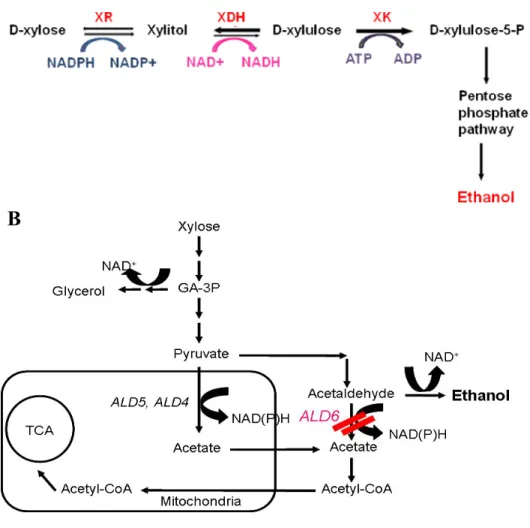
recombinant DNA technology because its genome has been completely sequenced [Goffeau et al., 1996]. But S. cerevisiae cannot metabolize xylose as a sole carbon source since this yeast does not possess intrinsic enzymes necessary for xylose metabolism [figure 1].
4. Kluyveromyces marxianus and it’s xylose metabolism
Ethanol production at elevated temperatures has received much attention because of the potential cost savings, which could be obtained by continuous evaporation of ethanol from the broth under reduced pressure (Hacking et al. 1984; Gough et al. 1996, 1997, 1998; Banat et al. 1998). This topic was recently reviewed for yeasts in general, including
K. marxianus. The advantages described, besides the energy savings due
5
rates, continuous ethanol removal, and reduced contamination (Banat et al. 1998). However, the temperature increase has a negative effect on ethanol yield and also reduces the cell viability (Anderson et al. 1986; Ballesteros et al. 1991). K. marxianus was reported to produce alcohol at temperatures above 40°C and to have a maximum growth temperature of 47°C (Anderson et al. 1986), 49°C (Hughes et al. 1984), or even 52°C (Banat et al. 1992). Lower ethanol tolerance was observed when K.
marxianus was compared to S. cerevisiae, and this was correlated with
the activity of the plasma membrane ATPase (Rosa and Sa-Correia 1992; Fernanda and Sa- Correia 1992). Hacking et al. (1984) screened yeast strains for their ability to ferment glucose to ethanol at high temperatures. The tolerance of all species seemed to decrease with temperature, but in general, Kluyveromyces strains were more thermotolerant than
Saccharomyces, which in turn can produce higher ethanol yields.
Anderson et al. (1986) compared K. marxianus strains isolated from sugar mills and CBS strains for ethanol production at high temperatures. The CBS strains produced the same ethanol amounts as the new isolates but with lower cell viability and higher cultivation time. Sakanaka et al. (1996) reported the fusion of a thermotolerant strain of K. marxianus with a high ethanol producing strain of S. cerevisiae; however, their fermentative capacity was severely impaired and the fusants’
6
thermostability was lower than for either of the parental cells. Recently XR, XDH, XK of K. marxianus were reported. [Biao Zhang et al., 2011, Li Lulu et al., 2013, Rongliang Wang et al., 2013]
Ethanol from lignocellulosic materials by a simultaneous saccharification and fermentation process (SFS) was produced with K.
marxianus.[M Ballasteros et al., 2004] Also, by glcose and xylose
co-fermentation, ethanol could be produced in K. marxianus. [JM laplace 1996]
5. Xylose reductase (XR)
Xylose reductase (XR) is classified as a member of the aldo-keto reductase (AKR) superfamily which is made up of 14 different families and approximately 120 members [Hyndman et al., 2003; Kavanagh et al., 2003]. XR has been purified from many yeasts such as P. stipitis [Rizzi
et al.,1988; Webb et al., 1992], C. shehatae [Ho et al., 1990]. XR from P. stipitis is active with various aldose substrates such as D-xylose, D-
glucose and D-ribose [Verduyn, C et al., 1985].
XR from P. stipitis, C. shehatae, C. parapsilosis can utilize both NADPH and NADH as a cofactor, whereas XR from C. tropicalis, C.
utilis, C. guilliermondii, D. hansenii exclusively uses NADPH only
7
and Kuzmanova, 1998; Yokoyama et al., 1995].
XR from K. marxianus can utilize NADPH only as a cofactor. The Km of the recombinant KmXR for NADPH is 65.67 μM and KmXR activity is 1.295 U/mg, which is lower than those of most reported yeast XRs, and the enzyme has no activity with coenzyme NADH. This result demonstrates that the XR from K. marxianus is highly coenzyme specific.[Biao Zhang et al., 2011]
6. Xylitol dehydrogenase (XDH)
Xylitol dehydrogenases (EC 1.1.1.9) are classified as members of the medium-chain alcohol dehydrogenease family, and share structural and functional properties with medium-chain sorbitol dehydrogenases [Lunzer et al., 1998]. XDHs have been purified and characterized from various xylose-fermenting yeasts, including K.marxianus P. stipitis [Rizzi et al., 1989b], C. shehate [Yang and Jeffries, 1990]
S. cerevisiae xylitol dehydrogenease(ScXDH), the gene product of the YLR070c ORF, is specific for NAD+ as a cofactor(Richard et al., 1999). The apparent kinetic constants of the ScXDH were: Km,xylitol = 25 mM,
Km,NAD+= 240 μM, Km,xylulose = 1.1 mM , and Km,NADH = 55 μM. These
kinetic values suggest that the enzyme actually favors the reverse direction whereby xylulose is reduced to xylitol and that this enzyme
8
reaction may be incapable of supporting a high flux of xylose through central metabolism which is needed for fermentation of xylose to ethanol. The highest activity of KmXDH could be observed at pH 9.5 during 55°C. The values of kcat/Km indicate that KmXDH prefers NAD+ to NADP+ (kcat/Km NAD+ 3681/min mM and kcat/Km NADP+ 1361/min mM).[Li Lulu et al., 2013]
7. Xylulokinase(XK)
Xylulokinase(EC 2.7.1.17) that acts to phosphorylate xylulose for entry into the pentose phosphate pathway has been studied in Lactobacillus
pentosus, Klebsiella aerogenase, and Klebsiella pneumonia [Lampen,
1953; Stumpf and Horecker, 1956; Feldmann et al., 1992].
The gene encoding xylulokinase (XKS1) from S. cerevisiae is found on the right arm of chromosome VII and encodes the native XK (ScXK) [Rodriguez-Pena et al., 1998]. Deletion of the XKS1 gene results in mutants unable to grow on xylulose as the sole carbon source [Richard et
al., 2000]. K.marxianus had its own XK gene. KmXYL3 was expressed
in Escherichia coli BL21 (DE3) cells, and the specific activity of the resulting recombinant purified xylulokinase was 23.5 mU/mg. [Rongliang Wang et al., 2013]
9
8. Acetaldehyde dehydrogenase family (ACDHs)
Two acetaldehyde dehydrogenase(ACDHs) were originally identified in
S. cerevisiae;an Mg2+-activated, NADP+-dependent cytosolic enzyme
[Seegmiller, 1953] and a glucose-repressed, NAD(P)+-dependent, mitochondrial enzyme activated by K+ and thiols [Jacobson & Bernofsky, 1974]. Five ACDH genes have now been identified in the genome sequence of S. cerevisiae S288C. According to the nomenclature of Navarro—Avino et al.(1999), the cytosolic ACDHs are encoded by
ALD6, ALD2 and ALD3, whereas the mitochondrial isoforms are
encoded by ALD4 and ALD5. Ald6p and Ald4p, which are Mg2+ -and K+ -dependent, respectively, are the major isoforms and have been shown to be involved in growth on glucose and on ethanol [Meaden et al., 1998]. In S. cerevisiae, acetate is produced as an intermediated of the pyruvate dehydrogenase (PDH) bypass, which converts pyruvate into acetyl-CoA in a series of reactions catalysed by pyruvate decarboxylase(PDC), acetaldehyde dehydrogenase(ACDH) and acetyl-CoA synthetase. This pathway is the sole source of cytosolic acetyl-CoA, which is required for anabolic processes such as lipid biosynthesis [Flikweert et al., 1996]. The reaction catalyze by ACDH also generates reducing equivalents, which are required for a variety of synthetic pathways and redox reactions, in the form of NAD(P)H. ACDH produces acetate by
10
oxidizing the acetaldehyde produced from pyruvate during the fermentation of sugars and that formed during ethanol oxidation.
One reason for improvement of specific rate of xylose consumption may be that ALD6 gene disruption led to escape the inhibition of cellular metabolism caused by acetate accumulation in the medium [M. Teresa Ramos et al., 1990].
11
Figure 1. Metabolic pathway of xylose metabolism in recombinant S. cerevisiae harboring XYL1, XYL2 and XYL3 from
12
Figure 2. Strategy to improve the xylose fermentation in recombinant
S. cerevisiae
(A) Process of converting xylose to ethanol and key enzymes (B) To minimize the acetate formation by ALD6 gene disruption
B
A
13
9. Cofactors
Heterologous expressions of xylose reductase (XYL1) and xylitol dehydrogenase (XYL2), either case of which being accompanied by overexpression of xylulokinase (XKS1 or XYL3), are known as the prevalent strategies for metabolic engineering of S. cerevisiae to ferment xylose. [K€otter & Ciriacy, 1993; Tantirungkij et al., 1993; Walfridsson
et al., 1997; Ho et al., 1998, 1999; Meinander et al., 1999; Eliasson et al.,
2000, 2001; Jin et al., 2000.]
But alternative strategy employs overexpression of GRE3 coding for endogenous aldose reductase instead of XYL1 to construct efficient xylose-fermenting S. cerevisiae. Replacement of XYL1 with GRE3 has been regarded as an undesirable approach because NADPH-specific aldose reductase (GRE3) would aggravate redox balance with xylitol dehydrogenase (XYL2) using NAD+ exclusively. Optimized expression levels of GRE3, XYL2, and XYL3 could overcome redox imbalance during xylose fermentation by engineered S. cerevisiae under oxygen-limited conditions.[S R Kim et al., 2013]
As XR from K. marxianus also utilize only NADPH, cofactor imbalance between NADPH dependent XR and NAD+ dependent XDH would be occured. But It is possible to produce ethanol in spite of redox imbalance by combination of XR, XDH and XK.
14
10. Research Objectives
Key genes like XYL1, XYL2, XYL3 involved in the xylose metabolic pathway were introduced to produce ethanol from xylose in recombinant
S. cerevisiae. ADL6 gene was disrupted to increase ethanol and decrease
byproduct that inhibited ethanol fermentation should be considered. This study was focused on characterization of genetic factors and process conditions for the production of ethanol from xylose in metabolically engineered S. cerevisiae
The specific objectives of this study are as follows.
(1) To clone genes of xylose metabolism XYL1 encoding XR,
XYL2 encoding XDH and XYL3 encoding XK from K. marxianus.
(2) To compare recombinant strain harboring K. marxianus genes with Sch. stipitis genes generally used in xylose fermentation.
(3) To express XYL1, XYL2 and XYL3 for producing ethanol and minimize the acetic acid formation as inhibitory compound by
15
II. MATERIALS AND METHODS
1. Reagents
All chemicals used were of reagent grade. Glucose, xylitol, agarose, ampicillin, ethidium bromide, yeast synthetic drop-out supplement, yeast nitrogen base (YNB, w/o amino acid), protease inhibitor cocktail, bovine serum albumin, β-nicotinamide adenine dinucleotide phosphate (β-NADPH, β-NADP+), nicotinamide adenine dinucleotide(NADH, β-NAD+ ), EDTA, trizma base, and antifoam were purchased from Sigma-Aldrich Chemical Company (St. Louis, MO, USA). Protease inhibitor cocktail was purchased from Roche Company. Bacto-peptone, bacto-trypton, yeast extract and bacto-agar were obtained from Difco (Detroit, MI., USA); xylose and glycine from Junsei (Tokyo, Japan); ethanol from Merck (Darmstadt, Germany); HPLC-grade water from J.T. Baker (Phillipsburg, NJ, USA); 2N NaOH and 5N HCl, NaCl, H2SO4, and
16
2. Strains and plasmids
2.1. Strains
E. coli TOP10 (Invitrogen, Carlsbad, CA, USA) was used for the
propagation and preparation of plasmid DNA. S. cerevisiae D452-2 [Matα, leu2 his3 ura3 can1 ] were used as host strains for the expression of xylose metabolic pathway genes. S. cerevisiae D452-2 strain was kindly donated by Prof. Makino at Kyoto university. S. cerevisiae ISXK [D452-2 , Ty1-delta::PGPD-XKS1-TGPD-neor] which had been engineered for
overepxression of endogenous XK [Lee 2008] was also used as an host for additional engineering.
XYL1 expression system
The XYL1 gene from K. marxianus was introduced and expressed in S.
cerevisiae. The linearized plasmids p403KmXR was transformed into S. cerevisiae DX23 strain. S. cerevisiae DX23 [D452-2,
ura3::URA3-PGKP-XYL2-PGKT,PGKP-XYL3-PGKT] harboring pRS306XDHXK
[Jung-Hyun Jo] had XDH, XK from scheffersomyces stipitis for production of ethanol from xylose. The plasmid p403KmXR and pRS306XDHXK were linearized by restriction enzyme BsmI.The transformants were named as DX23/KM1.
XYL1-XYL2 expression system
17
expressed in recombinant S. cerevisiae. The linearized plasmids p406KmXRXDH were transformed into recombinant S. cerevisiae ISXK strain. The plasmid p406KmXRXDH was linearized by restriction enzyme XcmI. The transformants were named as ISXK/KM12.
XYL1-XYL2 –XYL3 expression system
The XYL1, XYL2 and XYL3 genes were introduced and expressed in S.
cerevisiae. The linearized plasmid p406KmXRXDH and p403KmXK
was transformed into S. cerevisiae D452-2 strain. The plasmid p406KmXRXDH and p403KmXK were linearized by restriction enzyme
XcmI. The transformants were named KM12,3.
XYL1-XYL2 –XYL3 and △ALD6 expression system
The linearized plasmid pAUR_d_ALD6 [Lee 2008] was transformed into KM12,3. The plasmid pAUR_d_ALD6 was linearized by restriction
enzyme SalI. The transformant was named KM12,3△ald6
Strains for confirming XYL1, XYL2 and XYL3 from K. marxianus and Sch. stipitis
To confirm activity of each XYL1, XYL2 and XYL3, p403Km(Ss)XR, P405Km(Ss)XDH and p406Km(Ss)XK was respectively transformed to
S. cerevisiae D452-2 strain to construct D/Km(Ss)XR, D/Km(Ss)XDH
and D/Km(Ss)XK.
18
medium in a deep freezer at -80℃ suspended in 15% glycerol.
2.2. Plasmids
pRS306XDHXK plasmids were kindly donated by Jung-Hyun Jo at Seoul National university. XYL2 and XYL3 genes coding for NAD+ dependent PsXDH and NADH-dependent PsXK each were cloning to pRS306.
Plasmid pAUR_d_ALD6 was constructed by Sung-Hang Lee. [2008] Truncated ALD6 gene was isolated from S. cerevisiae CEN.PK2-1D genomic DNA and introduced into plasmid pAUR101(Takara, Japan) .
Plasmid pRS403, pRS405, pRS406, pRS403PGK and pRS426GPD were used as mother vectors and cloning vectors for introduction of
XYL1, XYL2, XYL3 genes.
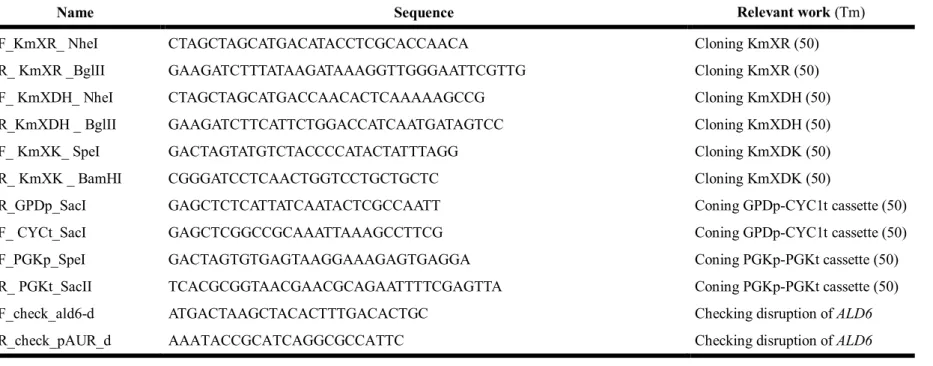
XR was isolated from genomic DNA of K. marxianus by the PCR using primers listed in Table 2. This was introduced into plasmid pRS426 to construct plasmid pRS426GPDKmXR. XR was expressed under the control of the constitutive glyceraldehyde-3-phosphate dehydrogenase (GPD) promoter. Additionally, for activity assay of single KmXR, XR cassettes from K. marxianus and Sch. Sipitis was cloned to pRS403 to construct p403GPDKm(Ss)XR [Figure 3].
19
XDH also could be isolated from genomic DNA of K. marxianus by the PCR using primers listed in Table 2. This was cloned into plasmid pRS403 to construct plasmid pRS403PGKKmXDH . Then, XDH was expressed under the control of the constitutive phosphoglycerate kinase (PGK) promoter. Additionally, for activity assay of single KmXDH, XDH cassettes from K. marxianus and Sch. Sipitis was cloned to pRS405 to construct p405PGKKmXDH [Figure 4]..
XR and XDH expression cassettes were isolated from pRS426GPDKmXR and pRS403PGKKmXDH plasmids by the PCR using primers listed in Table 2, respectively. They introduced into plasmid pRS406 to construct plasmid pRS406KmXRXDH [Figure 3]. XR and XDH were expressed under the control of the constitutive glyceraldehyde-3-phosphate dehydrogenase (GPD) promoter and phosphoglycerate kinase (PGK) promoter respectively.
Finally, XK was isolated from genomic DNA of K. marxianus by the PCR using primers listed in Table 2. Plasmid pRS403PGKKmXK was constructed by introducing XK [Figure 3]. XK was expressed under the control of the constitutive phosphoglycerate kinase (PGK) promoter. Additionally, for activity assay of single KmXK, XK cassettes from K.
marxianus and Sch. Sipitis was cloned to pRS406 to construct
20
Table 1. A list of recombinant S. cerevisiae strains used in this study
Strains Genotype Used plasmid
D452-2 Matα, leu2 his3 ura3 can1
ISXK D452-2 , Ty1-delta:: GPDP -XKS1- GPDt-neo pAUR_d_ALD6 [SH LEE 2008], DX23 D452-2, ura3::URA3-PGKP-XYL2-PGKT- PGKP-XYL3-PGKT pRS306XDHXK [Jung-Hyun Jo] DX23/KM1 DX23, his3::HIS3- GPDP –KmXYL1- CYC1t p403GPDKmXR
ISXK/KM12
ISXK, ura3::URA3- GPDP –KmXYL1- CYC1t -
PGKP-KmXYL2-PGKT p406KmXRXDH KM12,3 D452-2, ura3::URA3-GPDP–KmXYL1-CYC1T tPGKP-KmXYL2-PGKT, his3::HIS3- PGKP – KmXYL3- PGKt p406KmXRXDH, p403PGKKmXK Ss12,3 D452-2, ura3::URA3-GPDP–XYL1-CYC1T -tPGKP -XYL2-PGKT, -his3::HIS3- PGKP – XKS1- PGKt p406XRXDH, p403PGKXK [Jung-Hyun Jo] KM12,3△ald6 KM12,3, Ty1-delta:: GPDP -XKS1- GPDt-neo
pAUR_d_ALD6 [SH LEE 2008],
21
Table 2. A list of primers used in this study
Name Sequence Relevant work (Tm)
F_KmXR_ NheI CTAGCTAGCATGACATACCTCGCACCAACA Cloning KmXR (50) R_ KmXR _BglII GAAGATCTTTATAAGATAAAGGTTGGGAATTCGTTG Cloning KmXR (50) F_ KmXDH_ NheI CTAGCTAGCATGACCAACACTCAAAAAGCCG Cloning KmXDH (50) R_KmXDH _ BglII GAAGATCTTCATTCTGGACCATCAATGATAGTCC Cloning KmXDH (50) F_ KmXK_ SpeI GACTAGTATGTCTACCCCATACTATTTAGG Cloning KmXDK (50) R_ KmXK _ BamHI CGGGATCCTCAACTGGTCCTGCTGCTC Cloning KmXDK (50)
R_GPDp_SacI GAGCTCTCATTATCAATACTCGCCAATT Coning GPDp-CYC1t cassette (50) F_ CYCt_SacI GAGCTCGGCCGCAAATTAAAGCCTTCG Coning GPDp-CYC1t cassette (50) F_PGKp_SpeI GACTAGTGTGAGTAAGGAAAGAGTGAGGA Coning PGKp-PGKt cassette (50) R_ PGKt_SacII TCACGCGGTAACGAACGCAGAATTTTCGAGTTA Coning PGKp-PGKt cassette (50) F_check_ald6-d ATGACTAAGCTACACTTTGACACTGC Checking disruption of ALD6 R_check_pAUR_d AAATACCGCATCAGGCGCCATTC Checking disruption of ALD6
22
3. DNA Manipulation and Transformation
3.1. Enzymes
Restriction enzymes, calf intestinal alkaline phosphatase (CIP) and Klenow fragment were purchased from New England Biolabs (Beverly, MA, USA). T4 DNA ligase was obtained from Takara(Tokyo,Japan).
3.2. Transformation of E. coli
Transformation of E. coli was carried out as described by Sambrook et al. [1989]. E. coli Top10 was cultured in 5 mℓ LB medium for 12hr. Half a milliliter of the culture was transferred to fresh 50 mℓ LB medium and cultured until OD600 reached 0.5. Cells harvested by centrifugation at
6000 rpm for 5 min at 4℃ were resuspended in 5 mℓ of ice-cold 100 mM CaCl2 solution containing 15% (v/v) glycerol. Resuspended cells
were aliquoted to 100 μℓ, mixed with DNA, and kept on ice for 30 min. They were subjected to heat-shock at 42℃ for 45 sec, and one mℓ of LB medium was added to the test tubes and incubated at 37℃ for 1 hour to allow the bacteria to express the antibiotic resistance. An appropriate volume of the transformed cells was spread on LB agar plates with an ampicillin selection marker.
23
Mini-scale preparation of plasmid DNA was carried out using
AccuPrep TM Plasmid Extraction Kit from Bioneer Co. (Daejon, Korea)
according to the manufacturer’s instruction.
Preparation of yeast genomic DNA to obtain a template for the gene was carried out using MasterpureTM Yeast DNA Purification Kit (EPICENTRE, Madison, Wis., USA) according to the manufacturer’s instruction.
3.4. Isolation of DNA fragments and DNA sequencing
DNA was digested with restriction enzymes and separated on a 0.1% (w/v) agarose gel. After full separation of the desired DNA band from the gel, the gel containing the DNA fragment was solubilized and further purified by using Gel Extraction Kit from Takara(Tokyo,Japan). DNA sequencing was performed at SolGent co., Ltd (Daejeon, Korea).
3.5. Polymerase chain reaction (PCR)
PCRs were performed with the GeneAmp PCR System 2400 (Applied Biosystems, Lincoln, CA, USA). PCRs for subcloning of XYL1, XYL2 and XYL3 were performed in 50 µL of dyemix solution from Enzynomics Co.(Korea) containing 10 pM each of forward and reverse primers (Table 2), and 1 µL genomic DNA of K. marxianus. PCRs for
24
cloning of XYL1 and XYL2 cassettes were performed in in 50 µL of dyemix solution from Enzynomics Co.(Korea) containg 10 pM each of forward and reverse primers (Table 2), and 1 µL pRS426GPDKmXR and pRS403PGKKmXDH respectively. After heating the reaction tubes for 5 min at 94 , ℃ 25 cycles of PCR amplification were performed as follows: 30 sec at 94 , ℃ 30 sec at 50 , and 1min 30 sec at 72℃ ℃(time is dependent on product size, 1 min for 1kb), followed by 7 min at 72℃ during the last cycle.
In case of colony PCR, total volume of dyemix solution was 20 µL containg 10 pM each of forward and reverse primers, and colony was put into dyemix solution. The reaction tubes was heated for 10 min at 94℃.
3.6. Yeast transformation
Yeast transformation was carried out by the Alkali-Cation method and MicroPulserTM Electroporation Apparatus (Bio-Rad, Richmond, USA) with the following modifications to increase the transformation efficiency [Wang et al., 1996]. Transformants were cultivated and selected on YNB ura- ,YNB ura-his- or YP-AbA(0.5 mg/L )plates.
4. Homologous recombination
25
were carried by homologous recombination. Two step gene replacement method with some modification was used in this study [Dan Burke, 2000].
XYL1, XYL2 cassettes and XYL3 were obtained by PCR. The PCR
product was cloned into pRS406 having URA3 marker and pRS403 having HIS3 marker to make pRS406KmXRXDH and pRS403KmXK. Plasmid pRS406KmXRXDH and pRS403KmXK were linearized with retriction enzyme XcmI and BsmI before transformation into D452-2 strain.
Truncated ALD6 gene was amplified was obtained by PCR. The PCR product was cloned into pAUR101 that has AUR1-C marker to make pAUR_d_ALD6. Plasmid pAUR_d_ALD6 was linearized with restriction enzyme Sal I as shown in before transformation into KM12,3 strain.
Transformants were selected on YP glc with AbA 0.5 mg/L plate and used for diagnostic colony PCR. PCR primers listed in Table 2 were used.
26
Figure 3. Genetic maps of plasmids pRS403KmXR, pRS406KmXRXDH and pRS403KmXK
27
28
Figure 5. Schematic representation of ALD6 gene disruption by homologous recombination.
29
5. Media and culture conditions
5.1 Media
LB medium (1 % tryptone, 0.5 % yeast extract, 1 % NaCl) was used for
E. coli cultivation. YEPD-ABA medium (1% yeast extract, 2%
bacto-peptone, 2% glucose, Aureobasidin A 0.5 mg/L ) and YNB medium (0.6 g/L) which lacked appropriate amino acid were used for selection of yeast strains. YEPX (1% yeast extract, 2% bacto-peptone, 4% xylose) were used for cultivation of yeast strains.
5.2 Inoculation
Recombinant S. cerevisiae stock was transferred to a test-tube containing 5 ml of appropriate medium and incubated overnight at 30°C in a shaking incubator (Vision, Korea). Pre-culture was carried out in a 500 ml baffled flask with 100 ml or 200 ml working volume at 30°C for 12 h in YPD (2% glucose) media at fully aerobic condition (250 rpm). The inocula were prepared by growing cells overnight to an OD600 of
over 10. The cells were then harvested in 50 mL autoclaved falcon, resuspended in 50 mL DDW and then transferred to the bioreactor, giving an initial OD600 of approximately 5.
In case of flask culture, recombinant cell stock was transferred to test-tube containing 5ml YPD (2%glucose) and incubated overnight at 30°C,
30
fully aerobic condition (250 rpm). This cells were harvested in 2 ml eppen tube, and then transferred to 250ml glass flask containing 50ml YPX (4% xylose), giving an initial ) OD600 of approximately 5.
5.3 Cultivations
Batch flask cultivations took place in a 250 ml glass flask with 50 ml working volume at 30 °C, oxygen-limited condition (80 rpm). YEP medium (1 % (w/v) yeast extract, 2 % (w/v) peptone) supplemented with 4 % (w/v) xylose was used for batch flask cultivation.
Bioreactor cultivations took place in a 1L B.Braun multi-fermenter (BIOSTAT-Q,Germany) with 0.5 L working volume. Medium acidity was automatically controlled at pH 5.5 by addition of 2 N NaOH from Duksan (Korea) and temperature of 30℃ was maintained throughout the cultivation. Foam was removed by the addition of Antifoam 204 (Sigma Chemical Co., USA). YEP medium (1 % (w/v) yeast extract, 2 % (w/v) peptone) supplemented with 4 % (w/v) xylose was also used for batch fermentations. The fermentation experiments were performed under oxygen limited condition at 0.3 vvm and 200 rpm.
.
6. Analysis
31
Dry cell mass concentration was estimated by measuring absorbance at 600 nm by a spectrometer (Ultrospec 2000, Amersham Pharmacia Biotech, Piscataway, NJ, USA). Optical density was converted into dry cell mass by using the following conversion equation.
Dry cell mass (g/L) = 0.30 × OD600
6.2 Sugar and ethanol concentrations
Concentrations of glucose, xylose, xylitol, glycerol, acetic acid and ethanol were measured by a high performance liquid chromatography (Agilent 1260infinity, U.S.A) equipped with the Carbohydrate Analysis column (Phenomenex, USA). The carbohydrate analysis ion exclusion column heated at 60°C was applied to analyze the 20 ul of diluted culture broth. Detection was made with a reflective index detector at 35°C. HPLC operation conditions were set according to the instruction manual of the column supplier. H2SO4 (5 mM) solution was used as
mobile phase at a flow rate of 0.6 ml/min.
6.3 Measurement of enzyme activities Sample preparation
50 ㎕ of the recombinant S. cerevisiae stock was transferred to a test-tube containing 5 ml of YPD media and incubated overnight at 30 °C in
32
a shaking incubator (Vision, Korea) at 250 rpm.
Samples of steady-state cultures were harvested by 13200 rpm centrifugation, giving them same OD600 at 20. After washing cells twice,
centrifuge them and threw supernatant away. Then, cells were resuspended with 500 µl Y-PER (THERMO #78991) and appropriated buffers containing protease inhibitor cocktail and agitated for 20 minutes at room temperature. After centrifugation of the samples for 10 minutes at 4℃, 13200 rpm, the supernatant was used for crude extract.
Xylose reductase (XR) activity
Preparation of crude cell extract and measurement of xylose reductase activity were one using the method described by Jeun [Jeun et al., 2003] with some modification.
The standard assay volume of 200 µL contained 50 mM Potassium phosphate buffer (pH 6.0 ), 0.4 mM NADPH or NADH and 2M xylose. Xylose reductase activity was measured microplate reader reader (Molecular Devices Co., Sunnyvale, CA, USA) by monitoring the oxidation of NADPH or NADH at 30℃ and 340 nm.
One unit of XR activity was defined as the amount of enzyme that can oxidize one micromole of NADPH or NADH per minute. Specific
33
enzyme activity (U/mg protein) was estimated by dividing enzyme activity by the cellular protein concentration.
Xylitol dehydrogenase (XDH) activity
Preparation of crude cell extract and measurement of xylitol dehydrogenase activity were one using the method described by Jin [Jin
et al., 1998] with some modification.
The standard assay volume of 200 µL contained 50 mM Tris-HCl buffer (pH 8.5), 50 mM MgCl2, 4 mM NAD+ and 300 mM xylitol.
Xylitol dehydrogenase activity was measured microplate reader reader (Molecular Devices Co., Sunnyvale, CA, USA) by monitoring the reduction of NAD+ at 30℃ and 340 nm.
One unit of XDH activity was defined as the amount of enzyme that can reduce one micromole of NAD+ per minute. Specific enzyme activity (U/mg protein) was estimated by dividing enzyme activity by the cellular protein concentration.
Xylulokinase (XK) activity
Preparation of crude cell extract and measurement of xylulokinase activity were one using the method described by Lee [Lee et al., 2000] with some modification.
34
The xylulokinase reaction is done by coupling the reduction of pyruvate to lactase by lactate dehydrogenase. Xylulokinse produces a small amount of ADP to allow pyruvate kinase to convert phosphoenolpyruvate into lactate. Xylulokinase activity was determined by measuring the rate of NAD+ production at 340 nm.
Xylulose+ATP ---XK---> Xylulose 5-phosphate + ADP ADP + Phosphoenolpyruvate ---PK---> Pyruvate + ATP Pyruvate + NADH ----LDH---> Lactate + NAD+
The standard assay volume of 200 µL contained 20 mM glycylglycin buffer(pH 7.4), 0.2 mM NADH, 1.1 mM ATP, 2.3 mM phosphoenolpyruvate, 5 mM MgSO4, 2 U pyruvate kinase, 2 U lactate
dehydrogenase and 8.5 mM xylulose. Xylulokinase activity was measured microplate reader reader (Molecular Devices Co., Sunnyvale, CA, USA) by monitoring the oxidation of NADH at 30℃ and 340 nm.
One unit of XK activity was defined as the amount of enzyme that can oxidize one micromole of NADHper minute. Specific enzyme activity (U/mg protein) was estimated by dividing enzyme activity by the cellular protein concentration.
35
Protein concentration was determined by the protein assay kit (Bio-Rad, Richmond, CA, USA) based on the method of Bradford using bovine serum albumin (BSA) as standard.
36
III. RESULTS AND DISCUSSIONS
1 . Cloning and sequence analysis of XYL2, XYL2, XYL3
genes from K. marxianus
K. marxianus genome is currently being sequenced but the projects are
listed as incomplete [http://genomesonline.org/cgibin/GOLD/bin/Search. cgi]. Seqeuncing of XYL1, XYL2, XYL3 from K. marxianus was done [http://ergo.integratedgenomics.com/ERGO/login.cgi, ], thus primer for cloning genes was able to be constructed. ORF of each genes were successfully obtained by PCRs with following primers
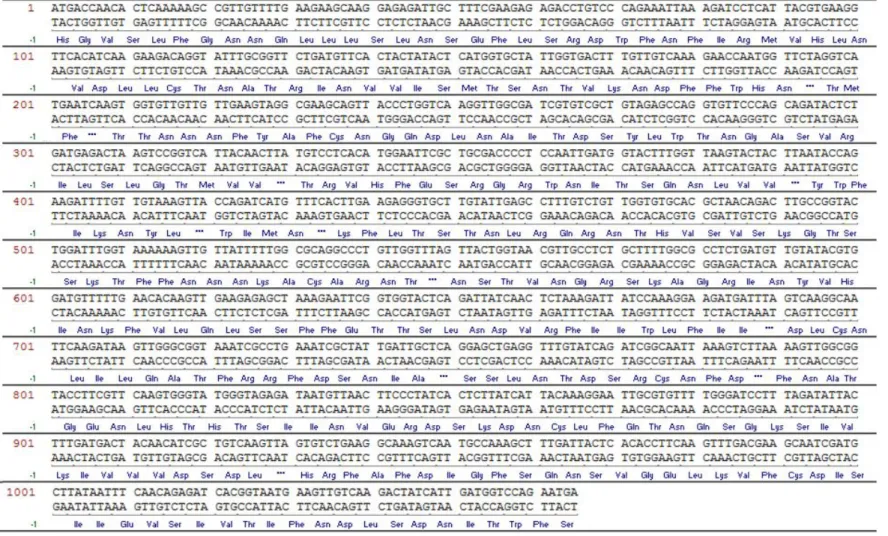
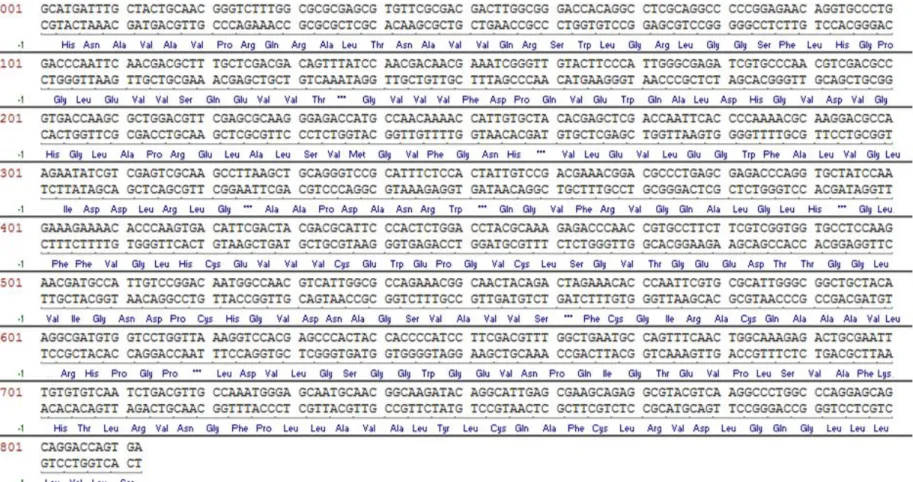
A 990 bp ORF of KmXR encoding a 329 amino acid protein [fig. 6], a 1,065 bp ORF of KmXDH encoding a 354 amino acid protein [fig. 7], a 1,812 bp ORF of KmXK encoding a 603 amino acid protein could be found. [fig. 8]
37
38
40
41
2 . Construction of recombinant S. cerevisiae
The K. marxianus gene XYL1 encoding KmXR was integrated into the
HIS3 locus of S. cerevisiae DX23 and cells selected on YNB his- plate
were checked by colony PCR whether vectors for transferring XYL1 gene were inserted to exact location. Several colonies showing appropriate size of PCR product were picked and fermented with 40 g/L xylose. One colony having best fermenting ability was chosen and stored as cell stocks. Introducing XYL1, XYL2 to URA3 locus of S. cerevisiae ISXK and XYL1, XYL2 to URA3 as well as XYL3 to HIS3 of S. cerevisiae D452-2 were also done and confirmed same way.
To confirm activity of XYL1, XYL2, XYL3 from K. marxianus and compare with each genes of Sch. Stipitis, each genes was integrated to S.
cerevisiae D452-2. D/Km(Ss)XR, D/Km(Ss)XDH, D/Km(Ss)XK were
constructed..
The linearized plasmid pAUR_d_ALD6 was integrated into the ALD6 locus of KM12,3 in order to disruption of ALD6 gene using YP-AbA plate. All strains were confimed whether having or deleting right genes or not.
3. Confirmation of heterologous expression of XYL1
To confirm expression of exogenous XYL1 gene in S. cerevisiae, it was transformed to DX23 host strain that show expression of XYL2 and XYL3
42
surely. If XYL1 was expressed well, XR would be produced and S.
cerevisiae could produce ethanol from xylose.
3.1 Specific activitiy assay of KmXR
Cofactor specificity of xylose reductase (XR) was checked by measuring enzyme activity. Specific activities of a single KmXR in D/KmXR and the recombinant S. cerevisiae DX23/KM1 in the presence of NADPH and NADH were 0.58, 0.06 and 0.48, 0.03 U/mg-protein, respectively [Figure 9]. It also seems that KmXR in recombinant strain was almost dependent to NADPH. It is similar with single KmXR in D/KmXR in an aspect to both cofactor affinity and specific activities.
D/KMXR DX23/KMXR S p e ci fi c X R a c ti ci ty ( U /m g ) 0.0 0.2 0.4 0.6 0.8 1.0 NADPH NADH
Figure 9. Comparison of the specific activities of xylose reductase (XR) between S. cerevisiae D/KmXR , S. cerevisiae DX23/KM1
43
3.2 Microaerobic bath fermentation
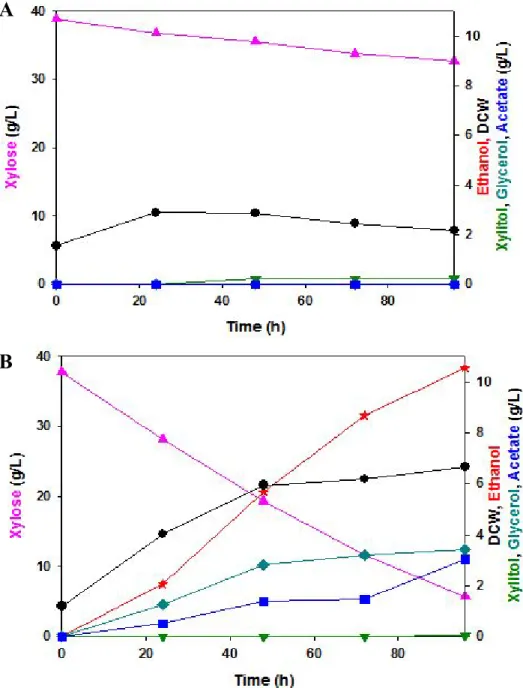
Microaerobic batch flask fermentations were performed with DX23/KM1 and DX23/pRS403 control strain. YEPD medium containing 4 %(w/v) xylose was used. Figures 10 and Table 3 showed Microaerobic batch fermentation profiles and fermentation results.
As control strain didn’t have entire xylose metabolic pathway, it couldn’t produce ethanol, but recombinant strain DX23/KM1 surely produce ethanol. Therefore, heterologous expression of XYL1 could be confirmed in S. cerevisiae.
S. cerevisiae DX23/KM1consumed 34.1 g/L xylose then, produced
6.67 g/L of final dry cell weight and 10.5 g/L of ethanol for 96 h at initial O.D. 5. Ethanol yield of S. cerevisiae DX23/KM1was 0.31 g ethanol/g xylose and its productivity was 0.11 g/L∙h.
44
Figure 10. Microaerobic batch fermentation profiles of S. cerevisiae DX23/pRS403 (A) and S. cerevisiae DX23/KM1(B) in YEPD containing 4 %(w/v) xylose at 30℃, 80 rpm, initial OD : 5
( : Dry cell weight, : Xylose, : Xylitol, : Glycerol, : Acetate, : Ethanol )
A
45
Table 3. Summary of Microaerobic batch fermentation of S. cerevisiae DX23/KM1
Strains Dry cell weight (g/L) Final ethanol concentration (g/L) Ethanol yield (g ethanol/ g xylose) Ethanol productivity (g/L-hr) xylose consumption rate (g/L-hr) DX23/KM1 6.67 10.5 0.31 0.11 0.28
46
4. Confirmation of heterologous expression of XYL2
To confirm expression of exogenous XYL2 gene in S. cerevisiae, XYL1 which was verified to express well in S. cerevisiae and XYL2 was transformed to ISXK host strain that show expression of XYL3surely. IfXYL2 was expressed well, XDH would be produced and S. cerevisiae
could produce ethanol from xylose.
4.1 Specific activitiy assay of KmXDH
Expression of XDH was detected by measuring enzyme activity. Specific activities of single KmXDH in D/KmXDH and the recombinant
S. cerevisiae ISXK/KM12 in the presence of NAD+ were 0.57 and 0.21
U/mg-protein respectively. It also seems that KmXDH in recombinant strain was almost dependent to NAD+. It is similar with single KmXDH in D/KmXDH in an aspect to both cofactor affinity but specific activities is somewhat lower that of KmXDH [Figure 11].
47 D/KMXDH ISXK/KM12 S p e ci fi c X D H a c ti ci ty ( U /m g ) 0.0 0.2 0.4 0.6 0.8 1.0 NADP+ NAD+
Figure 11. Comparison of the specific activities of xylitol dehydrogenase (XDH) between S. cerevisiae D/KmXDH, S. cerevisiae ISXK/KM12.
4.2 Microaerobic bath fermentation
Microaerobic batch flask fermentations were performed with ISXK/KM12 and ISXK/pRS406 control strain. YEPD medium containing 4 %(w/v) xylose was used. Figures 12 and Table 4 showed Microaerobic batch fermentation profiles and fermentation results.
As control strain depleted XR, XDH enzyme among entire xylose metabolic pathway, it couldn’t produce ethanol, while recombinant strain ISXK/KM12 surely produce ethanol. Therefore, heterologous expression of XYL2 in S. cerevisiae could be confirmed.
48
S. cerevisiae ISXK/KM12 consumed 27.5 g/L xylose then, produced
4.89 g/L of final dry cell weight and 9.26 g/L of ethanol for 96 h at initial O.D. 5. Ethanol yield of S. cerevisiae DX23/KM1was 0.34 g ethanol/g xylose and its productivity was 0.10 g/L∙h.
49
Figure 12. Microaerobic flask batch fermentation profile of S. cerevisiae ISXK/pRS406 (A) and S. cerevisiae ISXK/KM12 (B) in YEPD containing 4 %(w/v) xylose at 30 , ℃ 80 rpm, initial OD : 5
( : Dry cell weight, : Xylose, : Xylitol, : Glycerol, : Acetate, : Ethanol )
A
50
Table 4. Summary of aerobic batch fermentation of S. cerevisiae ISXK/KM12
Strains Dry cell weight (g/L) Final ethanol concentration (g/L) Ethanol yield (g ethanol/ g xylose) Ethanol productivity (g/L-hr) xylose consumption rate (g/L-hr) ISXK/KM12 4.89 9.26 0.34 0.10 0.29
51
5. Confirmation of heterologous expression of XYL3
To confirm expression of exogenous XYL3 gene in S. cerevisiae, XYL1 and XYL2 which were proved to express in S. cerevisiae and XYL3 were transformed to S. cerevisiae D452-2 strain that could not metabolize xylose. If XYL3 was expressed well, XK would be produced and S.
cerevisiae could produce ethanol from xylose through entire
combination of XR, XDH and XK.
5.1 Specific activitiy assay of KmXK
Expression of xylulokinase (XK) was detected by measuring enzyme activity. Specific activity of KmXR, XDH in recombinant S. cerevisiae KM12,3 was 4.40, 4.60 U/mg-protein respectively [Figure 13]. Secific activities of single KmXK and KmXK of KM12,3 are similar each other.
52 D/KMXK D/KM12,3 S p e ci fi c X K a ct ic it y (U /m g ) 0 1 2 3 4 5 NADH
Figure 13. Comparison of the specific activities of xylulokinase (XK) between S. cerevisiae D/KmXK and S. cerevisiae KM12,3
5.2 Microaerobic bath fermentation
Microaerobic batch flask fermentations were performed with KM12,3 and D/pRS403,406 control strain. YEPD medium containing 4 %(w/v) xylose was used. Figures 14 and Table 5 showed Microaerobic flask batch fermentation profiles and fermentation results.
As control strain depleted entire xylose metabolic pathway, it couldn’t produce ethanol, while recombinant strain KM12,3 surely produce ethanol. Therefore, heterologous expression of XYL3 in S. cerevisiae could be confirmed as well as expression of XYL1 and XYL2.
53
g/L of final dry cell weight and 11.1g/L of ethanol for 96 h at initial O.D. 5. Ethanol yield of S. cerevisiae KM12,3was 0.31 g ethanol/g xylose and its productivity was 0.12 g/L∙h.
54
Figure 14. Microaerobic flask batch fermentation profiles of and S.
cerevisiae D/pRS403406 (A) and S. cerevisiae KM12,3 (B) in YEPD
containing 4 %(w/v) xylose at 30 , ℃ 80 rpm, itintial OD : 5 . ( : Dry cell weight, : Xylose, : Xylitol, : Glycerol,
: Acetate, : Ethanol )
A
55
Table 5. Summary of aerobic batch fermentation of S. cerevisiae KM12,3(96 h – Point of maximum ethanol production)
Strains Dry cell weight (g/L) Final ethanol concentration (g/L) Ethanol yield (g ethanol/ g xylose) Ethanol productivity (g/L-hr) xylose consumption rate (g/L-hr) KM12,3 6.69 11.1 0.31 0.12 0.38
56
6. Comparison of with Sch. stipitis
6.1 Specific activity
To compare genes from Sch. stipitis, At first, activity of single KmXR in D/KmXR was compared with single SsXR in D/SsXR. XR from K.
marxianus prefered NADPH as the coenzyme and specific activity was
very low with NADH in contrast with XR from Sch. Stipitis dependent both NADPH and NADH. Considered NADPH only, specific activity of KmXR was 0.58 U/mg-protein and 0.8 times lower than that of SsXR. Activity of single KmXDH in D/KmXDH was compared with single SsXDH in D/SsXDH. XDH from K. marxianus prefered NAD+ as the coenzyme and specific activity was very low with NADP+. These properties are similar with XDH from Sch. Stipitis. Considered NAD+ only, specific activity of KmXDH was 0.56 U/mg-protein and 0.35 times lower than that of singleSsXDH. Activity of single KmXK in D/KmXK was compared with single SsXK in D/SsXK. XK from K. marxianus. Specific KmXK activity was 4.4 U/mg-protein and 6 times higher compared with that of single SsXK. Specific KmXK activity of 4.3 U/mg-protein in was obtained for the recombinant S. cerevisiae KM12,3, which was similar with specific D/KmXK activity [Figure 15].
57 D/KMXR D/KM12,3 S p ec if ic X R a c ti c it y (U /m g ) 0.0 0.2 0.4 0.6 0.8 1.0 NADPH NADH D/KMXDH ISXK/KM12 S p ec if ic X D H a ct ic it y (U /m g ) 0.0 0.2 0.4 0.6 0.8 1.0 NADP+ NAD+
A
B
58 D/KMXK D/KM12,3 S p ec if ic X K a ct ic it y (U /m g ) 0 1 2 3 4 5 NADH
Figure 15. Comparison of the specific activities of single XR (A), XDH (B) and XK (C)
Specific activities of KM12,3 and SS12,3 were shown in figure 16. KM12,3 activities were all lower than those of Ss12,3 .
59 Ss12,3 KM12,3 S p e ci fi c X R a ct ic it y (U /m g ) 0.0 0.2 0.4 0.6 0.8 1.0 NADPH NADH Ss12,3 KM12,3 S p e ci fi c X D H a ct ic it y (U /m g ) 0.0 0.2 0.4 0.6 0.8 1.0 1.2 1.4 NADP+ NAD+
A
B
60 Ss12,3 KM12,3 S p e c if ic X K a c ti ci ty ( U /m g ) 0 2 4 6 8 NADH
Figure 16. Comparison of the specific activities of XR (A), XDH (B) and XK (C)between S. cerevisiae SS12,3 and S. cerevisiae KM12,3
6.2 Microeaerobic fernmtnetion
Microaerobic batch flask fermentations were performed with Both KM12,3 and Ss12,3. YEPD medium containing 4 %(w/v) xylose was used. Figures 17 and Table 6 showed Microaerobic flask batch fermentation profiles and fermentation results.
At 72 h, KM2,3 strain produce 10.1 g/L of ethanol at initial OD : 5, similar with Ss12,3 strain. Also, KM12,3 accumulates more byproduct such as xylitol, glycerol, acetate. These phenomenones might be occured
C
61
by difference of specific activities and cofactor imbalance between NADPH dependent KmXR and NAD+ dependent KmXDH. As specific activity of KmXDH is much lower than that of SsXDH, xylitol would be more accumulated than in case of Ss12,3.
KmXR was totally dependent in NADPH, supply of NAD+ was not occured within KmXR – KmXDH process. NADH was converted to NAD+ though the pathway of producing Glycerol and this NAD+ could fulfill depletion of cofactor in expressing KmXDH.[J W Kim 2012]. Acetate was accumulated in cells as fermentation lasted for a long time. Cell growth and xylose metabolism were inhibited over 2 g/L of acetate [S H Lee 2011]. But when Acetaldehyde was converted to acetate, NADPH was produced and it might help working of KmXR, xylose uptake. So, It is possible for Km12,3 to produce more acetate for supplying NADPH.
62
Figure 17. Microaerobic flask batch fermentation profile of SS12,3 (A) and KM12,3 (B) YEPD containing 5 %(w/v) xylose at 30 , pH 5.5.℃ ( : Dry cell weight, : Xylose, : Xylitol,
: Glycerol, : Acetate, : Ethanol )
A
63
Table 6. Summary of microaerobic batch fermentation of SS12,3 and KM12,3 (72 h)
Strains Xylose consumption rate (g/L-hr) ethanol concentration (g/L) Ethanol productivity (g/L-hr) Ethanol yield (g ethanol /g xylose)
Dry cell mass
(g/L) Xylitol Glycerol Acetate
SS12,3 0.41 10.2 0.14 0.35 8.64 0.43
1.68
1.45 1.94
64
7. Effect of ALD6 gene disruption on xylose fermentation
in recombinant S. cerevisiae
7.1 Confirmation of ALD6 gene disruption
The ALD6 gene was disrupted by introducing linearized pAUR_d_ALD6 plasmid by single crossover homologous recombination event. Disruption cassette shown in Figure 15 was transformed into KM12,3 strain.
Disruption of ALD6 gene was confirmed by diagnostic PCR using appropriate primers (Table 2). Expected-sized PCR product was obtained as shown in Figure 18.
Figure 18. Electrophoresis of diagnostic PCR products.