저작자표시-비영리-변경금지 2.0 대한민국 이용자는 아래의 조건을 따르는 경우에 한하여 자유롭게 l 이 저작물을 복제, 배포, 전송, 전시, 공연 및 방송할 수 있습니다. 다음과 같은 조건을 따라야 합니다: l 귀하는, 이 저작물의 재이용이나 배포의 경우, 이 저작물에 적용된 이용허락조건 을 명확하게 나타내어야 합니다. l 저작권자로부터 별도의 허가를 받으면 이러한 조건들은 적용되지 않습니다. 저작권법에 따른 이용자의 권리는 위의 내용에 의하여 영향을 받지 않습니다. 이것은 이용허락규약(Legal Code)을 이해하기 쉽게 요약한 것입니다. Disclaimer 저작자표시. 귀하는 원저작자를 표시하여야 합니다. 비영리. 귀하는 이 저작물을 영리 목적으로 이용할 수 없습니다. 변경금지. 귀하는 이 저작물을 개작, 변형 또는 가공할 수 없습니다.
A THESIS
FOR THE DEGREE OF MASTER OF SCIENCE
Studies on nucleotide-enriched diets for olive flounder
(Paralichthys olivaceus) and red seabream
(Pagrus major)
Jin-Woo Song
Department of Marine Life Science GRADUATE SCHOOL JEJU NATIONAL UNIVERSITY
i
CONTENTS
국문초록 ……… ⅲ
ABSTRACT……… ⅴ
LIST OF FIGURES……… ⅶ
LIST OF TABLES……….. ⅷ
Ⅰ. INTRODUCTION……… 1
Ⅱ. MATERIALS AND METHODS……… 5
2.1 Experimental diets………. 5
2.2 Feeding trials and sample collection………. 5
2.3 Analyses………. 8
2.4 Statistical analysis……….. 10
Ⅲ. RESULTS……… 11
3.1 Experiment Ⅰ………. 11
ii
Ⅳ. DISCUSSION………. 28
Ⅴ. SUMMARY…….……….. 32
Ⅵ. REFERENCES ………. 34
iii
국문초록
Inosine monophosphate (IMP)는 음식의 감칠맛을 좋게 하는 조미료의 원료로 이용되며 동물을 대상으로한 실험에서는 사료섭이율을 증강시킨다고 보고되고 있다. 최근에는 IMP을 포함한 핵산물질은 면역력에도 중요한 역할을 한다고 보고 되어 새로운 면역증강물질로도 각광 받고 있다. 국내에서 양식되고 있는 넙치와 참돔을 대상으로 해산어용 배합사료 내 C-IMP의 기능성에 대하여 조사하였다. 이 실험에 사용된 총 5개의 실험사료는 C-IMP의 함량을 각각 0, 0.1, 0.2, 0.4, 1.0%의 농도가 되도록 기초사료에 첨가하여 조단백질과 에너지가 동일하도록 사료를 제작하였다. 넙치를 대상으로 한 14주간의 사양실험에서는 0.1-0.2% C-IMP를 첨가한 실험구가 고농도 그룹인 1.0% 첨가구에 비해 유의적으로 높은 성장률을 나타내었다. 생존율은 전 실험구에서 유의적인 차이가 없었다. 사료유인성 실험결과, 모든 그룹에서 유의적인 차이는 없었으나 0.2% 첨가구가 대조구에 비해 약 20% 가량 높은 경향을 보여 치어기 넙치에 있어서 사료섭이율을 증강 시킬 것이라고 추측된다. 비특이적 면역반응 분석결과, myeloperoxidase활성과 lysozyme활성에서는 사료 내 0.2-0.4% 첨가구가 대조구에 비해 유의적으로 높은 값을 보였으나, 대식세포 활성과 superoxide dismutas활성에 있어서는 유의적인 차이를 발견할 수 없었다. 14주간의 성장실험 종료 후, Streptococcus iniae 균을 이용하여 공격실험을 실시하였다. 공격실험 결과, C-IMP을 첨가하지 않은 대조구는 21일 동안 87%의 높은 누적 폐사율을 보인 반면 C-IMP첨가구는 15% 이하의 상당히 낮은 누적폐사율이 확인하였다. 참돔을 대상으로 한 12주간의 사양실험에서는 0.1% C-IMP첨가구가 대조구
iv
또는 1.0% 첨가구에 비해 유의적으로 높은 성장률, 단백질이용효율, 사료전환효율을 보였다. 사료유인성 실험결과에서도 0.1% 첨가구가 1.0% 고농도 그룹에 비해 유의적으로 높은 값을 보였다. 비특이적 면역반응에서는 모든 실험구에서 유의적인 차이를 발견할 수 없었다. 넙치와 참돔의 실험 결과를 종합해 볼 때, C-IMP의 사료 내 첨가는 해산 양식어류의 성장과 사료효율을 개선하고 비특이적 면역반응을 증강시켜 항병성을 높일 수 있을 것으로 판단된다. 이 실험 결과를 바탕으로 치어 넙치와 육성기 참돔 사료 내 C-IMP의 적정첨가 농도는 0.1 - 0.4% 범위가 될 것으로 사료된다.v
ABSTRACT
These studies were conducted to investigate the effects of dietary supplementation of C-IMP, an inosine monophophate product, on growth performance, feed utilization, innate immunity and disease resistance against Streptococcus iniae for juvenile olive flounder and red seabream. Five experimental diets were formulated to contain C-IMPat levels of 0, 0.1, 0.2, 0.4 and 1.0% (designated as Con, 0.1%, 0.2%, 0.4% and 1.0%, respectively). All diets were formulated to be isonitrogenous and isocaloric. Triplicate groups of fish were fed the experimental diets to apparent satiation (twice a day, 08:00 and 17:00 h) for 14 weeks in Experiment I and 12 weeks in Experiment II. In Exp I, weight gain and specific growth rate of fish fed 0.1 – 0.2% C-IMP were significantly higher than those of fish fed the 1.0% C-IMP. Diet palatability seemed to be improved when C-IMPwas added at 0.2%. Groups of fish fed 0.2% C-IMP diet had significantly higher myeloperoxidase and lysozyme activities than groups of fish fed the control diet meanwhile nitro blue tetrazolium and superoxide dismutase activities were not significantly different among all the fish groups. Cumulative mortality of fish fed 0.1 – 1.0% C-IMP diets showed much lower mortality (15%, 4%, 4% and 9% for 0.1%, 0.2%, 0.4% and 1.0% C-IMP, respectively) than the control group (87%) in the challenge test against S. ininae. In Exp II, growth performances, feed efficiency and protein efficiency ratio of fish fed 0.1% C-IMP diet were significantly higher than those of fish fed the control or 1.0% C-IMP diets. No significant difference was observed in survival among all the dietary treatments. Diet palatability was significantly improved when C-IMP was added at 0.1% level. Non-specific immune responses of fish were not significantly different among all the fish groups. These studies suggest that dietary supplementation of C-IMP containing inosine monophosphate can increase growth performance, feed utilization, innate immunity and disease resistance against S.
vi
iniae. The optimum dietary level seems to be 0.1 – 0.4% for olive flounder at the juvenile stage and red seabream at the growing stage.
vii
LIST OF FIGURES
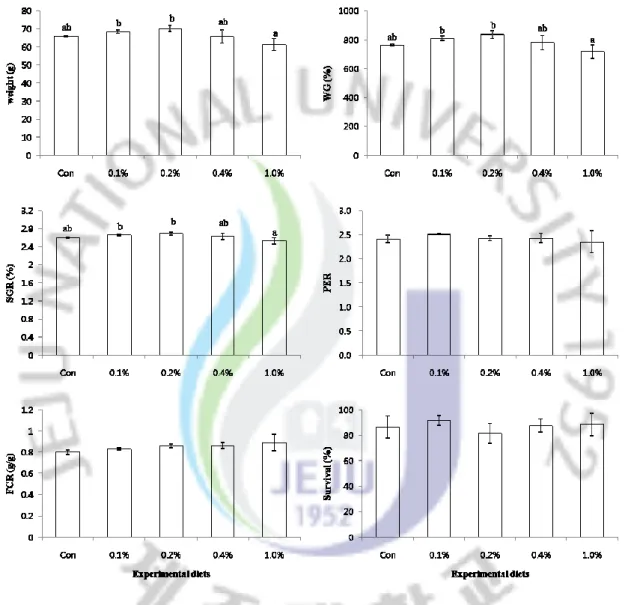
Fig. 1. Growth perfornance of olive flounder fed the five experiemental diets for 14
weeks.
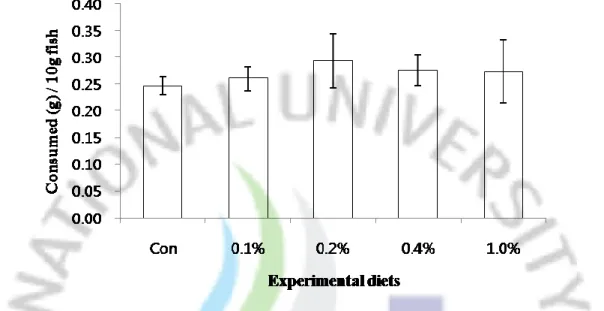
Fig. 2. Instantaneous feed intake of olive flounder fed the five experimental diets. The
fish were allowed to have the diets for 3min. Values are expressed as cconsumed
feed amounts per 10 g fish and means of 9 replicate (3 replicates per diet with 3
time tests) tests per treatment
Fig. 3. Non-specific immune response of red seabream fed experimental diets for 12
weeks.
Fig. 4. Cumulative mortality of olive flounder fed the experiemental diets of C-IMP
after challenge with Streptococcus iniae by intraperitoneal injection.
Fig. 5. Growh performance of red seabream fed the five experiemental diets for 12
weeks.
Fig. 6. Instantaneous feed intake of red seabream fed the five experiemental diets. The
fish were allowed to have the diets for 3 min. Values are expressed as consumed
feed amounts per 10 g fish and means of 9 replicate (3 replicates per diet with 3
time tests) test per treatment.
Fig 7. Non-specific immune response of red sea bream fed experimental diets for 12
viii
LIST OF TABLES
Table 1. Formulation and proximate composition of diets for junvenile olive flounder
and red seabream (% DM)
Table 2. Growth performance of olive flounder fed the five experiemental diets for 14
weeks.
Table 3. Blood parameters of olive flounder fed the five experiemental diets for 14
weeks.
Table 4. Non-specific immune response of olive flounder fet the five experimental diets
for 14 weeks.
Table 5. Mean days to the first mortality and cumulative mortality of olive flounder
after 21 days of post-challenge with Streptococcus iniae
Table 6. Growth performance of red seabream fed the five experiemental diets for 12
weeks.
Table 7. Blood parameters of red seabream of fed experimental diets for 12 weeks.
Table 8. Non-specific immune response of red seabream fed the five experiemental diets
1
Ⅰ.
INTRODUCTION
Olive flounder, Paralichthys olivaceus is currently the most important marine aquaculture species in Korea. Its aquaculture production dramatically increased from 1,037mt in 1990 to 54,700mt in 2008 (Ministry of Maritime Affairs and Fisheries 2009). Red seabream, Pagrus major is currently one of the most important marine aquaculture species in Japan, China and Korea. Its aquaculture production in Korea was approximately 10,000mt in 2008 (Ministry of Maritime Affairs and Fisheries 2009). Recently, the finfish aquaculture in Korea has been facing many problems related to disease such as Streptococcus iniae. This bacterium is the main etiological cause of streptococcosis in wild and farmed fish worldwide. It has been thought to be a main reason for the high fish mortality and poor growth (Ostland, 2003). Antibiotic treatment of bacterial diseases in fish culture has been utilized as one of the most therapeutic treatments for many years. However, the current problems and/or issues in the culture of the fish species are the fact that fish farmers use a huge quantity of antibiotics to prevent the species from bacterial or viral diseases (Patterson and Burkholder, 2003).
A wide range of antimicrobial compounds including ampicillin, doxycycline, streptomycin, nitrofurantoin, furazolidone and oxytetracycline has been used to treat the infectious bacterial diseases in aquaculture farms (Akinbowale et al., 2006; Darwish and Hobbs, 2005). However, the efficacy of these treatments depends upon many factors, such as the drug concentration, infectious intensity, time of treatment and other water parameters (Samuelsen, 2006; Rodriguez et al., 2007). The use of antibiotics can lead to pollution, damage into the ecological system in the surrounding environment of fish farms and drug resistances of the fish against pathogenic agents (Rigos and Troisi, 2005). The accumulation of those chemicals in aquaculture products has also been reported as a serious concern of consumers. Use of natural compounds to improve the non-specific immune response and to prevent the outbreak of
2
diseases has been considered as a feasible solution to develop a sustainable and antibiotic-free aquaculture system. Therefore, the use of various antibiotic feed additives has been prohibited (Zhou et al., 2006), and thereby alternatives have been searched to replace the antibiotic additives in aquaculture industry including fish farms.
Nucleotides consist of a nitrogenous base, a pentose sugar, and one or more phosphate groups. The nitrogenous base is either a purine or a pyrimidine whose atoms are primarily derived from amino acids. Pyrimidine bases are six-membered rings and include uracil, cytosine and thymine. Purine bases have a second five-membered ring and include adenine, guanine, hypoxanthine and xanthine (Rudolph, 1994). Inosinie monophosphate (IMP) serves as the common precursor for adenine monophosphate (AMP) and guanine monophosphate (GMP). An appropriate balance of purine nucleotide is maintained through the activities of various enzymes which regulate conversions of GMP and AMP back to IMP (Chu, 1991).
Nucleotides have been known to have important physiological and biochemical functions including encoding and deciphering genetic information, energy metabolism and cell signaling as well as serving as components of coenzymes and cellular agonists (Carver and Walker, 1995; Cosgrove, 1998). Nucleotides have typically been thought to be non-essential nutrients, because neither
biochemical malfunctions nor deficiency symptoms are developed in human or
terrestrial animals.
However, this proposal has been challenged by many recent results whichsuggested that deficiency of dietary nucleotide may damage important tissue such as liver, heart, and intestine and immune functions (Grimble and Westwood, 2000). Nucleotide supplementation in diets was reported to be beneficial for infants since they positively affect intestinal and hepatic functions, lipid metabolism, immunity and tissue development and repair under normal conditions (Carver and Walker, 1995; Sanchez-Pozo et al, 1999; Gil, 2001). Studies with terrestrial animals revealed that nucleotide-supplemented diet influenced the phagocytic acitivity (Gil, 2002), interleukin-2 production (Van Buren et al., 1985), natural killer
3
cell activity (Carver et al., 1990) and host resistance to pathogen including viral, bacterial and parasitic pathogens (Adjer et al., 1993). Current research on dietary nucleotides in fish have observed that it may improve growth performances of fingering and juvenile stages, enhance larval quality via broodstock fortification, alter intestinal structure and enhance stress tolerance. (Li et al., 2005; Li and Gatlin Ⅲ, 2006; Cheng et al., 2011). Also, nucleotide has received heightened attention as potential immunostimulants in many fish. Common carp, Cyprinus carpio fed nucleotide isolated from yeast RNA was significantly improved in term of serum complement activity, lysozyme activity and superoxide anion production of head kidney (Sakai et al., 2001). Murthy et al. (2009) also reported that Pacific white shrimp, Litopenaeus vannamei fed diet of commercial product containing nucleotides (Optimun, Chemoforma, Switzerland) had enhanced respiratory burst and total hemocyte count. Dietary nucleotides can enhance resistance of fish against various pathogens. However, methodology to investigate disease resistance is difficult and limited. Thus, survival rate after infection with certain pathogens is commonly evaluated as a measure of disease resistance. After bath infection with Vibrio anguillarum, cumulative mortality of rainbow trout fed a nucleotide-supplemented diet was approximately 31%, while group of fish fed basal diet had 49% mortality (Burrells et al., 2001a). Other studies also reported that dietary supplementation of nucleotide enhanced disease resistance of several fish species and crustaceans including tilapia, Saratheradon niloticus x S. aureus (Ramadan et al., 1994), Atlantic salmon, Salmo salar L. (Burrells et al., 2001b) and rainbow trout, Oncorhynchus mykiss (Tahmasebi-Kohyani et al., 2011).
Amino acids, glycinbetaine, oligopeptides, nucleosides and nucleotides have been known to stimulate taste receptors of many fish species (Ishida and Hidaka, 1987). Previous studies reported that IMP, GMP and AMP possess flavor enhancer and usually have been utilized as chemo-attractant in fish diet (Kuninaka, 1966; Kojima, 1974; Ikeda et al., 1991; Yamaguchi, 1991). Especially, inosine-5-monophosphate (IMP) is used as food additives to enhance the
4
taste of food (Steffens et al., 1994) and the synergistic effects between IMP and other stimulating compounds including amino acids or nucleosides influence the intensity of the taste (Kumazawa and Kurihara, 1990; Yamaguchi, 1991). Dietary supplementation of IMP was reported to increase feed attractiveness for various fish including juvenile largemouth bass, Micropterus salmoides and yellowtail, Seriola quinqueradiata (Kiyohara et al., 1975; Mackie and Adron 1978; Takeda et al., 1984; Kubitza et al., 1997). Therefore, IMP has been significantly important concept of research on nutrition factors and functional food development. In fish, research on nucleotide nutrition is needed to offer insights about interactions between nutrition and physiological responses and practical solutions to prevent basic risks of infectious diseases for aquaculture industry. However, information pertaining to the synthesis and metabolism of nucleotide is limited to date in marine fish species. The present studies were designed to investigate the effect of dietary supplementation of C-IMP, an inosine monophosphate product, for juvenile olive flounder and growing red seabream.
5
Ⅱ. MATERIALS AND METHODS
2.1 Experimental diets
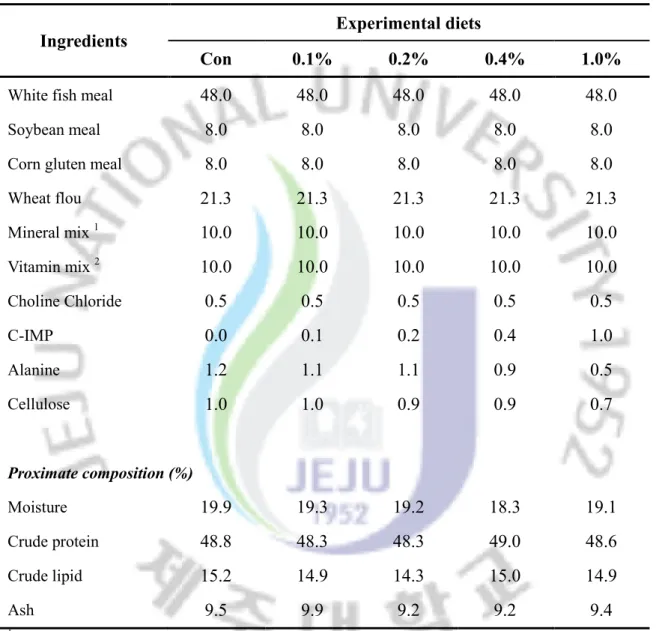
Five experimental diets were formulated to contain C-IMPat levels of 0, 0.1, 0.2, 0.4 and 1.0% (designated as Con, 0.1%, 0.2%, 0.4% and 1.0%, respectively). All diets were formulated to be isonitrogenous (48% crude protein) and isocaloric (20.7 MJ/kg diet). Alanine was adjusted in the experimental diets to balance total nitrogen. The dietary formulation and proximate composition are provided in Table 1. All dry materials were thoroughly mixed with 20~30% double distilled water, extruded through a meat chopper machine (SMC-12, Kuposlice, Busan, Korea) at 5 mm in diameter after fish oil addition, freeze-dried at −40 °C for 24 h and stored at −20 °C until use.
2.2 Feeding trials and sample collection
Juvenile olive flounder and growing red seabream were transported from a private hatchery (Jeju Island, Korea; Gyeongsangnam-do, Korea) to Marine and Environmental Research Institute, Jeju National University, Jeju, Korea. These fish were fed a commercial diet for 2 weeks to be acclimated to the experimental conditions. In experiment I, 720 fish (IBW, 7.5 ± 0.02 g/fish) were randomly distributed (40 fish per tank) into eighteen 150 L capacity polyvinyl circular tanks with three replications per dietary treatment for olive flounder. In experiment II, 180 fish (IBW, 120 ± 0.05 g/fish) were randomly distributed (10 fish per treatment) into eighteen 350 L capacity polyvinyl circular tanks with three replications per dietary treatment for red seabream. All tanks were supplied with filtered seawater at a flow-rate
6
of 3 L/min and aeration to maintain enough dissolved oxygen. Triplicate groups of fish were fed the experimental diets to apparent satiation (twice a day, 08:00 and 17:00 h) for 14 weeks (Exp I) and 12 weeks (Exp II). Uneaten feed was collected 30 min after feeding and reweighed to determine feed intake. Growth of fish was measured every 3 weeks. Feeding was stopped 24 h prior to weighing to minimize stress of the fish.
At the end of feeding trials, three fish per tank (9 fish per dietary treatment) were randomly sampled and anaesthetized with 2-phenoxyethanol (200ppm) for blood analyses. We collected the blood samples after the meal of six hours. Blood samples were taken from the caudal vein with heparinized syringes for the determination of hematocrit, hemoglobin and respiratory burst. After the measurement with whole blood, blood plasma was collected after centrifugation at 5000 × g for 10 min. Another set of blood samples (9 fish per dietary treatment) were taken from the caudal vein with a sterile syringe without heparin and allowed to clot at room temperature for 30 min. Serum was collected following centrifugation for 10 min at 5000 × g and stored at −70 °C for the analysis of non-specific immune responses.
7
Table 1.
Formulation and proximate composition of diets for junvenile olive flounder
and red seabream (% DM)
Ingredients
Experimental diets
Con
0.1%
0.2%
0.4%
1.0%
White fish meal
48.0
48.0
48.0
48.0
48.0
Soybean meal
8.0
8.0
8.0
8.0
8.0
Corn gluten meal
8.0
8.0
8.0
8.0
8.0
Wheat flou
21.3
21.3
21.3
21.3
21.3
Mineral mix 110.0
10.0
10.0
10.0
10.0
Vitamin mix 210.0
10.0
10.0
10.0
10.0
Choline Chloride0.5
0.5
0.5
0.5
0.5
C-IMP0.0
0.1
0.2
0.4
1.0
Alanine1.2
1.1
1.1
0.9
0.5
Cellulose1.0
1.0
0.9
0.9
0.7
Proximate composition (%) Moisture19.9
19.3
19.2
18.3
19.1
Crude protein48.8
48.3
48.3
49.0
48.6
Crude lipid15.2
14.9
14.3
15.0
14.9
Ash9.5
9.9
9.2
9.2
9.4
1MgSO4.7H2O, 80.0; NaH2PO4.2H2O, 370.0; KCl, 130.0; Ferric citrate, 40.0; ZnSO4.7H2O, 20.0; Ca-lactate, 356.5;
CuCl, 0.2; AlCl3. 6H2O, 0.15; Na2Se2O3, 0.01; MnSO4.H2O, 2.0; CoCl2.6H2O, 1.0. 2
L-ascorbic acid, 121.2; DL-α tocopheryl acetate, 18.8; thiamin hydrochloride, 2.7; riboflavin, 9.1; pyridoxine hydrochloride, 1.8; niacin, 36.4; Ca-D-pantothenate, 12.7; myo-inositol, 181.8; D-biotin, 0.27; folic acid, 0.68;
8
2.3
AnalysesAt the end of the feeding trials, all fish in each tank were weighed and counted to compute the weight gain, specific growth rate, feed conversion ratio, protein efficiency ratio and survival. Hematocrit was determined for three individual fish per tank by a microhematocrit technique (Brown, 1980). Hemoglobin, total protein, glucose, total cholesterol and triacyglycerol were determined in the same three fish by using the automated blood analyzer (SLIM, SEAC Inc, Florence, Italy).
Analyses of crude protein, moisture and ash in the diets were performed by standard methods (AOAC, 1995). Dietary lipid was determined by the method of Folch et al. (1957).
Instantaneous palatability test was conducted under the same experimental tanks and conditions. To measure palatability of experimental diets, the diets were weighed with 50g and the fish were fed their respective diet by hand for 3 min each morning for three days and then remaining feeds were reweighed to determine the palatability activity. The test was conducted with 3 times (3 days) and palatability activity was expressed as total consumed feed/10g fish.
The oxidative radical production by phagocytes during respiratory burst was measured by the nitro-blue-tetrazolium (NBT; Sigma, USA) assay described by Kumari and Sahoo (2005). Briefly, blood and 0.2% NBT were mixed in equal proportion (1:1), incubated for 30 min at room temperature, then 50 ul was taken out and dispensed into glass tubes. Then, 1 ml of dimethylformamide (Sigma, USA) was added and centrifuged at 2000 × g for 5 min. Finally, the optical density of supernatant was measured at 540 nm. Dimethylformamide was used as the blank.
Lysozyme activity was measured according to the turbidimetric method described by Hultmark (1980), with a slight modification. The lysozyme substrate was a 0.75 mg/ml freeze-dried Micrococcus lysodeikticus (Sigma) suspension in 0.1 M sodium phosphate acid buffer, pH
9
6.4. Serum (20 ul) was added to 200 ul of the bacterial suspension and the reduction in absorbance at 570 nm was measured after 1 and 6 min at room temperature.
Myeloperoxidase (MPO) activity was measured according to Kumari and Sahoo (2005). Briefly, serum (20 ul) was diluted with HBSS (Hanks balanced salt solution without Ca2+ or Mg2+, Sigma, USA) in 96-well plates. Then, 35 ul of 20 mM 3,3’,5,5’-tetramethylbenzidine hydrochloride (Sigma, USA) and 5 mM H2O2 were added. The color change reaction was
stopped after 2 min by adding 35 ul of 4 M sulfuric acid. Finally, OD was read at 450 nm. Superoxide dismutase (SOD) activity was measured by the percentage reaction inhibition rate of enzyme with WST-1 substrate (a water soluble tetrazolium dye) and xanthine oxidase using a SOD Assay Kit (Fluka, 19160) according to the manufacturer's instructions. Each endpoint assay was monitored by absorbance at 450 nm (the absorbance wavelength for the colored product of WST-1 reaction with superoxide) after 20 min of reaction time at 37°C. The percent inhibition was normalized by mg protein and presented as SOD activity units.
Streptrococcus iniae (ATCC 29178, Korea Collection for Type Cultures) provided by the Marine Microbiology Laboratory at the Department of Marine Life Medicine, Jeju National University, was cultured in Brain Heart Infusion broth (BHIB, Difco) and incubated with shaking for 24 h at 37°C. Growth of the S. iniae was measured by optical density at 700 nm. Fish from each treatment were challenged by intraperitoneal injection with 100 ul of S. iniae containing 1 × 10⁷CFU/ml. Fish behavior and mortality were monitored and recorded for 21 days of olive flounder.
10
2.4 Statistical analysis.
All diets were assigned by a completely randomized design. Data were analyzed by one-way analysis of variance (ANOVA) in SPSS version 11.0 (SPSS Inc., Chicago, IL, USA). When ANOVA identified differences among groups, the difference in means was made with Duncan's multiple range test. Statistical significance was determined at P<0.05 for means of treatments. Data are presented as means ± SD. Percentage data were arcsine transformed before statistical analysis.
11
Ⅲ. RESULTS
3.1 Experiment I (Olive flounder)
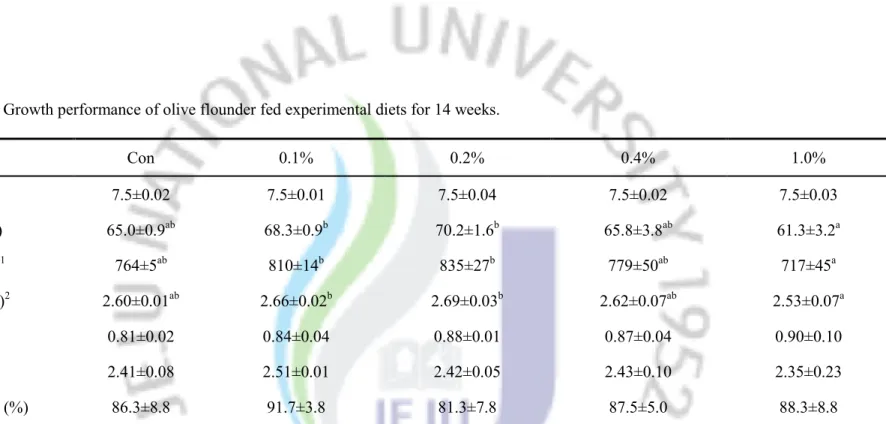
At the end of 14 weeks of feeding trial, weight gain and specific growth rate of fish fed 0.1 - 0.2% C-IMP diets were significantly higher than those of fish fed the 1.0% C-IMP (Table 2 and Fig. 1). No significant difference was observed in feed conversion ratio, protein efficiency ratio and survival among all fish groups.
In the Exp I, instantaneous feed intake of fish was determined after 8 weeks of feeding trial. The palatability of the diets seemed to be improved when C-IMP was added at 0.2% level (Fig. 2).
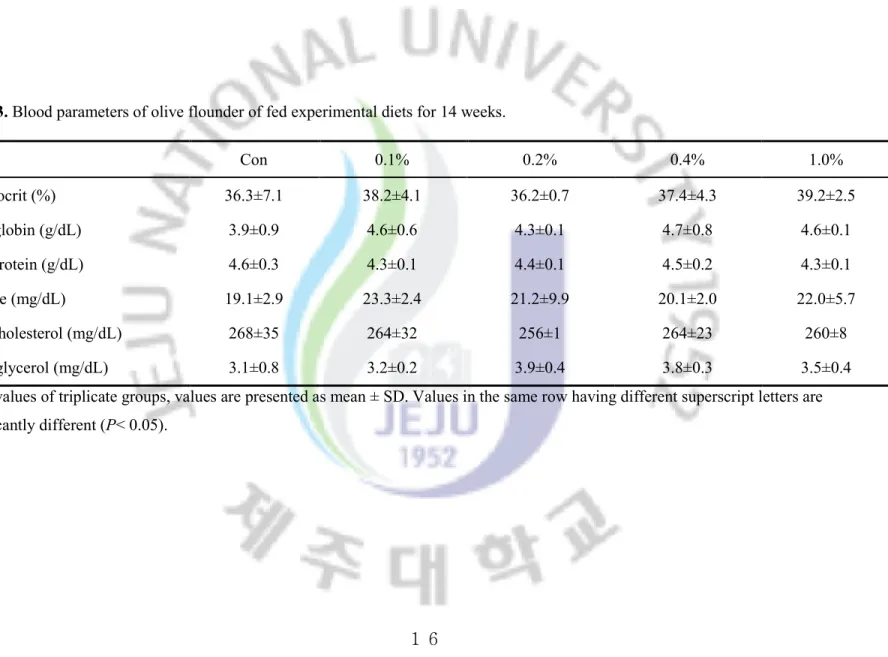
The results of blood parameters are presented in Table 3. No significant differences were observed in hematocrit, hemoglobin, total protein, glucose, total cholesterol and triacyglycerol among all the dietary treatments.
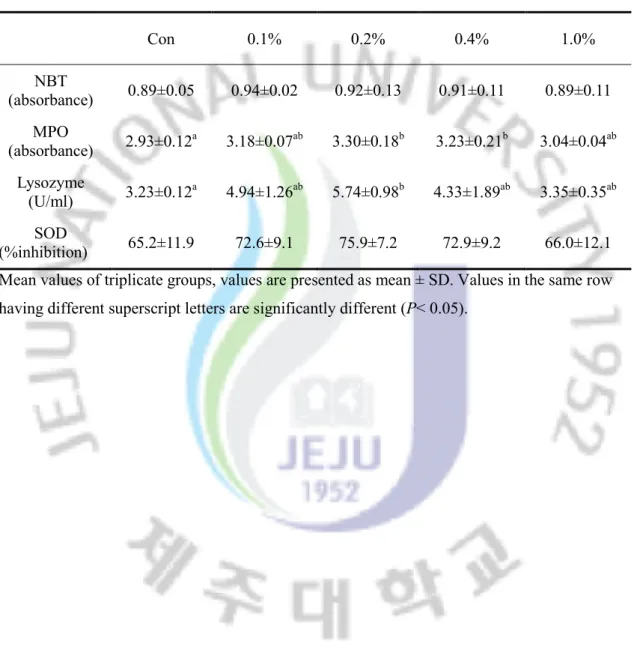
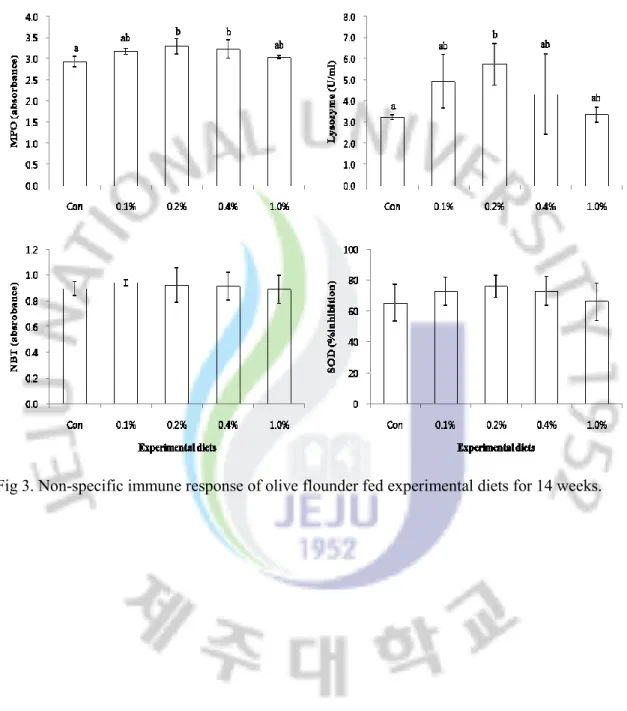
At the end of feeding trial, respiratory burst (NBT), myeloperoxidase (MPO), lysozyme activity and superoxide dismutase activity (Table 4 and Fig. 3) were analyzed to verify non-specific immune responses of the fish. It is well known that NBT, MPO, lysozyme and SOD activities are usually used as indicators of non-specific immune responses in fish. The groups of fish fed 0.2 – 0.4% C-IMP diets had significantly higher MPO and lysozyme activities than groups of fish fed the control diet. However, the NBT and SOD activity were not significantly different among all the fish groups.
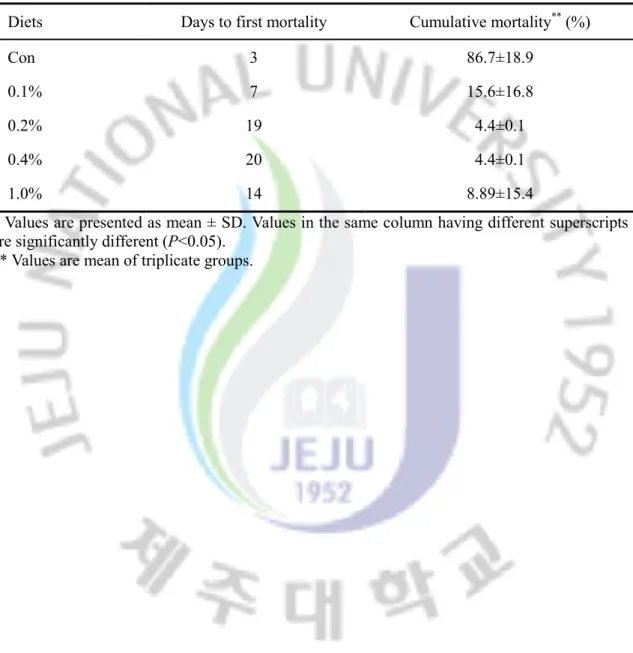
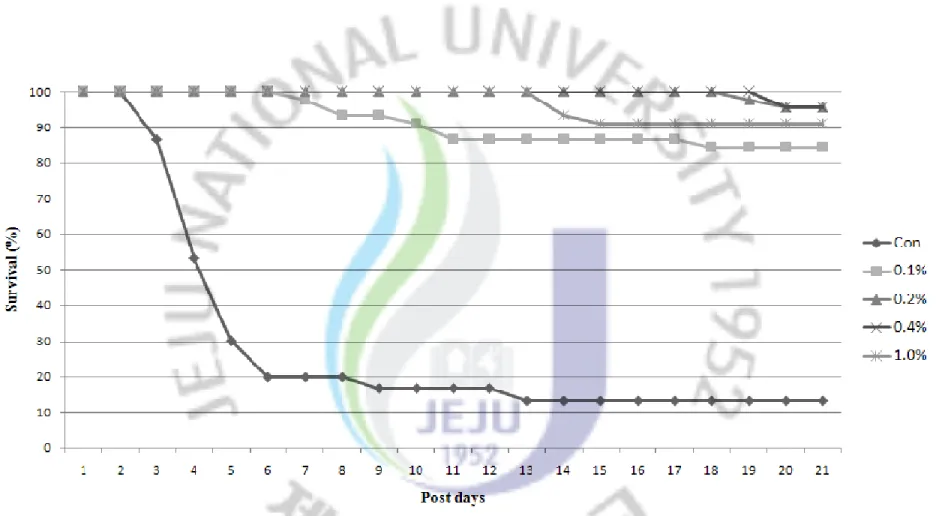
Cumulative mortality was observed approximately 87% in the control group 21 days after the challenge with S. iniae (Table 5 and Fig. 4). Interestingly, however, the mortalities of fish group fed 0.1 – 1.0% C-IMP diets were much lower (15%, 9%, 4.4% and 4.4% for 0.1%, 0.2%,
12
13
Table 2. Growth performance of olive flounder fed experimental diets for 14 weeks.
Con 0.1% 0.2% 0.4% 1.0% IBW (g) 7.5±0.02 7.5±0.01 7.5±0.04 7.5±0.02 7.5±0.03 FBW (g) 65.0±0.9ab 68.3±0.9b 70.2±1.6b 65.8±3.8ab 61.3±3.2a WG (%)1 764±5ab 810±14b 835±27b 779±50ab 717±45a SGR (%)2 2.60±0.01ab 2.66±0.02b 2.69±0.03b 2.62±0.07ab 2.53±0.07a FCR3 0.81±0.02 0.84±0.04 0.88±0.01 0.87±0.04 0.90±0.10 PER4 2.41±0.08 2.51±0.01 2.42±0.05 2.43±0.10 2.35±0.23 Survival (%) 86.3±8.8 91.7±3.8 81.3±7.8 87.5±5.0 88.3±8.8
Mean values of triplicate groups, values are presented as mean ± SD. Values in the same row having different superscript letters are significantly different (P< 0.05).
1
Weight gain (%) = 100*(final mean body weight – initial mean body weight)/initial mean body weight
2
Specific growth rate (%) = [(loge final body weight - loge initial body weight)/days] x 100
3Feed conversion ratio = dry feed fed / wet weight gain 4
14
15
Fig 2. Instantaneous feed intake of olive flounder fed the five experimental diets. The fish were allowed to have the diets for 3min. Values are expressed as cconsumed feed amounts per 10 g fish and means of 9 replicate (3 replicates per diet with 3 time tests) tests per treatmen.
16
Table 3. Blood parameters of olive flounder of fed experimental diets for 14 weeks.
Con 0.1% 0.2% 0.4% 1.0% Hematocrit (%) 36.3±7.1 38.2±4.1 36.2±0.7 37.4±4.3 39.2±2.5 Hemoglobin (g/dL) 3.9±0.9 4.6±0.6 4.3±0.1 4.7±0.8 4.6±0.1 Total protein (g/dL) 4.6±0.3 4.3±0.1 4.4±0.1 4.5±0.2 4.3±0.1 Glucose (mg/dL) 19.1±2.9 23.3±2.4 21.2±9.9 20.1±2.0 22.0±5.7 Total cholesterol (mg/dL) 268±35 264±32 256±1 264±23 260±8 Triacyglycerol (mg/dL) 3.1±0.8 3.2±0.2 3.9±0.4 3.8±0.3 3.5±0.4
Mean values of triplicate groups, values are presented as mean ± SD. Values in the same row having different superscript letters are significantly different (P< 0.05).
17
Table 4. Non-specific immune response of olive flounder fed experimental diets for 14 weeks.
Con 0.1% 0.2% 0.4% 1.0% NBT (absorbance) 0.89±0.05 0.94±0.02 0.92±0.13 0.91±0.11 0.89±0.11 MPO (absorbance) 2.93±0.12 a 3.18±0.07ab 3.30±0.18b 3.23±0.21b 3.04±0.04ab Lysozyme (U/ml) 3.23±0.12 a 4.94±1.26ab 5.74±0.98b 4.33±1.89ab 3.35±0.35ab SOD (%inhibition) 65.2±11.9 72.6±9.1 75.9±7.2 72.9±9.2 66.0±12.1 Mean values of triplicate groups, values are presented as mean ± SD. Values in the same row having different superscript letters are significantly different (P< 0.05).
18
19
Table 5. Mean days to the first mortality and cumulative mortality of olive flounder after 21 days of post-challenge with Streptococcus iniae*
Diets Days to first mortality Cumulative mortality** (%)
Con 3 86.7±18.9
0.1% 7 15.6±16.8
0.2% 19 4.4±0.1
0.4% 20 4.4±0.1
1.0% 14 8.89±15.4
* Values are presented as mean ± SD. Values in the same column having different superscripts are significantly different (P<0.05).
20
Fig. 4. Cumulative mortality of olive flounder fed the experiemental diets of C-IMP after challenge with Streptococcus iniae by intraperitoneal injection.
21
3.2 Experiment II (Red seabream)
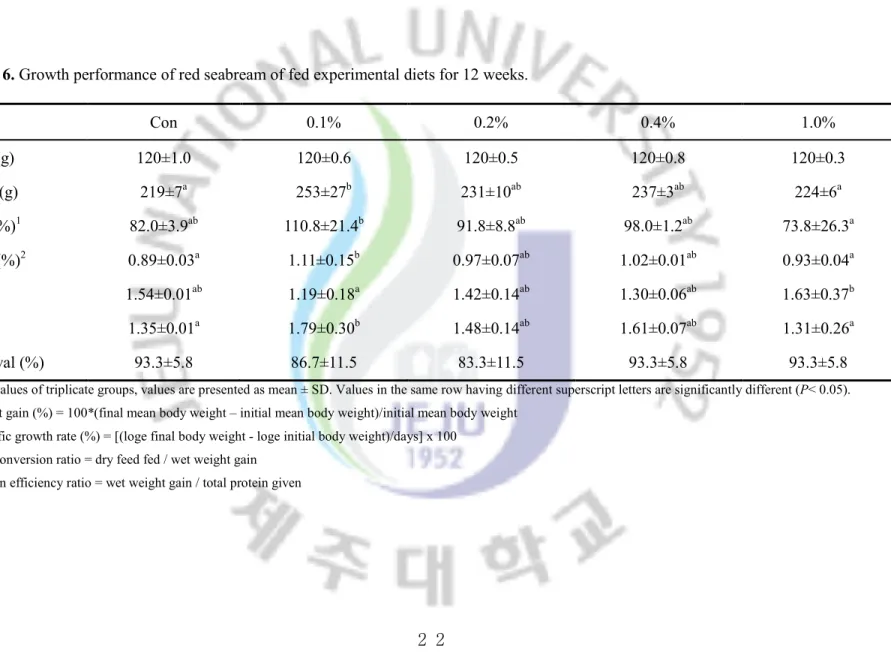
At the end of 12 weeks of feeding trial, growth performances, feed conversion ratio and protein efficiency ratio of fish fed 0.1% C-IMP supplemented diets were significantly higher than those of fish fed the control and 1.0% diets (Table 6 and Fig. 5). No significant difference was observed in survival among all the dietary treatments.
Instantaneous feed intake of fish was determined after 7 weeks of feeding trial. The palatability of the diets was significantly improved when C-IMP was added at 0.1% level compared to high dietary concentration of C-IMP (1.0%) group (Fig. 6). Therefore, the increased growth performance and feed utilization of fish fed diets containing C-IMP is attributed to the increased feed intake and improved feed efficiency.
The results of blood parameters are presented in Table 7. Hematocrit, hemoglobin and total protein values were significantly higher at 0.2% C-IMP group than the control group. However, there was no significant difference in triacylglycerol concentration among all the treatments.
At the end of feeding trial, NBT, MPO, lysozyme activity and SOD activity (Table 8 and Fig. 7) were analyzed. In this study, the NBT, MPO, lysozyme and SOD activities were not significantly different among all the fish groups.
22
Table 6. Growth performance of red seabream of fed experimental diets for 12 weeks.
Con 0.1% 0.2% 0.4% 1.0% IBW (g) 120±1.0 120±0.6 120±0.5 120±0.8 120±0.3 FBW (g) 219±7a 253±27b 231±10ab 237±3ab 224±6a WG (%)1 82.0±3.9ab 110.8±21.4b 91.8±8.8ab 98.0±1.2ab 73.8±26.3a SGR (%)2 0.89±0.03a 1.11±0.15b 0.97±0.07ab 1.02±0.01ab 0.93±0.04a FCR3 1.54±0.01ab 1.19±0.18a 1.42±0.14ab 1.30±0.06ab 1.63±0.37b PER4 1.35±0.01a 1.79±0.30b 1.48±0.14ab 1.61±0.07ab 1.31±0.26a Survival (%) 93.3±5.8 86.7±11.5 83.3±11.5 93.3±5.8 93.3±5.8
Mean values of triplicate groups, values are presented as mean ± SD. Values in the same row having different superscript letters are significantly different (P< 0.05).
1
Weight gain (%) = 100*(final mean body weight – initial mean body weight)/initial mean body weight
2 Specific growth rate (%) = [(loge final body weight - loge initial body weight)/days] x 100 3
Feed conversion ratio = dry feed fed / wet weight gain
4
23
24
Fig. 6. Instantaneous feed intake of olive flounder fed the five experimental diets. The fish were allowed to have the diets for 3min. Values are expressed as cconsumed feed amounts per 10 g fish and means of 9 replicate (3 replicates per diet with 3 time tests) tests per treatment
25
Table 7. Blood parameters of red seabream fed experimental diets for 12 weeks.
Con 0.1% 0.2% 0.4% 1.0% Hematocrit (%) 39.9±1.8a 41.8±2.0ab 45.7±5.3b 41.2±1.0ab 40.6±2.5ab Hemoglobin (g/dL) 6.6±0.2b 6.8±0.1b 6.6±0.4b 5.9±0.1a 5.6±0.2a Total protein (g/dL) 4.6±0.5a 4.9±0.1ab 5.7±0.3c 5.4±0.5bc 5.5±0.3bc Glucose (mg/dL) 43.3±10.2a 46.5±8.5a 49.6±3.6a 51.2±3.3a 64.8±4.4b Total cholesterol (mg/dL) 323±16ab 308±30a 406±41c 381±18c 364±30bc Triacyglycerol (mg/dL) 4.0±0.9 5.1±0.8 5.3±1.2 6.2±1.0 6.8±3.0
Mean values of triplicate groups, values are presented as mean ± SD. Values in the same row having different superscript letters
are significantly different (P< 0.05).
26
Table 8. Non-specific immune response of red sea bream fed experimental diets for 12 weeks.
Con 0.1% 0.2% 0.4% 1.0% NBT (absorbance) 0.91±0.07 0.90±0.06 0.91±0.04 0.99±0.06 0.92±0.07 MPO (absorbance) 1.18±0.15 1.23±0.24 1.28±0.15 1.17±0.06 1.11±0.08 Lysozyme (U/ml) 1.98±0.77 2.51±0.42 2.57±0.71 1.91±1.06 2.80±0.63 SOD (% inhibition) 48.6±2.9 54.9±9.3 50.2±3.9 49.3±8.6 46.1±4.3 Mean values of triplicate groups, values are presented as mean ± SD. Values in the same row having different superscript letters are significantly different (P< 0.05).
27
28
Ⅳ. DISCUSSION
Numerous reports in humans and animals have reported that dietary supplementation of nucleotides has positive influences on growth performances, immune responses and disease resistance (Carver et al., 1990; Carver and Walker, 1995; Devresse, 2000). Attention of the dietary nucleotide for fish has focused mainly on the possible chemo-attractive effect (Mackie, 1973; Kiyohara et al., 1975). The present study showed that growth performances were significantly increased by feeding of 0.1 - 0.4% C-IMP level. These results were in agreement with the previous studies (Lin et al., 2009; Tahmasebi-Kohyani et al., 2011). Growth rate of hybrid tilapia was increased by a commercial nucleotide product (Ascogen P) at 0.2 – 0.5% levels (Ramadan and Atef, 1991). Tahmasebi-Kohyani et al. (2011) also reported that growth performance of rainbow trout at fingerling stage was enhanced by feeding 0.15 - 0.2% Optimun (Chemoforma, Augst, Swizerland) another commercial nucleotide product. Adamek et al. (1996) observed that optimum dietary concentration of Ascogen (0.06 – 0.25%) increased growth and feed efficiency, while high dietary concentration of Ascogen (5%) cause growth depression of rainbow trout and goldfish. Similarly, a high dietary concentration of C-IMP (1.0%) in the present study resulted in depressed growth performance in fish than low level of dietary C-IMP (0.1 – 0.4%). The depressed growth performance by high nucleotide levels seemed to be due to the toxicity by uric acid in serum metabolized from purine base (Rumsey et al., 1992). In Exp II, feeding of 0.1% C-IMP resulted in better PER and FCR compared to the control or 1.0% groups, suggesting that dietary supplementation of 0.1% C-IMP was appropriate for the growth rate in red seabream at the growing stage. The present and previous studies on growth performances demonstrated that optimum level of C-IMP supplementation would be 0.1 – 0.4% in diets for juvenile olive flounder and growing red seabream. Regardless of the dietary
29
nucleotide levels, several studies reported that some opposite results on growth. Cheng et al. (2011) reported that red drum fed nucleotide-supplemented diet was not affected by the nucleotide supplementation. Li et al (2004) also reported that no significant differences were observed in weight gain or feed efficiency and survival of hybrid striped bass fed the basal diet and nucleotide supplemented diets. Other studies (Li et al., 2005; 2007) also did not find any significant result on growth performances of red drum or Pacific white shrimp.
It is known that certain nucleotides act as taste enhancers for mammals and fish. Several studies reported an important discovery on the chemo-attractive effect of dietary nucleotide for fish (Carr, 1976; Ikeda et al., 1988; Takaoka et al., 1990). Previous studies also reported that dietary nucleotides stimulated feeding responses of largemouth bass (Kubitza et al., 1997), jack mackerel Trachurus japonicus (Ishida and Hidaka, 1987) and turbot, Scophthalmus maximus (Mackie and Adron, 1978). However, the studies concluded that the behavioral or gustatory responses of fishes to exogenous nucleotides may be species specific. In the present studies, the C-IMP supplementation resulted in higher palatability of the diets than the control diet or high concentration of C-IMP (1.0%). It can be concluded that dietary supplementation of C-IMP could improve feed palatability and thereby improve growth rates of fish.
Research on terrestrial animal and humans supported that dietary nucleotide are crucial for optimal functioning of the immune system (Cosgrove, 1998). Similar results were reported in fish that exogenous nucleotide was able to increase lysozyme and phagocytic activities in common carp (Sakai et al., 2001). Tahmasebi-Kohyani et al. (2011) observed that fish fed diets containing a commercial nucleotide product enhanced alternative complement, lysozyme activities and immunoglobulin M level. Li et al. (2004) reported a dose-dependent effect of brewer yeast containing nucleotides on immune responses of hybrid striped bass. However, opposite results were reported in case of high dietary concentration of exogenous. Cheng et al. (2011) also reported that NBT and lysozyme activities appeared to be unaffected by red drum
30
fed the basal diet and nucleotide supplemented diets. The results suggest that excessive dietary nucleotides inhibited immune responses.
Commercial nucleotide products containe other compounds, such as vitamins, nucleoside and free amino acids. Thus, Lin et al. (2009) studied to investigate the effect of dietary supplementation of individual nucleotide (IMP, AMP, GMP, UMP and CMP) or mixture of the five nucleotides on the immune responses of grouper, Epinephelus malabaricus. The results indicated that dietary supplementation of purified nucleotides exerts a positive effect on immune response compared to a basal diet. In the present study, olive flounder fed dietary C-IMP increased MPO and lysozyme activities. The results of the increased innate immunity in the present study confirm that dietary supplementation of C-IMP could improve non-specific immune responses of fish. Low et al. (2003) found that the reason for the increased immune response was attributed to changes in immune gene expressions by dietary nucleotide supplementation. However, in Exp II, red seabream fed dietary C-IMP was not significantly different in immune responses. These data indicate that doses, timing or fish species have significant effects on the efficacy of the nucleotide as immunostimulants.
In fish, the non-specific immune system is greatly crucial for disease resistance (Anderson, 1992). Dietary nucleotide can improve resistance of fish to various pathogens. Li and Gatlin (2007) found that dietary supplementation of purified nucleotide mixture significantly increased disease resistance of red drum against pathogen with V. harveyi compared to basal diet group. Tahmasebi-Kohyani et al. (2011) also reported that average mortality of fish fed 1 - 2% nucleotide supplementation in diets were recorded to approximately 39%, meanwhile 85% was observed in the control fish group after challenge with S. iniae during 21 days. They concluded that dietary nucleotides are capable of enhancing the potential of immune system in fish and thereby increase resistances to pathogens. In olive flounder (Exp I) in the present study, initial mortality of the control group began 3 days after challenge, while
31
mortalities in the C-IMP fed groups began after 7 days after.This result suggested that dietary supplementation of C-IMP can exert a positive influence on the resistance to bacterial infection possibly through the increased or boosted immune responses that had significantly improved MPO and lysozyme activities in the present study. The exact mechanism on this needs to be further verified.
In conclusion, the results observed that the dietary supplementation of C-IMP at 0.1 – 0.4% levels can increase growth performance, feed utilization, innate immunity and disease resistance of S. iniae in olive flounder or red seabream. The optimum dietary levels seemed to be 0.1 – 0.4% ranges for juvenile olive flounder and/or growing red seabream.
Further studies on absorption, metabolism and gastrointestinal hepatic effects of nucleotides should be studied in greater detail.
32
Ⅴ. SUMMARY
Dietary supplementation of nucleotide has been an important issue in aquaculture industry. Nucleotides have essential physiological and biochemical functions including encoding and deciphering genetic information, mediating energy metabolism and cell signaling as well as serving as components of coenzymes, allosteric effectors and cellular agonists. Dietary nucleotides have been reported to be beneficial for infants since they positively influence lipid metabolism, immunity, and tissue growth, development and repair.
In the present studies, fish fed 0.1 – 0.4% C-IMP supplemented diets were significantly higher than those of fish fed the control and 1.0% C-IMP diets. These results suggested that low growth performance by high nucleotide levels was due to the toxicity by uric acid in serum metabolized from purine base.
We analyzed respiratory burst (NBT), myeloperoxidase (MPO), lysozyme activity and superoxide dismutase activity. The NBT and SOD activity were not significantly different among all the fish groups. Meanwhile, groups of fish fed 0.2 – 0.4% C-IMP diet had significantly higher MPO and lysozyme activities than groups of fish fed control diet (Exp I). However, the NBT, MPO, lysozyme and SOD activities were not significantly different among all the fish groups (Exp II).
Cumulative mortality was observed approximately 87% in the control group 21 days after the challenge with S. iniae. Interestingly, however, the groups of fish fed 0.1 – 1.0% C-IMP diets showed much lower mortality (15%, 9%, 4.4% and 4.4% for 0.1%, 0.2%, 0.4% and 1.0% C-IMP, respectively) than the control group.
In conclusion, the results observed that the dietary supplementation of C-IMP at 0.1 – 0.4% levels can increase growth performance, feed utilization, innate immunity and disease resistance of S. iniae in olive flounder or red seabream. The optimum dietary levels seemed to
33
34
Ⅵ. REFERENCES
AOAC (Association of Official Analytical Chemists), 1995. Official Methods of Analysis. Adamek, Z., Hamackova, J., Kouril, J., Vachta, R., and Stibranyiova, I. 1996. Effect of Ascogen
probiotics supplementation on farming success in rainbow trout (Oncorhynchus mykiss) and wels (Silurusglais) under conditions of intensive culture. Krmiva (Zagreb) 38, 11-20. Adjei, A.A., Takamine, F., Yokoyama, H., Shiokawa, K., Matsumoto, Y., Asato, L, et al. 1993.
The effects of oral RNA and intraperitoneal nucleoside-nucleotide administration on methicillin-resistant Staphylococcus aureus infection in mice. J. Parenter. Enteral. Nutr. 17, 148-152.
Akinbowale, O.L., Peng, H., Batron, M.D., 2006. Antimicrobial resistance in bacteria isolated from aquaculture sources in Australia. J. Appl. Microbiol. 100, 1103-1113.
Anderson, D.P. 1992. Immunostimulants, adjuvants, and vaccine carriers in fish: application to aquaculture. Annu Rev Fish Dis 2, 281-307.
Brown, B.A. 1980. Routine hematology procedures. In: Brown, B.A. (Ed.), Hematology, Principles and Procedures, Lea and Febiger, Philadelphia, PA, USA, pp. 71–112.
Burrells, C., William, P.D., and Forno, P.F. 2001a. Dietary nucleotides: a novel supplement in fish feeds 1. Effects on resistance to diseases in salmonids. Aquaculture 199, 159– 169. Burrells, C., William, P.D., Southage, P.J., and Wadsworth, S.L. 2001b. Dietary nucleotides: a
novel supplement in fish feeds 2. Effects on vaccination, salt water transfer, growth rate and physiology of Atlantic salmon. Aquaculture 199, 171– 184.
Carr, W.E.S. 1976. Chemoreception and feeding behavior in the pigfish, Orthopristis chrysopterus: characterization and identification of stimulatory substances in a shrimp extract. Comp. Biochem. Physiol. 55, 153-157.
35
Carver, J.D., Cox, W.I., and Barness, L.A. 1990. Dietary nucleotide effects upon murine natural killer cell activity and macrophage activation. J. Parenter. Enteral Nutr. 14, 18-22.
Carver, J.D. 1994. Dietary nucleotides: cellular immune, intestinal and hepatic system effects. J. Nutr. 124, 144-148.
Carver, J.D., and Walker, W.A. 1995. The role of nucleotides in human nutrition. J. Nutr. Biochem. 6, 58–72.
Cheng, Z., Buentello, A., and Gatlin, D.M. III. 2011. Dietary nucleotides influence immune responses and intestinal morphology of red drum Sciaenops ocellatus. Fish Shellfish Immunol. 30, 143-147.
Chu, S.W. 1991. Nucleotides: biochemistry and metabolism. Sem. Pediatr. Gastr. Nutr. 2, 6-11. Cosgrove, M., 1998. Nucleotides. Nutrition 14, 748– 751.
Darwish, A.M., and Hobbs, M.S. 2005. Laboratory efficacy of amoxicillin for the control of Streptococcus iniae infection in blue tilapia. J. Aquat. Anim. Health 17, 197-202.
Devresse, B. 2000. Nucleotides-a key nutrient for shrimp immune system. Feed Mix. 8, 20-22. Folch, J., Lee, M., and Sloane-Stanley, G.H. 1957. A simple method for the isolation and
purification of total lipids from animal tissues. J. Biol. Chem. 226, 497–509.
Gil, A. 2001. New additions to infant formulas. In: pediatric Gastroenterology and Nutrition in Clinical Practice, ed. C Liftschitz, pp 113-135. New York: Marcel Dekker.
Gil, A. 2002. Modulation of the immune response mediated by dietary nucleotides. Eur. J. Clin. Nutr. 56 (Suppl. 3), S1– S4.
Grimble, G.K., and Westwood, O.M.R. 2000. Nucleotides. In: German, J.B., Keen, C.L. (Eds.), Nutrition and Immunology: Principles and Practice. Humana Press Inc., Totowa, NJ, USA, pp. 135– 144.
Hultmark, D. 1980. Insert immunity: purification and properties of three inducible bactericidal proteins from hemolymph of immunized pupae of Hyalophora cecropia. Eur. J. Biochem.
36
106, 7-16.
Ikeda, I., Hosokawa, H., Shimeno, S. and Takeda, M. 1988. Identification of feeding stimulants in the krill extract for jack mackerel. Bull. Jpn. Soc. Sci. Fish 54, 235-238.
Ikeda, I., Hosokawa, H., Shimeno, S. and Takeda, M. 1991. Feeding stimulant activity of nucleotides, tryptophan and their related compounds for jack macker. Nippon Suisan Gakkashi 57, 1539-1542.
Ishida, Y., and Hidaka, I. 1987. Gustatory response profiles for amino acids, glycine-betaine, and nucleotides in several marine teleosts. Bull. Jpn. Soc. Sci. Fish 53: 1391-1398. Kiyohara, S., Hidaka, I., and Tamura, T. 1975. Gustatory response in the puffer-II. Single fiber
analysis. Bull. Jpn. Soc. Sci. Fish. 41, 383– 391.
Kojima, K. 1974. Safety evaluation of disodium 5’-inosinate, disodium 5’-guanylate and disodium 5’-ribonucleate. Toxicology 2, 185-206.
Kubitza, F., Lovshin, L.,L. and Lovell, R.T. 1997. Identification of feed enhancers for juvenile largemouth bass Micropterus salmoides. Aquaculture 148, 191-200.
Kumari, J., and Sahoo, P. K. 2005. Effects of cyclophosphamide on the immune system and disease resistance of Asian catfish Clasrias batrachus. Fish Shellfish Immunol. 19, 307– 16.
Kumazawa, T., and Kurihara, K. 1990. Large synergism between monosodium glutamate and 5'-nucleotides in canine taste nerve responses. Am. J. Physiol. 259, 420-426.
Kuninaka, A. 1966. Recent studies of 5’-nucleotides as new flavor enhancers. In: Flavor chemistry, Advances in Chemistry, Series 56 (R.F. Gould, ed.), P. 261-275. American Chemical Society, Washington, D.C.
Li, P., Lewis, D.H., Gatlin, D.M. Ⅲ 2004. Dietary oligonucleotides from yeast RNA influence immune responses and resistance of hybrid strped bass (Morone chrysops x Morone saxatilis) to Streptococcus iniae infection. Fish shellfish Immunol. 16, 561-569.
37
Li, P and Gatlin D. M. Ⅲ 2006. Nucleotide nutrition in fish: current knowledge and future applications. Aquaculture 251, 141-152.
Li P. and Gatlin D.M. III, 2007. Dietary supplementation of Purified nucleotide mixture transiently enhanced growth and feed utilization of juvenile red drum, Sciaenops ocellatus. J. World Aquac. Soc. 38, 281-286.
Li, P., Burr, G.S., Goff, J.B., Whiteman, K.W., Davis, K.B., Vega, R.R., Neill, W.H., and Gatlin, D.M. III 2005. A preliminary study on the effects of dietary supplementation of brewers yeast and nucleotides, singularly or in combination, on juvenile red drum (Sciaenops ocellatus). Aquac. Res. 36, 1120-1127.
Li, P., Lawrence A.L., Castille F.L., and Gatlin, D.M. III 2007. Preliminary evaluation of a purified nucleotide mixture as a dietary supplement for Pacific white shrimp Litopenaus vanamei. Aquac. Res. 38, 887-890.
Lin, Y.H., Wang, H., and Shiau, S.Y. 2009. Dietary nucleotide supplementation enhances growth and immune responses of grouper (Epinphelus malabaricus). Aquac. Nutr. 15, 117-122.
Low, C., Wadsworth, S., Burrells, C., and Secombes, C.J. 2003. Expression of immune genes in turbot (Scophthalmus maximus) fed a nucleotide-supplemented diet. Aquaculture 221, 23-40.
Mackie, A.M. 1973. The chemical basis of food detection in the lobster Homarus gammarus. Mar. Biol. 21, 103-108.
Mackie, A.M., and Adron, J.W. 1978. Identification of inosine and inosine 5V-monophosphate as the gustatory feeding stimulants for the turbot, Scophthalmus maximus. Comp. Biochem. Physiol. 60A, 79–83.
Murthy, H.S., Li, P., Lawrence, A. L., and Gatlin D. M. 2009. Dietary β-glucan and nucleotide effects on growth, survival and immune responses of Pacific white shrimp, Litopenaeus
38
vannamei. Journal of Applied Aquaculture 21, 150-168.
Ostland, V. 2003. The importance of approved antibiotics for the treatment of systemic bacterial infections of hybrid striped bass. Presented at World Aquaculture 2003, 18 February-20 February 2003, Louisville, USA.
Patterson, J. A., and Burkholder, K.M. 2003. Application of prebiotics and probiotics in poultry production. Poultry Sci. 82, 627-631.
Ramadna, A., and Atef, M. 1991. Effect of the biogenic performance enhancer (Ascogen “S”) on growth rate of tilapia fish. Acta Vet. Scand. 87, 304-306.
Ramadan, A., Afifi, N.A., Moustafa, M., Samy, A.M., 1994. The effect of ascogen on the immune response of tilapia fish to Aeromonas hydrophila vaccine. Fish Shellfish Immunol. 4, 159-165.
Rigos, G., and Troisi, G.M. 2005. Antibacterial agents in Mediterranean finfish farming: a synopsis of drug pharmacokinetics in important euryhaline fish species and possible environmental implications. Rev. Fish Biol. Fish 15, 53-73.
Rodriguez, J.C., Pastor, E., Ruiz, M., Flores, E., and Royo, G. 2007. Antibiotic resistance during therapy: mechanisms and means of control. Infect. Dis. Drug Targets 7, 43–45. Rudolph, F.B. 1994. The biochemistry and physiology of nucleotides. J. Nutr. 124, 124-127. Rumsey, G.L., Winfree, R.A., and Hughes, S.G. 1992. Nutritional value of dietary nucleic acids
and purine bases to rainbow trout (Oncorhynchus mykiss). Aquaculture 108, 97-110. Sakai, M., Taniguchi, K., Mamoto, K., Ogawa, H., and Tabata, M. 2001. Immunostimulant
effect of nucleotide isolated from yeast RNA on crap, Cyprinus carpio L. J. Fish. Dis. 24, 433-438.
Samuelsen, O.B. 2006. Pharmacokinetics of quinolones in fish: a review. Aquaculture 255, 55-75.
39
growth. In: Trends in Comparative Biochemistry and Physiology, ed. SG pandalai, pp 99-111. Trivandrum: transworld Research Network.
Steffens, A.B., Leuvenink, H., and Scheurink, A. J. 1994. Effects of monosodium glutamate (umami taste) with and without guanosine 5’-monophophate on rat autonomic responses to meals. Physiol. Behav. 56, 59-63.
Takaoka, O., Takii, K., Nakamura, M., Kumai, H. and Takeda, M. 1990. Identification of feeding stimulants for marbled rockfish. Bull. Jpn. Soc. Sci. Fish 56, 345-351.
Takeda, M., Takii, K. and Matsui, K. 1984. Identification of feeding stimulants for juvenile eel. Bull. Jpn. Soc. Sci. Fish 50, 645-651.
Tahmasebi-Kohyani, A., Keyvanshokooh, S., Nematollahi, A., Mahmoudi, N., and Pasha-Zanoosi, H. 2011. Dietaryadministration of nucleotides to enhance growth, humoral immune responses, and disease resistance of the rainbow trout (Oncorhynchus mykiss) fingerlings. Fish shellfish Immunol. 30, 189-193.
Van Buren, C.T., Kulkarni, A.D., Fanslow, W.C., and Rudolph, F.B. 1985. Dietary nucleotides, a requirement for helper/inducer T lymphocytes. Transplantation 40, 694-697.
Yamaguchi, S. 1991. Basic properties of umami and effects on humans. Physiol. Behav. 49, 833-841.
Zhou, J., Song, X.L., Huang, J., and Wang, X.H. 2006. Effects of dietary supplementation of A3α-peptidoglycan on innate immune responses and defense activity of Japanese flounder (Paralichthys olivaceus). Aquaculture 251, 172-181.
40
ACKNOWLEDGEMETNS
저에게는 2년이라는 짧지만 길었던 석사과정의 시간 동안 언제나 든든한 버팀목이 되어주신 분들이 계십니다. 한없이 부족한 저에게 길을 잃지 않게 따뜻한 관심과 사랑으로 지도해 주시고, 늘 한결 같은 마음으로 질책보다는 격려로 자신감을 심어주셨던 이경준 지도교수님께 고개 숙여 깊은 감사를 드립니다. 무엇보다 교수님의 열정과 인품, 학자로서의 모습을 항상 간직하며 살도록 하겠습니다. 항상 변함없는 관심과 용기를 북돋아주시고, 바쁘신 와중에도 논문을 다듬어 주신 이영돈 교수님과 정준범 교수님께도 감사의 글을 올립니다. 그리고 학부시절부터 석사과정 동안 수업을 통해 많은 가르침을 주신 이기완 교수님, 송춘복 교수님, 최광식 교수님, 이제희 교수님, 허문수 교수님, 여인규 교수님, 전유진 교수님, 김기영 교수님에게도 깊은 감사 말씀을 드립니다. 석사기간 동안 연구를 무사히 끝낼 수 있게 도와주신 양어사료영양학 실험실의 큰 형님인 장계환 선배님, 진정한 낚시의 멋을 알려주신 박영준 선배님과 힘든 미국 유학생활을 하면서 실험에 필요한 논문을 항상 검색해 주셨던 이봉주 선배님에게도 진심으로 감사 말씀을 드립니다. 또한 실험실 생활과 연구에 있어서 저의 부족함을 채워주신 임세진 형님, 김성삼 형님, 차지훈 형님, 오대한 형님과, 지금은 실험실원이 아니지만 항상 도움을 준 친구이자 동기인 호관이, 누구보다 고생했을 현용이와 성웅이, 하늘나라에서도 항상 웃으며 응원하고 계실 김봉규 선배님에게 이 글을 빌어 진심으로 감사의 마음을 전합니다. 정말로 많은 분들의 도움으로 제가 이 자리에 올 수 있었던 것 같습니다. 소리 없이 많은 도움을 주신 모든 분들에게 이 자리를 빌어 감사 말씀을 드립니다.41
끝으로 그 어떤 말로도 표현할 수 없이 존경하고 사랑하는 아버지, 어머니와 누나 그리고 항상 저를 응원해준 친구들과 모든 짜증과 불만을 너그럽게 받아주어 학업에 집중할 수 있게 도와준 사랑하는 안나에게도 감사의 마음을 전합니다.